半导体芯闻

Search documents
芯片设备巨头,全面备战2nm
半导体芯闻· 2026-02-14 08:56
Core Viewpoint - Applied Materials has launched new deposition, etching, and material modification systems to enhance AI computing capabilities through atomic-scale improvements in transistors as the semiconductor industry transitions to 2nm and advanced nodes [1] Group 1: New Technologies and Innovations - The introduction of GAA (Gate-All-Around) transistors is a significant shift in the semiconductor industry, enabling higher energy efficiency and supporting more powerful AI chip computations [1] - The Producer™ Viva™ radical treatment system allows for atomic-level engineering of the surfaces of GAA transistor nanosheets, which is crucial for improving electron mobility and overall chip performance [2] - The Centris™ Sym3™ Z Magnum™ etching system enhances the uniformity and performance of silicon nanosheets by achieving precise 3D trench profiles, essential for advanced transistor manufacturing [4][5] Group 2: Performance Enhancements - The Viva system, when combined with the Producer Pyra™ thermal annealing process, can reduce copper wire resistance, extending the application of copper in low-layer metal interconnects at advanced nodes [3] - The Sym3 Z Magnum system utilizes second-generation pulsed voltage technology (PVT2) to achieve cleaner and more precise trench etching, which improves transistor switching speed and overall chip efficiency [5] - The Centris™ Spectral™ molybdenum atomic layer deposition system selectively deposits single-crystal molybdenum to reduce contact resistance by up to 15%, addressing the challenges of traditional tungsten contacts at the nanoscale [6]



半导体所在大规模单片集成高速光互连研究方面取得新进展
半导体芯闻· 2026-02-14 08:56
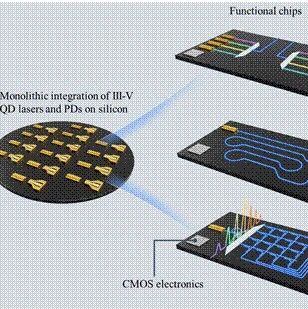
Core Insights - The article discusses significant advancements in silicon-based photonic integration technology, which is crucial for meeting the increasing demand for high-performance interconnect capabilities in the context of exponential data growth driven by AI, IoT, and big data [1] Group 1: Technological Advancements - Silicon photonic integration is identified as a revolutionary technology that merges light and electricity, enabling high bandwidth, low latency, high energy efficiency, and lightweight interconnect solutions [1] - Recent research by a team led by researchers Yang Tao and Yang Xiaoguang has made progress in large-scale monolithic integration of high-speed optical interconnects using a silicon-based epitaxial quantum dot platform [2] Group 2: Research Findings - The research results were published in "Laser & Photonics Reviews," highlighting the development of a wafer with an 8-layer InAs/GaAs quantum dot structure on a CMOS-compatible silicon substrate [2] - The team successfully fabricated direct modulation lasers and waveguide photodetectors, achieving a maximum 3-dB bandwidth of 4.5 GHz for lasers and 2.02 GHz for detectors [1][2] Group 3: Performance Metrics - The direct modulation rate of the laser reached 12.5 Gbit/s, while the data reception capability of the detector was 5 Gbit/s [1] - High-speed signal interconnects were demonstrated with a rate of 1.01 GHz based on a free-space optical coupling integrated structure [1]
事关安世,商务部回应
半导体芯闻· 2026-02-14 08:56
Group 1 - The Dutch court has ordered an investigation into ASML Semiconductor for alleged mismanagement, emphasizing the need to restore global semiconductor supply chain stability, which is a common interest for the international industry, including China and the Netherlands [1] - The Chinese Ministry of Commerce has stated that it hopes the Netherlands will create favorable conditions for constructive resolution of internal disputes between companies, highlighting the importance of maintaining stability in the global semiconductor supply chain [1] - The Chinese Ministry of Foreign Affairs has reiterated its position on the ASML Semiconductor issue, attributing the root cause of the problem to improper administrative intervention by the Netherlands in corporate operations [1]

一座芯片工厂,被发向太空
半导体芯闻· 2026-02-14 08:56
Core Viewpoint - A UK company, Space Forge, is developing a space "factory" to produce materials needed for quantum computers, AI data centers, and defense infrastructure, achieving key milestones in manufacturing high-quality semiconductor crystals in microgravity conditions [1][2]. Group 1: Space Manufacturing Technology - Space Forge's factory, located in Cardiff, Wales, aims to produce "seed" crystals for semiconductors that can be used in communication infrastructure, computing, and transportation [1]. - The company plans to launch a satellite named ForgeStar-1 using a SpaceX rocket by June 2025, which will generate plasma at temperatures of 1000 degrees Celsius (1832 degrees Fahrenheit) to facilitate advanced crystal production [1]. - The CEO, Joshua Western, emphasizes that manufacturing semiconductors in microgravity leads to a more orderly atomic arrangement, resulting in semiconductor crystals with purity hundreds to thousands of times higher than those produced on Earth [1]. Group 2: Market and Commercialization - The primary market for Space Forge's materials includes aerospace and defense, telecommunications, and data sectors, with plans to establish a commercial production system in orbit within two years [2]. - The company faces significant regulatory challenges, as obtaining launch permits took two and a half years despite the satellite's construction taking only seven weeks [2]. - The value of the high-quality compounds produced in space could reach tens of millions of dollars per kilogram, with potential for hundreds of new material combinations previously only theoretical [2].

芯聚蓉城 链通沪蓉 掘金川渝!
半导体芯闻· 2026-02-14 08:56
Core Insights - The article highlights the rapid growth and opportunities in the semiconductor industry in Chengdu, which is positioned as a national integrated circuit industry base with a complete industrial chain in the western region [1][4][5] - The 2026 Chengdu International Industrial Expo will feature the "Chip Future" integrated circuit series of activities, aiming to connect the semiconductor industry with global resources and local market demands [2][3][12] Industry Overview - Chengdu's semiconductor market is projected to exceed 137 billion yuan by 2025, driven by significant demand for various chips, including industrial-grade sensors and automotive power semiconductors [1][5][8] - The region has established a collaborative industrial ecosystem, with Chengdu focusing on IC design and advanced packaging, while Chongqing specializes in power semiconductor manufacturing [5][6] Event Details - The expo will take place from March 11 to 13, 2026, at the China West International Expo City, featuring a dedicated 30,000 square meter semiconductor exhibition area [3][9] - The event will include policy empowerment, technology sharing, demand release, and precise matching of industry needs, particularly in precision testing, robotics, and laser equipment [2][11] Market Demand - The demand for chips in the Chengdu-Chongqing economic circle is substantial, with Chengdu producing over 120 million smart terminals annually and Chongqing being a major hub for laptop and automotive manufacturing [7][8] - Key sectors such as aerospace, industrial robotics, and laser equipment are rapidly developing, further increasing the demand for specialized chips [8][11] Strategic Collaboration - The event aims to facilitate cross-regional collaboration between Chengdu and Shanghai, enhancing resource sharing and industry cooperation [10][12] - The integration of the Chengdu and Shanghai exhibitions will provide participating companies with enhanced visibility and access to a broader market [10][12]

这类DRAM,成为新研究方向
半导体芯闻· 2026-02-14 08:56
Core Viewpoint - Samsung Electronics and SK Hynix are accelerating the development of the next-generation 3D Dynamic Random Access Memory (DRAM), specifically the vertical structure "4F² DRAM," aiming to complete and test early prototypes by the end of this year [2][3]. Group 1: 4F² DRAM Development - The 4F² DRAM architecture overcomes the limitations of traditional planar DRAM by utilizing a vertical stacking method, which is expected to enhance performance, data transfer rates, and energy efficiency [2]. - Samsung and SK Hynix plan to validate the commercial viability of the 4F² DRAM prototype before advancing to 3D DRAM development [3]. - Micron Technology has opted to skip the 4F² DRAM stage and move directly into 3D DRAM development [3]. Group 2: Industry Challenges and Innovations - The transition to vertical structure designs is seen as essential to overcome the challenges posed by the shrinking of planar DRAM, which has led to increased complexity and manufacturing costs [4]. - Samsung anticipates launching the 4F² DRAM following its seventh-generation 10nm products, while SK Hynix may introduce its 4F² series in the next generation [4]. - The performance of the 4F² DRAM is projected to improve by nearly 50% compared to existing models, with a potential for mass production within three years if development progresses smoothly [4].

服务器CPU,AMD市占首超40%
半导体芯闻· 2026-02-14 08:56
Core Viewpoint - AMD has significantly increased its market share in the server CPU segment, achieving a revenue share of 41.3% in Q4 2025, marking a 1.8% increase from Q3 2025 and a 4.9% year-over-year growth in a multi-billion dollar market [2]. Group 1: Server Market - AMD holds a 40% revenue share in the server CPU market, with its EPYC processors capturing 41.3% of the revenue share in Q4 2025 [2]. - AMD's unit share in the server market is 28.8%, indicating higher average selling prices compared to Intel, which has a unit share of 71.2% and a revenue share of 58.7% [2][3]. - The year-over-year growth for AMD in the server market is 4.9%, reflecting strong performance in a competitive landscape [2]. Group 2: Desktop Market - In the desktop CPU market, AMD's revenue share is 42.6%, while its unit share is 36.4%, suggesting that AMD's Ryzen processors command higher average prices [3]. - The desktop segment has seen a quarter-over-quarter revenue growth of 1.6% and a year-over-year growth of 14.6%, indicating increasing popularity among gamers [3]. Group 3: Mobile/Notebook Market - In the mobile and notebook CPU market, Intel dominates with a revenue share of 75.1% and a unit share of 74%, reflecting its pricing strategy aligned with its market presence [4]. - AMD holds a 29.2% unit share and a 35.4% revenue share in the mobile CPU market, showcasing its competitive positioning despite Intel's overall lead [4].


三星,终于逆袭?
半导体芯闻· 2026-02-14 08:56
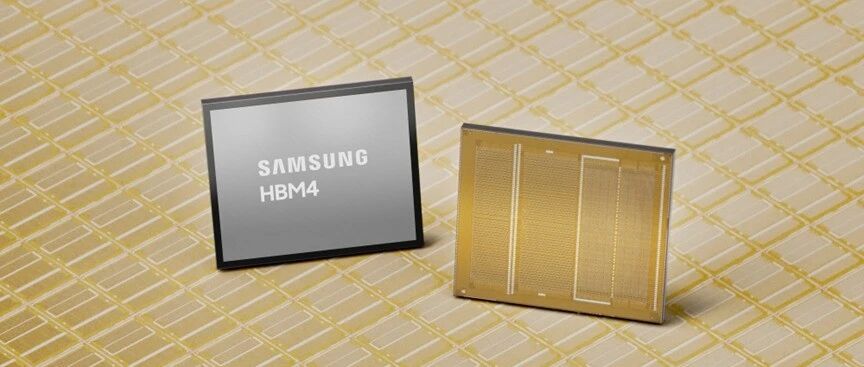
Core Viewpoint - Samsung Electronics has begun shipping its sixth-generation high-bandwidth memory (HBM4), becoming the first manufacturer to mass-produce this crucial storage chip for artificial intelligence, marking a significant turnaround in its competitive position in the AI-driven semiconductor market [1][3]. Group 1: Product Features and Performance - Samsung's HBM4 memory offers a stable processing speed of up to 11.7 Gbps, a 46% increase over the industry standard of 8 Gbps, and a 1.22 times improvement over its predecessor HBM3E's maximum speed of 9.6 Gbps [3][4]. - The total memory bandwidth per stack has increased by 2.7 times compared to HBM3E, reaching up to 3.3 TB/s [4]. - Samsung has integrated advanced low-power design solutions to address the challenges posed by the increase in I/O pin count from 1024 to 2048, achieving a 40% improvement in energy efficiency and a 30% enhancement in heat dissipation [4]. Group 2: Market Strategy and Future Plans - Samsung anticipates that its HBM product sales will triple in 2026 compared to 2025 and is actively expanding HBM4 production capacity [5][6]. - The company plans to introduce HBM4E samples in the second half of 2026 and customized HBM samples based on specific customer requirements in 2027 [7]. - Samsung's integrated design and manufacturing capabilities provide a competitive edge in the HBM market, allowing for optimized production processes and reduced supply chain risks [6][7]. Group 3: Competitive Landscape - Samsung's HBM4 is expected to create a turning point in the competitive landscape, particularly against SK Hynix, which has dominated the HBM market due to its exclusive orders from NVIDIA [10][13]. - The differentiation in manufacturing processes between Samsung and SK Hynix has led to significant performance disparities, with Samsung's HBM4 achieving higher data transfer rates and scalability [13][14]. - Analysts believe that Samsung's performance-first strategy may set new market standards, especially as NVIDIA has raised its specifications to 13 Gbps [14].
美国拟全面封杀芯片设备售中
半导体芯闻· 2026-02-13 09:35
Group 1 - The core proposal from U.S. lawmakers aims to upgrade export controls on semiconductor manufacturing equipment to China, focusing on "domestic production capacity" as a criterion for export bans [1] - The proposed measures will close existing loopholes, preventing non-U.S. companies from exporting advanced equipment for 14nm logic chips and 128-layer 3D NAND memory to China without a license [1] - A significant aspect of the proposal includes a maintenance ban, which would cut off U.S. technical support and spare parts for hundreds of billions of dollars worth of imported equipment in China, effectively shortening the equipment's lifecycle [1] Group 2 - The proposal also seeks to establish a multilateral embargo mechanism with allies to prevent China from circumventing technology barriers through reverse engineering of critical equipment subcomponents [1] - The only exemption in the proposal is for equipment that has been localized in China, which undermines the legitimate spare parts supply for foreign chip manufacturers operating in China, conflicting with recent annual export licenses granted [1] - On the same day the letter was revealed, the U.S. Department of Commerce reached a settlement regarding a case involving Applied Materials and equipment smuggling to China, highlighting inconsistencies in enforcement [1]
这些芯片,太难了
半导体芯闻· 2026-02-13 09:35
Core Viewpoint - The surge in storage chip prices is forcing major global electronics companies to face three challenging options: raise product prices, absorb costs, or adjust product configurations [1][2]. Group 1: Impact on Electronics Manufacturers - The AI boom is significantly impacting the supply chain, as AI requires extensive data center support, leading to a shortage of storage chips for manufacturers of smartphones, PCs, and gaming consoles [1][2]. - Dell Technologies has raised prices of some commercial laptops by up to 30%, while Acer has reduced the multitasking storage space in its budget PCs [1][3]. - Xiaomi has halted production of low-memory versions of new mid-range devices and increased prices, while LG Electronics has a dim outlook for TV sales this year due to rising storage chip prices [1][2]. Group 2: Market Trends and Predictions - The shortage of storage chips is expected to worsen for the smartphone, PC, and gaming console industries, with anticipated declines in shipment volumes [2][4]. - According to TrendForce, contract prices for DRAM and NAND flash have increased to approximately seven times their previous levels over the past 12 months [2][3]. - Analysts predict that supply will remain tight until the end of 2028, with little chance of price drops in the short term due to ongoing AI infrastructure investments [2][3]. Group 3: Financial Implications for Companies - The rising cost of storage chips, which accounts for 30% of total costs in PCs, is expected to suppress demand in the personal computer and smartphone sectors, although price increases may offset this decline [3][4]. - Apple CEO Tim Cook noted that while the impact of rising storage chip prices was minimal in the last fiscal quarter, a more significant effect is expected in the current quarter [3][4]. - Qualcomm's CEO expressed a desire for more storage chips, indicating that the supply constraints are affecting even companies not directly involved in consumer electronics [4].