日经中文网

Search documents


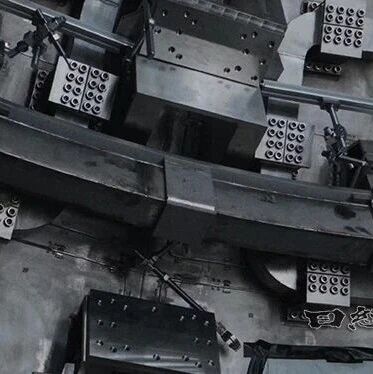
日本核聚变实验核心装置建成,记者探访内部
日经中文网· 2026-01-01 00:33
Core Viewpoint - The completion of the plasma control device at the JT-60SA nuclear fusion facility marks a significant step in stabilizing plasma for future experiments, with plans to conduct plasma generation experiments starting in 2026 [1][4]. Group 1: Plasma Control Device - The plasma control device, known as the "position control coil," has been installed at the JT-60SA facility, which is located in Ibaraki Prefecture, Japan [1]. - This device is crucial for maintaining the stability of plasma, which is formed by heating fuel to 100 million degrees Celsius [3][4]. - The coils are made of copper, with a diameter of 8 meters, and were installed with precision to ensure a circular shape, controlling installation errors to within 2 millimeters [1]. Group 2: JT-60SA Facility - JT-60SA is the world's largest Tokamak-type nuclear fusion experimental device, redesigned and completed in 2020, and it successfully generated plasma for the first time in 2023 [6]. - The facility will undergo enhancement projects starting in 2024 to produce higher temperature and pressure plasma, with completion expected by 2026 [6]. - Research outcomes from JT-60SA will contribute to the ITER nuclear fusion reactor project currently under construction in France [6].
冈山大学等开发出用病毒破坏食道癌细胞的新药
日经中文网· 2026-01-01 00:33
Core Viewpoint - A genetically modified virus that selectively destroys cancer cells has been developed for the treatment of esophageal cancer, showing promising results in clinical trials with patients who cannot undergo standard cancer treatments [2][4]. Group 1: Drug Development and Clinical Trials - The drug, named "Telomelysin," is a recombinant adenovirus designed to specifically target and attack cancer cells [4]. - Clinical trials began in 2020, focusing on patients who are difficult to treat with conventional cancer therapies, administering Telomelysin three times during radiation therapy [5]. - Results from the trials indicated that after 18 months, 18 out of 36 patients experienced complete cancer remission, significantly higher than the approximately 20% remission rate typically seen with radiation therapy alone [6]. Group 2: Regulatory Approval and Market Potential - The research team from Okayama University has applied for production and sales approval from the Japanese Ministry of Health, Labor and Welfare, which, if granted, would make this the world's first treatment of its kind [2][6]. - The rapid proliferation of the virus, which can multiply 100,000 to 1,000,000 times within a day, enhances the effectiveness of radiation therapy [5].

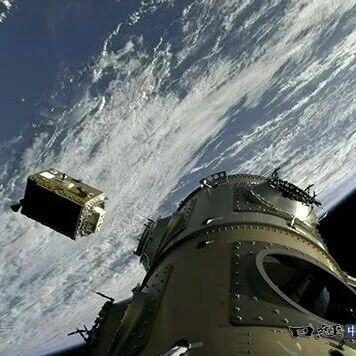
谷歌、SpaceX等瞄准打造太空数据中心
日经中文网· 2026-01-01 00:33
Core Viewpoint - The article discusses the emerging concept of space data centers, which are being developed by major US tech companies as a solution to the increasing power and water demands of ground-based AI data centers. Space data centers could potentially replace the need for extensive ground infrastructure due to their efficiency in energy generation and cooling [1][4][11]. Group 1: Companies Involved - Google plans to launch satellites equipped with its high-performance AI semiconductor "TPU" by early 2027 as part of its "Project Suncatcher" to utilize solar energy in space [6][8]. - SpaceX is also interested in the space data center concept, with CEO Elon Musk endorsing the idea and the company preparing for an IPO that may include funding for such initiatives [7][8]. - Other companies like Blue Origin, OpenAI, Starcloud, Axiom Space, and Aetherflux are also exploring or developing technologies related to space data centers [8]. Group 2: Technical Aspects - Space data centers will operate on satellites in Earth's orbit, utilizing solar power for continuous operation and eliminating the need for water cooling, which is a significant requirement for ground data centers [2][10]. - The efficiency of solar panels in space can reach up to eight times that of ground-based systems, allowing for nearly uninterrupted power generation [6][11]. Group 3: Market Demand and Challenges - The demand for power from US data centers is projected to reach 106 GWh by 2035, equivalent to over 100 large nuclear power plants, highlighting the urgency for alternative solutions like space data centers [11]. - The current cost of launching payloads into near-Earth orbit is around $1,500 per kilogram, but if it can be reduced to $200 per kilogram by the mid-2030s, the feasibility of space data centers will significantly improve [11].


高市获得市场信任面临三大难关
日经中文网· 2025-12-31 06:57
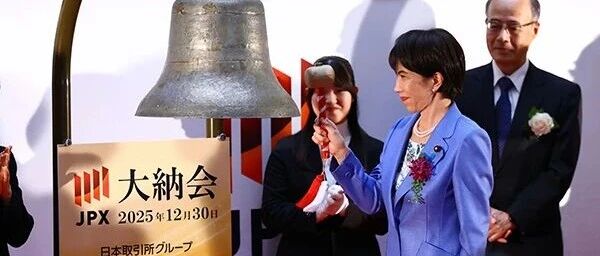
Core Viewpoint - The focus for 2026 is on the risks associated with the proactive fiscal policy of the government led by Prime Minister Kishi, emphasizing the need to ensure market trust amidst growing caution [2][6]. Group 1: Monetary Policy Challenges - The first challenge is the Bank of Japan's monetary policy meeting scheduled for January 22-23, where Governor Ueda is expected to maintain a rate hike stance, continuing the trend of rising interest rates [2][4]. - Despite raising the policy interest rate to 0.75% in December 2025, the yen remains weak, trading around 155 yen per dollar, indicating a persistent depreciation trend [4]. - If the Bank of Japan cannot reverse the yen's depreciation expectations, the implications of potential currency intervention will be scrutinized [4]. Group 2: Fiscal Discipline Adjustments - The second challenge involves adjusting fiscal discipline, with the government planning to revise fiscal balance indicators in January, moving away from annual surplus targets to a multi-year assessment [6]. - The previous administration set 2026 as the deadline for achieving a primary balance surplus, but the current government may introduce alternative indicators, focusing on the ratio of government debt to GDP [6]. Group 3: Economic Policy Framework - The third challenge is the "Basic Policy on Economic and Fiscal Management and Reform" (commonly known as the "Bone-Strong Policy"), which is expected to reflect a strong proactive fiscal stance following the approval of the 2026 budget [7]. - Prime Minister Kishi has emphasized responsible fiscal management, indicating that the government will not irresponsibly issue bonds or reduce taxes, although there are concerns within the ruling party about excessive fiscal stimulus [7]. - The internal divisions within the ruling party regarding fiscal policy could pose risks to Kishi's already fragile government, making it crucial to propose a growth strategy that is acceptable to the market [7].
铃木将在日本生产轻型EV,维持100万本土产量
日经中文网· 2025-12-31 06:57
Core Viewpoint - Suzuki plans to start domestic production of lightweight electric vehicles (EVs) in Japan by the fiscal year 2026, aiming to maintain a production scale of 1 million vehicles domestically, which is crucial for sustaining the supply chain [2][5]. Group 1: Production Plans and Strategy - Suzuki will begin producing lightweight EVs at its Kakegawa plant in Shizuoka Prefecture in the fiscal year 2026, with specific launch dates and pricing yet to be announced [4]. - The company has historically viewed a domestic production target of 1 million vehicles as essential for supply chain stability, but production has frequently fallen below this threshold in the past decade [5]. - To counteract the decline in domestic sales of lightweight vehicles, which have dropped by 18% from 2015 levels, Suzuki is increasing production in India, which has become a key export base [5]. Group 2: Market Context and Challenges - The overall sales of lightweight vehicles in Japan are projected to decline by 18% to approximately 1.56 million units by 2024, compared to 2015, which is a larger drop than the 9% decline in regular vehicle sales [5]. - The COVID-19 pandemic significantly impacted Suzuki's sales, bringing them to a 30-year low in 2021, although there is a current recovery trend [5]. - The shift in production strategy is also influenced by rising inflation and high tariffs, prompting Japanese automakers to reconsider their domestic production models [6].

日本家庭恩格尔系数达29.4%
日经中文网· 2025-12-31 06:57
Core Viewpoint - Japan's Engel coefficient has reached a record high of 29.4% in Q3 2025, indicating a significant burden on food spending amidst persistent food inflation [2][5][7]. Group 1: Engel Coefficient and Food Inflation - The Engel coefficient for Japan in Q3 2025 is 29.4%, the highest since the current standard was adopted in 2000, with a moving average of 28.4% for the last four quarters [2][5]. - Japan's Engel coefficient was already the highest among G7 countries in 2024, with the lowest being around 16% in the United States, indicating a stark difference in food spending [7][9]. - Food prices in Japan have shown a year-on-year increase of around 6%, with specific items like chocolate and coffee beans experiencing significant price hikes due to high import costs [7][9]. Group 2: Household Financial Pressure - Real wages in Japan have seen negative growth for ten consecutive months as of October 2025, exacerbating financial pressure on households [9][10]. - The average proportion of disposable income spent on food for households of two or more was nearly 19% from January to October 2025, higher than previous years [9][10]. - Households are reaching their limits in cutting food spending, indicating a need for a shift in strategy to manage overall expenses [10][11]. Group 3: Strategies for Financial Management - Households are encouraged to reassess fixed expenditures such as housing, communication, and insurance to find areas for potential cuts [11]. - Despite ongoing wage increases, concerns about corporate salary adjustments have risen, potentially leading to stagnation in salary growth [11]. - Families are advised to explore various strategies, including job changes, to cope with inflationary pressures [11].

上海工业地带变潮流地标,借鉴“涩谷模式”
日经中文网· 2025-12-31 03:02
Core Insights - The West Bund area in Shanghai has transformed into a new landmark attracting many trend-sensitive young people after redevelopment [2][4] - The redevelopment involved the participation of the Japanese architectural firm "Nikken Sekkei," which applied experiences from the redevelopment of Shibuya Station in Tokyo [2][5] Group 1: Redevelopment Overview - The West Bund is located along the Huangpu River in Xuhui District, spanning approximately 11 kilometers, and was previously an industrial zone with cement factories and an airport [4] - The area has seen the opening of art museums and commercial facilities, with major companies like Alibaba establishing offices there [4] Group 2: Urban Design and Planning - Nikken Sekkei was involved in the overall planning of a section called "Media Port," which features multiple buildings interconnected by pedestrian-friendly spaces [5] - The design includes underground passages for easy movement between buildings and elevated walkways to enhance pedestrian flow [5] - Key nodes known as "Urban Core" have been established to facilitate vertical movement using escalators and stairs, similar to the Shibuya redevelopment project [5] Group 3: Community Engagement - The area has become popular among young pet owners, with many pet-friendly shops attracting visitors despite the distance from their homes [4]

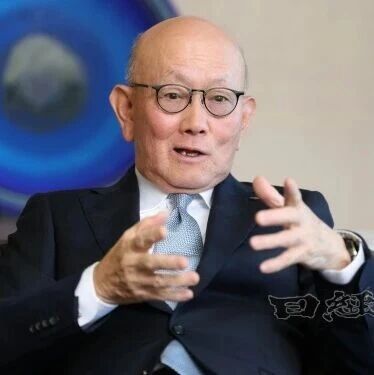
伊藤忠商事会长:中国依然存在机会
日经中文网· 2025-12-31 03:02
Core Viewpoint - The article discusses the current economic situation in China, the challenges faced by Japanese companies in the Chinese market, and the potential opportunities that still exist despite geopolitical tensions [2][3][5]. Group 1: Current Economic Situation in China - The adjustment in China's real estate market is not yet complete, and the economy is expected to face severe challenges until 2026. The potential returns from real estate investments are decreasing, and personal consumption is facing headwinds [3]. - The Chinese government is attempting to increase investments in infrastructure and advanced technologies like AI, but these efforts are insufficient to boost economic growth rates [3]. Group 2: Japanese Companies' Response to China - Japanese companies should cautiously explore opportunities in China while managing risks. There are still potential markets for products and services favored by Chinese consumers, despite the ongoing Japan-China tensions [7]. - Companies that have developed low-cost, high-quality food services in Japan are successfully entering the deflationary Chinese market [7]. Group 3: Opportunities in Chinese Products and Technology - China has a wealth of engineering talent, and its humanoid robots have set Guinness World Records for walking distances. These robots could be useful in Japan, especially in sectors facing labor shortages [8]. - Chinese products, such as BYD's electric vehicles and Huawei's smartwatches, are not only competitively priced but also of high quality. However, there are psychological barriers among Japanese consumers regarding Chinese products that need to be addressed [8]. Group 4: Itochu Corporation's Future Plans - Itochu Corporation aims to achieve the highest consolidated net profit among general trading companies for the fiscal year ending March 2026, with a target of exceeding 900 billion yen [9].