日经中文网

Search documents
资生堂再次迷航,全球化路线继承不力
日经中文网· 2025-12-14 00:33
中村直文:时常可以听到"资生堂体现了银座文化,在创始人家族的成员福原义春担任社长时期曾春风 得意"的说法。但实际上,在福原经营的时期资生堂增长乏力。"资生堂的春天"是优先考虑海外市场而 非文化的时期…… 中村直文: 资生堂正在迷失方向。继2024财年(截至2024年12月)之后,该公司发布的2025财年业绩 预期再次出现520亿日元最终亏损,这一数字将创出历史最高纪录。资生堂的股价也下跌至高点的4分之 1以下。资生堂的战略究竟出现了什么问题? 万亿日元"。 鱼谷雅彦2014年作为没有公司内部董事经验的外部出身者就任资生堂社长 当然增长的动力来自海外市场。资生堂在美国、欧洲、中国等海外设立地区总部,同时录用了来自公司 外部的国际化人才。还开始采用英语召开会议,推进了经营风气改革。 "资生堂体现了银座文化,在创始人家族的成员福原义春担任社长时期曾春风得意",资生堂内外时常可 以听到这样的声音。确实,资生堂自创立以来一直通过化妆品、食品、建筑物等,作为美文化的体现者 彰显出了较高的存在感。 但实际上,福原参与经营的1980年代后半期至2000年代反而是资生堂增长乏力的时期。30年前的1995年 度销售额约为5400 ...


蜜雪冰城在日本展开攻势
日经中文网· 2025-12-14 00:33
Core Viewpoint - MIXUE is rapidly expanding its presence in Japan while maintaining a focus on quality and customer satisfaction, aiming to adapt its offerings to local preferences [2][11]. Group 1: Expansion Strategy - MIXUE operates over 46,000 stores globally, surpassing Starbucks, and is strategically increasing its store count in Japan, with a focus on major cities like Tokyo, Osaka, and Yokohama [2][9]. - The company has opened seven stores in Japan as of November, including the newly launched MIXUE Shin-Okubo Station store [9][12]. - Future expansion will prioritize locations that attract both tourists and local customers, particularly in high foot traffic areas [12]. Group 2: Product Offering and Pricing - MIXUE's pricing strategy is centered around affordability, with most products priced below 500 yen (approximately 22.6 yuan), including popular items like soft serve ice cream at 150 yen (about 6.8 yuan) and drinks starting at 130 yen (about 5.9 yuan) [9][11]. - The company emphasizes a self-managed supply chain to keep costs low while ensuring quality, sourcing fresh ingredients locally in Japan [11]. Group 3: Customer Demographics and Marketing - The primary customer demographic consists of women aged 10 to 29, with a notable presence of foreign tourists, who make up 20-50% of customers depending on the location [11]. - MIXUE plans to enhance brand awareness through social media marketing and promotional activities, particularly targeting younger audiences [11][12].


日本央行年加息幅度35年来首次突破0.5%?
日经中文网· 2025-12-14 00:33
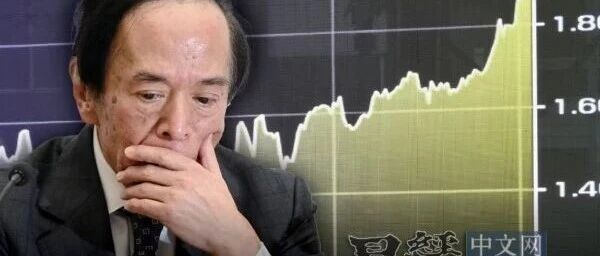
如果12月加息,作为政策利率的无担保隔夜拆借利率将上升到0.75%左右。30多年来,该利率(月平 均)一直没有超过0.5%左右的"壁垒",但今后将突破这一壁垒。 受"历史性加息"影响,市场参与者也将更加关注2026年加息的情况。 清水功哉:日本银行(央行)在12月18~19日的货币政策会议上很可能敲定今年第2次的0.25%左右加 息,这次加息可能被认为是"历史性的"。因为在过去的35年里,日本的加息幅度没有超过过0.5%…… 清水功哉: 日本银行(央行)在12月18~19日的货币政策会议上敲定成为今年第2次的0.25%左右加息 这一可能性正在被市场强烈意识到,这次加息可能被认为是"历史性的"。这是因为2025年的年加息幅度 合计将达约0.5%,创出35年来最大幅度,作为约30年来利率上限的"0.5%壁垒"的突破也将实现。 这将再次给人留下"利率上升时代"到来的印象,以长期利率上升显著的债券市场为代表,或将对市场氛 围产生影响。 日本央行随着1998年实施现行《日本银行法》,获得货币政策的"自主性",自那以来,其中有5年决定 加息。分别是解除零利率的2000年、第二次解除零利率的2006年、进一步加息的2007 ...
英伟达高管:日本已不再是机器人大国
日经中文网· 2025-12-13 00:33
Murali表示,AI自主控制机器人的"物理AI"时代已经到来,机器人的应用将拓展到护理等此前难以引入 的领域。他认为,相关市场规模达50万亿美元,物理AI正处于迈向实用化的转折点。 英伟达正在与发那科、安川电机等日本大型工业机器人企业在AI领域展开合作。英伟达负责智能机器 业务的Murali在接受采访时指出,AI自主控制机器人的"物理AI"时代已经到来,当前中美企业正引领开 发潮流,而日本"已经落后"…… 在机器人行业,美国半导体巨头英伟达(NVIDIA)不断提高存在感。该公司正在与发那科、安川电机 等日本大型企业在人工智能(AI)领域展开合作。到访日本的英伟达智能机器业务负责人Murali Gopalakrishna在接受日本经济新闻采访时,既肯定了日本在工业机器人领域的优势,同时也指出在AI主 导的新潮流下"日本已不再是机器人大国"。 日经中文网 https://cn.nikkei.com 视频号推荐内容: 人形机器人是这一趋势的典型代表。Murali指出,当前中美企业正引领开发潮流,而日本"已经落后"。 过去的研发以硬件为核心,日本占据领先优势,但如今"已转向AI优先",这是日本落后的背景。 不过,M ...


36氪精选:修复瘫痪、增强常人,脑机接口会成未来人类「外挂」吗?
日经中文网· 2025-12-13 00:33
Core Viewpoint - The article discusses the emerging potential of brain-computer interfaces (BCIs) in consumer healthcare over the next five to ten years, highlighting significant advancements and investments in the field, particularly in the context of medical applications and the integration of AI technologies [5][10]. Group 1: Industry Developments - In mid-2025, notable advancements in BCIs include Neuralink's $650 million funding round, raising its valuation to $9 billion, and expanding its applications to include speech and vision restoration for patients [5]. - Synchron secured $200 million in Series D funding, while Paradromics received FDA approval for clinical trials focused on speech function restoration [6]. - Chinese companies like JieTi Medical are progressing steadily in clinical trials and product optimization under strict regulatory frameworks, with their invasive BCI systems entering the "green channel" for innovation review by the National Medical Products Administration [6][7]. Group 2: Applications and Future Prospects - BCIs are categorized into three main application areas: brain-controlled output (e.g., decoding movement intentions), neural modulation (e.g., deep brain stimulation for Parkinson's), and sensory reconstruction (e.g., restoring hearing and vision) [9]. - The clinical value of BCIs in treating diseases is expected to be validated within the next three to five years, improving patients' quality of life and work capabilities [10]. - The consumer healthcare aspect of BCIs is anticipated to emerge in the next five to ten years, transforming human-machine interaction and enhancing efficiency through direct brain control of devices [10]. Group 3: Technological Innovations - The second-generation high-throughput wireless BCI system developed by JieTi Medical features 256 electrode channels, expanding its application from motor control to language reconstruction [7]. - The implantation process involves minimally invasive techniques, allowing for stable signal collection from the brain with low latency, comparable to natural brain function [13]. - Accumulating single-cell data from BCIs is crucial for advancing neuroscience and enhancing product design, with the potential for significant breakthroughs in understanding brain functions [14][15]. Group 4: AI Integration and Future Implications - AI and algorithms are expected to play a vital role in processing complex brain data, with the potential to create foundational models that improve the performance of BCIs for new patients [17][18]. - The relationship between BCIs and AI is seen as a dynamic interplay, where human intentions can guide AI actions, leading to more sophisticated control of devices [18]. - The integration of BCIs could enable humans to exceed current physical capabilities, with examples showing that BCI users can achieve faster control speeds than average individuals [19][20]. Group 5: Ethical Considerations and Human-Machine Fusion - The development of BCIs is viewed as a necessary step towards deep human-machine integration, serving as a bridge for communication between humans and AI [20][21]. - Concerns about AI potentially evolving beyond human control highlight the importance of maintaining human agency in the development of these technologies [21].

新兴国家股市迎来走出“寒冬”良机
日经中文网· 2025-12-13 00:33
Core Viewpoint - Emerging market stocks are expected to outperform developed market stocks for the first time in five years, driven by a weaker dollar and high valuations in the U.S. stock market, leading to renewed interest in these markets [2][4][6]. Group 1: Market Performance - As of the end of November, the MSCI Emerging Markets Index rose 27% in USD terms and 25% in local currency terms, outperforming the MSCI Developed Markets Index, which increased by 19% and 16% respectively [4]. - The Bovespa Index in Brazil and the FTSE/JSE Top 40 Index in South Africa both saw a 50% increase in 2025, highlighting significant gains in emerging markets [6]. - The South Korean Composite Stock Price Index increased by 60% when converted to USD, despite the KRW/USD exchange rate remaining stable [6]. Group 2: Investment Trends - Investors are becoming sensitive to their low holdings in emerging market stocks and are beginning to shift funds towards these markets [8]. - Technology stocks are driving the rise in emerging market equities, with significant gains seen in companies like China's Zhongji Xuchuang, which increased over fourfold due to its products being used in NVIDIA's GPU servers [8]. - Other notable performers include SK Hynix in South Korea and PT Dian Swastatika Sentosa Tbk in Indonesia, which tripled in value amid rising energy demands [8]. Group 3: Economic Outlook - The monetary easing policies across various countries are expected to positively impact economies and corporate performance in the future, with diversification into U.S. assets being a mid-term theme [9]. - Emerging market companies account for over 30% of global corporate revenues, indicating significant growth potential despite their representation in global indices being only about 10% [9]. - Analysts suggest that undervalued small-cap stocks in emerging markets, which have lower correlation with developed markets, present attractive diversification opportunities [9].

日本文化内容产业目标是达到汽车规模
日经中文网· 2025-12-13 00:33
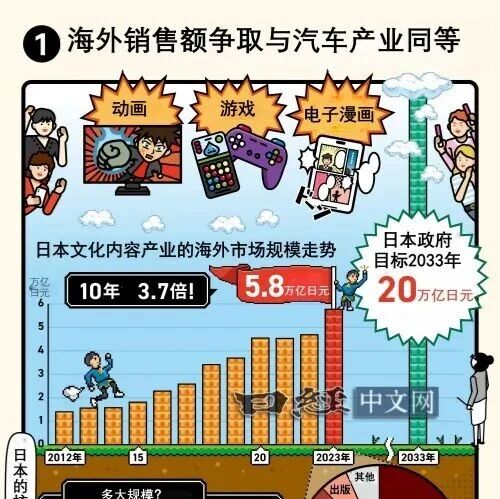
2023年日本的文化内容产业的海外销售额为5.8万亿日元(约合人民币2685亿元),创出历史最高,超 过了钢铁产业和半导体产业。日本设定了2033年20万亿日元的目标,相当于日本汽车相关产业的21.6万 亿日元规模…… (注):根据日本内阁府和经济产业省的资料制图 日本的动画、游戏等文化内容跨越国界吸引了众多粉丝,在海外也获得高度评价。2023年日本的文化内 容产业的海外销售额达到5.8万亿日元(约合人民币2685亿元),创出历史最高纪录,超过了钢铁产业 和半导体产业,10年里增加到了3.7倍。日本政府正在为培养短缺人才提供支持,推动这一增长产业发 展。 日本政府将文化内容产业定位于核心产业之一,设定了使2033年的海外销售额达到20万亿日元的目标, 这是2023年的3.5倍。规模逼近日本汽车相关产业的21.6万亿日元。受新冠疫情下"宅家"需求的推动,随 着视频发布平台的普及,海外发布环境得以完善。 为日本的文化内容产业大幅增长起到拉动作用的是在线家用游戏和动画。2023年占总体的70%以上。出 版方面,电子漫画增长显著,日本的电影出口额也出现增加。 (注)根据日本文化厅的资料制图 日本当前的课题是培养人才。 ...
日本过半地方新房价格是年收10倍以上
日经中文网· 2025-12-12 07:45
Core Viewpoint - The average price of newly built residential buildings in Japan for 2024 has led to a national average housing price-to-income ratio of 10.38 times, indicating that it is increasingly difficult for single-income households to afford new homes [1][3]. Group 1: Housing Price Trends - The housing price-to-income ratio has increased from 10.09 in 2023 to 10.38 in 2024, marking the second consecutive year it has exceeded 10 times [3]. - Over 24 prefectures in Japan have a housing price-to-income ratio exceeding 10 times, a 30% increase from 18 prefectures in the previous year [6]. - The average annual income is growing slowly while housing prices are rising at a rate that outpaces income growth [6]. Group 2: Regional Insights - In regions outside of Tokyo, the average price of newly built residential buildings has also risen significantly, with many areas seeing prices surpassing 10 times the local annual income [1][6]. - Specific examples include Kumamoto Prefecture, where the "MJR Kumamoto Gate Tower" is selling units priced over 2 billion yen (approximately 901 million yuan) due to its prime location and strong demand [6]. - In Okayama City, the "Proud Tower Okayama" has sold over 300 units, including one priced at 369.98 million yen (approximately 166.7 million yuan), indicating a diverse buyer demographic [6]. Group 3: Construction Costs and Market Dynamics - Rising construction costs, with a reported increase of 4-6% in the past year for reinforced concrete buildings, are contributing to higher housing prices [9]. - Real estate companies are shifting focus towards high-end housing to meet the demands of dual-income families and affluent individuals, as traditional housing for the general public yields lower profits [9]. - The disparity in housing conditions between urban centers and local cities is notable, with local markets facing higher land acquisition costs due to competition with hotels and other developments [9].

Rapidus新增获得20余家日本企业出资
日经中文网· 2025-12-12 07:45
金融机构当中,包括现有股东三菱UFJ银行在内的3大银行和日本政策投资银行将最多合计出资250亿日 元。从地方银行来看,除了Rapidus工厂所在的北海道的北洋银行和北海道银行之外,千叶银行、肥后 银行和北陆银行也在就出资进行协调。3大银行除出资之外,还将在2027年度以后提供最多2万亿日元规 模的贷款。 Rapidus已完成第一阶段的民间资金筹集 股东达到约30家企业,Rapidus将完成2025年度获得1300亿日元民间投资的目标…… 力争实现最近端半导体国产化的Rapidus将获得20多家企业投资。除本田、佳能和京瓷等之外,千叶银 行等也将加入股东行列。预计索尼集团等现有股东也将追加出资。股东达到约30家企业,Rapidus将完 成2025年度获得1300亿日元民间投资的目标。日本半导体产业的重振体制正在完善。 Rapidus最早2025年内与各家企业正式达成协议,2026年3月前获得出资。各家企业的出资额预计在5亿 ~200亿日元左右。此外,也有正在谈判的企业,出资企业数和合计出资额今后有可能增加。 新出资的实业公司除了佳能、京瓷、富士胶片控股和牛尾电机等半导体制造设备与零部件供应企业之 外,还有精工爱 ...

2025年日本的年度汉字是“熊”
日经中文网· 2025-12-12 07:45
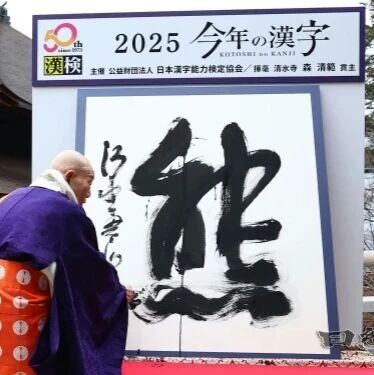
年度汉字评选始于1995年,此次是第31次。通过日本汉字能力检定协会的网站及明信片从日本全国进行 征集,然后选出得票最多的汉字。 2024年因许多日本运动员在巴黎奥运会和残奥会获得金牌以及政治黑金问题等,"金"字当选年度汉字。 Kyodo 清水寺住持森清范挥毫写下被确定为年度汉字的"熊"字(12月12日,京都市东山区) 理由是日本各地接连发生了熊出没以及受到熊害的事件。在京都市清水寺,住持森清范在高约1.5米、 宽约1.3米的和纸上挥毫写下了"熊"字。年度汉字评选始于1995年,此次是第31次…… 12月12日,日本汉字能力检定协会宣布,"熊"字当选为用1个字反映日本2025年世态民情的"今年的汉 字"。理由是日本各地接连发生了熊出没以及受到熊害的事件。在京都市清水寺,住持森清范在高约1.5 米、宽约1.3米的和纸上挥毫写下了"熊"字。 版权声明:日本经济新闻社版权所有,未经授权不得转载或部分复制,违者必究。 日经中文网 https://cn.nikkei.com 视频号推荐内容: ...