日经中文网

Search documents
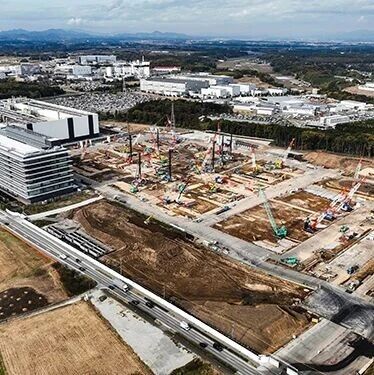
台积电熊本第二工厂考虑改为生产AI尖端半导体
日经中文网· 2025-12-12 02:34
Core Viewpoint - TSMC is considering changing its plans for the second factory in Kumamoto, Japan, to produce advanced semiconductors, specifically 4nm chips for AI applications, due to low utilization rates at the first factory and global EV sales decline [2][8]. Group 1: TSMC's Operations in Japan - TSMC's first factory in Kumamoto has started production of 12-28nm products, but the utilization rate has not met initial expectations due to the sluggish global EV market [2][8]. - The second factory, originally planned to produce 6-40nm products, is now being adjusted to potentially include 4nm production equipment for mainstream AI semiconductors [2][6]. - The construction site for the second factory is currently halted, and if plans are adjusted, the expected production start date of 2027 may be delayed [8]. Group 2: Importance of AI Semiconductors - AI semiconductors are fundamental to technological innovation, making the establishment of a domestic supply chain crucial for enhancing industry competitiveness [6]. - The demand for AI semiconductors is increasing globally, with companies like NVIDIA facing competition for supply [4][6]. - Japan's government is supporting semiconductor initiatives, including a significant investment in TSMC's projects and the establishment of a new factory by Micron Technology for AI memory chips in Hiroshima [9]. Group 3: Economic and Strategic Implications - The total investment for TSMC's projects in Japan is approximately $22.5 billion (about 3.5 trillion yen), with the Japanese government providing around 1.2 trillion yen in funding support [8]. - Japan's efforts to reduce dependence on imported semiconductors are becoming increasingly important from an economic security perspective [8]. - Rapidus, a company supported by the Japanese government, plans to start mass production of 2nm products in 2027, indicating a push towards advanced semiconductor manufacturing in Japan [8].


日经BP精选:自动对焦眼镜、数字疗法……科技能治愈“现代病”吗?
日经中文网· 2025-12-12 02:34
日经BP成立于1969年4月, 隶属于日本经济新闻社集团。作为日本领先的B2B媒体公司,我们聚焦"经营 管理"、"专业技术"及"生活时尚"三大主要领域,满足客户多元化的需求。 编者荐语: 日经中文网"开设了"日经BP精选"栏目。日经BP是日本经济新闻社媒体集团的一员,成立于1969年。作 为日本领先的B2B媒体公司,聚焦经营管理、专业技术及生活时尚三大主要领域。敬请读者关注。 以下文章来源于日经BP ,作者日经BP 日经BP . 1. 旨在控制近视发展的眼镜型设备的开发不断推进 "近视本身就是典型的现代病",开发眼药等产品的日本窪田制药控股(HD)会长、社长兼首席执行官 (CEO)窪田良敲响了这样的警钟。 2. 挑战摆脱手机成瘾的技术出现。利用NFC标签防止过度使用社交媒体等 3. 通过APP等治疗高血压等疾病的"数字疗法"也备受关注 阅读更多内容请点击下方" 阅读原文 " (本文由日经BP提供) 可自动调节焦距的 " 自动对焦智能眼镜 "——ViXion01S (图片来源: ViXion ) 近视、手机成瘾、高血压 …… 科技的广泛应用正让人们面对越来越多 " 现代病 " 的困 扰。一方面,很多企业也在尝试 ...

日本女性被麻辣烫“征服”
日经中文网· 2025-12-12 02:34
Core Viewpoint - The popularity of "Mala Tang" (spicy hot pot) in Japan is rapidly increasing, particularly among women aged 10 to 40, with a significant rise in the number of specialized stores and sales figures expected to continue growing [2][10][12]. Group 1: Market Growth - The number of new Mala Tang stores in Japan is projected to increase by at least eight times by 2025 compared to three years ago [2][8]. - From January to September 2025, 93 new Mala Tang stores opened across Japan, a significant increase from just 11 in 2022 [8]. - The average monthly sales for Mala Tang stores rose from approximately 3.5 million yen in 2021 to about 16 million yen in 2025 [8]. Group 2: Consumer Demographics - Approximately 90% of the customers at Mala Tang stores are women aged between 10 and 40 [5][10]. - The store design caters to female customers, promoting a café-like atmosphere where women feel comfortable dining alone [5]. Group 3: Unique Selling Proposition - Mala Tang offers a customizable dining experience, allowing customers to choose from around 50 different ingredients, which enhances its appeal [5][8]. - The dish is characterized by a rich broth made from about 20 spices, along with a base of chicken and pork bones, aligning with Japanese taste preferences [5][10]. Group 4: Brand Expansion - "Qibao Mala Tang," a leading brand in Japan, has opened 48 stores since its inception in 2007, emphasizing the use of fresh ingredients and unique flavors [10]. - Chinese brands like "Zhang Liang Mala Tang" and "Yang Guo Fu Mala Tang" are also expanding their presence in Japan, particularly in areas with significant Chinese populations [10][12]. Group 5: Future Outlook - The trend of Mala Tang is expected to continue, with potential for it to become a staple in Japanese cuisine, although strategies to attract male customers may be necessary for sustained growth [12][13].


白宫:与日本维持同盟关系,同时与中国合作
日经中文网· 2025-12-12 02:34
Group 1 - The White House spokesperson emphasized the importance of maintaining a strong alliance with Japan while also fostering a good cooperative relationship with China, indicating a balanced approach towards both countries [2][4] - In response to concerns about the deteriorating Sino-Japanese relations, the spokesperson did not provide an evaluation of the current situation or mention any specific actions the U.S. might take [4] - The spokesperson highlighted the significance of Japan as an ally, especially in light of recent tensions arising from incidents such as Chinese military aircraft targeting Japanese Self-Defense Force planes with radar [4] Group 2 - The spokesperson noted that President Trump has established a good relationship with Japan's new Prime Minister, emphasizing their previous meetings and ongoing communications [4]

高市“台湾有事”答辩在准备资料中未记载
日经中文网· 2025-12-12 02:34
Core Viewpoint - The article discusses Japanese Prime Minister Sanna Takichi's unexpected remarks regarding Taiwan potentially constituting a "survival crisis," which were not included in the pre-prepared response materials from the Cabinet Office [2][4]. Group 1 - Takichi's "survival crisis" response occurred during a questioning session in the House of Representatives Budget Committee on November 7, in response to inquiries from Democratic Party member Katsuya Okada [2][4]. - The Cabinet Office's pre-prepared response materials did not contain any mention of the "survival crisis" concept, suggesting that Takichi made the statement based on her own judgment during the session [2][4]. - Following Takichi's remarks, Democratic Party representative Yoshihiko Noda criticized her for acting unilaterally and deviating from the government's pre-prepared content [4]. Group 2 - Democratic Party Senator Kiyomi Tsujimoto publicly requested the release of the Cabinet Office's prepared response materials, which emphasized a desire for peaceful dialogue regarding Taiwan and indicated that the government would assess the situation based on specific circumstances [4]. - Takichi's statement about the possibility of triggering a "survival crisis" was not part of the official materials, indicating it was her personal view rather than a consensus from government officials [5].
银价首破60美元大关,未来是涨是跌?
日经中文网· 2025-12-11 07:45
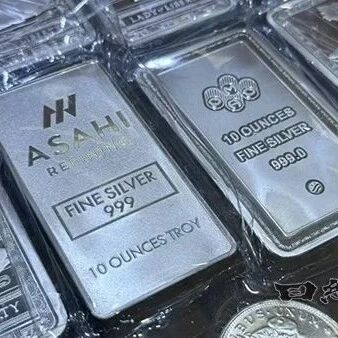
银价创出历史新高 由于押注美联储降息,投机资金涌入。关于今后的行情,有分析师表示:"如果认为明年以后将继续降 息的看法公布,那么贵金属的行情将进一步迎来东风"。也有意见指出:"(银价)目前的上升速度很 快,很有可能在近期暴跌" …… 日经中文网 https://cn.nikkei.com 视频号推荐内容: 美国一旦再次降息将使得没有利息的黄金和白银等贵金属的投资价值提升。针对美联储截至10日召开的 美国联邦公开市场委员会(FOMC)会议,日本市场分析师丰岛逸夫表示"如果认为明年以后将继续降 息的看法公布,那么贵金属的行情将进一步迎来东风"。 另一方面,如果传出对未来的进一步降息保持慎重的信号,将成为行情的负担。 关于白银价格,日本Market Strategy Institute的代表龟井幸一郎指出,"目前的上升速度很快,很有可能 在近期暴跌"。白银还存在因相对于黄金的低估值而吸引投机性资金、进而暴涨的一面,如果市场的降 息预期消失,也有可能出现大幅调整。 版权声明:日本经济新闻社版权所有,未经授权不得转载或部分复制,违者必究。 白银价格再次迅速上涨。作为国际指标之一的伦敦现货价格12月9日首次突破60美元/ ...
从门罗主义的特朗普推论看美国外交
日经中文网· 2025-12-11 07:45
Core Viewpoint - The article discusses the implications of the new U.S. National Security Strategy (NSS) under the Trump administration, highlighting a focus on the Western Hemisphere and a critical stance towards Europe while seeking to rebuild strategic stability with Russia [1][6]. Group 1: U.S. National Security Strategy - The NSS emphasizes the "Trump Corollary" which aims to prevent foreign competitors from deploying military forces in the Western Hemisphere, asserting U.S. leadership in the region [3][4]. - The strategy reflects a historical precedent set by the Monroe Doctrine, which rejected European interference in the Americas, and is seen as a justification for U.S. intervention in its sphere of influence [4][5]. Group 2: Relations with Europe and Russia - The NSS expresses uncertainty about Europe's reliability as an ally, criticizing its immigration policies and suggesting a more adversarial stance towards European nations [6]. - In contrast, the strategy indicates a desire to rebuild strategic stability with Russia, despite minimal references to military threats from China [5][6]. Group 3: Broader Implications - The article suggests that the "Trump Corollary" is not merely a return to isolationism but a strategic redefinition of U.S. foreign policy aimed at national interests, exemplified by the use of tariffs in trade negotiations [5]. - The intertwining of U.S. security strategy with cultural wars reflects a deeper ideological divide, with significant implications for future U.S. foreign policy beyond the current administration [6].

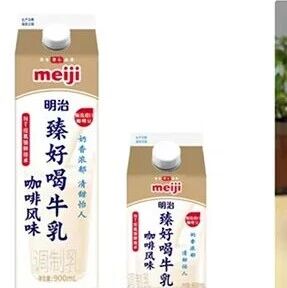
明治将在中国发售“臻好喝牛乳 咖啡风味”
日经中文网· 2025-12-11 07:45
Group 1 - The core product being launched is "Meiji Delicious Milk Coffee Flavor," which will be available in two sizes: 900ml priced at 26.9 yuan and 400ml priced at 14.9 yuan [2][4] - The product will be sold through Meiji's wholly-owned subsidiary, Meiji (China) Investment Company, specifically in coastal regions of China [4] - This marks the first time Meiji is introducing its domestic "Meiji Delicious Milk" brand coffee product to the overseas market [4] Group 2 - The coffee market in China is expected to grow significantly, with projections indicating an increase from approximately 15.8 trillion yen in 2024 to about 27.8 trillion yen by 2029 [4] - There is a particularly high demand for milk coffee products, with cappuccinos and lattes being the most popular choices in cafes [4]
北海道泊核电站的重启取得进展,有助于吸引企业进驻
日经中文网· 2025-12-11 02:47
Core Viewpoint - The Governor of Hokkaido, Naomichi Suzuki, has agreed to restart the No. 3 reactor at the Tomari Nuclear Power Plant, which is expected to enhance stable electricity supply and contribute to economic growth and greenhouse gas reduction in Hokkaido [2][4]. Group 1: Restart Process and Safety - The restart of the nuclear power plant requires consent from the Governor of Hokkaido and the heads of four municipalities surrounding the plant, all of whom have expressed their agreement [4]. - The No. 3 reactor passed safety inspections by the Nuclear Regulation Authority in July, and the governor plans to communicate this decision to the central government promptly [4][12]. Group 2: Economic Implications - Restarting the nuclear power plant is anticipated to improve investment predictability, thereby attracting businesses and expanding job opportunities in Hokkaido [4][5]. - The restart is projected to lead to a reduction in household electricity prices by approximately 11% and a 7% decrease in corporate electricity prices, marking the largest price drop associated with a nuclear restart among major power companies [11]. Group 3: Competitive Electricity Pricing - Hokkaido Electric Power currently has the highest electricity prices in Japan, with household rates at 9,376 yen, compared to lower rates in regions with operational nuclear plants [8][11]. - The reliance on fossil fuels for electricity generation makes costs susceptible to geopolitical risks, while the introduction of nuclear power is expected to stabilize and lower electricity prices [7][11]. Group 4: Future Developments - The company plans to restart the remaining No. 1 and No. 2 reactors, with the potential for further price reductions to align with national averages if all three reactors are operational [12]. - The anticipated energy mix by 2030 is expected to consist of nearly 40% from nuclear and thermal power each, with over 20% from renewable sources, significantly diversifying the current reliance on thermal power [12].

中国EV纷纷进入日本,广汽也要加入
日经中文网· 2025-12-11 02:47
Core Viewpoint - GAC Group plans to enter the Japanese electric vehicle (EV) market in the summer of 2026, aiming for 2,000 orders by 2027, amid declining domestic sales and increasing competition in the EV sector [2][4]. Group 1: Market Entry Strategy - GAC will sell its AION brand EVs in Japan through M Mobility Japan, targeting corporate clients initially with two models: AION UT and AION V [4]. - The AION UT will have a starting price of 3.3 million yen (approximately 149,800 yuan), while the AION V will start at 5 million yen (approximately 227,000 yuan) [4]. - GAC's total sales from January to September 2025 fell by 11% year-on-year to 1.18 million units, with AION brand sales down 20% to 180,000 units [4]. Group 2: Competitive Landscape - Other Chinese automakers, including BYD and Geely, have also entered the Japanese market, with BYD achieving 3,508 units sold in Japan from January to November 2023, a 64% increase year-on-year [6][7]. - The overall EV sales in Japan from January to November 2023 were 55,380 units, with EVs accounting for only about 1.5% of new car sales, indicating significant growth potential [7][9]. - Japanese automakers are responding with new EV models, intensifying competition in the market [9].