量子位

Search documents
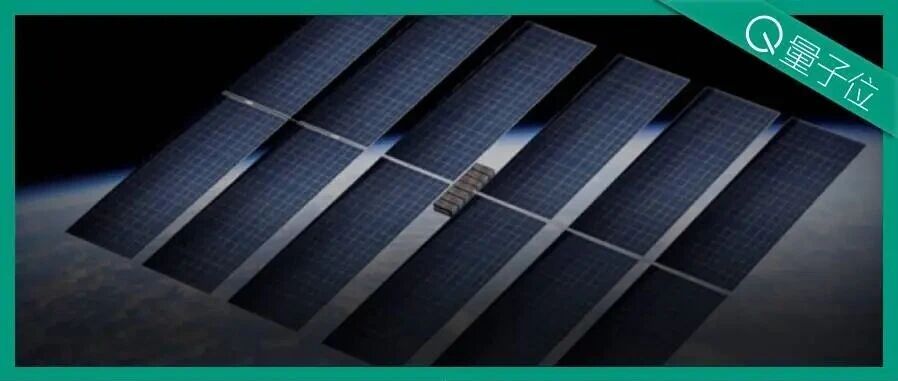
万卡集群要上天?中国硬核企业打造太空超算!
量子位· 2025-11-29 01:00
Core Viewpoint - The concept of "space supercomputing" is transitioning from a science fiction idea to an engineering reality, with significant advancements in computational infrastructure occurring in space [5]. Group 1: Developments in Space Computing - The successful launch of the Starcloud-1 satellite equipped with NVIDIA H100 by SpaceX marks a critical step in building "space supercomputing" [2]. - Google has announced its "Project Suncatcher," which involves deploying a satellite cluster equipped with TPU [3]. - Chinese research institutions have been exploring space intelligent computing since 2019, with significant projects like the "Three-Body Constellation" satellite launched by Zhijiang Laboratory [7]. Group 2: Chinese Initiatives in Space Computing - The Chinese Academy of Sciences has been a pioneer in space-based computing, developing advanced satellite computing payloads and intelligent models [9]. - Zhongke Tiansuan, a commercial space enterprise, is also actively involved in this field, aiming to establish a robust space computing ecosystem [8][11]. - The "Tiansuan Plan" aims to create a true "space supercomputer" in low Earth orbit, establishing a "second brain" for humanity in extreme conditions [13]. Group 3: New Paradigms in Space Computing - The traditional "ground computing" model is facing physical limitations, necessitating a shift to "space computing" where processing occurs closer to data sources [14]. - The development of a space internet application ecosystem is anticipated, similar to the evolution of terrestrial internet from 1G to 4G [16][18]. - The application of space computing can significantly enhance decision-making processes in various sectors, such as fisheries, by providing real-time data and insights [20]. Group 4: Technical Challenges and Solutions - The transition of supercomputing capabilities to space involves overcoming significant physical challenges, including radiation protection and thermal management [25][26]. - Zhongke Tiansuan is addressing these challenges by developing advanced cooling systems and utilizing semiconductor physics to enhance chip resilience in space [30][38]. - The proposed hybrid active-passive cooling architecture aims to efficiently dissipate heat generated by high-performance chips in the vacuum of space [39]. Group 5: Future Implications of Space Supercomputing - The establishment of space supercomputing infrastructure is crucial for humanity's future endeavors in space exploration and utilization [41]. - Space computing centers can provide robust support for remote areas and critical applications, enhancing capabilities in autonomous driving and low-altitude economies [42]. - As space computing networks develop, they are expected to become the primary battleground for computational and networking capabilities, surpassing terrestrial systems [43].

苹果AI论文太坑了!用GPT写的GT,导致北京程序员通宵加班
量子位· 2025-11-28 08:30
Core Viewpoint - The article discusses a significant incident involving a paper from Apple that was found to have serious flaws, including a Ground Truth (GT) error rate potentially as high as 30%, leading to a researcher publicly calling for its retraction [10][21][31]. Group 1: Incident Overview - The incident began when a researcher from the company, Lei Yang, was excited to adapt a benchmark from an Apple paper that aligned with his recent research [2][12]. - After working on the adaptation, he discovered that the benchmark claimed to outperform GPT-5 but had a substantial GT error rate and official code bugs [3][21]. - Lei Yang's attempts to fix the bugs resulted in even lower performance metrics, prompting him to investigate the errors in the GT data [17][19]. Group 2: Research Findings - Upon reviewing the errors, Lei Yang found that 6 out of 20 questions he checked were clearly incorrect due to issues in the GT data, which seemed to be poorly quality-checked [19][20]. - This led him to estimate that the GT error rate could be as high as 30%, raising concerns about the integrity of the data used in the paper [21][22]. Group 3: Response and Retraction - After reporting the issues to the authors, Lei Yang received a brief response, and the issue was closed without proper resolution [23][25]. - Following his public comments highlighting the data quality issues, the authors eventually retracted the paper and removed the associated GitHub repository [31][32]. - The authors acknowledged the oversight in data quality and expressed regret for their initial handling of the feedback [37][39].


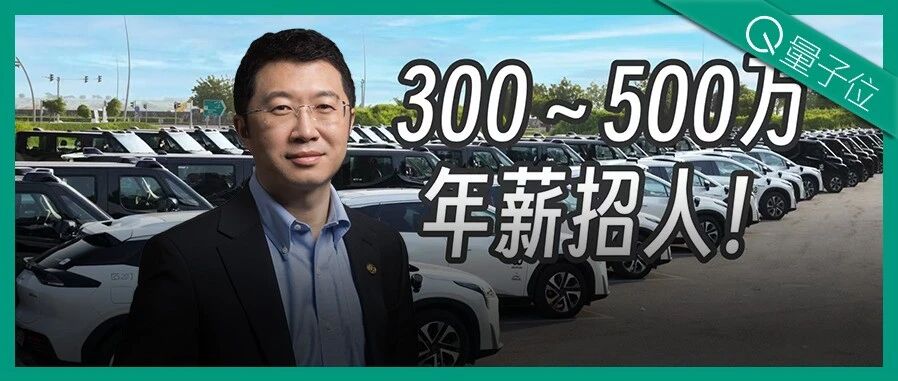
对话韩旭:双重上市后,英才校招300万起步
量子位· 2025-11-28 08:30
Core Viewpoint - The article highlights the transformation of Han Xu, CEO of WeRide, who has shifted focus from competition to attracting top talent after the company's dual listing on the Hong Kong Stock Exchange, emphasizing the importance of recruiting the best individuals for future success [1][6][72]. Group 1: Company Overview - WeRide has achieved significant milestones, including being recognized as the "first global Robotaxi stock" and operating autonomous taxis in eight countries, making it one of the largest Robotaxi fleets globally [1]. - The company has undergone a challenging yet rewarding journey, with Han Xu's leadership marked by a focus on market feedback rather than competitive positioning [3][4]. Group 2: Talent Recruitment Strategy - Han Xu has initiated a talent recruitment plan called the "Talent Plan," offering salaries starting from 3 million to 5 million RMB, which aligns with Silicon Valley standards for AI PhD graduates [8][9]. - The emphasis on recruiting top talent is seen as crucial for WeRide's success, with Han Xu believing that hiring the best individuals will lead to the company becoming the best in the industry [10][11]. Group 3: Company Culture and Environment - WeRide is characterized by an open and transparent culture that encourages innovation, which Han Xu believes is essential for attracting and retaining top talent [23][24]. - The company aims to create an environment where talented individuals can thrive, emphasizing the importance of a fair evaluation system and minimal management for high-performing employees [12][21]. Group 4: Industry Context and Future Outlook - The article discusses the current state of the autonomous driving industry, indicating a competitive landscape where only a few players will succeed, likening it to a historical transition from the Spring and Autumn period to the Warring States period in ancient China [39][42]. - Han Xu asserts that autonomous driving remains a cutting-edge field with immense potential for societal impact, countering the notion that it has lost its appeal [31][32].
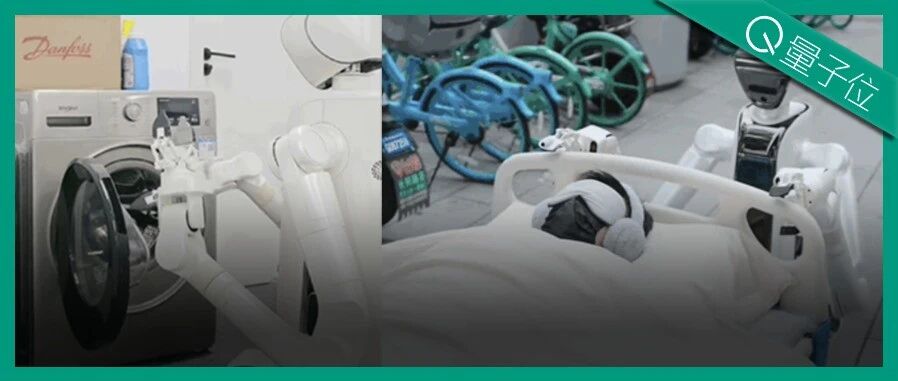
国产家庭机器人终于落地!连人带床推你去上班,小五位数价格明年开卖
量子位· 2025-11-28 06:31
Core Viewpoint - The article discusses the emergence of a domestically developed embodied intelligent robot, F1, which is designed for household tasks and aims to serve as a family assistant rather than just a cleaning robot [3][21][22]. Group 1: Product Features - F1 is equipped with 22 degrees of freedom, allowing for natural movements of arms, head, and waist, and can adapt its height between 1000mm and 1430mm to interact with different family members [9][10]. - The robot can carry up to 5kg, making it suitable for various household tasks, including opening heavy appliances like refrigerators and washing machines [12]. - F1 features nearly 30 sensors and 6 cameras, enabling it to perform tasks like local mapping, person recognition, and real-time obstacle avoidance [14][15]. Group 2: Market Positioning - The robot is positioned as a family assistant, focusing on tasks related to children, elderly care, and large cleaning, with an emphasis on the complexity of kitchen tasks [22][24][25]. - The company aims to address a significant market need by integrating features that cater to children's interactions, leveraging the founder's background in education [28][30]. Group 3: Technological Innovations - F1 utilizes a model architecture called RVLA (Reverse VLA) to handle complex household tasks by breaking them down into atomic actions, enhancing task execution efficiency [32][33]. - The robot employs a dual-layer model structure, combining a large model for simpler tasks and smaller models for precise control in complex scenarios [37][38]. - A robust execution and error correction mechanism is in place, allowing the robot to retry failed actions automatically [39][41]. Group 4: Company Background and Strategy - The founder, Zhang Yi, previously established a successful education company and transitioned to robotics, believing in the long-term potential of household robots [48][52]. - The company operated for three years without external funding, focusing on product development based on user feedback and real-world testing [55][57]. - F1 is expected to launch in the domestic market within a year, with a price point in the low five-digit range, targeting the consumer market [60][61].
阿里千问开始蹬鼻子上脸了
量子位· 2025-11-28 06:31
Core Viewpoint - Alibaba has launched its first hardware equipped with Qianwen, the Quark AI glasses, showcasing significant advancements in AI integration and user experience [2][4]. Product Overview - The Quark AI glasses come in two series, S1 and G1, with six models; the S1 starts at 3799 yuan and the G1 at 1899 yuan [4]. - The glasses feature a dual battery system with a capacity of 287mAh, providing a total usage time of 7 hours and a standby time of 25 hours [15]. AI Capabilities - The glasses support image recognition and voice queries, allowing users to ask questions about unfamiliar objects directly [17]. - They offer translation in 89 languages, including real-time translation and photo translation [20]. - The device can transcribe and summarize meetings, and it integrates with Alibaba's ecosystem, including Alipay, Gaode navigation, and Taobao [22][23]. Design and Comfort - The S1 model features two styles: Wellington and Boston, with the Boston style available in tortoiseshell and black [29]. - The glasses are designed to be lightweight, with a frame thickness of only 3.3mm and a leg thickness of 7.5mm, making them among the thinnest in the market [32]. Imaging and Audio Quality - The Quark AI glasses utilize dual optical displays and can achieve a maximum brightness of 4000 nits, enhancing outdoor visibility [38]. - They support 12MP ultra-clear photography with features like EIS stabilization and cloud AI stabilization for improved image quality [44]. - The audio system includes a five-microphone array combined with bone conduction technology for clear voice interaction in noisy environments [51].

夸克AI浏览器来了!深度融合千问,迎来“Chrome级”进化时刻
量子位· 2025-11-28 04:11
Core Viewpoint - Quark has evolved into a new generation "AI browser," integrating advanced AI capabilities to compete directly with Chrome in the global browser market [2][10][16]. Group 1: AI Integration and Features - Quark has deeply integrated the Qwen AI model, allowing users to invoke the AI assistant seamlessly while browsing, enabling real-time interactions such as summarization and translation without switching applications [5][21][22]. - The new AI browser features six AI toolkits, including a floating ball for quick access, a shortcut box for immediate queries, and a screenshot tool for visual content understanding, enhancing user experience [21][23][28]. - The AI sidebar allows for continuous interaction with the AI while browsing, facilitating a more immersive and efficient workflow [31][36]. Group 2: Competitive Positioning - Quark aims to position itself as a leading AI browser by leveraging Alibaba's technology ecosystem and the Qwen model, marking a significant step in the global browser competition [10][11][16]. - The integration of AI into the browser's core capabilities reflects a broader trend where browsers are evolving from simple web display tools to comprehensive AI-driven platforms [7][19]. Group 3: Performance and User Experience - The Qwen model has demonstrated strong performance, achieving a 22.32% return in a recent AI investment competition, showcasing its capabilities in complex decision-making [12]. - Quark's new features aim to streamline user interactions, reducing the need for cumbersome processes and enhancing overall browsing efficiency [48][50].

精准锁定「硬骨头」:难样本筛选破局SFT依赖,GRPO-only斩获感知推理双最优
量子位· 2025-11-28 04:11
Core Insights - The article presents a new research study that challenges the traditional belief that supervised fine-tuning (SFT) is a necessary precursor to reinforcement learning (RL) in the training of multimodal models, demonstrating that RL alone can effectively optimize multimodal capabilities [2][36]. Group 1: Research Findings - The study, conducted by Central South University and ZTE Corporation, introduces a quantifiable and operational "difficulty sampling" standard for multimodal models, validating the effectiveness of a training approach that relies solely on RL strategies (GRPO) [3][36]. - The research addresses two long-standing issues in multimodal post-training: the lack of quantifiable sample difficulty metrics and the inability of training paradigms to optimize perception and reasoning capabilities simultaneously [4][5][6]. Group 2: Methodology - Two complementary difficulty quantification strategies are proposed: Progressive Image Semantic Masking (PISM) and Cross-Modality Attention Balance (CMAB), which facilitate the hierarchical training framework [7][36]. - PISM involves progressively masking different parts of images to simulate varying degrees of visual information loss, allowing for the assessment of model performance based on its reliance on visual details [10][14]. - CMAB evaluates the complexity of cross-modal interactions by analyzing the attention scores of generated tokens across different Transformer layers, providing insights into the balance of attention between text and image inputs [19][34]. Group 3: Experimental Results - The experimental results indicate that the GRPO-only paradigm, which utilizes medium and difficult samples, significantly outperforms both full dataset training and random sample training, underscoring the importance of data quality over quantity [29][36]. - In visual reasoning tasks, the GRPO-only approach achieved optimal scores in multiple metrics, with notable improvements in MathVista (68.3) and OCRBench (77.8) compared to traditional methods [27][29]. - The study also highlights that SFT did not contribute to performance gains, suggesting that it may introduce "pseudo chains of thought" that limit the model's true reasoning capabilities [29][36]. Group 4: Future Directions - The research team outlines three future research directions: dynamic difficulty adjustment for adaptive learning, exploration of combined sampling strategies from PISM and CMAB, and validation of methods on larger multimodal models [38][39].


80后诺奖得主:AlphaFold下一步融合大模型
量子位· 2025-11-28 04:11
鹭羽 发自 凹非寺 量子位 | 公众号 QbitAI 正值 AlphaFold 问世五周年,其设计者、也是凭借AlphaFold获得诺贝尔化学奖的 John Jumper 公开表示: AlphaFold的下一步是与大模型融合。 不过具体方法并没有透露,或许已有所思路,甚至已经在进程之中。 五年期间,AlphaFold已经帮助全球 300多万 研究人员,预测了数亿种蛋白质的三维结构,并影响了超 50万篇 相关论文。 可以说,这是继量子力学和分子生物学革命后,生命科学的又一次重大跃迁。 继最初的 "结构预测革命" 、随后的 "科研常规工具" 化,AlphaFold及其继承技术正在进入新的 大模型 阶段。 AlphaFold+大模型 现在AlphaFold已经从最初单纯地蛋白质结构预测,发展到能够处理更为复杂的多分子复合体以及更广范围的生物分子交互。 科学家们也据此,实现了相当多的成果突破: 即使是在AI浪潮不断涌来的今天,AlphaFold仍然是 AI+生命科学 最具里程碑意义的一次落地。 作为一款由 谷歌DeepMind 开发的AI科研工具,AlphaFold能够精确预测蛋白质的三维结构。 例如最近来自密苏里大 ...


速报!MEET2026嘉宾阵容再更新,观众报名从速
量子位· 2025-11-28 04:11
Core Insights - The MEET2026 Smart Future Conference will focus on cutting-edge technologies and industry developments that have garnered significant attention throughout the year [1][2] - The theme "Symbiosis Without Boundaries, Intelligence to Ignite the Future" emphasizes how AI and smart technologies are penetrating various industries, disciplines, and scenarios, becoming a core driving force for societal evolution [2] Event Highlights - Key topics of discussion will include reinforcement learning, multimodal AI, chip computing power, AI in various industries, and AI going global [3] - The conference will showcase the latest collisions between academic frontiers and commercial applications, featuring leading technological achievements from infrastructure, models, and product industries [4] - An authoritative release of the annual AI rankings and the annual AI trend report is anticipated during the conference [5][116] Notable Speakers - Zhang Yaqin, President of Tsinghua University's Intelligent Industry Research Institute and an academician of the Chinese Academy of Engineering, will be a key speaker [11][12] - Sun Maosong, Executive Vice President of Tsinghua University's AI Research Institute, will also present [15] - Wang Zhongyuan, Director of the Beijing Academy of Artificial Intelligence, is among the notable attendees [19] - Other prominent figures include Wang Ying, Vice President of Baidu Group, and Han Xu, Founder and CEO of WeRide [24][28] Awards and Reports - The "Artificial Intelligence Annual Rankings" initiated by Quantum Bit has become one of the most influential rankings in the AI industry, evaluating companies, products, and individuals across three dimensions [117] - The "2025 Annual AI Trend Report" will analyze ten significant AI trends based on technological maturity, current implementation, and potential value, highlighting representative organizations and best cases [118] Conference Details - The MEET2026 Smart Future Conference is scheduled for December 10, 2025, at the Beijing Jinmao Renaissance Hotel, with registration now open [119][121] - The event aims to attract thousands of technology professionals and millions of online viewers, establishing itself as an annual barometer for the smart technology industry [122]
量子位编辑作者招聘
量子位· 2025-11-28 04:11
Core Viewpoint - The article emphasizes the ongoing AI boom and invites individuals to join the company "Quantum Bit," which focuses on tracking AI advancements and has established itself as a leading content platform in the industry [1]. Recruitment Opportunities - The company is hiring for three main directions: AI Industry, AI Finance, and AI Product, with positions available for both experienced professionals and fresh graduates [2][4]. - All positions are full-time and based in Beijing, Zhongguancun [2]. Job Responsibilities - **AI Industry Direction**: Focuses on innovations in infrastructure, including chips, AI infrastructure, and cloud computing [5]. - **AI Finance Direction**: Involves tracking venture capital and financial reports in the AI sector, monitoring capital movements within the industry [6]. - **AI Product Direction**: Concentrates on the application and hardware developments of AI [6]. Benefits and Growth Opportunities - Employees will have the chance to engage with the latest AI technologies and tools, enhancing their work efficiency and creativity [6]. - The company offers a vibrant team environment, competitive salaries, and comprehensive benefits, including social insurance, meal allowances, and performance bonuses [6][12]. - New hires will receive mentorship from senior editors to accelerate their professional growth [6]. Company Impact and Reach - By 2025, Quantum Bit aims to have over 2.4 million subscribers on WeChat and more than 7 million users across all platforms, with a daily reading volume exceeding 2 million [12]. - The company is recognized as the top new media outlet in the AI and frontier technology sectors according to third-party data platforms [12].