高工锂电

Search documents
“湿法涂布”承压升级:固态电池直面GWh交付挑战
高工锂电· 2025-08-16 08:40
Core Viewpoint - The commercialization of solid-state batteries is beginning to take shape with the emergence of GWh-level orders, but the current delivery relies on the modification and innovation of traditional lithium-ion battery wet coating equipment rather than a revolutionary new production model [2][3]. Group 1: Challenges in Manufacturing - The transition from liquid electrolyte to solid electrolyte in batteries is a fundamental step towards solid-state technology, which involves significant changes in the physical properties of the slurry system [4][6]. - The ideal battery slurry must exhibit "shear-thinning" rheological properties, allowing for low viscosity during pumping while maintaining structural integrity during drying [5]. - The introduction of solid electrolytes transforms the slurry into a "rich solid phase," leading to increased viscosity and the formation of hard agglomerates that can cause defects in the coating process [6][7]. - The complexity of the slurry system increases as it evolves from a simple "bimodal particle" system to a "multimodal particle" blend, complicating the mixing of different solid particles with distinct physical and chemical properties [8]. Group 2: Material and Process Divergence - Different solid electrolyte chemical systems present unique challenges for wet coating processes, particularly with oxide-based electrolytes that are hard and brittle, leading to wear on equipment [10][12]. - Companies like QuantumScape focus on achieving fundamental breakthroughs in material performance, which may conflict with modern battery manufacturing's efficiency goals [12]. - In contrast, companies like Penghui Energy prioritize process compatibility and commercial efficiency, aiming for high energy density while maintaining cost parity with traditional lithium batteries [14][15]. Group 3: Sulfide Route Challenges - The sulfide route faces a series of interconnected technical constraints, with wet coating emerging as the mainstream method for producing sulfide solid electrolyte membranes [17][18]. - The chemical instability of sulfide materials poses challenges in solvent selection and binder compatibility, leading to difficulties in achieving both solubility and adhesion [19][20]. - The industry is exploring various coating methods, with high-precision slot die coating seen as essential for large-scale safe production [22]. Group 4: Equipment and Industry Response - The manufacturing challenges in battery technology are creating commercial opportunities for upstream equipment manufacturers, who are actively deploying solutions to meet customer demands [23]. - Companies like Mannesmann have introduced high-temperature coating systems to address issues related to high solid content slurries [24]. - Other leading equipment manufacturers are also developing parallel dry and wet solid coating systems to enhance production capabilities [26][27]. Group 5: Integration of Materials and Processes - The successful commercialization of solid-state batteries requires a deep integration of materials, processes, and final product forms, leading to new manufacturing challenges [30][31]. - The current wet coating methods struggle to balance high ionic conductivity and flexibility in electrolyte membranes, highlighting the need for suitable binder selection [31]. Conclusion - The path to solid-state battery commercialization is not linear but involves navigating multiple contradictions and constraints while seeking localized optimal solutions [32]. - Future success in solid-state battery manufacturing will depend on the ability to integrate cross-disciplinary knowledge effectively [33].


固态电池:从“永远的五年”到实战冲刺
高工锂电· 2025-08-15 12:19
Core Viewpoint - The solid-state battery industry is entering a critical phase, with many companies planning to achieve small-scale production by 2027 and large-scale production by 2030, marking a countdown to mass production within five years [2][5][11]. Summary by Sections Event Announcement - The 2025 High-Performance Lithium Battery Annual Conference will be held from November 18-20, 2025, in Shenzhen, China, celebrating the 15th anniversary of the event and the High-Performance Golden Ball Awards [2]. Company Progress and Production Plans - CATL plans to produce a solid-state battery with an energy density of 500Wh/kg by 2027 [4]. - BYD aims for a 400Wh/kg battery with demonstration production in 2027 and large-scale production by 2030 [4]. - Other companies like A123, LG New Energy, and Panasonic have set various targets for solid-state battery production between 2025 and 2030, with energy densities ranging from 400Wh/kg to 720Wh/kg [4]. Industry Dynamics - The phrase "five years again and again" reflects skepticism about the solid-state battery's progress, but recent advancements in various applications signal a shift in this perception [5][6]. - The countdown to the last five years is now seen as a clear signal of the solid-state battery's transition into practical application [6]. Capacity Planning - Companies are planning significant production capacities, with firms like Weilan New Energy and Qingtao Energy targeting capacities of 128.2GWh and 10GWh respectively across multiple locations [8]. Application Developments - SAIC Group's MG brand will use semi-solid-state batteries in its MG4 electric vehicle, enhancing range and safety, indicating a move towards broader consumer adoption [9]. - Nandu Power signed a 2.8GWh order for independent energy storage using its semi-solid-state battery, showcasing market recognition of the technology [9]. - In the eVTOL sector, Funeng Technology has delivered semi-solid-state batteries to a leading U.S. eVTOL customer, marking a significant achievement in aviation-grade battery technology [10]. - Funeng Technology is also engaging with humanoid robot manufacturers to supply solid-state batteries, indicating a growing interest in this technology across various sectors [11]. Future Outlook - The next five years will be crucial for solid-state battery technology, with material innovation, production line optimization, and policy collaboration being key factors influencing the speed of technology implementation [11].





揽超 40GWh 储能电芯大单,远景如何脱颖而出?
高工锂电· 2025-08-15 12:19
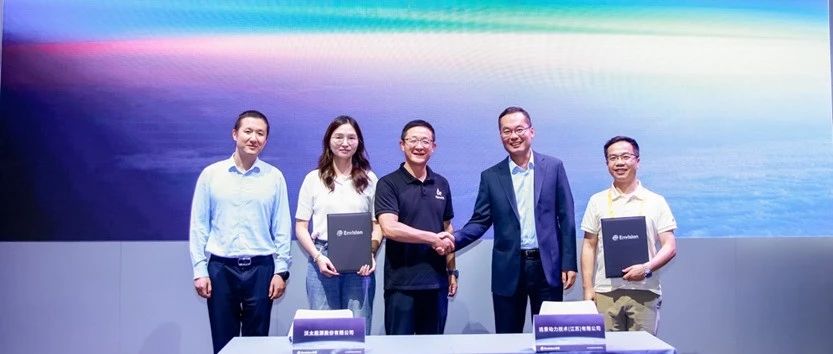
Core Viewpoint - The article highlights the significant shift in China's energy storage industry towards a market-driven model, emphasizing the importance of high-quality battery cells to meet international standards and support global energy transition efforts [6][12]. Group 1: Industry Developments - On August 14, over 10 energy storage integrators signed a strategic cooperation agreement with Envision, finalizing a total scale of over 40GWh for battery cell collaboration [2]. - The release of Document No. 136 marks the transition of China's energy storage sector into a market-oriented era, prompting companies to reassess their profit models and focus on long-term value creation [6][12]. - The global energy storage market is increasingly demanding higher safety, lifespan, and efficiency standards for battery cells, which are now critical for project investment returns [7][11]. Group 2: Market Dynamics - The 40GWh order represents approximately one-eighth of the global demand for energy storage battery cells in 2024, indicating strong confidence in Envision's battery technology [7]. - The shift from price-based purchasing to evaluating the cost per kilowatt-hour over a ten-year cycle reflects a growing focus on lifecycle cost efficiency [8]. - The energy storage application landscape is diversifying, requiring different battery characteristics for various use cases, such as long cycle life for renewable projects and high power density for grid frequency regulation [8]. Group 3: Safety and Certification - Envision Power has become the first company in China to obtain the GB 44240 certification, demonstrating its commitment to safety and quality across the entire battery lifecycle [11]. - The company has implemented rigorous safety testing protocols, exceeding current market standards, which enhances its competitive edge in the energy storage sector [11]. Group 4: International Expansion - By 2025, China's energy storage lithium battery exports are expected to exceed 300GWh, with significant growth in markets such as Europe, the Middle East, and Australia [13]. - Chinese companies currently hold over 80% of the global energy storage market share, with potential to surpass 90% in the future [13]. - Envision's partnerships with various domestic and international firms illustrate a collaborative approach to expanding into overseas markets, leveraging local service capabilities and compliance with international standards [16].
HI锂电出口格局生变:德国上位,美国退居次席
高工锂电· 2025-08-15 12:19
Group 1 - The core viewpoint of the article highlights the significant growth in China's lithium-ion battery exports, reaching a total of $34.102 billion in the first half of the year, marking a year-on-year increase of 25.14%, setting a historical record for the same period [2] - The top five export markets for Chinese lithium batteries in the first half of the year were Germany, the United States, Vietnam, the Netherlands, and South Korea, with notable shifts in rankings compared to the previous year [2] - Germany has replaced the United States as the largest export destination for Chinese lithium batteries, primarily due to increased barriers from U.S. tariffs and legislation affecting imports [3][4] Group 2 - The U.S. tariffs have significantly impacted exports, with a sharp decline in May where exports to the U.S. fell to $646 million, a year-on-year decrease of 22.7% and a month-on-month decrease of 43% [4] - Following the U.S.-China Geneva trade talks, there was a temporary recovery in June, with exports to the U.S. rising to $1.086 billion, a month-on-month increase of 68.1% [4] - However, new U.S. legislation is expected to further complicate market access for Chinese lithium battery companies, as domestic production in the U.S. is increasing, reducing reliance on imports [4] Group 3 - In contrast, Germany's demand for lithium batteries is on the rise due to local automotive production and government incentives for energy storage systems, which are driving the need for batteries [5] - Germany's strategic position in Europe, along with its developed infrastructure for electric vehicles, enhances its role as a key hub for Chinese battery exports to Europe [5] - Recent adjustments in EU regulations have provided some relief for Chinese battery companies, delaying compliance requirements that could have pressured their market entry [6]
每日速递|孚能科技获国内头部车企定点,预计2026年开始供货
高工锂电· 2025-08-15 12:19
Battery Industry - Funeng Technology has received project designation from a leading domestic new energy commercial vehicle client, with the project expected to use a lithium iron phosphate battery solution starting in 2026 [2] - Nandu Power announced plans to launch semi-solid lithium battery products for civilian use in the second half of the year, focusing on battery swapping and vehicle distribution [3] - TBL New Energy's solid-state battery project has been selected for the National Key R&D Program, aiming to develop high energy density and long cycle life batteries for low-altitude aircraft applications [5] - The implementation of the new mandatory product certification rules for lithium-ion batteries and power banks has begun, prohibiting the production, import, and sale of non-compliant products [5] Material Supply - The first batch of recycled black powder raw materials for lithium-ion batteries has successfully cleared customs in Ningbo, marking a significant step in the management of imported materials [7] Overseas Developments - Wildcat Resources confirmed the economic viability of the Tabba-Tabba lithium mine project in Western Australia, with an internal rate of return of 26.6% and a tax-free cash flow projection of AUD 4.57 billion [9] - UK battery developer Harmony Energy plans to raise £300 million (approximately USD 400 million) to expand into emerging European markets, driven by increasing storage demand due to rising wind and solar energy generation [12]

每日速递|安徽星川新能源高功率电池启动二期项目
高工锂电· 2025-08-14 10:45
Group 1: Industry Events - The 2025 (15th) High-tech Lithium Battery Annual Conference will be held from November 18-20, 2025, at the JW Marriott Hotel in Shenzhen [1] Group 2: Battery Projects - Anhui Xingchuan New Energy has commenced construction on its second high-power battery project with a total investment of approximately 980 million yuan, covering an area of about 61 acres and a planned building area of approximately 59,000 square meters [2] - The first phase of Anhui Xingchuan's high-power battery project, which recently completed production, had a total investment of 2 billion yuan and is expected to achieve an annual output value of 1.6 billion yuan upon full production [2] - Tianneng has initiated three large-scale energy storage projects in Jiangsu, Henan, and Guizhou, with a total scale of 110.18 MWh, utilizing self-produced battery cells [4] Group 3: Battery Recycling - Beijing Beikong Resource Recycling Technology Co., Ltd. has been established to focus on the recycling and reuse of waste power batteries from electric vehicles, as a wholly-owned subsidiary of a state-owned enterprise [6] Group 4: International Expansion - VinFast has signed a strategic cooperation agreement with Plugsurfing to expand its electric vehicle charging network across Europe, providing access to over 1 million public charging stations in 24 European countries [8] - Sony Honda Mobility has begun pre-production of its Afeela electric vehicle in Ohio, with plans for initial deliveries in mid-2026, featuring advanced technology and a dual-motor all-wheel-drive system [9]

国内电动化渗透率54%“徘徊” 电池出口增速超58%
高工锂电· 2025-08-14 10:45
Core Viewpoint - The article discusses the dual dynamics of the Chinese electric vehicle (EV) market, highlighting the slowdown in domestic growth alongside strong export expansion, which is reshaping the competitive landscape and growth pathways for the battery industry [3][5]. Domestic Market Trends - In July, the production of new energy passenger vehicles reached approximately 1.15 million units, showing a year-on-year increase of 22%, but a month-on-month decline of 3%. Retail sales were about 990,000 units, with a year-on-year growth of 12% but a significant month-on-month drop of 11% [5][6]. - The penetration rate of new energy vehicles in the domestic market has remained stagnant between 50% and 54% for nearly a year, failing to surpass the 55% mark [5]. - The retail market for pure electric vehicles grew by about 25% year-on-year, while plug-in hybrid sales saw a slight decline of 0.2%, and range-extended models dropped significantly by 11% [5][6]. - The market share of domestic brands in new energy vehicles stabilized at 70%, with a penetration rate of 75%, while luxury brands had a penetration rate of 30% and mainstream joint ventures only 7% [5][6]. Price Competition and Cost Pressures - The average price reduction for new energy vehicles in July was approximately 17,000 yuan, representing an 11.1% decrease, indicating ongoing price wars that are transferring cost pressures to battery manufacturers [6][7]. - The average price of plug-in hybrid models dropped by about 33,000 yuan, with a reduction rate of 14%, which is higher than that of pure electric vehicles [6][7]. Battery Supply Chain Dynamics - In July, lithium iron phosphate batteries accounted for 81% of the domestic battery installations, with a year-on-year growth of 49%, while the installation of ternary batteries decreased by 4% [7]. - The market concentration of domestic power battery manufacturers continued to decline, with the top two companies' market share dropping by 4.5 percentage points year-on-year [7]. Export Growth and Global Market Trends - In July, exports of new energy passenger vehicles reached 210,000 units, a year-on-year increase of 120%, accounting for 45% of total passenger vehicle exports [9][10]. - Exports of pure electric vehicles constituted 65% of new energy exports, with A00 and A0 class small pure electric vehicles' share rising from 26% to 43% [9][10]. - BYD's exports reached 80,000 units in July, a year-on-year increase of 160%, particularly strong in the European market, where sales grew by 470% [10][11]. - The overall export volume of domestic power batteries increased by approximately 48%, surpassing domestic sales for the first time [10]. High-End Market Opportunities - Despite price competition in the low-end market, the high-end market (vehicles priced above 250,000 yuan) is emerging as a new battleground, with several brands launching new models in this segment [11][12]. - The global production of ternary materials reached a historical high in July, indicating a strong demand for high-performance batteries [11][12]. Future Outlook - The transition of automotive consumption subsidies from direct grants to loan interest subsidies signals a shift in policy direction, with a focus on service consumption areas such as battery testing and maintenance [12]. - As some hybrid models begin to retract in the domestic market, automakers must find ways to expand their advantages over traditional fuel vehicles rather than competing within the pure electric segment [12].
GGII:锂盐价格持续调整,2026H2有望进入新一轮上涨周期
高工锂电· 2025-08-14 10:45
Core Viewpoint - The lithium salt market has experienced significant price fluctuations, with a dramatic drop of over 90% from late 2022 to mid-2025, followed by a recovery due to supply-demand adjustments and regulatory measures [5][10]. Group 1: Industry Overview - GGII is a third-party research and consulting institution focused on emerging industries in China, including lithium batteries, energy storage, hydrogen energy, and new materials [2]. - The 2025 High-Performance Lithium Battery Annual Conference will celebrate the 15th anniversary of GGII and include the Golden Ball Awards ceremony [3][4]. Group 2: Price Trends - Lithium carbonate prices fell from over 600,000 yuan/ton at the end of 2022 to around 60,000 yuan/ton by June 2025, a decline exceeding 90%. As of July 2025, prices have rebounded to approximately 70,000 yuan/ton, marking a recovery of over 10% from the lowest point [5]. - GGII forecasts that the average price of lithium carbonate in the second half of 2025 will stabilize around 80,000 yuan/ton, with potential peaks reaching 85,000 to 90,000 yuan/ton due to easing supply-demand imbalances [5]. Group 3: Demand and Supply Analysis - Global demand for lithium from lithium batteries is expected to increase by approximately 350,000 tons LCE in 2025, driven by unexpected growth in the energy storage market, with a growth rate exceeding 30% [7]. - By 2026, global lithium demand is projected to reach 1.86 million tons, with an additional increase of about 370,000 tons, primarily due to rising demand for lithium salts in phosphate iron lithium cathode materials [7]. - On the supply side, global lithium supply is anticipated to increase by 320,000 tons in 2025, reaching 1.65 million tons, mainly from overseas lithium spodumene mines and salt lakes [9]. Group 4: Future Outlook - GGII predicts that lithium salts may enter a new price increase cycle in the second half of 2026 due to reduced expansion rates in lithium mining projects, regulatory measures against disorderly capacity expansion, and expected rapid growth in overseas lithium battery demand [10].

韩国浦项联手中伟布局,中国LFP产业链全球“溢出”
高工锂电· 2025-08-14 10:45
Core Viewpoint - The article discusses the strategic collaboration between POSCO Future and Zhongwei New Materials to advance LFP cathode materials, highlighting the challenges faced by Korean and Japanese battery manufacturers in decoupling from the Chinese lithium battery supply chain [2][3][8]. Group 1: Strategic Collaborations - POSCO Future and Zhongwei New Materials signed a Memorandum of Understanding (MOU) to discuss the construction of LFP cathode material production facilities to supply the ESS market [2]. - The collaboration builds on previous partnerships in the production of precursor materials, indicating a long-term strategy to enhance LFP production capabilities [10]. Group 2: Market Dynamics - The demand for LFP batteries is increasing, particularly in the energy storage sector, prompting Korean and Japanese companies to shift their focus from ternary batteries to LFP technology [6][8]. - Despite the growing interest in LFP, the global production capacity remains highly concentrated in China, making it difficult for non-Chinese entities to establish competitive LFP production [8][9]. Group 3: Regulatory Environment - The "Big and Beautiful" Act has introduced restrictions that impact the supply chain for Korean and Japanese battery manufacturers, limiting their ability to source materials from certain foreign entities [7]. - These regulatory changes have led to a strategic pivot among major battery manufacturers, emphasizing the need for localized supply chains to meet increasing energy demands in the U.S. market [6][7]. Group 4: Future Outlook - Chinese LFP cathode materials are expected to become increasingly dominant in the global market starting in 2025, with companies like Longpan Technology securing long-term supply agreements [9]. - The reliance on Chinese materials for LFP production indicates that even companies like POSCO Future will need to maintain ties with Chinese suppliers to achieve their production goals [10].

GGII:千亿工程驱动,工程机械电动化引爆锂电“掘金潮”
高工锂电· 2025-08-13 10:08
Core Viewpoint - The electricization of the construction machinery industry in China is accelerating, driven by major projects and market demand, leading to significant growth in lithium battery demand for electric construction machinery [4][11][18]. Group 1: Market Overview - The construction machinery industry in China has maintained stable development, with a total sales of 968,900 units in the first half of 2025, a year-on-year increase of 4.58% [7]. - The electricization rate of major construction machinery products is increasing significantly, with electric loaders seeing a sales increase of 172.8% year-on-year, reaching a penetration rate of 21.5% [7][11]. - GGII predicts that by 2030, the overall electricization penetration rate of the construction machinery industry in China will exceed 50% [8]. Group 2: Lithium Battery Demand - The demand for lithium batteries in construction machinery is expected to grow rapidly, with a shipment volume of over 11 GWh in the first half of 2025, representing a year-on-year growth of over 60% [11]. - The electric loader segment is the fastest-growing, with a year-on-year growth rate exceeding 170% [11]. - GGII estimates that by 2030, the shipment volume of lithium batteries for construction machinery in China will reach over 100 GWh, with a compound annual growth rate exceeding 36% from 2025 to 2030 [11]. Group 3: Major Projects and Opportunities - The launch of the Yarlung Zangbo River downstream hydropower project is expected to generate a demand for construction machinery equipment worth 1200-1800 billion yuan, with lithium batteries accounting for approximately 480-720 billion yuan of this cost [4]. - The project is anticipated to drive the electricization of construction machinery, benefiting leading battery manufacturers such as CATL and Eve Energy [4][11]. Group 4: Competitive Landscape - Leading lithium battery companies, including CATL and Eve Energy, are actively engaging in the electric construction machinery market, with CATL holding a market share exceeding 55% in this sector [14][15]. - Eve Energy has launched specific products for the construction machinery market, addressing key industry pain points such as battery size and lifespan [15][16]. - Other companies like BYD and Guoxuan High-Tech are also developing diverse technological routes to capture market share in the electric construction machinery segment [16].