中汽协会数据

Search documents
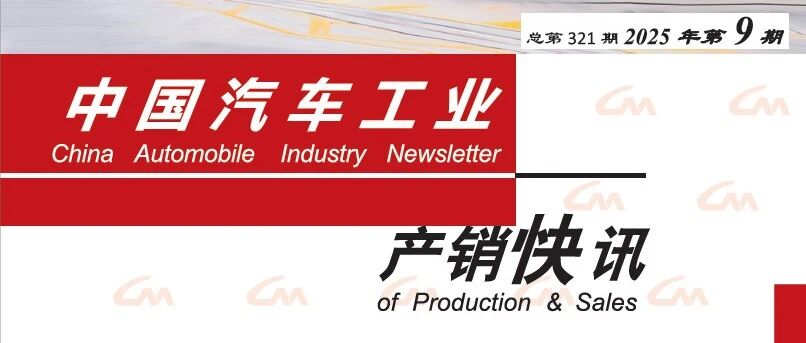
数据简报 | 2025年1-8月前十位汽车生产企业(集团)销售情况简析
中汽协会数据· 2025-09-19 04:22
Group 1 - The core viewpoint of the article highlights that among the top ten automotive companies, GAC Group, Dongfeng Motor, and BAIC Group experienced a decline in sales compared to the same period last year, while other companies showed varying degrees of growth [1] - According to the China Association of Automobile Manufacturers, the top ten automotive companies sold a total of 17.734 million vehicles from January to August 2025, accounting for 83.9% of the total automotive sales [4]

数据简报 | 2025年8月汽车出口情况简析
中汽协会数据· 2025-09-18 07:14
Core Viewpoint - The automotive export sector in China is experiencing significant growth, with both passenger and commercial vehicle exports showing positive trends in August 2025. Group 1: Overall Export Performance - In August 2025, total automotive exports reached 611,000 units, representing a month-on-month increase of 6.2% and a year-on-year increase of 19.6% [2] - From January to August 2025, total automotive exports amounted to 4.292 million units, reflecting a year-on-year growth of 13.7% [2] Group 2: Passenger Vehicle Exports - In August 2025, passenger vehicle exports were 533,000 units, with a month-on-month increase of 6.7% and a year-on-year increase of 21.8% [3] - From January to August 2025, passenger vehicle exports totaled 3.636 million units, showing a year-on-year growth of 14.5% [3] Group 3: Commercial Vehicle Exports - In August 2025, commercial vehicle exports reached 78,000 units, with a month-on-month increase of 3.3% and a year-on-year increase of 6.6% [4] - From January to August 2025, commercial vehicle exports were 656,000 units, indicating a year-on-year growth of 9.7% [5] Group 4: Traditional Fuel Vehicles - In August 2025, traditional fuel vehicle exports were 387,000 units, with a month-on-month increase of 10.6% but a year-on-year decrease of 3.5% [5] - From January to August 2025, traditional fuel vehicle exports totaled 2.76 million units, reflecting a year-on-year decline of 6.6% [5] Group 5: New Energy Vehicle Exports - In August 2025, new energy vehicle exports were 224,000 units, showing a month-on-month decrease of 0.6% but a year-on-year increase of 100% [8] - From January to August 2025, new energy vehicle exports reached 1.532 million units, with a year-on-year growth of 87.3% [8]
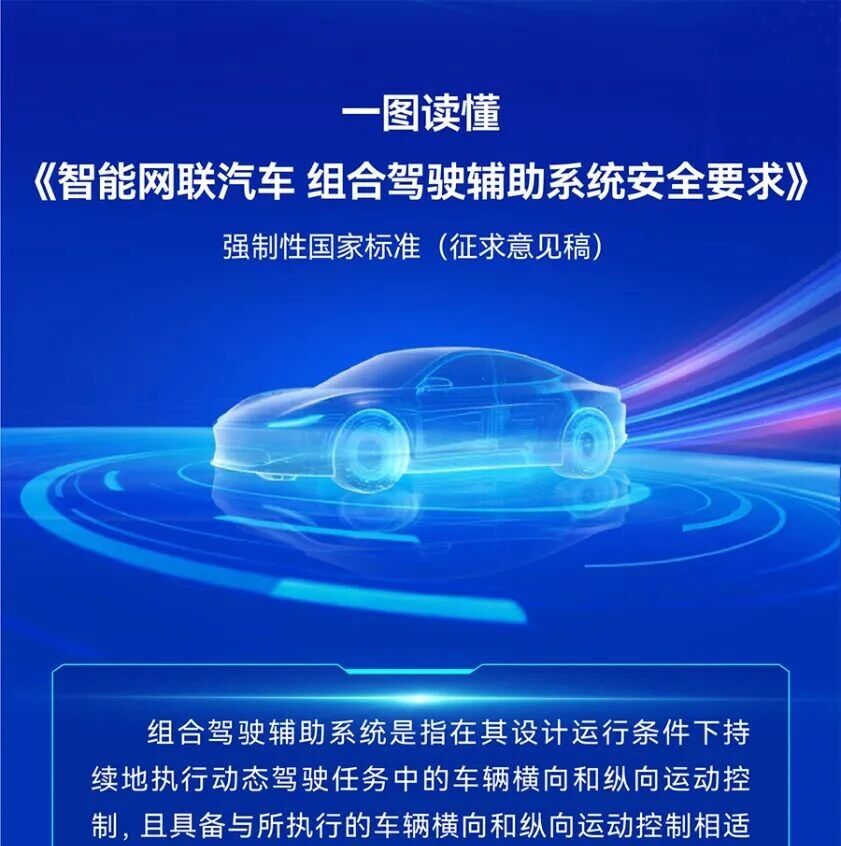
工信部就《智能网联汽车 组合驾驶辅助系统安全要求》强制性国家标准公开征求意见
中汽协会数据· 2025-09-18 07:14
Core Viewpoint - The Ministry of Industry and Information Technology (MIIT) is soliciting public opinions on the mandatory national standard for "Safety Requirements for Intelligent Connected Vehicles' Combined Driving Assistance Systems," which aims to establish a safety baseline for these systems, enhancing product safety and ensuring public safety [1][4]. Group 1: Background of Standard Development - The global automotive industry is rapidly transitioning towards electrification, connectivity, and intelligence, with intelligent connected vehicles being a strategic focal point for future development [2]. - In the first seven months of this year, the sales of passenger cars equipped with combined driving assistance systems reached 7.76 million units, a year-on-year increase of 21.31%, with a penetration rate of 62.58%, up by 6.5 percentage points from the previous year [2]. Group 2: Challenges and Issues - The widespread application of combined driving assistance systems has introduced new challenges, including a lack of unified performance baselines, leading to significant reliability and stability differences among products from different manufacturers [3]. - Marketing practices have blurred the lines between "driving assistance" and "automated driving," resulting in dangerous behaviors among some drivers, such as prolonged disengagement from driving tasks [3]. Group 3: Main Content of the Standard - The MIIT emphasizes the importance of safety in intelligent connected vehicles and has organized the National Automotive Standardization Technical Committee to expedite the development of the mandatory national standard [4]. - The standard categorizes combined driving assistance systems into basic single-lane, basic multi-lane, and navigation combined driving assistance systems, excluding parking systems, and aims to enhance product capabilities, strengthen safety requirements, and regulate system usage [4]. Group 4: Functional Performance Requirements - The standard establishes clear functional performance requirements and safety baselines, including human-machine interaction, functional safety, information security, and data recording [6]. - For navigation combined driving assistance systems, specific requirements are set to ensure compliance with traffic expectations and to validate system capabilities through various testing methods [7]. Group 5: Process Management Requirements - The standard proposes comprehensive safety management requirements throughout the entire lifecycle of combined driving assistance systems, from development to operation, to mitigate risks [8]. - It aims to establish a scientific and complete safety assurance method that covers all stages, enhancing the overall safety of the systems [8]. Group 6: System Usage Regulations - The standard mandates that drivers must receive training and confirm their understanding of the system's limitations before activation, to prevent misuse [9]. - It requires systems to have detection capabilities for driver disengagement and to issue alerts if the driver fails to respond, with provisions to disable the system if necessary [10]. Group 7: Comparison with International Regulations - The standard aligns with international regulations, particularly UN R171, while addressing specific safety needs and traffic conditions in China [11]. - Key differences include stricter requirements for driver engagement detection and detailed testing methods tailored to local traffic scenarios [12]. Group 8: Progress and Future Plans - The standard is currently in the public consultation phase, with plans for further collaboration and expedited implementation based on feedback [13]. - The goal is to ensure effective enforcement of safety technical requirements to support the high-quality development of the intelligent connected vehicle industry [13].
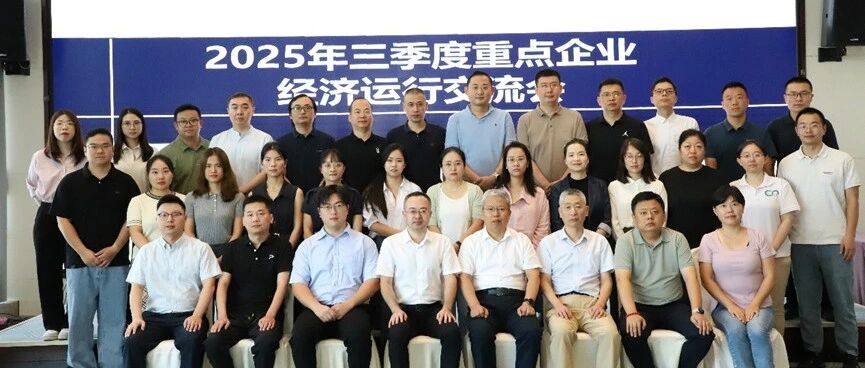
2025年三季度汽车行业重点企业经济运行交流会议在杭州召开
中汽协会数据· 2025-09-18 07:14
Core Viewpoint - The meeting organized by the China Association of Automobile Manufacturers (CAAM) focused on the current operational status of the automotive industry, key issues, and policy recommendations, aiming to enhance communication among major industry players and support high-quality development of the sector [1][3]. Group 1: Meeting Overview - The 2025 Q3 automotive industry economic operation exchange meeting was held in Hangzhou, Zhejiang, with participation from 18 key enterprises including Geely, BYD, SAIC, and others [1][3]. - The meeting was chaired by CAAM Deputy Secretary-General Chen Shihua, who emphasized the importance of the meeting as a platform for internal communication and industry feedback [3]. Group 2: Key Discussion Topics - The meeting addressed several hot topics, including the trade-in policy, industry "involution," production and operation of enterprises, supply chain issues, development of new energy vehicles versus traditional fuel vehicles, the "14th Five-Year Plan," and internationalization [3]. - Participants were encouraged to share insights from an industry perspective rather than solely from their individual company viewpoints [3]. Group 3: Future Directions - Chen Shihua expressed gratitude for the participation and indicated that the association would compile the suggestions and feedback from the meeting to relay to relevant government departments [5]. - The association aims to enhance its operational work and communication with enterprises to better fulfill its role as a platform for industry monitoring and problem identification [5].





数据简报 | 2025年8月新能源汽车产销情况简析
中汽协会数据· 2025-09-17 03:22
Core Viewpoint - The article highlights the rapid growth of the new energy vehicle (NEV) industry in China, with significant increases in production and sales figures for August 2025 and the first eight months of the year. Group 1: Production and Sales Growth - In August 2025, NEV production and sales reached 1.391 million and 1.395 million units respectively, showing year-on-year growth of 27.4% and 26.8% [3] - From January to August 2025, NEV production and sales totaled 9.625 million and 9.620 million units, with year-on-year growth rates of 37.3% and 36.7% [3] - The domestic sales of NEVs in August 2025 were 1.171 million units, reflecting a month-on-month increase of 13% and a year-on-year increase of 18.3% [4] Group 2: Export Performance - In August 2025, NEV exports amounted to 224,000 units, showing a month-on-month decline of 0.6% but a year-on-year increase of 100% [7] - For the first eight months of 2025, NEV exports reached 1.532 million units, representing a year-on-year growth of 87.3% [7] Group 3: Overall Market Trends - The NEV market in China is experiencing a robust upward trend, with both production and sales figures exceeding 25% growth on a year-on-year basis in August [1]
图说经济 | 如何展望未来经济走势?
中汽协会数据· 2025-09-17 03:22
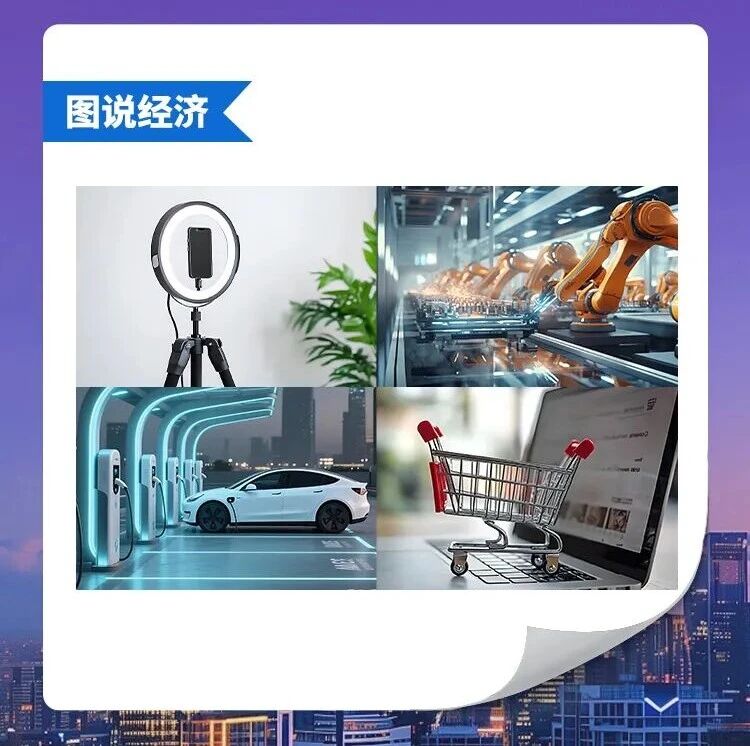
Core Viewpoint - The article emphasizes that China's economy is expected to continue its stable and progressive development, supported by effective macro policies, deepening reforms, and a smooth domestic and international dual circulation system [3][19]. Group 1: Consumption Trends - Consumer potential is being released, with market sales steadily recovering due to various measures aimed at boosting consumption. Notably, sales of products related to trade-in programs are performing well, and new consumption models like live-streaming sales and instant retail are rapidly growing [3][7]. - Service consumption is expanding, with increased holiday travel and a resurgence in cultural and tourism consumption, as well as active markets for sports events and film performances [5]. - Upcoming holidays such as the Mid-Autumn Festival and National Day are expected to further stimulate consumer spending, enhancing both the volume and quality of consumption [7]. Group 2: Emerging Industry Dynamics - The high-tech manufacturing sector is showing positive growth, with a year-on-year increase of 9.5% in value added from January to August [8]. - The transition towards intelligent and green manufacturing is progressing steadily, with significant production increases in industrial robots (29.9%), civilian drones (53.7%), and new energy vehicles (31.4%) during the same period [10]. - The development potential in emerging fields is continuously being released, which will help expand economic growth space and facilitate the transition from old to new growth drivers [14]. Group 3: Market Vitality - Market vitality is gradually improving, driven by the deepening of the national unified market and the strengthening of domestic circulation. The integration of domestic and foreign trade is accelerating, promoting enhanced market activity [15]. - From January to July, profits of large-scale manufacturing enterprises increased by 4.8% year-on-year, indicating a positive trend in the manufacturing sector [16]. - The import and export volume of private enterprises grew by 7.4% from January to August, reflecting a robust performance in trade [17]. Group 4: Macroeconomic Policies - Macroeconomic policies are being effectively implemented across various regions and departments, contributing to stable economic development. The "two重" construction and "two新" policies have shown significant effects [20]. - The business activity expectation indices for manufacturing and service sectors in August were 53.7% and 57%, respectively, both showing an increase from the previous month, indicating positive business sentiment [18].
【数据发布】2025年8月份规模以上工业增加值增长5.2%
中汽协会数据· 2025-09-16 07:04
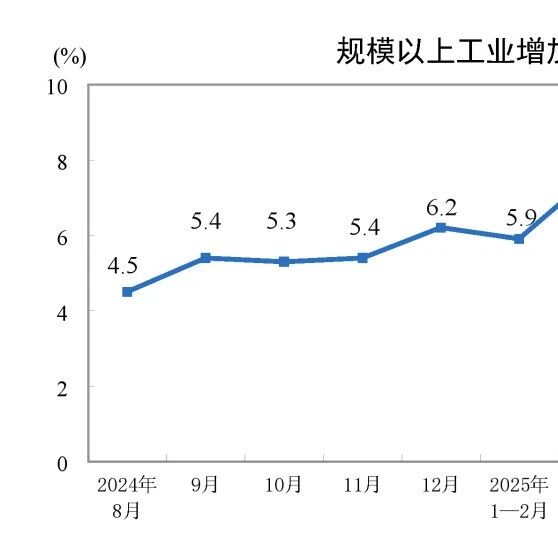
Core Viewpoint - In August, the industrial added value of large-scale industries increased by 5.2% year-on-year, indicating a steady growth trend in the industrial sector [1][5]. Group 1: Industrial Growth - The industrial added value for January to August showed a year-on-year growth of 6.2% [1][5]. - The mining industry saw a year-on-year increase of 5.1%, while manufacturing grew by 5.7%, and the electricity, heat, gas, and water production and supply industry increased by 2.4% in August [3][5]. - High-tech manufacturing experienced a notable growth of 9.3% in August [5]. Group 2: Economic Types - State-owned enterprises reported a year-on-year growth of 4.7% in August, while joint-stock enterprises grew by 6.0%, foreign and Hong Kong, Macao, and Taiwan-invested enterprises increased by 2.3%, and private enterprises grew by 4.6% [3][5]. Group 3: Industry Performance - Among 41 major industries, 31 maintained year-on-year growth in added value in August [3]. - Significant growth was observed in the chemical raw materials and chemical products manufacturing industry at 7.6%, black metal smelting and rolling industry at 7.3%, and automotive manufacturing at 8.4% [3][5]. Group 4: Product Output - In August, out of 623 industrial products, 319 saw a year-on-year increase in output [4]. - Steel production reached 12.277 million tons, up 9.7% year-on-year, while cement production fell by 6.2% to 14.802 million tons [4][5]. - The production of new energy vehicles surged by 22.7% to 1.333 million units in August [6]. Group 5: Sales and Exports - The sales rate of industrial products was 96.6%, a slight decrease of 0.1 percentage points year-on-year [4][6]. - The export delivery value of industrial enterprises was 1.3029 trillion yuan, showing a nominal decline of 0.4% year-on-year [4][6].
声 明
中汽协会数据· 2025-09-16 07:04
Core Viewpoint - The Chinese Ministry of Commerce has initiated an anti-dumping investigation into imported simulation chips from the United States, responding to U.S. measures in the integrated circuit sector. The China Association of Automobile Manufacturers (CAAM) supports this action and emphasizes the need for a fair international market environment for the automotive industry's technological advancement and sustainable development [1]. Group 1 - The CAAM expresses strong concern regarding the anti-dumping investigation and supports the Ministry of Commerce's necessary measures [1]. - The association calls for domestic and international enterprises to enhance technological innovation and industry chain collaboration, particularly in electrification and intelligence [1]. - The CAAM aims to actively support and cooperate with the investigation authorities to uphold fair trade and protect industry legal rights [1].

【数据发布】2025年1—8月份全国固定资产投资增长0.5%
中汽协会数据· 2025-09-16 07:04
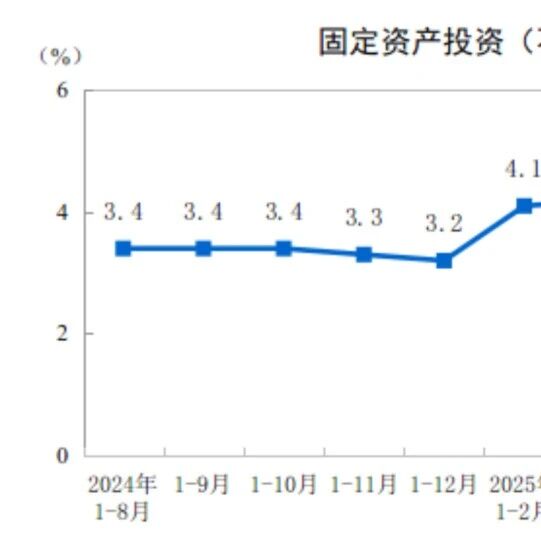
Core Viewpoint - The fixed asset investment in China from January to August 2025 shows a slight year-on-year growth of 0.5%, with a notable decline in private investment by 2.3% [1][4]. Investment by Industry - Investment in the primary industry reached 646.1 billion yuan, growing by 5.5% year-on-year [3][4]. - The secondary industry saw an investment of 1,182.46 billion yuan, with a growth rate of 7.6% [3][4]. - The tertiary industry experienced a decline in investment, totaling 2,014.04 billion yuan, down by 3.4% [3][4]. - Within the secondary industry, industrial investment grew by 7.7%, with mining investment increasing by 3.0%, manufacturing by 5.1%, and electricity, heat, gas, and water production and supply by 18.8% [3][4]. Investment by Region - Eastern region investment decreased by 3.5%, while the central region saw a growth of 2.5%, and the western region increased by 2.3%. The northeastern region experienced a decline of 6.0% [3][4]. Investment by Registration Type - Domestic enterprises' fixed asset investment grew by 0.5%, while investment from Hong Kong, Macau, and Taiwan enterprises increased by 2.3%. In contrast, foreign enterprises' investment fell significantly by 15.4% [3][4].
数据简报 | 2025年8月商用车产销情况简析
中汽协会数据· 2025-09-16 07:04
Core Viewpoint - The commercial vehicle market in China shows a mixed performance in August 2025, with a decline in production and sales compared to the previous month, but an increase compared to the same period last year [1][4][8]. Group 1: Commercial Vehicle Performance - In August 2025, commercial vehicle production and sales reached 315,000 and 316,000 units respectively, with month-on-month increases of 5.9% and 3.4%, and year-on-year increases of 16.4% and 16.3% [3]. - From January to August 2025, commercial vehicle production and sales totaled 2.713 million and 2.744 million units, reflecting year-on-year growth of 7.1% and 5.2% [5]. Group 2: Bus Performance - In August 2025, bus production and sales both reached 45,000 units, with month-on-month increases of 3.4% and 7.4%, and year-on-year increases of 18.7% and 11.6% [4]. - Despite a slight decline in overall bus production and sales, other bus categories showed varying degrees of growth [6]. Group 3: Truck Performance - In August 2025, truck production and sales were 270,000 and 272,000 units, with month-on-month increases of 6.3% and 2.7%, and year-on-year increases of 16% and 17.1% [8]. - From January to August 2025, truck production and sales reached 2.362 million and 2.393 million units, with year-on-year growth of 6.5% and 4.5% [8].