中国能源报

Search documents
这一年,新能源从替补席走上舞台中央
中国能源报· 2025-12-29 04:57
Core Viewpoint - In 2025, the renewable energy industry in China transitioned from rapid scale expansion to high-quality development, driven by dual goals of carbon neutrality and a new energy system, marking a significant leap in energy structure [1][2]. Group 1: Industry Achievements - By the end of September 2025, the installed capacity of renewable energy in China approached 2.2 billion kilowatts, accounting for 59.1% of the total installed capacity, with wind and solar power exceeding 1.7 billion kilowatts [4]. - In the first three quarters, renewable energy generation reached 2.89 trillion kilowatt-hours, representing about 60% of the total electricity consumption, indicating that new energy sources are primarily supporting economic growth [4]. - The solar power installed capacity reached 1.14 billion kilowatts, a year-on-year increase of 43.8%, while wind power capacity reached 590 million kilowatts [4]. Group 2: Technological Advancements - The energy storage sector is experiencing diverse technological developments, with large-capacity battery cells (over 500Ah) becoming a new competitive focus, enhancing system integration efficiency [7]. - Breakthroughs in hydrogen energy technology are being made, with significant advancements in electrolyzer efficiency and the establishment of long-distance hydrogen transport pipelines, paving the way for large-scale applications [7]. - In the wind and solar sectors, rapid advancements in N-type photovoltaic cell technology and floating wind power technology are contributing to improved energy conversion efficiency and expanding operational capabilities [7]. Group 3: Market Dynamics and Challenges - The renewable energy industry is facing a transformation from capital-driven rapid expansion to a more stable and precise policy-driven growth model, leading to a period of deep adjustment characterized by overcapacity and price wars [8][10]. - The industry is witnessing a shift from simple capacity competition to deeper value creation and global expansion, with companies focusing on technological innovation and international partnerships [10]. Group 4: Future Outlook - The upcoming "15th Five-Year Plan" emphasizes building a strong energy nation, with the renewable energy sector expected to focus on strength rather than just size, integrating various energy components to address consumption challenges [11].


这一年,电网骨干网架纵横延伸,配网“毛细血管”精准织密
中国能源报· 2025-12-29 04:28
Core Viewpoint - The article emphasizes the significant advancements in China's power grid construction aimed at establishing a new type of power system by 2025, focusing on safety, sustainability, and development, with record-high investments and enhanced energy transmission capabilities [1][2][4]. Investment and Infrastructure Development - In 2023, the State Grid's fixed asset investment is expected to exceed 650 billion yuan, while the Southern Power Grid plans to invest 175 billion yuan, both marking historical highs [1]. - Key projects completed include four ultra-high voltage projects and the second phase of the Qinghai-Tibet interconnection, enhancing cross-regional energy allocation capabilities [1]. Project Highlights - The Jinshang-Hubei ±800 kV ultra-high voltage direct current project, spanning nearly 1900 kilometers, will deliver approximately 40 billion kWh of clean electricity annually, replacing about 12 million tons of standard coal and reducing CO2 emissions by around 30 million tons [1]. - The Southern Power Grid has successfully upgraded its backbone network, including the Hainan 500 kV provincial main network, which marks a historic transition from 220 kV to 500 kV operations [2]. Collaborative Efforts and Innovations - Five flexible interconnection projects have been approved, marking a deep collaboration between the State Grid and Southern Power Grid in the flexible direct current sector, with plans to build five new converter stations [4]. - Technological innovations, such as the world's first direct current site-level cascading technology and the first ±800 kV ultra-high voltage quantum current sensor, are enhancing the grid's capacity to support high proportions of renewable energy [5]. Energy Supply and Market Dynamics - During the peak summer period, national electricity load reached new highs, with significant inter-provincial electricity resource circulation aiding in efficient energy distribution [4]. - The Southern Power Grid provided 1.8 million kW of clean electricity to support the Yangtze River Delta region, demonstrating the effectiveness of cross-regional electricity trading [4].
2025电力行业破浪前行
中国能源报· 2025-12-29 04:28
2025年,电力行业在能源安全与市场化改革的双重要求下稳步前行。面对极端天气考验、产业结构转型带来的多元挑战,行业以保供 稳价为底线,以市场机制创新为引擎,在供需平衡、市场建设、政策落地等方面实现多重突破。从全国统一电力市场框架成型到跨区资 源配置效率提升,再到电力消费结构优化,电力行业用坚实的发展成效,为经济社会高质量发展筑牢能源根基,也为"双碳"目标推进注 入持续动力。 截至6月底,全国电力市场经营主体数量97.3万家,同比增长2 3.8%,其中发电企业3.7万家、电力用户93.1万家、售电公司4366家。多 元主体协同参与的市场生态加速形成,为资源优化配置注入持续动力。 2025年是"十四五"规划收官之年,又恰逢"新电改"提出十周年,全国统一电力市场建设如期实现"初步建成"目标,形成中长期、现 货、辅助服务协同运行的市场格局。 在《关于全面加快电力现货市场建设工作的通知》2025年底前基本实现电力现货市场全覆盖的要求下,现货市场实现"从试点到全覆 盖"的跨越。目前除西藏等个别地区外,28个省份已连续开展现货交易,其中山西、广东、山东等7个省区转入正式运行阶段。 区域电力市场建设是全国统一电力市场建设的关 ...

2025油气行业交出“十四五”以来最具分量的“安全答卷”
中国能源报· 2025-12-29 03:58
Core Viewpoint - In 2025, the Chinese oil and gas industry is undergoing a profound transformation, achieving historical highs in both oil and gas production while transitioning from a traditional energy provider to a key player in new materials and systems integration [1][7]. Group 1: Industry Achievements - The "Seven-Year Action Plan" has successfully concluded, marking a significant milestone in energy security with record production levels in both oil and gas [3][4]. - Offshore oil production has notably increased, with the Bohai Oilfield achieving a historic output of over 40 million tons of oil equivalent, comparable to creating a new "Daqing" in offshore production [3][4]. - The first 10,000-meter exploratory well, "Deep Earth Taka 1," has been drilled, discovering underground oil and gas resources, thus opening new resource potential [4]. Group 2: Technological Advancements - The industry has made significant breakthroughs in core technologies, establishing a robust technical foundation for energy independence [5]. - The completion of the "Deep Sea No. 1" Phase II project has integrated domestic underwater production systems and deep-water drilling ships, enabling China to independently develop most deep-sea resources [5]. - Innovations in drilling technology have drastically reduced drilling cycles for deep coalbed methane wells from nearly 100 days to under one month, enhancing efficiency [5]. Group 3: Market Transition - The peak in refined oil consumption signifies a shift in the industry, moving from providing fuel to becoming a supplier of industrial materials and stable system services [7][8]. - The role of natural gas has evolved, becoming a crucial stabilizer and regulator in the new power system, especially as the share of wind and solar energy increases [7]. - The oil and gas industry is transforming into an open "symbiotic platform," integrating with renewable energy sources and leveraging digitalization and AI for enhanced operational efficiency [7][8]. Group 4: Future Outlook - The industry is poised to accelerate its integration into the new energy system, showcasing its strength and adaptability in response to evolving energy demands and technological advancements [8].

2025煤炭保供与转型底气足
中国能源报· 2025-12-29 03:58
Core Viewpoint - The coal industry in 2025 shows a mix of impressive achievements and potential challenges, with a historical high in coal supply but a notable decline in consumption for the first time in nearly nine years [1]. Group 1: Production and Supply - From January to November 2025, the national industrial raw coal output reached 4.4 billion tons, a year-on-year increase of 1.4%, with expectations for a record high in annual raw coal supply [1]. - Major coal-producing regions such as Shanxi, Shaanxi, and Xinjiang saw raw coal production increase by 2.4%, 2.6%, and 2.6% respectively, while Inner Mongolia's production is expected to exceed 1.2 billion tons despite a decrease compared to last year [1]. - The "rich mine precision mining" policy has led to a 6.3% increase in Guizhou's raw coal output, while some regions like Jiangxi have reduced production by 37.6% due to capacity withdrawal [1]. Group 2: Policy and Regulation - Policy adjustments have significantly influenced coal production, with the National Energy Administration's July 2025 notice targeting overproduction and promoting stable coal supply [2]. - The "anti-involution" policy has effectively regulated production order in major coal-producing areas, leading to a five-month consecutive year-on-year contraction in coal supply and a rebound in coal prices [2]. - The establishment of a capacity reserve system is underway, aiming for a reserve capacity of over 90 million tons by 2026, enhancing the resilience of coal supply [2]. Group 3: Industry Transformation - The modern coal chemical industry and coal-electricity joint operation models have matured, with an expected annual coal conversion of approximately 16 million tons of standard coal, becoming essential to the petrochemical sector [4]. - The coal industry is advancing in intelligent and green development, with over 900 intelligent coal mines established, accounting for nearly 25% of total coal mines, and over 50% of mining capacity now being smart mining [4]. - The National Energy Administration's guidance on integrating coal and renewable energy emphasizes the development of new energy resources in coal mining areas, with many coal companies expanding into solar, wind, and energy storage sectors [4]. Group 4: Market Dynamics and Future Outlook - The coal market sentiment remains complex, with consensus on coal consumption entering a peak plateau, leading to short-term supply-demand fluctuations and a gradual long-term decline in demand [5]. - The coal production focus is shifting towards resource-rich western regions, with Shanxi, Inner Mongolia, Shaanxi, and Xinjiang remaining the main supply areas, while older mining regions face challenges in resource continuity and transformation [5]. - As the industry moves into 2026, energy supply security and green transformation will continue to be key topics, with coal companies expected to drive high-quality development through innovative practices [5].

中国能源这一年,加速跑!
中国能源报· 2025-12-29 03:28
Group 1 - The core viewpoint of the article emphasizes China's commitment to achieving a low-carbon economy by 2035, marking a significant step in global climate cooperation and showcasing the country's ability to balance climate responsibility with economic growth [2][3]. - The "14th Five-Year Plan" includes the goal of building an energy powerhouse, elevating energy from a foundational element of economic development to a core pillar of national strength, thus establishing a clear direction for high-quality energy development in the coming years [2][3]. Group 2 - China's energy strategy is characterized by a dual focus on security and development, with coal production expected to remain above 4.8 billion tons by 2025, and renewable energy capacity projected to exceed 2.2 billion kilowatts, highlighting a robust commitment to clean energy [3][4]. - The construction of a new energy system is anticipated to be flexible, reliable, and interconnected, moving beyond simple iterations of old and new energy sources [4]. Group 3 - In the first 11 months of the year, China's total electricity consumption reached 94,602 billion kilowatt-hours, a year-on-year increase of 5.2%, with projections indicating that total consumption will exceed 100 trillion kilowatt-hours for the first time [6]. - The energy supply security measures have proven effective, with record-high electricity loads during peak summer months and significant inter-provincial electricity support [6]. Group 4 - Oil and gas production has reached new heights, with crude oil output at approximately 215 million tons and natural gas production surpassing 260 billion cubic meters, marking a historic high [7][8]. - The oil and gas industry is expected to continue focusing on increasing reserves and production while ensuring a resilient and sustainable energy supply system [8]. Group 5 - The renewable energy sector is rapidly advancing, with installed capacity nearing 2.2 billion kilowatts and accounting for approximately 59.1% of total capacity, driven by strong policy support and technological breakthroughs [10]. - New energy storage capacity has also seen significant growth, exceeding 100 million kilowatts, representing over 40% of the global total [10]. Group 6 - The renewable energy industry is undergoing a transformation to address issues of price competition and market order, with government initiatives aimed at regulating low-price competition in the photovoltaic sector [11][12]. - The focus is shifting from scale expansion to value creation, emphasizing innovation and differentiation in product development and business models [12]. Group 7 - China's nuclear power sector is expanding, with five new projects approved this year, maintaining a leading position globally with 54 units under construction and 58 in operation [14]. - Significant advancements in nuclear technology, including the development of the "Hualong One" reactor and breakthroughs in thorium-based molten salt reactors, are enhancing the role of nuclear energy in achieving a low-carbon energy system [14]. Group 8 - The electricity market has seen substantial growth, with a total trading volume of 60,300 billion kilowatt-hours from January to November, representing a 7.6% increase year-on-year [19][20]. - The implementation of market reforms is facilitating the integration of renewable energy into the grid, with new policies promoting market-based pricing for renewable projects [21]. Group 9 - The national carbon market has expanded to include key industries such as steel, cement, and aluminum, covering over 60% of total carbon emissions, with significant trading volumes recorded [23]. - The integration of carbon markets with renewable energy markets is being strengthened, which is crucial for promoting low-carbon transitions in the economy [23]. Group 10 - The establishment of zero-carbon parks is underway, with a goal to create approximately 100 national-level parks, emphasizing the importance of these areas in achieving green transformation and carbon neutrality [24]. - Various regions are exploring innovative practices to enhance renewable energy consumption and industrial green transformation within these parks [24].

2025:能源转型交出高分“答卷”
中国能源报· 2025-12-28 23:33
Core Viewpoint - The article emphasizes the significant transformation of China's energy structure towards a low-carbon economy, highlighting the importance of green development as a key aspect of high-quality growth in the country [1][3]. Group 1: Structural Changes in Energy Landscape - By 2025, China's clean energy consumption is projected to reach 28.6%, while coal consumption will decrease to 53.2%, marking a substantial shift in the energy structure [3][14]. - The establishment of the world's largest carbon market is noted, which effectively guides the largest scale of carbon emissions in the economy and society [3][14]. - The renewable energy system, led by wind and solar power, is not only set to meet the 2030 targets ahead of schedule but also continues to inject green momentum into the world [3][14]. Group 2: Investment Trends - In 2025, China's energy investment is expected to reach 3.54 trillion yuan, reflecting an 11% year-on-year growth, indicating a robust upward trend in investment [5][15]. - Investments in nuclear power, onshore wind, distributed solar, and smart grids are highlighted, along with rapid growth in future industries such as new energy storage and hydrogen energy [5][15]. - The article describes the investment landscape as a "green symphony," where financial commitments accelerate the arrival of green energy and foster innovation [5][15]. Group 3: Future Outlook - The "14th Five-Year Plan" is recognized as a pivotal year for coordinating efforts in carbon reduction, pollution control, green expansion, and economic growth [9][17]. - The upcoming "15th Five-Year Plan" is anticipated to usher in a new era led by a green technology revolution, transforming the energy sector into a key player in shaping a beautiful China [9][17]. - The article expresses confidence in the future of clean energy, with hydrogen and nuclear fusion being identified as new economic growth drivers, indicating a shift from supplementary to primary energy sources [7][16].

2025:“首发”奇迹•能源印象
中国能源报· 2025-12-28 23:33
Core Viewpoint - In 2025, China's energy sector continues to set records, showcasing significant advancements in both traditional and renewable energy, as well as in high-end equipment and system integration, highlighting the country's innovative efforts in energy security and green transformation [1]. Group 1: Major Breakthroughs in Energy Sector - On February 20, China National Petroleum Corporation announced the successful drilling of the country's first over 10,000-meter deep exploration well, the Shendi Takou 1 well, reaching a depth of 10,910 meters, marking it as the deepest vertical well in Asia and the second in the world [1]. - On May 8, the "Longdong to Shandong ±800 kV UHVDC Project," China's first large-scale integrated energy base for wind, solar, thermal, and storage, was completed, capable of delivering 36 billion kWh of electricity annually from Gansu to Shandong [2]. - On July 2, the world's largest 500 MW high-head impulse turbine core component was officially launched, indicating China's transition from following to leading in high-end hydropower equipment [2]. Group 2: Advancements in Green Energy - In July, the first phase of the world's largest green hydrogen ammonia project, with a capacity of 320,000 tons, was completed at the Zero Carbon Hydrogen Industry Park in Chifeng, marking a shift from demonstration to large-scale commercial operation in China's green hydrogen ammonia industry [3]. - On July 12, the "Guo Uranium No. 1" demonstration project in Ordos, Inner Mongolia, produced its first barrel of uranium, becoming the largest and most advanced natural uranium production base in China [3]. Group 3: Innovations in Energy Infrastructure - On August 22, the world's first 100 MW heavy-duty truck supercharging station was put into operation in Sichuan, designed to serve 700 trucks daily and reduce charging time to 15 minutes, improving efficiency by four times compared to traditional methods [4]. - On November 28, the first 1500-degree Celsius single-shaft heavy-duty gas turbine project was fully operational in Chongqing, filling a gap in China's F-class improved single-shaft heavy-duty gas turbine technology [4]. Group 4: Storage and Renewable Energy Projects - On December 1, the world's first 6 MWh long-duration energy storage prefabricated cabin, equipped with a thousand amp-hour battery cell, was prepared for shipment overseas, indicating China's capability for large-scale application in lithium battery long-duration energy storage systems [6]. - On December 6, the largest grid-type energy storage project in China, with a total investment of 2.5 billion yuan and a capacity of 1 GW/4 GWh, was officially put into operation in Inner Mongolia [7]. - On December 15, the 800 MW offshore wind power project in Jiangsu, operated by the Three Gorges Corporation, was fully connected to the grid, setting a record for the farthest offshore distance at 85.5 kilometers [7]. - On December 16, the first mass-produced green methanol project in Guangdong was launched, utilizing local agricultural and forestry waste, achieving an annual production of 50,000 tons with a carbon reduction rate of over 85% [7]. - On December 25, the largest pumped storage power station in China, with a total investment exceeding 10 billion yuan and a capacity of 1.7 million kilowatts, had its first unit connected to the grid, marking a significant breakthrough in hydropower equipment and engineering construction [9].
能源早新闻丨我国自主研发,投入运行!
中国能源报· 2025-12-28 22:33
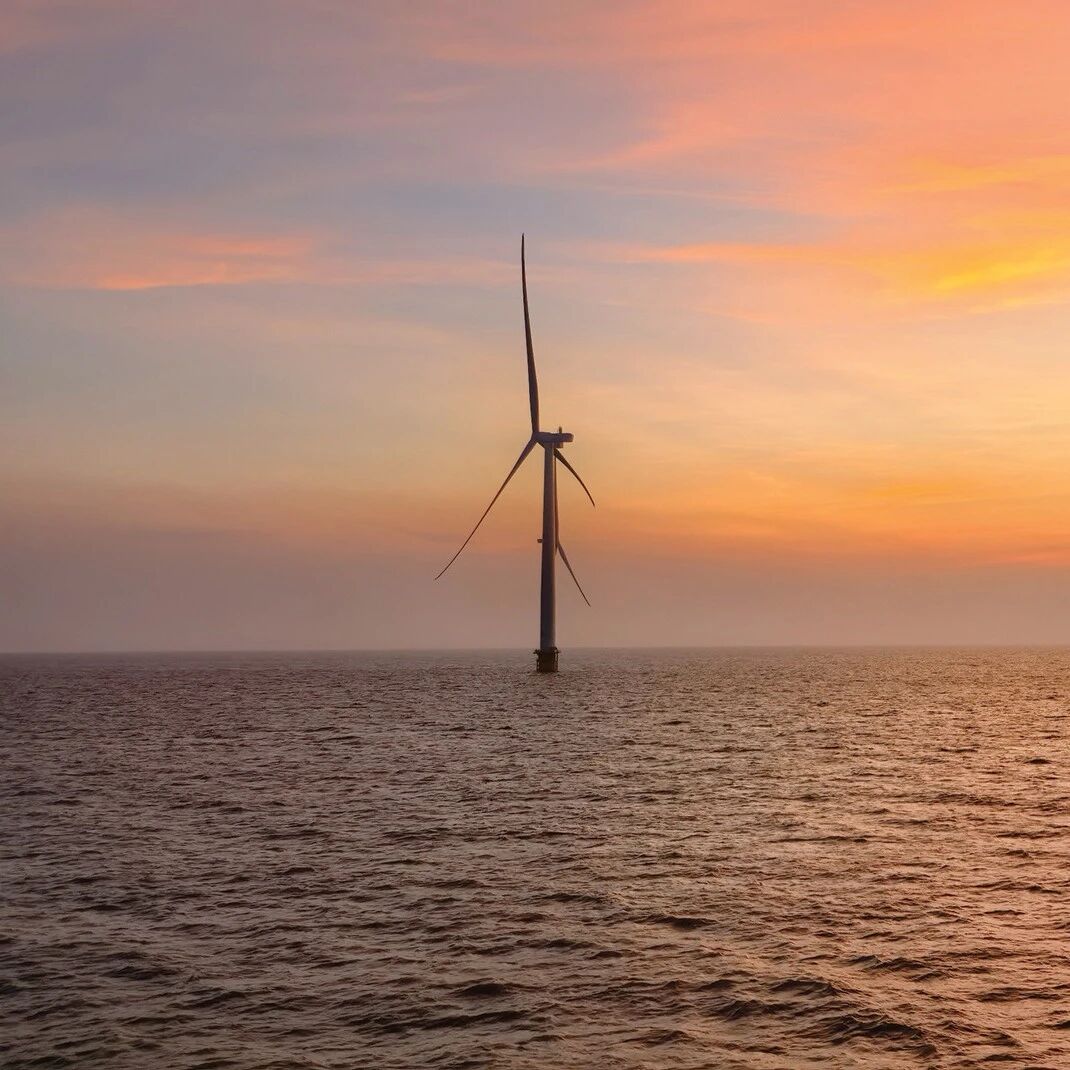
News Highlights - The first batch of national-level zero-carbon parks has been announced, including 52 parks such as Beijing Economic-Technological Development Area and Tianjin Economic-Technological Development Area [2] - The National Development and Reform Commission and the National Energy Administration released the "Basic Rules for the Electric Power Mid- to Long-term Market," aiming to enhance the balance of long-term supply and demand in the electricity market [2] - As of November, the total installed power generation capacity in China reached 3.79 billion kilowatts, a year-on-year increase of 17.1%, with solar power capacity growing by 41.9% [2] - In November, 258 million green certificates were issued, with 58.25% being tradable [2] - China's first million-kilowatt offshore photovoltaic project has been fully connected to the grid, marking the largest open offshore photovoltaic project globally [2] Domestic News - The international thermonuclear fusion experimental reactor (ITER) correction field coil procurement package has been completed and delivered in Hefei [3] - Central enterprises have commenced construction on headquarters projects in Xiong'an New Area, with all four enterprises in the second batch starting construction [3] - A new type of hybrid commutation converter valve developed in China has begun commercial operation in Henan, addressing key technical challenges in DC transmission [3] Infrastructure Projects - The Xiang-Guangdong back-to-back interconnection project has started construction, with a total investment of 5.755 billion yuan, expected to be operational by June 30, 2027 [4] - Shanxi Province has completed its first market-oriented price bidding for incremental renewable energy projects, with 49 projects selected and a total mechanism electricity volume of 545.7 million kilowatt-hours [5] International News - Chile has established a new company to enhance lithium development and production, merging subsidiaries of the state-owned Codelco and SQM for exploration and commercialization activities [6] Corporate News - The first batch of units at the Yebatang Hydropower Station has been officially put into operation, expected to generate over 10.2 billion kilowatt-hours annually, saving approximately 310,000 tons of standard coal and reducing CO2 emissions by over 830,000 tons [7] - The construction of a 1,000-ton navigation facility at the Longtan Hydropower Station in Guangxi has begun, expected to be completed by September 2031 [7]
40名公职人员被问责!辽阳重大火灾事故调查报告发布
中国能源报· 2025-12-28 12:52
Core Viewpoint - The major fire incident at the Sanli Chef Restaurant in Liaoyang, Liaoning Province, was attributed to multiple failures in safety management and regulatory oversight, leading to significant casualties and economic losses [2][3][5]. Group 1: Incident Overview - The fire occurred on April 29, 2025, resulting in 22 fatalities and 3 injuries, with direct economic losses amounting to 25.36 million yuan [3]. - The investigation revealed that the fire was ignited by a discarded cigarette butt from a customer, which, aided by wind, entered a maintenance opening and ignited combustible materials stored inside [5]. Group 2: Investigation Findings - The investigation identified that the restaurant failed to implement safety responsibilities, illegally modified its exterior, and used substandard materials, which contributed to the rapid spread of the fire [2][5]. - The local government and relevant departments were found to have inadequately fulfilled their responsibilities, exacerbating the situation [2][9]. Group 3: Accountability and Recommendations - The investigation recommended legal action against eight individuals, including the restaurant operators, and initiated accountability measures against 40 public officials for their roles in the incident [8][9]. - Key lessons highlighted include the need for improved safety awareness and the enforcement of safety responsibilities by production and operation units [9].