
DONGFENG GROUP(00489)

Search documents
2026年销量目标现分化: 传统车企稳健推进 新势力冲刺高增长
Zhong Guo Zheng Quan Bao· 2026-01-15 21:12
Core Insights - The automotive market in 2026 is characterized by significant differentiation in sales targets among major car manufacturers, with a total target exceeding 21.55 million units, approximately 63% of the 2025 domestic sales volume [1] - Traditional automakers are focusing on stable growth rates of 10% to 30%, while new entrants and cross-industry brands are setting aggressive targets of 34% to 67.5%, indicating a strong push for market share [1] Summary by Company - **Geely**: Set a sales target of 3.45 million units for 2026, a 14% increase from 2025, with a focus on 2.22 million units of new energy vehicles (NEVs), achieving a penetration rate of 64.3% [1] - **Chery**: Aims for 3.2 million units, a 14.03% increase from 2025's 2.81 million units, with plans to launch 17 key models [2] - **Dongfeng Group**: Targets 3.25 million units, a 30% increase from 2025, with 1.7 million NEVs and 600,000 units for export [2] - **Great Wall Motors**: Sets a more conservative target of 1.8 million units, a 36% increase from 2025's 1.32 million units [2] - **Leap Motor**: Aims for 1 million units, a 67.5% increase from 2025's 596,600 units, leveraging core technology and a competitive parts system [2] - **Xiaomi**: Targets 550,000 units, a 34% increase from 2025's 410,000 units, emphasizing a stable expansion strategy [3] - **NIO**: Plans for a sales range of 456,000 to 489,000 units, maintaining a growth rate of 40% to 50% [3] - **GAC Toyota**: Sets a conservative target of 800,000 units, a 3.6% increase from 2025 [3] - **SAIC Volkswagen**: Aims for 1 million units, maintaining 2025 levels, with plans for 7 new NEV models [3] Market Dynamics - The automotive industry is shifting from incremental expansion to competition within existing market shares, with varying growth rates reflecting companies' strategies and market conditions [4] - Traditional automakers are generally targeting growth rates between 13% and 30%, with NEV sales growth rates significantly higher, indicating a consensus on NEVs as the main growth driver [4] - New energy vehicle sales targets are notably higher than overall sales targets, with Geely and Changan targeting 32% and 26.2% growth rates respectively [4] Strategic Considerations - The high growth targets set by new entrants are driven by the need for scale to improve cash flow and profitability, but achieving these targets will require strong organizational capabilities [5] - Key factors influencing the achievement of sales targets include the rollout of new energy products, success in overseas markets, and the overall capability of the companies [6] - The industry is expected to see a 4.3% growth in exports, with companies like BYD targeting 1.5 to 1.6 million units for overseas sales [6]





传统车企稳健推进 新势力冲刺高增长
Zhong Guo Zheng Quan Bao· 2026-01-15 20:48
Core Insights - The automotive market in 2026 is characterized by significant differentiation in sales targets among major car manufacturers, with a total target exceeding 21.55 million units, approximately 63% of the 2025 domestic sales volume [1] - Traditional automakers are focusing on stable growth rates of 10% to 30%, while new entrants and cross-industry brands are setting aggressive targets ranging from 34% to 67.5%, indicating a strong push for market share [1] Summary by Company - Geely aims for a sales target of 3.45 million units in 2026, a 14% increase from 2025, with a focus on 2.22 million units of new energy vehicles, achieving a penetration rate of 64.3% [1] - Chery targets 3.2 million units, a 14.03% increase from 2025, with plans to launch 17 key models focusing on electrification and intelligence [2] - Dongfeng Group sets an ambitious target of 3.25 million units, a 30% increase from 2025, with a focus on 1.7 million new energy vehicles and 600,000 exports [2] - Great Wall Motors adopts a more cautious approach with a target of 1.8 million units, reflecting a 36% increase from 2025 [2] - Leap Motor aims for 1 million units, a 67.5% increase, building on a strong 2025 performance of 596,600 units [2] - Xiaomi targets 550,000 units, a 34% increase, emphasizing a production strategy driven by orders [3] - NIO sets a sales target range of 456,000 to 489,000 units, maintaining a growth rate of 40% to 50% [3] - GAC Toyota's target is 800,000 units, a modest 3.6% increase, while SAIC Volkswagen aims for 1 million units, maintaining its 2025 target [3] Market Dynamics - The differentiation in sales targets reflects a shift from incremental expansion to competition within existing market shares, with the difficulty of achieving these targets closely tied to each company's base, product layout, and systemic capabilities [4] - Traditional automakers are generally targeting growth rates between 13% and 30%, with a notable emphasis on new energy vehicle sales growth, which is significantly higher than overall growth targets [4] - New energy vehicles are recognized as the main growth engine, with companies like Geely and Changan setting ambitious growth targets for their new energy vehicle sales [4] - The aggressive targets set by new entrants are seen as a response to the need for scale, cash flow improvement, and valuation support, although they face challenges in converting scale into systemic strength [5] Key Factors for Target Achievement - The success of sales targets hinges on three main dimensions: the rollout of new energy products, effectiveness in overseas market expansion, and the overall systemic support capabilities of the companies [5] - Companies like Geely and Changan are expected to achieve their targets due to stable completion rates and robust channel layouts, while some joint venture brands may face risks of market share erosion despite conservative targets [5]

东风悦享换“帅”,集团销量承压,转型迫在眉睫
Guo Ji Jin Rong Bao· 2026-01-15 04:52
Group 1 - Dongfeng Motor Group is adjusting its layout in the intelligent connected vehicle sector, with a significant increase in registered capital for Dongfeng Yuyou Technology Co., Ltd. from approximately 79.3 million to about 380 million yuan, a growth of 378% [1] - The leadership change at Dongfeng Yuyou, with Tang Jing stepping down as chairman and Zhan Xin taking over, signals a strategic shift as the company aims to accelerate the development of its intelligent driving platform [1][2] - Zhan Xin's extensive experience within the Dongfeng system, including roles in technology research and development, positions him as a suitable leader to enhance collaboration between Dongfeng Yuyou and the group's R&D framework [1][2] Group 2 - Dongfeng Yuyou has primarily focused on technology validation and government collaboration projects from 2020 to 2023, but the industry is entering a commercialization phase post-2025, necessitating a leader with both technical understanding and commercial drive [2] - The restructuring of the R&D system at Dongfeng aims to integrate dispersed technical resources, with Zhan Xin's leadership expected to bridge the gap between technology platforms and practical applications [3] - Dongfeng Group's vehicle sales have stagnated, with a reported total of 1.8962 million units sold in 2025, a mere 0.01% increase compared to previous years, falling short of the 3 million target set at the beginning of the year [3][5] Group 3 - The decline in sales of joint venture brands, such as Dongfeng Nissan and Dongfeng Honda, has prompted Dongfeng Group to accelerate its transition towards independent brands and new energy vehicles [4] - In 2025, Dongfeng's new energy vehicle sales are projected to exceed 500,000 units, reflecting a year-on-year growth of 46.62%, with notable performances from brands like Lantu and Mengshi Technology [5] - Dongfeng Group has set an ambitious sales target of 3.25 million vehicles for 2026, an 8% increase from the previous year's target, despite facing significant pressure from current sales figures [5]
岚图汽车获批赴港上市,东风集团将私有化退市
Zhong Guo Jing Ying Bao· 2026-01-15 02:45
Group 1 - Lantu Automotive's plan to list in Hong Kong has been approved, marking a significant step for the company to enter the capital market [1] - Dongfeng Group will privatize and delist through a merger, distributing shares of Lantu Automotive to its shareholders as part of the process [2] - The transaction involves a combination of "share distribution + absorption merger," with both core steps being interdependent and progressing simultaneously [2] Group 2 - Dongfeng Group's announcement indicates that further approvals are required from the China Securities Regulatory Commission and the Hong Kong Stock Exchange for the listing [3] - Lantu Automotive changed its business name and type in September 2025, reflecting its transition to a joint-stock company [2] - The company submitted its listing application to the Hong Kong Stock Exchange on October 2, 2025, with CICC as the sole sponsor [2]

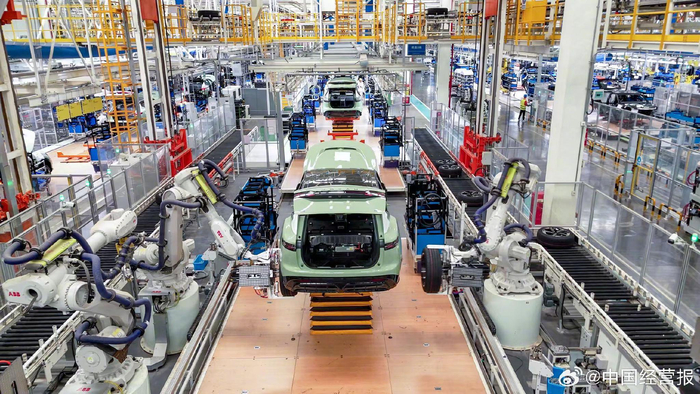
岚图汽车赴港上市获批 东风集团股份将私有化退市
Zhong Guo Jing Ying Bao· 2026-01-15 01:00
Group 1 - Lantu Automotive's plan to list in Hong Kong has been approved, marking its entry into the capital market after a short preparation period of less than five months [1] - Dongfeng Motor Group announced the privatization of Dongfeng Group through a merger, which includes the distribution of Lantu Automotive shares and the cancellation of the group's listing status [1][3] - The listing plan for Lantu Automotive began on August 22, 2025, with a two-step process involving a share distribution and a merger [3] Group 2 - Dongfeng Group will distribute 79.67% of its shares in Lantu Automotive to all shareholders before Lantu's introduction to the Hong Kong Stock Exchange [3] - Following the share distribution, Dongfeng Motor's wholly-owned subsidiary will pay equity compensation to the controlling shareholder and cash compensation to minority shareholders to achieve 100% control of Dongfeng Group [3] - Lantu Automotive changed its name and corporate structure in September 2025, transitioning to a joint-stock company [3]
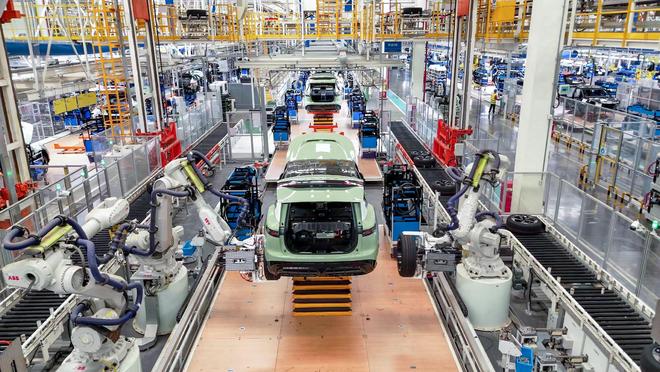
岚图汽车港股上市已获股东批准 2025年销量超15万辆增超87%
Xin Lang Cai Jing· 2026-01-14 23:47
Group 1 - The core point of the news is that Dongfeng Group is moving forward with the privatization of Dongfeng Group Co., Ltd. and the listing of its subsidiary, Lantu Automotive, in Hong Kong [1][2][4] - Dongfeng Group has received necessary approvals from various government bodies for the privatization process, which is a significant step towards Lantu Automotive's listing [2][3] - Lantu Automotive plans to go public through an introduction listing, while Dongfeng Group will simultaneously complete its privatization and delisting [1][2] Group 2 - In 2025, Lantu Automotive is projected to achieve a total sales volume of 150,200 units, representing a year-on-year increase of 87.44% [1][7] - Lantu Automotive has shown strong financial performance, with a revenue increase to 15.782 billion yuan in the first seven months of 2025, a 90.2% year-on-year growth, and a net profit of 434 million yuan [6] - The company has successfully transitioned from losses in previous years to profitability, marking it as the first unlisted new energy vehicle company to achieve this milestone [6] Group 3 - Lantu Automotive has established a comprehensive product matrix, including models such as Lantu FREE, Lantu Dreamer, Lantu Pursuit, Lantu Zhiyin, and Lantu Taishan, covering SUV, MPV, and sedan categories [1][6] - The company has formed a strategic partnership with Huawei to enhance its technological capabilities, particularly in autonomous driving [8] - Lantu Automotive is on track to become the first high-end new energy brand under a central state-owned enterprise to reach a production scale of 300,000 vehicles [8]
两大汽车央企董事长年薪不到百万
Di Yi Cai Jing· 2026-01-14 11:57
Group 1 - The State-owned Assets Supervision and Administration Commission (SASAC) disclosed the annual salary information for over 80 central enterprise leaders for 2024 [1] - Among the two major automotive central enterprises, China FAW Group's chairman, Qiu Xiandong, has the highest salary at 909,700 yuan [1] - Dongfeng Motor Group's chairman, Yang Qing, has an annual salary of 868,600 yuan [1]
东风汽车旗下悦享科技公司注册资本增至3.8亿元
Zheng Quan Ri Bao· 2026-01-14 10:06
Group 1 - Dongfeng Yuyou Technology Co., Ltd. has undergone a business change, with Tang Jing stepping down as chairman and replacing by Zhan Xin [2] - The registered capital of the company has increased from approximately 79.3 million to about 380 million [2] - The shareholders of the company include Dongfeng Motor Group Co., Ltd. and Wuhan Fanxiang Enterprise Management Partnership (Limited Partnership) [2]
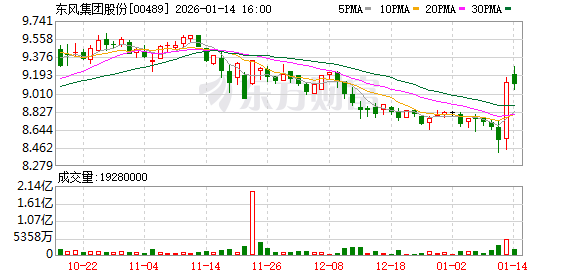
东风集团股份(00489) - 根据《收购守则》规则22作出的交易披露
2026-01-14 08:51
執行人員接獲依據香港《公司收購及合併守則》規則 22 作出以下的證券交易的披露: | 交易方 | 日期 | | | | 買入/賣 股份數目 | 每股價格 | 交易後數額(包括與其訂 | | 佔該類別證券的百分比 | | | --- | --- | --- | --- | --- | --- | --- | --- | --- | --- | --- | | | | | | | 出 | | | 有協議或達成諒解的任 | (包括與其訂有協議或 | | | | | | | | | | | 何人士的證券) | 達成諒解的任何人士的 | | | | | | | | | | | | 證券)% | | | BlackRock, Inc. | 2026 | 年 1 | 月 | 12 日 | 賣出 17,937,126 | $8.5400 | 107,284,742 | | | 4.3048% | 完 2026 年 1 月 13 日 註: 透過合併進行私有化 就東風汽車集團股份有限公司的股份的交易披露 BlackRock, Inc.憑藉持有受要約公司的普通股,所以根據第(6)類別屬受要約公司的聯繫人。 交易是為全權委託投資客戶 ...
小摩:东风集团股份重组计划获批 标志进程迈出关键一步
Zhi Tong Cai Jing· 2026-01-14 06:55
Group 1 - The core viewpoint of the article is that Dongfeng Group's stock price surged due to the approval of its restructuring plan by the mainland government [1] - The company announced a privatization plan on August 22 last year, intending to delist from the Hong Kong Stock Exchange and spin off its electric vehicle business, "Lantu," for independent listing [1] - The approval of the restructuring plan marks a significant step forward in the company's restructuring process [1] Group 2 - Morgan Stanley upgraded Dongfeng's investment rating to "Buy" last year, anticipating that the privatization will unlock the company's potential value [1] - The firm maintains a "Buy" rating and a target price of HKD 11 for Dongfeng [1]