
DONGFENG GROUP(00489)

Search documents
勾勒行业决战之年新图景 中国汽车创新盛典在北京举办
Zhong Zheng Wang· 2026-01-25 09:13
Group 1 - The event "Auto-First Annual Gala and 2025-2026 China Automotive Innovation Ceremony" highlights the automotive industry's critical years ahead, emphasizing the importance of scale advantages for leading companies and the irreversible trend of smart technology in vehicles [1] - SAIC Motor Corporation was awarded "Annual Automotive Enterprise," while the "Annual Car" award went to the AITO M9, showcasing the recognition of significant players in the industry [1] - The awards reflect the upward vitality and international strength of Chinese brands, with Geely Galaxy recognized as "Annual Brand" and BYD and Chery as "Annual Export Brands" [1] Group 2 - The awards also illustrate a diverse market ecosystem, with models like XPeng G7 and SAIC Volkswagen Lavida Pro winning in various segments, indicating the success of traditional brands in the electric and smart vehicle transformation [2] - Data shows that by 2025, the penetration rate of new energy vehicles in China will exceed 54%, with multiple technology routes such as hybrid, range-extended, and pure electric advancing simultaneously [2] - The competition in the automotive market is expected to focus on technology, cost, and channel strength, testing companies' strategic determination and adaptability as the industry shifts from scale to strength [2]





拥有102项“四新”黑科技!东风天龙KH重磅新品下线
第一商用车网· 2026-01-24 13:28
东风汽车董事长、党委书记杨青,总经理、党委副书记冯长军,党委常委、副总经理王俊,十堰市委书记王永辉,市委副书记、市长余 珂,市人大常委会主任赵哲,市政协主席、市委秘书长蔡贤忠,市委常委、常务副市长周智勇,市委常委、副市长高红民,中国汽车工 业协会副秘书长李邵华,湖北省经信厅二级巡视员望晓东,东风汽车集团股份有限公司商用车事业部总经理、党委书记张小帆,东风商 用车总经理刘利成,党委书记、副总经理郑华以及公司领导刘振声、曾苗、吴怀主、白维之、方勇、张大、刘翼等齐聚现场,见证这一 兼具行业里程碑意义与区域发展价值的重要时刻。 王俊指出,D600智慧工厂投产是落实国家新型工业化、制造强国战略的重要举措,不仅将有力推动东风汽车转型升级和商用车事业跃 升进位,更将加速十堰智能网联新能源汽车产业集群培育,为鄂西区域性中心城市建设注入强劲动力。D600新品的加入,为推动商用 车事业全面振兴,奋力实现"四个行业第一"提供新的有力支撑。 面向"十五五",东风汽车深入学习贯彻习近平总书记对中央企业工作的重要指示精神,坚持智能化、绿色化、融合化发展,依 托"4+2"事业布局,加快推进新能源、智能化、国际化三大跃迁。东风汽车将持续集中 ...


东风2025年自主品牌占比超六成,冯长军解码汽车消费新潜力
Zhong Guo Qing Nian Bao· 2026-01-24 07:42
Group 1 - Dongfeng Motor is focusing on technological innovation and product upgrades to meet market demands and create user value as a key operational priority [2] - The vehicle trade-in policy is seen as a significant driver for market growth, with its effectiveness stemming from the collaboration between supply and demand [2] - Dongfeng Motor aims to build a brand structure that covers various market segments, projecting sales of 1.04 million new energy vehicles by 2025, a year-on-year increase of 21%, and over 1.5 million for its self-owned brands, with a growth rate exceeding 9% [2] Group 2 - As a major state-owned automotive enterprise, Dongfeng Motor's operational trends are viewed as a barometer for industry development [3] - The core challenge for traditional automakers is to achieve brand elevation and market breakthroughs through electrification and intelligent transformation during the 14th Five-Year Plan period [3] - Dongfeng Motor's insights on technological innovation and market strategy reflect the evolving policies and market environment, which will significantly impact the health of the industry chain and the release of consumer potential [3]

东风汽车董事长杨青2024年薪酬86.86万 略低于一汽集团董事长邱现东
Sou Hu Cai Jing· 2026-01-24 03:17
运营商财经网 李广艳/文 近日,官方公布了2024年度国内80多家央企高管的薪酬数据,作为国内整车央企之一,东风汽车集团有 限公司董事长杨青获薪86.86万元,在央企体系中处于第二梯队,引发人们密切关注。 据了解,杨青出生于1966年7月,至今年7月就年满60周岁,达到法定退休年龄。2023年10月底,杨青正 式出任东风汽车董事长、党委书记,所以,2024年是他履新之后的首个完整年。 国内第三家整车央企中国长安汽车集团,由于其在2025年7月才成立,并没有出现在此次公布的名单 中。作为参考,根据重庆长安汽车股份有限公司年报,董事长朱华荣2024年获薪225.74万元,明显高于 另外两家央企。 值得注意的是,国有汽车集团董事长薪酬大多在100万-300万,比如,上汽集团董事长王晓秋2024年的 薪酬为236.76万元,福田汽车董事长常瑞为236.0万元,广汽集团董事长冯兴亚获薪198.37万元,不过这 公开信息显示,2024年度杨青应付年薪为86.86万元,是东风汽车内部薪酬最高者,社会保险、企业年 金、补充医疗保险及住房公积金的单位缴存部分为14.87万元。 和一汽相比,2024年一汽集团董事长邱现东应付年薪 ...
东风集团股份(00489) - 联合公告 - (1) 东风汽车集团(武汉)投资有限公司通过吸收合併的...
2026-01-23 04:19
香港交易及結算所有限公司及香港聯合交易所有限公司對本聯合公告 的內容概不負責,對其準確性或完整性亦不發表任何聲明,並明確表示, 概不對因本聯合公告全部或任何部份內容而產生或因倚賴該等內容而 引 致 的 任 何 損 失 承 擔 任 何 責 任。 本 聯 合 公 告 僅 供 參 考,並 不 構 成 收 購、購 買 或 認 購 東 風 公 司、要 約 人、 本 公 司 或 嵐 圖 證 券 之 邀 請 或 要 約,亦 非 在 任 何 司 法 權 區 招 攬 任 何 投 票 權 或 批 准。 本 聯 合 公 告 之 全 部 或 部 分 內 容 不 得 在、向 或 從 任 何 將 構 成 違 反 其 適 用 法 律 或 法 規 之 司 法 權 區 發 佈、刊 發 或 派 發。 DONGFENG MOTOR CORPORATION* 東風汽車集團有限公司 (一間 於中華 人民 共和 國註冊 成立的 有限 公司) 東風汽車集團股份有限公司 (於中華人民共和國註冊成立的股份有限公司) (股份代號:489) DONGFENG MOTOR GROUP COMPANY LIMITED* DONGFENG MOTOR GROUP (W ...
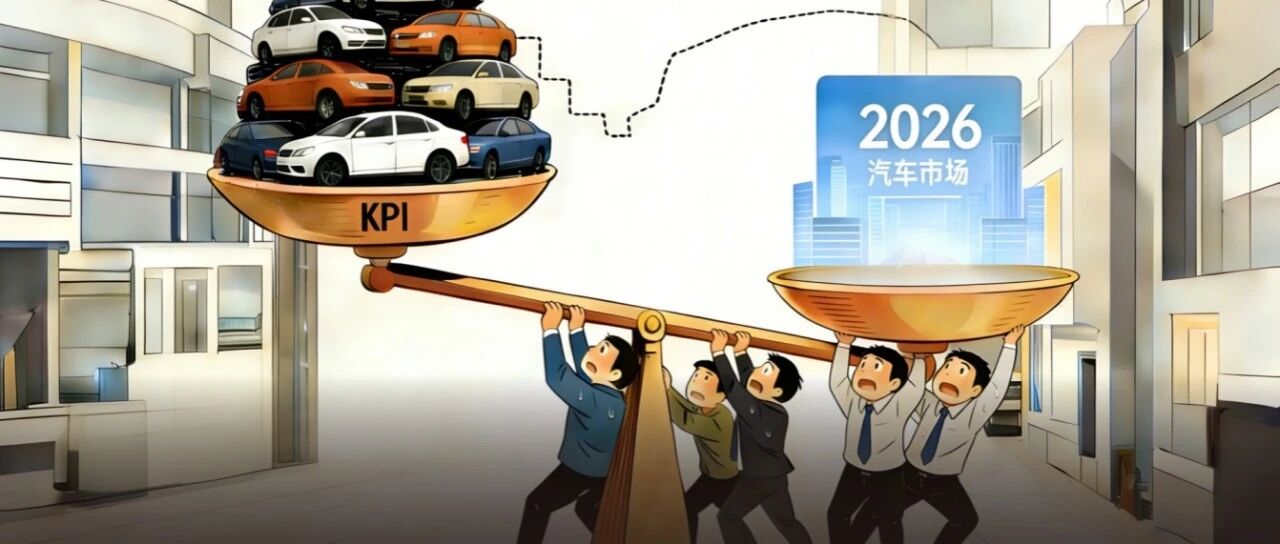
注定悲剧的2026,还有多少车企不信邪?
汽车商业评论· 2026-01-22 23:07
Core Viewpoint - The article discusses the challenges and strategies of the Chinese automotive industry as it faces declining domestic sales and increasing pressure to transition towards higher-value and technology-intensive vehicles. The focus is on the 2026 sales targets set by various automakers amidst a backdrop of changing government policies and market dynamics [3][6][8]. Group 1: Market Overview - In 2025, China's automotive production and sales reached 34.4 million units, a 9.4% increase year-on-year, maintaining its position as the world's largest market for the 17th consecutive year [3]. - Domestic sales, excluding exports, were 27.3 million units, up 6.7%, with passenger vehicles accounting for approximately 24.1 million units, growing by 8.0% [5]. - However, December 2025 saw a significant decline in domestic sales, with only 2.519 million units sold, marking a 6.7% month-on-month drop and a 15.6% year-on-year decrease [5]. Group 2: Industry Challenges - The average profit margin in the Chinese automotive industry has fallen to 4.4%, only slightly above the historical low of 4.3% in 2024, indicating extremely thin profit margins [6]. - The new vehicle replacement subsidy policy, shifting from fixed subsidies to percentage-based subsidies, targets higher-priced vehicles, which may pressure companies that rely heavily on low-cost models [8]. Group 3: Sales Targets and Strategies - Major automakers have set ambitious sales targets for 2026, with a combined goal of approximately 35 to 36 million passenger vehicles, reflecting a year-on-year increase of 12% to 15% [5]. - Traditional automakers are focusing on stability and efficiency improvements, while new entrants are experiencing significant divergence in their growth strategies [10][30]. - For instance, Changan aims for a total sales target of 3.3 million units in 2026, with a strong emphasis on new energy vehicles, projecting 1.43 million units from this segment [12][15]. Group 4: New Energy Vehicle Focus - The article highlights the increasing importance of new energy vehicles (NEVs) in the sales strategies of various automakers, with companies like Dongfeng targeting 1.7 million NEVs in 2026, representing a significant portion of their overall sales goals [15][26]. - Geely plans to launch over ten new models in 2026, focusing on a comprehensive product matrix to drive sales growth [23]. Group 5: Export Market Dynamics - The export market for Chinese vehicles is thriving, with exports reaching 7 million units in 2025, a 21% increase year-on-year, and NEV exports doubling to 2.6 million units [49]. - Automakers are increasingly prioritizing overseas markets, with many setting aggressive export targets that significantly exceed their overall sales growth targets [51][54]. - For example, Changan's overseas sales target for 2026 is set at 750,000 units, accounting for nearly a quarter of its total sales goal [52].

重磅利好,中国电车能领德国补贴了,两国为新能源出海开政策绿灯
3 6 Ke· 2026-01-21 01:39
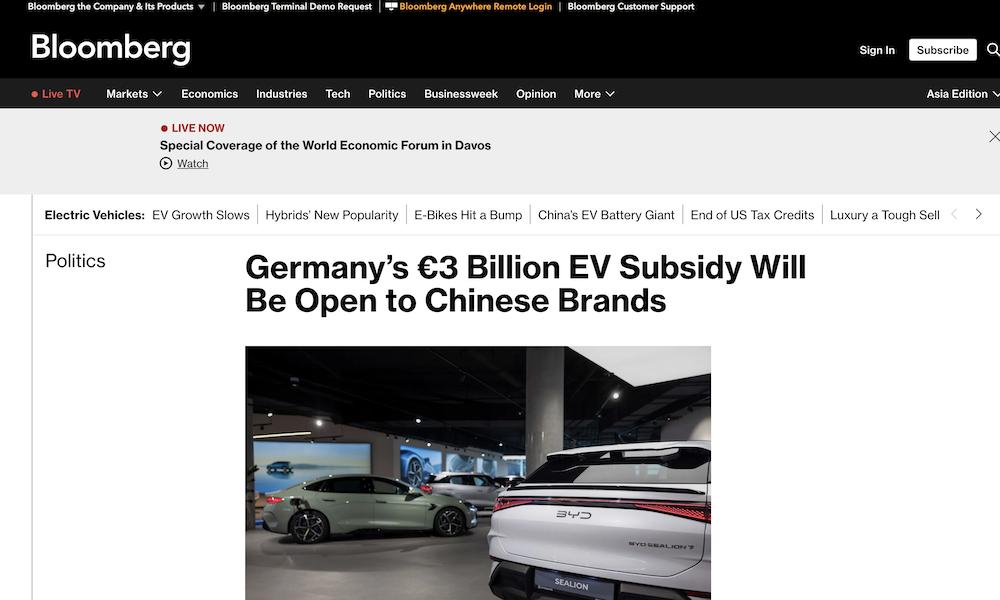
Core Viewpoint - Recent policy changes in Germany and Canada are creating favorable conditions for Chinese electric vehicle manufacturers to expand internationally, particularly in the European and North American markets [1][2][5]. Group 1: Germany's Policy Changes - The German government has announced a €3 billion (approximately ¥24.5 billion) subsidy plan for electric vehicles, providing up to €6,000 (approximately ¥49,000) for households purchasing new electric cars, which is open to all manufacturers, including Chinese brands [1][2]. - This subsidy aims to boost electric vehicle sales and support the automotive industry after a significant drop in demand following the end of previous subsidy programs [5]. - The German Federal Environment Minister emphasized the need to embrace competition rather than impose restrictions, indicating a welcoming stance towards Chinese automotive manufacturers [5]. Group 2: Canada's Policy Adjustments - Canadian Prime Minister Justin Trudeau announced the cancellation of a 100% tariff on Chinese electric vehicles and introduced an annual quota of 49,000 vehicles that will benefit from a 6.1% most-favored-nation tariff rate [1][8]. - This quota corresponds to the export volume from China to Canada before the imposition of additional tariffs, with expectations for gradual increases over the years [10]. - Trudeau highlighted China's undeniable advantages in the electric vehicle sector, aiming to learn from innovative partners to enhance Canada's competitive automotive industry [10]. Group 3: Export Growth of Chinese Automakers - In 2025, China's total automobile exports are projected to reach 8.32 million units, marking a 30% year-on-year increase, continuing a five-year growth trend [11]. - The export value is expected to grow from $34.5 billion (approximately ¥240.1 billion) in 2021 to $142.4 billion (approximately ¥991 billion) in 2025, reflecting a 21% increase [11]. - Notably, the export volume of new energy vehicles is anticipated to double, reaching 2.615 million units in 2025, with significant contributions from major automakers like BYD and Chery [11][16]. Group 4: Performance of Major Chinese Automakers - Chery is expected to lead in export volume in 2025, with 1.34 million units, while BYD's exports are projected to reach 1.05 million units, a 144% increase from the previous year [16][18]. - SAIC Group is also set to export 950,000 units, leveraging its joint ventures and brand portfolio [18]. - New entrants like Leap Motor and Xpeng are showing remarkable growth, with exports increasing by 600% and 150%, respectively, indicating a strong competitive presence in the international market [19][20]. Group 5: Industry Implications - The evolving international landscape for Chinese automakers signifies a historic shift from "bringing in" to "going out," enhancing the global influence of Chinese automotive brands [21]. - The advancements in technology, such as smart cabins and battery innovations, are contributing to the transformation of the global automotive industry [21]. - The current complex international environment and restructuring of the global automotive landscape suggest that Chinese automotive exports are likely to maintain a robust trajectory, becoming a key driving force in global mobility transformation [21].

东风汽车集团取得负极极片及其制备方法和电池专利
Jin Rong Jie· 2026-01-20 04:35
Group 1 - The core point of the article is that Dongfeng Motor Corporation has obtained a patent for a negative electrode sheet and its preparation method, indicating a focus on innovation in battery technology [1] - The patent was granted with the announcement number CN119419227B and the application date is September 2024 [1] - Dongfeng Motor Corporation was established in 2001 and is located in Wuhan, primarily engaged in the automotive manufacturing industry [1] Group 2 - The registered capital of Dongfeng Motor Corporation is 858,937,000 RMB [1] - The company has made investments in 44 enterprises and has participated in 5,000 bidding projects [1] - Dongfeng Motor Corporation holds 5,000 patent records and has 156 administrative licenses [1]
一季度整车有望反弹,零部件聚焦新产业投资:汽车行业周报(20260112-20260118)-20260118
Huachuang Securities· 2026-01-18 12:26
Investment Rating - The report maintains a positive outlook for the automotive industry, expecting a rebound in vehicle sales in Q1 and focusing on investments in intelligent driving, robotics, and liquid cooling technologies [3]. Core Insights - The automotive sector is experiencing significant dynamics, including sales, pricing, exports, and robotics developments [2]. - The report highlights that January's early sales data shows a substantial year-on-year decline, primarily due to subsidy reductions and rising vehicle prices, leading to consumer hesitation [5]. - The report anticipates that the pressure on vehicle prices will be managed through strict enforcement of anti-competitive practices, aiming to stabilize prices and profit margins [5]. - The export market is expected to grow rapidly, supported by agreements that lower trade barriers for electric vehicles, enhancing profitability for manufacturers and dealers [5]. - The robotics sector is gaining traction, with the Optimus V3 generating market excitement and expectations for product launches [5]. Data Tracking - In early January, the average discount rate remained stable, with a 9.6% increase year-on-year, and the average discount amount reached 22,259 yuan, up by 2,192 yuan year-on-year [4]. - December's wholesale vehicle sales were reported at 2.85 million units, reflecting a year-on-year decline of 8.7% and a month-on-month decline of 6.3% [4]. - Notable sales performance in December included significant year-on-year growth for new energy vehicle manufacturers like NIO and Li Auto, while traditional automakers like SAIC and Changan showed mixed results [6]. Industry News - The report discusses various industry developments, including the price commitments for electric vehicles between China and Europe, which aim to facilitate trade [27]. - The Ministry of Industry and Information Technology is focusing on enhancing the competitiveness of the new energy vehicle sector and regulating market practices to prevent price wars [27]. - Recent data indicates a significant drop in retail sales of passenger vehicles in early January, with a 32% year-on-year decline [27]. Market Performance - The automotive sector saw a weekly increase of 0.71%, ranking 8th out of 29 sectors, while the overall market indices showed mixed results [10].



东风汽车申请增压发动机增压中冷的冷却系统专利,显著改善发动机动力性、经济性
Jin Rong Jie· 2026-01-17 00:55
天眼查资料显示,东风汽车集团股份有限公司,成立于2001年,位于武汉市,是一家以从事汽车制造业 为主的企业。企业注册资本858937万人民币。通过天眼查大数据分析,东风汽车集团股份有限公司共对 外投资了44家企业,参与招投标项目5000次,专利信息5000条,此外企业还拥有行政许可156个。 声明:市场有风险,投资需谨慎。本文为AI基于第三方数据生成,仅供参考,不构成个人投资建议。 国家知识产权局信息显示,东风汽车集团股份有限公司申请一项名为"一种增压发动机增压中冷的冷却 系统和方法"的专利,公开号CN121322180A,申请日期为2025年11月。 专利摘要显示,本申请涉及一种增压发动机增压中冷的冷却系统和方法,涉及汽车冷却系统技术领域。 本申请的冷却系统包括增压中冷器冷却回路,其包括依次连接的第一水泵、第一冷交换器chiller、增压 中冷器和中冷散热器;第一水泵的进液口与所述中冷散热器的出口连接;空调冷媒连接管路,其与空调 冷却回路并联;所述空调冷媒连接管路与所述第一冷交换器chiller冷交换连接。该系统突破了传统中冷 散热器受限于环境温度的限制,使冷却液温度可低于环境温度,从而有效解决高环境温度、 ...