
TENCENT(00700)

Search documents
港股午评:恒指涨1.01%、科指涨0.38%,科网股多数走高,商业航空概念股回调,有色金属股普涨,招金矿业等多股创新高
Jin Rong Jie· 2026-01-13 04:21
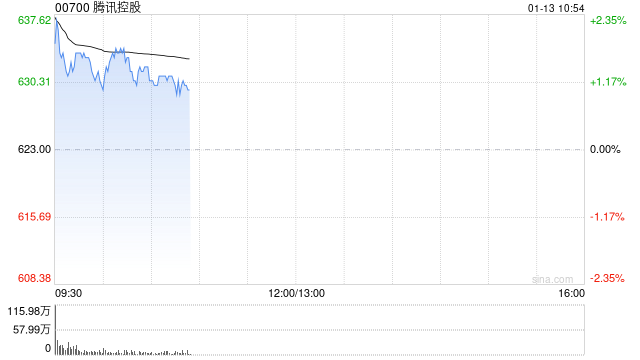
Market Overview - The Hong Kong stock market opened high on January 13, with the Hang Seng Index rising by 1.01% to 26,877.42 points, the Hang Seng Tech Index up by 0.38% to 5,885.42 points, the National Enterprises Index increasing by 0.8% to 9,293.55 points, and the Red Chip Index up by 0.96% to 4,153.53 points [1] - Major technology stocks mostly rose, with Alibaba increasing by 3.5%, Tencent Holdings up by 0.48%, and JD Group rising by 1.11%. However, Xiaomi fell by 0.67%, Meituan dropped by 0.86%, and Kuaishou decreased by 1.93% [1] Company News - WuXi AppTec (02359.HK) forecasted a net profit of 19.151 billion yuan for the fiscal year 2025, representing a year-on-year increase of approximately 103%, which includes gains from the sale of partial equity in joint ventures and the divestiture of certain businesses [2] - Dongfeng Group (00489.HK) reported cumulative automobile sales of 1.8962 million units for 2025, reflecting a year-on-year growth of approximately 0.01% [3] - Q Technology (01478.HK) announced that it sold 45.938 million camera modules in 2025, a year-on-year increase of 43.6%, while fingerprint recognition module sales decreased by 12% to 17.947 million units [3] - Yue Yuen Industrial Holdings (00551.HK) reported a cumulative operating income of 8.031 billion USD for 2025, a decrease of 1.85% year-on-year [4] - Baoshan International (03813.HK) reported a cumulative operating income of 17.132 billion yuan for 2025, down by 7.2% year-on-year [5] - Jiangshan Holdings (00295.HK) indicated that its total solar power generation for 2025 is approximately 300,700 MWh, a decrease of 6.14% year-on-year [6] - Yida China (03639.HK) projected a contract sales amount of approximately 763 million yuan for 2025, a decline of 19.43% year-on-year [7] - China Lilang (01234) reported a high single-digit growth in retail sales for its "LILANZ" products in the fourth quarter [8] Clinical Trials and Innovations - Clover Biopharmaceuticals (02197.HK) has initiated Phase II clinical trials for its RSV-hMPV-PIV3 respiratory combined vaccine candidate [9] - Yiming Anke (01541.HK) received approval from the National Medical Products Administration for clinical trials of MM01 (Tideglusib) for atherosclerosis treatment [10] - Xianjian Technology (01302.HK) has entered the special review process for its Concave Supra integrated three-branch reconstruction system [11] Corporate Actions - Haitong Securities (01905.HK) plans to issue company bonds not exceeding 1 billion yuan [13] - China Heartland Fertilizer (01866.HK) has approved a new plan to repurchase up to 10% of its issued shares from the open market, not exceeding 200 million yuan in value [13] - Tencent Holdings (00700.HK) repurchased 1.024 million shares for approximately 636 million HKD at prices ranging from 614 to 627 HKD [14] - Geely Automobile (00175.HK) repurchased 9.007 million shares for approximately 151 million HKD at prices between 16.63 and 17.15 HKD [15] - Jun Da Holdings (02865.HK) announced that its controlling shareholder plans to reduce its stake by up to approximately 8.7254 million shares [16] Analyst Insights - CITIC Securities released a 2026 investment outlook, suggesting that the Hong Kong stock market may experience a second round of valuation recovery and performance revival, driven by internal and external economic factors [17] - Huaxi Securities noted that the Hong Kong market continues to lag behind the A-share market, with a need for time to restore market sentiment [18] - Guoyuan International indicated that the Hong Kong market is currently in a relatively quiet period, awaiting further catalysts for market movement [18] - Industrial Securities recommended focusing on leading internet companies in the AI sector, as well as dividend assets in low-interest-rate environments, and new consumption trends [19]

富瑞:重申AI为中国互联网市场首要主题 首选阿里(09988)及腾讯
智通财经网· 2026-01-13 03:00
Core Viewpoint - The report by Jefferies emphasizes that artificial intelligence will remain the primary theme in China's internet market through 2026, followed by the defensive entertainment sector and the rapidly growing tourism industry [1] Group 1: Market Trends - The market has already factored in recent consumer sentiment and monthly Gross Merchandise Volume (GMV) growth, with a year-on-year GMV increase of 7.5% in the third quarter of September, and growth rates of 4.9% and 1.5% for October and November respectively compared to the same period last year [1] Group 2: Company Preferences - Jefferies lists Alibaba-W (09988) and Tencent Holdings (00700) as the top picks in the internet sector, followed by Baidu Group-SW (09888), Trip.com Group-S (09961), NetEase-S (09999), Kuaishou-W (01024), Tencent Music-SW (01698), JD Group-SW (09618), and Meituan-W (03690) [1] Group 3: E-commerce Focus - The focus in the fast e-commerce sector is shifting from low Average Order Value (AOV) orders to high AOV orders, as the latter offers better unit economics under healthy industry conditions [1] Group 4: Kuaishou Developments - Kuaishou's AI-generated model "K可灵AI" has launched several new products, with analysis indicating that its motion control feature has gained significant popularity in overseas markets since late December and into January, with expectations that Kuaishou's fourth-quarter performance will meet projections [1]


富瑞:重申AI为中国互联网市场首要主题 首选阿里及腾讯
Xin Lang Cai Jing· 2026-01-13 02:54
Group 1 - The core theme of the report by Jefferies is that artificial intelligence will continue to be the primary focus of the Chinese internet market through 2026, followed by the defensive entertainment sector and the rapidly growing tourism industry [2][5] - The report highlights that the market has factored in recent consumer sentiment and monthly Gross Merchandise Volume (GMV) growth, with a year-on-year increase of 7.5% in GMV for the September quarter, and growth rates of 4.9% and 1.5% for October and November respectively [2][5] - Jefferies identifies Alibaba-W (09988) and Tencent Holdings (00700) as the top picks in the internet sector, followed by Baidu Group-SW (09888), Trip.com Group-S (09961), NetEase-S (09999), Kuaishou-W (01024), Tencent Music-SW (01698), JD Group-SW (09618), and Meituan-W (03690) [2][5] Group 2 - The focus in the fast e-commerce sector is shifting from low Average Order Value (AOV) orders to high AOV orders, as the latter offers better unit economics in a healthy industry environment [2][5] - Kuaishou's AI-generated video model "Keling AI" has launched several new products, and analysis indicates that its motion control feature has gained popularity in overseas markets since late December and into January, with expectations that Kuaishou's Q4 performance will meet projections [2][5]


港股消费(159735)已连续3日获得资金净申购,区间净流入额4811.1万元
Xin Lang Cai Jing· 2026-01-13 02:53
Core Viewpoint - The Hong Kong Consumption ETF (159735) has seen significant net inflows, indicating growing investor interest in the fund and the underlying consumer sector in Hong Kong [1][2]. Group 1: Fund Performance - As of January 12, the Hong Kong Consumption ETF (159735) recorded a net subscription of 28.1 million CNY, ranking 16th out of 207 in cross-border ETF net inflows for the day [1]. - The fund's latest size is 792 million CNY, up from 759 million CNY the previous day, reflecting a 3.70% increase in net inflow relative to the prior day's size [1]. - Over the past five days, the fund has accumulated a net subscription of 48.1 million CNY, ranking 25th out of 207 in cross-border ETF net inflows [1]. Group 2: Fund Details - The Hong Kong Consumption ETF (159735) was established on May 25, 2021, with an annual management fee of 0.50% and a custody fee of 0.10% [2]. - The fund's latest share count is 980 million, with a year-to-date increase of 6.52% in shares and a 9.16% increase in size compared to December 31, 2022 [2]. - The fund has a total trading volume of 901 million CNY over the last 20 trading days, with an average daily trading volume of 45.1 million CNY [2]. Group 3: Holdings and Composition - Major holdings in the Hong Kong Consumption ETF (159735) include Alibaba (19.54%), Tencent (16.59%), and Pop Mart (7.99%), among others, with total holdings reflecting a diverse exposure to the consumer sector [3]. - The ETF tracks the Hong Kong Consumption CNY Index (931455), and its performance is compared with another ETF, Hong Kong Consumption (513590), which has a smaller size of 230 million CNY [3].



富瑞:重申AI为中国互联网市场首要主题 首选阿里(09988)及腾讯(00700)
智通财经网· 2026-01-13 02:51
Group 1 - The core viewpoint of the report is that artificial intelligence will remain the primary theme in China's internet market through 2026, followed by the defensive entertainment sector and the rapidly growing tourism industry [1] - The report notes that the market has factored in recent consumer sentiment and monthly Gross Merchandise Volume (GMV) growth, with a year-on-year GMV increase of 7.5% in the third quarter of September, and expected growth of 4.9% and 1.5% in October and November respectively [1] - The report identifies Alibaba-W (09988) and Tencent Holdings (00700) as the top picks in the internet sector, followed by Baidu Group-SW (09888), Trip.com Group-S (09961), NetEase-S (09999), Kuaishou-W (01024), Tencent Music-SW (01698), JD Group-SW (09618), and Meituan-W (03690) [1] Group 2 - The focus in the fast e-commerce sector is shifting from low Average Order Value (AOV) orders to high AOV orders, as the latter offers better unit economics under healthy industry conditions [1] - Kuaishou's AI-generated model "K可灵" has launched several new products, and analysis indicates that its motion control feature has gained popularity in overseas markets since late December and into January, with expectations that Kuaishou's fourth-quarter performance will meet expectations [1]
花旗:料AI云服务需求仍强劲 互联网板块首选腾讯控股(00700)
智通财经网· 2026-01-13 02:37
Group 1 - The tightening of regulations and the introduction of e-commerce value-added tax are impacting the profitability of small and medium-sized merchants, which will exert pressure on the monetization capabilities and profit margins of e-commerce platforms [1] - Demand for AI cloud services remains strong, and with domestic chip supply gradually catching up and some high-end foreign chips being approved, supply constraints are expected to ease [1] - The competitive landscape in the fields of food delivery, instant retail, and AI chatbots remains intense, with companies investing in promotional expenses to capture market share and enhance new user penetration and adoption rates, potentially further pressuring profitability and profit margins [1] Group 2 - The overseas market is becoming a new focus for Robotaxi, AI applications, and internet data center construction [1] - The preferred companies in the industry include Tencent Holdings (00700), Alibaba (BABA.US), Trip.com (TCOM.US), NetEase (NTES.US), and Century Huatong (002602.SZ) [1]

花旗:料AI云服务需求仍强劲 互联网板块首选腾讯控股
Zhi Tong Cai Jing· 2026-01-13 02:35
Group 1 - The tightening of regulations and the introduction of e-commerce value-added tax are impacting the profitability of small and medium-sized merchants, which will exert pressure on the monetization capabilities and profit margins of e-commerce platforms [1] - Demand for AI cloud services remains strong, and with domestic chip supply gradually catching up and some high-end foreign chips being approved, supply constraints are expected to ease [1] - The competitive landscape in the fields of food delivery, instant retail, and AI chatbots remains intense, with companies investing in promotional expenses to capture market share and enhance new user penetration and adoption rates, potentially further pressuring profitability and profit margins [1] Group 2 - The overseas market is becoming a new focus for Robotaxi, AI applications, and internet data center construction [1] - The preferred companies in the industry include Tencent Holdings (00700), Alibaba (BABA.US), Trip.com (TCOM.US), NetEase (NTES.US), and Century Huatong (002602) [1]
方舟健客盘中涨近40% 近期携手腾讯健康数智化升级“AI+慢病管理”领域技术
Xin Lang Cai Jing· 2026-01-13 02:33
Core Viewpoint - Ark Health (06086) has seen a significant stock price increase, rising nearly 40% during trading, with a current price of 2.98 HKD and a trading volume of 136 million HKD, following the announcement of a partnership with Tencent Health to launch an "AI + Chronic Disease Management" solution [1] Group 1: Partnership and Collaboration - The collaboration between Ark Health and Tencent Health marks a new development stage in the domestic chronic disease management sector [1] - The partnership aims to provide comprehensive support for industry partners, from technology validation to scenario implementation and large-scale deployment, enhancing the intelligent, compliant, and efficient development of the industry [1] Group 2: Technological Strengths - Ark Health is recognized as a leading "AI + Chronic Disease Management" service platform, leveraging its innovative "AI + H2H (Hospital to Home) smart healthcare ecosystem" to establish unique technological advantages and practical experience in chronic disease management [1] - Tencent Cloud, as a leading cloud service provider, excels in key technology areas such as cloud computing, big data, and artificial intelligence, complementing Ark Health's strengths [1] Group 3: Market Impact - The strong collaboration between Ark Health and Tencent Health is expected to provide robust technical support for the digital transformation and upgrade of the "AI + Chronic Disease Management" sector [1]
港股异动 | 方舟健客(06086)早盘涨近40% 近期携手腾讯健康数智化升级“AI+慢病管理”领域技术
智通财经网· 2026-01-13 02:24
Group 1 - Ark Health (06086) experienced a significant stock increase of nearly 40%, currently trading at 3.21 HKD with a transaction volume of 1.03 million HKD [1] - The recent collaboration between Ark Health and Tencent Health marks a new development phase in chronic disease management in China, providing comprehensive support from technology validation to large-scale deployment [1] - Ark Health, as a leading "AI + chronic disease management" service platform, leverages its innovative "AI + H2H (Hospital to Home) smart healthcare ecosystem" to establish a unique technological advantage in chronic disease management [1] Group 2 - The partnership represents a systematic output of technological capabilities and is a significant exploration of the deep integration model of "artificial intelligence + healthcare" [2] - In response to recent policy initiatives from the National Health Commission and other departments promoting the application of AI in healthcare, this collaboration aims to drive the healthy development of the AI healthcare industry [2]
方舟健客早盘涨近40% 近期携手腾讯健康数智化升级“AI+慢病管理”领域技术
Zhi Tong Cai Jing· 2026-01-13 02:22
Core Viewpoint - Ark Health (06086) has seen a significant stock increase of nearly 40%, currently trading at 3.21 HKD, following the announcement of a collaboration with Tencent Health on an "AI + Chronic Disease Management" solution, marking a new development phase in the domestic chronic disease management sector [1] Group 1: Company Collaboration - The partnership between Ark Health and Tencent Health aims to provide comprehensive support for industry partners, from technology validation to scenario implementation and large-scale deployment, injecting new momentum into the intelligent, compliant, and efficient development of the industry [1] - Ark Health, as a leading "AI + Chronic Disease Management" service platform in China, leverages its innovative "AI + H2H (Hospital to Home) smart medical ecosystem" to establish unique technological advantages and practical experience in chronic disease management [1] - Tencent Cloud, recognized as a leading cloud service provider, excels in key technology areas such as cloud computing, big data, and artificial intelligence, enhancing the partnership's capability to support the digital upgrade of the "AI + Chronic Disease Management" field [1] Group 2: Industry Context - This collaboration represents not only a systematic output of technical capabilities but also an important exploration of the deep integration model of "Artificial Intelligence + Healthcare" [2] - In response to recent policy initiatives from the National Health Commission and other departments promoting the application of "Artificial Intelligence + Healthcare," the partnership aligns with national efforts to advance the healthy development of the AI healthcare industry [2]