
TENCENT(00700)

Search documents
试用近10个AI助理,我决定自己把活干了
创业邦· 2026-03-28 03:45
Core Viewpoint - The article discusses the rapid advancements in AI technologies, particularly focusing on tools like OpenClaw, Claude, and Manus, and their implications for productivity and user interaction with computers [8][10][12]. Group 1: AI Tools and Their Features - Anthropic's Claude has introduced a desktop application that allows users to control their computers, performing tasks like opening files and using browsers, with a focus on user safety through permission requests [10][12]. - OpenClaw is described as a system-level technology that translates natural language into commands for computer files, while Claude relies on visual models to interact with the user interface [12]. - Manus, another AI tool, operates through command line instructions and can automate tasks across devices, although it currently faces limitations in accurately executing user commands [16][18]. Group 2: Market Response and Development - Major smartphone manufacturers, including Xiaomi and Huawei, have begun testing their own AI agents, indicating a competitive landscape similar to the early days of Android [19][21]. - Various tech giants are actively integrating OpenClaw into their platforms, with companies like JD, Tencent, and Alibaba packaging it into user-friendly applications [23][25]. - Alibaba has launched a B2B agent named Accio, aimed at cross-border e-commerce, showcasing the trend of specialized AI agents for specific market needs [32][41]. Group 3: Financial Investments in AI - Alibaba has established a new business unit focused on AI, merging several departments under CEO Wu Yongming, while Tencent reported over 18 billion yuan invested in AI products in the previous year [29][30]. - Baidu's financial report indicates that AI business revenue constitutes 43% of its overall income, highlighting the growing importance of AI in major tech companies [29]. Group 4: User Experience and Challenges - Users have expressed mixed experiences with AI tools, noting that while they can automate tasks, they often require significant user input and may not always perform as expected [17][47]. - The article emphasizes the need for clear use cases for AI, as many users struggle to find effective applications for these technologies in their daily work [51][52]. - The concept of "tokens" is introduced, indicating that the operational costs of using AI tools can be high, which may deter users from fully utilizing these technologies [54][56].



多品牌金饰逼近1400元
新华网财经· 2026-03-28 03:17
Core Viewpoint - The article highlights a significant increase in gold and silver prices, with spot gold surpassing $4555 per ounce and closing at $4493.36 per ounce, marking a 2.5% increase [1]. Price Movements - Spot gold reached a peak of $4555 per ounce before closing at $4493.36 per ounce, reflecting a 2.5% increase [1]. - The price of gold jewelry from various brands also saw notable increases, with Lao Miao gold jewelry priced at 1397 yuan per gram, up 32 yuan from the previous day [1]. - Lao Feng Xiang gold jewelry was reported at 1396 yuan per gram, an increase of 28 yuan from the previous day [1]. - Zhou Sheng Sheng gold jewelry was priced at 1391 yuan per gram, rising by 27 yuan from the previous day [1].




“百虾大战”开打,云厂商重估token价值
第一财经· 2026-03-27 13:57
Core Viewpoint - The article discusses the rapid expansion of the shrimp-related product market driven by OpenClaw, with major tech companies like Tencent, Alibaba, and JD entering the space, leading to a surge in agent capabilities and token consumption in the cloud industry [3][4]. Group 1: Market Dynamics - The launch of various shrimp-related products has led to a significant increase in the number of offerings in the market, with companies like Tencent and JD quickly rolling out their products [3]. - Tencent's Workbuddy was developed rapidly, with its prototype ready by January and launched shortly after, showcasing the agility of tech firms in responding to market trends [3]. - The overall revenue growth for Tencent Cloud is expected to exceed last year's figures, with AI identified as a major growth driver [5]. Group 2: Token Consumption and Cloud Services - The increase in token consumption is directly linked to the rise in computational power usage, with JD reporting a 455% week-on-week increase in token calls for its cloud services [5]. - IDC forecasts that the usage of agents by the largest 2000 publicly listed companies will increase tenfold by 2027, with token and API call volumes expected to grow by 1000 times [5]. - The emergence of agent capabilities is seen as a pivotal moment for cloud vendors, marking a shift towards enterprise-level AI applications [5][6]. Group 3: Strategic Responses from Cloud Vendors - In response to the growing token consumption, Alibaba has established the Alibaba Token Hub to focus on the creation and application of tokens, with expectations that MaaS (Model as a Service) will become a significant revenue stream [7]. - ByteDance's Volcano Engine has also seen a significant increase in cloud model calls, with a target of exceeding 10 billion yuan in annual MaaS revenue [7]. - Tencent has emphasized the importance of SaaS and AI-related services beyond just token consumption, indicating a strategic shift in their approach to cloud services [7]. Group 4: Industry Considerations - There are concerns regarding the sustainability of a business model focused solely on token consumption, as it may lead to high costs for users and potential customer attrition [8]. - The article suggests that the focus should be on developing effective and secure agents rather than merely increasing token consumption [8]. - The shrimp product concept is viewed as a long-term trend with real demand and application scenarios, indicating that the impact of OpenClaw will continue to evolve [9].

美股巨头"抠门"了,中概却开始"撒钱":背后逻辑绝了
美股研究社· 2026-03-27 11:29
Core Viewpoint - The article discusses a significant shift in global capital markets, highlighting the divergence between U.S. companies focusing on AI investments and Chinese companies engaging in stock buybacks to support their valuations [2][3][4]. Group 1: U.S. Companies' Shift - Major U.S. companies are reducing stock buybacks in favor of investing in AI infrastructure, indicating a transition from shareholder returns to future growth investments [9][10]. - Microsoft has a $60 billion buyback authorization but executed only about $20 billion in 2025, reallocating funds towards data center development [9]. - Amazon has nearly ceased buybacks, with a capital expenditure forecast of $100 billion in 2026 focused on logistics and AI capabilities [9]. - Meta Platforms suspended buybacks in 2025, prioritizing cash for AI projects, while Google's buyback dropped over 60% year-on-year [9][10]. Group 2: Chinese Companies' Buyback Strategy - In contrast, Chinese companies are actively engaging in stock buybacks, with Tencent recently committing to a buyback of 300 million HKD, signaling confidence in their valuations [13][14]. - Other Chinese firms like Xiaomi, JD.com, and Alibaba are also participating in buybacks, establishing a trend of "normalizing market value management" [13][14]. - The buybacks serve as a signal of financial health and confidence in undervalued stocks, contrasting with the U.S. approach of prioritizing growth over immediate returns [14][15]. Group 3: Market Dynamics and Implications - The absence of buybacks in the U.S. is leading to increased market volatility and a shift towards fundamental-based pricing, as investors must now analyze growth potential rather than relying on buyback support [10][18]. - The contrasting strategies of U.S. and Chinese companies reflect a broader rebalancing of capital logic, with U.S. firms investing in AI as a "spear" and Chinese firms using buybacks as a "shield" to protect valuations [17][18]. - The article suggests that the current divergence in strategies may persist, influenced by the pace of AI commercialization and global liquidity changes [23][24].


任泽平年度预测:2026十大趋势
泽平宏观· 2026-03-27 11:18
Group 1 - The core viewpoint of the article is that AI will significantly change the world, marking the beginning of a new Kondratiev wave driven by innovation and technology [10][29][58] - The first major trend identified is the global monetary easing cycle, which is expected to exceed expectations, leading to an AI explosion and a bull market in commodities and stock markets [10][12][19] - The article predicts that by 2026, the US Federal Reserve will implement a "rate cut + weak dollar" strategy to alleviate debt burdens and attract manufacturing back to the US, prompting other countries to follow suit [12][15][17] Group 2 - The second major trend is the dawn of a new Kondratiev wave, which will bring about a decade of upward innovation, presenting significant opportunities for individuals [29][34][36] - The article emphasizes that economic cycles are driven by innovation, with the current Kondratiev wave being led by AI, which is expected to create new wealth opportunities and companies by 2026 [34][36][38] - It discusses the cyclical nature of economies, highlighting the importance of recognizing and adapting to these cycles for financial success [32][36][38] Group 3 - The third major trend is that AI is not just a trend but a "tsunami," indicating a profound and rapid transformation across various sectors [58][60] - The article highlights the advancements in AI showcased at events like CES, where AI technologies, including robotics and autonomous driving, are rapidly evolving and gaining public attention [61][63] - It predicts that AI will fundamentally alter industries, leading to the replacement of many jobs and the emergence of new business models, such as "one-person companies" utilizing AI agents for various tasks [70][72][73] Group 4 - The article addresses the challenges posed by population aging, declining birth rates, and the rising costs of education and child-rearing, exacerbated by AI-induced job displacement [87][89] - It reflects on the historical development of AI, noting its ups and downs, and emphasizes the breakthroughs that have led to its current capabilities [90][94][96] - The narrative includes the story of Geoffrey Hinton, a key figure in AI development, and his concerns about the implications of AI advancements for humanity [117][120][122]




腾讯控股(00700) - 翌日披露报表
2026-03-27 09:34
FF305 翌日披露報表 (股份發行人 ── 已發行股份或庫存股份變動、股份購回及/或在場内出售庫存股份) 表格類別: 股票 狀態: 新提交 公司名稱: 騰訊控股有限公司 呈交日期: 2026年3月27日 如上市發行人的已發行股份或庫存股份出現變動而須根據《香港聯合交易所有限公司(「香港聯交所」)證券上市規則》(「《主板上市規則》」)第13.25A條 / 《香港聯合交易所有限公司GEM證券 上市規則》(「《GEM上市規則》」)第17.27A條作出披露,必須填妥第一章節 。 | 第一章節 | | | | | | | | | | --- | --- | --- | --- | --- | --- | --- | --- | --- | | 1. 股份分類 | | 普通股 | 股份類別 | 不適用 | | 於香港聯交所上市 | 是 | | | 證券代號 (如上市) | | 00700 | 說明 | | | | | | | 多櫃檯證券代號 | | 80700 | RMB 說明 | | | | | | | A. 已發行股份或庫存股份變動 | | | | | | | | | | | | | | 已發行股份(不包括庫存股份 ...
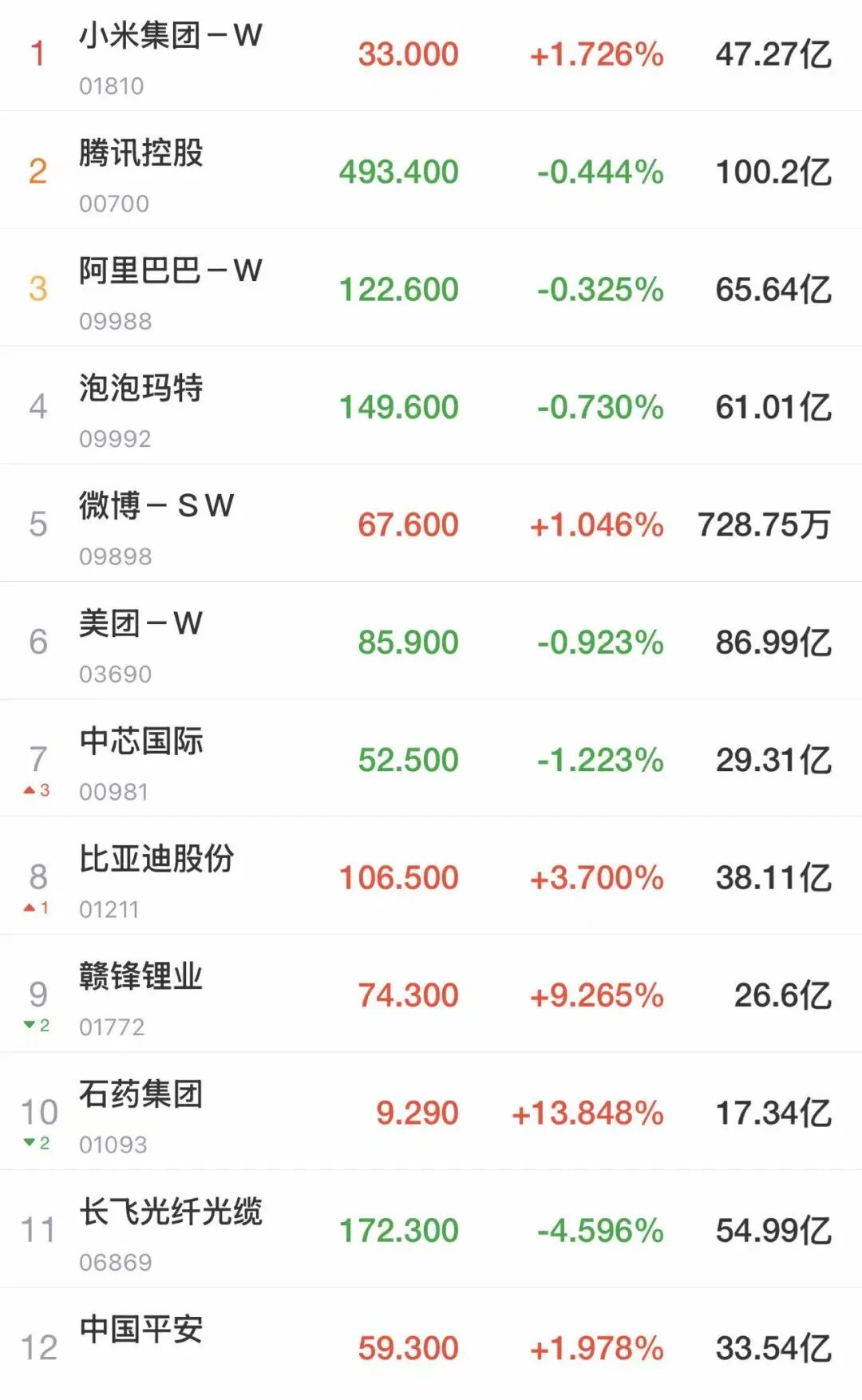
三大指数齐涨 小米涨超1.7% B站、快手涨超1%!锂电板块爆发,赣锋锂业涨超9% | 港股收盘
Mei Ri Jing Ji Xin Wen· 2026-03-27 08:45
Market Performance - The Hong Kong stock market indices collectively rose on March 27, with the Hang Seng Index increasing by 0.38% to close at 24,951.88 points, the Hang Seng Tech Index up by 0.35%, and the National Enterprises Index rising by 0.76% [1] Sector Performance - Technology stocks showed mixed results, with Kuaishou and Xiaomi both rising over 1%, while Bilibili fell by more than 1% [1] - Innovative pharmaceutical stocks surged, with CSPC Pharmaceutical Group increasing by over 13% [1] - The lithium battery sector performed well, with Ganfeng Lithium rising by over 9% [1] - The commercial aerospace sector faced declines, with Junda Co., Ltd. dropping by over 9% [1] Stock Highlights - Xiaomi Group saw a price increase of 1.726%, closing at HKD 33.00 with a trading volume of 4.727 billion [2] - Ganfeng Lithium reported a price increase of 9.265%, closing at HKD 74.30 with a trading volume of 2.66 billion [2] - CSPC Pharmaceutical Group experienced a significant rise of 13.848%, closing at HKD 9.29 with a trading volume of 1.734 billion [2] Investor Sentiment - Goldman Sachs indicated that international investor interest in Chinese stocks has likely reached a near-high point, with only about 10% of surveyed clients considering the Chinese stock market "non-investable," a significant improvement from approximately 40% two years ago [4] - Haitong International's Chief Economist Zhang Yidong believes that the recent market fluctuations do not alter the long-term trend, with both A-shares and H-shares expected to reach new highs in the second half of the year [4]


传媒行业快评报告:3月游戏版号共计发放133款,生活模拟类《粒粒的小人国》过审
Wanlian Securities· 2026-03-27 07:55
Investment Rating - The industry investment rating is "Outperform the Market," indicating a projected increase of over 10% in the industry index relative to the broader market within the next six months [4][7]. Core Insights - In March 2026, a total of 133 game licenses were approved, which is a 13% decrease from February (152 licenses) but remains stable compared to March 2025 (134 licenses). This includes 130 domestic games and 3 imported games [2][3]. - The game "Little People Country," developed by Tencent, is highlighted for its unique positioning in the life simulation genre, emphasizing a "no-goal" gameplay style and social interaction, which may disrupt traditional gameplay in the domestic market [2][3]. Summary by Sections Industry Events - The National Press and Publication Administration announced the approval of 133 game licenses in March 2026, consisting of 130 domestic and 3 imported games [1]. Investment Highlights - The approval volume of game licenses in March 2026 has decreased compared to February but remains stable year-on-year. Key titles include "Little People Country" and others from major developers like Tencent and NetEase [2][3]. - The life simulation game market is expected to see increased competition, with major players dominating. "Little People Country" aims to carve out a niche with its innovative gameplay [2]. Investment Recommendations - Despite a decrease in license approvals, the overall industry remains stable, with strong product pipelines from leading companies. It is recommended to focus on companies with diverse product offerings and strong R&D capabilities [3].
腾讯控股:AI赋能驱动业务关键跃迁,战略布局聚焦智慧体生态构建(简体版)-20260327
First Shanghai Securities· 2026-03-27 05:40
Investment Rating - The report maintains a "Buy" rating for the company with a target price of 780 HKD, indicating a potential upside of 54.33% from the last closing price [4][56]. Core Insights - The company has exceeded market expectations for revenue in Q4 2025, driven by the commercialization of AI products, with Q4 revenue reaching 194.4 billion RMB, a year-on-year increase of 13% [1][7]. - The company’s annual revenue for 2025 was 751.8 billion RMB, reflecting an 8% year-on-year growth, while net profit for Q4 was 58.3 billion RMB, up 14% year-on-year [1][7]. - Significant investments in AI, exceeding 18 billion RMB, have been made, marking a historical high for AI-related expenditures [1][11]. Revenue Breakdown - **Gaming Revenue**: In Q4 2025, domestic gaming revenue was 38.2 billion RMB, a 15% increase year-on-year, with international gaming revenue reaching 21.1 billion RMB, up 32% year-on-year. The total gaming revenue for 2025 was 241.6 billion RMB, a 22% increase [2][8]. - **Marketing Services**: Q4 marketing services revenue was 41.1 billion RMB, up 17% year-on-year, driven by enhanced user engagement and AI technology upgrades [3][9]. The total marketing services revenue for 2025 was 145 billion RMB, reflecting a 19% increase [3][9]. - **Financial Technology and Enterprise Services**: Q4 revenue in this segment was 60.8 billion RMB, an 8% increase year-on-year, with the total for 2025 reaching 229.4 billion RMB, also up 8% [10][30]. Profitability Metrics - The overall gross margin for Q4 2025 was 56%, a 3% increase year-on-year, with specific segments showing improved margins: value-added services at 60%, marketing services at 60%, and financial technology at 51% [10][30]. Strategic Focus - The company is focusing on building an AI ecosystem, leveraging its existing user base and data to enhance its competitive edge in various sectors, including gaming, marketing, and financial services [22][35]. - The management has outlined a six-dimensional framework to assess the sustainability of its AI moat, emphasizing the importance of network effects, proprietary data, regulatory barriers, and unique IP content [24][26]. Future Outlook - The company plans to significantly increase its AI investments in 2026, with expectations of doubling its AI-related expenditures, which will support its core business growth [11][40]. - The strategic deployment of AI across multiple business lines is expected to enhance operational efficiency and user engagement, positioning the company favorably in the competitive landscape [35][52].
腾讯控股:AI赋能驱动业务关键跃迁,战略布局聚焦智能体生态构建(简体版)-20260327
First Shanghai Securities· 2026-03-27 05:40
Investment Rating - The report assigns a "Buy" rating with a target price of HKD 780, indicating a potential upside of 54.33% from the last closing price [5][57]. Core Insights - The company has exceeded market expectations for revenue in Q4 2025 and the full year, driven by the commercialization of AI products, with significant contributions from gaming, advertising, and cloud services [2][3][4]. - The company is focusing on building an ecosystem around AI, with substantial investments in AI capabilities, which are expected to enhance core business growth [5][27][39]. Financial Performance Summary - In Q4 2025, the company reported revenue of RMB 1,944 billion, a year-on-year increase of 13% and a quarter-on-quarter increase of 0.8%. The total revenue for the year reached RMB 7,518 billion, up 8% year-on-year [2][8]. - The net profit attributable to shareholders for Q4 2025 was RMB 583 billion, a 14% increase year-on-year, while the annual net profit was RMB 2,248 billion, up 16% [2][8]. - The Non-IFRS net profit for Q4 2025 was RMB 647 billion, reflecting a 17% year-on-year growth, with the annual figure at RMB 2,596 billion, also up 17% [2][8]. Business Segment Performance - **Gaming**: Q4 2025 domestic gaming revenue was RMB 382 billion, a 15% increase year-on-year, driven by new titles. International gaming revenue reached RMB 211 billion, a 32% increase year-on-year, with total gaming revenue for the year at RMB 2,416 billion, up 22% [3][9]. - **Marketing Services**: Revenue for Q4 2025 was RMB 411 billion, a 17% increase year-on-year, benefiting from AI-driven advertising enhancements. The annual marketing services revenue was RMB 1,450 billion, up 19% [4][10]. - **Financial Technology and Enterprise Services**: Q4 revenue was RMB 608 billion, an 8% increase year-on-year, with the annual total at RMB 2,294 billion, also up 8% [4][11]. Investment and Strategic Focus - The company has significantly increased its capital expenditure to RMB 792 billion in 2025, with over RMB 180 billion allocated to AI investments, marking a historical high [2][12]. - The management has outlined a multi-model strategy to leverage AI across various consumer applications and existing businesses, expecting sustained growth in core operations [5][27][39]. Market Position and Competitive Advantage - The company maintains a strong competitive edge through its unique data assets, regulatory barriers, and proprietary content, which are expected to enhance its AI capabilities and market position [28][30][35]. - The AI strategy is supported by a robust ecosystem, leveraging the extensive user base of WeChat and other platforms to drive AI product integration and distribution [39][52].