
TENCENT(00700)

Search documents
美银:人工智能仍为中国互联网最大增长亮点 腾讯为行业首选
Ge Long Hui· 2026-01-13 06:42
1月13日,美银证券发表中国互联网报告,预期今年股价表现仍然分歧,人工智能将再次跑赢,娱乐及 旅游等虚拟消费再度跑赢实体电商,人工智能仍为业界最大增长亮点,但疲弱宏观状况对消费开支(电 商)及企业开支(广告)构成压力,仍为拖累行业因素。但中国互联网股估值吸引,为下行提供缓冲,目前 预测市盈率为18倍,低于十年平均的23倍、纳指100的26倍及美股"七巨头"的31倍。 责任编辑:栎树 选股方面,该行仍偏好人工智能及在线游戏多于电商,腾讯仍为行业首选,拥有人工智能应用推动增 长、市场竞争稳定、最佳股东回报及估值吸引的最佳结合。阿里巴巴仍为中国人工智能的最佳投资目标 股份,亦为中国电商股首选。 港股频道更多独家策划、专家专栏,免费查阅>> ...


美银:AI仍为中国互联网最大增长亮点,腾讯控股为行业首选!阿里巴巴仍是中国人工智能领域的最佳投资标的,亦是中国电商股首选
Sou Hu Cai Jing· 2026-01-13 06:40
Core Viewpoint - The report from Bank of America Securities indicates that stock performance will continue to diverge this year, with the artificial intelligence sector expected to outperform the market again, while virtual consumption in entertainment and travel will continue to excel over physical e-commerce [2] Group 1: Market Trends - The macroeconomic environment remains weak, putting pressure on consumer spending (e-commerce) and corporate spending (advertising), which continues to be a drag on the industry [2] - Chinese internet stocks are seen as having attractive valuations, providing a buffer against downside risks, with a forecasted price-to-earnings ratio of 18 times, lower than the ten-year average of 23 times, the Nasdaq 100's 26 times, and the "Big Seven" of US stocks at 31 times [2] Group 2: Stock Preferences - The company prefers stocks in artificial intelligence and online gaming over e-commerce, with Tencent Holdings (00700) being the top choice due to its growth driven by AI applications, stable market competition, excellent shareholder returns, and attractive valuation [2] - Alibaba (09988) is identified as the best investment target in China's artificial intelligence sector and the preferred choice among Chinese e-commerce stocks [2] - Baidu Group-SW (09888) is considered attractive in the AI field, with value release on the right track [2] - In the digital entertainment sector, the company favors online gaming, recommending Bilibili-W (09626) and Tencent Music-SW (01698) [2] - Within specific segments, JD Health (06618) and Trip.com Group-S (09961) are viewed positively [2]


微信员工澄清“通知显示头像”功能:并非仅限iOS设备
Feng Huang Wang· 2026-01-13 06:18
凤凰网科技讯 1月13日,"微信通知显示头像"话题昨日冲上热搜,话题显示部分用户微信通知可以显示 头像了。但也有部分用户表示并没有这个功能。 昨日,有媒体报道称微信通知能显示好友头像了,仅限iOS设备。据了解,新版微信新增"显示头像"开 关,除了显示朋友名称、群聊名外,用户还可在通知中看到微信好友头像。需在微信"设置"-"通知"-"通 知显示内容"中开启,支持单独设置是否显示头像和消息内容,方便用户隐私控制。目前该功能处于灰 度测试阶段,并非所有用户可见。 对此,微信员工"客村小蒋"称:"还是要纠正下,微信通知显示头像的功能,安卓上是一直有的,我附 个图。昨天也有媒体误解,以为只有iOS上有 。" ...
美银:AI仍为中国互联网最大增长亮点 腾讯控股为行业首选
Zhi Tong Cai Jing· 2026-01-13 06:16
Core Viewpoint - The report from Bank of America Securities indicates that stock performance will remain differentiated this year, with the artificial intelligence sector expected to outperform the market again, while virtual consumption in entertainment and travel will continue to outperform physical e-commerce [1] Group 1: Market Trends - The macroeconomic environment is weak, putting pressure on consumer spending (e-commerce) and corporate spending (advertising), which remains a drag on the industry [1] - Chinese internet stocks are seen as having attractive valuations, providing a buffer against downside risks, with a forecasted price-to-earnings ratio of 18 times, lower than the ten-year average of 23 times, the Nasdaq 100's 26 times, and the "Big Seven" in the US stock market at 31 times [1] Group 2: Stock Preferences - The company prefers stocks in artificial intelligence and online gaming over e-commerce, with Tencent Holdings (00700) being the top pick due to its growth driven by AI applications, stable market competition, excellent shareholder returns, and attractive valuation [1] - Alibaba (09988) is identified as the best investment target in China's artificial intelligence sector and the top choice among Chinese e-commerce stocks [1] - Baidu-SW (09888) is considered attractive in the AI field, with value release on the right track [1] - In the digital entertainment sector, the company favors online gaming, recommending Bilibili-W (09626) and Tencent Music-SW (01698) [1] - Within specific sectors, JD Health (06618) and Trip.com (09961) are viewed positively [1]
美银:AI仍为中国互联网最大增长亮点 腾讯控股(00700)为行业首选
智通财经网· 2026-01-13 06:06
Core Viewpoint - The report from Bank of America Securities indicates that stock performance will remain differentiated this year, with the artificial intelligence sector expected to outperform the market again, while virtual consumption in entertainment and tourism will continue to excel over physical e-commerce [1] Group 1: Market Trends - The weak macro environment is putting pressure on consumer spending (e-commerce) and corporate spending (advertising), which remains a drag on the industry [1] - Chinese internet stocks are seen as having attractive valuations, providing a buffer against downside risks, with a forecasted price-to-earnings ratio of 18 times, lower than the ten-year average of 23 times, the Nasdaq 100's 26 times, and the "Big Seven" of US stocks at 31 times [1] Group 2: Stock Selection - The company prefers artificial intelligence and online gaming over e-commerce, with Tencent Holdings (00700) being the top pick due to its growth driven by AI applications, stable market competition, excellent shareholder returns, and attractive valuation [1] - Alibaba (09988) is identified as the best investment target in China's artificial intelligence sector and the top choice among Chinese e-commerce stocks [1] - Baidu-SW (09888) is considered attractive in the AI field, with value release on the right track [1] - In the digital entertainment sector, the company favors online gaming, recommending Bilibili-W (09626) and Tencent Music-SW (01698) [1] - Within specific sectors, JD Health (06618) and Trip.com (09961) are viewed positively [1]
大行评级|美银:人工智能仍为中国互联网最大增长亮点 腾讯为行业首选
Ge Long Hui· 2026-01-13 05:54
Core Viewpoint - Bank of America Securities forecasts mixed stock performance for Chinese internet companies this year, with artificial intelligence expected to outperform again, while virtual consumption in entertainment and travel is anticipated to surpass physical e-commerce [1] Group 1: Industry Outlook - Artificial intelligence remains the biggest growth highlight in the industry, despite weak macroeconomic conditions putting pressure on consumer spending (e-commerce) and corporate spending (advertising) [1] - Current valuation for Chinese internet stocks is attractive, with a forecasted price-to-earnings ratio of 18 times, lower than the ten-year average of 23 times, the Nasdaq 100's 26 times, and the "Big Seven" in the US at 31 times [1] Group 2: Stock Selection - The company prefers artificial intelligence and online gaming stocks over e-commerce, with Tencent being the top choice due to its combination of AI-driven growth, stable market competition, optimal shareholder returns, and attractive valuation [1] - Alibaba is identified as the best investment target in Chinese artificial intelligence and remains the preferred stock in the Chinese e-commerce sector [1]
Sensor Tower:2025TOP30中国手游发行商全球吸金233亿美元 同比基本持平
Zhi Tong Cai Jing· 2026-01-13 05:52
Core Insights - Global mobile game revenue is projected to grow slightly by 1.3% to $82.3 billion in 2025, with the top 30 Chinese mobile game publishers generating $23.3 billion, maintaining a steady revenue level compared to 2024, accounting for 35% of the total revenue of the top 100 mobile game publishers [1] Group 1: Top Publishers and Their Performance - Tencent remains the top global mobile game publisher in 2025, with flagship titles like "Honor of Kings" and "PUBG MOBILE" contributing to its success, achieving over $2 billion in revenue from "Honor of Kings," marking a 5% year-on-year growth [2] - Point2 Interactive experienced explosive growth with a 87% increase in global revenue, securing the second position in the revenue rankings, driven by the success of "Whiteout Survival," which saw a 45% revenue increase to $2.1 billion [2] - Lemon Microfun's revenue surged by 165%, making it the leader in the merging game segment, with its flagship title "Gossip Harbor" achieving a 242% revenue increase [3] Group 2: Growth of Game Segments - The merging game segment has seen explosive growth, with a 95% year-on-year increase in 2025, reaching a market size of over $2.4 billion, becoming a core strategic focus for publishers [3] - Heavy strategy games are driving market growth through innovative "SLG+X" gameplay, with global strategy game revenue increasing by 20% to over $20 billion in 2025, particularly strong growth in the U.S., Japan, and South Korea [4] - Hybrid casual games are also gaining traction, with significant contributions from titles like "Archero 2," which saw a 630% revenue increase, and "Capybara Go!" generating $140 million [5] Group 3: Notable New Entrants and Rankings - The 2025 overseas mobile game revenue rankings saw new entries such as "Kingshot" and "Lands of Jail," with "Merge Cooking" achieving a remarkable 267% revenue increase, entering the top 30 for the first time [7][8] - The top 30 Chinese mobile game publishers also include 34 other companies like Mattel163 and ONEMT, indicating a diverse and competitive market landscape [6]
腾讯取得接口请求示例生成方法专利
Jin Rong Jie· 2026-01-13 04:35
Group 1 - Tencent Technology (Shenzhen) Co., Ltd. has obtained a patent for a method and device for generating interface request examples, with the authorization announcement number CN116069305B, and the application date being November 2021 [1] - Tencent Technology (Shenzhen) Co., Ltd. was established in 2000 and is located in Shenzhen, primarily engaged in software and information technology services, with a registered capital of 2 million USD [1] - The company has invested in 15 enterprises, participated in 279 bidding projects, and has 5000 trademark records and 5000 patent records, along with 574 administrative licenses [1]
港股午评:恒指涨1.01%、科指涨0.38%,科网股多数走高,商业航空概念股回调,有色金属股普涨,招金矿业等多股创新高
Jin Rong Jie· 2026-01-13 04:21
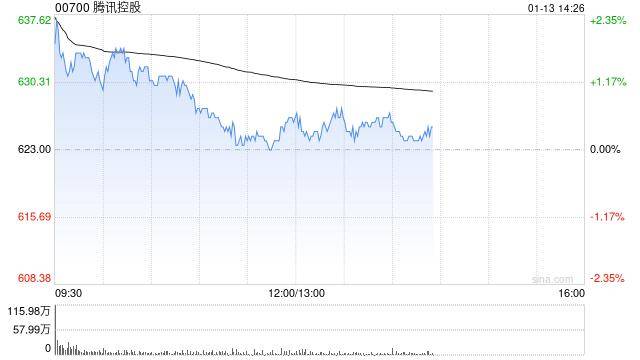
Market Overview - The Hong Kong stock market opened high on January 13, with the Hang Seng Index rising by 1.01% to 26,877.42 points, the Hang Seng Tech Index up by 0.38% to 5,885.42 points, the National Enterprises Index increasing by 0.8% to 9,293.55 points, and the Red Chip Index up by 0.96% to 4,153.53 points [1] - Major technology stocks mostly rose, with Alibaba increasing by 3.5%, Tencent Holdings up by 0.48%, and JD Group rising by 1.11%. However, Xiaomi fell by 0.67%, Meituan dropped by 0.86%, and Kuaishou decreased by 1.93% [1] Company News - WuXi AppTec (02359.HK) forecasted a net profit of 19.151 billion yuan for the fiscal year 2025, representing a year-on-year increase of approximately 103%, which includes gains from the sale of partial equity in joint ventures and the divestiture of certain businesses [2] - Dongfeng Group (00489.HK) reported cumulative automobile sales of 1.8962 million units for 2025, reflecting a year-on-year growth of approximately 0.01% [3] - Q Technology (01478.HK) announced that it sold 45.938 million camera modules in 2025, a year-on-year increase of 43.6%, while fingerprint recognition module sales decreased by 12% to 17.947 million units [3] - Yue Yuen Industrial Holdings (00551.HK) reported a cumulative operating income of 8.031 billion USD for 2025, a decrease of 1.85% year-on-year [4] - Baoshan International (03813.HK) reported a cumulative operating income of 17.132 billion yuan for 2025, down by 7.2% year-on-year [5] - Jiangshan Holdings (00295.HK) indicated that its total solar power generation for 2025 is approximately 300,700 MWh, a decrease of 6.14% year-on-year [6] - Yida China (03639.HK) projected a contract sales amount of approximately 763 million yuan for 2025, a decline of 19.43% year-on-year [7] - China Lilang (01234) reported a high single-digit growth in retail sales for its "LILANZ" products in the fourth quarter [8] Clinical Trials and Innovations - Clover Biopharmaceuticals (02197.HK) has initiated Phase II clinical trials for its RSV-hMPV-PIV3 respiratory combined vaccine candidate [9] - Yiming Anke (01541.HK) received approval from the National Medical Products Administration for clinical trials of MM01 (Tideglusib) for atherosclerosis treatment [10] - Xianjian Technology (01302.HK) has entered the special review process for its Concave Supra integrated three-branch reconstruction system [11] Corporate Actions - Haitong Securities (01905.HK) plans to issue company bonds not exceeding 1 billion yuan [13] - China Heartland Fertilizer (01866.HK) has approved a new plan to repurchase up to 10% of its issued shares from the open market, not exceeding 200 million yuan in value [13] - Tencent Holdings (00700.HK) repurchased 1.024 million shares for approximately 636 million HKD at prices ranging from 614 to 627 HKD [14] - Geely Automobile (00175.HK) repurchased 9.007 million shares for approximately 151 million HKD at prices between 16.63 and 17.15 HKD [15] - Jun Da Holdings (02865.HK) announced that its controlling shareholder plans to reduce its stake by up to approximately 8.7254 million shares [16] Analyst Insights - CITIC Securities released a 2026 investment outlook, suggesting that the Hong Kong stock market may experience a second round of valuation recovery and performance revival, driven by internal and external economic factors [17] - Huaxi Securities noted that the Hong Kong market continues to lag behind the A-share market, with a need for time to restore market sentiment [18] - Guoyuan International indicated that the Hong Kong market is currently in a relatively quiet period, awaiting further catalysts for market movement [18] - Industrial Securities recommended focusing on leading internet companies in the AI sector, as well as dividend assets in low-interest-rate environments, and new consumption trends [19]
富瑞:重申AI为中国互联网市场首要主题 首选阿里(09988)及腾讯
智通财经网· 2026-01-13 03:00
Core Viewpoint - The report by Jefferies emphasizes that artificial intelligence will remain the primary theme in China's internet market through 2026, followed by the defensive entertainment sector and the rapidly growing tourism industry [1] Group 1: Market Trends - The market has already factored in recent consumer sentiment and monthly Gross Merchandise Volume (GMV) growth, with a year-on-year GMV increase of 7.5% in the third quarter of September, and growth rates of 4.9% and 1.5% for October and November respectively compared to the same period last year [1] Group 2: Company Preferences - Jefferies lists Alibaba-W (09988) and Tencent Holdings (00700) as the top picks in the internet sector, followed by Baidu Group-SW (09888), Trip.com Group-S (09961), NetEase-S (09999), Kuaishou-W (01024), Tencent Music-SW (01698), JD Group-SW (09618), and Meituan-W (03690) [1] Group 3: E-commerce Focus - The focus in the fast e-commerce sector is shifting from low Average Order Value (AOV) orders to high AOV orders, as the latter offers better unit economics under healthy industry conditions [1] Group 4: Kuaishou Developments - Kuaishou's AI-generated model "K可灵AI" has launched several new products, with analysis indicating that its motion control feature has gained significant popularity in overseas markets since late December and into January, with expectations that Kuaishou's fourth-quarter performance will meet projections [1]

