
SMIC(00981)

Search documents
中芯国际预期国际财务报告准则下第四季度收入同比增长7.91%至10.06%
Zhong Guo Jin Rong Xin Xi Wang· 2025-11-13 13:09
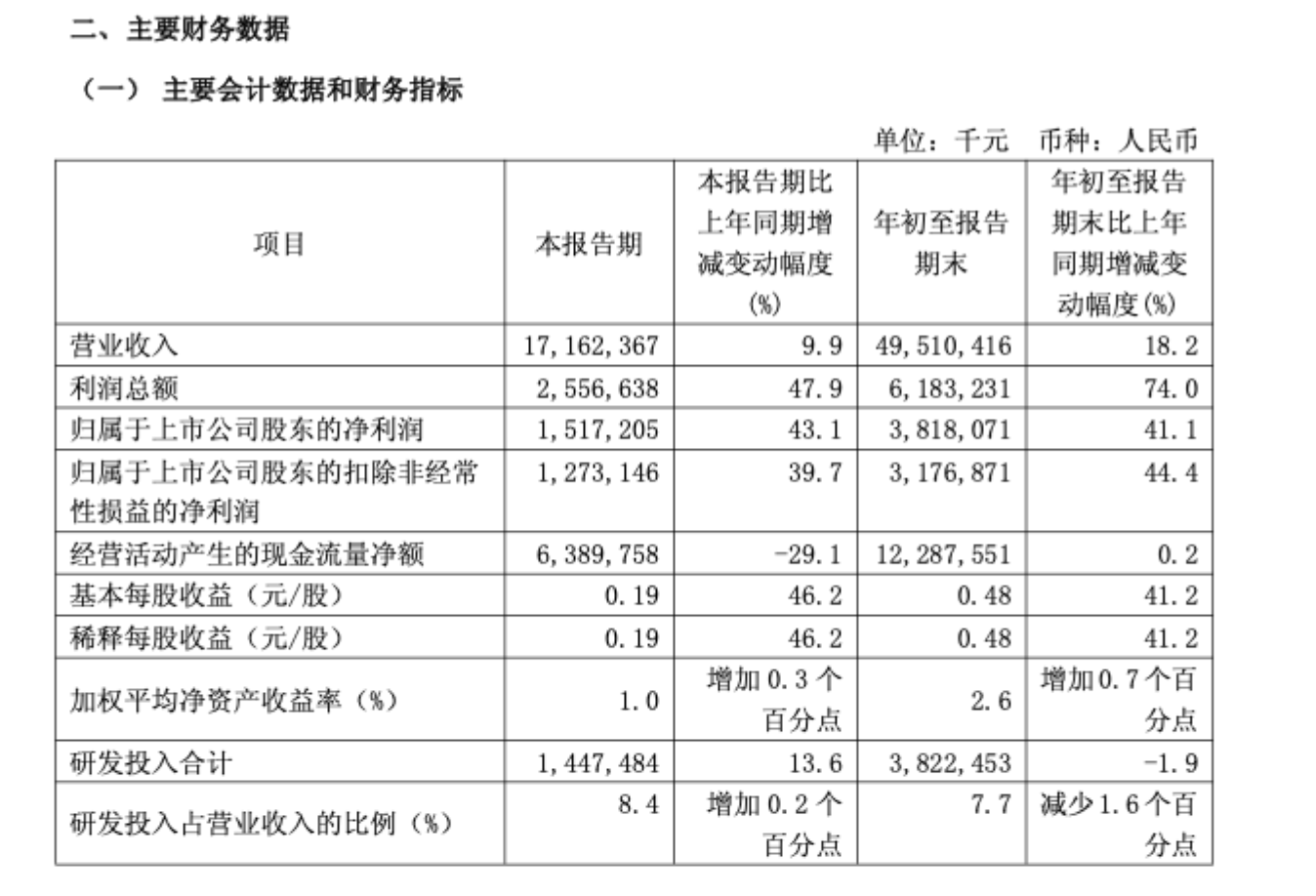
Core Insights - SMIC reported a 9.9% year-on-year increase in Q3 2025 revenue to RMB 17.162 billion, with a net profit growth of 43.1% to RMB 1.517 billion [1] - For the first three quarters of 2025, revenue increased by 18.2% to RMB 49.510 billion, and net profit rose by 41.1% to RMB 3.818 billion [1] - The company's gross margin for Q3 was 25.5%, up 4.8 percentage points from the previous quarter, with a capacity utilization rate of 95.8%, an increase of 3.3 percentage points [1] Financial Performance - Q3 2025 revenue was RMB 17.162 billion, with a net profit of RMB 1.517 billion and a non-GAAP net profit of RMB 1.273 billion [1] - For the first three quarters, revenue was RMB 49.510 billion, net profit was RMB 3.818 billion, and non-GAAP net profit was RMB 3.177 billion [1] - The gross margin for the first three quarters was 23.2%, an increase of 5.6 percentage points year-on-year [1] Future Guidance - For Q4 2025, the company expects revenue to remain flat or grow by 2% quarter-on-quarter, with a gross margin guidance of 18% to 20% [1] - The H-share announcement indicated that Q3 2025 sales revenue was $2,381.8 million, compared to $2,209.1 million in Q2 2025 and $2,171.2 million in Q3 2024 [1] - The estimated revenue for Q4 2024 is approximately $2,207.3 million, suggesting a projected year-on-year growth of 7.91% for Q4 2025 [2]

中芯国际第三季度盈利抬升资本支出翻倍 北上资金大幅加仓
Zheng Quan Shi Bao Wang· 2025-11-13 13:01
Core Insights - SMIC reported a strong Q3 performance with revenue of 17.162 billion yuan, a year-on-year increase of 9.9%, and a net profit of 1.517 billion yuan, up 43.1% [1] - The company’s gross margin and capacity utilization improved, with a quarterly profit margin of 60.3%, an increase of 7.6 percentage points year-on-year [1] - For Q4, SMIC expects revenue to remain flat or grow by 2%, with gross margin projected between 18% and 20% [1] Financial Performance - Q3 revenue reached 17.162 billion yuan, with a net profit of 1.517 billion yuan, leading to a basic earnings per share of 0.19 yuan [1] - Year-to-date revenue for the first three quarters was 49.51 billion yuan, reflecting an 18.2% year-on-year growth, with net profit of 3.818 billion yuan, a growth of approximately 40% [1] - Capital expenditure for Q3 was 17.065 billion yuan, a quarter-on-quarter increase of about 26% and a year-on-year doubling [1] Product and Market Segmentation - In Q3, 12-inch wafers accounted for 77% of the product mix, with capacity utilization rising to 95.8% [1] - By application, consumer electronics had the highest share, increasing by 43.4% quarter-on-quarter, while smartphone revenue share decreased to 21.5% [2] - Geographically, the China region's share rose to 86.2%, while the US region's share fell to 10.8% [2] Shareholder Activity - Since July, SMIC's stock price has increased by nearly 40%, with significant accumulation by northbound funds [3] - By the end of Q3, the top ten shareholders included northbound funds, which increased their holdings to 5.85% [3] - New shareholders include the Harvest CSI Star Market Chip ETF and the E Fund CSI 300 ETF, now ranked ninth and tenth among shareholders [3] Cautionary Measures - SMIC has prudently recognized credit impairment losses and asset impairment losses totaling 917 million yuan for the first three quarters of 2025, impacting consolidated profits [3]
中芯国际赚爆了!产能近100%!
国芯网· 2025-11-13 12:59
Core Viewpoint - The article emphasizes the growth and performance of SMIC (Semiconductor Manufacturing International Corporation) in the semiconductor industry, highlighting significant revenue and profit increases in the third quarter of 2023. Financial Performance - In Q3 2023, SMIC reported revenue of 171.62 billion RMB, with a net profit of 15.17 billion RMB, reflecting a year-on-year growth of 43.10% [2][4]. - For the first three quarters of 2023, the company achieved a total revenue of 495.10 billion RMB, up 18.2% year-on-year, and a net profit of 38.18 billion RMB, which is a 41.1% increase [4]. - The gross margin for the first three quarters was 23.2%, an increase of 5.6 percentage points compared to the same period last year, while Q3 gross margin reached 25.5%, up 4.8 percentage points [4]. Capacity and Utilization - SMIC's capacity utilization rate in Q3 2023 was 95.8%, showing a year-on-year increase of 17.8% [6]. - The monthly production capacity is projected to increase from 991,25 thousand 8-inch equivalent wafers in Q2 2025 to 1,022,75 thousand in Q3 2025 [6]. Revenue Breakdown - In Q3 2023, revenue by application was distributed as follows: smartphones 21.5%, computers and tablets 15.2%, consumer electronics 43.4%, internet and wearables 8%, and industrial and automotive at 11.9% [6]. - Revenue contribution by region showed that the Chinese market accounted for 86.2%, while the U.S. contributed 10.8% and the Eurasian region 3% [6]. Guidance and Future Outlook - For Q4 2023, SMIC's revenue guidance is expected to remain flat or grow by 2% quarter-on-quarter, with a gross margin forecast of 18% to 20% [4].

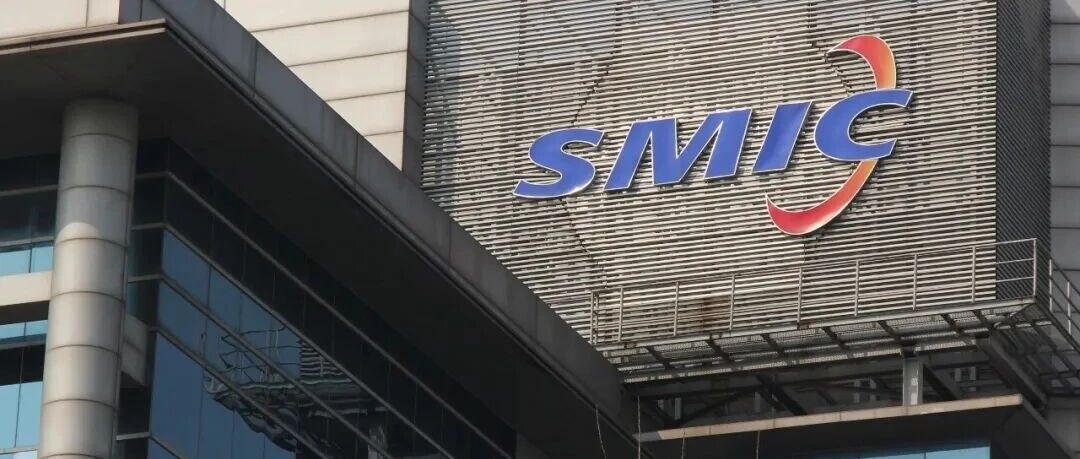
【太平洋科技-每日观点&资讯】(2025-11-14)
远峰电子· 2025-11-13 12:57
Market Performance - The main board led the gains with notable increases in stocks such as Shiji Information (+10.02%), Yongding Co. (+9.99%), and Data Port (+9.99%) [1] - The ChiNext board saw significant growth with stocks like Zhidema (+20.00%) and Chaoping San (+13.68%) [1] - The Sci-Tech Innovation board was led by Baiwei Storage (+13.21%) and Changguang Huaxin (+9.60%) [1] - Active sub-industries included SW Portal Websites (+2.98%) and SW Communication Application Value-Added Services (+2.68%) [1] Domestic News - Yiwentech launched the second generation of AR glasses, Even G2, featuring advanced specifications such as 640×350 resolution and 1200 nits peak brightness, with a 75% increase in display area compared to the previous generation [1] - Baidu announced the new Kunlun chip M100, optimized for large-scale reasoning scenarios, set to launch in 2026, and the M300 for ultra-large multimodal model training, expected in 2027 [1] - Cambricon announced its embrace of the FlagOS ecosystem, an open-source software stack supporting over 20 mainstream AI chip models [1] - UMC and Metalenz have entered mass production of the Polar ID facial recognition solution, which significantly reduces costs and complexity compared to existing methods [1] Company Announcements - SMIC reported Q3 2025 revenue of 17.162 billion yuan, a 6.9% increase quarter-on-quarter, with a gross margin of 25.5%, up 4.8 percentage points [3] - Hengyin Technology announced a significant shareholder reduction of 5% through block trading, with 5.7 million shares sold, representing 1.10% of total shares [3] - Hengshuo Co. completed its share reduction plan, selling 573,857 shares, which is 0.69% of total shares [3] - Zhixin Electronics received a patent for a heat shrink device, enhancing its production automation capabilities [3] Overseas News - Infineon reported a fiscal year 2025 revenue of 14.662 billion euros, a 2% year-on-year decline, with a profit of 2.56 billion euros and a profit margin of 17.5% [1] - Microchip Technology launched a new series of optical Ethernet PHY transceivers, offering 25 Gbps and 10 Gbps options [1] - The global smartphone panel market saw a significant quarterly growth, with Q3 2025 shipments reaching 580 million units, a year-on-year increase of approximately 5.2% [1] - Kioxia expects NAND demand to exceed supply, projecting a 15% growth in bit shipments for fiscal year 2025 [1]



A股公告精选 | 中芯国际(688981.SH)三季报出炉!Q3实现净利超15亿元
智通财经网· 2025-11-13 12:51
Group 1: Company Performance - SMIC reported a revenue of 17.162 billion yuan in Q3 2025, a year-on-year increase of 9.9%, with a net profit of 1.51 billion yuan, up 43.1% year-on-year. For the first three quarters, revenue reached 49.51 billion yuan, growing 18.2%, and net profit was 3.81 billion yuan, an increase of 41.1% year-on-year, driven by increased wafer sales and product mix changes [1] - Huasheng Lithium reported a revenue of 538.5553 million yuan for the first three quarters of 2025, a year-on-year increase of 62.29%, but still incurred a net loss of 102.9745 million yuan [5] Group 2: Stock Performance and Risks - Aofeng China announced that its stock price has significantly deviated from its fundamentals, with a cumulative increase of 230.84% over 13 trading days, leading to potential risks for investors if the stock continues to rise abnormally [2] - Renmin Tongtai's stock experienced a cumulative increase of 46.43% over four consecutive trading days, with the company warning of potential rapid declines due to market sentiment and irrational speculation [4] Group 3: Mergers and Acquisitions - Guotai Group announced the acquisition of 100% equity in Beikuan Baomao for 110 million yuan through a public bidding process [3] Group 4: New Projects and Contracts - Lichong Group's subsidiaries received project confirmations for aluminum alloy wheels, with expected total sales of approximately 1.135 billion yuan over the project lifecycles [15] - Anhui Construction's subsidiary won a bid for a project worth 1.753 billion yuan, including two major contracts with a total construction cost of approximately 1.215 billion yuan and 538 million yuan respectively [16] Group 5: Clinical Trials and Innovations - Haishi Science received approval for clinical trials of HSK39297 tablets for age-related macular degeneration, indicating strong development potential and a favorable benefit/risk ratio [6]
港股公告精选|腾讯三季度盈利超600亿元 中芯国际前三季收入同比增约两成
Xin Lang Cai Jing· 2025-11-13 12:41
Performance Highlights - Tencent Holdings (00700.HK) reported Q3 revenue of 192.87 billion yuan, a year-on-year increase of 15% and a quarter-on-quarter increase of 5%. Net profit reached 63.13 billion yuan, up 19% year-on-year and 13% quarter-on-quarter [2] - Semiconductor Manufacturing International Corporation (00981.HK) achieved Q3 sales revenue of 2.38 billion USD, a quarter-on-quarter increase of 7.8% and a year-on-year increase of 9.7%. Gross margin improved to 22.0%, up 1.6 percentage points quarter-on-quarter [3] - JD Group (09618.HK) reported Q3 total revenue of 299.06 billion yuan, a year-on-year increase of 14.85%, while net profit decreased by 55.03% to 5.28 billion yuan [4] - JD Logistics (02618.HK) recorded Q3 revenue of 55.08 billion yuan, a year-on-year increase of 24.1%, with operating profit rising by 125.3% to 1.24 billion yuan [5] - Bilibili (09626.HK) achieved Q3 net revenue of 7.69 billion yuan (1.08 billion USD), a year-on-year increase of 5%, and turned a profit with a net profit of 469 million yuan (65.9 million USD) [6] Company News - Heng Rui Medicine (01276.HK) received clinical trial approval for its drug, with similar products expected to generate global sales of approximately 11.04 billion USD in 2024 [7] - China Pacific Insurance (02601.HK) reported that for the first ten months, life insurance premium income reached 241.32 billion yuan, a year-on-year increase of 9.9% [8] - Zhong An Online (06060.HK) reported total original insurance premium income of approximately 29.82 billion yuan for the first ten months, a year-on-year increase of 5.18% [9] Buyback Activities - Yongsheng Services (01995.HK) plans to repurchase up to approximately 173 million shares, accounting for about 10% of the issued share capital [12] - Kintor Pharmaceutical (02171.HK) intends to repurchase up to approximately 25.46 million shares [13] - China Feihe (06186.HK) spent 87.86 million HKD to repurchase 20 million shares at prices ranging from 4.37 to 4.40 HKD [14]



沪指再次新高,新的一轮上涨要来了吗?
Sou Hu Cai Jing· 2025-11-13 12:34
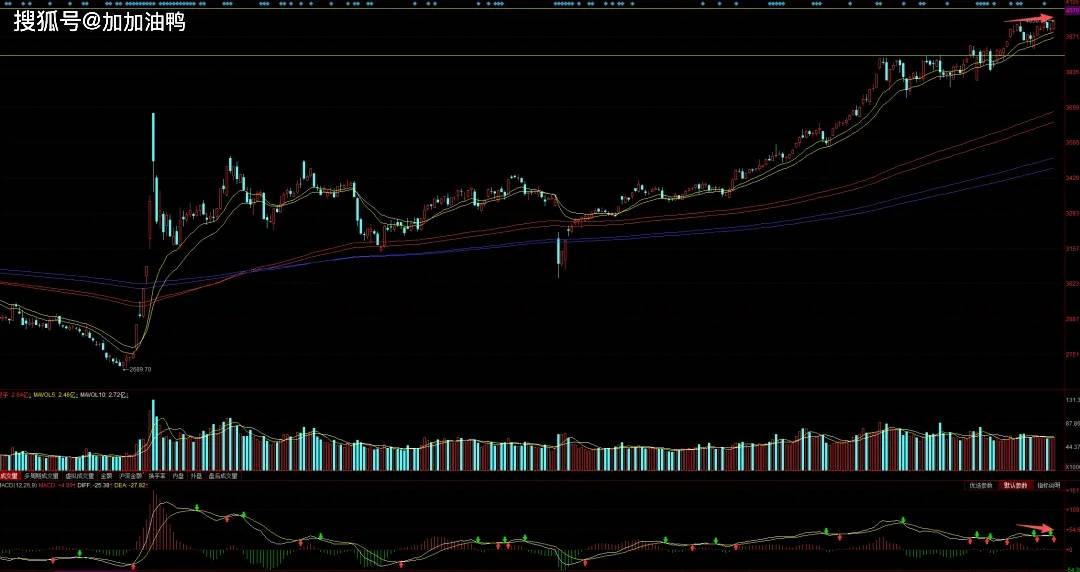
Group 1 - The Shanghai Composite Index has broken through previous highs, reaching a new 10-year peak, with trading volume exceeding 2 trillion yuan, indicating a potential new upward trend in the market [1] - The recent market increase is attributed to three key factors: the end of the U.S. government shutdown, the unexpected resignation of the Atlanta Fed President, and Alibaba's announcement of its AI model "Qianwen" [2][3] - The economic impact of the government shutdown is estimated to be around $1.5 trillion, suggesting that reopening may not resolve all issues, as new challenges may arise [2] Group 2 - Alibaba's AI model announcement has positively influenced the market, particularly benefiting AI-related stocks, which have seen significant adjustments recently [3] - Semiconductor company SMIC reported third-quarter revenue of $6.838 billion, a year-on-year increase of 17.44%, and a net profit of $512 million, up 33% year-on-year, although its valuation remains high [5] - The overall market trend may shift in the fourth quarter, with a focus on AI and technology sectors, while traditional sectors like mining and metals are also experiencing price increases due to global monetary easing [4][5] Group 3 - The technical analysis of the Shanghai Composite Index indicates that it is currently the strongest index, but caution is advised as various indicators suggest potential market topping [8]
中芯国际,最新业绩出炉
2 1 Shi Ji Jing Ji Bao Dao· 2025-11-13 12:25
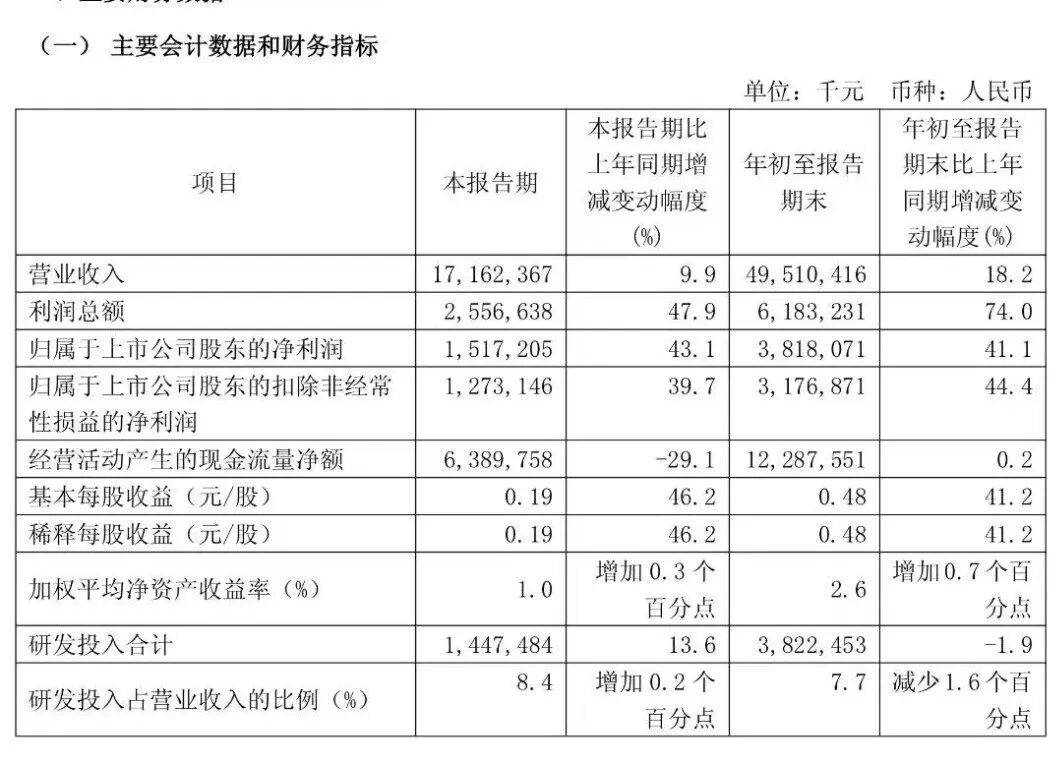
Core Insights - SMIC reported Q3 2025 revenue of 171.62 billion yuan, a year-on-year increase of 9.9%, and a net profit of 15.1 billion yuan, up 43.1% year-on-year [1][2] - For the first three quarters, revenue reached 495.10 billion yuan, reflecting an 18.2% year-on-year growth, while net profit was 38.1 billion yuan, a 41.1% increase year-on-year [1][2] - The growth in performance is attributed to an increase in wafer sales and changes in product mix [1] Financial Performance - Q3 revenue: 171.62 billion yuan, up 9.9% year-on-year [2] - Q3 net profit: 15.1 billion yuan, up 43.1% year-on-year [2] - Revenue for the first three quarters: 495.10 billion yuan, up 18.2% year-on-year [2] - Net profit for the first three quarters: 38.1 billion yuan, up 41.1% year-on-year [2] - Basic earnings per share: 0.19 yuan, up 46.2% year-on-year [2] - R&D investment: 1.45 billion yuan in Q3, up 13.6% year-on-year [2] Market Reaction - As of November 13, SMIC's A-shares rose by 2.9% to 123.1 yuan per share, with a market capitalization of 659.6 billion yuan [3] - SMIC's Hong Kong shares increased by 3.21% to 75.6 HKD per share, with a market capitalization of 723.7 billion HKD [3] Future Outlook - The company expects Q4 revenue to remain flat or grow by 2% quarter-on-quarter, with a gross margin projected between 18% and 20% [1]
月产能突破百万片,中芯国际三季度净利润增长43.1%
Di Yi Cai Jing· 2025-11-13 12:25
Core Viewpoint - SMIC reported strong financial performance for Q3 2025, with significant revenue and profit growth driven by increased wafer sales and product mix changes [1][3]. Financial Performance - Revenue for Q3 reached 171.62 billion yuan, a quarter-on-quarter increase of 6.9% [1][3]. - Net profit attributable to shareholders was 15.17 billion yuan, representing a year-on-year growth of 43.1% [1][3]. - Gross margin improved to 25.5%, up 4.8 percentage points from the previous quarter [1][3]. - Basic and diluted earnings per share were both 0.19 yuan, an increase of 46.2% year-on-year [3]. Revenue Breakdown - Revenue from the Chinese market accounted for 86.2% of total revenue, up from 84.1% in Q2 [3][4]. - The U.S. market contributed 10.8%, while the Eurasian market accounted for 3.0% [3][4]. - Revenue from the smartphone sector represented 21.5%, while consumer electronics accounted for 43.4% [4]. Production Capacity - Monthly production capacity reached 1.0228 million wafers, surpassing the one million mark [4]. - Wafer sales totaled 2.4995 million, with a capacity utilization rate of 95.8% [4]. - Capacity utilization rates increased from 90.4% in Q1 to 95.8% in Q3, indicating a positive industry trend [4]. Research and Development - R&D expenditure for the quarter was 1.447 billion yuan, a year-on-year increase of 13.6% [4]. - Capital expenditures reached 17.065 billion yuan, a quarter-on-quarter growth of 25.98% [4]. Cash Flow and Future Outlook - Net cash flow from operating activities was 6.39 billion yuan, down 29.1% year-on-year [5]. - The company anticipates Q4 revenue to remain flat or grow by 2%, with gross margin guidance of 18% to 20%, indicating a potential decline from Q3 levels [5].
科创板三季报完成交卷 硬科技动能澎湃
Zheng Quan Ri Bao Wang· 2025-11-13 11:49
Core Insights - The overall net profit of the Sci-Tech Innovation Board companies saw a significant year-on-year increase of 75% in the third quarter, reflecting strong resilience and growth quality in the "hard technology" sector [2][3]. Financial Performance - For the first three quarters of 2025, the companies on the Sci-Tech Innovation Board achieved total operating revenue of 1,105.01 billion yuan, a year-on-year increase of 7.9%, and a net profit of 49.27 billion yuan, up 8.9% [2]. - Excluding four leading photovoltaic companies, the overall revenue and net profit of the board increased by 14.6% and 30.6% respectively, indicating an amplified growth momentum [2]. - Over 70% of companies reported revenue growth, and nearly 60% saw net profit increases, with 158 companies experiencing net profit growth exceeding 50% [2]. R&D Investment - The total R&D investment of the Sci-Tech Innovation Board reached 119.75 billion yuan, which is 2.4 times the net profit, with a median R&D intensity of 12.4%, leading all A-share sectors [3]. - 35 unprofitable companies in the newly established growth tier reported a revenue increase of 39% year-on-year, while their net profit losses decreased by 65% [3]. Industry Highlights - The integrated circuit industry, a core area for technological self-reliance, saw 121 related companies achieve a revenue increase of 25% and a net profit increase of 67% [5]. - The artificial intelligence sector emerged as a new growth pillar, with significant revenue increases reported by key players such as Cambrian and Haiguang [6]. - The biopharmaceutical sector experienced an 11% revenue increase and a 48% net profit increase, with nine new class 1 drugs approved for market [6]. Market Dynamics - The photovoltaic sector benefited from "anti-involution" policies, with 17 related companies significantly reducing their losses by 28% [7]. - The lithium battery industry saw a revenue increase of 7% year-on-year, with a net profit of 1.02 billion yuan, marking a return to profitability for 19 companies [7].

