LENOVO GROUP(00992)

Search documents
两款人形机器人在深圳成功下线并将量产
Xin Lang Cai Jing· 2025-10-20 07:35
Core Insights - The collaboration between Kuawei Intelligence and Daimeng Robotics as partners in Lenovo's "Spark & Brightness Program" has successfully delivered the first batch of humanoid robot products [1] - This delivery indicates that the humanoid robot products have transitioned from small-scale testing to mass production [1] - The mass production will continue at the Southern Intelligent Manufacturing Base [1]

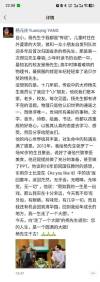
联想集团董事长杨元庆悼念杨振宁:您的人生,是一个圆满的大圈!物理只是他认识世界的通道之一,而绝非唯一
Sou Hu Cai Jing· 2025-10-20 01:51
Core Viewpoint - Lenovo Group Chairman Yang Yuanqing expressed deep admiration and respect for the late physicist Yang Zhenning, highlighting his diverse interests beyond physics, including literature, music, and art, and his childlike curiosity in learning and sharing knowledge [1][2][3] Group 1 - Yang Yuanqing reminisced about his childhood encounters with Yang Zhenning, describing him as a legendary figure and a source of inspiration throughout his education [2][3] - The rich inner world of Yang Zhenning was emphasized, showcasing his gratitude for life's experiences and his thoughtful approach to celebrating milestones, such as his 90th birthday [3] - Yang Zhenning's reflections on life and education were noted, particularly his feelings about returning to his roots and the fulfillment he found in his journey [3]

联想集团董事长杨元庆发文悼念杨振宁:您的人生,是一个圆满的大圈!物理只是他认识世界的通道之一,而绝非唯一
Sou Hu Cai Jing· 2025-10-20 01:46
Core Points - Lenovo Group Chairman Yang Yuanqing expressed deep condolences for the passing of physicist Yang Zhenning, highlighting his diverse interests beyond physics, including literature, music, poetry, painting, and calligraphy, which he approached with childlike curiosity and seriousness [1][5][6] Summary by Sections - **Personal Reflection**: Yang Yuanqing reminisced about his childhood admiration for Yang Zhenning, recalling how he and his friends welcomed Yang Zhenning upon his return to China and how he was a notable alumnus of Yang Yuanqing's high school [5][6] - **Life Philosophy**: Yang Zhenning's rich inner world and gratitude for life's experiences were emphasized, particularly during his 90th birthday celebration, where he prepared a presentation reflecting on his life journey and quoted Shakespeare about returning to childhood [6]
联想宣布升级智联质量生态模式 聚焦 以AI赋能质量管理
Zhi Tong Cai Jing· 2025-10-17 10:51
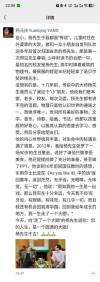
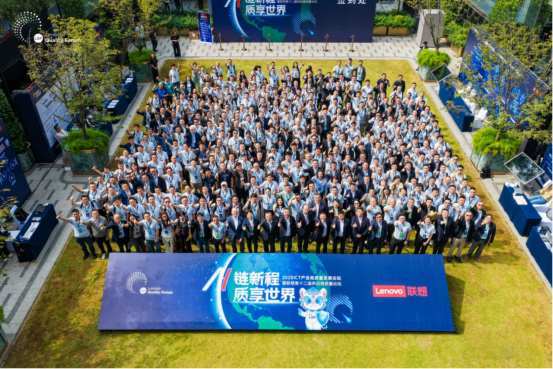
Core Insights - The forum held in Chongqing focused on the theme "AI Chain New Journey, Quality Enjoying the World," emphasizing the importance of quality in the context of new globalization and rapid AI development [1] - Lenovo has been hosting the Supplier Quality Forum annually since 2014, highlighting its commitment to quality as a cornerstone of its business and competitive advantage [1] Group 1: Quality Management Achievements - Lenovo's Vice President announced significant improvements in quality metrics over the past five years, including a 45% reduction in initial failure rates and a 21% reduction in warranty failure rates, along with a 31% increase in user satisfaction [2] - The "Extreme Left Shift" quality management philosophy aims to identify and mitigate quality risks from the earliest stages of product development, rather than at manufacturing or post-sale [2][3] Group 2: Collaborative Innovations - Lenovo's collaboration with Wistron in Chongqing has led to a modern manufacturing base that emphasizes quality control from the research and development stage, marking a shift from reactive to proactive quality management [3] - Joint efforts with BOE have resulted in innovative solutions to critical issues in product design and manufacturing, showcasing the importance of collaborative innovation in the consumer electronics industry [3] Group 3: Digital Transformation and AI Integration - Lenovo is entering the 2.0 phase of its digital transformation, driven by AI, which is seen as a new engine for quality competitiveness [5][6] - The company is enhancing its quality ecosystem by integrating AI capabilities across the entire supply chain, aiming for self-sensing, self-executing, self-decision-making, and self-adaptive quality management [6] Group 4: Global Operations and Market Growth - Lenovo's mobile business has seen significant growth, with a 45% year-on-year increase in the global foldable smartphone market, and Motorola's market share doubling to 28% [8] - The establishment of "lighthouse factories" and the implementation of AI-driven quality management have led to substantial reductions in quality losses and improved decision-making accuracy in production [7][8] Group 5: Future Directions - Lenovo aims to continue driving digital transformation in global industries, collaborating with suppliers to build a high-quality, resilient, and sustainable supply chain ecosystem [10] - The company emphasizes the importance of quality in the context of new globalization, advocating for a shift from GDP to GNP thinking among Chinese enterprises to enhance global competitiveness [9][10]
联想举办第十二届供应商质量论坛:以“极限左移 + AI”重构ICT产业质量生态
Ge Long Hui· 2025-10-17 10:02
Core Insights - The forum themed "AI Chain New Journey, Quality Enjoying the World" was held in Chongqing, where Lenovo Group gathered over 500 suppliers and industry experts to discuss building a resilient, sustainable, and win-win industrial ecosystem in the context of new globalization and rapid AI development [1][5]. Group 1: Quality Management Achievements - Lenovo Group has significantly improved its quality metrics over the past five years, with initial failure rates and in-warranty failure rates improving by 45% and 21% respectively, and user satisfaction (Net Promoter Score/Product Satisfaction Index) improving by 31% [4]. - The "Extreme Left Shift" quality management philosophy has been pivotal in these improvements, emphasizing early intervention in the product lifecycle to identify and mitigate quality risks [6][4]. Group 2: Collaboration and Innovation - Lenovo has collaborated with Wistron for over 24 years, establishing a modern manufacturing base in Chongqing, which has led to a shift from reactive to proactive quality management [8]. - The partnership with BOE has also resulted in innovative solutions to address critical quality issues, showcasing the importance of collaborative innovation in the consumer electronics industry [8]. Group 3: Digital Transformation and AI Integration - Lenovo's global supply chain has entered a new phase of digital transformation driven by AI, focusing on enhancing quality management through intelligent systems [10][12]. - The company is implementing AI across its quality ecosystem, connecting data from over 600 suppliers to enable proactive quality management and decision-making [12][13]. Group 4: Market Performance and Global Strategy - Lenovo's mobile device segment, particularly the Moto foldable phones, has seen significant growth, with a 45% year-on-year increase in global shipments and a market share increase from 14% to 28% [16]. - The company emphasizes the importance of reliability and user experience in competing with top international brands, advocating for a shift in focus from GDP to GNP in global operations [18]. Group 5: Future Outlook - Lenovo aims to continue driving digital transformation in the global supply chain, collaborating with partners to build a high-quality, resilient, and sustainable ecosystem [21].
联想宣布升级智联质量生态模式 以AI赋能质量管理
Zhi Tong Cai Jing· 2025-10-17 09:57
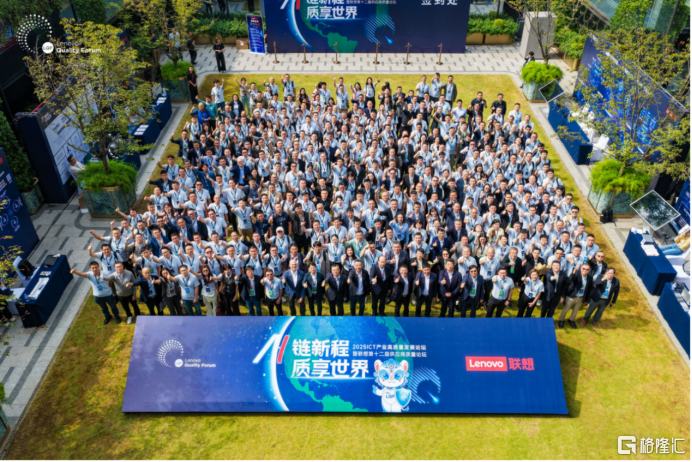
Core Viewpoint - Lenovo Group is focusing on quality management and innovation in the context of new globalization and rapid AI development, aiming to build a resilient, sustainable, and win-win industrial ecosystem through collaboration with over 500 suppliers and industry experts at the 2025 ICT Industry High-Quality Development Forum [1][2]. Group 1: Quality Management Achievements - Lenovo has improved its initial failure rate and in-warranty failure rate by 45% and 21% respectively over the past five years, with user satisfaction (Net Promoter Score/Product Satisfaction Index) improving by 31% [3]. - The "Extreme Left Shift" quality management philosophy has been pivotal in these improvements, emphasizing early intervention in the product lifecycle to identify and mitigate quality risks [6]. Group 2: Collaboration and Innovation - Lenovo has established a modern manufacturing base in Chongqing in collaboration with Wistron, focusing on quality control from the R&D stage and achieving significant advancements in quality management through joint innovation [8]. - The company is also working closely with BOE in Chongqing to address critical quality issues, implementing improvements in product design and manufacturing processes [9]. Group 3: Digital Transformation and AI Integration - Lenovo's global supply chain is entering a new phase of digital transformation driven by AI, with a focus on enhancing quality management capabilities across the entire ecosystem [10]. - The company is developing an intelligent quality management system that integrates AI to improve decision-making and risk identification, achieving a 70% reduction in quality losses since 2018 [11]. Group 4: Market Performance and Global Strategy - Lenovo's Moto foldable phones have seen a 45% year-on-year increase in global market shipments, with the brand's market share doubling from 14% to 28% in the same period [14]. - The company emphasizes the importance of high reliability and user experience to compete with top international brands, advocating for a shift from GDP to GNP thinking in global operations [18]. Group 5: Future Outlook - Lenovo aims to continue driving digital transformation in global industries, collaborating with suppliers to build a high-quality, resilient, and sustainable supply chain ecosystem [20].
财通证券:港股围绕AI主线布局 看好这11只个股!
Ge Long Hui· 2025-10-17 03:46
Group 1 - The core viewpoint is that the Hang Seng Technology sector is in the early stage of a macro liquidity recovery and an AI technology cycle, presenting high mid-term allocation value [1] Group 2 - The current fundamentals of Hang Seng Technology benefit from the explosion in application and content driven by new technological changes, with the AI technology cycle at its starting point [2] - The long-term logic involves competition for user numbers and engagement in a diminishing traffic dividend environment, which tests organizational capabilities [2] - High-quality companies are showing strong shareholder return capabilities post traffic dividend decline, with a focus on tracking EPS changes and policies, particularly in the consumer sector [2] Group 3 - The Hang Seng Technology sector is currently influenced by the Federal Reserve's transition to a liquidity easing phase, following the fastest and most extensive rate hikes since the 1980s [3] - The current price-to-earnings ratio (TTM) for Hang Seng Technology is at the 34th percentile of the past five years [3] Group 4 - Investment recommendations suggest focusing on AI-related sectors, particularly those likely to achieve performance realization first [3] - The AI hardware and computing power supply chain is expected to maintain high prosperity due to accelerated capital expenditure from global major companies [3] - The software application and content ecosystem are in the early stages of AI empowerment, with optimism for overseas software performance and other industry advancements [3] Group 5 - The e-commerce, local life, and advertising technology sectors are performing steadily under policy stimulus and operational efficiency improvements [3] - The acceleration of smart driving and mobility scenarios is anticipated to become a new growth driver for the industry [3] Group 6 - Recommended companies for investment include Tencent Holdings as a preferred choice, Alibaba and Baidu as mid-term elastic stocks, and Lenovo, Yueda Group, Trip.com, and Sunny Optical as stable slow-growth options [3] - Elastic stocks include Kuaishou, Horizon Robotics, Kingdee International, and Xpeng Motors [4]




恒生科技基本面如何?财通证券列出11只大牛股 联想、腾讯位列其中
智通财经网· 2025-10-17 03:25
Group 1 - The core viewpoint is that the Hang Seng Technology sector is in the early stage of a macro liquidity recovery and an AI technology cycle, presenting high mid-term allocation value [1] Group 2 - The current fundamentals of the Hang Seng Technology sector benefit from the explosion in application and content driven by new technological changes, currently at the starting point of the AI technology cycle [2] - The long-term logic involves competition for user numbers and engagement in a market where traffic dividends are gradually diminishing, testing organizational capabilities [2] - High shareholder return capabilities are evident among quality companies following the decline of traffic dividends, with a focus on tracking EPS changes and policies, particularly in the consumer sector [2] Group 3 - The Hang Seng Technology sector is influenced by the Federal Reserve's transition to a liquidity easing phase since September, following the fastest and most extensive rate hikes since the 1980s [3] - The current price-to-earnings ratio (TTM) of the Hang Seng Technology sector is at the 34th percentile of the past five years [3] Group 4 - Investment recommendations suggest focusing on AI-related sectors, particularly those likely to achieve performance realization first, benefiting from accelerated capital expenditure by global companies [3] - The software application and content ecosystem is in the early stages of AI empowerment, with optimism for overseas software performance and other industry advancements [3] - The e-commerce, local life, and advertising technology sectors are performing steadily under policy stimulus and operational efficiency improvements [3] - Intelligent driving and mobility scenarios are accelerating, expected to become new growth drivers for the industry [3] Group 5 - Recommended companies for high performance certainty and leading AI technology and content ecosystem layouts include Tencent Holdings, Alibaba, and Baidu [3] - Mid-term elastic stocks include Lenovo Group, China Literature, Trip.com, and Sunny Optical [3] - Elastic stocks also include Kuaishou, Horizon Robotics, Kingdee International, and Xpeng Motors [4]
重磅科技盛会,周末袭来!华为、苹果、阿里等巨头重点受邀
Zheng Quan Shi Bao· 2025-10-16 23:45
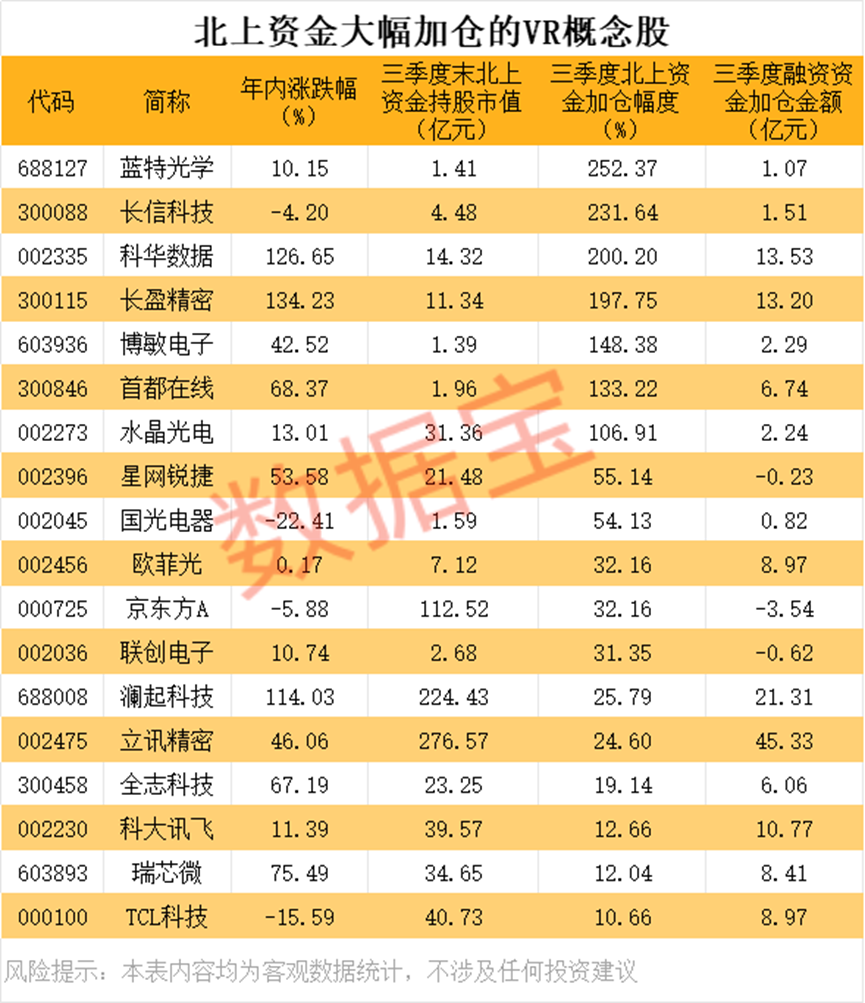
Group 1: Event Overview - The 2025 World VR Industry Conference will be held on October 19-20 in Nanchang, organized by the Jiangxi Provincial Government and other local authorities, focusing on the rapid application of VR technology [1] - The theme of the conference is "VR+AI Opens the Intelligent Future," aiming to create a high-end platform for deep integration of technology and industry [1] - The conference will feature five specialized matchmaking sessions and four corporate ecosystem forums, including topics like "AI+VR Integration Innovation" and "Huawei Ecosystem Forum" [2] Group 2: Industry Development in Jiangxi - Jiangxi Province has rapidly developed its VR industry, with a projected revenue of 110 billion yuan in 2024, marking a 9.34% year-on-year growth and a 26-fold increase since 2018 [3] - The province hosts over 400 VR companies, including major players like Huawei, Alibaba, and Lenovo, contributing to a robust industrial ecosystem [3] - The National Virtual Reality Innovation Center has made significant technological breakthroughs since its establishment in 2022, enhancing capabilities in key areas such as 3D reconstruction and gesture tracking [3] Group 3: Stock Market Performance - VR-related stocks in the A-share market have seen an average increase of over 28%, with companies like Changying Precision and Kehua Data doubling their stock prices this year [4] - Four VR concept stocks have released third-quarter earnings forecasts, all indicating significant profit increases, with Shuo Beid expecting a net profit growth of 1258.39% to 1313.24% [5] - Northbound capital has significantly increased its holdings in VR concept stocks, with 18 stocks seeing over 10% increases in shareholding during the third quarter [6]




政策加持,巨头引领,端侧AI爆发或成中企超车良机
Cai Fu Zai Xian· 2025-10-16 06:33
Core Insights - The article discusses the significant shift of artificial intelligence (AI) from cloud-based solutions to edge computing, driven by the explosion of computing power and increasing privacy concerns. This transition is termed the "downward revolution" in AI, which is expected to create new opportunities in the industry [1][2]. Industry Developments - The Ministry of Commerce and eight other departments in China have issued guidelines to accelerate innovation in AI terminal products, emphasizing the need for collaboration between supply and demand [1][2]. - Major tech companies, including Meta, OpenAI, NVIDIA, Lenovo, and JD.com, are making significant advancements in edge AI, indicating a competitive landscape that is heating up [1][3]. - According to Tianfeng Securities, the combination of policy support and industry leadership is expected to lead to a major cycle of innovation in edge AI products, with 2026 projected to be a pivotal year [1][3]. Market Potential - The demand for edge AI is driven by user needs for real-time processing, data privacy, and personalized experiences. Edge AI reduces reliance on cloud computing resources, thereby enhancing user experience and privacy protection [2][6]. - The Chinese edge AI market is projected to grow from less than 200 billion yuan in 2023 to over 1.9 trillion yuan by 2028, with a compound annual growth rate (CAGR) of 58% [6][7]. Competitive Landscape - Companies are intensifying their efforts in edge AI, with OpenAI planning to launch several AI hardware products in the coming year, including smart speakers and smart glasses [3][6]. - Lenovo is also making strides in edge AI, with its upcoming Moto X70 Air smartphone expected to feature advanced AI capabilities, positioning it as a strong competitor to Apple's products [3][4]. Technological Innovations - The trend towards smaller AI models for edge devices is gaining traction, with companies focusing on practical performance and power efficiency rather than just increasing model parameters [7][8]. - Lenovo has introduced technologies such as model compression and inference acceleration engines to enhance the performance of AI PCs, achieving capabilities comparable to cloud-based models [9][11]. Future Outlook - The integration of edge and cloud AI is seen as crucial for enhancing overall AI performance, with companies like Lenovo developing platforms that facilitate seamless collaboration between devices [11][12]. - The maturation of model miniaturization technology and continuous upgrades in hardware components are expected to lead to a significant explosion in AI terminal products, benefiting domestic manufacturers [14].