LENOVO GROUP(00992)

Search documents
金价冲破4000美元 机构关注这些股
Zheng Quan Shi Bao Wang· 2025-10-09 00:03
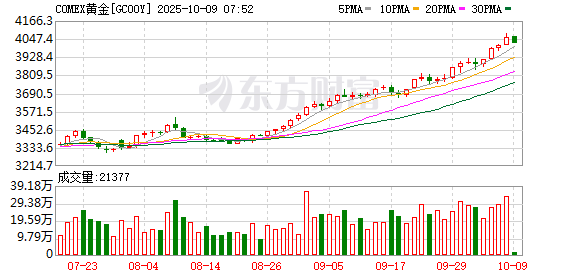
Group 1 - During the National Day and Mid-Autumn Festival holiday (October 1 to October 8), international gold prices surged significantly, with London gold spot prices breaking through $4000 per ounce, reaching a historical high of $4049.64 per ounce, marking a cumulative increase of 4.72% during the holiday period [3] - Other precious metals also saw notable increases, with London silver rising by 5.05% and LME copper increasing by 5.03% [3] - Hong Kong stocks in the non-ferrous metal sector followed the gold price trend, with notable increases in stock prices for companies such as Chifeng Jilong Gold Mining, which rose by 13.26% on October 8, and China Silver Group, which increased by 12.5% [3] Group 2 - The rise in non-ferrous metal prices was primarily influenced by the U.S. federal government "shutdown" concerns, as the Senate attempted to pass temporary funding bills [4] - Central banks continued to increase their gold reserves, with China's gold reserves reported at 74.06 million ounces by the end of September, marking an increase for the 11th consecutive month [4] - The World Gold Council reported that global official gold reserves increased by 166 tons in the second quarter, indicating a sustained demand for gold from central banks [4] Group 3 - According to research from Everbright Securities, the global market value of mined gold is projected to reach $20 trillion in 2024, with private investment-related gold assets totaling $6 trillion, indicating a relatively low allocation of gold compared to the global stock and bond markets [5] - The report suggests that there is significant potential for increasing gold allocation in the context of global order restructuring and deepening cracks in the credit monetary system [5] Group 4 - In the A-share market, gold sector stocks have averaged a 35.14% increase since the second half of the year, with notable performers including Yuguang Gold Lead and Zhongjin Gold, which saw increases of 72.28% and 53.94%, respectively [7] - Six gold stocks received ratings from more than ten institutions, with Zijin Mining and Shandong Gold leading in institutional attention [7] - Forecasts indicate that net profits for these gold stocks are expected to rise from 2025 to 2027, with Hunan Gold projected to have a net profit increase of 133.56% [7]




高盛最新增持股票名单曝光:联想、华虹半导体等位列其中




Ge Long Hui· 2025-10-08 10:12
Core Viewpoint - Goldman Sachs released its October Asia-Pacific strategy report, highlighting a list of recommended stocks based on the "earnings revision leading indicator" criterion, focusing on Hong Kong and Chinese concept stocks [1] Group 1: Recommended Stocks - Tencent (00700.HK) is included in the list of recommended stocks [1] - Alibaba-W (09988.HK) is also featured as a buy recommendation [1] - Xiaomi-W (01810.HK) is highlighted as a potential investment opportunity [1] - AIA Group (01299.HK) is part of the recommended stocks [1] - Pinduoduo (PDD.US) is listed among the buy stocks [1] - Hong Kong Exchanges and Clearing (00388.HK) is included in the recommendations [1] - Ping An Insurance (02318.HK) is mentioned as a buy [1] - Kuaishou-W (01024.HK) is part of the recommended list [1] - Techtronic Industries (00669.HK) is highlighted as a potential investment [1] - China Pacific Insurance (02328.HK) is included in the buy recommendations [1] - Lenovo Group (00992.HK) is featured in the list [1] - ZTO Express-W (02057.HK) is also recommended [1] - Hua Hong Semiconductor (01347.HK) is part of the buy list [1] - Kingdee International (00268.HK) is included in the recommendations [1] - GDS Holdings Limited-SW (09698.HK) is highlighted as a potential investment [1] - AAC Technologies (02018.HK) is part of the recommended stocks [1] - BYD Electronic (00285.HK) is included in the buy recommendations [1] - China International Capital Corporation (03908.HK) is featured in the list [1] - Weichai Power (02338.HK) is mentioned as a buy [1] - CRRC Corporation (01766.HK) is included in the recommendations [1] - JD Logistics (02618.HK) is part of the recommended stocks [1] - Swire Pacific A (00019.HK) is highlighted as a potential investment [1] - Miniso Group (09896.HK) is included in the buy recommendations [1] - Times Electric (03898.HK) is part of the recommended list [1] - Haitian International (01882.HK) is also featured in the recommendations [1]
高盛10月买入名单出炉:腾讯、联想、华虹半导体等24只个股在列
智通财经网· 2025-10-08 08:31
Core Viewpoint - Goldman Sachs released its October Asia-Pacific strategy report, highlighting a list of recommended stocks based on the "Earnings Revisions Leading Indicator" criteria, focusing on Hong Kong and Chinese concept stocks [1] Group 1: Recommended Stocks - The report includes a list of stocks recommended for purchase, which are: - Tencent (00700.HK) - Alibaba-W (09988.HK) - Xiaomi-W (01810.HK) - AIA (01299.HK) - Pinduoduo (PDD.US) - Hong Kong Exchanges and Clearing (00388.HK) - Ping An Insurance (02318.HK) - Kuaishou-W (01024.HK) - Techtronic Industries (00669.HK) - China Pacific Insurance (02328.HK) - Lenovo Group (00992.HK) - ZTO Express-W (02057.HK) - Hua Hong Semiconductor (01347.HK) - Kingdee International (00268.HK) - GDS Holdings-SW (09698.HK) - AAC Technologies (02018.HK) - BYD Electronic (00285.HK) - China International Capital Corporation (03908.HK) - Weichai Power (02338.HK) - CRRC Corporation (01766.HK) - JD Logistics (02618.HK) - Swire Pacific A (00019.HK) - Miniso Group (09896.HK) - Times Electric (03898.HK) - Haitian International (01882.HK) [1]
“十五五”规划聚焦具身智能,企业锚定场景落地抢滩万亿风口
Sou Hu Wang· 2025-10-08 04:37
Group 1: Market Potential and Growth - The market size of China's embodied intelligence industry is expected to reach 973.1 billion yuan by 2025, with the robotics market at 522.9 billion yuan (up 8.9%) and the autonomous driving market at 450.2 billion yuan (up 17.5%) [1] - By 2026, the market size of the embodied intelligence industry in China is projected to exceed 1 trillion yuan [1] - The humanoid robot market is predicted to reach nearly 3 trillion yuan by 2040, while the embodied intelligence market could reach 1.5 trillion USD (over 10 trillion yuan) by 2030, with a CAGR of 25% [7] Group 2: Policy and Strategic Importance - The "15th Five-Year Plan" is crucial for consolidating the achievements of the "14th Five-Year Plan" and laying the foundation for the "16th Five-Year Plan," directly impacting the realization of the 2035 vision [2] - The Chinese government is increasingly focusing on the development of embodied intelligence, with policies being established to support the industry during the "15th Five-Year Plan" period [3] - The government aims to elevate embodied intelligence as a core sector supporting the manufacturing powerhouse and digital China strategy, transitioning from foundational layout to core breakthroughs and integrated empowerment [2] Group 3: Corporate Developments and Innovations - Lenovo Group has made significant advancements in embodied intelligence, including the mass production of an intelligent driving domain controller based on the NVIDIA DRIVE AGX Thor platform [3] - The "Lenovo Enjoy No. 1" humanoid robot has been deployed in flagship stores across multiple cities, showcasing its ability to interact with the environment and serve as a commercial-grade robot [9] - Lenovo's "Morning Star" six-legged robot has demonstrated exceptional performance in extreme environments, enhancing the efficiency and safety of polar exploration tasks [11] Group 4: Application Scenarios and Investment Opportunities - The application scenarios for embodied intelligence are expected to focus on labor-intensive, repetitive tasks with high risks, where the technology can provide significant returns on investment [8] - The two main directions for investment in embodied intelligence are technical feasibility and cost-effectiveness, with strong potential for early adoption in various sectors [11] - Companies like Lenovo and Huawei, which have made early investments in intelligent fields, are expected to benefit from the growth opportunities in the embodied intelligence industry during the "15th Five-Year Plan" [7][12]

联想收购Infinidat计划或于年底前完成 企业级存储市场竞争力将大幅提升
Ge Long Hui· 2025-10-06 01:29
Core Insights - Infinidat has announced the expansion of its InfiniBox G4 storage array product line, introducing smaller models and upgrading existing products, coinciding with Lenovo's acquisition plans progressing smoothly, expected to finalize by the end of 2025 [1][2] Group 1: Acquisition Details - Lenovo's acquisition of Infinidat has been on track since its announcement in January 2025, with the complementary nature of both companies' businesses highlighted as a key advantage [2] - Infinidat focuses on high-end enterprise storage solutions, while Lenovo has strengths in entry-level and mid-range storage, creating a strategic fit for both companies [2][3] - The acquisition aims to fill Lenovo's gap in high-end storage technology and enhance its data center infrastructure [2][5] Group 2: Product Innovations - The new InfiniBox G4 models have reduced size by 30%, from 14U to 11U, and introduced lower capacity versions with a 29% price reduction compared to previous models, while maintaining high-end enterprise attributes [3][4] - The G4 series features native support for S3 compatible object storage, simplifying deployment processes significantly [3] - Infinidat has upgraded the hybrid G4 storage array's hard drive configuration, increasing effective capacity to 33PB, nearly doubling the previous maximum of 17.2PB [4] Group 3: Market Outlook - Industry partners have expressed strong support for the InfiniBox G4, noting its smaller size, better environmental adaptability, faster bandwidth, enhanced software capabilities, and lower pricing as key factors for expanding its application in various settings [4] - The acquisition is expected to significantly enhance Lenovo's product line and market competitiveness, particularly in the high-end SMB sector [5] - The collaboration is anticipated to deliver integrated solutions combining high-end storage, AI servers, and RAG data services, addressing the evolving needs of enterprises in the AI era [5]
AI战略又一重要布局将落地!联想(00992)收购高端存储企业Infinidat事宜或于年底前完成
智通财经网· 2025-10-06 01:11
Core Insights - Infinidat has announced an expansion of its InfiniBox G4 storage array product line, introducing smaller models and upgrading existing products, while Lenovo's acquisition of Infinidat is progressing smoothly and expected to complete by the end of 2025 [1][2] Group 1: Infinidat's Product Development - The InfiniBox G4 product line update may be Infinidat's last major product move as an independent company [1] - The new InfiniBox G4 models have reduced size by 30% from 14U to 11U and introduced a low-capacity version with a 29% lower entry price compared to the 2024 small-size model, while maintaining high-end enterprise attributes such as 35 microseconds low latency and full network security features [3][4] - The G4 series now supports native S3-compatible object storage, simplifying deployment processes significantly [3] Group 2: Acquisition Details - Lenovo's acquisition of Infinidat is on track since its announcement in January 2025, with the complementary nature of both companies' businesses being a key highlight [2] - Infinidat's high-end storage capabilities will enhance Lenovo's product offerings, particularly in the high-end storage market where Lenovo previously lacked presence [3] - The acquisition will allow Infinidat's business to be integrated into Lenovo's Infrastructure Solutions Group, enhancing Lenovo's capabilities in the high-end market beyond SMB and mid-range storage [3] Group 3: Market Potential and Industry Impact - The effective capacity of the hybrid G4 storage array has increased to 33PB, nearly doubling from the previous maximum of 17.2PB [4] - Industry partners recognize the market potential of the InfiniBox G4, with its combination of smaller size, better environmental adaptability, faster bandwidth, stronger software capabilities, and lower price expected to drive adoption in various new scenarios [4][5] - The acquisition is anticipated to significantly enhance Lenovo's market competitiveness and expand its product line, providing a comprehensive storage and AI collaborative solution for enterprises [5]
AI战略又一重要布局将落地!联想收购高端存储企业Infinidat事宜或于年底前完成
Zhi Tong Cai Jing· 2025-10-06 01:08
Core Insights - Infinidat has announced the expansion of its InfiniBox G4 storage array product line, introducing smaller models and upgrading existing products, while Lenovo's acquisition of Infinidat is progressing smoothly and is expected to be completed by the end of 2025 [1][2] Group 1: Acquisition Details - Lenovo's acquisition of Infinidat, announced in January 2025, is on track, with the complementary nature of both companies' businesses being a key highlight [2] - Infinidat focuses on high-end enterprise storage solutions, while Lenovo has strengths in entry-level and mid-range storage, making the acquisition a strategic move to fill gaps in Lenovo's offerings [2][3] - The acquisition will allow Lenovo to enhance its product portfolio and provide comprehensive high-end storage support to its partners [3] Group 2: Product Innovations - The new InfiniBox G4 models have reduced their size by 30%, down to 11U, and introduced lower capacity versions with a 29% lower entry price compared to previous models, while maintaining high-end enterprise attributes [3][4] - The G4 series features native support for S3-compatible object storage, simplifying deployment processes significantly [3] - Infinidat has upgraded the hybrid G4 storage array's hard drive configuration, increasing effective capacity to 33PB, nearly doubling the previous maximum of 17.2PB [4] Group 3: Market Outlook - Industry partners have recognized the potential of the InfiniBox G4, highlighting its smaller size, better environmental adaptability, faster bandwidth, and enhanced software capabilities [4] - The acquisition is expected to significantly enhance Lenovo's market competitiveness and expand its product line, particularly in the high-end small and medium-sized enterprise market [5] - The integration of Infinidat's technology with Lenovo's AI server capabilities is anticipated to create a comprehensive solution for enterprise storage and computing needs in the AI era [5]
联想推出 GPU 高级服务:AI 工作负载性能提升 30%,破局企业硬件与预算困境
Ge Long Hui· 2025-10-04 09:22
据海外媒体QUANTUM ZEITGEIST报道,联想集团于近日正式发布 GPU 高级服务(GPU Advanced Services)。随着人工智能从 "小众领域的实验" 全面跃 升为企业核心商业必需 —— 过去一年间,部署 AI 系统的组织数量已实现翻倍 —— 但其底层动力核心 GPU(图形处理器)的发展却未能同步跟进:GPU 容量的扩张速度远超企业预算承受能力,导致大量企业陷入"硬件闲置浪费"或"性能瓶颈拖慢创新"的两难境地。此次联想推出的"服务优先"模式GPU高级服 务旨在弥补这一差距,不仅承诺将AI工作负载运行速度提升高达30%,更为主流企业打造了一条通往"生产就绪型AI"的清晰落地路径。 优化GPU引擎:从基准测试到业务落地 商业价值重构:从"资本密集"到"成本可控+价值可见" 投资GPU基础设施是一项资本密集型事业,但联想的模式将其转变为灵活、经济高效的服务。通过将GPU部署与经过验证的性能基准相结合,企业避免了过 度配置的常见陷阱——即因工作负载尚未完全实现而导致硬件闲置。其结果是基础设施支出的切实减少,通常量化为三年期内总拥有成本降低20-30%。 除了节省成本,速度提升也带来直接的财务影响 ...
联想(00992)推出GPU高级服务 助力AI工作负载性能提升高达30%
智通财经网· 2025-10-04 03:47
Core Insights - Lenovo Group has launched GPU Advanced Services to address the gap between the rapid expansion of AI systems and the limitations of GPU capacity, promising up to a 30% increase in AI workload performance [1] - The service model aims to transform capital-intensive GPU investments into flexible, cost-effective solutions, reducing total ownership costs by 20-30% over three years [4] Summary by Sections GPU Advanced Services Overview - The service is designed to support the entire lifecycle of AI applications through a three-phase modular approach, including planning, implementation, and ongoing management [2][3] Phase 1: GPU Planning and Design Services - Focuses on accurately matching enterprise needs by analyzing current AI workloads and recommending customized hardware combinations [2] Phase 2: GPU Implementation Services - Converts design plans into actual systems, providing detailed architecture blueprints and software stack configurations, while also offering training for client IT teams [3] Phase 3: GPU Hosting Services - Ensures peak system performance through subscription-based ongoing optimization and compliance monitoring, allowing companies to focus on model development rather than infrastructure maintenance [3] Economic Impact - The shift from capital-intensive GPU infrastructure to a service model allows companies to avoid over-provisioning and reduces infrastructure spending, leading to significant cost savings [4] - Speed improvements in sectors like media and healthcare can translate into increased throughput and better patient outcomes, respectively [4] Industry Customization - Lenovo's GPU Advanced Services are tailored for four key sectors: healthcare, automotive, media and entertainment, and cloud service providers, each requiring specific performance enhancements [5][6][7] Healthcare Sector - Focuses on high-resolution imaging and telemedicine, enabling real-time AI-assisted diagnostics with reduced inference latency [6] Automotive Sector - Targets edge AI and safety, optimizing embedded GPU inference pipelines for autonomous driving applications [6] Media and Entertainment Sector - Enhances real-time rendering efficiency, allowing content creators to preview 3D models instantly and scale from single workstations to multi-node clusters [6] Cloud Service Providers - Improves AI as a Service (AIaaS) product launch cycles and GPU resource utilization, leading to better profitability for cloud vendors [7] Conclusion - As AI transitions from experimental to everyday applications, the demand for efficient and scalable GPU infrastructure is expected to grow, with Lenovo's services providing a practical path for organizations to maximize their hardware potential [7]
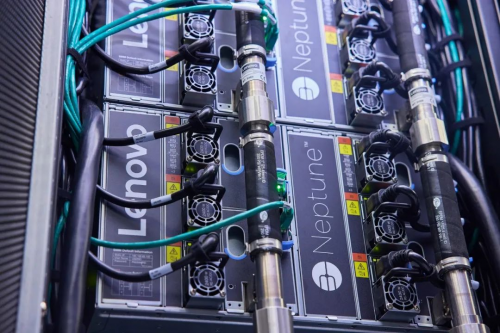
AI服务器液冷渗透率将超50%,系统化服务能力成竞争焦点
Sou Hu Wang· 2025-10-04 02:33
Group 1: Market Overview - The rapid development of AI technology is driving unprecedented cooling demands in data centers, with liquid cooling emerging as a more efficient and cost-effective solution [1] - According to Guosen Securities, the global liquid cooling market for data centers is expected to reach $10 billion by 2026, driven by major tech companies like Google, Amazon, Meta, and NVIDIA [1][6] - The penetration rate of liquid cooling in domestic data centers is projected to accelerate, with an expected penetration rate of over 50% for AI servers by 2026 [6] Group 2: Technological Advancements - Liquid cooling systems outperform traditional air cooling in terms of heat transfer capabilities and overall energy efficiency, leading to lower Power Usage Effectiveness (PUE) and reduced energy consumption [3] - Lenovo's "Hades" warm water cooling system, designed for AI training and high-performance computing, has achieved a PUE value below 1.1, allowing for the operation of servers exceeding 100 kW without dedicated air conditioning [5][8] - Innovations such as Lenovo's "Flying Fish" bionic cooling design and "Dual-Cycle" phase-change immersion cooling system have significantly enhanced cooling performance, with PUE values as low as 1.035 [8] Group 3: Competitive Landscape - Domestic manufacturers are gaining ground in the liquid cooling market, leveraging cost advantages and technological innovations to compete with established foreign players [9][14] - Vertiv, a leading overseas temperature control company, holds a 23.5% share of the global data center cooling market, benefiting from partnerships with NVIDIA [9] - Lenovo's collaboration with major chip manufacturers like Intel, NVIDIA, and AMD enhances its competitive edge in the liquid cooling sector, allowing for seamless integration of server performance [13][14] Group 4: Future Projections - The liquid cooling market in China is expected to grow significantly, with projections indicating a market size of approximately 130 billion yuan by 2029 [6] - The demand for liquid cooling solutions is expected to be driven by the increasing energy consumption of data centers, which currently accounts for 1.5% to 2% of global electricity usage, projected to rise to 4% by 2030 [2] - Companies like Lenovo are well-positioned to capitalize on the growing liquid cooling market due to their technological advancements and strong service capabilities [14]