
LENOVO GROUP(00992)

Search documents
戴尔、联想等PC厂计划涨价,涨幅最高20%
Xin Lang Cai Jing· 2025-12-07 08:13
Core Viewpoint - The ongoing increase in storage prices is impacting not only smartphone manufacturers but also PC and laptop manufacturers, leading to planned price hikes of up to 20% by companies like Lenovo, Dell, and HP [1] Group 1: Price Increases - Lenovo has already begun notifying customers about upcoming price adjustments [1] - Dell and HP are also planning to raise prices, with the maximum increase expected to reach 20% [1] - All server and computer quotes will expire on January 1, 2026, after which new pricing will significantly increase [1]



联想、戴尔、惠普要涨价了
财联社· 2025-12-07 06:25
Core Viewpoint - The ongoing surge in memory prices is impacting various sectors, particularly mobile and PC manufacturers, leading to anticipated price increases of up to 20% for products from companies like Lenovo, Dell, and HP [5][6]. Group 1: Price Increases and Manufacturer Responses - Lenovo has begun notifying customers of upcoming price adjustments, with new pricing set to take effect on January 1, 2026, due to rising memory costs and increased demand for high-performance systems driven by AI applications [6]. - Dell is also considering price hikes of at least 15% to 20%, with potential implementation as early as mid-December, citing unprecedented increases in memory chip costs [6]. - HP's CEO has indicated that the second half of 2026 may be particularly challenging, with plans to raise prices if necessary, noting that memory chips account for approximately 15% to 18% of a PC's cost [6]. Group 2: Market Impact and Forecast Adjustments - The rise in memory prices is exerting upward pressure on the material costs of consumer electronics, leading to increased retail prices and dampening market demand, as highlighted by TrendForce's report [7]. - TrendForce has revised its forecast for laptop shipments in 2026 from a projected growth of 1.7% to a decline of 2.4% due to the impact of rising memory prices [7]. - The shortage of storage chips has escalated from a component-level issue to a macroeconomic risk, potentially hindering productivity growth based on AI and delaying significant investments in digital infrastructure [7]. Group 3: Industry Dynamics and Competitive Landscape - Huatai Securities predicts that the ongoing rise in storage prices will pressure the consumer electronics sector, particularly Android smartphones and PCs, which may see a year-on-year decline in shipment volumes [8]. - The competitive landscape among smartphone manufacturers may shift, with companies like Apple and Samsung potentially less affected by storage price increases, while others may need to balance hardware profit margins with market share [8]. - There is a risk of profit margins being squeezed in the supply chain, suggesting a need to monitor production rates and the potential for price wars in certain industries [8].


涨幅最高20%,戴尔、联想等PC厂计划涨价 存储成本压力“扛不住了”
Feng Huang Wang· 2025-12-07 03:04
Group 1 - The ongoing increase in storage prices is affecting not only smartphone manufacturers but also PC and laptop manufacturers, with companies like Lenovo, Dell, and HP planning price hikes of up to 20% [1] - Lenovo has already notified customers about upcoming price adjustments, with new pricing set to take effect on January 1, 2026, due to rising memory costs and increased demand for high-performance systems driven by AI applications [1] - Dell is also considering price increases of at least 15%-20% for its PC and server products, with potential implementation as early as mid-December [1] Group 2 - The rise in memory prices is putting pressure on profit margins for PC manufacturers, prompting companies like Lenovo, HP, Dell, Samsung, and LG to reassess their product plans for 2026, including AI PCs and tablets [2] - TrendForce has reported that the increase in memory prices has significantly raised the bill of materials (BOM) for consumer electronics, leading brands to raise retail prices and suppressing market demand, resulting in a downward revision of the 2026 laptop shipment forecast from a 1.7% increase to a 2.4% decrease [2] - The shortage of storage chips has escalated from a component-level issue to a macroeconomic risk, with warnings that long-term shortages could hinder productivity growth based on AI and delay billions of dollars in digital infrastructure development [2] Group 3 - Haitong Securities predicts that the continued rise in storage prices will put pressure on the consumer terminal industries such as Android smartphones and PCs, potentially leading to a year-on-year decline in shipment volumes [3] - The competitive landscape among brand manufacturers may shift, with companies like Apple and Samsung being less affected by storage price increases, while some manufacturers may need to balance hardware profits against market share [3] - Profit margins in the supply chain components may be squeezed, suggesting a need to monitor the extent of production capacity declines and the potential for price wars in certain industries [3]
涨幅最高20%!戴尔(DELL.US)、联想(00992)等PC厂计划涨价 存储成本压力“扛不住了”
智通财经网· 2025-12-07 02:57
Group 1 - The core issue is the rising memory prices impacting PC and laptop manufacturers, leading to planned price increases of up to 20% by companies like Lenovo, Dell, and HP [1][2] - Lenovo has already notified customers of upcoming price adjustments, with new pricing set to take effect on January 1, 2026, due to increased memory costs and heightened demand for AI applications [1] - Dell is also considering price hikes of at least 15%-20%, with potential implementation as early as mid-December, citing unprecedented increases in memory chip costs [1][2] Group 2 - HP's CEO has indicated that the second half of 2026 may be particularly challenging, with plans to raise prices if necessary, noting that memory chips account for 15%-18% of a PC's cost [1][2] - The rising memory prices are exerting profit pressure on PC manufacturers, prompting a reevaluation of product plans for 2026, including AI PCs and tablets [2] - TrendForce has revised its 2026 laptop shipment forecast from a 1.7% year-on-year growth to a 2.4% year-on-year decline due to increased material costs [2] Group 3 - The ongoing memory shortage is evolving from a component-level issue to a macroeconomic risk, potentially hindering productivity growth based on AI and delaying significant digital infrastructure investments [2] - The storage price increases may lead to a decline in shipment volumes for Android phones and PCs, affecting competition dynamics among brands [3] - There is a suggestion to monitor production activity rates and the potential for price wars within the supply chain as profit margins are squeezed [3]
内存短缺,服务器价格上涨
半导体行业观察· 2025-12-07 02:33
Core Insights - The article discusses the significant impact of memory shortages on server and PC prices, with manufacturers facing rising component costs due to a shift in production focus towards AI servers [3][4]. Group 1: Price Increases - DRAM prices are projected to rise by 8% to 13%, with some forecasts suggesting even higher increases [3]. - Major OEMs, including Dell, Lenovo, HP, and HPE, plan to raise server prices by approximately 15%, while PC prices are expected to increase by about 5% [4][5]. - Samsung has reportedly raised memory prices by up to 60% as wafer production capacity shifts towards AI workloads [4]. Group 2: Industry Response - Manufacturers are reevaluating their product lines, with some brands halting consumer-oriented memory production to meet enterprise demands [4]. - The COO of Dell described the current memory shortage as "unprecedented," indicating that supply is struggling to keep pace with growing demand [4]. - Lenovo's COO highlighted the immense cost pressure from memory and solid-state drives, complicating mitigation efforts [5]. Group 3: Market Dynamics - The shift towards AI-centric production is affecting the supply and cost of general hardware components [4][6]. - IDC analysts noted that the current market volatility is unusually high compared to past fluctuations, driven by increasing demand for servers, CPUs, and GPUs [5].

对话联想基础设施业务群黄山、周韬:单纯算力中心面临生存危机,AI工厂如何重构商业闭环
Feng Huang Wang· 2025-12-07 02:08
Core Insights - The article discusses the transition of China's AI industry from a phase of intense competition to a focus on practical applications, highlighting Lenovo's initiatives in this transformation [1][10] Group 1: AI Factory Concept - Lenovo introduced the "AI Factory" concept as a reconstruction of the computing infrastructure business model, moving beyond mere computing power to address complex industry needs [2][3] - The shift from traditional computing centers to AI factories is seen as essential for reducing costs and enhancing efficiency for small and medium enterprises [2][3] Group 2: Business Model Innovation - Lenovo aims to fill the capability gaps of its clients by providing a comprehensive suite of services, including consulting, data governance, and AI production management, thus lowering the barriers for SMEs [3][4] - The company emphasizes the importance of ecosystem collaboration to enhance operational efficiency and competitiveness [3] Group 3: Standardization Efforts - The lack of industry standards for AI training and inference efficiency is identified as a significant challenge, prompting Lenovo to collaborate with various institutions to establish integrated training and inference standards [4] - This initiative aims to eliminate information asymmetry in the computing service market, allowing clients to better understand the return on investment for their expenditures [4] Group 4: Hardware Innovations - Lenovo's new server, the WA8080a G5, is designed to address the challenges posed by the rapid evolution of GPU technology, which has seen power consumption exceed 1000 watts [5][6] - The company has adopted a modular design strategy to accommodate the fast-paced changes in GPU architecture, ensuring long-term investment protection for clients [7] Group 5: Software and Performance Optimization - Lenovo's Wanquan Heterogeneous Computing Platform 4.0 has been optimized to address emerging technology trends, particularly in handling long sequences in model training [8] - Innovations in network load balancing have been implemented to tackle bandwidth degradation issues in large-scale clusters [8] Group 6: Market Observations - Despite technological advancements, the commercial viability of AI applications remains a challenge, with only a small percentage of clients willing to pay for models [9] - The current market is compared to the mobile internet era, indicating that the ecosystem for AI applications has not yet reached a stage of widespread willingness to pay [9] Group 7: Conclusion - Lenovo's initiatives signal a significant shift in the AI computing industry towards standardized, measurable, and profitable services, marking a deep transformation in production efficiency and business models [10]

从硬件到服务!联想(00992)发布首款高端大模型训练AI服务器及AI工厂解决方案等四项关键成果
智通财经网· 2025-12-06 08:40
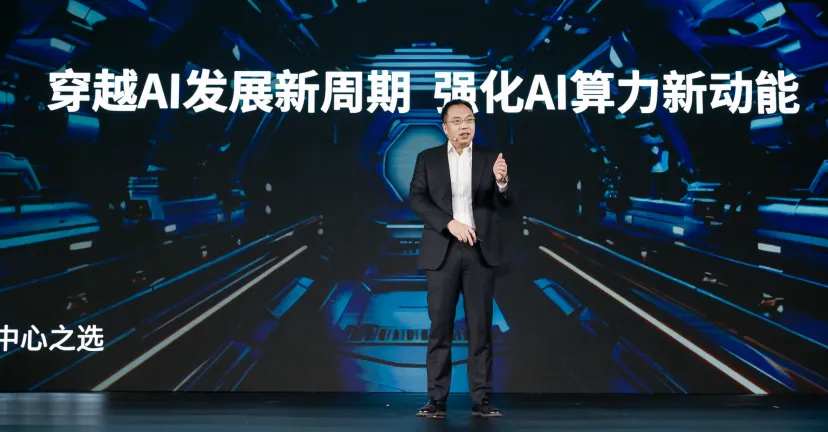
Core Insights - Lenovo has transitioned from a traditional hardware manufacturer to a leader in AI services, marking a strategic shift in its core value from hardware production to standardized AI service capabilities and scalability potential [12] Group 1: AI Solutions and Innovations - Lenovo's "AI Factory" is a strategic solution that transforms complex AI development tasks into a standardized, efficient "AI production line," utilizing customer data as raw materials [3] - The launch of the Lenovo Wanquan Heterogeneous Computing Platform 4.0 enhances AI service efficiency and industry adaptability, achieving a 35% reduction in model training time through long-sequence parallel optimization [4] - The DeepSeek R1 model has achieved a record-breaking throughput of 12,000 Tokens/s, providing Lenovo with a differentiated advantage in AI services [5] Group 2: Market Position and Growth - Lenovo ISG China has experienced a remarkable 175% revenue growth over the past two and a half years, establishing itself as one of the fastest-growing AI infrastructure providers in China [2][11] - The AI server market in China is projected to reach $16 billion in the first half of 2025, doubling year-on-year, with expectations to exceed $140 billion by 2029 [10] Group 3: Strategic Partnerships and Standards - Lenovo has collaborated with industry partners to release the first model training and inference service standard, which fills a gap in the industry and supports the standardized implementation of AI factories [8] - The new service model allows enterprises to access AI capabilities without building complete AI teams, leading to stable recurring revenue for Lenovo [10] Group 4: Valuation Shift - Lenovo is shifting its valuation logic from traditional PE (Price-to-Earnings) metrics focused on hardware sales to PS (Price-to-Sales) metrics that emphasize service revenue growth and customer lifetime value [9][10] - As service revenue increases in proportion to total revenue, Lenovo's profitability is expected to transition from low-margin manufacturing to high-margin technology services, potentially increasing market valuation multiples [11][12]
从硬件到服务!联想发布首款高端大模型训练 AI 服务器及AI工厂解决方案等四项关键成果
Ge Long Hui· 2025-12-06 08:35
Core Insights - Lenovo has transitioned from a traditional hardware manufacturer to a leader in AI services, marking a strategic shift in its business model and valuation approach [2][11] Group 1: Product Launches and Innovations - Lenovo ISG China launched four core products: "AI Factory" solution, the high-end AI training server Lenovo Wenti WA8080a G5, the Wanquan Heterogeneous Computing Platform 4.0, and the industry's first training and inference service standard [1][2] - The "AI Factory" is a standardized system that transforms complex AI development tasks into a modernized production line, utilizing customer data as raw materials [3] - The Wanquan Heterogeneous Computing Platform 4.0 enhances AI service efficiency and industry adaptability through significant upgrades in four technical scenarios, including a 35% reduction in model training time and a 60% increase in bandwidth utilization [3][5] Group 2: Market Position and Growth - Lenovo's infrastructure business has seen a 175% revenue growth over the past two and a half years, positioning it among the fastest-growing AI infrastructure providers in China [2][10] - The AI server market in China is projected to reach $16 billion by mid-2025, doubling year-on-year, with expectations to exceed $140 billion by 2029 [10] Group 3: Strategic Shift in Valuation - Lenovo is shifting from a PE (Price-to-Earnings) valuation model focused on hardware sales to a PS (Price-to-Sales) model that emphasizes service revenue growth and customer lifetime value [9][11] - The introduction of service subscription and customized delivery models allows Lenovo to provide ongoing AI development support, leading to stable recurring revenue and higher profit margins [9][11] Group 4: Industry Standards and Ecosystem Development - Lenovo has collaborated with industry partners to release the first model training and inference service standard, which aims to standardize AI production and accelerate industry transformation [8] - The establishment of this standard is expected to fill industry gaps and provide a unified framework for enterprises, promoting the shift from fragmented exploration to standardized, scalable AI solutions [8]
联想申请一种图像处理方法专利,可移除图像中的目标对象
Jin Rong Jie· 2025-12-06 07:54
Core Viewpoint - Lenovo (Beijing) Co., Ltd. has applied for a patent for an image processing method, indicating ongoing innovation in technology and potential future applications in their product offerings [1]. Group 1: Patent Application - The patent application is titled "An Image Processing Method" with publication number CN121073790A, filed on August 2025 [1]. - The method involves identifying at least one target object in a first target image, determining a first local image that meets target conditions, processing this local image to remove the target object, and merging the processed image back into the original [1]. Group 2: Company Overview - Lenovo (Beijing) Co., Ltd. was established in 1992 and is located in Beijing, primarily engaged in the manufacturing of computers, communications, and other electronic devices [1]. - The company has a registered capital of 565 million Hong Kong dollars and has invested in 107 enterprises, participated in 5,000 bidding projects, and holds 1,751 trademark records and 5,000 patent records [1]. - Additionally, the company possesses 238 administrative licenses, showcasing its extensive operational footprint [1].
联想申请电子设备及电子设备的控制方法专利,降低壳体温度
Jin Rong Jie· 2025-12-06 01:24
国家知识产权局信息显示,联想(北京)有限公司申请一项名为"电子设备及电子设备的控制方法"的专 利,公开号CN121078693A,申请日期为2025年8月。专利摘要显示,本公开实施例公开了一种电子设 备及电子设备的控制方法,电子设备包括:壳体,具有容纳腔、以及与所述容纳腔连通的出风口;第一 发热件,设置于所述容纳腔内;导热组件,设置于所述容纳腔内;所述导热组件用于对所述第一发热件 导热至第一位置;第一风扇,设置于所述容纳腔内;所述第一风扇的全部吹风用于吹向所述第一位置; 第二风扇,设置于所述容纳腔内,所述第二风扇的至少部分吹风用于吹向所述容纳腔内的第一区域,以 降低所述壳体的温度;其中,所述第一区域与所述出风口的距离大于所述第一位置与所述出风口之间的 距离。 本文源自:市场资讯 作者:情报员 声明:市场有风险,投资需谨慎。本文为AI基于第三方数据生成,仅供参考,不构成个人投资建议。 天眼查资料显示,联想(北京)有限公司,成立于1992年,位于北京市,是一家以从事计算机、通信和 其他电子设备制造业为主的企业。企业注册资本565000万港元。通过天眼查大数据分析,联想(北京) 有限公司共对外投资了107家企业,参 ...