KUAISHOU(01024)

Search documents
科网股早盘全线回暖 美团-W涨超5%京东集团-SW涨超4%
Xin Lang Cai Jing· 2026-02-23 01:49
Group 1 - The technology stocks showed a significant rebound in early trading, with Meituan-W (03690) rising by 5.26% to HKD 85 [1] - JD Group-SW (09618) increased by 4.53% to HKD 108.50 [1] - Alibaba-W (09988) saw an increase of 3.26%, reaching HKD 151.90 [1] - Kuaishou-W (01024) rose by 3.38% to HKD 68.75 [1] - Tencent (00700) experienced a 2.40% increase, trading at HKD 534.50 [1]





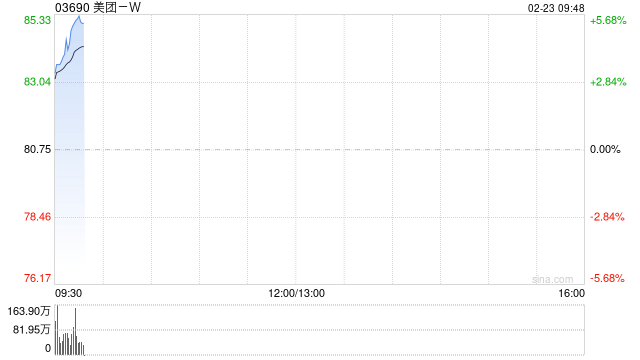
港股异动 | 科网股全线回暖 美团-W(03690)涨超5% 机构称AI投资有望进入产业趋势下半场
智通财经网· 2026-02-23 01:44
智通财经APP获悉,科网股全线回暖,截至发稿,美团-W(03690)涨5.14%,报84.9港元;京东集团- SW(09618)涨3.56%,报107.5港元;阿里巴巴-W(09988)涨2.65%,报151港元;快手-W(01024)涨 2.63%,报68.25港元;腾讯(00700)涨2.01%,报532.5港元。 开源证券则表示,关注AI商业化及应用场景拓展;开源模型能力持续提升下,AI云需求有望持续验 证,AI应用有望带动推理需求持续增长,国产AI芯片增长迅速,昆仑芯正式启动中国香港上市进程, 推荐阿里巴巴-W、拼多多,百度集团-SW,受益标的腾讯控股。 消息面上,阿里旗下阿里云宣布开源新一代千问Qwen3.5-Plus大模型,其API价格每百万Token低至0.8 元人民币。中银国际发布研报称,本轮AI行情尚未出现明显泡沫化特征,2026年AI投资有望进入产业 趋势下半场。 ...
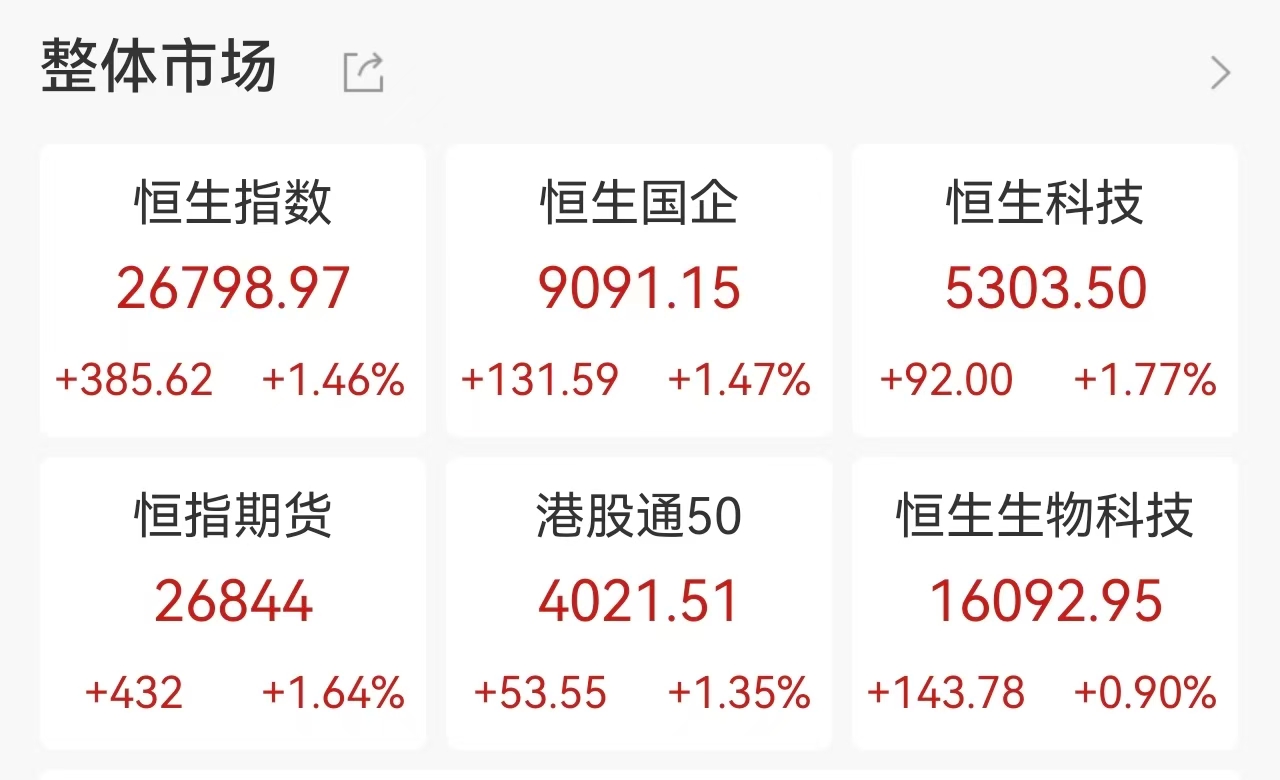
港股开盘:恒指涨1.46%,恒生科指涨1.77%,快手、美团涨超3%,智谱高位回落跌近14%
Jin Rong Jie· 2026-02-23 01:32
港股恒生指数开盘涨1.46%,报26798.97点,恒生科技指数涨1.77%,报5303.5点,国企指数涨1.47%,报9091.15点,红筹指数涨0.27%,报4395.97点。 大型科技股中,阿里巴巴-W涨2.04%,腾讯控股涨1.34%,京东集团-SW涨2.12%,小米集团-W涨1.41%,网易-S涨5.24%,美团-W涨3.03%,快手-W涨 3.16%,哔哩哔哩-W涨1.39%。网易涨超5%领涨蓝筹,智谱高位回落跌近14%,公司就改版致歉,支持用户退款。 当地时间2月21日,特朗普宣布将全球输美商品关税从10%提高至15%并立即生效,称将推出新"合法关税"。稍早前,美国联邦最高法院公布裁决结果,认 定特朗普政府依据《国际紧急经济权力法》实施的相关大规模关税措施缺乏明确法律授权。 为了配合特朗普的关税政策,美国贸易代表办公室宣布启动新一轮"301条款"调查,范围覆盖大多数主要贸易伙伴。贸易代表格里尔表示,美国与欧盟、韩 国等国家达成的那些协议仍然有效。 上周五,三大指数集体收涨,纳指涨0.9%,上周累涨1.51%;标普500指数涨0.69%,上周累涨1.07%;道指涨0.47%,上周累涨0.25%。科 ...
跃马迎春,视听同行!“北京大视听”携手20家视听平台齐贺新春
Xin Lang Cai Jing· 2026-02-21 13:10
Group 1 - The article highlights the launch of the "Beijing Big Audio-Visual" initiative during the Spring Festival, featuring over 1,100 quality works across nine categories, achieving over 206 million views and clicks [1][41] - iQIYI has prepared a diverse range of high-quality dramas for the audience, including "Tree of Life" and "Wind Passing by," enhancing the cultural experience during the Spring Festival [4] - Various platforms like Youku and Tencent Video are also showcasing new content, with Youku's "Rural Love 18" and Tencent's "Pure Love in the Era" set to attract viewers [9][12] Group 2 - Douyin's Spring Festival gala focuses on intangible cultural heritage, featuring performances that highlight traditional arts and customs [14] - Kuaishou is promoting user-generated content around the Spring Festival theme, encouraging participation through activities like the "Old Iron Special Train" [5][16] - Hongguo Short Drama is offering a rich lineup of micro-dramas, including "You Hide in the Starry Night" and "Wealthy Family," appealing to various audience segments [23][28] Group 3 - Weibo is engaging users with the GoodYear and GoodLanternFestival topics, creating an interactive platform for sharing festive experiences [37][39] - Beijing Broadcasting Television is integrating various events and programs to celebrate the New Year, including the Spring Festival Gala and interactive online activities [10][41]


短剧也有春节档,每天有超200部漫剧上新
Xin Lang Cai Jing· 2026-02-21 08:58
Core Viewpoint - The competition for short dramas during the Spring Festival is intensifying, with various platforms striving to capture user attention and seize market opportunities [1] Group 1: Industry Trends - The Spring Festival short drama competition has become more heated, with major platforms launching numerous new works to attract viewers [1] - Red Fruit Short Drama has initiated its Spring Festival campaign early, starting from February 9 and planning to release over 1,000 new short and comic dramas [1] - Tencent Video launched a "Short Drama Festival" on February 2, featuring both horizontal and vertical short dramas [1] Group 2: Content Supply and Innovations - Over 60 leading production companies are participating in the release of new works during the Spring Festival [1] - The supply period for Kuaishou's Spring Festival content extends from January to March, although at a slower pace compared to Red Fruit Short Drama [1] - Comic dramas are highlighted as the main attraction for this year's Spring Festival, with the year 2025 being defined as the "Year of Comic Dramas" by industry insiders [1] Group 3: Technological Advancements - The integration of AI technology is enabling comic dramas to overcome production capacity and cost challenges, positioning them as a new traffic blue ocean in the content industry [1] - From New Year's Eve to the fourth day of the new year, Tencent's platform is releasing over 200 new comic dramas daily [1]

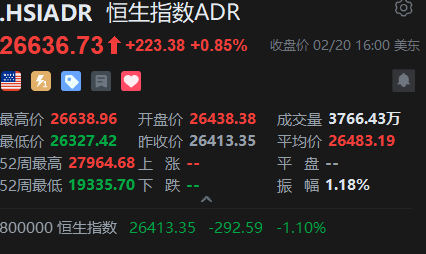
智通ADR统计 | 2月21日
智通财经网· 2026-02-20 23:59
Group 1 - Major blue-chip stocks mostly rose, with HSBC Holdings closing at HKD 137.775, up 2.59% from the previous close in Hong Kong [2] - Tencent Holdings closed at HKD 531.758, an increase of 1.87% from the previous close in Hong Kong [2] Group 2 - Tencent Holdings reported a latest price of HKD 522.000, down HKD 11.000 or 2.06%, with an ADR price of HKD 531.758, showing an increase of HKD 9.758 compared to the Hong Kong stock price [3] - Alibaba Group (W) had a latest price of HKD 147.100, down HKD 7.600 or 4.91%, with an ADR price of HKD 150.874, reflecting an increase of HKD 3.774 compared to the Hong Kong stock price [3] - HSBC Holdings had a latest price of HKD 134.300, up HKD 0.100 or 0.07%, with an ADR price of HKD 137.775, indicating an increase of HKD 3.475 compared to the Hong Kong stock price [3]


智谱上市1月涨5倍,市值超越京东、快手
Guan Cha Zhe Wang· 2026-02-20 11:04
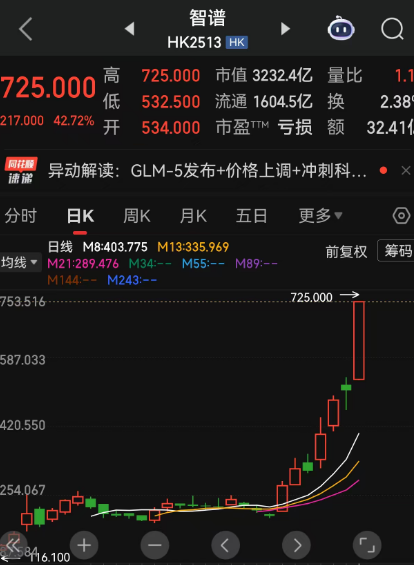
Core Insights - Zhipu AI's stock price surged by 42.72% to 725 HKD, reaching a market capitalization of over 323.2 billion HKD, surpassing major domestic internet companies like Kuaishou and JD.com [1] - The company launched its flagship model GLM-5, featuring 744 billion parameters and significant advancements in technology, which has garnered substantial market interest and demand [2] Company Performance - Zhipu AI's revenue grew by over 300% year-on-year in 2025, with more than 20,000 enterprise clients across various sectors, and a high customer repurchase rate exceeding 80% [2] - The company has faced supply-demand challenges due to the overwhelming demand for GLM-5, leading to service delays and a need for expansion in computing power [3] Market Position - Zhipu AI's GLM-5 model ranks first among open-source models in key programming and reasoning benchmarks, closely competing with top closed-source models [2] - The Chinese large model market is projected to grow over 220% year-on-year by 2025, with a compound annual growth rate of over 150% from 2023 to 2027, indicating a favorable environment for Zhipu AI [3] Industry Trends - The AI industry is experiencing a high growth cycle, with increasing policy support from the government for AI development, which provides a stable environment for long-term growth [3] - Major brokerage firms express bullish views on Zhipu AI, highlighting its leading technology and commercial execution capabilities in the AI sector [4]

科技新贵上位,大模型双雄智谱、MiniMax市值突破3000亿港元大关,智谱一日之内涨出一个B站, 携程、快手、京东市值相继被超过 ,恒科已成“老登股”?
Jin Rong Jie· 2026-02-20 10:51
Core Insights - The Hong Kong stock market saw significant gains for AI companies Zhiyuan and MiniMax, with both surpassing a market capitalization of 300 billion HKD, indicating a rise of new tech leaders in the market [1][3] - On the first trading day of the Lunar New Year, while the Hang Seng Tech Index fell nearly 3%, Zhiyuan and MiniMax stood out with substantial price increases, with Zhiyuan's stock price reaching a peak of 739 HKD per share, marking a rise of over 45% [1] - MiniMax also performed well, closing at 970 HKD per share, reflecting a gain of over 14% on the same day, and a total increase of 487.88% since its listing on January 9 [3] Company Performance - Zhiyuan's market capitalization increased by over 96.7 billion HKD in one day, reaching 323.24 billion HKD, with a total increase of over 256% since February 9 [1] - MiniMax's market capitalization reached 304.23 billion HKD, with a significant rise since its IPO [3] Market Dynamics - The market landscape for tech stocks in Hong Kong has shifted, with Zhiyuan and MiniMax surpassing the market capitalizations of major companies like Ctrip, Kuaishou, and JD, and approaching the valuation of Baidu at 350 billion HKD [5] - The performance of these AI companies is seen as a reflection of the growing interest and investment in AI technologies, particularly in light of recent developments in the industry [10] Industry Trends - The rapid iteration of large models is leading to a restructuring of the internet value chain, shifting focus from traditional traffic scale to behavior execution and result-based business models [10] - The AI application sector is experiencing simultaneous technological breakthroughs and intensified commercialization, supported by national strategies promoting AI development [10] Future Outlook - Despite the strong performance of Zhiyuan and MiniMax, concerns remain regarding the overall tech sector in Hong Kong, with analysts predicting continued weakness in the market due to investor apprehension about major companies like Alibaba and Baidu [11]
智通ADR统计 | 2月20日
智通财经网· 2026-02-19 23:23
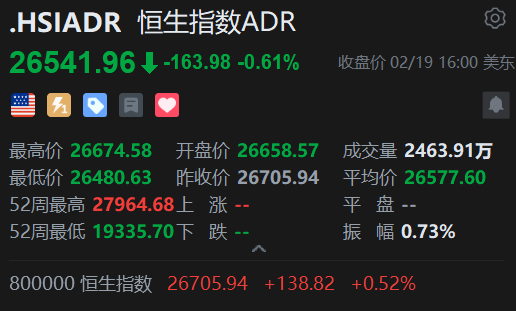
Market Overview - The Hang Seng Index (HSI) closed at 26,541.96, down by 163.98 points or 0.61% on February 19 [1] - The index opened at 26,658.57, reached a high of 26,674.58, and a low of 26,480.63, with a trading volume of 24.6391 million [1] Major Blue-Chip Stocks Performance - HSBC Holdings closed at HKD 135.722, up by 1.13% compared to the previous close [2] - Tencent Holdings closed at HKD 532.399, down by 0.11% compared to the previous close [2] Stock Price Movements - Tencent Holdings (00700) latest price is HKD 533.000, with a slight increase of 1.000 or 0.19% [3] - Alibaba Group (09988) latest price is HKD 154.700, down by 0.700 or 0.45% [3] - HSBC Holdings (00005) latest price is HKD 134.200, down by 1.500 or 1.11% [3] - AIA Group (01299) latest price is HKD 82.350, up by 2.050 or 2.55% [3] - Meituan (03690) latest price is HKD 82.050, down by 0.100 or 0.12% [3] - JD.com (09618) latest price is HKD 105.900, down by 0.500 or 0.47% [3]
春晚广告位争夺战:四十年国民记忆与商业洪流
Xin Lang Cai Jing· 2026-02-19 07:21
Core Insights - The evolution of the CCTV Spring Festival Gala sponsorship reflects the transformation of Chinese society and economy over the past 40 years, showcasing the changing consumer demands and emerging industries [20][21]. Group 1: 1980s to Early 1990s - The Era of Scarcity - In the 1980s, as China transitioned from a planned economy to a market economy, consumer goods were scarce, leading to a high demand for basic commodities [22]. - The first brand to sponsor the Spring Festival Gala was Kambas watches in 1984, which used 3,000 quartz watches as payment, marking the beginning of brand sponsorship in the gala [22][23]. - Kambas became a household name, with production reaching 1.26 million units in 1987 and over 2 million by 1991, despite the high price of its watches relative to average incomes [23][24]. Group 2: Mid-1990s to Early 2000s - The Rise of Consumerism - The mid-1990s saw a shift in consumer spending from basic goods to electronics, with Shandong Kongfu Banquet Wine becoming the first "advertising king" by paying 30.79 million yuan for sponsorship in 1995 [26]. - The competition among liquor brands for sponsorship reflected the rise of "social consumption," where premium liquor became a status symbol for social gatherings [28]. - After winning the Spring Festival sponsorship, Qin Pool Wine's sales skyrocketed from 180 million yuan in 1995 to 950 million yuan in 1996, demonstrating the immediate impact of gala sponsorship [29]. Group 3: 2000s to Early 2010s - The Home Appliance Boom - The early 2000s marked a shift towards home appliances as the primary consumer focus, with Midea becoming the most frequent sponsor, securing 16 sponsorships from 2003 to 2019 [30]. - The cost of advertising during the gala increased significantly, with Midea's sponsorship fee rising from 6.8 million yuan in 2005 to 57.2 million yuan in 2011, an increase of 840% [30]. - Midea's revenue grew from 17.5 billion yuan in 2003 to over 140 billion yuan in 2014, reflecting the effectiveness of its gala sponsorship strategy [12][30]. Group 4: Mid-2010s to Present - The Digital Economy and Technological Innovation - The rise of internet companies has transformed the Spring Festival Gala into a platform for digital engagement, with WeChat's "red envelope war" in 2015 significantly boosting viewer interaction [15][35]. - The gala's advertising has evolved from one-way promotion to interactive engagement, with platforms like Douyin and Kuaishou participating in sponsorships [16][35]. - The presence of technology companies has increased, with innovations such as AI and robotics showcased during the gala, indicating a shift from traditional advertising to technology-driven marketing [19][37].