BYD(01211)

Search documents
伊朗冲突爆发后,亚洲各地的比亚迪经销店生意火爆
Xin Lang Cai Jing· 2026-03-21 12:49AI Processing
在菲律宾马尼拉金融区的一家比亚迪汽车经销店,中国公司生产的电动汽车需求量非常高,销售人员 Poh表示,过去两周内的订单量已相当于以往一个月的水平,"由于油价上涨,客户纷纷用电动汽车替换 燃油汽车"。在越南河内一家VinFast(VFS.O)展厅,由于客户到访量翻了四倍,该店不得不增聘销售人 员。自伊朗战争爆发以来的三周内,该展厅已售出250辆电动汽车。这意味着每周销量超过80辆,是 2025年平均销量的两倍。亚洲开发银行首席经济学家阿尔伯特·帕克表示,油价上涨正在创造经济动 力,加速向电动汽车的转型。 ...

安徽男子比亚迪“白嫖”事件,让多少人开了眼界?
商业洞察· 2026-03-21 09:22
以下文章来源于桌子的生活观 ,作者桌子先生 桌子的生活观 . 三观比五官更正,思想比套路更深。著有畅销书《你只是假装很努力》、《我们终将与美好的一切相 遇》.... -------------------------- 作者:桌子先生 来源:桌子的生活观 这是怎么回事?什么时候,广大网友竟然同情起商家来了? 这事儿,还得好好从头说起。 最近的互联网,真是小刀拉屁股——让人开眼了。 01 这几天,安徽一位"比亚迪庞先生"彻底火了。 他在短短一年多的时间内,去他买车的4S店就餐260天,洗车和充电的次数更是不计其数,被人戏 称"天底下最成功的白嫖"。 然而,众多一向跟4S店"势不两立"的网友们,纷纷站到了庞先生这边,因为4S那边已经站不下 了。 2024年9月,安徽的庞先生在合肥一家比亚迪4S店购买了一台"比亚迪·秦"汽车。 当时,门店销售曾口头承诺,购买车之后,店里可以提供用餐、洗车、充电等服务。 没想到,就是这次"口头承诺",引来了后续一年多无休止的拉锯战。 按照一般人的思维,提供了这个服务,咱也不能老来是不是?顶多充几次电,吃几餐饭,平时该干 嘛干嘛,交易结束,咱们两清。 但没想到,这个庞先生,可不是一般人 ...


报名通道 | 2026高工固态电池技术与应用峰会倒计时33天
高工锂电· 2026-03-21 04:31
Core Viewpoint - The solid-state battery industry is entering a critical year in 2026, transitioning from technology validation to large-scale production, driven by policies, technology, capital, and application scenarios [2][3]. Group 1: Industry Development - The industry is moving from "technical exploration" to "industrialization and implementation," with the Ministry of Industry and Information Technology designating solid-state batteries as a core breakthrough direction and establishing national standards [2][3]. - The focus has shifted from basic research to engineering verification and mass production, with the period from 2026 to 2027 identified as a key window for small-scale production [2][3]. Group 2: Technological Trends - Sulfide electrolytes are becoming the mainstream research direction due to their high ionic conductivity and process compatibility, while other routes like oxides and polymers are pursuing differentiated strategies [3]. - The industry is transitioning from multiple exploratory routes to a focus on mainstream technology and supporting process adaptation [3]. Group 3: Application Scenarios - High-end passenger vehicles remain the core window for the large-scale implementation of solid-state batteries, while new scenarios such as eVTOL, humanoid robots, AIDC data centers, and commercial aerospace are emerging as new battlegrounds for performance validation and commercial value exploration [3]. - The application of solid-state batteries is also expanding into consumer electronics, including two-wheelers and wearable devices, creating a diverse application landscape [3]. Group 4: Industry Collaboration - Competition in the solid-state battery sector is evolving from a single-point battle among battery companies to an ecosystem competition involving materials, equipment, cells, vehicles, resources, and applications [3]. - Vertical integration trends are becoming more pronounced as automakers and upstream resource giants accelerate their entry into the industry [3]. Group 5: Cost and Supply Chain - Solid-state batteries currently cost over 30% more than traditional lithium batteries, with low yield rates and shortages of high-end raw materials posing significant challenges to mass production [4]. - The industry's development logic is shifting from "technical parameter competition" to creating value across the entire lifecycle, with collaborative innovation across the supply chain being a key path to reducing costs and improving efficiency [4]. Group 6: Summit Highlights - The summit will feature over 200 influential companies and 300 industry leaders, facilitating technical exchanges and new product showcases [7]. - Key topics will include overcoming mass production bottlenecks, advancements in core materials, and the impact of national standards on industry dynamics [9][10].





油价冲刺“9元时代”,电车党笑了?
吴晓波频道· 2026-03-21 02:48
Core Viewpoint - The ongoing Middle East conflict and rising oil prices are accelerating the shift from fuel vehicles to electric vehicles, presenting a significant opportunity for Chinese electric vehicle manufacturers to expand globally [2][4][5]. Group 1: Impact of Oil Prices on Vehicle Preferences - The prediction of a price increase of approximately 1.5 yuan per liter for gasoline is causing anxiety among fuel vehicle owners, leading to a shift towards electric vehicles [2]. - Historical parallels are drawn to the 1970s oil crisis, which similarly prompted consumers to abandon larger fuel-consuming vehicles in favor of smaller, more efficient models [4]. Group 2: Growth of Chinese Electric Vehicle Exports - In the first two months of the year, China's total vehicle exports increased by nearly 50%, with traditional automakers like Chery and Geely seeing export growth of 45.6% and 150%, respectively [8]. - Chinese electric vehicle exports reached 559,000 units, a year-on-year increase of 114.7%, with BYD achieving over 100,000 units in overseas sales in February alone [8][12]. Group 3: Market Dynamics in Australia and Southeast Asia - In Australia, the import of new vehicles from China surpassed that from Japan for the first time, indicating a significant shift in market dynamics [10]. - The market share of electric vehicles in Australia grew to 11.8%, with traditional fuel vehicles declining by 17.7% [15]. - In Thailand, Chinese brands achieved a market share of 47.34%, surpassing Japanese brands for the first time, with electric vehicle sales increasing by 345% [16]. Group 4: Challenges and Strategies for Chinese Automakers - Despite significant growth, Chinese automakers face challenges due to the low base of their current market presence and the need for improved localization and service systems [22]. - The strategy has shifted from merely exporting products to a full industry chain approach, including local assembly and supply chain development [22][23]. - Partnerships and acquisitions of local dealerships are being pursued to enhance market presence and control over sales channels [25][28]. Group 5: Future Projections and Market Conditions - Morgan Stanley projects a 16% increase in overall Chinese automotive exports by 2026, with electric vehicle exports expected to grow by 39% [32]. - The domestic market is experiencing a contraction, with significant declines in sales for new energy vehicles, prompting a focus on international expansion [32][33]. - Historical precedents suggest that the current geopolitical climate may lead to a rapid transformation in the global automotive landscape, similar to past oil crises [34].

宇树IPO来了,年收入17亿;字节超60亿美元出售沐瞳科技;泡泡玛特回应7年前买的盲盒才发货;特斯拉计划从中国采购200亿光伏设备丨邦早报
创业邦· 2026-03-21 01:11
Group 1 - The core viewpoint of the article highlights significant developments in various companies and industries, including IPO applications, acquisitions, and strategic shifts towards AI and automation [3][4][12][18]. Group 2 - YuTree Technology's IPO application has been accepted by the Shanghai Stock Exchange, aiming to raise 4.202 billion yuan, with projected revenues of 1.708 billion yuan in 2025, a 335.36% increase year-on-year, and a net profit of 600 million yuan, up 674.29% [3]. - ByteDance has agreed to sell Moonton Technology for over 6 billion USD, signaling a strategic focus on AI, as the company has made significant investments in this area [3]. - Tesla is reportedly seeking to procure 2.9 billion USD worth of photovoltaic manufacturing equipment from Chinese suppliers to meet its solar manufacturing goals in the U.S. [4]. - The international oil price surge is expected to impact the textile industry, particularly synthetic fibers like polyester, which have seen price increases from 7,000 yuan/ton to 9,600 yuan/ton [5]. - Xiaopeng Motors forecasts a total revenue of 76.72 billion yuan in 2025, representing an 87.7% increase, with a projected vehicle delivery of 429,400 units, a 125.9% increase from 2024 [5]. - The AI digital artist initiative has raised questions about potential copyright infringement, focusing on whether the public can recognize the likeness of real celebrities [20][21]. - The China Passenger Car Association predicts that retail sales of narrow passenger vehicles in March will reach approximately 1.7 million units, with new energy vehicles expected to account for around 900,000 units [23].




BYD Company Ltd. (OTCMKTS: BYDDY) Quarterly Earnings Preview and Financial Overview
Financial Modeling Prep· 2026-03-20 16:00
Core Viewpoint - BYD Company Ltd. has established itself as a leading player in the electric vehicle (EV) market, surpassing Tesla in sales and expanding its global presence, despite facing challenges in the competitive Chinese market [2][3][6]. Financial Performance - BYD is set to release its quarterly earnings on March 26, 2026, with an estimated earnings per share (EPS) of $0.19 and projected revenue of $35.63 billion [2][6]. - The company's financial metrics include a P/E ratio of 21.41, a price-to-sales ratio of 0.96, and an enterprise value to sales ratio of 0.97, indicating a moderate financial position [5][6]. Market Position - In 2025, BYD exported over one million cars, capturing 4.8% of the EV market share in Europe, which is crucial for its international growth strategy [3]. - The company has recently surpassed Tesla as the top-selling EV brand, reflecting its growing global market presence [2][6]. Stock Performance - BYD's stock opened at $12.28, down by 0.9%, with a fifty-day moving average of $12.35 and a 200-day average of $12.82 [4]. - Over the past year, the stock has fluctuated between a low of $11.20 and a high of $20.05, indicating market volatility [4].

中国企业占EV电池全球份额的7成
36氪· 2026-03-20 13:35
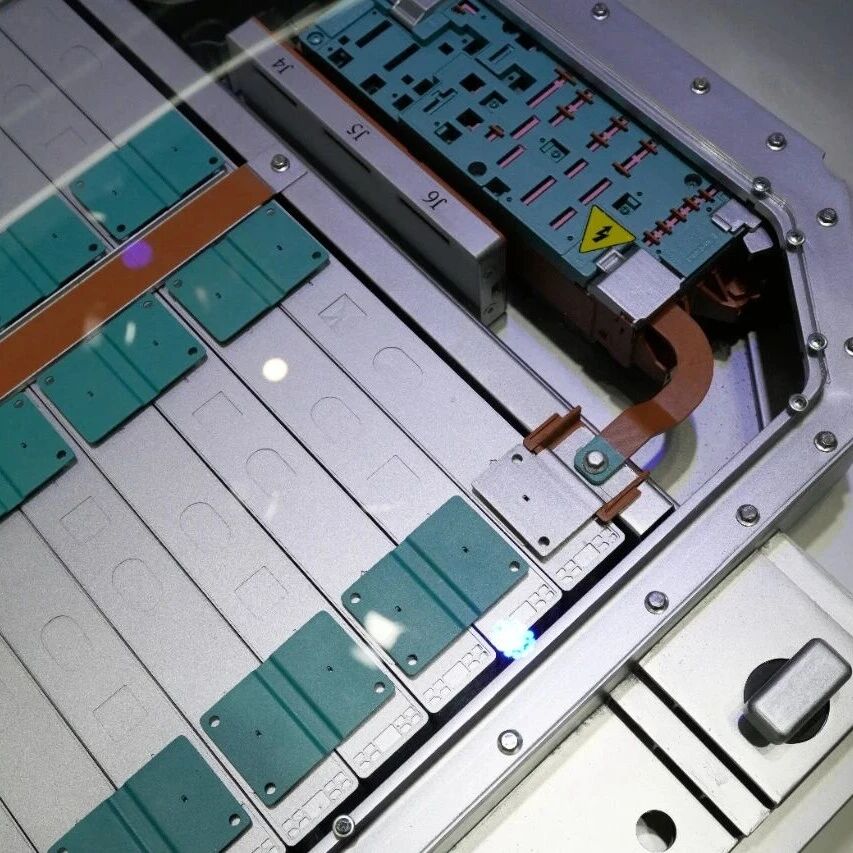
Core Viewpoint - The market share of Chinese companies in the EV battery sector is expected to exceed 70% by 2025, up from nearly 50% in 2021, indicating a strengthening monopoly in the industry [4][5][11]. Group 1: Market Dynamics - The largest company, CATL, is expanding orders in China and Europe, achieving record profits amid a slowdown in global EV demand [5][10]. - Global EV sales are slowing in certain regions like the U.S., but overall growth continues, with battery installation volumes projected to increase by 32% in 2025, reaching 1,187 GWh, with approximately 60% of this market in China [8][11]. Group 2: Competitive Landscape - CATL's market share is projected to rise to 39.2% in 2025, reflecting a 1 percentage point increase from 2024, supported by a broad product range and competitive pricing [7][11]. - Chinese companies dominate the top 10 global battery manufacturers, holding 6 out of 10 spots, with a combined market share of 70.4% in 2025, an increase of about 4 percentage points from 2024 [11]. Group 3: Challenges for Competitors - South Korean companies are struggling, with their combined market share dropping to 15.3% in 2025, down approximately 3 percentage points from 2024, and significantly reduced from over 30% in 2021 [11]. - LG Energy Solution, the largest South Korean firm, reported a 76% decrease in net profit, highlighting the challenges faced in the U.S. market due to policy changes and declining EV sales [12]. Group 4: Strategic Adjustments - South Korean firms are reevaluating their strategies in the U.S. market, with layoffs and asset sales occurring as they adapt to the changing landscape [12]. - Chinese companies, led by BYD, are focusing on expanding global sales and enhancing their technological capabilities to maintain and strengthen their competitive edge [13].

日本调整电动汽车补贴:丰田特斯拉各加40万日元,比亚迪不变
Guan Cha Zhe Wang· 2026-03-20 11:21
Core Viewpoint - The Japanese government's adjustment of electric vehicle subsidies for the first quarter of 2026 has significantly increased the subsidies for Japanese brands and Tesla, while Chinese brand BYD's models did not receive any increase, raising concerns about fairness in the evaluation process [1][3]. Group 1: Subsidy Adjustments - The subsidy amounts for Japanese brands such as Toyota, Nissan, and Suzuki, as well as Tesla, have been substantially increased, while BYD's models remain at 350,000 to 450,000 yen (approximately 15,200 to 19,500 RMB), which is 950,000 yen (approximately 41,200 RMB) less than Toyota's subsidies [1][3]. - The new subsidy policy is only applicable for the first quarter of this year, with expectations for a new subsidy system to be established thereafter [3]. Group 2: Evaluation Criteria - The evaluation for electric vehicle subsidies in Japan consists of two main parts: "model assessment" related to vehicle performance and "company assessment" concerning charging infrastructure and talent development, with a total score of 200 points determining the subsidy amount [3]. - BYD has reportedly received a low score from the Japanese Ministry of Economy, Trade and Industry, despite its efforts in promoting fast-charging stations, which were not reflected in its evaluation [3][7]. Group 3: Market Context - Currently, pure electric vehicles account for only about 2% of new car sales in Japan, making subsidies a crucial factor in consumer purchasing decisions [3]. - The adjustments in subsidies for other European automakers like BMW, Volkswagen, and Volvo have shown little change, with only Audi seeing an increase of up to 320,000 yen (approximately 13,900 RMB) [3][4]. Group 4: Implications of Trade Agreements - The subsidy adjustments are believed to be a result of the Japan-U.S. tariff agreement, aimed at ensuring fair competitive conditions [5]. - The Japanese Ministry of Economy, Trade and Industry acknowledged that the adjustments were based on the consensus reached in the Japan-U.S. tariff agreement [5].


全面出击,22家锂电企业“出海”动作大起底
高工锂电· 2026-03-20 11:08
Core Viewpoint - The article highlights the accelerated global expansion of 22 lithium battery companies, driven by the increasing demand for electric vehicles and energy storage, with a projected global lithium battery demand of 3065 GWh by 2026, representing a 34% year-on-year growth [3]. Group 1: Overview of Outbound Activities - Since January 2026, 22 lithium industry companies have updated their outbound progress, including 8 battery companies, 8 lithium material companies, and 6 equipment companies, showcasing diverse forms of international engagement from capacity establishment to technology export [3][7]. - The outbound activities of these companies reflect a unique pattern characterized by "chain leaders guiding, supporting follow-up, and diversified layouts" [7]. Group 2: Battery Companies - Leading battery companies like CATL, BYD, and others are actively driving outbound strategies, focusing on capacity establishment and technological cooperation, with a clear regional focus on Europe and Southeast Asia [8][9]. - CATL has adopted a "multi-regional layout and stepwise expansion" strategy, establishing a global capacity network with operational factories in Germany and ongoing projects in Indonesia and Hungary [9]. - BYD's approach involves technology output in collaboration with local partners in Vietnam, allowing for rapid market entry while avoiding direct factory establishment costs [9]. Group 3: Energy Storage Companies - Energy storage companies are primarily engaging in outbound activities through signing or winning large orders, indicating strong growth in the overseas energy storage market [10]. Group 4: Lithium Material Companies - Lithium material companies are closely following battery capacity expansions, focusing on regional collaboration to reduce transportation costs and enhance supply chain responsiveness [11]. - Companies like New Zebang and Tinci Materials are establishing bases in Malaysia and Morocco to meet local battery production demands, while also aiming for product differentiation and high-end market penetration [11][12]. Group 5: Lithium Equipment Companies - Lithium equipment companies are more cautious in their overseas expansions, primarily focusing on order-based activities rather than establishing production bases [13]. - Some companies, like Xian Dao Intelligent, are aggressively setting up manufacturing bases in multiple countries, while others are establishing subsidiaries and service networks to better serve local markets [13]. Group 6: Overall Trends - The outbound strategies of lithium industry companies are evolving from "product export" to "global layout" and from "single link" to "full-chain collaboration," driven by leading battery companies [14].

【联合发布】一周新车快讯(2026年3月14日-3月20日)
乘联分会· 2026-03-20 08:52
Core Viewpoint - The article provides an overview of new vehicle models set to launch in March 2026, highlighting specifications, market segments, and pricing strategies for various manufacturers in the automotive industry [2][3]. Group 1: Chery New Energy - The iCAR V27 is scheduled for release on March 13, 2026, positioned as a C SUV with a starting MSRP of 16.98 million to 19.68 million [7]. - It features a 1.5T range extender engine paired with an EVT transmission, offering a pure electric range of 200 to 210 km (CLTC) [6][7]. - The vehicle dimensions are 5,055 mm in length, 1,976 mm in width, and 1,894 mm in height, with a wheelbase of 2,910 mm [7]. Group 2: SAIC-GM-Wuling - The Wuling Bingguo S will launch on March 13, 2026, as an AO HB with an MSRP of 8.98 million [15]. - It is powered by a pure electric engine and EVT transmission, providing a pure electric range of 525 km (CLTC) [14][15]. - The vehicle's dimensions are 4,265 mm in length, 1,785 mm in width, and 1,600 mm in height, with a wheelbase of 2,610 mm [15]. Group 3: BYD Auto - The Fangchengbao Titanium 3 is set to debut on March 13, 2026, classified as an A SUV with an MSRP ranging from 15.38 million to 16.98 million [23]. - It features a pure electric engine with an EVT transmission, offering a pure electric range of 565 to 620 km (CLTC) [22][23]. - The vehicle dimensions are 4,605 mm in length, 1,900 mm in width, and 1,720 mm in height, with a wheelbase of 2,745 mm [23]. Group 4: Buick - The Buick Zhijing Shijia will be launched on March 17, 2026, as a C MPV with an MSRP of 48.99 million [31]. - It is equipped with a pure electric engine and EVT transmission, providing a pure electric range of 601 km (CLTC) [31]. - The vehicle dimensions are 5,260 mm in length, 2,023 mm in width, and 1,820 mm in height, with a wheelbase of 3,160 mm [31]. Group 5: ARCFOX - The ARCFOX Alpha S5 is scheduled for release on March 18, 2026, classified as a B NB with an MSRP ranging from 10.48 million to 17.38 million [37]. - It offers both range extender and pure electric options, with a pure electric range of 630 to 720 km (CLTC) [36][37]. - The vehicle dimensions are 4,886 mm in length, 1,930 mm in width, and 1,480 mm in height, with a wheelbase of 2,900 mm [37]. Group 6: XPeng Motors - The XPeng P7 will launch on March 18, 2026, as a C NB with an MSRP ranging from 20.38 million to 24.38 million [45]. - It features a pure electric engine with an EVT transmission, offering a pure electric range of 702 to 820 km (CLTC) [44][45]. - The vehicle dimensions are 5,017 mm in length, 1,970 mm in width, and 1,427 mm in height, with a wheelbase of 3,008 mm [45]. Group 7: FAW-Volkswagen - The Audi A5L is set to be released on March 19, 2026, classified as a B NB with an MSRP of 34.68 million [53]. - It is powered by a 2.0T engine paired with a DCT7 transmission [52][53]. - The vehicle dimensions are 4,908 mm in length, 1,860 mm in width, and 1,448 mm in height, with a wheelbase of 2,969 mm [53]. Group 8: Xiaomi Auto - The Xiaomi SU7 will launch on March 19, 2026, as a C NB with an MSRP ranging from 21.99 million to 30.39 million [61]. - It features a pure electric engine with an EVT transmission, offering a pure electric range of 720 to 902 km (CLTC) [60][61]. - The vehicle dimensions are 4,997 mm in length, 1,963 mm in width, and 1,460 mm in height, with a wheelbase of 3,000 mm [61]. Group 9: Chery Auto - The Chery Jetour X70 is scheduled for release on March 19, 2026, classified as a B SUV with an MSRP ranging from 9.99 million to 10.69 million [66]. - It is powered by a 1.5T engine with options for 6MT and DCT6 transmissions [66]. - The vehicle dimensions are 4,749 mm in length, 1,900 mm in width, and 1,720 mm in height, with a wheelbase of 2,745 mm [66]. Group 10: Chery Auto - The Chery Jetour Shanhai L7 will launch on March 19, 2026, as a B SUV with an MSRP ranging from 11.49 million to 13.19 million [76]. - It features a 1.5T plug-in hybrid engine with a 2DHT transmission, offering a pure electric range of 130 km (CLTC) [75][76]. - The vehicle dimensions are 4,749 mm in length, 1,900 mm in width, and 1,720 mm in height, with a wheelbase of 2,745 mm [76]. Group 11: Volvo - The Volvo EX30 is set to debut on March 20, 2026, classified as an AO SUV with an MSRP ranging from 20.38 million to 25.58 million [84]. - It features a pure electric engine with EVT transmission, offering a pure electric range of 410 to 590 km (CLTC) [83][84]. - The vehicle dimensions are 4,299 mm in length, 1,838 mm in width, and 1,555 mm in height, with a wheelbase of 2,650 mm [84].