
PSBC(01658)

Search documents
邮储银行(601658) - 中国邮政储蓄银行股份有限公司关于监事长辞任的公告
2025-09-23 10:30
中国邮政储蓄银行股份有限公司(以下简称本行)监事长、股东 代表监事陈跃军先生因达到法定退休年龄,向本行监事会提交辞呈, 辞去本行监事长、股东代表监事职务。该辞任自 2025 年 9 月 23 日起 生效。陈跃军先生已确认其与本行监事会无不同意见,亦无就其辞任 需要通知本行股东及债权人的任何事项。 陈跃军先生于 2012 年加入本行,任职期间坚持以习近平中国特 色社会主义思想为指导,恪尽职守、勤勉尽责,带领本行监事会认真 贯彻落实党中央重大决策部署及监管要求,积极推动党的领导与公司 治理有机融合,创新监督方式,完善监督机制,有效发挥监督制衡作 用,切实维护本行、股东、职工、债权人和其他利益相关者合法权益, 为推动本行持续稳健经营、完善公司治理、实现高质量发展作出重要 贡献。本行监事会对陈跃军先生表示衷心感谢! 特此公告。 中国邮政储蓄银行股份有限公司监事会 二〇二五年九月二十三日 中国邮政储蓄银行股份有限公司 关于监事长辞任的公告 中国邮政储蓄银行股份有限公司监事会及全体监事保证本公告内容不存在 任何虚假记载、误导性陈述或者重大遗漏,并对其内容的真实性、准确性和完整 性承担法律责任。 证券代码:601658 证 ...
邮储银行(601658) - 中国邮政储蓄银行股份有限公司董事会决议公告
2025-09-23 10:30
证券代码:601658 证券简称:邮储银行 公告编号:临 2025-048 议案表决情况:有效表决票 16 票,同意 16 票,反对 0 票,弃权 0 票。 本行独立董事对本项议案发表如下意见:经认真审阅相关文件并 沟通了解,我们认为本行吸收合并中邮邮惠万家银行有限责任公司符 1 合业务发展规划和经营需要,不存在损害本行或中小股东利益的情 形。我们同意该议案,并同意将该议案提交本行股东大会审议。 本项议案尚需提交本行股东大会审议。 详情请参见本行同日在上海证券交易所网站(www.sse.com.cn) 发布的《中国邮政储蓄银行股份有限公司关于吸收合并全资子公司的 公告》。 中国邮政储蓄银行股份有限公司 董事会决议公告 中国邮政储蓄银行股份有限公司董事会及全体董事保证本公告内容不存在 任何虚假记载、误导性陈述或者重大遗漏,并对其内容的真实性、准确性和完整 性承担法律责任。 中国邮政储蓄银行股份有限公司(以下简称本行)董事会于 2025 年 9 月 8 日以书面形式发出会议通知,于 2025 年 9 月 23 日在北京以 现场方式召开会议。会议应出席董事 16 名,亲自出席董事 15 名,钟 瑞明董事由于其他公务 ...
邮储银行:将吸收合并全资子公司邮惠万家银行
Xin Lang Cai Jing· 2025-09-23 10:19
邮储银行公告,为进一步优化管理及业务架构,公司将吸收合并下属全资子公司中邮邮惠万家银行有限 责任公司。本次吸收合并完成后,邮惠万家银行的独立法人资格依法注销,其全部业务、财产、债权债 务以及其他各项权利义务由邮储银行承继。客户的相关权利和义务均不受影响,已合法签署的合同、协 议继续有效。此次合并尚需提交股东大会审议,并报请国家金融监督管理总局批准后方可实施。 ...
金融赋能+智慧养殖 山西汾西养殖产业跑出加速度
Zhong Guo Xin Wen Wang· 2025-09-23 09:02
Core Viewpoint - The beef cattle farming industry in Fenxi County, Shanxi Province, is undergoing a transformation through a model of "scale + standardization + intelligence + insurance," supported by local financial institutions like Postal Savings Bank [1][6]. Group 1: Industry Development - Fenxi County has approximately 690 beef cattle farmers with a total herd size exceeding 20,000 heads [1]. - The local government has introduced a combination of target price insurance, subsidy policies, and casualty insurance, covering 5,753 heads of cattle and providing a total compensation of 1.5396 million yuan to mitigate market price fluctuations and disease risks [1]. - The core objectives for beef cattle farming include increasing herd size by 30,000 heads by the end of the 14th Five-Year Plan, achieving an average of one beef cattle per agricultural household, and targeting an output of 1 million heads and a production value of 160 million yuan by 2024 [1][2]. Group 2: Financial Support - Postal Savings Bank has launched three financial products: "Industry Loan," "Agricultural and Animal Husbandry Loan," and "Rapid Credit Loan," providing over 50 million yuan in loans to more than 300 farmers [5][6]. - The "Industry Loan" is tailored to local agricultural characteristics, with a maximum credit limit of 30 million yuan and a maximum term of 60 months [5]. - The "Agricultural and Animal Husbandry Loan" offers unsecured online loans up to 500,000 yuan, with a quick approval process based on business flow [5][6]. Group 3: Technological and Ecological Initiatives - The county is promoting the construction of standardized bases and projects like Zhongying Agriculture and Animal Husbandry, utilizing smart collars and automated feeding systems to enhance breeding and fattening efficiency [2]. - An ecological cycle is being established with zero-carbon biogas and organic fertilizer plants, creating a closed-loop system of "breeding - biogas - organic fertilizer - returning to the fields" [2]. Group 4: Case Studies - The Hongxing Breeding Cooperative, which received a 150,000 yuan loan from Postal Savings Bank, has expanded its herd to 140 heads, demonstrating effective financial support [4]. - The Kangruilai Biotechnology Company has received 6.524 million yuan in loans, significantly enhancing its product competitiveness and achieving annual sales exceeding 20 million yuan [8][9].



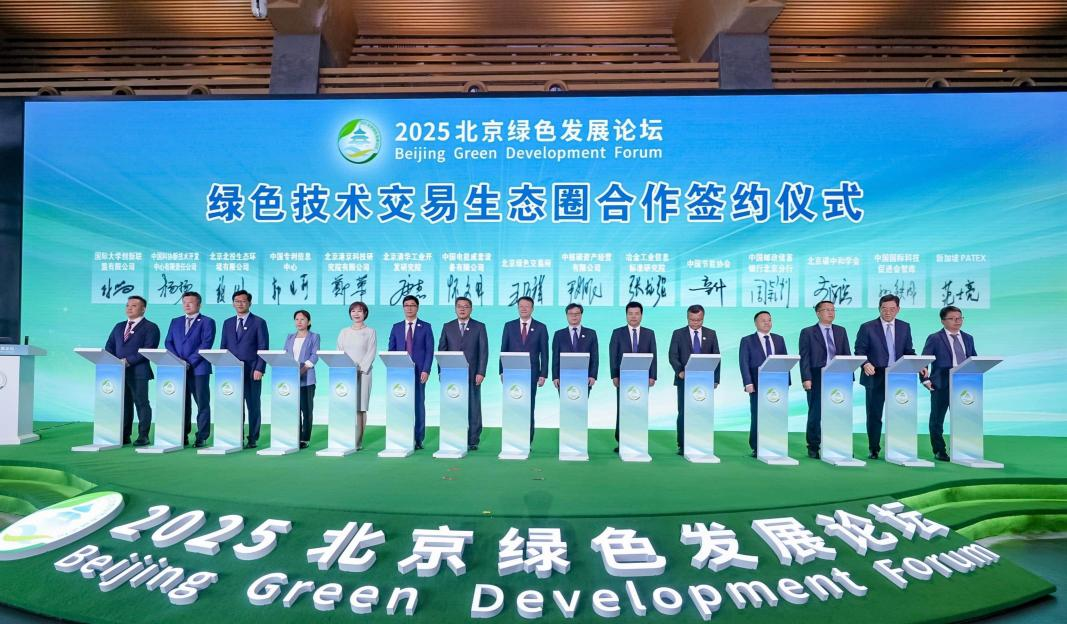
邮储银行北京分行亮相2025北京绿色发展论坛—展示绿色金融成果,服务首都绿色发展
Zhong Guo Jin Rong Xin Xi Wang· 2025-09-23 08:08
转自:新华财经 论坛期间,邮储银行北京分行深度参与全部5场"绿色发展会客厅"活动,与通州、房山、昌平、平谷、顺义五区相关政府单位开展对接交流,并出席多 场平行论坛,围绕绿色金融政策、产品创新、产业对接、气候投融资等议题分享经验,推动绿色金融与绿色产业协同发展。 邮储银行北京分行相关负责人表示,未来将继续贯彻落实国家"双碳"战略,围绕北京市绿色经济标杆城市建设目标,优化绿色金融服务体系,聚焦降 碳、减污、扩绿、增长等关键环节,强化对节能环保、生态保护等领域的金融供给,丰富多元金融工具,完善机制标准,构建绿色金融生态体系,助力 首都绿色高质量发展,为实现碳达峰碳中和目标贡献金融力量。 编辑:焦若涵 2025年北京绿色发展论坛于9月21日至25日在北京城市副中心三大文化设施户外环形走廊带举行。作为首届北京绿色发展论坛的重要配套活动,本届博 览会聚焦绿色产业前沿技术与实践,搭建政策解读、成果展示、产业对接与公众体验的综合平台。中国邮政储蓄银行北京分行积极参展,围绕"绿色让 生活更美好"主题,全面展示其在绿色金融领域的创新实践与服务成果。 除金融产品创新外,邮储银行北京分行在展区设置高科技互动体验区,展示数字人客服、A ...
以案说险|广发银行南京分行提醒您:警惕“代理维权”陷阱
Jiang Nan Shi Bao· 2025-09-23 07:16
1.不法中介以"专业维权""有关系有渠道"为诱饵,欺骗借款人支付定金或预付款,之后以各种事由拖延 甚至消失,导致消费者经济受损。 2.不法中介往往教唆借款人编造虚假事实、伪造证据,消费者将面临欺诈、诬告陷害等法律责任。 赵先生信用卡欠款逾期,收到银行催收通知后心急如焚。网上看到"专业代理维权,帮与银行协商减免 债务"的广告,称付代理费就能减免利息、延长还款期限。赵先生随即联系对方,对方自称为专业金融 维权团队,承诺至少减免一半利息,延长还款期限一年。赵先生信以为真,支付1000元代理费,还按要 求提供信用卡号、身份证号等个人信息。对方让他等消息,期间别联系银行。可一个多月后,赵先生依 旧未等到协商成功消息,却收到银行催款律师函。再联系"维权团队",发现电话不通、微信被拉黑,这 才发现自己被骗。 风险小贴士: 广发银行南京分行提醒您: 警惕非法中介代理陷阱 守护自身合法权益! ...
金融活水润沃野 丰收节里唱新歌
Jin Rong Shi Bao· 2025-09-23 05:41
Group 1: Agricultural Development and Financial Support - The "China Farmers' Harvest Festival" highlights the successful agricultural production across various regions, with significant contributions from financial institutions like Postal Savings Bank [1] - Postal Savings Bank has achieved an agricultural loan balance of 2.44 trillion yuan and a balance of inclusive loans for small and micro enterprises of 1.72 trillion yuan, leading among major banks [1] - The bank's initiatives include the release of policies aimed at enhancing rural financial services and expanding support for agriculture, thereby promoting rural revitalization [1] Group 2: Grain Production and Food Security - China’s grain production has consistently increased, with total output surpassing 1.4 trillion jin in 2024, reinforcing the foundation of food security [2] - Jilin Province, utilizing only 4% of the country's arable land, contributes 6% of the total grain output and 10% of the commercial grain, showcasing its agricultural productivity [2] Group 3: Financial Services Impact on Farmers - Postal Savings Bank's financial services have significantly aided farmers, such as providing a 500,000 yuan "industry loan" to a farmer in Linhai Town, enabling him to expand his planting area [3] - The bank's support has led to increased agricultural production and improved living standards for farmers, with clients becoming advocates for the bank's inclusive financial services [3] Group 4: Support for Specialty Agricultural Products - The bank has played a crucial role in the success of the pomegranate industry in Panzhihua, with sales exceeding 70 million yuan and significant loan support provided [8][9] - The establishment of a cooperative model for pomegranate production has led to standardized development and increased income for local farmers, with an average disposable income of 25,100 yuan [9] Group 5: Innovation in Financial Services - Postal Savings Bank has utilized big data and IoT technologies to create tailored financial solutions for the artificial mushroom industry, addressing the unique challenges faced by this sector [6][7] - The bank's comprehensive service model includes managing collective accounts and facilitating quick fund transfers, enhancing operational efficiency for agricultural enterprises [9]

邮储银行涨2.01%,成交额2.47亿元,主力资金净流入2429.27万元
Xin Lang Cai Jing· 2025-09-23 02:01
Core Viewpoint - Postal Savings Bank of China (PSBC) has shown a stock price increase of 12.22% year-to-date, with recent fluctuations indicating a slight decline in the short term [2] Group 1: Stock Performance - As of September 23, PSBC's stock price rose by 2.01% to 6.08 CNY per share, with a trading volume of 2.47 billion CNY and a market capitalization of 730.18 billion CNY [1] - Over the past five trading days, the stock has decreased by 1.46%, and over the past 20 days, it has declined by 3.03%, while showing a 10.14% increase over the last 60 days [2] Group 2: Financial Performance - For the first half of 2025, PSBC reported a net profit of 49.23 billion CNY, reflecting a year-on-year growth of 0.85% [3] - The bank's revenue for the same period was reported as 0.00 CNY, indicating a potential area of concern [3] Group 3: Business Segments - PSBC's main business segments include personal banking (69.57% of revenue), corporate banking (19.70%), and funding operations (10.65%) [2] - The bank provides a variety of financial services, including loans, deposits, and investment banking [2] Group 4: Shareholder Information - As of June 30, 2025, PSBC had 164,100 shareholders, a decrease of 10.31% from the previous period, while the average number of shares held per shareholder increased by 11.66% to 415,086 shares [3] - The bank has distributed a total of 137.80 billion CNY in dividends since its A-share listing, with 77.40 billion CNY distributed in the last three years [4] Group 5: Institutional Holdings - As of June 30, 2025, Hong Kong Central Clearing Limited was the fourth-largest shareholder, holding 942 million shares, an increase of 60.83 million shares from the previous period [4] - Other significant institutional shareholders include various ETFs, which have also increased their holdings [4]
消费信贷劲增!邮储银行科技、政策双驱惠民
Di Yi Cai Jing· 2025-09-22 06:25
Core Viewpoint - The implementation of personal consumption loan interest subsidy policies in China aims to lower consumer credit costs and stimulate domestic demand, with China Postal Savings Bank (Postal Bank) actively participating in this initiative to enhance consumer finance services and support economic recovery [1][8]. Group 1: Policy and Market Response - Recent structural monetary policies and financial support measures have been introduced to boost consumer credit, with a focus on sectors like home appliances, automotive, and healthcare [1][8]. - As of June 2025, Postal Bank's personal consumption loan balance exceeded 3.03 trillion yuan, marking a net increase of 369.81 billion yuan, positioning it among the top three listed banks in terms of consumer loans [1][2]. - The bank has launched a comprehensive action plan to enhance consumer finance services, which includes 20 specific measures aimed at supporting various consumer needs and boosting domestic demand [2][3]. Group 2: Technological Empowerment - Postal Bank has leveraged technology to improve operational efficiency and customer experience, implementing over 230 applications of large models across various business areas [5][6]. - The bank's intelligent external calling system has reached 8 million potential customers, effectively guiding 300 billion yuan in consumer credit towards essential sectors [6]. - A comprehensive anti-fraud model has been established, protecting over 100,000 accounts and preventing losses exceeding 800 million yuan [6][7]. Group 3: Future Development and Strategy - The bank plans to enhance customer acquisition capabilities through targeted strategies, including leveraging fiscal subsidy policies and cross-marketing within its existing customer base [9]. - By the end of 2025, Postal Bank aims to complete nationwide centralized review and approval processes for all consumer credit businesses, which is expected to improve customer experience and risk management [9].
邮储银行上海分行:科技赋能“三农”金融服务创新
Xin Hua Cai Jing· 2025-09-22 05:48
Core Insights - Postal Savings Bank of China (PSBC) has successfully launched its first "Agricultural and Animal Husbandry Loan" in Shanghai's Songjiang District, marking a significant innovation in financial services for rural areas [1] - The bank aims to increase its agricultural loans by over 300 million yuan and inclusive agricultural loans by over 50 million yuan by the end of July 2025, contributing to rural revitalization and agricultural modernization in Shanghai [1][2] Group 1 - The "Agricultural and Animal Husbandry Loan" is designed to address the financing challenges faced by farming and breeding customers, utilizing a combination of operational and agricultural data for credit assessment [1][2] - The loan application process has been streamlined through the use of mobile technology, allowing farmers to submit materials online and complete most procedures efficiently [1] - PSBC is committed to continuously optimizing its agricultural loan products and processes, enhancing user experience and operational efficiency [2]