
TME(01698)

Search documents
腾讯音乐“守城”,汽水音乐“改道”
3 6 Ke· 2026-01-21 12:18
Core Viewpoint - Tencent Music has successfully established itself in the fan economy within a sentiment-driven market, leading to a positive outlook from analysts and a significant increase in stock value following its recent financial report [1][2]. Financial Performance - Tencent Music's revenue grew from 254.3 billion to 312.4 billion from 2019 to 2021, but fell to 283.4 billion in 2022 due to structural adjustments, maintaining around 280 billion since then [2]. - As of Q3 2025, Tencent Music's cumulative revenue reached 265.7 billion with a net profit of 96.97 billion, marking a peak in net profit [2]. - The stock price surged over 17% to a historical high of 102.10 HKD per share, with a total market capitalization of 316.3 billion HKD following the Q2 2025 financial report [1]. Market Position - Tencent Music holds approximately 69% market share in China's online music sector, significantly ahead of its closest competitor, NetEase Cloud Music, which has about 19% [9]. - The company has integrated various platforms like QQ Music, Kugou, and Kuwo to create a complementary business ecosystem, solidifying its leadership in the online music market [5]. Revenue Streams and Growth Potential - Tencent Music's online music service revenue reached 69.7 billion, a 27.2% increase year-on-year, with subscription revenue at 45 billion, up 17.2% [5][6]. - The company is exploring new revenue sources through online and offline events, merchandise, and collaborations with major entertainment companies [1][6]. Fan Economy and User Engagement - Tencent Music has developed a robust fan economy, enhancing user engagement through features like digital albums and exclusive content for higher-tier subscriptions [6][7]. - The introduction of SVIP services has increased user willingness to pay, reflected in a rise in average revenue per paying user (ARPPU) to 11.9 yuan [7]. Competitive Landscape - The online music market is transitioning from growth to competition for existing users, with Tencent Music and NetEase Cloud Music being the primary competitors [9][10]. - New entrants like ByteDance's Soda Music are disrupting the market, leveraging algorithmic recommendations and the vast user base of Douyin (TikTok) to attract users [11][13]. Strategic Initiatives - Tencent Music is focusing on expanding its content library and enhancing user experience through collaborations with major music labels and artists [5][6]. - The company is also diversifying its offerings by integrating music with gaming and film, creating a comprehensive ecosystem that extends beyond traditional music consumption [6][8]. Future Outlook - Analysts remain optimistic about Tencent Music's long-term value, with expectations for continued growth in both subscription and non-subscription revenue streams [1][8]. - The competitive landscape is evolving, with a need for Tencent Music to innovate and adapt to maintain its market leadership amid rising competition from new platforms [17][18].


腾讯音乐娱乐申请风险预测方法专利,提高风险预测准确性
Jin Rong Jie· 2026-01-19 12:45
Group 1 - Tencent Music Entertainment Technology (Shenzhen) Co., Ltd. has applied for a patent titled "A Risk Prediction Method, Device, Equipment, and Computer-Readable Storage Medium," with publication number CN121356915A, and the application date is December 2025 [1] - The patent describes a risk prediction method that enhances accuracy by determining a comprehensive predicted risk based on static risk scores, associated network risk scores, and predicted risk scores [1] - The method involves identifying target static risk features and associated network risk features, calculating future handling ratios, and predicting risks based on user attributes [1] Group 2 - Tencent Music Entertainment Technology (Shenzhen) Co., Ltd. was established in 2017 and is primarily engaged in software and information technology services, with a registered capital of 5 million RMB [2] - The company has invested in 12 enterprises, participated in 14 bidding projects, and holds 1,169 trademark records and 1,457 patent records [2] - Additionally, the company possesses 45 administrative licenses [2]
大行评级|里昂:腾讯音乐回调后提供入市机会,重申“跑赢大市”评级
Ge Long Hui· 2026-01-19 07:37
Core Viewpoint - Tencent Music's stock price has underperformed the market year-to-date due to concerns over increased competition, adjustments in expectations regarding the resumption of K-pop concerts in mainland China, and potential impacts from heightened antitrust activities on its acquisition of Ximalaya [1] Group 1 - The stock price has retraced 38% from its peak on September 17 of the previous year, indicating a significant decline [1] - The company is believed to have a sustainable subscription model and competitive products built around fan and artist connections, suggesting that the market may have overreacted [1] - The report maintains an "outperform" rating with target prices of $23.7 for US shares and HK$92.1 for Hong Kong shares, indicating a favorable risk-reward level at current prices [1]
腾讯音乐(TME):音乐盘点
citic securities· 2026-01-19 07:23
Investment Rating - The report indicates a favorable investment opportunity for Tencent Music (TME US/1698 HK), suggesting that the current sell-off is excessive and presents a good entry point due to attractive risk-reward dynamics [4]. Core Insights - Tencent Music's stock has underperformed year-to-date, influenced by competitive narratives, expectations around the K-pop concert restart, and heightened antitrust concerns regarding the acquisition of Himalaya [4]. - The stock price has retraced 38% from its peak of $26.7 on September 17, 2025, primarily driven by a reduction in valuation multiples [4]. - The report aligns with the views of CITIC Lyon Research, emphasizing the sustainability of Tencent Music's subscription model and its competitive product offerings built around fan-artist relationships [4]. Company Overview - Tencent Music was established in 2016 and operates several well-known music platforms, including QQ Music, Kugou Music, Kuwo Music, and 全民 K 歌. The company has developed a diversified business model centered around music and audio content discovery, listening, singing, viewing, performing, and social interaction [10]. - The primary revenue sources include online music subscriptions, online karaoke and live streaming, advertising, content licensing, and digital album sales. After a challenging transition in 2022-2023, the company has established a more sustainable business structure, with online music business growth driven by successful subscription strategies [10]. Revenue Breakdown - Online music services account for 62.4% of total revenue, while social entertainment services and others contribute 37.6% [11]. - The company generates 100% of its revenue from Asia, with no contributions from the Americas, Europe, or the Middle East and Africa [11]. Market Consensus - The market consensus target price for Tencent Music is $25.80 [12]. - As of January 15, 2026, the stock price is $16.6, with a market capitalization of $27.09 billion [11].

贾国龙再发声:“从来不存在两岁的西蓝花”;马斯克向OpenAI微软索赔千亿美元;欧盟多国考虑对930亿欧元美国商品加征关税...
Sou Hu Cai Jing· 2026-01-19 02:25
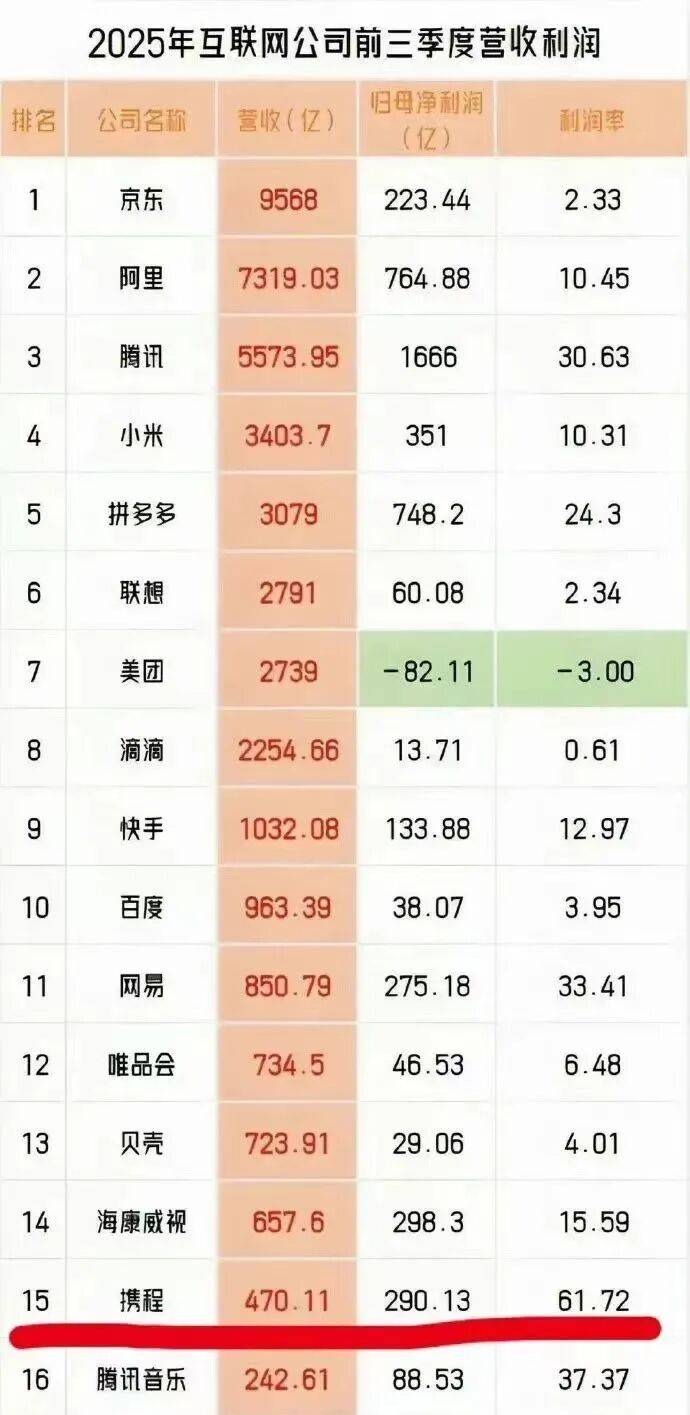
Group 1: Internet Company Revenue and Profit - JD.com leads the revenue chart with 956.8 billion, followed by Alibaba at 731.9 billion and Tencent at 557.4 billion [1] - Alibaba's net profit stands at 76.5 billion, significantly higher than JD.com's 22.3 billion, while Tencent shows a strong profit of 166.6 billion [1] - The profit margin for Tencent is notably high at 30.63%, compared to Alibaba's 10.45% and JD.com's 2.33% [1] Group 2: Market Trends and Insights - The data indicates a competitive landscape among major internet companies, with varying revenue and profit margins suggesting different business strategies and operational efficiencies [1] - The significant profit margins of Tencent may indicate a focus on high-margin services, while JD.com and Alibaba are still scaling their operations [1] Group 3: Financial Performance Overview - The overall financial performance of the top internet companies reflects a diverse range of growth strategies, with some companies prioritizing revenue growth while others focus on profitability [1] - The financial results for the third quarter of 2025 highlight the ongoing evolution of the internet sector in China, with implications for future investment opportunities [1]


千问App全面接入阿里生态,ChatGPT新增广告功能
GF SECURITIES· 2026-01-18 12:06
Core Insights - The report maintains a bullish outlook on the internet sector, particularly e-commerce, social entertainment media, internet healthcare, short videos, and IP-related markets, driven by advancements in AI applications and product innovations [3][17][22]. E-commerce - The report continues to recommend Alibaba in the e-commerce sector, highlighting the recent AI application developments that are expected to catalyze growth. The MAU of the Qianwen app has surpassed 100 million, indicating strong user engagement [3][17]. - JD.com is projected to experience marginal improvements after a weak growth quarter in Q4 2025, maintaining a buy rating [3][17]. Social Entertainment Media - Bilibili and Tencent are noted for their strong advertising momentum, with Tencent's gaming fundamentals improving. The report anticipates the release of new games from both companies, enhancing their product offerings [3][17][22]. - Tencent's game "Delta Action" is expected to become a significant title alongside "Honor of Kings" and "Peacekeeper Elite" [3][17]. Internet Healthcare - JD Health and Alibaba Health are leveraging their leading platform advantages to deepen collaborations with upstream pharmaceutical manufacturers, resulting in strong revenue and profit growth [3][17]. Short Videos - Kuaishou is recognized for its stable core business and technological leadership in AI, with ongoing efforts to optimize user engagement and monetization through advanced recommendation systems [3][17][22]. IP and Trendy Toys - Pop Mart is expanding its overseas supply chain, with recent shipments from partners in Indonesia, Cambodia, and Mexico, indicating a robust international strategy [3][17]. Long Videos - The report notes a recovery in the number of TV series registrations, with multiple platforms releasing high-quality content, suggesting investment opportunities in companies like iQIYI and Mango TV [3][17]. Music Streaming - Tencent Music and NetEase Cloud Music have shown stable performance, although concerns about competition have led to a valuation adjustment. The report emphasizes the importance of quality content in driving subscription growth [3][17][22]. Gaming Sector - The gaming industry is expected to maintain its growth trajectory into 2026, with a focus on leading companies like Tencent and NetEase, as well as emerging players with strong product pipelines [3][22]. Advertising - The report indicates stable advertising spending from Q1 flash purchase advertisers, with AI applications like Canva and Afu being utilized in advertising strategies, suggesting continued growth in the advertising sector [3][22]. AI Developments - The report highlights the current phase of intensive AI development in China, recommending attention to companies involved in AI model iterations and applications across various sectors [3][22].


1月16日热门中概股涨跌不一 台积电涨4.48%,腾讯音乐跌4.98%
Xin Lang Cai Jing· 2026-01-15 21:30
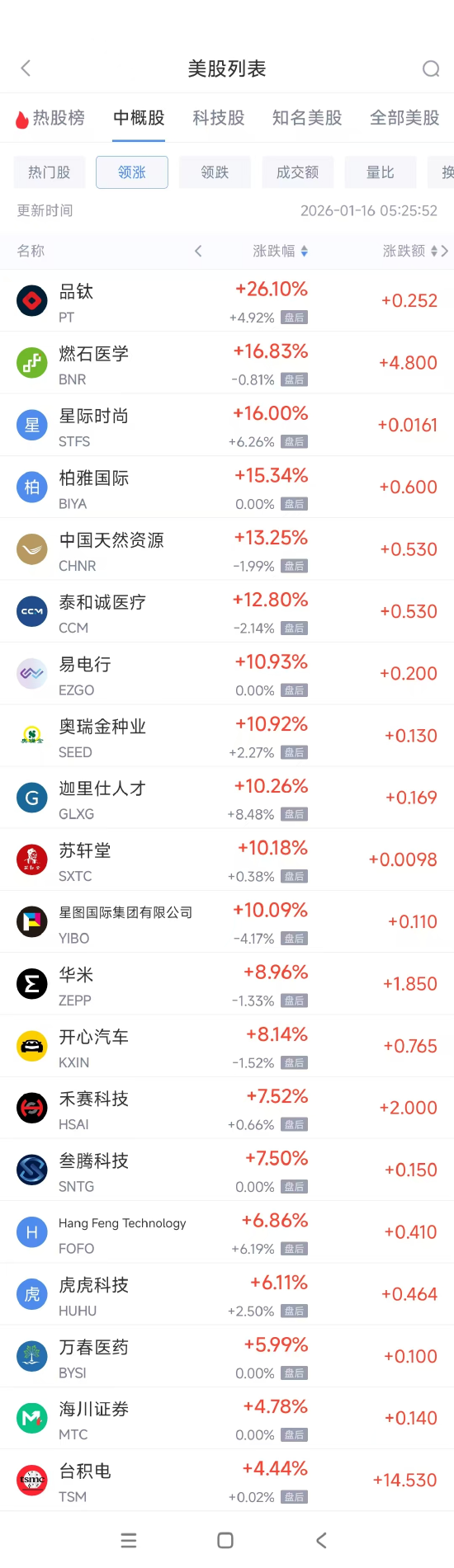
Group 1 - The Nasdaq China Golden Dragon Index (HXC) closed down by 0.60% on January 16, with mixed performance among Chinese concept stocks [1][8]. - Among the stocks that increased, TSMC rose by 4.48%, Alibaba by 0.62%, and NIO by 1.64% [1][8]. - Stocks that declined included Pinduoduo down by 0.40%, NetEase down by 2.09%, and Tencent Music down by 4.98% [1][8]. Group 2 - The US stock market saw gains on Thursday, led by the chip and banking sectors, helping major indices rebound after two days of decline [2][9]. - The Dow Jones Industrial Average increased by 292.81 points, or 0.60%, closing at 49,442.44 points; the Nasdaq rose by 58.27 points, or 0.25%, to 23,530.02 points; and the S&P 500 gained 17.87 points, or 0.26%, to 6,944.47 points [2][9]. Group 3 - A list of top-performing Chinese concept stocks includes Pintai with a rise of 26.10%, and Fuel Medical with an increase of 16.83% [3][11]. - The list of declining Chinese concept stocks features Fanhua Financial down by 14.04%, and Zhongchi Chefu down by 12.98% [6][14].


美银:AI仍为中国互联网最大增长亮点,腾讯控股为行业首选!阿里巴巴仍是中国人工智能领域的最佳投资标的,亦是中国电商股首选
Sou Hu Cai Jing· 2026-01-13 06:40
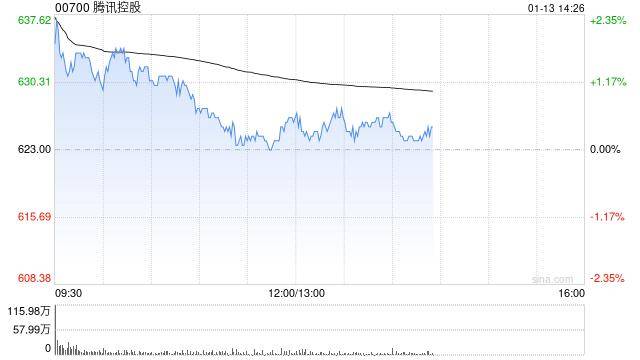
Core Viewpoint - The report from Bank of America Securities indicates that stock performance will continue to diverge this year, with the artificial intelligence sector expected to outperform the market again, while virtual consumption in entertainment and travel will continue to excel over physical e-commerce [2] Group 1: Market Trends - The macroeconomic environment remains weak, putting pressure on consumer spending (e-commerce) and corporate spending (advertising), which continues to be a drag on the industry [2] - Chinese internet stocks are seen as having attractive valuations, providing a buffer against downside risks, with a forecasted price-to-earnings ratio of 18 times, lower than the ten-year average of 23 times, the Nasdaq 100's 26 times, and the "Big Seven" of US stocks at 31 times [2] Group 2: Stock Preferences - The company prefers stocks in artificial intelligence and online gaming over e-commerce, with Tencent Holdings (00700) being the top choice due to its growth driven by AI applications, stable market competition, excellent shareholder returns, and attractive valuation [2] - Alibaba (09988) is identified as the best investment target in China's artificial intelligence sector and the preferred choice among Chinese e-commerce stocks [2] - Baidu Group-SW (09888) is considered attractive in the AI field, with value release on the right track [2] - In the digital entertainment sector, the company favors online gaming, recommending Bilibili-W (09626) and Tencent Music-SW (01698) [2] - Within specific segments, JD Health (06618) and Trip.com Group-S (09961) are viewed positively [2]


美银:AI仍为中国互联网最大增长亮点 腾讯控股为行业首选
Zhi Tong Cai Jing· 2026-01-13 06:16
Core Viewpoint - The report from Bank of America Securities indicates that stock performance will remain differentiated this year, with the artificial intelligence sector expected to outperform the market again, while virtual consumption in entertainment and travel will continue to outperform physical e-commerce [1] Group 1: Market Trends - The macroeconomic environment is weak, putting pressure on consumer spending (e-commerce) and corporate spending (advertising), which remains a drag on the industry [1] - Chinese internet stocks are seen as having attractive valuations, providing a buffer against downside risks, with a forecasted price-to-earnings ratio of 18 times, lower than the ten-year average of 23 times, the Nasdaq 100's 26 times, and the "Big Seven" in the US stock market at 31 times [1] Group 2: Stock Preferences - The company prefers stocks in artificial intelligence and online gaming over e-commerce, with Tencent Holdings (00700) being the top pick due to its growth driven by AI applications, stable market competition, excellent shareholder returns, and attractive valuation [1] - Alibaba (09988) is identified as the best investment target in China's artificial intelligence sector and the top choice among Chinese e-commerce stocks [1] - Baidu-SW (09888) is considered attractive in the AI field, with value release on the right track [1] - In the digital entertainment sector, the company favors online gaming, recommending Bilibili-W (09626) and Tencent Music-SW (01698) [1] - Within specific sectors, JD Health (06618) and Trip.com (09961) are viewed positively [1]
富瑞:重申AI为中国互联网市场首要主题 首选阿里(09988)及腾讯
智通财经网· 2026-01-13 03:00
Core Viewpoint - The report by Jefferies emphasizes that artificial intelligence will remain the primary theme in China's internet market through 2026, followed by the defensive entertainment sector and the rapidly growing tourism industry [1] Group 1: Market Trends - The market has already factored in recent consumer sentiment and monthly Gross Merchandise Volume (GMV) growth, with a year-on-year GMV increase of 7.5% in the third quarter of September, and growth rates of 4.9% and 1.5% for October and November respectively compared to the same period last year [1] Group 2: Company Preferences - Jefferies lists Alibaba-W (09988) and Tencent Holdings (00700) as the top picks in the internet sector, followed by Baidu Group-SW (09888), Trip.com Group-S (09961), NetEase-S (09999), Kuaishou-W (01024), Tencent Music-SW (01698), JD Group-SW (09618), and Meituan-W (03690) [1] Group 3: E-commerce Focus - The focus in the fast e-commerce sector is shifting from low Average Order Value (AOV) orders to high AOV orders, as the latter offers better unit economics under healthy industry conditions [1] Group 4: Kuaishou Developments - Kuaishou's AI-generated model "K可灵AI" has launched several new products, with analysis indicating that its motion control feature has gained significant popularity in overseas markets since late December and into January, with expectations that Kuaishou's fourth-quarter performance will meet projections [1]
