BUSYMING(01768)

Search documents
鸣鸣很忙20260202
2026-02-03 02:05
Summary of Key Points from the Conference Call Industry Overview - The snack wholesale store industry in China is rapidly developing due to several factors, including supply chain advantages, declining distribution costs, standardization of snack categories, high repurchase frequency, and consumer habits influenced by population density [2][6][7]. Company Insights Mingming Hen Mang - Mingming Hen Mang is a leading player in the snack wholesale industry, benefiting from industry trends by controlling costs through improved supply chain efficiency and product selection logic [2][10]. - The company plans to expand its store count significantly, with expectations to exceed 32,000 stores under neutral conditions and potentially reach 38,000 stores under optimistic scenarios by 2025 [21][22]. - Revenue is projected to surpass 100 billion yuan and net profit to exceed 4.2 billion yuan by 2027, indicating strong growth potential [22]. Sam's Club - Sam's Club has achieved success in the Chinese market by offering high-quality products, a streamlined SKU strategy, and leveraging a strong product development team to enhance supply chain efficiency [11][12]. Other Competitors - Other brands like Aoleqi and Hema NB are also adapting to the market by implementing unique strategies, such as Aoleqi's focus on private labels and low-cost operations, which serve as models for emerging snack wholesale stores [17][19][20]. Key Strategies and Trends - The snack wholesale store model has evolved through three stages: small high-margin stores, larger stores with declining margins, and the emergence of large-scale low-margin stores post-pandemic [8][9]. - The cost structure has been redefined to a "10+20" model, where backend costs account for 10% and franchise/store costs for 20%, significantly lowering distribution costs [6][8]. - The introduction of private label products and channel-specific offerings has helped maintain overall gross margins while providing competitive pricing to consumers [4][6]. Consumer and Market Dynamics - Snack wholesale stores cater to concentrated consumer demand for snacks, offering a wide variety of products at competitive prices, which enhances customer satisfaction and loyalty [4][5]. - The industry benefits from the high repurchase frequency of snack products, making it an ideal category for chain operations [7][20]. Challenges and Considerations - Expanding into multiple categories poses challenges, including managing different product frequencies and complexities in supply chain management [20]. - The competitive landscape is evolving, with major players like Mingming Hen Mang and Wancheng engaging in strategic positioning to minimize direct competition and stabilize market dynamics [23]. Conclusion - The snack wholesale industry in China is poised for continued growth, driven by innovative business models, effective supply chain management, and strategic expansion plans from leading companies like Mingming Hen Mang and Sam's Club [2][10][22].
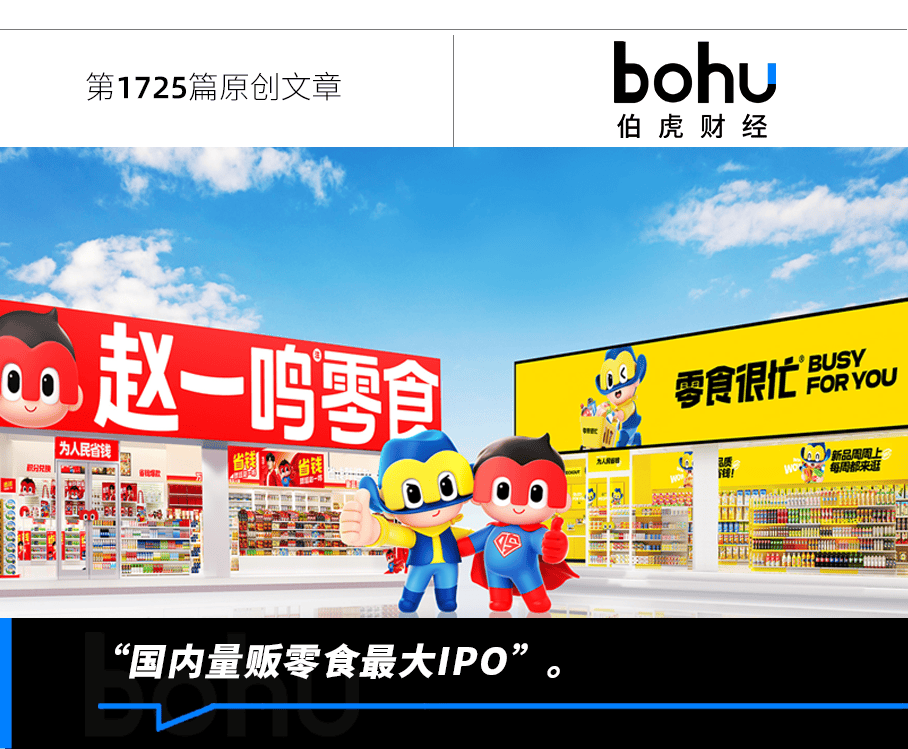
鸣鸣很忙敲钟港股,“量贩零食最大IPO”诞生
Sou Hu Cai Jing· 2026-02-02 16:22
Core Viewpoint - Mingming Hen Mang has officially listed on the Hong Kong Stock Exchange with a market capitalization exceeding HKD 90 billion, marking the largest IPO in the domestic mass snack sector [2][3]. Group 1: Company Overview - Mingming Hen Mang was formed through the merger of two brands, "Zero Snacks" and "Zhao Yiming Snacks," which began operations in 2017 and 2019 respectively, and has since embarked on an aggressive expansion strategy [4]. - The company achieved revenues of CNY 42.86 billion, CNY 102.95 billion, and CNY 393.44 billion from 2022 to 2024, with a compound annual growth rate (CAGR) of 203.0% [4]. - Adjusted net profits for the same period were CNY 0.82 billion, CNY 2.35 billion, and CNY 9.13 billion, with a CAGR of 234.6% [4]. - By 2024, the number of stores is expected to exceed 10,000, reaching 21,000 by November 2025, covering 28 provinces and various city tiers in China [4]. Group 2: Market Position - Mingming Hen Mang is the largest chain retailer of leisure food and beverages in China, holding a 1.5% market share based on GMV for 2024 [4]. - The company ranks fourth among food and beverage chain retailers in China, with a 0.8% market share [4]. Group 3: Pricing Strategy - The company is known for its low prices, with average product prices approximately 25% lower than those in regular supermarkets [5]. - Examples of pricing include CNY 1.2 for bottled water, CNY 0.8 for chocolate, and CNY 2.2 for mixed nuts [5]. Group 4: Operational Efficiency - Mingming Hen Mang collaborates with over 2,500 food manufacturers, eliminating intermediaries and enhancing bargaining power due to its extensive store network [6]. - The company has established 48 smart warehousing centers across the country, enabling efficient logistics with a delivery radius of 300 kilometers [6]. - The average inventory turnover period is approximately 11.6 days, indicating high operational efficiency in the retail sector [6]. Group 5: Industry Outlook - For the first three quarters of 2025, Mingming Hen Mang reported revenues of CNY 463.7 billion, reflecting a year-on-year growth of 75.2% [7]. - The Chinese leisure food and beverage retail market is projected to grow from CNY 2.9 trillion in 2019 to CNY 3.7 trillion in 2024, with a CAGR of 5.5% [7]. - The down-market segment is expected to reach a GMV of CNY 2.3 trillion by 2024, with a CAGR of 6.5% from 2019 to 2024 [7]. Group 6: Competitive Landscape - Recent performance reports from competitors like Three Squirrels and Good Products indicate significant losses, attributed to structural adjustments in store operations [8][9]. - The rise of discount snack brands has intensified competition, impacting mid-to-high-end brands [10]. - The market is experiencing a shift, with discount brands capturing market share, leading to a challenging environment for traditional brands [10]. Group 7: Challenges Ahead - The industry faces increased competition, with a duopoly emerging in the discount snack sector, leading to pressure on margins and profitability [10][11]. - The reliance on a low-price model poses risks as store expansion slows, necessitating improvements in product categories and brand development to enhance profitability [11]. - Management of franchise operations and market saturation are significant challenges, with high store density in some regions affecting sales performance [11].

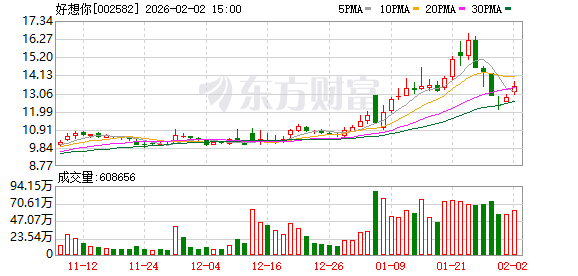
好想你业绩大反转!投资鸣鸣很忙浮盈37亿 红枣主业仍拖后腿
Guo Ji Jin Rong Bao· 2026-02-02 13:58
Core Viewpoint - The impressive performance of the company is primarily driven by investment gains rather than a recovery in its main business operations [2][3]. Group 1: Financial Performance - The company expects a net profit attributable to shareholders of between 750 million to 950 million yuan for 2025, a significant turnaround from a loss of 71.96 million yuan in the previous year [2]. - The main driver of this turnaround is a substantial increase in non-recurring gains, particularly from the fair value changes of its investment in Hunan Mingming Henbang Commercial Chain Co., Ltd. [2]. - The company reported a projected net loss of 50 million to 80 million yuan when excluding non-recurring items, indicating ongoing pressure in its core red date and health food business [3]. Group 2: Business Operations - The company, known as the "first stock of red dates," has faced continuous pressure in its main business due to changes in consumer demand and intensified industry competition [3]. - Since divesting from Baicaowei and refocusing on the red date business, the company's revenue has remained stagnant between 1 billion to 2 billion yuan, failing to break through this range [3]. - The company has accumulated losses exceeding 300 million yuan over the past three years, with net profits attributable to shareholders reported as -189 million yuan, -52 million yuan, and -72 million yuan for 2022 to 2024 [3]. Group 3: Future Outlook - The company has set performance targets in its employee stock ownership plan, aiming for a net profit of no less than 20 million yuan in 2026 and 50 million yuan in 2027, excluding stock payment expenses and investment gains from Mingming Henbang [4].

好想你业绩大反转!投资鸣鸣很忙浮盈37亿,红枣主业仍拖后腿
Guo Ji Jin Rong Bao· 2026-02-02 13:56
Core Viewpoint - The impressive performance of the company "好想你" (002582) is primarily driven by investment gains rather than a recovery in its main business operations [1][2]. Group 1: Financial Performance - The company expects a net profit attributable to shareholders of between 750 million to 950 million yuan for 2025, a significant turnaround from a loss of 71.96 million yuan in the previous year [1]. - The key to this turnaround is a substantial increase in non-recurring gains, mainly from the fair value changes of its investment in Hunan Mingming Hen Mang Commercial Chain Co., Ltd. (code "01768") [1]. - The company's net profit, excluding non-recurring gains, is projected to be a loss of 50 million to 80 million yuan for 2025, indicating ongoing challenges in its core business [2]. Group 2: Business Operations - The core business of "好想你," which focuses on red dates and related health food products, has not shown signs of stable profitability, continuing to face operational pressures [2]. - Since divesting from Baicaowei and refocusing on the red date business, the company's revenue has remained stagnant between 1 billion to 2 billion yuan, failing to break through this range [2]. - The cumulative net losses from 2022 to 2024 are projected to exceed 300 million yuan, with core business operations struggling to generate positive returns [2]. Group 3: Future Outlook - The company has set performance targets in its employee stock ownership plan, aiming for a net profit of no less than 20 million yuan in 2026 and 50 million yuan in 2027, excluding certain costs and investment gains [3]. - Improving the profitability of its core business has become a critical issue for "好想你" moving forward [3].
鸣鸣很忙上市背后:量贩零食的狂欢与危机
Sou Hu Cai Jing· 2026-02-02 09:36
Core Insights - Hunan Mingming Henbang Commercial Chain Co., Ltd. successfully listed on the Hong Kong Stock Exchange on January 28, 2026, becoming the "first stock of bulk snack food," marking its entry into the capital market [2] - The company operates 21,041 stores as of the listing date, with revenues projected to grow from 42.86 billion yuan in 2022 to 393.44 billion yuan in 2024, reflecting a compound annual growth rate of 203.0% [2][6] - The unique business model, which includes supply chain efficiency, franchise expansion, and digital empowerment, supports its rapid growth [4] Business Model - Mingming Henbang's success is attributed to its "supply chain efficiency + franchise expansion + digital empowerment" closed-loop business model, with franchising being a crucial component [4] - The company employs a "light asset franchise" model with low entry barriers, including zero franchise fees, management fees, training fees, service fees, and renovation profits, facilitating rapid store expansion [5] - From 2022 to Q3 2025, the number of stores grew from 1,902 to nearly 20,000, showcasing impressive expansion speed [6] Pricing and Supply Chain - The average price of Mingming Henbang's products is approximately 25% lower than similar products in offline supermarkets, enhancing its presence in lower-tier markets [7] - The company has restructured its supply chain by adopting a "factory-direct to store" model, collaborating with over 2,500 food enterprises to eliminate intermediaries and gain strong bargaining power [8] - As of the end of 2024, the company offers 3,380 SKUs, with each store maintaining at least 1,800 SKUs, significantly exceeding traditional supermarkets [8] Target Demographic - Over 60% of the snack consumption market is dominated by the "post-90s" and "post-00s" generations, whose consumption preferences have shifted towards value for money, emotional value, and situational consumption [9] - Young consumers are increasingly rational and practical, seeking cost-effective options, which aligns with Mingming Henbang's low-price strategy [9][10] - The diverse product range meets the varied and personalized needs of young consumers, with a flexible purchasing model that reduces waste [11] Market Challenges - Despite its success, Mingming Henbang faces challenges such as intensified industry competition, supply chain pressures, and evolving consumer demands post-IPO [3][14] - The snack food sector has transitioned from a blue ocean to a red ocean, with numerous brands entering the market, leading to fierce competition [14] - The industry suffers from severe product homogeneity, making it difficult for brands to maintain a competitive edge [14] Supply Chain and Cost Management - The expansion of stores increases procurement, warehousing, and distribution complexities, which could erode profit margins if not managed properly [15] - Fluctuations in raw material prices, such as nuts, which have seen increases of over 30%, pose additional challenges for maintaining low prices [15] - The light franchise model, while accelerating growth, presents management challenges, as increased store numbers may lead to inconsistent quality and service [15]
鸣鸣很忙(01768) - 截至二零二六年一月三十一日止月份之股份发行人的证券变动月报表
2026-02-02 08:56
股份發行人及根據《上市規則》第十九B章上市的香港預託證券發行人的證券變動月報表 截至月份: 2026年1月31日 狀態: 新提交 致:香港交易及結算所有限公司 公司名稱: 湖南鳴鳴很忙商業連鎖股份有限公司 呈交日期: 2026年2月2日 I. 法定/註冊股本變動 | 1. 股份分類 | 普通股 | 股份類別 | H | | 於香港聯交所上市 (註1) | | 是 | | | --- | --- | --- | --- | --- | --- | --- | --- | --- | | 證券代號 (如上市) | 01768 | 說明 | | | | | | | | | | 法定/註冊股份數目 | | | 面值 | | 法定/註冊股本 | | | 上月底結存 | | | 213,590,751 | RMB | | 1 RMB | | 213,590,751 | | 增加 / 減少 (-) | | | 0 | | | RMB | | | | 本月底結存 | | | 213,590,751 | RMB | | 1 RMB | | 213,590,751 | | 2. 股份分類 | 普通股 | 股份類別 | | 其他類 ...
从Costco到鸣鸣很忙,为什么都在赚“快”钱?
Xin Lang Cai Jing· 2026-02-02 06:55
Core Insights - The essence of retail lies in meticulous control over inventory, logistics, and cash flow, emphasizing the importance of turnover rates in driving profitability [2][3] - Retailers can achieve profitability through three main paths: high margin and high turnover, high margin with slower turnover, and high turnover with lower margins, the latter being crucial for mass-market retailers [3][4] Group 1: Importance of High Turnover - High turnover is essential for creating competitive advantages in retail, particularly for mass-market players who rely on rapid inventory turnover to generate profits [3][4] - The evolution of retail formats has consistently focused on improving turnover efficiency, with significant advancements seen from grocery stores to supermarkets and now to warehouse-style retailers like Costco [5][6] - The latest trend in retail is represented by bulk snack stores, which have significantly reduced inventory turnover days to 13.4 days, indicating a shift towards community-based retailing [7][29] Group 2: Cash Flow and Risk Management - High turnover creates an internal cash flow engine, allowing companies to minimize the capital required for operations by shortening inventory turnover days [8][30] - Companies like Costco and the newly listed Mingming Busy have demonstrated extremely short cash conversion cycles, enhancing their resilience and ability to return value to shareholders [9][31] - Sustained high turnover rates validate the effectiveness of a business model, indicating consumer acceptance and repeat purchases, which are essential for sustainable growth [10][32] Group 3: Supply Chain Efficiency - Retailers must optimize their supply chain relationships to achieve low prices, with a significant portion of costs attributed to product expenses [11][33] - Direct sourcing and data-driven consumer-to-manufacturer (C2M) models are becoming prevalent, allowing retailers to respond quickly to consumer preferences and reduce inefficiencies in traditional supply chains [12][34] - Shorter payment cycles enhance supplier relationships, enabling retailers to secure better terms and support for customized production and delivery [13][35] Group 4: Store Network Optimization - Retailers must maintain low costs and prices while ensuring product quality, often resulting in lower profit margins as a strategic choice [14][36] - The density of store locations creates a competitive advantage, allowing for better logistics and reduced fulfillment costs, as seen in Mingming Busy’s operations [15][39] - Rapid expansion of store networks, as demonstrated by Mingming Busy, is crucial for capturing market share and achieving operational efficiencies [16][40] Group 5: Operational Excellence - A streamlined and unified store design, combined with digital systems, allows retailers to manage large networks efficiently, reducing reliance on labor and enhancing operational consistency [17][41] - The integration of advanced management systems ensures that retailers can maintain high turnover rates while scaling operations effectively [18][42] - This operational model fosters a cycle of growth, where efficient store operations lead to stronger supplier relationships and better consumer perceptions of value [19][42]

鸣鸣很忙上市以“质价比”服务亿万家庭
Xin Lang Cai Jing· 2026-02-01 16:27
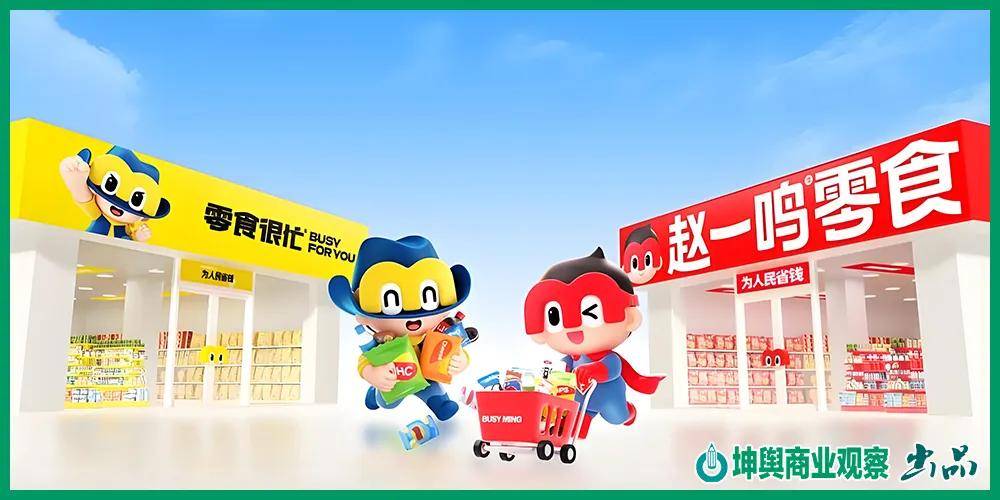
Group 1 - The core viewpoint of the article is that Hunan Mingming Hen Mang Commercial Chain Co., Ltd., the largest leisure food and beverage retail chain in China, officially listed on the Hong Kong Stock Exchange under the name "Mingming Hen Mang" [2] - The company operates two major brands, "Snacks Hen Mang" and "Zhao Yiming Snacks," and is a leader in the Chinese food and beverage wholesale model [2] - By the first nine months of 2025, the company achieved a retail sales volume (GMV) of 66.1 billion RMB, with its stores covering 28 provinces and cities across China, 59% of which are located in county towns and rural areas [2] Group 2 - The founder, chairman, and CEO of the company, Yan Zhou, stated that the company has grown from a community store to over 20,000 stores nationwide, becoming a staple in the lives of ordinary consumers [2] - The company aims to provide consumers with affordable and accessible snacks, emphasizing the joy of being able to buy a large bag for a reasonable price [2] - The company also focuses on enabling its franchisees to earn a living through their efforts, promoting a vision of a prosperous life for them [2]
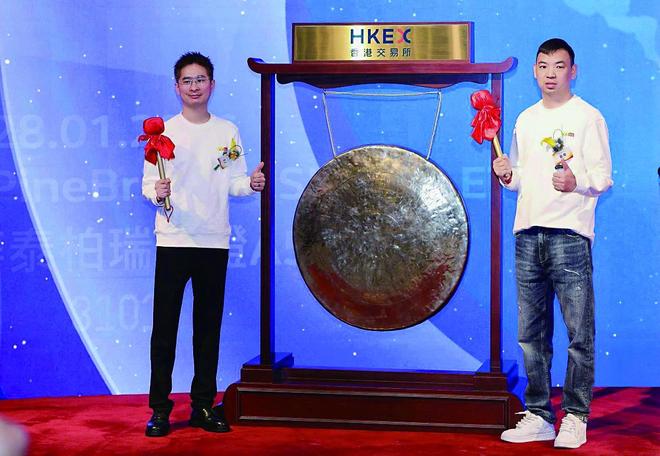
零食行业专题报告:鸣鸣很忙港股上市,关注产业链投资新趋势
Sou Hu Cai Jing· 2026-02-01 06:56
Group 1 - The core viewpoint of the report is that the snack retail industry is entering a new development phase, with the upcoming IPO of "Ming Ming Hen Mang" on January 28, 2026, expected to enhance market attention towards the snack sector [1][9][10] - "Ming Ming Hen Mang" plans to issue 14.1 million shares, accounting for approximately 7% of the total, with expected net proceeds exceeding HKD 3 billion and a market capitalization of around HKD 50 billion [1][9][10] - The market response has been positive, with eight cornerstone investors collectively subscribing for HKD 1.5 billion, including Tencent, Temasek, and BlackRock, and the subscription rate exceeding 1500 times during the offering phase [1][9][10] Group 2 - The downstream sector is shifting from rapid expansion to high-quality growth, with revenue growth expected to be sustainable and profitability improving [2][11] - The number of traditional snack retail stores in China is projected to increase from 8,000 in 2022 to over 45,000 by mid-2025, with a total potential of approximately 74,000 stores, indicating an additional growth of over 20,000 stores [2][11] - Profitability is expected to continue improving, with adjusted net profit margins for "Ming Ming Hen Mang" rising from 2.3% to 3.9% and for "Wan Chen" from -1.6% to 4.4% between 2023 and the first three quarters of 2025, driven by reduced store opening subsidies and adjustments in product mix [2][11][13] Group 3 - The upstream sector is benefiting from the expansion of product categories and the development of private label products, creating opportunities for supply chain companies [3][26] - Downstream stores are extending their product categories to include dairy, baking, and frozen foods, which is expected to benefit upstream supply chain companies, particularly mid-tier brands with significant revenue elasticity [3][26] - The relationship between upstream and downstream is evolving from simple trade to deep product collaboration, favoring manufacturers with strong product development and customization capabilities [3][26] Group 4 - Investment recommendations highlight the potential in the snack retail industry, suggesting a shift from rapid expansion to a focus on high-quality growth, with "Wan Chen" recommended and "Ming Ming Hen Mang" to be closely monitored [32] - Upstream opportunities are identified as downstream stores expand into new categories like dairy and baking, with recommendations for companies such as "Xin Dairy" and "Li Gao Foods" [32] - The report emphasizes the importance of developing private label products, with recommendations for companies like "Jin Zai Foods" and attention to "Yan Jin Pu Zi," "Wei Long Mei Wei," and "You You Foods" [32]

鸣鸣很忙登陆港交所,股价大涨73%,最新市值885.75亿港元;阶跃星辰完成过50亿人民币B+轮融资丨全球投融资周报01.24-01.30
创业邦· 2026-02-01 01:24
Core Insights - The article provides an overview of the latest trends in investment and financing activities in the domestic market, highlighting key sectors and significant funding events [5]. Group 1: Investment Overview - This week, there were 48 disclosed financing events in the domestic primary market, a decrease of 39 events compared to the previous week. The total disclosed financing amount reached 8.209 billion RMB, with an average financing amount of 328 million RMB [7]. - The most active sectors in terms of financing events were artificial intelligence (15 events), intelligent manufacturing (10 events), and materials (6 events) [9]. Group 2: Sector Highlights - In the artificial intelligence sector, the total financing amount was approximately 6.309 billion RMB, with the AI model technology developer "Jieyue Xingchen" securing a B round financing of over 5 billion RMB [9][10]. - The intelligent manufacturing sector saw a total disclosed financing of 590 million RMB, with "Turing Quantum," a developer of optical quantum chips and computers, receiving several hundred million RMB in B round financing [10]. Group 3: Regional Distribution - The majority of disclosed financing events were concentrated in Guangdong (16 events), Shanghai (11 events), and Beijing (7 events) [14]. - In Guangdong, 3 events disclosed a total financing of 320 million RMB, while in Shanghai, 6 events disclosed a total of 6.16 billion RMB [17]. Group 4: Financing Stages - The distribution of financing stages showed 38 early-stage events, 9 growth-stage events, and 1 late-stage event [18]. Group 5: Major Financing Events - Significant financing events included "Jieyue Xingchen" with over 5 billion RMB in B+ round financing, "Changting Technology" with 500 million RMB in B round financing, and "Turing Quantum" with several hundred million RMB in B round financing [21]. Group 6: IPO Activity - This week, 5 companies were monitored for IPOs, with the highest market capitalization being "Mingming Hen Mang" at 88.575 billion HKD. Four of these companies had previously received VC/PE or CVC investments [36][37]. Group 7: M&A Activity - There were 9 disclosed completed M&A events this week, a decrease of 5 events compared to the previous week. Notably, "Keboda" acquired 60% of "Keboda Intelligent" for 345 million RMB [40][41].