每日坚果

Search documents
坚果零食行业简析报告
MCR嘉世咨询· 2026-03-30 01:35
Investment Rating - The report indicates a positive investment outlook for the nut snack industry, highlighting a transition to a new growth phase with a market size expected to exceed 3,000 billion yuan by 2024 [4]. Core Insights - The Chinese nut snack market is entering a stable growth phase, transitioning from "scale-driven" to "efficiency-driven" growth, influenced by heightened health awareness post-pandemic and the rise of live e-commerce [4][19]. - The industry is experiencing a structural transformation, with a focus on product innovation, health functionality, and sustainable packaging, catering to diverse consumer needs across different age groups [4][41]. Summary by Sections Industry Overview - The nut snack industry in China has evolved through five stages: nascent, initial growth, rapid expansion, explosive growth, and maturity, with the current phase characterized by domestic brand dominance and industry consolidation [15]. Market Growth - The market size is projected to reach 3,260 billion yuan by 2025, with a growth rate of approximately 7.9% [19]. The growth is supported by increased health consciousness and significant changes in distribution channels, particularly the rise of live e-commerce [19][40]. Consumer Trends - There is a clear demographic shift in consumer preferences, with younger generations (Z generation) and older adults (silver-haired population) driving demand for health-oriented products [41]. The average per capita consumption in major cities is significantly higher than the national average, indicating regional consumption disparities [21][23]. Supply Chain and Policy Support - The report outlines a dual approach to industry support, focusing on domestic supply chain development and international trade benefits, which are crucial for reducing reliance on imported raw materials [29]. The RCEP agreement is expected to lower import costs significantly, enhancing the competitiveness of domestic products [27]. Food Safety Standards - Recent upgrades in food safety standards have raised the entry barriers for the industry, emphasizing the need for comprehensive quality control throughout the supply chain [26]. This shift is expected to accelerate market consolidation and enhance the competitive landscape [26]. Brand Competition - The competitive landscape has shifted from a focus on traffic to a deeper integration of channels and product functionality, with leading brands leveraging technology and innovation to maintain market share [37]. The top brands are increasingly focusing on quality control and product differentiation to navigate the competitive environment [37]. Future Opportunities - The industry is poised for growth driven by health-conscious consumption patterns, with significant potential for product innovation and market expansion into lower-tier cities [54][55]. The increasing demand for functional and health-oriented snacks presents a substantial opportunity for brands to innovate and capture market share [56].

三只松鼠扣非降约80%三个月两涨价 一年12亿买流量
Chang Jiang Shang Bao· 2026-02-03 07:11
Core Viewpoint - The snack giant Three Squirrels (300783.SZ) has struggled with its "high-end cost-performance" strategy, leading to a significant decline in expected profits for 2025, with net profit projected to drop by approximately 60% year-on-year [1][5]. Financial Performance - For the fiscal year 2025, the company anticipates a net profit attributable to shareholders of between 1.35 billion to 1.75 billion yuan, a decrease of about 2.73 billion to 2.33 billion yuan compared to the previous year, representing a year-on-year decline of 57.08% to 66.89% [5][6]. - The company reported a net profit of 1.61 billion yuan and a non-recurring net profit of 570 million yuan for the first three quarters of 2025, reflecting a year-on-year decline of 52.91% and 78.57%, respectively [2][6]. - The fourth quarter of 2025 is expected to be the worst in nearly four years, with projected net profits ranging from a loss of 260 million yuan to a profit of 140 million yuan [7]. Strategic Challenges - The company has faced challenges due to structural misalignment during peak sales seasons, significant increases in nut raw material prices, and strategic adjustments in sales structure, which have collectively contributed to profit declines [4][9]. - Despite the downturn, the company remains committed to its "high-end cost-performance" strategy, aiming for quality and differentiation [9]. Marketing and Sales Expenses - In 2024, the company spent 1.2 billion yuan on customer acquisition, and sales expenses exceeded 1.6 billion yuan in the first three quarters of 2025, marking a 24% increase year-on-year [4][14]. - The high sales expenses are primarily attributed to platform service and promotional costs, which are closely linked to the company's reliance on online sales [15][16]. Comparison with Competitors - Competitors like Wancheng Group and Mingming are implementing "extreme cost-performance" strategies, achieving significant profit increases, while Three Squirrels' strategy has not yielded similar advantages [10].
三只松鼠扣非降约80%三个月两涨价 “高端性价比”或失灵一年12亿买流量
Chang Jiang Shang Bao· 2026-02-03 00:25
Core Viewpoint - The snack giant Three Squirrels (300783.SZ) has seen its "high-end cost-performance" strategy fail after three years, leading to a significant decline in expected profits for 2025 [1][7]. Financial Performance - For the fiscal year 2025, the company anticipates a net profit attributable to shareholders of between 135 million to 175 million yuan, representing a year-on-year decline of approximately 60% [1][3]. - The expected net profit excluding non-recurring items is projected to be between 45 million to 65 million yuan, indicating a year-on-year decrease of around 80% [1][3]. - In the first three quarters of 2025, the company reported a net profit of 161 million yuan and a net profit excluding non-recurring items of 57 million yuan, both showing significant declines of 52.91% and 78.57% respectively compared to the previous year [4][11]. Strategic Challenges - The company attributes the profit decline to several factors, including structural misalignment during the sales peak season, significant increases in nut raw material prices, and proactive adjustments to the sales structure [5][6]. - Despite the downturn, Three Squirrels remains committed to its "high-end cost-performance" strategy, aiming for quality and differentiation [7]. Marketing and Sales Expenses - In 2024, the company spent 1.2 billion yuan on customer acquisition, and in the first three quarters of 2025, sales expenses exceeded 1.6 billion yuan, a year-on-year increase of 24% [2][12]. - The high sales expenses, primarily due to platform service and promotional costs, have significantly impacted profitability, with the net profit margin dropping to 1.97% [11][14]. Comparison with Competitors - Competitors like Wancheng Group and Mingming are implementing "extreme cost-performance" strategies, achieving substantial profit increases, while Three Squirrels' strategy has not yielded similar results [8].
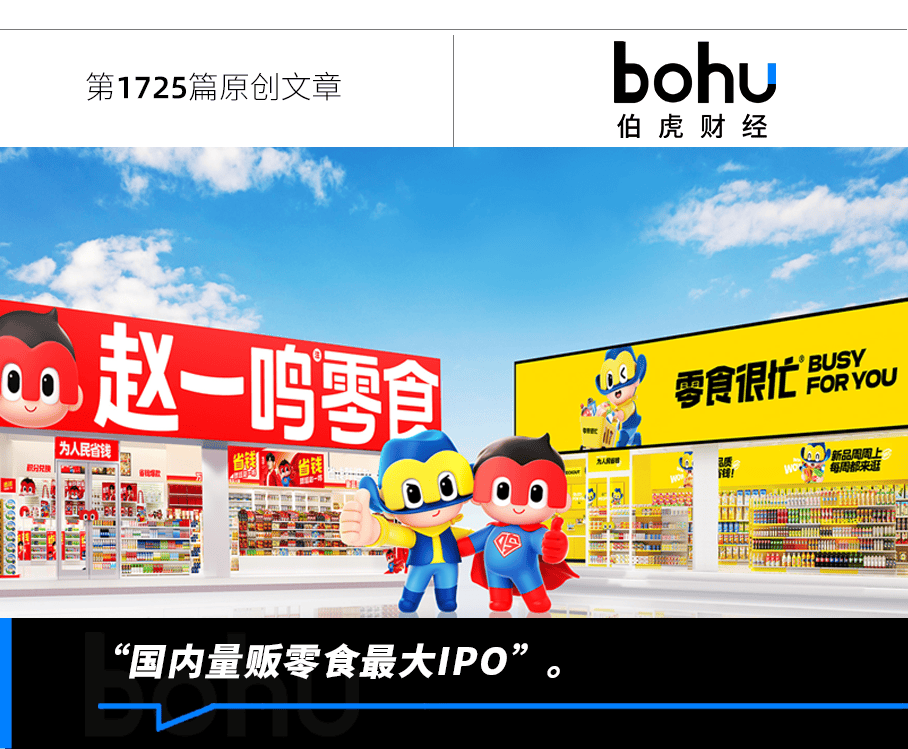
鸣鸣很忙敲钟港股,“量贩零食最大IPO”诞生
Sou Hu Cai Jing· 2026-02-02 16:22
Core Viewpoint - Mingming Hen Mang has officially listed on the Hong Kong Stock Exchange with a market capitalization exceeding HKD 90 billion, marking the largest IPO in the domestic mass snack sector [2][3]. Group 1: Company Overview - Mingming Hen Mang was formed through the merger of two brands, "Zero Snacks" and "Zhao Yiming Snacks," which began operations in 2017 and 2019 respectively, and has since embarked on an aggressive expansion strategy [4]. - The company achieved revenues of CNY 42.86 billion, CNY 102.95 billion, and CNY 393.44 billion from 2022 to 2024, with a compound annual growth rate (CAGR) of 203.0% [4]. - Adjusted net profits for the same period were CNY 0.82 billion, CNY 2.35 billion, and CNY 9.13 billion, with a CAGR of 234.6% [4]. - By 2024, the number of stores is expected to exceed 10,000, reaching 21,000 by November 2025, covering 28 provinces and various city tiers in China [4]. Group 2: Market Position - Mingming Hen Mang is the largest chain retailer of leisure food and beverages in China, holding a 1.5% market share based on GMV for 2024 [4]. - The company ranks fourth among food and beverage chain retailers in China, with a 0.8% market share [4]. Group 3: Pricing Strategy - The company is known for its low prices, with average product prices approximately 25% lower than those in regular supermarkets [5]. - Examples of pricing include CNY 1.2 for bottled water, CNY 0.8 for chocolate, and CNY 2.2 for mixed nuts [5]. Group 4: Operational Efficiency - Mingming Hen Mang collaborates with over 2,500 food manufacturers, eliminating intermediaries and enhancing bargaining power due to its extensive store network [6]. - The company has established 48 smart warehousing centers across the country, enabling efficient logistics with a delivery radius of 300 kilometers [6]. - The average inventory turnover period is approximately 11.6 days, indicating high operational efficiency in the retail sector [6]. Group 5: Industry Outlook - For the first three quarters of 2025, Mingming Hen Mang reported revenues of CNY 463.7 billion, reflecting a year-on-year growth of 75.2% [7]. - The Chinese leisure food and beverage retail market is projected to grow from CNY 2.9 trillion in 2019 to CNY 3.7 trillion in 2024, with a CAGR of 5.5% [7]. - The down-market segment is expected to reach a GMV of CNY 2.3 trillion by 2024, with a CAGR of 6.5% from 2019 to 2024 [7]. Group 6: Competitive Landscape - Recent performance reports from competitors like Three Squirrels and Good Products indicate significant losses, attributed to structural adjustments in store operations [8][9]. - The rise of discount snack brands has intensified competition, impacting mid-to-high-end brands [10]. - The market is experiencing a shift, with discount brands capturing market share, leading to a challenging environment for traditional brands [10]. Group 7: Challenges Ahead - The industry faces increased competition, with a duopoly emerging in the discount snack sector, leading to pressure on margins and profitability [10][11]. - The reliance on a low-price model poses risks as store expansion slows, necessitating improvements in product categories and brand development to enhance profitability [11]. - Management of franchise operations and market saturation are significant challenges, with high store density in some regions affecting sales performance [11].

洽洽食品拟变更可转债募投项目 新项目投资额缩减逾七成
Xin Lang Cai Jing· 2026-01-28 13:40
Core Viewpoint - Qiaqia Food announced a significant reduction and postponement of its "Hefei Qiaqia Industrial Park Nut Flexible Factory Construction Project," with the investment scale decreased by over 70% [1][2] Group 1: Project Changes - The original investment for the "Hefei Qiaqia Industrial Park Nut Flexible Factory Construction Project" was planned at 260 million yuan, with a projected annual capacity of 9,000 tons of daily nuts, 2,400 tons of shell nuts, and 2,400 tons of flavored nuts [1] - The revised project, now named "Qiaqia Hefei No. 1 Nut Flexible Factory Construction Project," will involve a single nut workshop with a 10 tons/day flavored nut production line and a 5 tons/day flavored nut production line, with a total construction cost of 60.8643 million yuan [1][2] - The completion date for the project has been extended from September 30, 2026, to October 31, 2026 [2] Group 2: Financial Adjustments - The investment amount has been reduced from 260 million yuan to 60.8643 million yuan, representing a reduction of 73.82% [2] - The remaining 199 million yuan and related interest income will be permanently reallocated to supplement working capital [2] Group 3: Strategic Implications - Qiaqia Food has established nine major production bases in China, including Hefei, Fuyang, Changsha, and Chongqing, and plans to build a new nut factory and production line in Thailand [2] - The adjustment of the fundraising project is a careful decision made by the company based on external circumstances and its strategic development needs, aligning with its actual operational requirements [2] - The construction of the nut flexible factory aims to achieve standardized processes from raw material selection to packaging, ensuring product stability and food safety, while enabling quick adaptation to market demands through small-batch, multi-batch production [2]
2025年上海市炒货食品及坚果制品商品包装物减量(过度包装)监督抽查结果公布
Zhong Guo Zhi Liang Xin Wen Wang· 2026-01-16 08:34
Group 1 - The Shanghai Municipal Market Supervision Administration conducted a packaging supervision inspection on roasted food and nut products, revealing that out of 15 batches tested, 4 batches were found to be non-compliant with packaging standards [2][3] - The inspection was based on GB 23350-2021 standards, focusing on packaging void ratio and the number of packaging layers [2] Group 2 - The compliant products included various nut mixes and snacks from brands such as Qingmei, Yao Sheng Ji, and San Zhi Song Shu, with specifications ranging from 25g to 1.42kg [3] - Non-compliant products included "Nut Gift Box" and "Probiotic Daily Nuts," which failed due to excessive packaging void ratios [3][4]
洽洽食品入选2025“未来力量”出海实力榜 一颗瓜子的全球旅程
Xin Lang Cai Jing· 2025-12-31 14:44
Core Insights - Chacha Food Co., Ltd. has been recognized as a leading enterprise in the "Future Power" list for 2025, showcasing its achievements in overseas markets and innovative globalization strategies [1][3] Company Overview - Chacha Food is a leading producer of nut-based snacks in China, with over 1 million acres of nut planting bases and 11 owned factories, ensuring product quality from the source [1][3] - The company offers a diverse range of products, including flavored sunflower seeds and daily nuts, with its sunflower seeds maintaining the top global sales position for several years [1][3] Brand Development - After over 20 years of development, Chacha has become a symbolic brand in China's nut industry, ranking in the "Asia Brand 500" for the third consecutive time in 2025, with a brand value of 56.872 billion yuan [4] - The company has received 37 national honors and holds 310 authorized patents, reflecting its commitment to product and technological innovation [4] International Expansion - Chacha Food has prioritized international expansion since its inception, establishing a global presence with operations in nearly 70 countries and regions, particularly in Southeast Asia, Europe, and North America [2][4] - The company has adapted its brand name for international markets to "chacha" or "chacheer" and tailored its products to local tastes, such as Thai coconut-flavored seeds and Japanese truffle-flavored seeds [5] Market Performance - The company has demonstrated strong growth, with overseas revenue increasing by 10.28% in 2024 and 13.18% in the first half of 2025 [5] - Chacha's sunflower seeds continue to lead the global market, underscoring its competitive edge in the international arena [5]
山姆席卷县城中产
投资界· 2025-11-27 07:17
Core Viewpoint - The article discusses the expansion of Sam's Club into smaller cities through various formats like "Sam's Preferred Supermarket" and "Sam's Selected Hourly Delivery," which cater to local consumers without requiring a membership fee, thus creating a new market dynamic [3][4][8]. Group 1: Expansion Strategies - Sam's Club has introduced "Sam's Preferred Supermarket" in areas without existing Sam's locations, providing a simplified shopping experience with a focus on quality products [4][7]. - The new stores maintain a minimalist design and offer a range of products similar to those found in larger Sam's Club locations, but without the need for a membership fee [7][8]. - The article highlights the rise of individual resellers who purchase products from Sam's Club and sell them in smaller communities, indicating a growing trend in local distribution [9][18]. Group 2: Consumer Behavior - Consumers in smaller cities are eager to access Sam's Club products, often participating in group purchases to save costs, which reflects a shift in shopping habits [9][17]. - The article notes that despite the higher prices in these new formats, consumers are willing to pay a premium for the perceived quality and brand association with Sam's Club [27][28]. - The demand for specific products, such as baked goods, is high, but the large packaging often leads to waste, indicating a mismatch between product size and consumer needs [14][17]. Group 3: Market Dynamics - The emergence of "Sam's Preferred" and similar stores has created a competitive landscape where various brands and products are available, often at higher prices than in traditional Sam's Club locations [22][25]. - The article mentions that these new stores often carry products from other major retailers, indicating a blending of brand identities in the marketplace [24][25]. - Concerns are raised about the potential for counterfeit products and quality issues as these new distribution channels grow, which could impact Sam's Club's reputation [30].


县城零售,冰火两重天
虎嗅APP· 2025-11-23 10:01
Core Viewpoint - The retail landscape in county-level cities is experiencing a stark contrast, with discount stores thriving while traditional supermarkets and convenience stores struggle to survive [2][11][30]. Group 1: Retail Performance Disparity - In a county commercial street, a well-established cooked food store is thriving, selling around 500 kg of cold dishes daily, while nearby stores face poor sales [3][6][8]. - Discount stores are attracting significant customer traffic, with one store reporting daily sales of 5,000 yuan in its first month and reaching over 10,000 yuan during peak periods [15][17]. - Traditional supermarkets are witnessing a drastic decline in sales, with one store's weekend sales dropping from 7,000-8,000 yuan to 3,000-4,000 yuan, reflecting a nearly 50% decrease in revenue over two years [19][21]. Group 2: Consumer Behavior Changes - Consumers in county areas are increasingly price-sensitive, with 71% prioritizing cost-effectiveness in their shopping decisions, significantly higher than the 58% in first- and second-tier cities [17][30]. - The shift towards online shopping is notable, with the proportion of online purchases in county areas rising from 32% in 2019 to 58% in 2024 [32]. Group 3: Industry Trends and Challenges - The number of discount stores is rapidly increasing, with a projected growth of 67% in 2024, particularly in county markets where over 55% of new stores are located [17][30]. - Convenience stores are facing high closure rates, with an 18% closure rate in county areas, compared to 12% in first- and second-tier cities [24]. - The restaurant industry is also struggling, with a closure rate of 16% in county markets, indicating a challenging environment for many dining establishments [28]. Group 4: Structural Changes in Retail - The retail industry is shifting from a "big and comprehensive" model to a "small and specialized" approach, with businesses focusing on niche markets to enhance competitiveness [34][36]. - Rising operational costs, particularly in rent and labor, are reshaping the industry landscape, making it difficult for traditional supermarkets to maintain profitability [36][37]. - Capital investment is increasingly favoring growth-oriented sectors like discount stores and specialty shops, leaving traditional retail formats with limited funding opportunities [37][38].
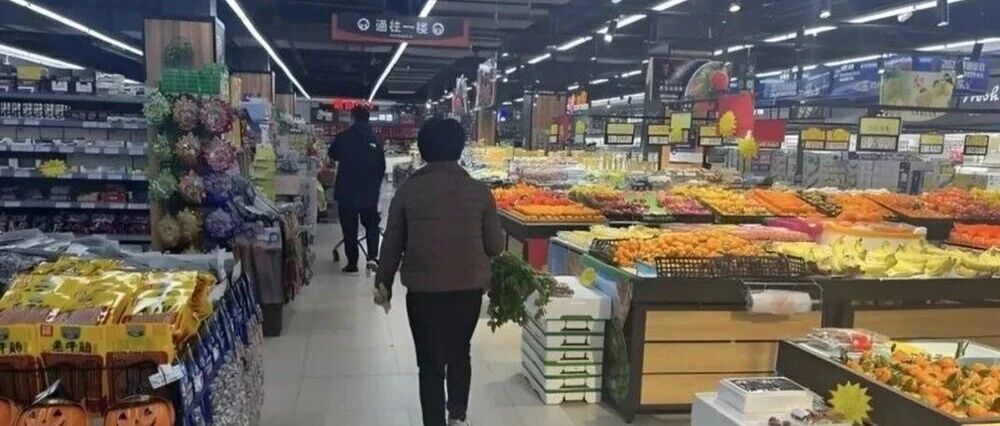
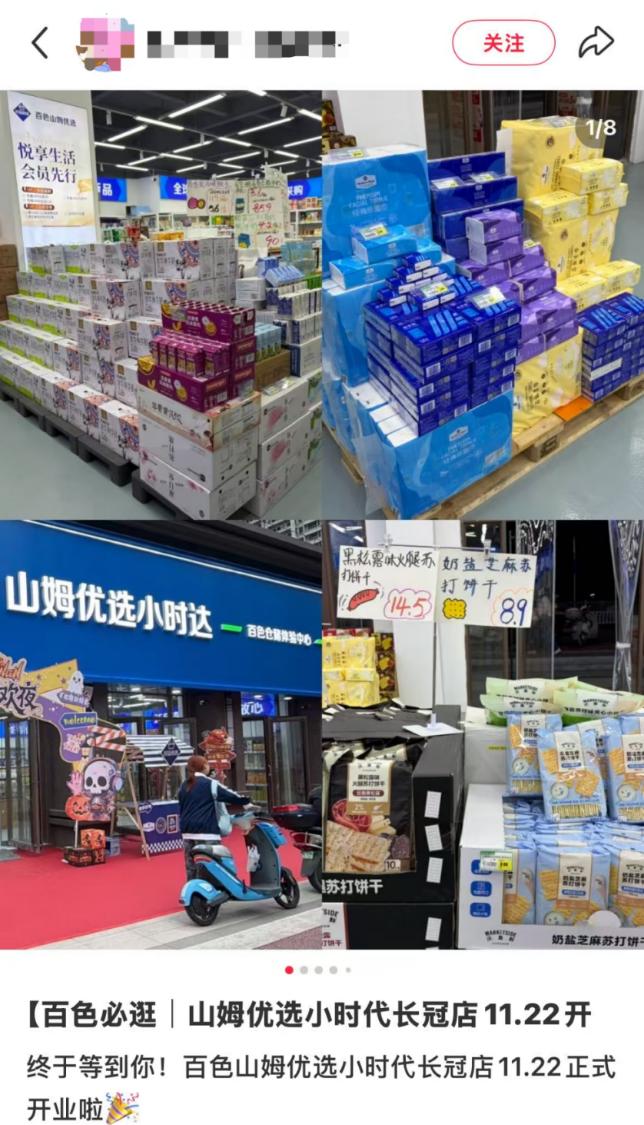
溢价100%的山寨山姆,挤满了想花钱的县城中产
3 6 Ke· 2025-11-20 03:36
Core Insights - The article discusses the expansion of Sam's Club into smaller cities through the establishment of "Sam's Preferred Supermarkets" and "Sam's Selected Hourly Delivery" services, which cater to local consumers without requiring a membership fee [1][2][5]. Group 1: Business Model and Strategy - Sam's Club is adapting its business model by creating smaller, community-based stores that mimic the experience of its larger membership warehouses, allowing consumers to access products without the membership fee [1][4][5]. - The new stores maintain a simplified and bright design, offering a "warehouse experience" while being smaller than traditional Sam's Club locations [4][5]. - The article highlights the rise of individual resellers who purchase products from Sam's Club and sell them in smaller quantities to local consumers, indicating a growing market for Sam's products in smaller cities [15][16][20]. Group 2: Consumer Behavior and Market Dynamics - Consumers in smaller cities are increasingly interested in premium products, leading to a demand for Sam's Club items, which are often sold at a significant markup by resellers [22][27]. - The article notes that the perception of Sam's Club as a symbol of a better lifestyle is prevalent among middle-class consumers in smaller cities, who are willing to pay higher prices for the brand's products [28][30]. - There is a growing trend of community-based group buying, where individuals pool resources to purchase Sam's products, reflecting a shift in consumer behavior towards collaborative purchasing [12][14][16]. Group 3: Challenges and Concerns - The article raises concerns about the quality control of products sold through resellers, as there have been reports of spoiled goods and potential counterfeit products [14][32]. - Sam's Club's parent company, Walmart China, has stated that it does not endorse these reseller practices, yet the reality on the ground shows a blurred line between official and unofficial sales channels [23][25]. - The potential for brand dilution and reputational risk is highlighted, as the proliferation of unregulated resellers could impact consumer trust in the Sam's Club brand [30][32].