
LI AUTO-W(02015)

Search documents
中国汽车的真正考验,才刚开始
Xin Lang Cai Jing· 2025-12-06 07:04
Core Viewpoint - The Chinese automotive industry is facing a significant downturn, with 2026 expected to be one of the most challenging years in its history due to declining sales and market conditions [5][37]. Group 1: Market Performance - Retail sales of passenger cars in China saw a 15% year-on-year increase earlier this year, but growth has rapidly declined since July, with October experiencing an overall negative growth [7][39]. - In November, daily retail sales averaged 4.6 million units, down 19% year-on-year in the first week, and 6.7 million units, down 9% in the second week [8][39]. - Major automakers are struggling to meet their sales targets, with only a few smaller new players achieving their goals by November [8][40]. Group 2: Industry Challenges - The automotive industry is transitioning from subsidy-driven growth to competition based on real demand and efficiency, indicating a significant shift in market dynamics [40][41]. - The impact of subsidies is diminishing, with over 50% of sales in 2025 attributed to trade-in programs, highlighting a reliance on government incentives [9][41]. - The market is experiencing a "strategic waiting" phase among consumers, leading to a decline in new orders as buyers anticipate better deals [15][48]. Group 3: Future Outlook - The expected decline in new energy vehicle purchase tax incentives in 2026 is anticipated to further exacerbate market challenges [15][47]. - The penetration rate of new energy vehicles is slowing, with a notable drop in total retail volume despite high growth rates in percentage terms [15][47]. - The industry is likely to undergo a significant restructuring, with weaker companies facing exit from the market, marking a shift from scale expansion to value competition [32][65]. Group 4: Technological Developments - The automotive sector is exploring various technological advancements, including smart driving and battery innovations, but progress varies across different areas [51][54]. - The introduction of solid-state batteries and centralized computing is underway, but widespread adoption is not expected until 2026 or later [54][55]. - The smart driving sector is experiencing a technological leap, with new models expected to enhance user trust and influence purchasing decisions in 2026 [57][60].






中国汽车的真正考验,才刚开始
虎嗅APP· 2025-12-06 03:32
Core Viewpoint - The article highlights that 2026 is expected to be a challenging year for the Chinese automotive industry, with significant declines in sales and a shift from subsidy-driven growth to competition based on real demand and efficiency [2][9]. Sales Performance - Retail sales of passenger cars in China saw a 15% year-on-year growth at the beginning of the year, but the growth rate has sharply declined since July, with October experiencing an overall negative growth [4][8]. - In November, the average daily retail sales of passenger cars were 46,000 units, down 19% year-on-year in the first week, 9% in the second week, and 7% in the third week [6]. Company Targets and Achievements - BYD aimed for 4.6 million units and achieved 4.18 million units by November, facing challenges to meet its target [7]. - SAIC Group set a target of 4.5 million units, with 4.11 million units sold by November, likely to meet its goal [7]. - Chery and Li Auto are unlikely to meet their targets, while Xiaomi and Leap Motor have already achieved theirs [11]. Market Dynamics - The automotive industry is experiencing its lowest profit margins in five years, with an average profit margin of only 3.8%, leading to significant price reductions [8]. - The market is shifting from a subsidy-driven model to one focused on genuine consumer demand and efficiency, indicating a potential industry "cold wave" in 2026 [8][41]. Subsidy Impact - The impact of subsidies is diminishing, with over 50% of sales in 2025 attributed to trade-in programs, which are now facing adjustments and reductions in many regions [10][13]. - The withdrawal of subsidies is leading to a significant drop in consumer purchasing activity, as many are adopting a "wait-and-see" approach [19][23]. Technological Developments - The article discusses various technological advancements in the automotive sector, including developments in autonomous driving and battery technology, which are seen as potential growth areas for 2026 [26][30]. - The shift towards "software-defined vehicles" and advancements in intelligent driving systems are expected to play a crucial role in the market's future [30][40]. Industry Outlook - The automotive industry is facing a structural adjustment, with weaker companies likely to exit the market as competition intensifies [47]. - The transition from scale expansion to value competition is seen as essential for the long-term health of the industry, with a focus on innovation and efficiency [47][48].


汽车早报|多个恶意诋毁蔚来网络账号被判赔偿道歉 理想汽车累计交付突破150万辆
Xin Lang Cai Jing· 2025-12-06 00:40
Group 1: Used Car Market - In October 2025, the national used car market transaction volume reached 1.76 million units, a year-on-year increase of 2.7% and a month-on-month decrease of 2% [1] - From January to October 2025, the cumulative transaction volume of used cars was 16.49 million units, reflecting a year-on-year growth of 3.5%, with a total transaction value of 1,057.2 billion yuan, up 0.6% [1] - The transfer rate of used cars has fluctuated between 25% and 30% in recent years, reaching a historical high of 33.1% in October 2025 [1] Group 2: Automotive Sales and Deliveries - GAC Group reported November 2025 automotive sales of 179,700 units, representing a month-on-month increase of 5.2% [4] - Honda's terminal automotive sales in China for November 2025 were 50,840 units, with cumulative sales from January to November 2025 totaling 578,580 units [5] - GAC Toyota's overall sales in November 2025 were 64,905 units, with total sales from January to November 2025 reaching 704,024 units [6] - Li Auto announced that its cumulative deliveries have surpassed 1.5 million units [3] Group 3: Industry Developments - RoboSense announced that its laser radar deliveries exceeded 150,000 units in November, with significant adoption in the automotive and robotics markets [8] - Aion, a brand under GAC, received project designation for its second-generation AION V and AION UT models for the European market, with total order volume exceeding 10 GWh [7] Group 4: Export Trends - South Korea's automotive export volume is expected to decline for the first time in five years, with estimates between 2.71 million and 2.72 million units, a decrease of approximately 2.3% to 2.6% compared to last year [9][10] - The decline in exports is primarily attributed to reduced shipments to the United States, which is South Korea's largest automotive export market, with a 7.9% year-on-year decrease in exports to the U.S. from January to October [10] Group 5: Recall Information - Ford is recalling approximately 108,762 vehicles in the U.S. due to improperly secured liftgate hinge covers that may detach from the vehicle [11] - Additionally, nearly 12,000 Lincoln MKT vehicles from 2016-2019 are being recalled due to potential detachment of the B-pillar door trim, which could increase crash risk [11]

KLÉPIERRE: INFORMATION REGARDING THE TOTAL VOTING RIGHTS AND SHARES OF KLÉPIERRE SA AS OF NOVEMBER 30, 2025
Globenewswire· 2025-12-05 16:45
Core Points - Klépierre is a leading European shopping mall operator, focusing exclusively on continental Europe, with a portfolio valued at €20.6 billion as of June 30, 2025 [3] - The company operates large shopping centers across more than 10 countries in continental Europe, attracting over 700 million visitors annually [3] - Klépierre is listed on Euronext Paris and is included in various indexes, including CAC Next 20 and EPRA Euro Zone, as well as ethical indexes like MSCI Europe ESG Leaders and FTSE4Good, highlighting its commitment to sustainable development [3] Share and Voting Rights Information - As of November 30, 2025, Klépierre has a total of 286,861,172 shares and 286,861,172 theoretical voting rights [2] - The number of exercisable voting rights is 286,342,025, accounting for shares that are deprived of voting rights [2][5] - Klépierre owns 519,147 of its own shares as of the same date [5]

1699起,理想AI眼镜开卖!整花活还是真刚需?
电动车公社· 2025-12-05 16:05
关注 「电动车公社」 和我们一起重新思考汽车 零跑 虽然表面上没整什么花活,但别忘了零跑母公司大华可是安防龙头。 似乎, 理想 成了一 股清流,除了 造车以外很少干" 出格 "的事。 但如今,理想这个浓眉大眼的也" 叛变 "了 。 12 月 3 号晚上,理想汽车发布了旗下首款人工智能附件—— AI 眼镜 Livis ,正式进军 具身智能行业。 15% 国补后, 起售价 1699 元。 大家好,我是电动车公社的社长。 如果把现存的新势力整一个 "花活度" 排名,我想大概应该这样去排: 做 3C 、家电产品起家的 小米 必然是浓度最高的, 人车家全生态应有尽有。 小鹏 野心最大,飞 行汽车、人形机器人、机器狗 …… 一抓一大把,争当科技排头兵。 蔚来 也差不多,又造手 机又研发芯片,NIO Life有声有色,还在换电站上投了不少光伏项目。 在理想 Livis 上市之后,我怀着好奇的心态,对比了一下市面上同类型智能眼镜的售价(小米、 Mate 、雷鸟等),发现这个定价 已经算非常亲民的了。 我们就借此机会,一起聊聊理想 AI 眼镜到底怎么样?对于理想汽车的发展有什么意义?今后的 AI 眼镜,又会朝着什么形态发展? ...

热门中概股多数上涨,百度涨超4%
Di Yi Cai Jing Zi Xun· 2025-12-05 15:18
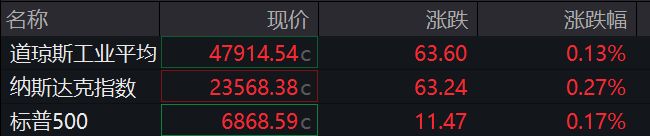
Core Viewpoint - The majority of popular Chinese concept stocks experienced an increase, with the Nasdaq Golden Dragon China Index rising over 1% [1] Group 1: Chinese Concept Stocks - Baidu Group rose over 4% [1] - Xpeng Motors and NIO both increased by over 2% [1] - Li Auto and Alibaba saw gains of over 1% [1] Group 2: U.S. Market Performance - On December 5, U.S. stock indices opened slightly higher, with the Nasdaq up 0.27%, the Dow Jones up 0.13%, and the S&P 500 up 0.17% [1] Group 3: Netflix and Warner Bros. Discovery - Netflix fell over 4% while Warner Bros. Discovery rose over 3% [1] - Netflix plans to acquire Warner Bros. Discovery's film studio and streaming business for $72 billion [1]


纳斯达克中国金龙指数上涨1.3%
Di Yi Cai Jing· 2025-12-05 14:54
Core Viewpoint - The Nasdaq China Golden Dragon Index experienced an initial increase of 1.3%, indicating positive market sentiment towards Chinese stocks listed in the U.S. [1] Company Performance - Baidu Group saw a rise of over 4%, reflecting strong investor interest and confidence in the company's performance [1] - Xpeng Motors and NIO both increased by over 2%, suggesting a favorable outlook for the electric vehicle sector [1] - Li Auto and Alibaba experienced gains of over 1%, indicating a stable performance among major Chinese companies [1]
热门中概股多数上涨,百度涨超4%
第一财经· 2025-12-05 14:47
Market Overview - On December 5, US stock indices opened slightly higher, with the Nasdaq up 0.27%, the Dow Jones up 0.13%, and the S&P 500 up 0.17% [1] - The Dow Jones Industrial Average was at 47,914.54, increasing by 63.60 points or 0.13% [2] - The Nasdaq Index reached 23,568.38, rising by 63.24 points or 0.27% [2] - The S&P 500 stood at 6,868.59, gaining 11.47 points or 0.17% [2] Chinese Stocks Performance - Most popular Chinese stocks saw an increase, with the Nasdaq Golden Dragon China Index rising over 1% [2] - Baidu Group surged over 4%, while Xpeng Motors and NIO both increased by over 2% [2] - Li Auto and Alibaba rose by over 1% [2] Company News - Netflix experienced a decline of over 4%, while Warner Bros. Discovery saw an increase of over 3% [2] - Netflix is set to acquire Warner Bros. Discovery's film studio and streaming business for $72 billion [2]

提供全天候智能陪伴体验 理想AI眼镜Livis正式上市
Bei Jing Ri Bao Ke Hu Duan· 2025-12-05 14:25
Core Insights - Li Auto officially launched its AI glasses, Livis, in collaboration with Zeiss, marking the first product from their global strategic partnership [1][3] - The glasses are priced starting at 1999 yuan, with a 15% national subsidy available until December 31 for the first sales month [1] - Livis aims to extend Li Auto's smart experience beyond the vehicle, serving as a natural interaction interface for users [3] Product Features - Livis glasses weigh only 36 grams and are optimized for comfort based on data from over 50,000 Chinese head shapes [8] - They feature IP54 dust and water resistance, making them suitable for daily use [8] - The glasses come with high-quality Zeiss lenses and offer various styles, including options for prescription, photochromic, and sunglasses [1][8] Technology and Functionality - Livis is equipped with a new version of Li Auto's AI assistant, powered by the self-developed MindGPT-4o multimodal model, allowing for hands-free operation of vehicle functions [5][6] - The glasses support a continuous operation time of 18.8 hours and can last up to 78 hours in standby mode [10] - They include a first-person camera with a 12-megapixel lens, supporting 105-degree ultra-wide-angle shooting and features like EIS electronic stabilization [8][10] Audio and User Experience - Livis incorporates open-space audio technology, providing a 360-degree surround sound experience [8] - The glasses are designed to enhance daily life interactions, allowing users to manage various tasks seamlessly without needing to use their phones [6][10]

李想造AI眼镜:未被暂停过的项目、从未公开的野心
2 1 Shi Ji Jing Ji Bao Dao· 2025-12-05 10:49
Core Viewpoint - Li Auto has officially launched its first AI eyewear product, Livis, priced at 1999 yuan, with a promotional price of 1699 yuan after subsidies. The company aims to target existing Li Auto users and tech enthusiasts, despite low initial sales expectations [1][2][9]. Product Launch and Features - Livis is claimed to be the lightest AI eyewear on the market, weighing only 36g, which is just 10g heavier than regular glasses [1]. - The product is a result of a strategic collaboration with Zeiss, focusing on integrating the AI assistant "Li Xiang" into users' daily lives through both a mobile app and the eyewear [3][12]. - The company has set a goal of acquiring at least 10,000 seed users for Livis, with a return rate lower than the industry average of 30-50% [8][9]. Market Context and Strategy - Li Auto has historically focused on refining a single vehicle model, but is now diversifying into AI eyewear amid declining sales, with monthly sales dropping from 50,000 to 30,000 units [2][10]. - The decision to enter the AI eyewear market comes after observing the success of Meta's Ray-Ban Meta glasses, indicating a strategic pivot to capitalize on emerging technology trends [3][6]. - Despite skepticism from investors and employees regarding the timing and focus of this new product, the company remains committed to its AI strategy, emphasizing user experience over immediate sales [5][10][12]. Development and Future Plans - The development of Livis has been a long-term project, with initial research dating back to 2020, and the first prototype completed in mid-2022 [14][15]. - Future iterations of the product are planned, including models with display capabilities, aiming to create a fully independent wearable device that does not require a smartphone [24][26]. - The company is focused on ensuring high-quality production standards, with plans for 100% inspection of each unit produced [24][27].