LI AUTO-W(02015)

Search documents
债市早报:上市公司监督管理条例公开征求意见;资金面略有收敛,债市震荡回暖
Sou Hu Cai Jing· 2025-12-08 02:10
Core Viewpoint - The financial market is experiencing fluctuations with a slight tightening of liquidity, a rebound in the bond market, and a collective rise in convertible bond indices, while U.S. Treasury yields are generally on the rise. Group 1: Domestic News - Chinese Vice Premier He Lifeng held a video call with U.S. Treasury Secretary Janet Yellen and Trade Representative Katherine Tai to discuss the implementation of agreements from recent high-level meetings, emphasizing the importance of continued cooperation in economic and trade relations [2] - The China Securities Regulatory Commission (CSRC) Chairman Wu Qing highlighted the need to develop first-class investment banks and institutions to support high-quality capital market development, advocating for a shift from price competition to value competition and better service to the real economy [3] - The CSRC is soliciting public opinions on the draft of the "Regulations on the Supervision of Listed Companies," which aims to strengthen comprehensive regulation throughout the lifecycle of listed companies [4] Group 2: Monetary Policy and Market Operations - The People's Bank of China conducted a 139.8 billion yuan reverse repurchase operation at a fixed rate of 1.40%, resulting in a net withdrawal of 161.5 billion yuan due to maturing reverse repos [9] - The overall liquidity in the market remains loose, with the DR001 and DR007 rates slightly increasing to 1.300% and 1.438%, respectively [10] Group 3: Bond Market Dynamics - The bond market showed signs of recovery, with the yield on the 10-year government bond decreasing by 2.15 basis points to 1.8285% as market sentiment improved following rumors of policy easing [12] - The secondary market for credit bonds saw significant price deviations, with "22 Vanke 02" dropping over 11% and "21 Vanke 02" falling over 10% [14] - Several companies, including Zhengyuan Real Estate and Fusheng Group, received public reprimands from the Shanghai Stock Exchange for disclosure violations [15] Group 4: Convertible Bonds - The convertible bond market experienced a collective rise, with major indices increasing by approximately 0.94% to 0.98%, and a total trading volume of 601.53 billion yuan, reflecting a significant increase from the previous day [17] - Several convertible bonds are set to trigger price adjustment clauses, while others announced early redemption [19] Group 5: International Market Insights - U.S. Treasury yields rose across various maturities, with the 2-year yield increasing by 4 basis points to 3.56% and the 10-year yield rising by 3 basis points to 4.14% [20] - Major European economies also saw an increase in 10-year government bond yields, with Germany's yield rising by 3 basis points to 2.80% [22]





AI眼镜取代不了手机,它想“干掉”传统眼镜
3 6 Ke· 2025-12-08 00:50
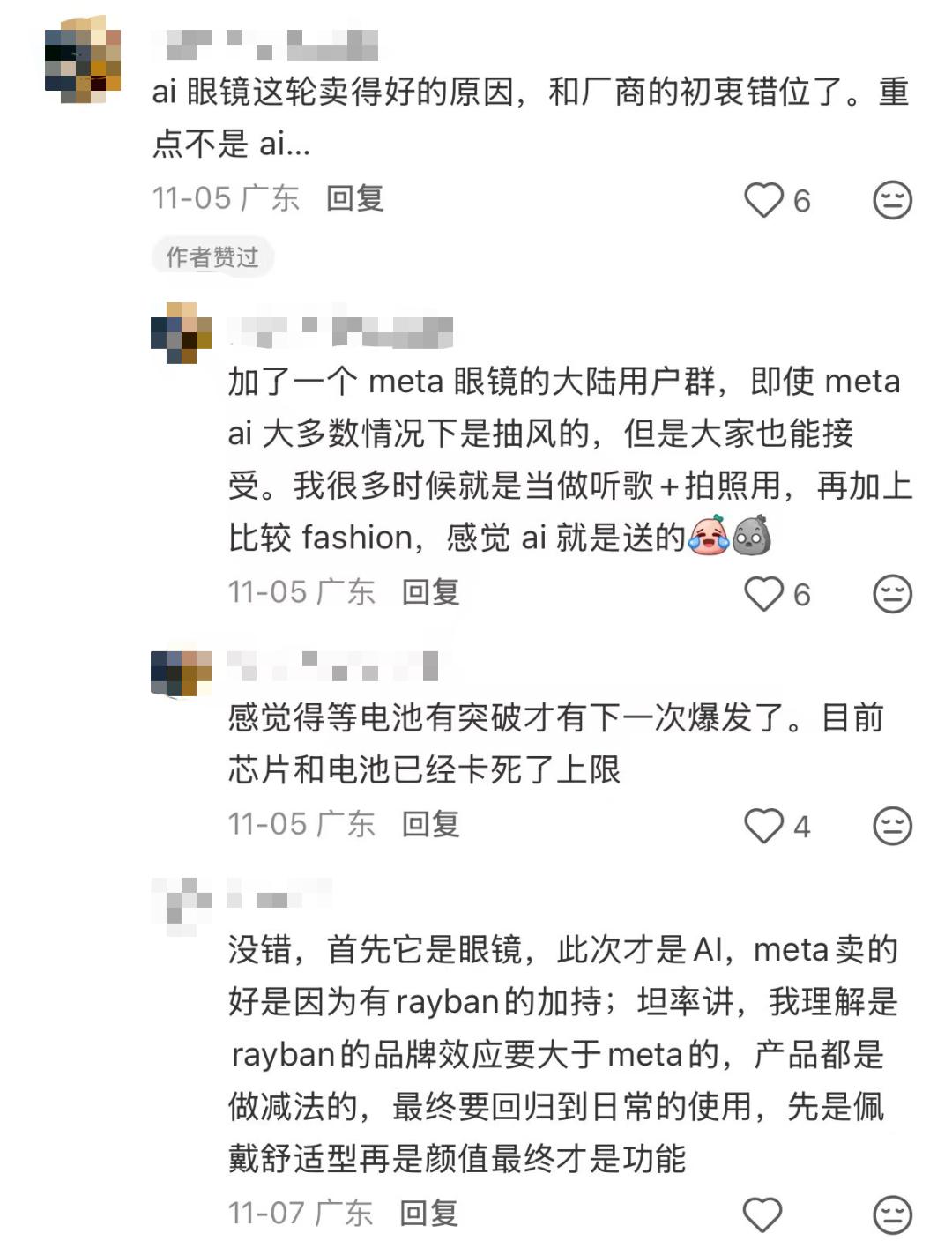
Core Insights - The current trend in AI glasses is not to replace smartphones but to replace traditional glasses with smart features. The focus is on creating high-quality eyewear that integrates AI technology [7][4]. Market Overview - In the past two months, 20 AI glasses have been launched in the Chinese market, including products from major companies like Baidu, Lenovo, and Alibaba, as well as startups like Rokid and Yingmu Technology [1]. - There are approximately 5 billion smartphone users globally, while the number of people who wear glasses is around 2 billion, indicating a significant market opportunity for AI glasses [2]. - The decision-making process for purchasing AI glasses is simplified for nearsighted individuals, as many are already spending hundreds to thousands of yuan on traditional glasses [3]. Competitive Landscape - The AI glasses market is becoming increasingly competitive, with five main categories of participants: smartphone manufacturers, internet giants, established AR glasses companies, new automotive players, and traditional eyewear brands collaborating with tech companies [4]. - IDC predicts that global shipments of smart glasses will reach 12.8 million units by 2025, with a 26% year-on-year growth, and the Chinese market alone is expected to exceed 2.75 million units, growing by 107% [4]. Product Development - The current AI glasses lack a "killer application" that makes them indispensable, which is a challenge for widespread adoption [6]. - A good pair of glasses must meet basic requirements of comfort and style, and partnerships between tech companies and traditional eyewear brands are a direct approach to achieving this [8][9]. - The weight of AI glasses is a critical factor; for instance, Ray-Ban Meta weighs 49 grams, significantly lighter than previous AR devices, while traditional prescription glasses weigh between 20-30 grams [13]. User Experience - AI glasses currently offer limited functionality, primarily focused on navigation and translation, and there is a gap between user expectations and the current capabilities of these devices [17]. - The most clear and irreplaceable function of AI glasses is hands-free recording, which is particularly useful in scenarios where users need to capture video without using their hands [19][21]. - Battery life remains a concern, with mainstream products offering 7-18 hours of usage, but improvements are being made, such as charging cases and replaceable components [17]. Future Outlook - The future of AI glasses is seen as a combination of AI and AR, aiming for a seamless integration of virtual and real-world experiences [28]. - The potential for AI glasses to become a primary interface for AI interaction is significant, with the possibility of them replacing smartphones in the long term [30]. - The market for specialized AI glasses, such as those designed for visually impaired users, represents an untapped opportunity that could address specific needs without requiring major technological breakthroughs [29].




银河证券:技术进步推动市场需求,智能眼镜产业链蓄势待发
Zheng Quan Shi Bao Wang· 2025-12-08 00:46
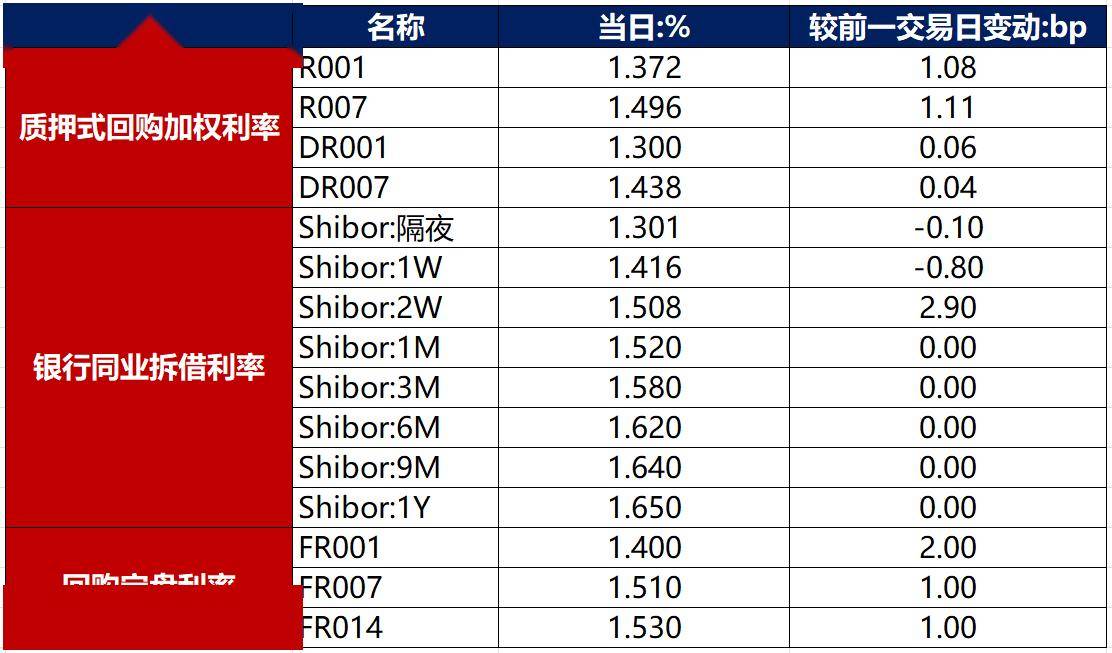
Core Viewpoint - The release of Li Auto's first AI smart glasses, Livis, on December 3, 2025, marks a significant development in the AI glasses industry, which is seeing participation from internet giants, smartphone manufacturers, and AR startups, indicating a shift towards consumer acceptance and market penetration [1] Industry Summary - The AI glasses industry is experiencing diverse participation from various players, including internet giants, smartphone manufacturers, and AR startups, leading to a wide range of product offerings [1] - The release of Livis contributes to the establishment of a more comprehensive ecosystem for the Li Auto brand, enhancing its market presence and competitive edge [1] - Technological advancements are driving market demand, positioning the smart glasses industry for significant growth and development [1]
日产N6、别克至境世家、新款蓝电E5上市!小鹏联手华为推出下一代增程发电机!多款新车登录工信部!11月车企销量公布!丨一周大事件
电动车公社· 2025-12-07 16:05
New Car Launches - Dongfeng Nissan N6 launched with a limited-time price of 91,900 to 121,900 yuan, featuring a hybrid system with a 75kW engine and a 155kW motor, offering a pure electric range of 170-180 km [1][3][9] - New Blue Energy E5 Plus launched at a limited-time price of 119,800 yuan, equipped with a 70kW engine and a 160kW motor, providing a pure electric range of 230 km [1][12][17] - Buick Zhijing Shijia launched with a price range of 439,900 to 469,900 yuan, featuring a 132kW engine and a dual-motor system, offering a pure electric range of 224 km [1][20][25] Company Dynamics - Xiaomi Auto has surpassed 500,000 cumulative deliveries, achieving its annual target ahead of schedule [1][28][29] - XPeng Motors collaborates with Huawei to launch a next-generation range extender generator with over 92% efficiency [1][32][35] - Changan Automobile is set to roll out its 30 millionth vehicle, becoming the first Chinese brand to reach this milestone [1][36][40] Sales Performance - BYD sold 474,921 passenger vehicles in November, maintaining a leading position in the new energy sector [1][71][73] - Changan Automobile's November sales reached 283,000 units, with over 125,000 in new energy vehicles [1][76][79] - SAIC-GM-Wuling achieved 118,726 new energy vehicle sales in November, marking three consecutive months of over 100,000 units sold [1][81] - Chery's new energy vehicle sales reached 116,794 units in November, continuing its growth trend [1][82][86] - Hongmeng Zhixing delivered 81,864 units in November, benefiting from increased production capacity [1][87][90] - Leap Motor delivered 70,327 units in November, showing strong market performance [1][91][92] - Great Wall Motors sold 40,113 new energy vehicles in November, reflecting a significant growth in its transition to new energy [1][95][96] - XPeng Motors delivered 36,728 units in November, with a year-to-date growth of 156% [1][98][99] - NIO delivered 36,275 units in November, with a notable increase in sales [1][100][106] - Li Auto delivered 33,181 units in November, maintaining a positive outlook despite market pressures [1][107][109] - Deep Blue Automotive delivered 33,060 units in November, with strong performance from its S05 model [1][111][113] - BAIC New Energy sold 32,328 units in November, with a significant year-on-year increase [1][114][115] - Lantu Automotive delivered 20,005 units in November, marking a strong sales milestone [1][116][118] - FAW Bestune sold 15,793 new energy vehicles in November, with a focus on young consumers [1][119][123] - Avita delivered 14,057 units in November, achieving a historical high [1][124][125] - Zhiji delivered 13,577 units in November, with a focus on expanding its product line [1][126][128] - Jishi Automotive delivered 1,452 units in November, showing steady growth in international markets [1][129][132] Industry News - A new national standard for steer-by-wire technology has been released, removing mandatory mechanical connections [2][133][135] - Global penetration of new energy vehicles is on the rise, projected to reach 25.2% by Q4 2025 [2][138][140] - South Korea's automotive exports have declined for the first time in recent years, with a forecasted drop in total exports [2][143][145]






微博1301万博主描述接理想商务
理想TOP2· 2025-12-07 14:34
Group 1 - The article discusses the recent engagement of a social media influencer with the automotive brand Li Auto, highlighting that the influencer has only promoted this brand in the past year [1] - The influencer has successfully recommended several vehicles from Li Auto to friends and followers, resulting in actual purchases, which the influencer believes have generated enough profit to justify the advertising costs [1] - The influencer emphasizes the importance of personal integrity and ethical standards in their role as a future brand ambassador, stating that they must lead by example in their recommendations [1] Group 2 - The article mentions a call for deeper discussions regarding the actual operational status and long-term fundamentals of Li Auto, indicating a focus on community engagement rather than technical or casual car enthusiast discussions [2]

11月新势力榜单:蔚来困于盈利,理想反弹乏力
Feng Huang Wang Cai Jing· 2025-12-07 14:03
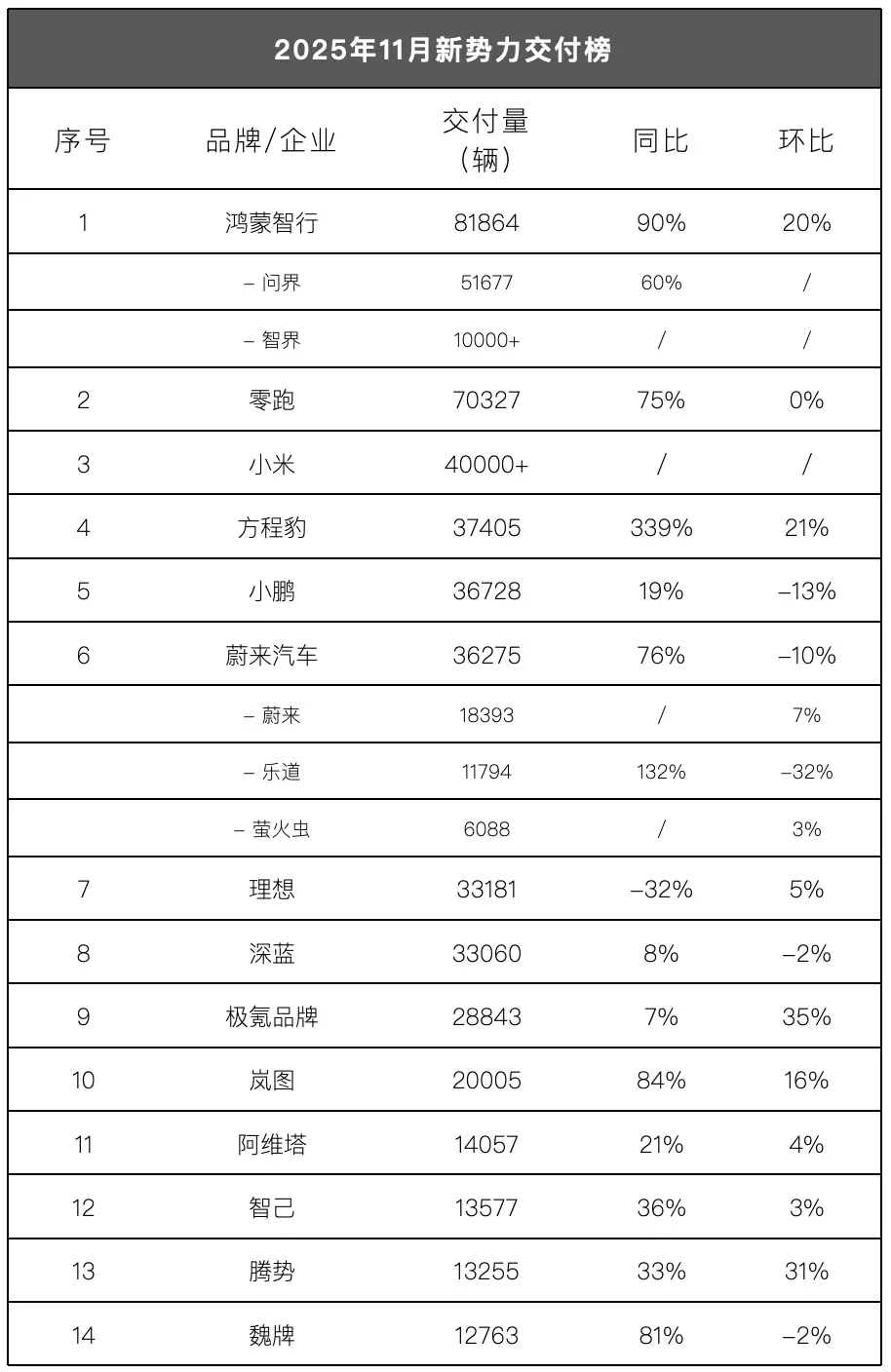
Core Insights - The delivery rankings of new car manufacturers have undergone significant changes in November, with a reshuffling of positions following the "golden September and silver October" period [1] Group 1: Delivery Rankings - Hongmeng Zhixing topped the delivery chart with 81,864 units, achieving a year-on-year growth of 90% and a month-on-month increase of 20% [2][3] - Leap Motor maintained its position as the "single brand champion" with 70,327 units delivered, marking its second consecutive month above 70,000 [4] - Xiaomi entered the top three with over 40,000 units, while BYD's Fangchengbao emerged as a dark horse with 37,405 units [5] Group 2: Competitive Landscape - In the second tier, brands like Xiaopeng (36,728 units) and NIO (36,275 units) are in close competition, with Ideal (33,181 units) and Deep Blue (33,060 units) also in the mix [5][21] - Zeekr accelerated its growth with 28,843 units, while Lantu broke the 20,000 mark for the first time [6] Group 3: Financial Performance and Market Challenges - Despite high delivery numbers, companies like Leap Motor face challenges in profitability, with a net profit of 150 million yuan in Q3, down 8% from the previous quarter [12][13] - Xiaomi's automotive division reported a 700 million yuan operating profit in Q3, making it the fastest to achieve profitability among new forces, yet its stock price has been under pressure due to negative publicity [14][15] - NIO's stock fell 20% in November after lowering its Q4 delivery guidance, indicating challenges in meeting profitability targets [24][30] Group 4: Strategic Adjustments - Xiaopeng is transitioning to a dual strategy of pure electric and range-extended vehicles, with plans to launch three new range-extended models in Q1 next year [19][20] - NIO is focusing on high-end models to improve overall gross margins, while also facing pressure to enhance profitability [22][26] - Ideal is adjusting its organizational structure and technology to address ongoing challenges, with a focus on ramping up production of its new electric model [28][30]


50款顶流车型静谧性对比,国产新能源车隔音全面领先
Sou Hu Wang· 2025-12-07 12:50
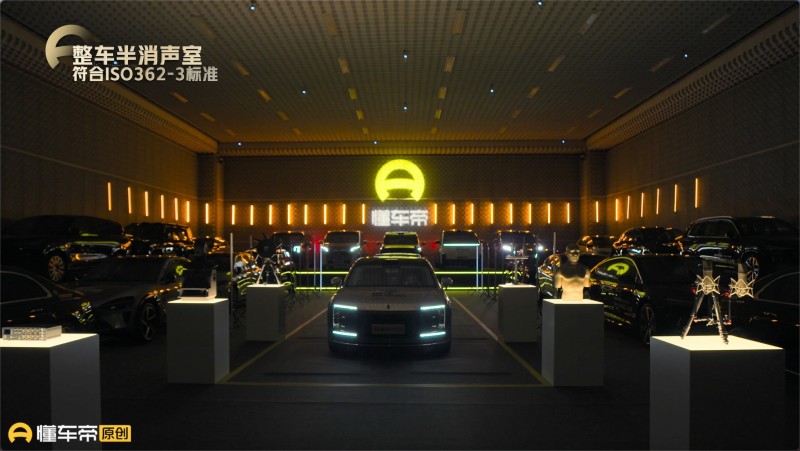
Core Insights - The article highlights the increasing importance of cabin quietness and in-car audio systems as core elements defining the comfort of the "mobile third living space" for consumers [1][6] - The launch of the "Dongche Voice Academy" by Dongche Di aims to help consumers better understand vehicle sound insulation levels and audio technology through comprehensive testing of 50 popular models [1][3] Group 1: Testing and Results - The testing involved collaboration with authoritative testing organizations and well-known music producers, focusing on various dimensions such as driving noise, static insulation, and subjective audio quality [1][3] - Results indicate that domestic electric vehicles excel in acoustic performance, with key indicators like driving noise and static insulation matching or surpassing those of foreign brands [1][3] - 80% of the five-star rated models were from domestic brands, and 90% of models with driving noise below 50 dBA were also from domestic brands, showcasing the maturity of domestic automakers in acoustic tuning [3][4] Group 2: Comparative Performance - In cross-brand comparisons, models like the Yangwang U8 and Xiaomi YU7 demonstrated outstanding performance in dynamic and static insulation, respectively, with no significant differences in acoustic experience compared to luxury brands [4][6] - Continuous investment in sound insulation materials, acoustic structure design, and proprietary algorithm development has allowed mainstream domestic brands to reach the acoustic quality of traditional luxury brands [4][7] Group 3: Consumer Insights - The study provides valuable insights for consumers regarding audio quality and quietness when purchasing new vehicles, emphasizing that price is not the sole determinant of audio performance [6][7] - The correlation between vehicle price and audio quality is not absolute, as demonstrated by the Lynk & Co 900, which offers high-quality audio performance at a lower price point [6][7] - The article suggests that the core value of in-car audio systems lies in technical adaptation and meeting consumer needs rather than merely the number of speakers or power ratings [7]
11月新势力榜单:蔚来困于盈利,理想反弹乏力
凤凰网财经· 2025-12-07 12:07
Core Viewpoint - The delivery rankings of new car manufacturers have undergone significant changes in November, with a reshuffling of positions following the "golden September and silver October" period, highlighting the competitive landscape in the electric vehicle market [4][6]. Group 1: Delivery Rankings - Hongmeng Zhixing topped the delivery chart with 81,864 vehicles delivered, a year-on-year increase of 90% and a month-on-month increase of 20%, becoming the "alliance leader" among new forces [5][10]. - Leap Motor maintained its position as the "single brand champion" with 70,327 vehicles delivered, indicating a strong competitive dynamic between the top two players [6][17]. - Xiaomi entered the third position with over 40,000 vehicles delivered, while BYD's Fangchengbao emerged as a dark horse with 37,405 vehicles, intensifying competition in the 30,000 to 40,000 vehicle range [7][19]. Group 2: Market Dynamics - The second tier of manufacturers is characterized by fierce competition, with brands like Xiaopeng and NIO facing challenges in maintaining their delivery volumes amid strategic adjustments and market pressures [24][26]. - NIO delivered 36,275 vehicles in November, a year-on-year increase of 76.3%, but faced stock price declines due to lowered fourth-quarter delivery guidance [28][29]. - Li Auto's deliveries reached 33,181 vehicles, showing signs of recovery, but the company still faces challenges in scaling production and maintaining profitability [32]. Group 3: Financial Performance and Market Sentiment - Xiaomi's automotive division reported a significant operating profit of 700 million yuan in Q3, making it the fastest profitable new force, despite facing negative market sentiment due to various controversies [20][21]. - Leap Motor's stock price fell by 9% in November, raising concerns about its ability to balance scale and profitability, especially in competitive price segments [17][18]. - The overall market sentiment reflects a growing scrutiny on profitability and sustainability, with companies needing to demonstrate not just sales growth but also healthy financial performance to meet investor expectations [36][37].

阿里系 App 禁止豆包手机登录;库克被曝出现“不明原因手部颤抖”;众擎T800人形机器人一脚踹倒自家CEO | AI周报
AI前线· 2025-12-07 05:33
Group 1 - Doubao mobile assistant faces login restrictions from Alibaba apps, including Taobao and Xianyu, due to security measures [3][4] - Doubao assistant claims it does not bypass authentication for sensitive operations and plans to adjust AI capabilities in certain scenarios [4][5] - The initial release of Doubao mobile assistant sold out quickly, with second-hand prices significantly higher than the official price, indicating strong market interest [5] Group 2 - The T800 humanoid robot from Zhongqing Robotics gained attention after a video showed it kicking the CEO, highlighting the robot's capabilities [6][9] - T800 is priced starting at 180,000 yuan and features advanced joint modules and sensory technology for various tasks [9] Group 3 - Jiuyue Automotive is undergoing bankruptcy restructuring, with plans to introduce new investors while Baidu seeks to exit its investment [10][11] - The restructuring faces challenges due to significant debt, estimated at 7 billion yuan, with major stakeholders like Geely and Baidu involved [11] Group 4 - Apple CEO Tim Cook reportedly experiences hand tremors, raising concerns among employees amid significant executive turnover at the company [12][13] Group 5 - New Oriental employee expresses dissatisfaction with the company's overtime culture, leading to internal repercussions [14][15] - The employee's complaints highlight issues with work-life balance and management practices within the company [14][15] Group 6 - Canon's Zhongshan factory announced generous severance packages for laid-off employees, with compensation reaching up to 400,000 yuan [16] - The factory's closure is part of a broader trend of production capacity shifting to Southeast Asia [16] Group 7 - A controversy arose when the chairman of Aibisen rejected the position due to dissatisfaction with a salary of 4.35 million yuan, which was later attributed to a clerical error [17] Group 8 - Meta's CEO Mark Zuckerberg plans to shift focus away from the metaverse, with the division having incurred losses exceeding 70 billion dollars [18][19] Group 9 - Microsoft denies reports of lowering AI sales targets, clarifying the distinction between growth goals and sales quotas [20][21] Group 10 - Nvidia launched the Alpamayo-R1 model, aimed at advancing autonomous driving technology through a new visual language model [28][29] Group 11 - Li Auto introduced its first AI smart glasses, Livis, with a starting price of 1,699 yuan after subsidies, aiming to integrate AI capabilities into daily life [30][31] Group 12 - MiHoYo's co-founder launched an AI chat model, AnuNeko, which aims to create interactive NPCs for gaming, reflecting a unique approach to AI integration in games [33][34] Group 13 - SenseTime released the NEO architecture for multimodal models, marking a significant advancement in AI capabilities [35]





特朗普松绑油耗标准:全球车企抢跑“油电同强时代”
智通财经网· 2025-12-06 09:08
Core Viewpoint - The proposal by former President Trump to terminate strict fuel economy standards set by the Biden administration poses a significant challenge to Europe's aggressive policies on banning fuel vehicles, highlighting a shift in the automotive industry's dynamics towards a more sustainable and diversified future led by China's oil-electric hybrid strategy [1][9]. Group 1: Policy Changes and Impacts - Trump's proposal aims to reduce the average cost of purchasing new cars by $1,000, potentially saving Americans $109 billion over five years [3]. - The new fuel efficiency standard proposed by Trump's administration requires vehicles to achieve approximately 34 miles per gallon by 2031, compared to Biden's target of 50 miles per gallon [2]. Group 2: Industry Dynamics - The automotive industry's core profits are derived from fuel vehicles, and the transition to electric vehicles represents a significant restructuring of interests, with traditional automakers facing survival pressures due to lost profits from engine manufacturing and after-sales services [4]. - The shift in stance among U.S. automakers from supporting electric vehicle initiatives to opposing stringent regulations reflects the industry's struggle with profit erosion amid changing policies [4]. Group 3: European Market Challenges - European automakers are under severe pressure from the EU's legislation to ban fuel vehicles by 2035, which is seen as overly ambitious and detrimental to businesses [5]. - The EU's "Fit for 55" plan aims for a 55% reduction in new car carbon emissions by 2030, with a complete transition to zero emissions by 2035, but this has led to some companies planning to abandon engine development altogether [5]. Group 4: Global Automotive Trends - The trend of oil-electric hybrid strategies is gaining traction globally, with Asian automakers, particularly Chinese brands like BYD, Geely, and Chery, significantly increasing their market share [7][8]. - The global automotive market remains predominantly fuel-based, with 73% of vehicles still using fuel, indicating that a rapid transition to electric vehicles is unlikely in the short term [8]. Group 5: China's Strategic Position - China's oil-electric hybrid strategy is viewed as a successful model, with the recent release of the 3.0 roadmap emphasizing the continued importance of internal combustion engines alongside electric vehicles [10]. - By 2040, it is projected that 85% of new passenger vehicles in China will be electric, with a significant market still remaining for non-pure electric models, positioning Chinese automakers as key players in the global automotive technology landscape [10].