
XIAO NOODLES(02408)

Search documents
港股“中式面馆第一股”再落子:遇见小面海外首店登陆新加坡,剑指全球500店规模
Ge Long Hui· 2025-12-29 05:41
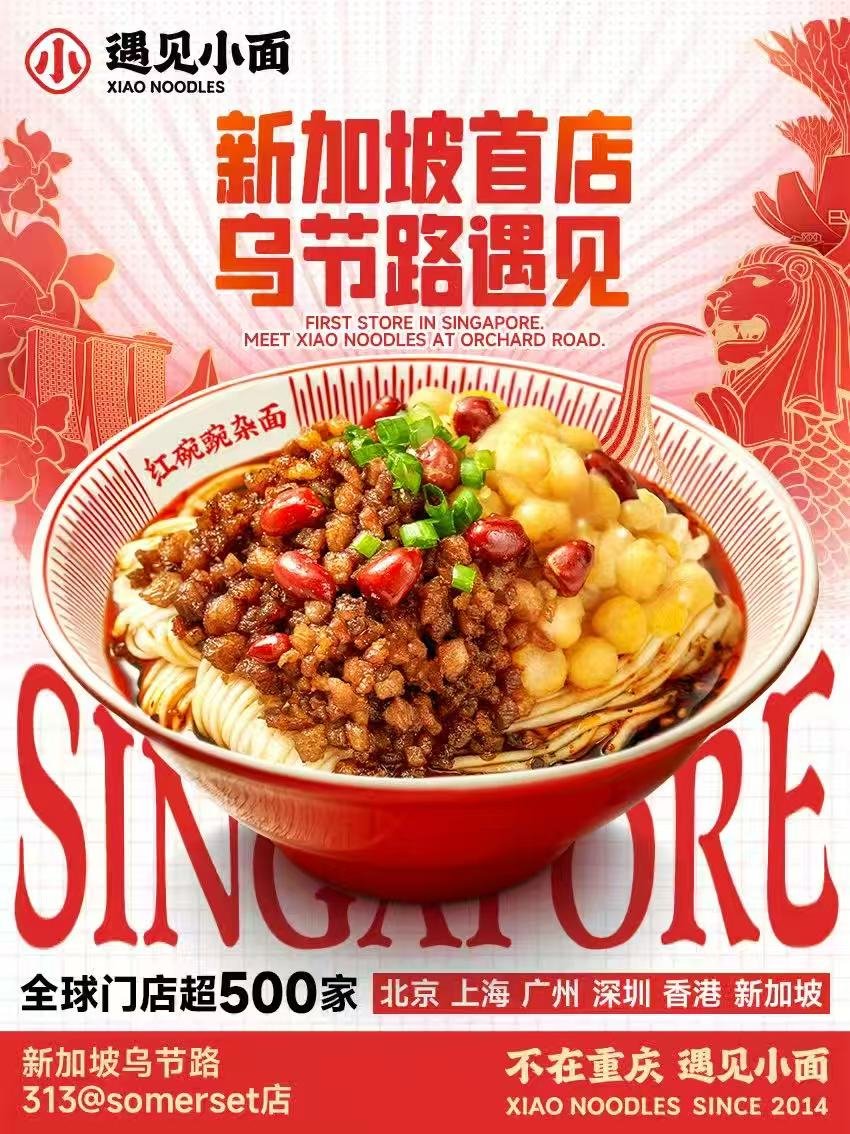
Group 1 - The core point of the article is that the Chinese restaurant chain "Yujian Xiaomian" (2408.HK) has opened its 500th store globally and its first store in Singapore, marking a significant step in its international expansion strategy [1] - The new store is located at the trendy commercial landmark Orchard Road 313@Somerset in Singapore, indicating the brand's commitment to establishing a presence in key international markets [1] - The opening of the Singapore store is part of the company's broader strategy to promote Sichuan-Chongqing style noodles on the global culinary stage, enhancing the internationalization of Chinese cuisine [1] Group 2 - Following its successful listing on the Hong Kong Stock Exchange on December 5, 2025, the company is accelerating its expansion efforts in Singapore, with additional locations such as the Tampines Mall store already in preparation [1] - The brand has surpassed 500 global stores, with significant presence in major cities including Beijing, Shanghai, Guangzhou, Shenzhen, Hong Kong, and Singapore [2] - The establishment of the Singapore store is a pivotal moment for the brand, as it aims to inject new vitality into the international development of Chinese dining [1]

遇见小面的资本尴尬:上市首日股价下跌27%,多次因食安问题被通报
Sou Hu Cai Jing· 2025-12-25 21:38
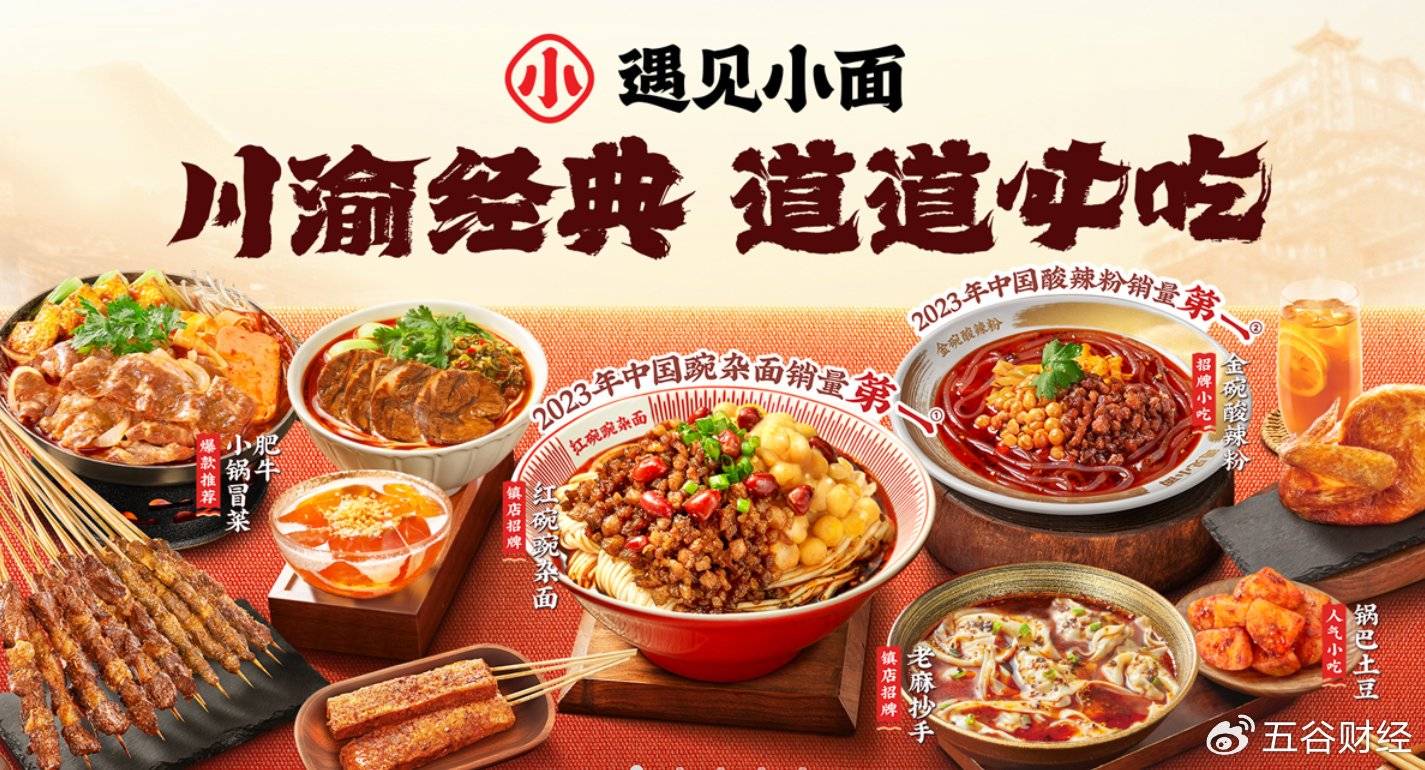
Core Viewpoint - The debut of Guangzhou Yujian Xiaomian Restaurant Co., Ltd. on the Hong Kong Stock Exchange was marked by a significant drop in share price, reflecting a disconnect between market enthusiasm and the company's fundamental performance [1][3]. Group 1: IPO Performance - Yujian Xiaomian's shares opened at HKD 5, down nearly 29% from the IPO price of HKD 7.04, closing at HKD 5.08, resulting in a market capitalization of approximately HKD 36.1 billion [1][3]. - The company achieved a record oversubscription of 425.97 times during its IPO, with cornerstone investors including Hillhouse Capital and Haidilao [1][3]. Group 2: Financial Performance - From 2022 to 2024, Yujian Xiaomian's revenue grew from HKD 418 million to HKD 1.154 billion, with a compound annual growth rate of 66.2%, and net profit shifted from a loss of HKD 35.973 million to a profit of HKD 60.7 million [4]. - However, key operational metrics showed concerning trends, including a decline in average daily sales per store from approximately HKD 13,997 in 2023 to HKD 11,805 in the first half of 2025, a drop of 15.66% [4][6]. Group 3: Business Strategy and Market Challenges - The introduction of low-priced products, such as the "19.9 yuan single meal," aimed to boost customer traffic but resulted in declining average sales per store [5]. - Same-store sales for direct-operated restaurants fell by 3.1% year-on-year in the first half of 2025, indicating growth challenges in core markets [6]. Group 4: Financial Health and Dividend Policy - Despite high debt levels, Yujian Xiaomian declared dividends totaling over HKD 34 million, which accounted for 56% of its 2024 net profit, raising concerns about financial sustainability [7]. - The company's asset-liability ratio has remained above 90%, indicating potential liquidity issues, with short-term borrowings reaching HKD 50 million against cash reserves of only HKD 42.19 million [7]. Group 5: Consumer Concerns and Brand Reputation - The company faced multiple food safety violations and consumer complaints, including reports of unsanitary conditions and food quality issues, which could damage its brand reputation [8]. - The shift in investor focus from rapid expansion to sustainable profitability and operational standards highlights the need for Yujian Xiaomian to address its fundamental challenges to succeed in the competitive market [8].
遇见小面的资本尴尬:百倍认购却在上市首日股价下跌27%,多次因食安问题被通报
Sou Hu Cai Jing· 2025-12-25 21:32
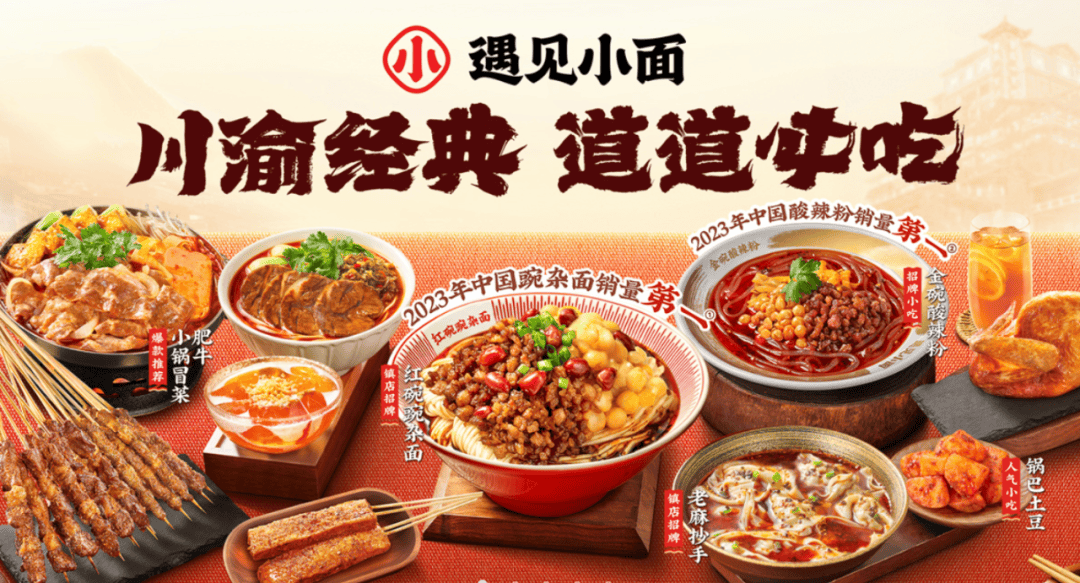
Core Viewpoint - The initial public offering (IPO) of Guangzhou Yujian Xiaomian Restaurant Co., Ltd. faced significant challenges, with the stock price dropping nearly 28% on its debut, highlighting a disconnect between market enthusiasm and the company's fundamental performance [1][3]. Group 1: IPO Performance - Yujian Xiaomian's IPO was highly anticipated, achieving a subscription rate of 425.97 times, the highest for a Chinese fast-food stock in the year [1]. - The company raised a total of 685 million HKD, with a net amount of 617 million HKD intended for store expansion, supply chain upgrades, and digitalization [3]. - Despite the initial excitement, the stock opened at 5 HKD, down nearly 29%, and closed at 5.08 HKD, reflecting a 27.84% decline from the issue price of 7.04 HKD, resulting in a market capitalization of approximately 3.61 billion HKD [1][3]. Group 2: Financial Performance and Concerns - From 2022 to 2024, Yujian Xiaomian's revenue grew from 418 million CNY to 1.154 billion CNY, with a compound annual growth rate of 66.2%, and net profit shifted from a loss of 35.97 million CNY to a profit of 60.7 million CNY [4]. - However, key operational metrics showed concerning trends, with average daily sales per store declining from approximately 13,997 CNY in 2023 to about 11,805 CNY in the first half of 2025, a drop of 15.66% [4][5]. - The same-store sales for direct-operated restaurants fell by 3.1% year-on-year in the first half of 2025, indicating growth challenges in core markets [6]. Group 3: Dividend Policy and Financial Health - Despite high debt levels, Yujian Xiaomian maintained a high dividend payout, distributing 19.5 million CNY in 2023 and 14.7 million CNY in March 2025, totaling over 34 million CNY, which is 56% of the 2024 net profit [8]. - The company's short-term borrowings reached 50 million CNY, with cash reserves of only 42.19 million CNY, leading to a net current liability of 242 million CNY and an asset-liability ratio consistently above 90% [8][9]. - The high dividend payout amidst financial strain raises concerns about the company's ability to sustain operations and invest for growth, as highlighted by experts [8][9]. Group 4: Brand Reputation and Consumer Feedback - Yujian Xiaomian faced multiple food safety issues, including violations of food safety regulations and consumer complaints about product quality, which have negatively impacted its brand reputation [9]. - As of December 24, 2025, there were 84 complaints against the company, including serious issues such as food contamination [9]. - The changing valuation logic in the restaurant industry emphasizes the need for sustainable profit models and robust quality control, indicating that Yujian Xiaomian must address these challenges to succeed in the long term [9].
遇见小面上市首日股价大跌27%,单店指标明显下滑
Xin Lang Cai Jing· 2025-12-25 12:41
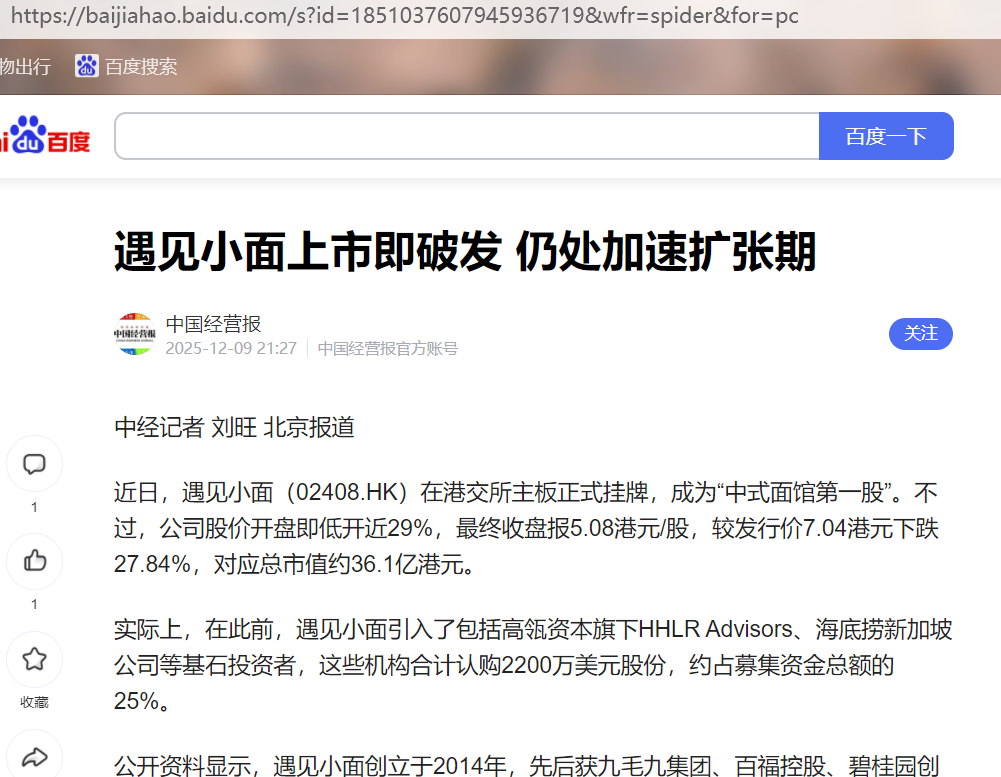
Core Viewpoint - The company "Yujian Xiaomian" (02408.HK) has officially listed on the Hong Kong Stock Exchange, becoming the first stock of a Chinese noodle restaurant, but its stock price fell by 27.84% on the first day of trading, closing at HKD 5.08 per share, with a total market capitalization of approximately HKD 3.61 billion [1][4][10]. Company Overview - Founded in 2014, Yujian Xiaomian has received investments from various firms including Jiumaojiu Group, Baifu Holdings, Country Garden Ventures, and Xijia De, and has expanded its presence in cities like Beijing, Shanghai, Guangzhou, Shenzhen, and Hong Kong [1][10]. - The company raised approximately HKD 685 million through the issuance of 97.36 million H-shares at an issue price of HKD 7.04 per share, with cornerstone investors subscribing to USD 22 million worth of shares, accounting for about 25% of the total fundraising [4][12]. Market Performance - On its first trading day, Yujian Xiaomian's stock price opened nearly 29% lower and closed down 27.84% from its issue price, reflecting market skepticism about its business model and future prospects [4][12]. - The company achieved a significant oversubscription of 425.97 times for its public offering, indicating initial strong interest from investors [4][12]. Business Challenges - Analysts have identified three major "singularization" challenges facing Yujian Xiaomian: 1. Geographic concentration, with stores heavily concentrated in Guangdong Province and insufficient expansion outside this region 2. Limited product range, primarily focused on Chongqing noodles, lacking diversification to support risk resilience 3. A singular operational model that restricts efficiency in cross-regional expansion [5][13]. Expansion Strategy - Yujian Xiaomian is in a phase of accelerated expansion, having opened its 200th store in Shanghai in July 2023 and planning to reach 400 stores by April 2025 [7][15]. - As of November 18, 2025, the company operates 465 restaurants, with 331 being directly operated and 86 franchised, and plans to add 520 to 610 new stores from 2026 to 2028, focusing on lower-tier cities and overseas markets [7][15]. Financial Performance - The company's revenue increased from CNY 418 million in 2022 to CNY 1.154 billion in 2024, with a turnaround from a net loss of CNY 35.973 million to a profit of CNY 60.7 million [7][15]. - In the first half of 2025, revenue reached CNY 703 million, a year-on-year growth of 33%, while net profit surged by 95.77% to CNY 41.834 million [7][15]. Operational Efficiency - Despite revenue growth, key operational metrics such as average daily sales per store have declined, with direct-operated restaurants seeing a drop from CNY 12,693 to CNY 11,805, and franchised restaurants from CNY 12,528 to CNY 11,493 [8][16][17]. - The overall turnover rates for direct and franchised stores also decreased, indicating potential inefficiencies in the current business model [8][18]. Future Outlook - The funds raised from the IPO will be used to expand the restaurant network, enhance market penetration, upgrade technology and digital systems, strengthen brand loyalty programs, and pursue strategic investments or acquisitions in the upstream food processing sector [18]. - Analysts suggest that the company should focus on improving operational efficiency and diversifying its product offerings before pursuing aggressive expansion, as the current model may not be sustainable [18].
遇见小面「跑步」上市,股价却“水银泻地”
Sou Hu Cai Jing· 2025-12-24 11:32
Core Viewpoint - The company "遇见小面" (Yujian Xiaomian) faces significant challenges in the competitive Chinese noodle restaurant market, despite its initial public offering (IPO) and reported revenue growth. The disparity between its market performance and consumer foot traffic raises questions about its long-term sustainability and competitive advantage [2][6][20]. Market Performance - Since its IPO, "遇见小面" has experienced a continuous decline in stock price, dropping over 38% from its issuance price of 7.04 HKD per share, reflecting a market sentiment that is not favorable towards the brand [4][6]. - As of December 24, the stock price fell to 4.99 HKD, resulting in a market capitalization decrease from approximately 35.55 billion HKD to 30.91 billion HKD within five trading days [2][4]. Industry Context - The Chinese noodle restaurant market is projected to grow at a compound annual growth rate (CAGR) of 12.72%, reaching approximately 286.6 billion CNY by 2024, with expectations to exceed 300 billion CNY by 2025 [6]. - Despite the overall market growth, the industry is characterized by intense competition, with the top five brands holding less than 10% market share, leading to a fragmented landscape where no single brand dominates [6][20]. Company Strategy and Challenges - "遇见小面" has expanded its store count significantly, from around 100 stores before 2021 to 252 by the end of 2023, with plans for 360 stores in 2024 and over 440 in 2025 [8][20]. - However, the growth in store numbers has not translated into improved operational efficiency, as key performance indicators such as store turnover rates and average customer spending have declined [7][20]. Consumer Experience - The in-store experience at "遇见小面" is designed to be appealing, with a clean and comfortable environment, diverse menu options, and attention to service details [11][12]. - Despite these efforts, customer feedback indicates dissatisfaction with service quality and food taste, which could hinder repeat business and brand loyalty [13][16]. Competitive Landscape - "遇见小面" competes directly with brands like "和府捞面" (Hefulao), which positions itself in the high-end market with a focus on premium dining experiences, making it difficult for "遇见小面" to penetrate that segment [17][18]. - The presence of numerous competitors, including regional brands and those specializing in niche offerings, further complicates "遇见小面"'s market position, as it faces pressure from both high-end and budget-friendly options [19][20].
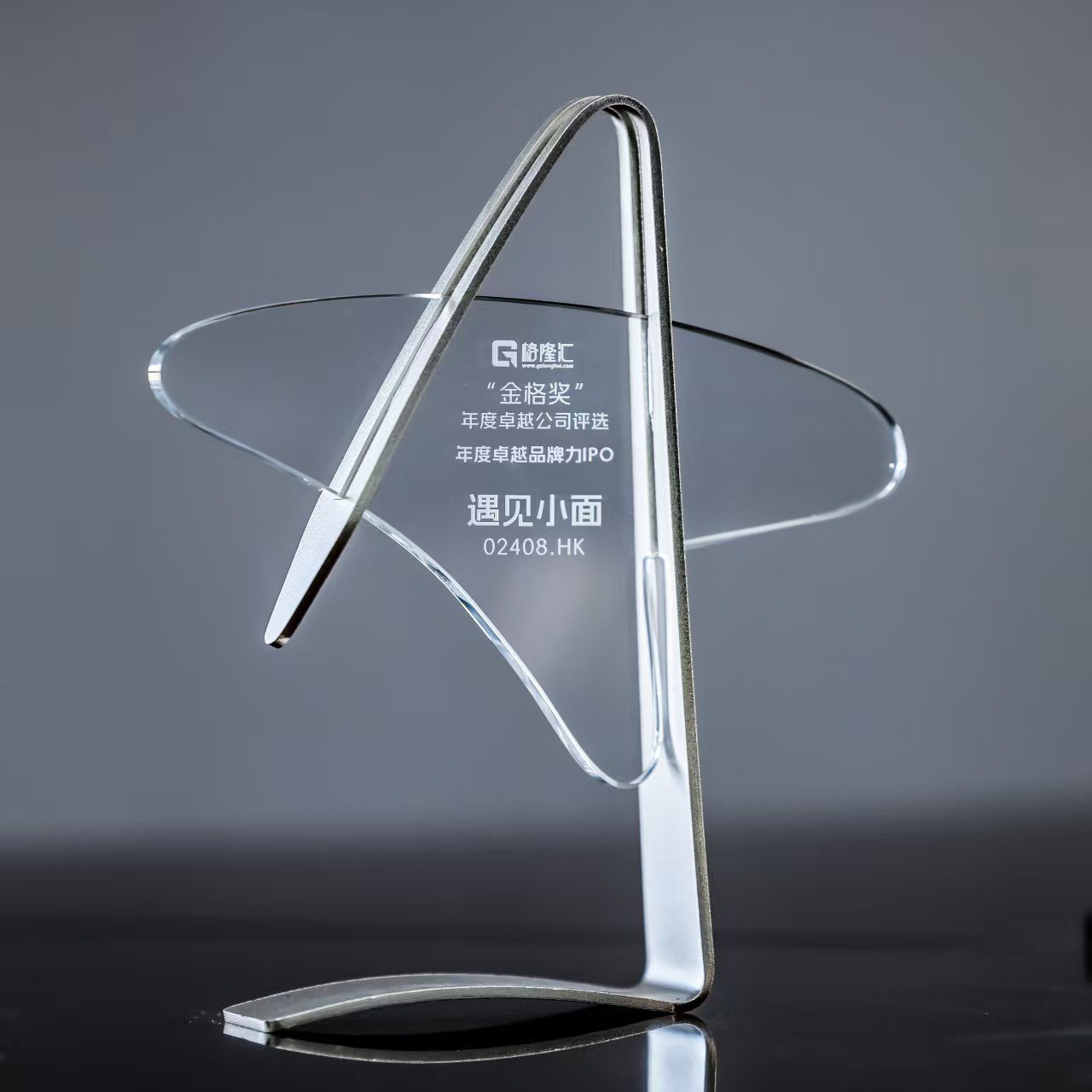
遇见小面荣获“格隆汇金格奖·年度卓越品牌力IPO”
Ge Long Hui· 2025-12-24 10:05
Core Viewpoint - The "Annual Outstanding Brand Power IPO" award was presented to the company "Encounter Noodle" (2408.HK) during the "Technology Empowerment · Capital Breakthrough" online sharing session held by Gelonghui on December 22 [1] Group 1 - The award recognizes new listed companies with strong brand innovation capabilities, high penetration rates, and steadily improving credibility in the capital market [1] - The evaluation of the award is based on a multi-dimensional analysis of the company's brand awareness, recognition, and reputation over the past year [1]
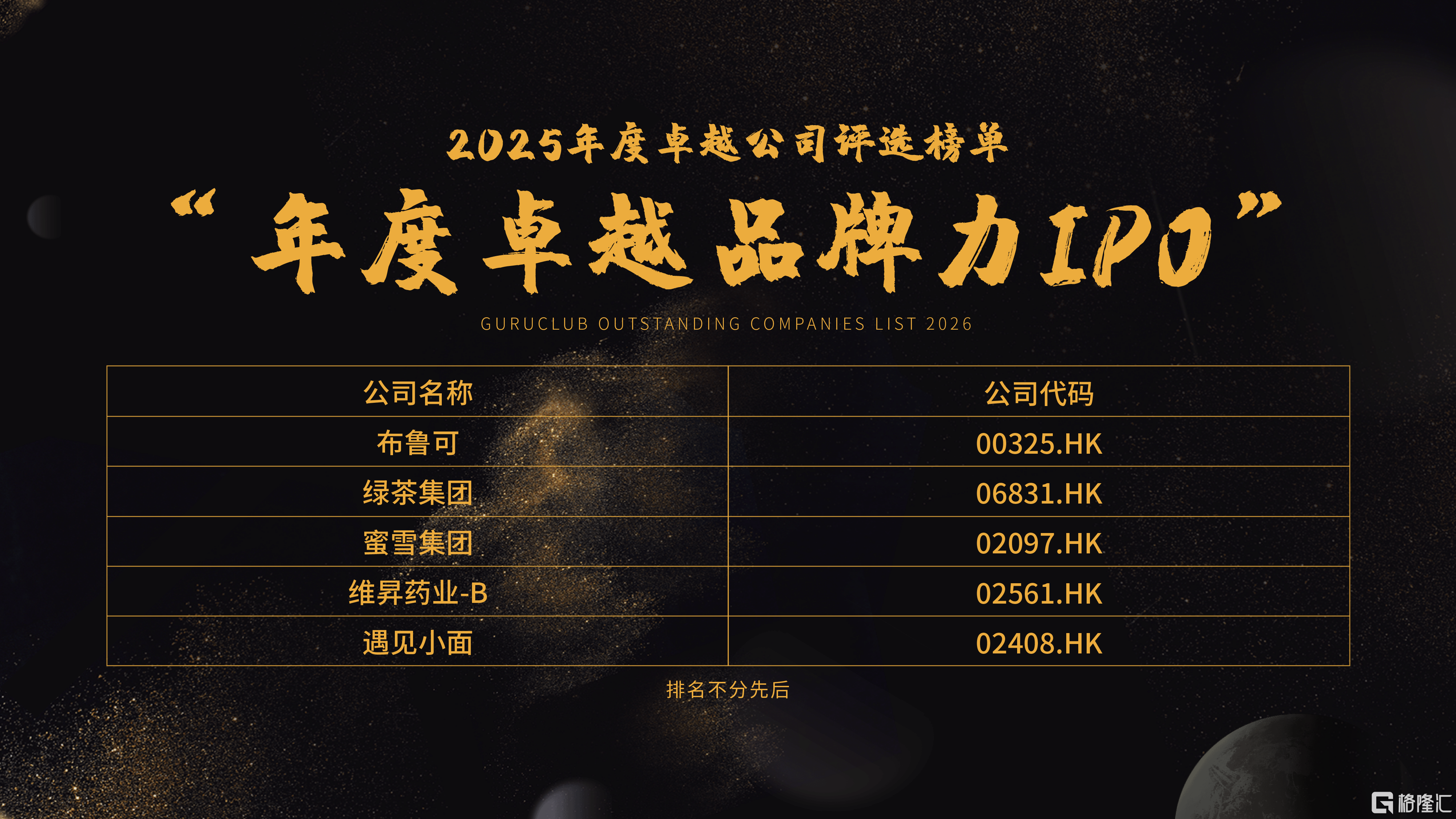
格隆汇“科技赋能·资本破局”线上分享会暨“金格奖”——“年度卓越品牌力IPO”奖项揭晓:布鲁可(00325.HK)、绿茶集团(06831.HK)、蜜雪集团(02097.HK)等5家企业上榜
Ge Long Hui· 2025-12-22 10:59
Core Viewpoint - The "Annual Excellence Brand Power IPO" awards recognize new listed companies with strong brand innovation capabilities and high penetration rates in the capital market, based on a comprehensive evaluation of brand awareness, recognition, and reputation over the past year [4]. Group 1 - The "Annual Excellence Brand Power IPO" award was presented to five companies: Bruker (00325.HK), Green Tea Group (06831.HK), Mixue Group (02097.HK), Weisheng Pharmaceutical-B (02561.HK), and Meet Xiaomian (02408.HK) [1]. - The evaluation process involved quantitative data analysis and a panel of experts to determine the final results [4]. - The awards aim to create a reference for the most valuable listed companies and unicorns in the investment community, covering all listed companies on major exchanges including the Hong Kong Stock Exchange, Shanghai Stock Exchange, Shenzhen Stock Exchange, New York Stock Exchange, and NASDAQ [4].
遇见小面港股上市首日破发 门店高速扩张背后或存隐忧
Xin Lang Cai Jing· 2025-12-21 20:25
Core Viewpoint - The company "Yujian Xiaomian" (02408.HK), known as the first stock of Chinese noodle restaurants, faced a significant drop in share price on its debut, closing at HKD 5.08, a decrease of 27.84% from the issue price of HKD 7.04, indicating challenges in the restaurant chain's high-quality development despite rapid expansion [1] Group 1: Company Overview - Yujian Xiaomian started in 2014 in Guangzhou and has grown into a chain focusing on Chongqing noodles, with sales ranking first among all Chinese chain restaurants for products like Chongqing noodles, wonton noodles, and hot and sour noodles from 2022 to 2024 [1] - The company has expanded its product offerings to include various dishes such as noodles, rice, snacks, and beverages [1] Group 2: Financial Performance - Revenue is projected to grow from CNY 418 million in 2022 to CNY 1.154 billion in 2024, with a 33.8% year-on-year increase in the first half of 2025, reaching CNY 703 million [2] - After turning a profit in 2023, net profit is expected to rise to CNY 60.7 million in 2024, with a significant increase of 95.8% to CNY 41.83 million in the first half of 2025 [2] Group 3: Expansion and Challenges - The number of restaurants increased from 133 to 465 from early 2022 to November 2025, marking a growth of 249.6%, with expansion into 22 cities in mainland China and plans for an overseas store in Singapore [3] - The company has faced challenges in balancing rapid expansion with operational quality, as indicated by a decline in same-store sales by 4.4% in 2024 and 3.1% in the first half of 2025 [3] Group 4: Financial Health - The company has experienced increasing current liabilities, with a net current liability of approximately CNY 255 million and a current ratio of 0.5, indicating high leverage with a debt ratio of 87.83% [4] - The financial pressures from rapid expansion raise concerns about the company's ability to maintain a balance between growth and operational stability, which is critical for its future prospects [4]
遇见小面股价破发 讲好规模故事还差多少火候?
Xin Lang Cai Jing· 2025-12-19 14:58
Core Viewpoint - The market response to the IPO of "Yujian Xiaomian," the first listed Chinese noodle restaurant, has been lukewarm, with the stock experiencing a significant drop on its debut, indicating investor skepticism about its future prospects [3][31]. Group 1: IPO and Market Response - "Yujian Xiaomian" issued a total of 97.36 million shares, with a staggering oversubscription rate of 425.97 times for the public offering, while the international offering had a much lower rate of 4.99 times [4][31]. - On its first trading day, the stock price fell to HKD 4.98 per share, closing at HKD 5.08, marking a decline of 27.84%. By December 19, the stock further dropped to HKD 4.74, a cumulative decrease of nearly 33% from the issue price of HKD 7.04 [4][32]. Group 2: Shareholder Structure and Market Sentiment - The ownership of "Yujian Xiaomian" is highly concentrated, with the top 25 shareholders, including founders and major investors, holding 95.3% of the shares, leaving only 4.7% in public circulation [5][33]. - The significant drop in stock price has raised concerns among cornerstone investors, who collectively invested approximately HKD 171 million, facing potential losses of around HKD 9 million based on the first-day closing price [5][33]. Group 3: Financial Performance and Operational Efficiency - The company has expanded rapidly, with the number of stores increasing from 200 in July 2023 to 465 by November 2025, including 331 directly operated stores [6][7]. - Revenue surged from CNY 418 million in 2022 to CNY 1.154 billion in 2024, achieving profitability with a net income of CNY 60.7 million in 2024, while the first half of 2025 saw revenue of CNY 703 million, a 33% year-on-year increase [7][36]. - However, operational efficiency is declining, with average daily sales per store decreasing, and the average customer spending has also dropped from CNY 36.2 to CNY 31.8 over the same period [8][36][37]. Group 4: Debt and Expansion Challenges - The company's debt ratio has been high, reaching 95.8% in 2022 and decreasing to 89.9% in 2024, which is still above the typical range for the restaurant industry [9][38]. - The majority of stores are concentrated in first-tier and new first-tier cities, particularly in Guangdong, which poses risks related to regional dependency and limits national expansion [9][38]. Group 5: Market Strategy and Consumer Perception - "Yujian Xiaomian" relies heavily on a standardized pre-prepared food model, which may limit customer experience and brand perception in a market that values freshness and transparency [10][39]. - Customer complaints, primarily about food quality, have been noted, indicating potential issues with product consistency and service [10][44]. Group 6: Future Growth Potential - The company plans to use approximately 60% of the net proceeds from its IPO to expand its restaurant network and enhance market penetration, with plans to open 520 to 610 new stores from 2026 to 2028 [7][35][54]. - The digitalization of operations is a key focus, with a membership system and supply chain management aimed at improving efficiency and customer loyalty, which could support long-term growth [7][54][55].
智通港股52周新高、新低统计|12月19日


智通财经网· 2025-12-19 08:44
Key Points - As of December 19, 38 stocks reached their 52-week highs, with Li Gao Health Life (02370), Ginkgo Education (01851), and Kangqiao Yuelife (02205) leading the high rate at 36.36%, 18.72%, and 8.70% respectively [1] - The top three stocks that achieved new highs are as follows: - Li Gao Health Life (02370) closed at 0.670, with a peak of 0.750, marking a 36.36% increase - Ginkgo Education (01851) closed at 2.430, with a peak of 2.600, marking an 18.72% increase - Kangqiao Yuelife (02205) closed at 1.200, with a peak of 1.250, marking an 8.70% increase [1] - Other notable stocks that reached new highs include Liangqing Holdings (1,000) at 7.14%, Jinxing International Holdings (02307) at 7.04%, and Wuxi Life (08148) at 6.21% [1] 52-Week Low Summary - The 52-week low rankings show that Haowen Holdings (08019) had the largest decline at -16.13%, closing at 0.130 [2] - Other significant declines include NIU Holdings (08619) at -11.86%, closing at 0.156, and Hashkey HLDGS (03887) at -9.59%, with a low of 5.090 [2] - Additional stocks with notable declines include Songdu Service (09608) at -9.09%, closing at 0.068, and Ruike Bio-B (02179) at -5.41%, closing at 5.070 [2]