CPIC(02601)

Search documents
销售新规重塑基金生态,关注春季躁动催化机遇
GF SECURITIES· 2025-12-14 04:09
Core Insights - The report emphasizes that new regulations in fund sales are reshaping the fund ecosystem, creating opportunities for investment as the spring market approaches [1][2] - The insurance sector is expected to see high growth in performance, supported by the introduction of a new commercial health insurance drug directory, which encourages product innovation [2][16] - The report suggests focusing on specific stocks within the insurance sector, including Xinhua Insurance, China Life, Ping An, and others, as they are likely to benefit from these developments [2][16] Weekly Performance - As of December 13, 2025, the Shanghai Composite Index reported a decrease of 0.34%, while the Shenzhen Component Index increased by 0.84% [11] - The average daily trading volume in the Shanghai and Shenzhen markets was 1.95 trillion yuan, reflecting a week-on-week increase of 15.14% [6] Industry Dynamics and Weekly Commentary Insurance Sector - The performance of listed insurance companies is expected to continue high growth, with long-term interest rate spreads showing marginal improvement [13][16] - The 10-year government bond yield was 1.84%, down 1 basis point from the previous week, providing a supportive environment for insurance stock valuations [13][16] Securities Sector - The issuance of the "Publicly Raised Securities Investment Fund Sales Behavior Norms (Draft for Comments)" aims to systematically regulate sales behavior and protect investor rights [17][18] - The new regulations mark a shift from a scale-driven approach to one focused on investor interests, promoting a fundamental transformation in the industry [18][23] Key Company Valuation and Financial Analysis - The report provides detailed valuation metrics for key companies in the insurance and securities sectors, indicating a "Buy" rating for several firms based on their projected earnings and price-to-earnings ratios [7][8] - For instance, Ping An is rated with a target price of 76.65 yuan per share, while Xinhua Insurance has a target price of 94.21 yuan per share, reflecting strong expected performance [7] Regulatory and Policy Environment - The national financial system work conference emphasized the need for risk prevention, strong regulation, and promotion of high-quality development in the financial sector [25][26] - The focus will be on stabilizing the market, enhancing financial governance, and addressing local government debt risks, which will shape the future landscape of the financial industry [25][29]



应对利率下行!万亿险企这样构筑“长坡厚雪”
券商中国· 2025-12-13 08:38
Core Viewpoint - The article discusses how China Pacific Insurance (CPIC) is adapting its asset-liability management strategies in response to a prolonged low interest rate environment, emphasizing the need for a long-term investment logic to navigate through economic cycles [1][2]. Group 1: Investment Strategies - As of Q3 2025, CPIC's investment assets reached CNY 2.97 trillion, an 8.8% increase from the previous year, with a non-annualized total investment return rate of 5.2%, up by 0.5 percentage points year-on-year [1]. - CPIC is adopting a refined "barbell" asset allocation strategy to balance fixed income, public equity, and alternative assets [1][4]. - The current equity asset allocation ratio is deemed reasonable based on internal asset-liability management models, focusing on long-term management goals [1]. Group 2: Challenges in Low Interest Rate Environment - The prolonged low interest rate environment poses significant challenges for insurance fund management, with 10-year government bonds currently in the 1.7%-1.9% range [2]. - The potential risk of interest spread loss is a major concern for the life insurance industry due to the lag in adjusting the guaranteed interest rates of insurance products [2]. - The characteristics of insurance assets, with approximately 90% sourced from policy liabilities, necessitate long-term management of funds [2]. Group 3: Asset-Liability Management - Enhancing asset-liability management capabilities is essential to meet both internal needs and external regulatory requirements [3]. - The core task of insurance asset-liability management is to allocate long-term funds to assets that can withstand shocks from interest rates, credit, and liquidity [3]. - CPIC emphasizes the need for a new asset-liability management strategy that aligns with the current low interest rate environment, moving away from traditional strategies [4]. Group 4: Principles of Asset-Liability Management - CPIC adheres to three principles: safety, profitability, and liquidity, aiming for cost-revenue matching, term structure matching, and cash flow matching [5]. - The asset side focuses on optimizing asset allocation based on the characteristics of liabilities, while the liability side aims to reduce costs and enhance flexibility [5]. Group 5: Equity Investment Strategy - CPIC's equity investment strategy centers on a dividend value approach, complemented by diverse satellite strategies [7]. - Since 2012, the cumulative return of CPIC's equity investments has reached 475.8%, significantly outperforming the benchmark by 308.2% [8]. - The long-term assessment mechanism allows CPIC to solidify professional capabilities and make timely adjustments to investment strategies [8]. Group 6: Alternative Investments - Alternative assets are increasingly becoming a key direction for insurance funds to enhance portfolio resilience, with equity investment assets projected to reach CNY 1.92 trillion by the end of 2024, a 12.95% increase [9]. - CPIC is focusing on mature targets for stable dividend income in the short term, while also exploring growth opportunities in emerging sectors driven by technological advancements [9].


中国太保苏罡:目前的权益资产配置比例符合长期管理目标
Di Yi Cai Jing· 2025-12-12 14:31
苏罡解释称,对于保险资金来说,权益资产的投资比例是资产负债管理模型的重要部分,需要考虑偿付 能力这一约束性前提以及兼顾年度财务绩效的稳定性等。"权益配置比例实际上是稀缺资源,因为这需 要消耗偿付能力,也需要应对未来可能的回撤风险。"苏罡说,因此需要调整到更好的资产结构,来实 现资产负债两端的长期可持续平衡。 但值得一提的是,保持权益资产配置比例的稳定并不等于不会加仓股市。由于保险负债端会源源不断产 生新的保费收入,即使权益资产配置比例不变,在绝对值上也意味着需要进行大量的新增配置。 中报数据显示,中国太保的核心权益资产(股票+权益型基金)截至今年上半年末的比例为11.8%,较 去年末增长0.6个百分点,但从五家A股上市险企的同期比例来看处于相对较低的位置。 加强资产负债管理是低利率环境下的"头等大事"。 在政策引导及市场"慢牛"等多重因素下,险资今年的加仓动作明显。接下来大型险企的权益投资动向也 成为市场关注焦点。 "我们的权益资产配置比例是合意的,符合我们的长期管理目标。"中国太保副总裁、首席投资官、财务 负责人苏罡在近日举行的中国太保2025年资本市场开放日上表示。 苏罡称,截至三季度末,中国太保的权益投 ...
解密太保投资“心法”:穿越利率周期的投资业绩从何而来?
Xin Lang Cai Jing· 2025-12-12 14:20
Core Insights - China Pacific Insurance (CPIC) has demonstrated outstanding investment performance in recent years, attracting significant attention and curiosity regarding its strategies and principles for asset-liability management [1][7] Asset-Liability Management Principles - CPIC emphasizes three principles for asset-liability management: safety, profitability, and liquidity, alongside three matching strategies: cost-benefit matching, term structure matching, and cash flow matching [8] - Approximately 90% of insurance assets stem from policy liabilities, necessitating long-term management of funds to align with the long duration of liabilities [8] Long-Term Assessment and Market Mechanism - The company has established a long-term assessment mechanism characterized by a rolling 3 to 5-year evaluation period, which has helped mitigate market volatility and achieve performance exceeding industry averages [3][9] - CPIC's asset management division employs a market-oriented investment standard, facilitating discussions with internal and external clients based on a three-year assessment cycle, a rarity in the industry [9] Equity Investment Strategy - CPIC adheres to a core strategy focused on dividend value, which not only provides stability across market cycles but also serves as an effective means to address net investment income pressures [10] - The company implements a "core + satellite" investment strategy, combining its differentiated investment capabilities with equity asset allocation to diversify sources of investment returns [10][11] Duration Management - In managing fixed-income assets, CPIC has significantly increased its allocation to long-term government bonds, effectively extending the duration of its asset portfolio [5][11] - The company believes that a duration gap of zero is not necessarily optimal, as overly focusing on minimizing this gap may sacrifice potential risk-adjusted returns [6][11] - Maintaining a reasonable duration gap is essential for creating better long-term returns, especially given the low asset accumulation levels in the insurance industry [6][11]
金改前沿|资管规模3.77万亿元,中国太保如何稳健跨越新周期?
Xin Hua Cai Jing· 2025-12-12 10:27
新华财经上海12月12日电(记者 王淑娟)作为金融市场的基准利率之一,我国10年国债收益率已跌破2%。与此同时,全球金融经济体系正发生深刻变化, 美元信用体系根基动摇。复杂多变的宏观经济环境下,保险公司如何跨越周期? 截至2025年6月末,中国太保的资产管理规模达3.77万亿元,较上年末增长6.5%。面对内外部的复杂环境,这家以稳健著称的大型综合性保险集团是如何投 资的?在中国太保2025年资本市场开放日活动上,中国太保集团高管及来自太保寿险、太保资产、长江养老、太保资本的管理层就如何打造跨越经济周期的 资产负债管理体系发表见解。 优化策略:动态管控期限和结构匹配 做好资产负债管理是保险公司的生命线。中国太保如何看待市场走势,又是如何通过建立机制来应对挑战的? 中国太保副总裁、首席投资官、财务负责人苏罡表示,主要发达经济体都经历过利率长期下行阶段,中国近年来利率也持续走低。10年期中国国债收益率目 前在1.7%至1.9%的区间内低位运行,这样的长期缓慢下降过程,是保险业面临的巨大挑战。 低利率市场环境下,对保险公司而言,资产负债管理水平是维系经营稳健、防控风险的核心能力,更是战略规划、业务布局与长期可持续发展 ...

港股收评:指数集体上扬!大金融股、黄金股走强,药品股低迷


Sou Hu Cai Jing· 2025-12-12 09:01
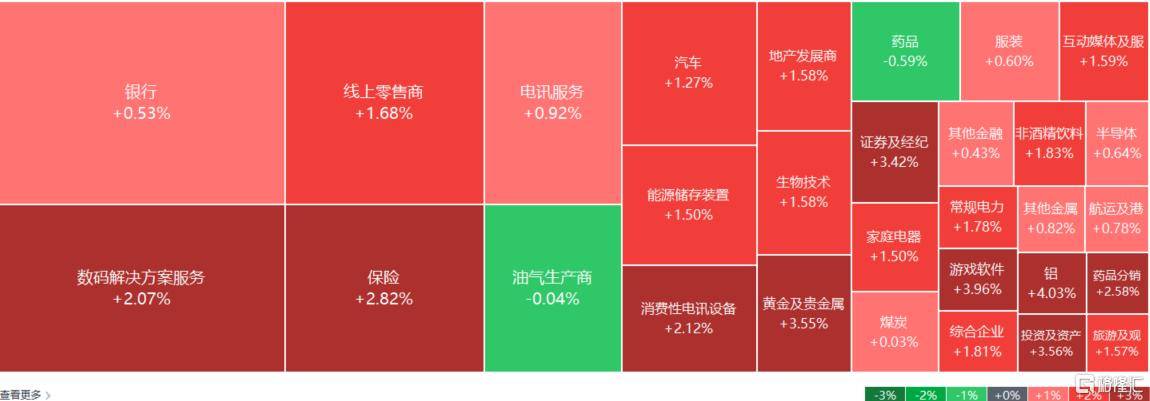
Market Overview - The market sentiment improved significantly due to favorable news from the Central Economic Work Conference, with the Hang Seng Index rising by 1.75% and returning to 26,000 points [1] - Major technology stocks collectively increased, with NetEase rising over 4%, Tencent and Alibaba up over 2%, and other tech companies like Xiaomi, Baidu, JD.com, and Kuaishou also seeing gains [1][3] Sector Performance - **Electric Power Equipment**: Strong performance with Dongfang Electric up over 13% and other companies like Harbin Electric and Shanghai Electric also showing significant gains [1][5] - **Financial Sector**: All major financial stocks, including China Pacific Insurance and CITIC Securities, saw increases, with HSBC reaching a market value of over HKD 2 trillion [1][8] - **Precious Metals**: Gold and silver prices surged, leading to active trading in gold stocks, with China Silver Group rising nearly 6% [1][6] - **Consumer Sector**: Restaurant stocks were active, with companies like Da Shi and Haidilao seeing notable increases, driven by policies aimed at boosting consumption [10] - **Real Estate**: Property stocks rose, with Longguang Group increasing over 4%, supported by policies to stabilize the real estate market [12] Individual Stock Highlights - **NetEase**: Stock price increased by 4.20% to HKD 218.40 [4] - **Dongfang Electric**: Stock price surged by 13.59% to HKD 24.90 [5] - **China Pacific Insurance**: Stock price rose by 5.68% to HKD 34.60 [9] - **China Silver Group**: Stock price increased by 5.80% to HKD 0.730 [7] - **Xuan Bamboo Bio**: Stock price increased by 25.19% to HKD 96.90, reaching a new high [16][19] Economic Policy Impact - The Central Economic Work Conference emphasized the importance of domestic demand and consumer spending, with plans to implement measures to boost consumption and stabilize the real estate market [10][12]
港股异动 内险股午后全线拉升 保险投资股票风险因子调降 险企资本运用效率有望提升
Jin Rong Jie· 2025-12-12 06:14
消息面上,12月5日,金管总局调降保险公司投资相关股票的风险因子。东海证券指出,此次调整有望 降低险企资本占用压力,提升资金使用效率,推动长期价值投资进一步深化。同时,对保险资金"耐心 资本"的持续引导,也将进一步支持科技创新和实际经济赋能,优化行业资产负债匹配结构。保险板块 目前处历史低估值区间,重视板块配置机遇,建议关注拥有明显护城河的大型上市险企。 国盛证券发布研报称,长期来看,保险行业持续受益于银行存款搬家趋势,多元化的养老、医疗、理财 储蓄等保险需求有望推动行业持续扩容。短期来看,险企开门红进展顺利,有望提振2026年负债端表 现。产品预定利率阶梯型下调大幅缓解行业利差损风险,"报行合一"推动行业反内卷和头部公司集中度 提升,积极看好保险板块的配置价值。 本文源自:智通财经网 智通财经获悉,内险股午后全线拉升,截至发稿,中国人寿(02628)涨4.4%,报28港元;中国太保 (02601)涨4.09%,报34.08港元;中国平安(02318)涨2.85%,报63.25港元;中国财险(02328)涨0.96%,报 16.9港元。 ...


港股异动 | 内险股午后全线拉升 保险投资股票风险因子调降 险企资本运用效率有望提升
Zhi Tong Cai Jing· 2025-12-12 05:53
Group 1 - The core viewpoint of the news is that the insurance sector in Hong Kong experienced a significant rally, driven by a reduction in the risk factor for insurance companies investing in stocks, which is expected to enhance capital efficiency and support long-term value investment [1] - As of the report, major insurance stocks such as China Life, China Pacific Insurance, China Ping An, and China Property & Casualty Insurance saw notable increases in their share prices, indicating positive market sentiment [1] - The adjustment by the financial regulatory authority is anticipated to alleviate capital occupation pressure for insurance companies, thereby optimizing the asset-liability matching structure within the industry [1] Group 2 - The insurance industry is expected to benefit from the trend of bank deposits moving towards insurance products, with diverse demands in areas such as retirement, healthcare, and savings likely to drive industry expansion [2] - Short-term developments indicate that insurance companies are progressing well with their new year product offerings, which may enhance their liabilities performance in 2026 [2] - The reduction in the scheduled interest rates for insurance products is expected to significantly mitigate the risk of interest spread losses, while the integration of insurance and banking services is likely to promote industry consolidation and improve the concentration of leading companies [2]
内险股午后全线拉升 保险投资股票风险因子调降 险企资本运用效率有望提升
Zhi Tong Cai Jing· 2025-12-12 05:47
Core Viewpoint - The insurance sector is experiencing a significant rally, driven by regulatory changes that lower investment risk factors for insurance companies, enhancing capital efficiency and supporting long-term value investment [1] Group 1: Stock Performance - As of the report, major insurance stocks have seen substantial gains: China Life (601628) up 4.4% to HKD 28, China Pacific Insurance (601601) up 4.09% to HKD 34.08, China Ping An (601318) up 2.85% to HKD 63.25, and China Property & Casualty Insurance (02328) up 0.96% to HKD 16.9 [1] Group 2: Regulatory Impact - On December 5, the Financial Supervisory Commission lowered the risk factors for insurance companies investing in related stocks, which is expected to reduce capital occupation pressure and enhance fund utilization efficiency [1] - The adjustment is anticipated to support the continuous guidance of insurance funds as "patient capital," further promoting technological innovation and empowering the real economy [1] Group 3: Industry Outlook - Donghai Securities noted that the insurance sector is currently in a historically undervalued range, suggesting a focus on large listed insurance companies with significant competitive advantages [1] - Guosheng Securities highlighted that the insurance industry will benefit from the trend of bank deposits moving, with diversified demands in pensions, healthcare, and savings expected to drive industry expansion [1] - Short-term progress in the insurance companies' New Year business is expected to boost liability performance in 2026, while the adjustment of product interest rates is likely to alleviate industry spread loss risks [1] - The "reporting and operation integration" is seen as a way to reduce internal competition and increase concentration among leading companies, indicating a positive outlook for the insurance sector's allocation value [1]

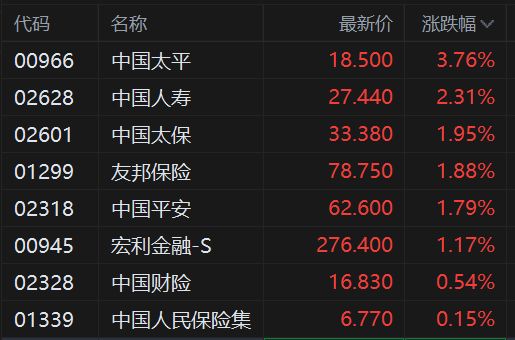
港股异动丨内险股普涨 中国太平涨近4% 中国平安涨近2% 机构看好保险业前景
Ge Long Hui· 2025-12-12 03:49
Group 1 - The core viewpoint of the news is that the Hong Kong insurance stocks have collectively risen, driven by positive market sentiment and favorable regulatory changes [1] - China Taiping increased by nearly 4%, China Life by 2.3%, and other major insurers like China Ping An and China Taibao saw gains of nearly 2% [2] - Guosheng Securities reported that the insurance industry will benefit from the trend of bank deposits moving to insurance products, with diverse demands in retirement, healthcare, and savings expected to drive industry expansion [1] Group 2 - Short-term progress in the insurance companies' performance is expected to boost the liability side for 2026, with a significant reduction in the scheduled interest rates alleviating the risk of industry spread losses [1] - UBS highlighted that the recent notification from the National Financial Regulatory Administration to adjust risk factors for insurance companies encourages long-term patient capital, which is beneficial for market sentiment [1] - UBS reiterated China Ping An as the industry’s top pick with a "buy" rating and a target price of 70 HKD, citing attractive risk-reward dynamics [1]