
MEITUAN(03690)

Search documents
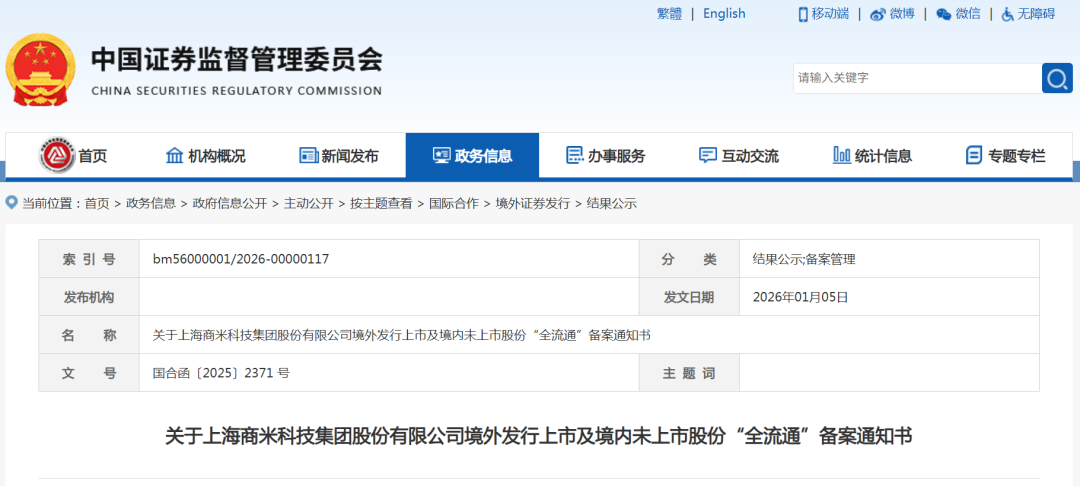
商米科技完成港股上市备案,蚂蚁、美团、小米为股东,全球最大的安卓端BIoT解决方案提供商
Xin Lang Cai Jing· 2026-01-05 14:04
Core Viewpoint - Sunmi Technology plans to issue up to 46 million overseas listed ordinary shares and list on the Hong Kong Stock Exchange, with 13 shareholders converting a total of 261,415,724 domestic unlisted shares into overseas listed shares [2][11]. Company Overview - Sunmi Technology is a leading provider of Business Internet of Things (BIoT) solutions, integrating smart hardware, software, and data insights to enable digital transformation in various offline business scenarios [3][12]. - The company currently holds over 10% market share in the global Android-based BIoT solutions market, which is expected to experience explosive growth in the next five years [3][12]. Business Operations - Sunmi Technology has served approximately 61,000 business partners globally, increasing from about 44,000 partners as of December 31, 2022, to an estimated 58,000 by December 31, 2024 [3][12]. - The company operates in over 100 industry verticals, including restaurants, supermarkets, fitness, clinics, and logistics, with solutions deployed in over 200 countries and regions [4][13]. Product and Technology - The company's BIoT solutions include smart devices and a BIoT PaaS platform, supported by a professional commercial operating system (SUNMI OS) [4][13]. - Sunmi Technology has recorded approximately 2 billion downloads of applications from its app market as of December 31, 2024, and has developed the industry's first low-code modular PaaS platform [5][14]. Financial Performance - The company reported revenues of approximately RMB 3.404 billion, RMB 3.071 billion, and RMB 3.456 billion for the years 2022, 2023, and 2024, respectively, with net profits of RMB 160 million, RMB 101 million, and RMB 181 million during the same period [7][16]. - Gross profit increased from RMB 821 million in 2023 to RMB 997 million in 2024, with gross margin rising from 26.7% to 28.9% due to higher sales in Europe and effective cost management [7][16]. Market Outlook - The global BIoT solutions market is projected to grow from approximately RMB 189 billion in 2020 to about RMB 235 billion by 2024, with a compound annual growth rate (CAGR) of around 5.6% [7][16]. - The Android-based BIoT solutions market is expected to expand from approximately RMB 32 billion in 2024 to about RMB 92 billion by 2029, with a CAGR of 23.7% [8][17]. Competitive Landscape - The BIoT industry is still in the early stages of digital transformation, with many solution providers operating at different stages of BIoT development [8][18]. - Companies focusing on isolated use cases, such as card payments, are beginning to recognize the importance of flexible and interconnected ecosystems, leading to a shift towards adopting Android systems [8][18].

ETF日报:短期黄金价格或延续高位震荡 关注黄金基金ETF和黄金股票ETF
Xin Lang Cai Jing· 2026-01-05 13:59
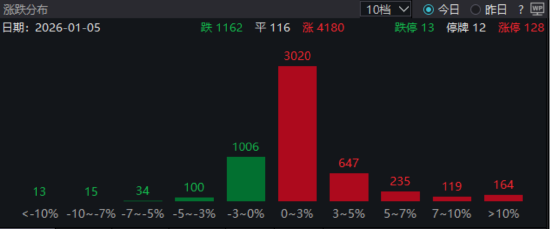
Group 1: A-Share Market Performance - The A-share market opened high and closed strong, with the Shanghai Composite Index rising by 1.38% to close at 4023.42 points, surpassing the 4000-point mark again [1] - The Shenzhen Component Index reached a new high, increasing by 2.24% to close at 13828.63 points [1] - The total trading volume exceeded 2.56 trillion yuan, indicating significant market activity [1] - Sectors such as media and pharmaceuticals led the gains, while oil and banking sectors faced declines, with over 4100 stocks rising [1] - The market outlook remains bullish, supported by the New Year effect and macroeconomic policies [1] Group 2: Hong Kong Market and Technology Sector - The Hong Kong market showed strong performance during the mainland's holiday, with the technology ETF rising over 4% [3] - The Hang Seng Index increased by 28% in 2025, marking its best annual performance since 2017 [3] - Key factors supporting the technology sector include improved macroeconomic conditions and a truce in US-China tariffs, alongside expectations of interest rate cuts by the Federal Reserve [3] - China's GDP grew by 5.2% year-on-year in the first three quarters of 2025, indicating economic resilience [3] - The AI industry's explosive growth has significantly boosted market confidence, exemplified by a 117% increase in shares of SMIC in 2025 [3] Group 3: ETF Insights - The Hong Kong Technology ETF tracks the CSI Hong Kong Stock Connect Technology Index, which includes major internet platforms and hard technology stocks [4] - The index structure allows it to benefit from both internet giants' profit releases and the growth in AI and semiconductor sectors [4] - Despite potential short-term volatility, the long-term outlook for the Hong Kong technology sector remains strong, with a favorable price-to-earnings ratio compared to US tech stocks [4] - Investors are encouraged to consider the Hong Kong Technology ETF for gradual investments to capitalize on the technology bull market [4] Group 4: Gaming Sector Performance - The gaming ETF rose by 4.55%, reflecting strong confidence in the sector's performance for 2026 [14] - The domestic gaming market's actual sales revenue surpassed 350 billion yuan in 2025, marking a 7.68% year-on-year increase [14] - The growth in the gaming sector is driven by the explosive performance of mini-program games, which generated 53.54 billion yuan in revenue, a 34.39% increase [14] - Chinese game developers are increasingly competitive globally, with overseas sales reaching $20.455 billion, a 10.23% increase [14] Group 5: Semiconductor and Storage Market - The semiconductor equipment ETF rose by 5.96%, indicating strong market interest [16] - The demand for storage products has surged, with DRAM and NAND Flash prices increasing over 300% since September [16] - The first quarter of 2026 is expected to see continued price increases in storage due to ongoing supply constraints and rising AI-related demand [16] - The semiconductor equipment sector is poised for significant growth, with order growth expected to exceed 30% in 2026 [16] Group 6: Gold Market Outlook - Gold ETFs saw increases of 2.09% and 2.41% for gold funds and gold stock ETFs, respectively [17] - Geopolitical tensions, particularly in Venezuela and ongoing conflicts in Ukraine, are expected to drive demand for gold as a safe haven [18] - The Federal Reserve's cautious stance on interest rate cuts and the ongoing trend of de-dollarization globally are likely to support gold prices in the medium to long term [18]


蚂蚁、美团入局AI硬件,Looki完成超2000万美元A轮融资
Xin Lang Cai Jing· 2026-01-05 11:45
Core Insights - Looki, an AI hardware startup, has completed over $20 million in Series A funding led by Ant Group, with participation from Meituan Longzhu, Huaden, Zhongguancun Capital, and existing investor BAI Capital [1][11] - The funding will enable Looki to enhance talent development, model iteration, product R&D, and supply chain integration, accelerating its technological accumulation in the AI-native hardware sector [1][11] - Looki aims to create a new hardware category focused on daily life documentation and companionship, distinguishing itself from traditional action cameras [3][12] Company Overview - Looki was founded in May 2024 by two Carnegie Mellon University alumni, with CEO Sun Yang having a background in smart hardware at Meituan and as a founding member of Google Assistant [2][11] - The team includes members from prestigious universities and companies like Google, Amazon, and ByteDance, specializing in AI algorithms, products, and hardware engineering [2][11] - The first product, Looki L1, a wearable multimodal AI hardware, was launched internationally in August 2025 and quickly gained popularity, selling out thousands of units [2][12] Product Features - Looki L1 is designed to document daily life through video, images, and audio, providing users with insights and emotional value, and is referred to as a "life review device" by its community [3][12] - The product has unique features such as generating daily summary vlogs and creative content like serialized comics, which have become popular among users [3][12] - User engagement has increased, with average usage time rising from 6.2 hours to 7.9 hours, indicating strong user interest and interaction with the device [4][12] New Developments - Looki is set to unveil a new feature called Proactive AI at CES, which will allow the device to provide information and reminders based on real-time understanding of user activities [5][13] - This feature, termed Scene-Adaptive Intelligence, will enable Looki to proactively assist users, such as reminding them about coffee intake or encouraging them to take breaks [8][14] - The proactive capabilities aim to transition Looki from passive recording to actively identifying key moments and offering relevant services [10][14] Future Outlook - Looki plans to continue focusing on a human-centered product philosophy as multimodal AI technology matures and user needs evolve [15]
港股投资策略报告:“年关”已过,港股新一轮攻势有望启动-20260105
INDUSTRIAL SECURITIES· 2026-01-05 11:29
Group 1 - Since late November, the Hong Kong stock market has weakened due to a slowdown in southbound capital inflows as the year-end approaches, leading to a decline in market risk appetite [3][14] - The three main concerns affecting the market include foreign capital reducing positions before the Christmas holiday, hedge funds shorting due to uncertainties, and worries about new regulations on mainland public funds potentially increasing selling pressure on Hong Kong stocks [3][14] Group 2 - With the new year, a new round of upward momentum in the Hong Kong stock market is expected, driven by seasonal inflows from insurance funds and the long-term allocation logic from the switch to IFRS9 accounting standards for non-listed insurance companies [5][31] - The market sentiment has dropped to a low point, significantly improving the risk-reward ratio, with signs of short covering in major tech stocks [6][18] - The proportion of short positions in leading internet stocks has shown signs of decline, indicating a potential rebound in stock prices as they reach attractive valuation levels [6][19] Group 3 - The expectation of RMB appreciation is expected to enhance the attractiveness of RMB assets, driving foreign capital inflows into Hong Kong stocks [7][42] - Historical data shows that during previous RMB appreciation cycles, the Hong Kong stock market has consistently performed well, particularly in the information technology sector [7][43] - The RMB is projected to appreciate against the USD, potentially returning to the "6" range, which could further incentivize foreign investment in Chinese equities [7][47] Group 4 - Investment recommendations suggest a bullish stance on Hong Kong stocks, particularly led by the Hang Seng Technology Index, with expectations of continued market growth driven by earnings and liquidity [52] - Key investment opportunities include leading internet companies in the AI sector, which are expected to benefit from both domestic and foreign capital inflows [53][54] - High dividend assets are highlighted as strategic investments in a low-interest-rate environment, with a current dividend yield of 6.70% for the Hang Seng High Dividend Yield Index [58][60] - New consumption trends are emerging, focusing on traditional service consumption transformation, Z-generation spending habits, and high-end consumption recovery [61][64]

精准匹配不同老年人需求 北京市民政局和美团签订战略合作协议
Bei Jing Shang Bao· 2026-01-05 11:14
Group 1 - The Beijing Civil Affairs Bureau and Meituan signed a strategic cooperation agreement to explore online channels for "platform +” elderly care services, aiming to create new consumption scenarios in the elderly care sector [1] - Meituan will introduce hundreds of registered elderly care service institutions in Beijing to enhance online infrastructure and address issues such as information asymmetry and service quality in the elderly care industry [1] - The collaboration will involve both online and offline initiatives, including community services and activities tailored for the elderly, to expand the industry's influence [1] Group 2 - Meituan's elderly care services currently cover over 300 cities in China, with more than 30,000 service institutions integrated into a comprehensive service matrix [2] - The demand for professional care services has surged, with a 78% year-on-year increase in potential users and over 200% growth in transaction volume [2] - Specific services such as "elderly bathing" have seen a 120% increase in search volume and over 85% growth in group purchase orders in the past year [2]
智通港股通活跃成交|1月5日





智通财经网· 2026-01-05 11:02
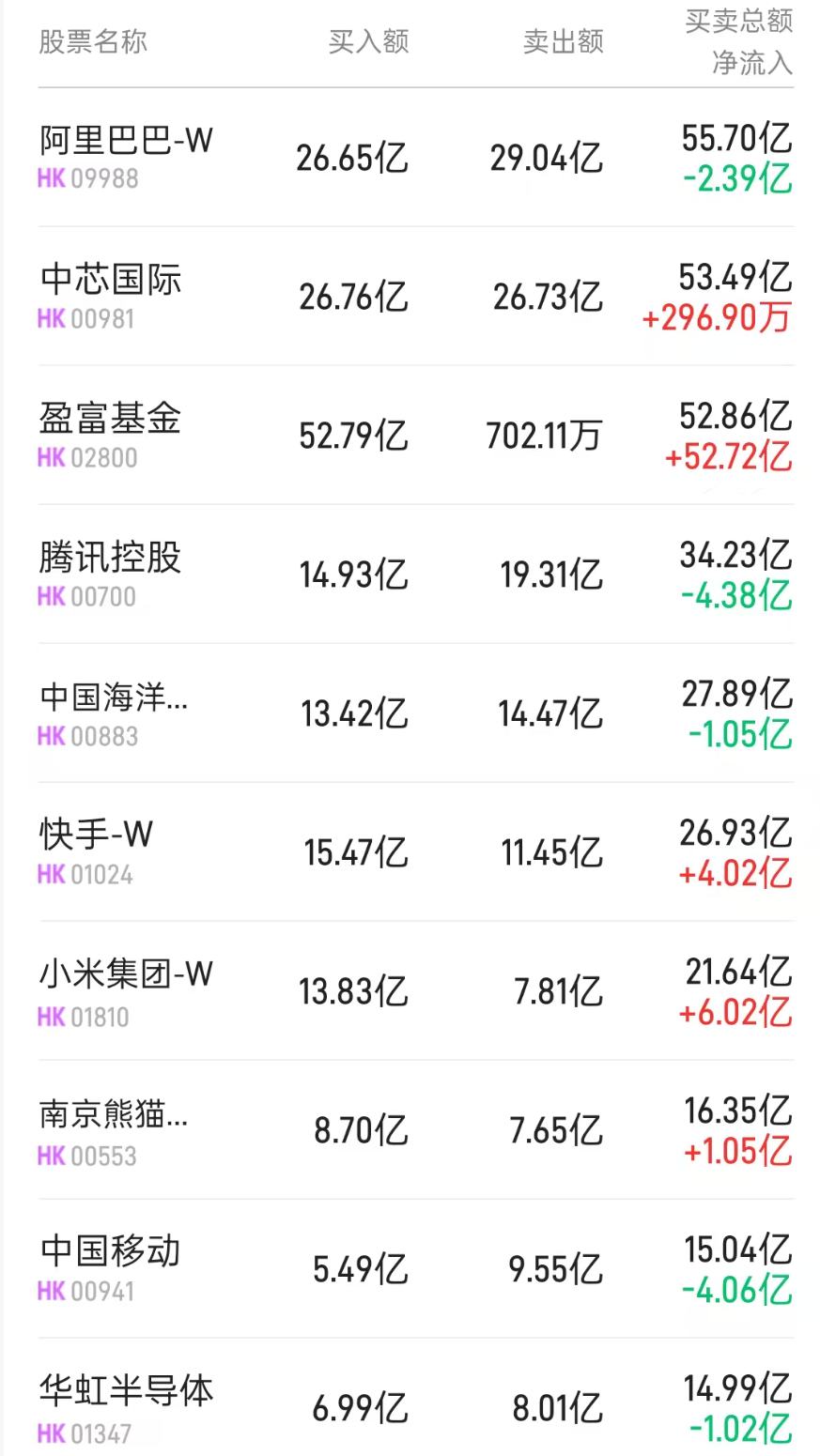
深港通(南向)十大活跃成交公司 沪港通(南向)十大活跃成交公司 | 公司名称 | 成交金额 | 净买入额 | | --- | --- | --- | | 阿里巴巴-W(09988) | 55.70 亿元 | -2.39 亿元 | | 中芯国际(00981) | 53.49 亿元 | +296.90 万元 | | 盈富基金(02800) | 52.86 亿元 | +52.72 亿元 | | 腾讯控股(00700) | 34.23 亿元 | -4.38 亿元 | | 中国海洋石油(00883) | 27.89 亿元 | -1.05 亿元 | | 快手-W(01024) | 26.93 亿元 | +4.02 亿元 | | 小米集团-W(01810) | 21.64 亿元 | +6.02 亿元 | | 南京熊猫电子股份(00553) | 16.35 亿元 | +1.05 亿元 | | 中国移动(00941) | 15.04 亿元 | -4.06 亿元 | | 华虹半导体(01347) | 14.99 亿元 | -1.02 亿元 | 智通财经APP获悉,2026年1月5日当天,阿里巴巴-W(09988)、中芯国际(00 ...
消息称阿里用 AI 应对“外卖大战”:商家只需上传照片就能完成门店 3D 建模
Xin Lang Cai Jing· 2026-01-05 10:38
IT之家 1 月 5 日消息,今天早间,据彭博社报道,阿里 巴巴集团正在上线一项面向餐饮商家的 AI 服务,帮助 餐厅以更直观的方式呈现店内环境。此举被视为阿里在 中国餐饮和本地生活赛道中,与美团展开竞争的一项新 举措。 据知情人士透露,高德地图即将支持餐厅通过上传照片 或视频,自动生成 3D 店内展示内容,降低商家在宣传 和营销方面的成本。这项技术基于通义万相视觉模型, 计划初期向部分商家免费开放。 据知情人士透露,高德地图即将支持餐厅通过上传照片或视频,自动生成 3D 店内展示内容,降低商家 在宣传和营销方面的成本。这项技术基于通义万相视觉模型,计划初期向部分商家免费开放。 报道提到,高德地图的这一动作,体现了阿里巴巴试图切入美团长期占据主导地位的领域。美团目前在 外卖、用户评价和餐厅预订等本地服务市场保持领先,阿里则希望依托 AI 能力及更充裕的资金资源, 在外卖等曾经失利的业务上逐步收复阵地。 IT之家从报道中获悉,2025 年,阿里承诺向核心线上业务投入数百亿元人民币的补贴和激励,与美团 及京东展开正面竞争。报道认为,高德地图 AI 餐厅服务的推出,与阿里巴巴首席执行官吴泳铭推动 AI 全面融入业务 ...
图解丨南下资金净买入港股187亿港元,大幅买入快手和小米
Ge Long Hui A P P· 2026-01-05 10:28
Group 1 - Southbound funds net bought Hong Kong stocks worth 18.723 billion HKD today [1] - The top net purchases included: - Tracker Fund of Hong Kong: 6.826 billion HKD - Kuaishou-W: 1.556 billion HKD - Xiaomi Group-W: 1.019 billion HKD - SMIC: 360 million HKD - CNOOC: 328 million HKD - Hua Hong Semiconductor: 322 million HKD - Meituan-W: 279 million HKD - Alibaba-W: 272 million HKD - China Life: 245 million HKD - Nanjing Panda Electronics: 105 million HKD [1] Group 2 - Southbound funds net sold Tencent Holdings worth 918 million HKD and China Mobile worth 406 million HKD [2] - Tencent has seen a continuous net sell for 6 days, totaling 4.86189 billion HKD [2] - Hua Hong Semiconductor has experienced a continuous net buy for 5 days, totaling 936.63 million HKD [2] - SMIC has seen a net buy for 3 consecutive days, totaling 1.5115 billion HKD [2] - Xiaomi has also seen a net buy for 3 consecutive days, totaling 1.48281 billion HKD [2] Group 3 - In the Shanghai Stock Connect, Alibaba-W had a net sell of 239 million HKD with a trading volume of 5.57 billion HKD [3] - In the Shenzhen Stock Connect, Kuaishou-W had a significant increase of 11.1% with a net buy of 1.154 billion HKD [3] - Xiaomi Group-W experienced a decrease of 2.3% with a net buy of 602 million HKD [3] - Nanjing Panda Electronics saw a notable increase of 39.8% with a net buy of 105 million HKD [3]



北水动向|北水成交净买入187.23亿 可灵玩法海外破圈 北水抢筹快手超15亿港元
智通财经网· 2026-01-05 10:05
智通财经APP获悉,1月5日港股市场,北水成交净买入187.23亿港元,其中港股通(沪)成交净买入98.09亿港元,港股通(深)成 交净买入89.14亿港元。 北水净买入最多的个股是盈富基金(02800)、快手-W(01024)、小米集团-W(01810)。北水净卖出最多的个股是腾讯(00700)、中 国移动(00941)。 | 股票名称 | 买入额 | 卖出额 | 买卖总额 | | --- | --- | --- | --- | | | | | 净流入 | | 阿里巴巴-W HK 09988 | 26.65亿 | 29.04亿 | 55.70亿 | | | | | -2.39 亿 | | 中芯国际 | 26.76 乙 | 26.73亿 | 53.49 乙 | | HK 00981 | | | +296.90万 | | 盈富基金 | 52.79 乙 | 702.11万 | 52.86 亿 | | HK 02800 | | | +52.72 乙 | | 腾讯控股 | 14.93亿 | 19.31亿 | 34.23 乙 | | HK 00700 | | | -4.38 Z | | 中国海洋 ... | 13.42 ...
北水动向|北水成交净买入187.23亿 可灵玩法海外破圈 北水抢筹快手(01024)超15亿港元
智通财经网· 2026-01-05 10:03
智通财经APP获悉,1月5日港股市场,北水成交净买入187.23亿港元,其中港股通(沪)成交净买入98.09亿港元,港股通(深)成 交净买入89.14亿港元。 北水净买入最多的个股是盈富基金(02800)、快手-W(01024)、小米集团-W(01810)。北水净卖出最多的个股是腾讯(00700)、中 国移动(00941)。 | 股票名称 | 买入额 | 卖出额 | 买卖总额 | | --- | --- | --- | --- | | | | | 净流入 | | 阿里巴巴-W | 26.65亿 | 29.04亿 | 55.70亿 | | HK 09988 | | | -2.39 Z | | 中芯国际 | 26.76 乙 | 26.73亿 | 53.49 乙 | | HK 00981 | | | +296.90万 | | 盈富基金 | 52.79 乙 | 702.11万 | 52.86亿 | | HK 02800 | | | +52.72 乙 | | 腾讯控股 | 14.93亿 | 19.31 乙 | 34.23 亿 | | HK 00700 | | | -4.38 Z | | :洪映圖中 | 13.42 乙 ...