
BANK OF QINGDAO(03866)

Search documents
银行:消费贷走出“规模竞赛”
Bei Jing Shang Bao· 2025-05-27 13:39
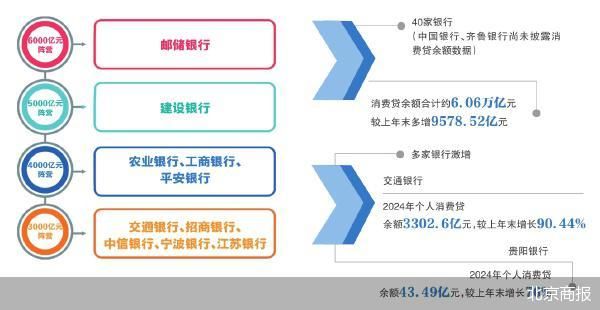
Core Viewpoint - The competition in consumer loans among banks has shifted from a focus on low interest rates to enhancing loan limits and extending loan terms, as banks seek to adapt to changing market conditions and regulatory guidance [1][11][15] Consumer Loan Growth - In 2024, the total consumer loan balance of 40 A-share listed banks increased by over 950 billion yuan, with some banks experiencing growth rates exceeding 90% compared to the previous year [1][3] - The consumer loan balance for these banks reached approximately 6.06 trillion yuan by the end of 2024, marking an increase of 957.85 billion yuan from the previous year [3][4] Interest Rate Trends - Consumer loan interest rates dropped to the "2" range, with some banks offering rates as low as 1.88% for select customers, but this trend has reversed with many banks raising rates to no less than 3% by April 2024 [1][9][10] - The shift back to "3" range interest rates is aimed at preventing excessive competition and potential financial risks associated with low-rate loans [10][11] Bank Strategies - Banks are now focusing on enhancing consumer loan products by increasing limits and extending terms, responding to government initiatives to boost consumption [11][12] - Various banks have begun to raise loan limits and extend repayment periods, with some institutions increasing the maximum loan amount from 300,000 yuan to 500,000 yuan and extending terms from five to seven years [12][16] Market Segmentation - The consumer loan market is showing significant differentiation, with some banks rapidly expanding their loan portfolios through low-rate strategies, while others are contracting due to concerns over rising non-performing loan rates [5][10] - Banks are increasingly targeting specific consumer scenarios, such as home renovations and electric vehicle purchases, to drive loan growth [15][16] Risk Management - The rise in consumer loan balances has led to an increase in non-performing loans, prompting banks to enhance their risk management practices and focus on quality customer segments [9][10][14] - Regulatory bodies are emphasizing the need for banks to monitor the flow of consumer loan funds to mitigate systemic risks [14]



银行股配置重构系列四:为何本轮重点推荐优质城商行?
Changjiang Securities· 2025-05-26 15:36
Investment Rating - The report maintains a "Positive" investment rating for the banking sector, particularly favoring high-quality city commercial banks [11]. Core Insights - In the current macroeconomic environment, government leverage expansion is the clearest direction for bank operations, with state-owned banks and city commercial banks focusing on government-related business as a core strategy for balance sheet expansion [2][7]. - Leading city commercial banks are accelerating their market share acquisition, with their performance growth consistently outpacing the banking industry, driven primarily by relatively high-speed balance sheet expansion [6][10]. - The asset quality of city commercial banks, primarily engaged in government-related business, is currently the most stable, with expectations for a decline in the net generation rate of non-performing loans this year [2][9]. Summary by Sections Macroeconomic Environment - The current macroeconomic environment favors government-related business, with city commercial banks focusing on local government, urban construction, and local state-owned enterprises [7]. - The demand for government-led financing continues to expand in key economic regions, such as the Chengdu-Chongqing area and Shandong province, despite concerns about export pressures in the Yangtze River Delta [7][8]. Competitive Landscape - The competitive dynamics between state-owned banks and leading city commercial banks are evolving, with state-owned banks experiencing a significant increase in credit market share due to macro policy guidance [8]. - Regulatory measures are being implemented to protect the net interest margins of state-owned banks, indirectly slowing their loan issuance and creating a more favorable competitive environment for city commercial banks [8][9]. Asset Quality and Loan Performance - City commercial banks have maintained low non-performing loan rates due to their focus on government-related loans, which have seen reduced risk following recent debt restructuring efforts [9]. - The tightening of risk control and loan issuance in retail banking is expected to lead to a slight decrease in the net generation rate of non-performing loans this year [9]. Investment Outlook - The report is optimistic about city commercial banks becoming the core focus for institutional investors in the banking sector, with expectations for their valuations to rise above 1x PB [10]. - Specific banks, such as Hangzhou Bank, are anticipated to lead in valuation increases due to their regional economic strength, asset quality, and performance growth [10].




银行业周度追踪2025年第20周:新一轮存款降息缓释净息差压力-20250526
Changjiang Securities· 2025-05-26 15:36
Investment Rating - The investment rating for the banking industry is "Positive" and maintained [10] Core Insights - The Yangtze Bank Index increased by 0.6% this week, outperforming the CSI 300 Index by 0.8% and the ChiNext Index by 1.5%. The market's focus on bank stocks has notably increased due to the logic of active fund allocation [2][6] - Following a 10 basis point (BP) reduction in the Loan Prime Rate (LPR) in May, major banks initiated a new round of deposit rate cuts. The interest rate for demand deposits decreased by 5 BP to 0.05%, while the rates for one-year, three-year, and five-year fixed deposits were reduced by 15 BP, 25 BP, and 25 BP respectively, with the one-year fixed deposit rate falling below 1.0% to 0.95% [7][26] - The recent deposit rate cuts are expected to effectively offset the impact of the LPR reduction, leading to a narrowing of the decline in net interest margins (NIM) in the future [8][30] Summary by Sections Market Performance - The Yangtze Bank Index's performance this week shows a cumulative increase of 0.6%, with significant contributions from city commercial banks like Qingdao Bank, which reported a revenue growth rate that exceeded expectations [6][17] - The average dividend yield for the five major state-owned banks in A-shares is 4.49%, with a 277 BP spread over the 10-year government bond yield, while the H-shares yield is even higher at 5.75% [19][24] Deposit Rate Cuts - The recent round of deposit rate cuts is the seventh since 2022, aimed at alleviating the pressure on banks' net interest margins. The current NIM for state-owned banks has reached a new low of 1.33% [7][28] - The report anticipates that the deposit rates will continue to have downward space, but due to the significant cuts already made, no further reductions are expected before the end of 2025 [26][30] Impact on Net Interest Margin - The deposit rate cuts are expected to provide a positive contribution to the banks' NIM, with estimates suggesting an average positive impact of 5 BP from the recent rate adjustments [30][31] - The banks with a higher proportion of fixed deposits and lower mortgage ratios are expected to benefit more from the recent rate cuts [31] Convertible Bonds and Valuation Opportunities - There is a growing market interest in convertible bonds issued by banks, particularly those like Hangzhou Bank, which are expected to see valuation recovery as they exceed forced redemption prices [34][35] - Other banks such as Nanjing Bank and Qilu Bank are also highlighted for their potential valuation recovery as they approach their respective conversion prices [34]
存银行,还不如买银行股?
第一财经· 2025-05-26 01:26
Core Viewpoint - The decline in domestic deposit rates has diminished the attractiveness of traditional savings, leading to a "substitution effect" where bank stocks are favored over deposits, resulting in strong performance in the banking sector [1][3][10]. Summary by Sections Deposit Rate Decline - Since 2025, domestic deposit rates have been continuously decreasing, with the one-year fixed deposit rate falling below 1%, marking a historical low [3]. - The diminishing returns from traditional savings have reignited discussions around the benefits of investing in bank stocks instead of saving [3]. Dividend Yield Comparison - As of May 23, 2025, among 42 A-share listed banks, 31 banks have a dividend yield exceeding 4%, with some banks like Ping An Bank and Minsheng Bank surpassing 8% [3]. - The significant yield difference has prompted a "substitution effect," where investors see greater returns from bank stocks compared to deposits [3]. Strong Performance of Bank Stocks - The banking sector has shown robust performance, with a year-to-date increase of 7.66%, outperforming the Shanghai and Shenzhen 300 Index, which has declined by 1.34% [3][4]. - Investors, including insurance funds and public funds, have increased their holdings in bank stocks significantly [4][5]. Insurance and Public Fund Involvement - Insurance funds have been the primary players in increasing bank stock holdings, with a 27.2% holding ratio as of Q1 2025, up 4.3 percentage points from the end of 2023 [5]. - Public funds have also increased their allocation to bank stocks, with the proportion rising from 1.2% to 2.5% by the end of Q1 2025 [5]. Sector Performance Disparity - There is a noticeable divergence in performance within the banking sector, with regional banks like Qingdao Bank and Chongqing Rural Commercial Bank showing strong gains, while some larger banks have underperformed [7]. - As of Q1 2025, state-owned banks experienced a 1.5% decline in revenue, while city commercial banks saw a 3% increase [8]. Asset Quality and Non-Performing Loans - The non-performing loan generation rate for large banks has increased, while it has decreased for joint-stock and rural commercial banks [9]. - Regional banks, benefiting from local economic support, maintain lower non-performing loan ratios compared to national banks [9]. Future Outlook - Analysts believe that high dividend strategies will continue to drive bank stock prices in the short term, while net interest margins and asset quality will be critical for long-term performance [11][12]. - The banking sector is facing challenges from asymmetric interest rate cuts, which may pressure net interest margins but could also lower funding costs in the long run [12].




资金情绪谨慎A股市场结构性行情持续
Zhong Guo Zheng Quan Bao· 2025-05-22 21:02
● 本报记者 吴玉华 行业板块方面,5月22日,申万一级行业中有6个行业出现主力资金净流入,其中传媒、国防军工、轻工 制造行业主力资金净流入金额居前,分别为13.87亿元、9.43亿元、5.83亿元。在出现主力资金净流出的 25个行业中,汽车、计算机、机械设备行业主力资金净流出金额居前,分别为37.77亿元、29.16亿元、 26.32亿元。 5月22日,A股市场震荡调整,银行板块逆势走强,上海银行、浦发银行等多只银行股创历史新高,结 构性行情持续。三大指数均下跌,创业板指跌近1%,整个A股市场超4400只股票下跌。市场成交缩 量,成交额为1.14万亿元。资金面上,Wind数据显示,22日沪深两市主力资金净流出超252亿元,资金 情绪谨慎。 分析人士认为,结合宽松的货币政策以及中长期资金流入资本市场,A股下行风险相对可控。短期来 看,市场下有支撑,但向上仍需消化外部不确定性因素带来的担忧,建议积极把握市场结构性机会。 缩量调整 5月22日,A股市场缩量调整,题材板块多数下跌。截至当天收盘,上证指数、深证成指、创业板指、 科创50指数、北证50指数分别下跌0.22%、0.72%、0.96%、0.48%、6.15 ...



高位股资金博弈加剧 银行股拉升稳大盘
Shang Hai Zheng Quan Bao· 2025-05-22 18:56
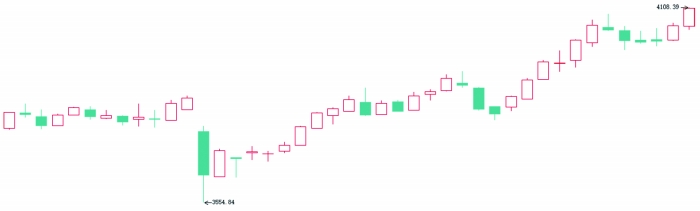
Group 1: Market Overview - A-share market showed increased structural differentiation on May 22, with high-position thematic stocks retreating and the North China 50 Index dropping over 6% [2] - The Shanghai Composite Index closed down 0.22% at 3380.19 points, while the Shenzhen Component Index fell 0.72% to 10219.62 points, and the ChiNext Index decreased by 0.96% to 2045.57 points [2] Group 2: Bank Sector Performance - Bank stocks rose against the market trend, with several banks like Pudong Development Bank, Jiangsu Bank, and Chengdu Bank reaching historical highs, while others like Qingdao Bank and CITIC Bank increased by over 2% [3] - Major state-owned banks and several others lowered RMB deposit rates on May 20, which is expected to positively impact net interest margins and allow banks to increase government bond allocations to support the real economy [3][4] - The valuation recovery logic driven by bank stock dividends is expected to continue, with limited downward pressure on net interest margins and stable performance anticipated [3] Group 3: High-Position Stock Dynamics - High-position stocks have become a market focus amid fluctuations, with stocks like Nanjing Port experiencing significant volatility, including a 7.21% increase after a drop [4] - Over 80 stocks have doubled in price this year, primarily in sectors like restructuring, price increases, robotics, AI, and new consumption, although many of these are small-cap stocks with poor performance [4][5] Group 4: Valuation Concerns - Some doubling stocks, such as Zhongyida, have been flagged for high valuations despite significant price increases, with a cumulative rise of 252.61% while the company remains in a loss position [5] - The market is expected to continue a volatile trend with low trading volumes, and structural opportunities may arise in sectors like export industry chains, domestic demand expansion, high dividend yields, and mergers and acquisitions [5]

【盘中播报】沪指涨0.04% 国防军工行业涨幅最大
Zheng Quan Shi Bao Wang· 2025-05-22 03:07
Market Overview - As of 10:28 AM, the Shanghai Composite Index increased by 0.04% with a trading volume of 422.88 million shares and a turnover of 508.38 billion yuan, representing a decrease of 13.62% compared to the previous trading day [1] Industry Performance - The top-performing sectors included: - Defense and Military Industry: Increased by 1.87% with a turnover of 270.81 billion yuan, up 25.38% from the previous day, led by Guoke Tiancai with a rise of 20.00% [1] - Banking: Increased by 0.39% with a turnover of 85.78 billion yuan, down 16.15% from the previous day, led by Qingdao Bank with a rise of 3.07% [1] - Coal: Increased by 0.25% with a turnover of 32.42 billion yuan, down 52.51% from the previous day, led by Zhongmei Energy with a rise of 1.76% [1] - The sectors with the largest declines included: - Beauty and Personal Care: Decreased by 1.87% with a turnover of 66.24 billion yuan, down 1.28% from the previous day, led by Kexin Co. with a decline of 8.84% [2] - Basic Chemicals: Decreased by 0.79% with a turnover of 326.48 billion yuan, down 16.66% from the previous day, led by Ningxin New Materials with a decline of 10.35% [2] - Public Utilities: Decreased by 0.70% with a turnover of 168.97 billion yuan, down 12.43% from the previous day, led by Jinkong Electric Power with a decline of 6.19% [2] Summary of Key Stocks - Leading stocks in the defense sector included Guoke Tiancai with a significant increase of 20.00% [1] - In the banking sector, Qingdao Bank showed a modest increase of 3.07% [1] - In the coal sector, Zhongmei Energy rose by 1.76% [1] - The largest decline in the beauty sector was seen in Kexin Co. with a drop of 8.84% [2] - Ningxin New Materials in the basic chemicals sector fell by 10.35% [2] - Jinkong Electric Power in public utilities decreased by 6.19% [2]

山东城商行三强观察:青岛银行利润增速第一,齐鲁银行总资产增速第一,威海银行息…
Zheng Quan Zhi Xing· 2025-05-21 12:11
Core Insights - In 2024, three listed city commercial banks in Shandong presented differentiated performance, with Qingdao Bank leading in net profit growth at 20.16%, while Weihai Bank had the highest net interest margin at 1.77% [1][2]. - Qilu Bank achieved the largest net profit of 4.986 billion yuan, followed by Qingdao Bank at 4.264 billion yuan and Weihai Bank at 1.992 billion yuan [1]. Financial Performance - Qingdao Bank ranked first in revenue with 13.498 billion yuan, followed by Qilu Bank at 12.496 billion yuan and Weihai Bank at 9.316 billion yuan, with Qingdao Bank also showing a revenue growth of 8.22% [3]. - Qilu Bank led in asset scale growth at 14.01%, with Qingdao Bank and Weihai Bank at 13.48% and 12.65% respectively [4]. Asset Quality - Qilu Bank had the highest return on equity (ROE) at 12.52%, while Qingdao Bank followed at 11.51% and Weihai Bank at 8.47% [6]. - Weihai Bank reported the highest non-performing loan (NPL) ratio at 1.41%, with Qilu Bank and Qingdao Bank at 1.14% and 1.19% respectively [7]. Business Structure - Qilu Bank's corporate banking business accounted for over 56% of its revenue, while Qingdao Bank's retail banking contributed significantly, with 27.61% of its revenue [8]. - Weihai Bank had the highest proportion of corporate banking business at 62.45%, while Qingdao Bank excelled in retail banking [8]. Loan and Deposit Growth - Qingdao Bank's total loans reached 340.69 billion yuan, growing by 12.53%, while Qilu Bank's loans were 337.14 billion yuan, growing by 12.31% [3]. - All three banks maintained double-digit growth in loans and deposits, although deposit growth rates showed a decline compared to the previous year [3].

山东城商行观察② | 增资潮涌动,谁更有韧性?
Xin Lang Cai Jing· 2025-05-19 04:25
Core Insights - By the end of 2024, the total assets of 14 city commercial banks in Shandong Province exceeded 4 trillion yuan for the first time, reaching 4.06 trillion yuan, a year-on-year increase of 12.79% [1] - The total deposits reached 3.05 trillion yuan, and the loan balance surpassed 2.2 trillion yuan, indicating synchronized expansion in deposits and loans [1] - The profitability of these banks showed strong potential, with a total net profit of 19.186 billion yuan, up 10.42% year-on-year [1] Asset Quality Differentiation - Among the 14 city commercial banks, 9 had non-performing loan (NPL) ratios below the national average of 1.50%, with the provincial average at 1.42% [3] - Dongying Bank had the best performance with an NPL ratio of 1.09%, while Qingdao Bank and Yantai Bank reduced their NPL ratios to 1.14% and 1.16%, respectively [3] - The banks increased their write-off efforts, achieving better loan quality, but significant differences existed between banks [3] Profitability and Risk Management - Qingdao Bank led with a net profit of 4.405 billion yuan, while Dezhou Bank's net profit plummeted over 50% to 1.24 billion yuan, reflecting vulnerabilities in regional banks during industrial transitions [4] - Qingdao Bank's loan quality remained strong, with a loan NPL ratio of 0.87% and a provision coverage ratio of 241.32%, indicating effective risk management [4] - Dezhou Bank's loan total shrank by 2.3%, and its net interest income fell by 12.6%, highlighting challenges in maintaining profitability [4] Capital Increase Trend - In 2024, Shandong city commercial banks experienced a "capital increase wave," with 8 banks announcing capital changes totaling over 12 billion yuan [7] - Rizhao Bank led with a capital increase of 6.086 billion yuan, while several other banks also significantly raised their registered capital [7] - Many banks adopted a dual-track model of equity and debt issuance to enhance capital, with various banks approved to issue capital supplement bonds [9] Overall Assessment - The capital increases and issuance of capital instruments have strengthened the risk resistance capabilities of Shandong city commercial banks, with asset quality improving [9] - However, ongoing attention to capital adequacy ratios is necessary, especially for smaller banks facing challenges [9]

青岛银行分析师会议-20250517
Dong Jian Yan Bao· 2025-05-17 09:13
Group 1: Report Overview - The report is about a research on Qingdao Bank in the banking industry, with a research date of May 16, 2025 [1][2][16] Group 2: Research Participants - The participating research institutions include Industrial and Commercial Bank of China Wealth Management, Changjiang Securities, CITIC Securities, Huaxia Fund, Changxin Fund, etc [2] - The types of participating institutions and their proportions are: other financial companies 8%, securities companies 33%, fund management companies 42%, property - insurance companies 8%, and trust companies 8% [19] Group 3: Core Views - Qingdao Bank achieved good growth in revenue and net profit in Q1 2025. The bank expanded the scale of interest - earning assets, increased the proportion of high - yield assets such as loans, and achieved significant cost - reduction and efficiency - improvement results on the liability side. The net interest margin was flat year - on - year and increased by 0.04 percentage points compared to 2024. The bank also increased non - interest income through bond profit - taking operations. In Q1 2025, the company's operating revenue was 4.047 billion yuan, a year - on - year increase of 357 million yuan or 9.69%. The net profit attributable to the parent company's shareholders was 1.258 billion yuan, a year - on - year increase of 177 million yuan or 16.42% [22] - As of the end of March 2025, the bank's non - performing loan ratio was 1.13%, a decrease of 0.01 percentage points from the beginning of the year, and the provision coverage ratio was 251.49%, an increase of 10.17 percentage points from the beginning of the year. The bank will continue to strengthen credit asset quality management and is expected to maintain a stable and improving asset - quality trend [23]