CM BANK(03968)

Search documents
金融业出拳整治“内卷式”竞争,价格恶战首当其冲
Nan Fang Du Shi Bao· 2025-07-24 10:56
Core Viewpoint - The financial industry is increasingly focusing on resisting "involution-style" competition, with institutions like Ping An Bank taking proactive measures to address this issue and promote sustainable business practices [2][4]. Group 1: Ping An Bank's Actions - On July 22, Ping An Bank held a meeting to outline its business development plan and promote the signing of commitment letters against "involution-style" competition among its over 2,000 employees [2]. - In Q1 2025, Ping An Bank reported a revenue of 33.709 billion, a year-on-year decrease of 13.1%, and a net profit of 14.096 billion, down 5.6% [2]. - The bank's total assets reached 57.8 trillion at the end of Q1, reflecting a slight increase of 0.1% compared to the end of the previous year [2]. Group 2: Industry-Wide Trends - The Guangdong Banking Association has established a "1+3+N" system to combat "involution-style" competition, which includes a negative list from regulatory bodies and self-regulatory measures from various business sectors [4]. - The Guangdong Financial Regulatory Bureau has publicly opposed "involution-style" competition and is working on self-regulatory agreements to guide the industry [4]. Group 3: Broader Industry Context - The call for resisting "involution" is gaining traction nationwide, with provinces like Fujian and Anhui issuing self-regulatory agreements to prevent malicious competition and ensure compliance with regulatory requirements [5]. - In Shenzhen, despite being a major financial hub, there has been no clear stance from local regulators on "involution" competition, although the banking sector's total assets reached 13.57 trillion, growing by 1.37% year-on-year [5]. Group 4: Regulatory Measures and Market Impact - The implementation of the "reporting and execution consistency" policy in the insurance sector aims to standardize market practices and curb harmful competition, resulting in a 30% reduction in average commission levels in certain channels [6]. - The banking sector is facing significant pressure on profitability, with net interest margins declining to approximately 1.43% in Q1 2025, leading to concerns about the sustainability of business models [7]. Group 5: Responses to Challenges - Strategies proposed by industry leaders include international expansion, diversification of revenue sources, and the use of artificial intelligence to enhance operational efficiency [8]. - There are differing opinions on the effectiveness of "anti-involution" measures, with some industry professionals arguing that the root cause of the issue lies in the high degree of market homogeneity rather than just pricing strategies [8].




中证香港300价值指数报3220.23点,前十大权重包含工商银行等
Jin Rong Jie· 2025-07-24 09:02
Group 1 - The core viewpoint of the news is the performance of the China Securities Hong Kong 300 Value Index, which has shown significant growth over various time frames, indicating a positive market trend [1][2]. - The China Securities Hong Kong 300 Value Index has increased by 6.54% in the past month, 18.03% in the past three months, and 22.11% year-to-date [1]. - The index is composed of four sub-indices: the China Securities Hong Kong 300 Growth Index, the China Securities Hong Kong 300 Value Index, the China Securities Hong Kong 300 Relative Growth Index, and the China Securities Hong Kong 300 Relative Value Index [1]. Group 2 - The top ten holdings of the China Securities Hong Kong 300 Value Index include major companies such as China Construction Bank (10.36%), HSBC Holdings (9.8%), and China Mobile (7.29%) [1]. - The financial sector dominates the index's industry composition, accounting for 59.00%, followed by communication services at 10.98% and energy at 10.50% [2]. - The index undergoes semi-annual adjustments, with sample changes implemented on the next trading day after the second Friday of June and December [2].



银行间市场经纪业务迎新规:统一监管、划清边界、强化风控
Zhong Guo Jing Ying Bao· 2025-07-23 12:31
Core Viewpoint - The People's Bank of China has released a draft regulation aimed at enhancing the management of interbank market brokerage services, addressing the need for specialized regulatory frameworks in this area [1][2] Group 1: Highlights of the Regulation - The regulation clarifies the types and service scope of brokerage institutions, reinforcing unified supervision to ensure these institutions focus on their core intermediary functions in secondary market liquidity facilitation [1][2] - It strengthens capital adequacy and liquidity requirements for brokerage institutions, mandating the establishment of effective "firewall" systems between brokerage and proprietary trading to enhance risk resilience and market fairness [1][3] - A unified trading process and operational standards are established, along with a regular information disclosure mechanism to improve transaction standardization, effectiveness, and transparency, thereby boosting overall market efficiency and investor trust [1][2] Group 2: Compliance and Operational Requirements - Brokerage institutions are restricted to serving only the interbank secondary market, covering various financial products, and are prohibited from participating in primary bond issuance and over-the-counter bond business [3][4] - Institutions must report to the central bank before entering the market, and non-specialized entities must establish independent departments to strictly separate brokerage activities from proprietary trading [3][4] - Real-time disclosure of optimal buy/sell quotes and transaction information is required, with all communications recorded and retained for at least five years [3][4] Group 3: Compliance Capability Enhancement - Banks must adhere to multiple core compliance requirements, including serving only qualified financial institution investors and signing service agreements to clarify responsibilities and trading terms [4][5] - Discriminatory pricing and misleading pricing practices are prohibited to ensure fair access to market prices for clients [4][5] - Banks are encouraged to deploy AI tools to monitor abnormal trading patterns and shift from reliance on information asymmetry to providing high-value services like liquidity analysis and compliance consulting [4][5][6]

港股央企红利50ETF(520990)跌0.39%,成交额1.79亿元
Xin Lang Cai Jing· 2025-07-23 07:15
流动性方面,截止7月23日,港股央企红利50ETF(520990)近20个交易日累计成交金额29.62亿元,日 均成交金额1.48亿元;今年以来,134个交易日,累计成交金额155.35亿元,日均成交金额1.16亿元。 港股央企红利50ETF(520990)现任基金经理为龚丽丽、汪洋。龚丽丽自2024年7月25日管理(或拟管 理)该基金,任职期内收益17.15%;汪洋自2025年7月15日管理(或拟管理)该基金,任职期内收益 3.73%。 最新定期报告显示,港股央企红利50ETF(520990)重仓股包括中国移动、中国石油股份、中远海控、 中国海洋石油、中国神华、中国石油化工股份、中国电信、中国联通、招商银行、中煤能源,持仓占比 如下。 股票代码股票名称持仓占比持仓股数(股)持仓市值(元)00941中国移动10.83%621.75万4.94亿00857 中国石油股份10.55%7814.80万4.81亿01919中远海控9.66%3540.75万4.40亿00883中国海洋石油 9.03%2547.10万4.12亿01088中国神华8.09%1328.00万3.69亿00386中国石油化工股份7.66%931 ...


24.6万亿私人银行进入存量时代
3 6 Ke· 2025-07-23 05:47
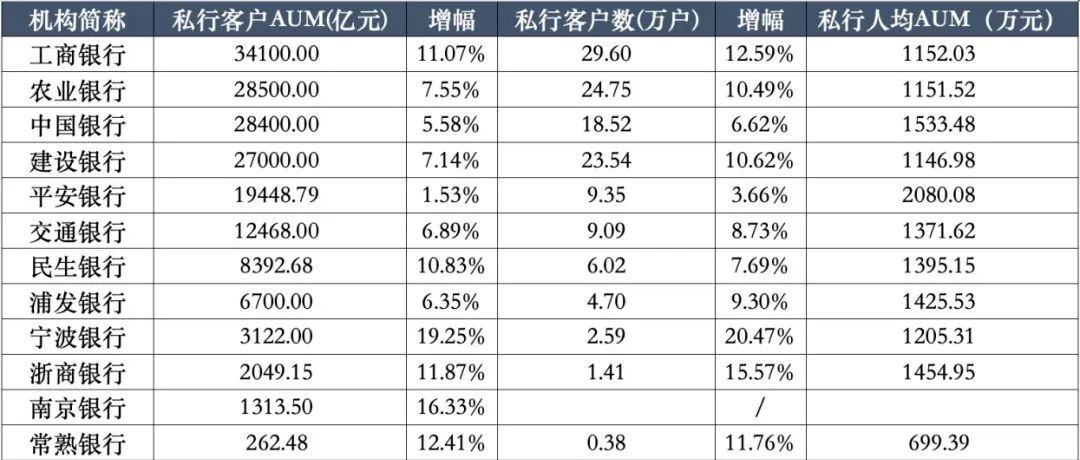
Core Insights - The private banking sector is experiencing intense competition among major banks, with a focus on high-net-worth clients and asset management growth [2][19] - Recent developments, including the "internship monetization" controversy involving Industrial Bank, have sparked discussions about the boundaries of value-added services in private banking [1][7] Group 1: Private Banking Market Overview - The total Assets Under Management (AUM) in the private banking sector has reached 24.6 trillion yuan, with many banks reporting double-digit growth in client numbers and AUM [2][6] - Major banks like Industrial Bank, Agricultural Bank, and Bank of China have surpassed 3 trillion yuan in AUM, with significant year-on-year growth rates of 18.87% and 16.73% respectively [6][12] Group 2: Client Growth and Performance - As of the end of 2024, Industrial Bank had 289,000 private banking clients, an increase of 9.9% from the previous year, while Agricultural Bank and Bank of China also reported substantial client growth [4][6] - The average AUM per private banking client varies, with Industrial Bank at 11.52 million yuan and Agricultural Bank at 11.51 million yuan [3][6] Group 3: Competitive Strategies - Banks are adopting differentiated strategies to attract high-net-worth clients, with a focus on comprehensive services that include financial and non-financial resources [9][12] - The competition is not only about asset size but also about the quality of services offered, with banks like Industrial Bank and Construction Bank emphasizing tailored solutions for entrepreneurs [14][18] Group 4: Challenges and Future Directions - The private banking sector faces challenges such as product homogenization and intense competition, which may impact the effectiveness of non-interest income growth [4][19] - Moving forward, the industry is expected to shift from a scale-oriented approach to one focused on the health of client assets, aiming for a transformation from "scale competition" to "value management" [20]



“鑫心惠邻‘携手银行’宣传”被近20家银行辟谣,监管警示贷款中介乱象风险
Hua Xia Shi Bao· 2025-07-23 04:20
Core Viewpoint - A newly established loan intermediary, Xin Xin Hui Lin, has sparked collective statements from nearly 20 banks in Shenzhen, indicating potential disruption to financial order and consumer rights due to misleading advertising practices [2][3]. Company Summary - Xin Xin Hui Lin (Shenzhen) Consulting Service Co., Ltd. was founded in November 2024 and has quickly established nine subsidiaries, focusing on community-based financing solutions [3][4]. - The company promotes its services through community-centric slogans, aiming to assist local residents in overcoming financing challenges [4]. Industry Summary - The shift of loan intermediaries towards residential communities reflects a transformation in the industry, driven by rising online customer acquisition costs and intensified market competition [4]. - This "community financing" model poses risks such as information asymmetry, lack of service transparency, and potential for excessive debt among consumers [5]. - Banks are encouraged to enhance financial education within communities and establish transparent service channels to mitigate the risks posed by unscrupulous intermediaries [5][6]. - Regulatory bodies are increasingly vigilant against illegal loan intermediary activities, emphasizing the need for clear boundaries in intermediary services and the establishment of transparent fee structures [6][7]. - Collaboration among regulatory agencies, industry associations, banks, and intermediaries is essential for standardizing practices and ensuring consumer protection [7].


中证香港上市可交易内地银行指数报1245.77点,前十大权重包含工商银行等
Jin Rong Jie· 2025-07-22 14:28
Group 1 - The core index of the China Securities Index for Hong Kong-listed tradable mainland banks (HKT Mainland Banks, H11145) opened high and rose, reporting 1245.77 points [1] - The HKT Mainland Banks index has increased by 1.56% in the past month, 16.29% in the past three months, and 22.87% year-to-date [1] - The index series includes three indices: HKT Hong Kong Real Estate, HKT Mainland Consumption, and HKT Mainland Banks, reflecting the overall performance of related theme securities in the Hong Kong securities market [1] Group 2 - The top ten weights in the HKT Mainland Banks index are: China Construction Bank (31.83%), Industrial and Commercial Bank of China (23.51%), Bank of China (17.4%), China Merchants Bank (10.52%), Agricultural Bank of China (7.24%), CITIC Bank (3.48%), Postal Savings Bank of China (2.55%), Minsheng Bank (1.52%), Chongqing Rural Commercial Bank (0.75%), and China Everbright Bank (0.66%) [1] - The market segment of the HKT Mainland Banks index is entirely represented by the Hong Kong Stock Exchange, with a 100.00% share [1] Group 3 - The financial sector accounts for 100.00% of the industry represented in the HKT Mainland Banks index sample [2] - The index sample is adjusted every six months, with adjustments implemented on the next trading day after the second Friday of June and December [2] - Weight factors are generally fixed until the next scheduled adjustment, with temporary adjustments made under special circumstances [2]
大分化时代下,高端信用卡决定“不卷了”
凤凰网财经· 2025-07-22 14:12
Core Viewpoint - The recent adjustments in high-end credit card benefits by multiple banks are proactive measures aimed at achieving sustainable business models and overall industry health, rather than merely a reduction in benefits [1][2]. Group 1: Adjustments in High-End Credit Card Benefits - Major banks, including China Merchants Bank, have announced updates to high-end credit card products, such as increasing usage thresholds and adjusting applicable ranges [1]. - The adjustments reflect a shift from a focus on short-term promotional products to long-term offerings that align with customer needs, maintaining a stable and optimized benefits structure [2][3]. - The changes include the introduction of new benefits for certain card types while increasing the spending requirements for others, indicating a strategic alignment with customer expectations and market demands [2][3]. Group 2: Market Trends and Economic Context - The high-end credit card segment has historically been a crucial part of commercial banks' financial services, with a focus on catering to high-net-worth individuals [4]. - The current economic environment has led to rising operational costs and increased challenges in credit risk management, prompting banks to reassess their benefits structures [5]. - The trend towards upgrading high-end credit cards from magnetic stripe to chip technology is part of a broader global shift, ensuring compatibility with international payment systems [6][7]. Group 3: Future Outlook - The differentiation among high-end credit card products is becoming clearer, with banks offering various products tailored to specific consumer needs, enhancing the overall customer experience [7]. - As banks complete their updates to high-end credit card benefits, market uncertainty is expected to decrease, leading to a more stable benefits ecosystem for cardholders [7].
银行股变奏,普涨格局下减持暗涌
2 1 Shi Ji Jing Ji Bao Dao· 2025-07-22 11:39
Core Viewpoint - The banking sector has shown strong performance in 2023, with the China Securities Banking Index rising by up to 25%, and many bank stocks reaching historical highs, prompting some shareholders to consider profit-taking through share reductions [1][2][3] Summary by Sections Bank Stock Performance - The banking sector's stocks have experienced significant gains, with 42 stocks achieving positive growth and 18 reaching new historical highs this year [1] - Qingdao Bank has seen the largest increase, with intraday gains exceeding 40% [1] Shareholder Reduction Announcements - Six banks have announced share reduction plans since May, coinciding with the peak prices of bank stocks [2][3] - China Life intends to reduce its stake in Hangzhou Bank by up to 50.79 million shares, representing 0.7% of the total shares, marking the end of its 16-year investment in the bank [2] - Other banks, such as Qilu Bank and Changsha Bank, have also announced share reductions, with Qilu Bank's major shareholder planning to sell up to 60.44 million shares [3][5] Reasons for Share Reductions - Market analysts suggest that the reductions are primarily due to shareholders seeking to lock in profits after substantial price increases [8][9] - Factors influencing these decisions include the need for asset reallocation, the high valuation of bank stocks, and potential concerns about future growth prospects [9] Ongoing Investment Interest - Despite the reductions, there is still strong interest in bank stocks, with eight banks receiving shareholder increases this year, indicating a net positive sentiment towards the sector [9][10] - Insurance companies have also been actively acquiring bank shares, further demonstrating ongoing confidence in the banking sector [10]




大分化时代下,高端信用卡决定“不卷了”
新浪财经· 2025-07-22 08:58
Core Viewpoint - The recent adjustments in high-end credit card benefits by multiple banks are proactive measures aimed at achieving sustainable business models and overall industry health amidst rising costs and increased risk management pressures [3][6][11]. Group 1: Industry Trends - Several banks, including China Merchants Bank and Everbright Bank, have announced updates to high-end credit card products, such as increasing usage thresholds and adjusting applicable ranges [3]. - The current round of adjustments is seen as a shift from a focus on aggressive benefits to a more sustainable approach, reflecting a broader industry trend towards differentiation and long-term viability [6][11]. Group 2: Specific Changes by Banks - China Merchants Bank has upgraded its Visa dual-standard high-end magnetic stripe cards to chip versions, adjusting annual fee waiver rules and introducing new benefits for its premium cardholders [5][6]. - The classic white chip card now requires a spending threshold of 180,000 yuan for the main card and 100,000 yuan for supplementary cards to qualify for fee waivers, indicating a shift towards more stringent requirements [5][6]. Group 3: Market Dynamics - The high-end credit card segment has historically been crucial for banks, targeting high-net-worth individuals whose spending patterns can significantly impact the economy [7]. - The rising operational costs and credit risk management challenges are prompting banks to reassess their high-end credit card strategies, moving away from unsustainable benefit models [7][8]. Group 4: Future Outlook - As major banks complete their updates to high-end card benefits, market uncertainty is expected to decrease, leading to a more stable and predictable benefits system for cardholders [11]. - The adjustments in high-end credit card offerings reflect a transition from rapid expansion to a focus on high-quality development within the banking industry, promoting a healthier ecosystem in the long run [11].