MICROSOFT(04338)

Search documents
微软Azure Local更新引发严重系统故障:每20小时蓝屏一次
Huan Qiu Wang· 2025-11-01 03:44
Core Insights - Microsoft recently faced significant system failures due to the update 2510 (version 11.2510.1002.87) for its hybrid cloud solution Azure Local, causing critical disruptions in industries such as healthcare and finance [1][3] Group 1: System Failures - The update led to frequent blue screen crashes (error code 0x139) in production environments, with systems crashing approximately every 20 hours [1][3] - An IT technician reported that multiple nodes hosting around 100 virtual machines experienced collective outages, interrupting essential services like electronic medical records and telemedicine platforms [3] Group 2: Impact on Healthcare - The failures were described as a "Super-GAU" (super disaster) by technical personnel, posing direct threats to patient safety due to reliance on low-latency data processing [3] - Microsoft confirmed that the root cause of the issue was an erroneous change in update 2510, which led to kernel security check failures [3] Group 3: Microsoft's Response - To temporarily mitigate the issue, Microsoft provided a registry fix command to disable the faulty module and restore system stability [3] - Microsoft subsequently retracted the updates with version numbers 11.2510.1002.87 and 12.2510.1002.88 [3] Group 4: Azure Local Overview - Azure Local is positioned as Microsoft's primary hybrid cloud solution, designed to allow enterprises to run certain Azure services in local data centers, balancing the security of private clouds with the flexibility of public clouds [3]


微软财报泄露了OpenAI的财务数据:单季度巨亏115亿美元
Hua Er Jie Jian Wen· 2025-11-01 03:02
Core Insights - Microsoft's latest financial report unexpectedly revealed OpenAI's financial status, indicating a potential loss exceeding $11.5 billion in a single quarter, significantly surpassing market expectations and highlighting the ongoing cash burn in the AI sector [1] - The report provides a rare glimpse into the financial condition of an AI unicorn, reflecting the substantial financial burden large tech companies bear to maintain their competitive edge in AI [1][5] Financial Performance - Microsoft reported a net loss of $3.1 billion due to its equity method investment in OpenAI, which corresponds to an estimated quarterly net loss of approximately $11.5 billion for OpenAI, based on Microsoft's 27% ownership stake [1][2] - The actual loss could be even higher, with pre-tax losses reported at $4.1 billion, suggesting that OpenAI's quarterly losses might exceed $12 billion when considering a higher ownership stake of 32.5% [3] Investment Context - Despite OpenAI's significant losses, the impact on Microsoft's overall financial health is limited, as the company reported a net profit of $27.7 billion in the previous quarter, indicating its capacity to absorb such investment losses [4] - The current loss of $3.1 billion represents a dramatic increase in OpenAI's cash consumption rate compared to a loss of $523 million in the same quarter last year [5]
微软创始人比尔·盖茨:AI行业正处于泡沫时期,大量投资将成坏账
Sou Hu Cai Jing· 2025-10-31 12:18
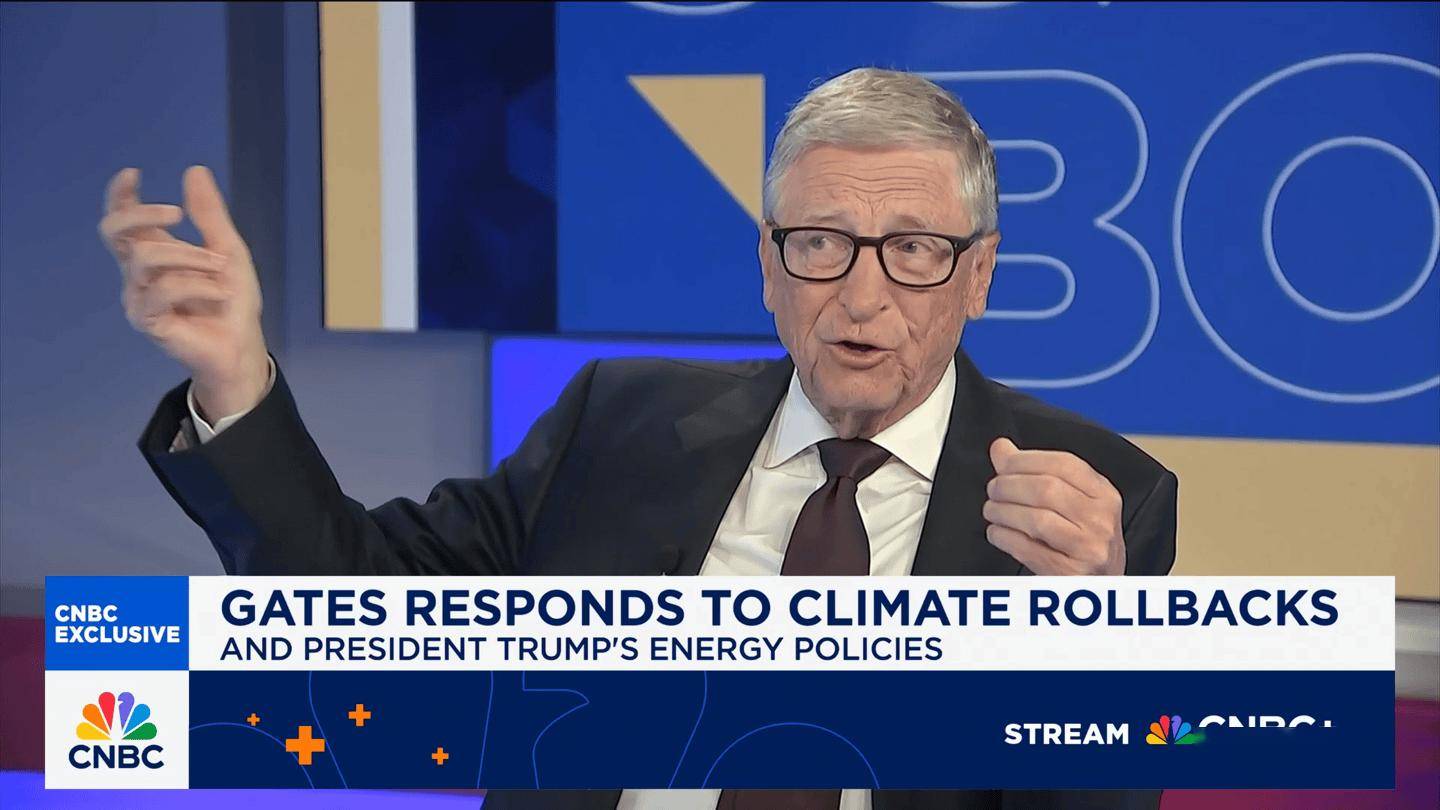
IT之家 10 月 31 日消息,微软联合创始人、前 CEO 比尔・盖茨本周(10 月 28 日)出席 CNBC 电视台《Squawk Box》节目,与主持人对谈 AI 行业目前的 现状,并预测未来 AI 行业将出现"泡沫破裂"。 IT之家注:互联网泡沫指的是 1995 年-2002 年前后,全球互联网行业发展初期出现的一场投机潮,当时人们对"互联网改变世界"展现巨大期待,大量资金疯 狂涌入网络公司,甚至许多资金流向了没有盈利能力的骗子企业。 最终这场泡沫在 2000 年 3 月 10 日达到顶峰,纳斯达克指数达到 5048 点,但从 4 月开始科技股票就大幅下跌,逐步导致市场信心崩溃,引发大量互联网公 司破产,最终纳指在 2002 年 10 月跌至 1100 点左右,不过这场泡沫也淘汰掉了许多不良商业模式,留下了亚马逊、谷歌、eBay 等真正能赚钱的公司。 他对"互联网泡沫"破裂时的景象回忆道:"最终整个行业发生了具有深远意义的事件(指 2002 年纳指跌至 1100 点左右),世界变得完全不同。一些公司最 终在泡沫破裂时站稳了脚跟,但大多数公司只是跟风投机,消耗资本最终倒闭"。 盖茨预测道,一些投资数十亿 ...
Azure加速在望,微软(MSFT.US)AI布局持续推进,华尔街建议逢低买入
智通财经网· 2025-10-31 09:54
微软首席财务官艾米·胡德在财报电话会议上表示:"Azure AI服务收入大体符合预期,本季度即便我们 继续上线更多容量,各工作负载的需求仍超过供应。" 摩根大通也重申"增持"评级,并将目标价从565美元小幅上调至575美元。由马克·墨菲领衔的摩根大通 分析师在周四报告中表示:"我们的感觉是,部分投资者或许过于乐观,原本期待Azure极高的增速能够 延续,并可能预期Q1 Azure固定汇率增长达40-41%,并且/或认为FQ2同比基数较低可能为更强劲的 Azure指引铺路。" 微软(MSFT.US)连续第二个季度实现同比营收增长逾18%,分析师指出,公司持续扩建人工智能算力, 正成为Azure增速加快的信号。在这家科技巨头公布2026财年第一季财报后,几乎所有主要金融机构均 重申"增持"或"买入"评级,并将任何回调视为买入机会。 其中,摩根士丹利重申对微软的"增持"评级,并将目标价从625美元上调至650美元。大摩分析师基思· 韦斯团队在周四投资者报告中写道:"商业预订量同比增长111%、RPO增长51%,凸显需求强劲;Azure 固定汇率增速39%,高于公司指引的37%,但略低于买方40%的预期。然而,在供应 ...
Evercore ISI上调微软目标价至640美元
Ge Long Hui· 2025-10-31 09:41
Core Viewpoint - Evercore ISI has raised Microsoft's target price from $625 to $640 while maintaining an "Outperform" rating [1] Group 1 - The target price adjustment reflects a positive outlook on Microsoft's performance in the market [1] - The "Outperform" rating indicates confidence in Microsoft's ability to exceed market expectations [1]
微软财报后下跌?大摩:公司增长在加速啊,市场搞错了重点
Hua Er Jie Jian Wen· 2025-10-31 03:51
Core Viewpoint - Microsoft’s stock price unexpectedly dropped after the release of its Q1 2026 financial report, but Morgan Stanley analysts argue that the market misinterpreted the results, overlooking significant growth acceleration signals [1][2]. Financial Performance - Commercial bookings surged by 111% year-over-year, driven by large contracts with OpenAI and several Azure deals exceeding $100 million, excluding a newly announced $250 billion contract with OpenAI [4]. - Current remaining performance obligations (cRPO) grew from 22% to 35% year-over-year, reaching $157 billion, indicating strong future revenue growth potential [4]. - Total remaining performance obligations (RPO) increased by 51% to approximately $400 billion [4]. - The company reported an earnings per share (EPS) of $3.72, slightly above market expectations, but excluding a $4 billion loss from OpenAI equity investments, the adjusted EPS would be $4.13, reflecting a 21% year-over-year growth [9]. Profitability Metrics - Gross margin reached 69.0%, exceeding market expectations by 130 basis points, while operating margin stood at 48.9%, also surpassing expectations by 230 basis points [6]. - Free cash flow increased by 33% to $25.7 billion, despite a 30% rise in capital expenditures [7]. Market Position and Future Outlook - Morgan Stanley maintains an "Overweight" rating on Microsoft, raising the target price from $625 to $650, emphasizing the company’s leadership in AI and cloud computing [2][8]. - The report highlights that the market's negative reaction to Azure's 39% growth, which was below some investors' expectations, is a misinterpretation, as demand continues to outpace supply [9]. - Microsoft is positioned at the core of major software demand trends, including cloud computing, AI, and digital transformation, presenting a buying opportunity for long-term investors [8].

大行评级丨花旗:微软现财年开局强劲 予其“买入”评级及目标价682美元
Ge Long Hui· 2025-10-31 03:13
Core Viewpoint - Microsoft has shown a strong start in the current fiscal year, with Azure cloud service revenue increasing by 39% year-over-year at constant currency, slightly below the market's high expectations of 40% [1] Group 1: Financial Performance - Commercial bookings have surged by 111% year-over-year, benefiting from additional commitments from OpenAI and strong capital expenditure guidance [1] - Overall revenue exceeded expectations, with the productivity and business processes segment outperforming by 2% [1] - Personal computing revenue, driven by Windows OEM, increased by 18% year-over-year, significantly surpassing expectations [1] Group 2: Cost and Profitability - Efficiency and return on investment showed positive trends, with both sales costs and operating expenses falling below the lower guidance limit [1] - Earnings before interest and taxes (EBIT) exceeded expectations by 8% [1] - Earnings per share growth was moderate due to OpenAI-related losses amounting to $3.7 billion, compared to the guidance of $1.3 billion [1] Group 3: Analyst Rating - Citi has assigned a "Buy" rating to Microsoft with a target price of $682 [1]
微软 - 2026 财年第一季度业绩 —— 投资者是否错失重点
2025-10-31 01:53
Summary of Microsoft 1Q26 Earnings Call Company Overview - **Company**: Microsoft (MSFT.O) - **Market Cap**: $4,043,212 million - **Stock Price (as of Oct 29, 2025)**: $541.55 - **Price Target**: Increased from $625.00 to $650.00 Key Industry Insights - **Industry**: Software - **Trends**: Strong positioning in key areas such as GenAI, Security, Digital Transformation, Cloud migrations, and Data Warehousing & Analytics - **CIO Behavior**: Increasing consolidation of IT spending with fewer vendors due to tight budgets Core Financial Highlights - **Revenue Performance**: Revenues exceeded expectations by approximately $2 billion, or nearly 3% above consensus - **Commercial Bookings Growth**: Grew 111% YoY in constant currency, driven by significant OpenAI contracts - **Current Remaining Performance Obligations (cRPO)**: Increased by 35% YoY to $157 billion, indicating strong future revenue potential - **Gross Margins**: 69.0%, 130 basis points ahead of consensus - **Operating Margins**: 48.9%, 230 basis points ahead of consensus - **Earnings Per Share (EPS)**: Reported at $3.72, beating consensus by $0.04, with a 13% YoY growth Azure Performance - **Azure Growth**: 39% YoY in constant currency, slightly below expectations of 40% - **Supply Constraints**: Azure growth limited by supply issues, with demand exceeding supply across workloads - **Future Guidance**: Azure growth expected to be around 37% in the next quarter Capital Expenditure and Future Outlook - **Capex**: Total capex of $34.9 billion in Q1, up 75% YoY, with expectations for FY26 capex growth to exceed 58% YoY, implying at least $140 billion in total capex - **Free Cash Flow**: Increased by 33% YoY to $25.7 billion despite a 30% growth in cash capex - **Q2 Revenue Guidance**: Expected between $79.5 billion and $80.6 billion, in line with consensus Risks and Considerations - **OpenAI Losses**: Significant losses attributed to OpenAI, totaling over $4 billion in the quarter, impacting EPS - **Investor Sentiment**: After-hours stock price pulled back ~4% due to concerns over Azure growth and OpenAI losses Conclusion - **Investment Thesis**: Microsoft shows strong demand trends, expanding operating margins, and a solid position in the software industry, particularly in AI and cloud services - **Recommendation**: Remains a top pick with aggressive buying suggested on pullbacks, as the durability of earnings growth and AI leadership are not fully priced in [1][3][10][18][24]
微软CEO再发表暴论:游戏业界最好的创新就是赚钱!
Sou Hu Cai Jing· 2025-10-30 21:48
Core Insights - Microsoft CEO Satya Nadella emphasized the need for continuous innovation in production methods, product content, distribution, and economic models within the gaming industry [1][3] - Nadella highlighted that the competition in the gaming sector extends beyond other games to include short video content [3] - The company is pursuing a "multi-platform" strategy to expand its gaming reach, aiming for a presence similar to its Office business [5] Group 1 - Nadella mentioned the importance of maintaining good profit margins as a means to achieve innovation [1] - The interview focused heavily on AI topics, with Nadella repeatedly stating that Microsoft's Azure servers are highly profitable, despite a recent outage [3] - No specific ideas or examples were provided regarding innovation in gaming, although Nadella expressed confidence in the need for new business models [3] Group 2 - The relationship between PC and console gaming was discussed, with Nadella asserting that they should not be viewed as entirely separate product lines [5] - The next generation of Xbox and PC platforms is expected to see more innovation at the system level [5]

砸锅卖铁搞AI,AI终于赚钱了,谷歌大涨16%,微软狂飙18%
3 6 Ke· 2025-10-30 12:43
Group 1 - Alphabet achieved a milestone by surpassing $100 billion in quarterly revenue for the first time, reaching $102.3 billion, a 16% year-over-year increase, driven by strong performance in cloud computing, AI, advertising, and subscription services [2][4][14] - Google Cloud revenue grew by 34% year-over-year to $15.2 billion, with over 70% of existing customers utilizing AI products, indicating robust demand for AI solutions [10][14] - Alphabet's net profit increased by 33% to $35 billion, with earnings per share rising by 35% to $2.87, reflecting strong operational performance despite significant AI-related expenditures [17][20] Group 2 - Microsoft reported a quarterly revenue of $77.7 billion, an 18% year-over-year increase, with intelligent cloud revenue exceeding $30.9 billion, driven by a 40% growth in Azure and other cloud services [6][23][26] - The net profit for Microsoft was $27.7 billion, a 12% increase year-over-year, although impacted by higher expenditures related to AI infrastructure and investments [28][34] - Microsoft plans to increase its AI capacity by 80% this year, with significant capital expenditures aimed at expanding data center capabilities, highlighting its commitment to AI and cloud integration [32][34] Group 3 - Both Alphabet and Microsoft are significantly increasing their capital expenditures towards AI infrastructure, with Alphabet projecting between $91 billion and $93 billion for 2025, and Microsoft planning to nearly double its data center capacity [20][36] - The financial results from both companies underscore the growing importance of AI as a key driver of revenue and profitability, marking a shift towards a new economic paradigm driven by intelligence and computing power [36]