
JD(09618)

Search documents
钱再多有什么用?身家620亿的刘强东,给所有企业家上了生动一课
Sou Hu Cai Jing· 2026-02-02 07:02
Core Viewpoint - Liu Qiangdong, the founder of JD.com, emphasizes the importance of prioritizing employees and community over mere profit, showcasing a model of corporate responsibility and gratitude [1][3]. Group 1: Corporate Philosophy and Employee Relations - JD.com operates under the belief that success cannot be achieved by one person alone, but rather through teamwork and shared benefits [19][23]. - Liu Qiangdong has implemented comprehensive employee benefits, including housing, social insurance, and holiday gifts, which are often unattainable for many in smaller cities [25][27]. - The company maintains a policy of providing equal benefits to all employees, regardless of their location or educational background, fostering a sense of loyalty and commitment [27][29]. Group 2: Community Engagement and Philanthropy - Liu Qiangdong has consistently given back to his hometown, providing financial support and essential goods to villagers, demonstrating a commitment to social responsibility [9][11]. - Investments in local infrastructure, such as logistics centers, hospitals, and schools, aim to improve the quality of life for residents and create job opportunities [13][15]. Group 3: Business Expansion and Strategy - JD.com has recently entered the competitive food delivery market, challenging established players like Meituan and Ele.me by leveraging aggressive marketing strategies and substantial financial incentives for merchants and consumers [31][35]. - The company has adopted a high-recruitment strategy for delivery personnel, offering flexible working conditions and competitive pay to attract a diverse workforce [39][41]. - Liu Qiangdong's hands-on approach, including personally experiencing the delivery process, has led to enhanced employee welfare and operational insights [39][41].



京东牵头制定洗碗机容积新标准,推动行业从“营销概念”转向“用户体验”
Zhong Guo Jing Ying Bao· 2026-02-02 05:36
Group 1 - The core viewpoint of the article is the launch of a new standard for the dishwasher industry by JD.com in collaboration with the China Standardization Association and leading brands like Siemens, Midea, and Haier, aimed at providing clearer purchasing guidelines for consumers [1][2] - The new standard replaces the vague "set count" concept with a clear labeling system based on "internal volume (liters) + key installation dimensions," addressing current market pain points and enhancing consumer decision-making [1] - Data indicates that by January 2026, the dishwasher industry is expected to see a 69% year-on-year increase in transaction volume, with the number of brands rising to 101 and related search queries exceeding 3 million [1] Group 2 - The new standard establishes a three-tier grading system based on "effective volume rate R (= volume ÷ total volume)," with levels defined as: Level 1 (R≥60%), Level 2 (58%≤R<60%), and Level 3 (R<58%) [1] - JD.com will provide exclusive labeling for products with an R value exceeding 60%, helping consumers easily identify models with higher space utilization [1] - To reinforce the implementation of the new standard, JD.com has launched a service enhancement during the New Year shopping festival, offering a "5-year replacement at 50% off" guarantee on selected kitchen appliances, with some products eligible for discounts up to 1,500 yuan after national subsidies [2]
京东与英中贸易协会达成战略合作
Bei Jing Shang Bao· 2026-02-02 03:25
Core Insights - JD Group has signed a strategic cooperation agreement with the China-Britain Business Council (CBBC) to enhance collaboration with local quality enterprises in the UK [1] - JD Global Purchase will provide comprehensive support for British brands, including market insights, customized operational services, and access to JD's e-commerce ecosystem and logistics network [1] - JD's European online retail platform, Joybuy, is set to launch in March this year, with trial operations already achieving same-day and next-day delivery in multiple UK cities [1] - JD Global Purchase has announced a "100 Billion, 1,000 Products New Growth Plan," aiming to introduce 1,000 overseas new brands and achieve a sales growth of 10 billion yuan over the next three years by July 2025 [1]
李亚鹏6小时直播销售额达1.6亿;月之暗面公开喊话百度;黄仁勋否认对OpenAI不满,透露将巨额投资;国际巨头被曝拟裁员3万人...
Sou Hu Cai Jing· 2026-02-02 01:26
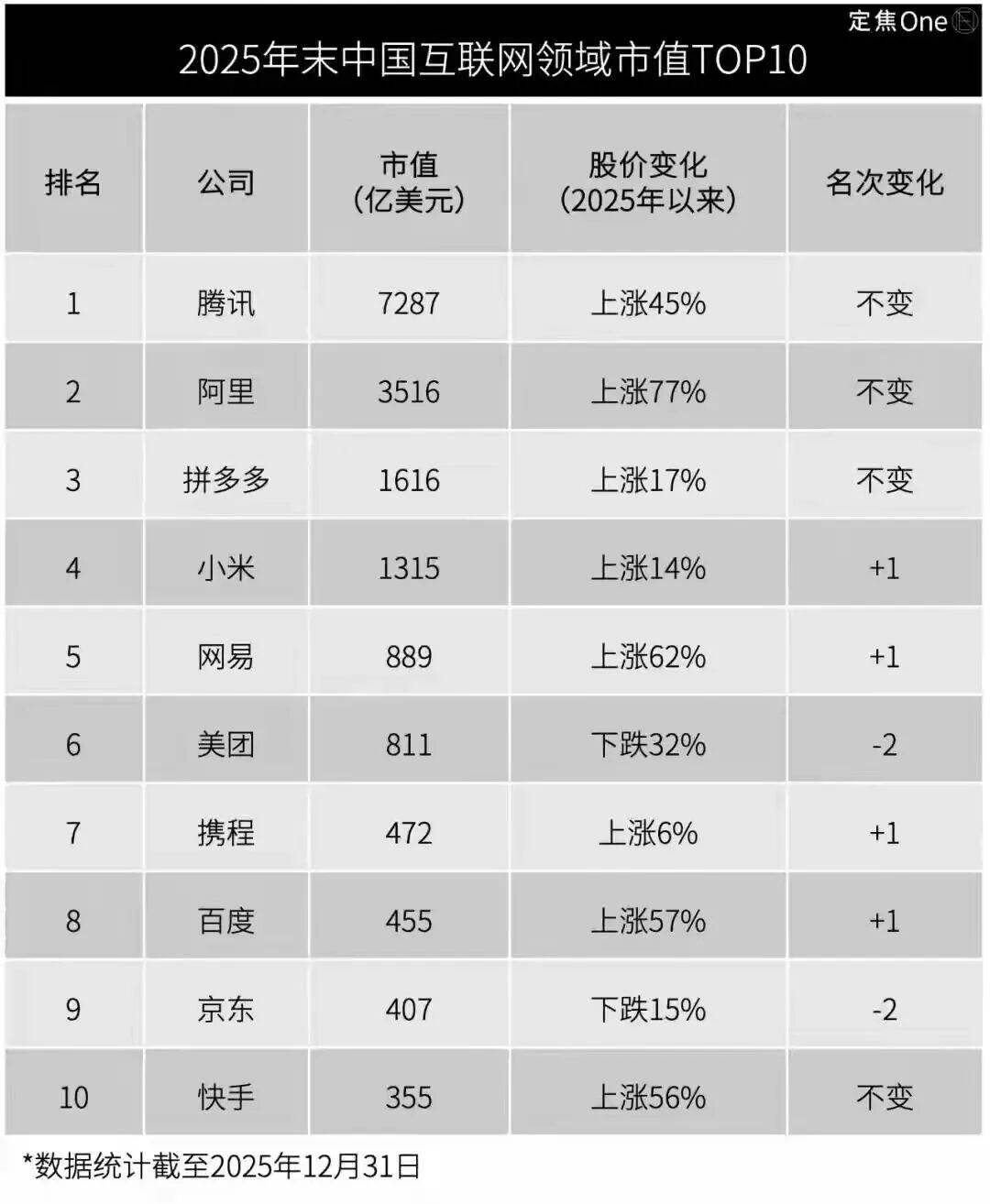
Group 1: Market Capitalization of Chinese Internet Companies - Tencent leads the market with a valuation of $72.87 billion, experiencing a 45% increase since the beginning of 2025 [1] - Alibaba follows with a market cap of $35.16 billion, showing a 77% rise [1] - Pinduoduo ranks third with a valuation of $16.16 billion, up by 17% [1] - Xiaomi's market cap is $13.15 billion, increasing by 14% [1] - NetEase has a valuation of $8.89 billion, with a significant 62% increase [1] - Meituan's market cap is $8.11 billion, but it has seen a decline of 32% [1] - Ctrip's valuation stands at $4.72 billion, with a modest increase of 6% [1] - Baidu's market cap is $4.55 billion, reflecting a 57% rise [1] - JD.com has a valuation of $4.07 billion, down by 15% [1] - Zhongren ranks last with a market cap of $3.55 billion, with a drastic drop of 245,606% [1] Group 2: Tax Policy Changes - The Ministry of Finance and the State Administration of Taxation announced a new VAT exemption policy for small-scale taxpayers, effective from January 1, 2026 [3] - The new threshold for monthly sales is set at 100,000 yuan, and for quarterly sales at 300,000 yuan [3] - For single transactions, the threshold is 1,000 yuan, applicable on a daily basis for multiple transactions [3] Group 3: AI and Technology Developments - Nvidia's CEO Jensen Huang denied any dissatisfaction with OpenAI and announced plans for a significant investment in the company [5] - Apple is reported to have acquired the Israeli company Q.ai for approximately $2 billion, marking its second-largest acquisition in history [5] - Waymo is seeking to raise about $16 billion at a valuation close to $110 billion, with Alphabet expected to contribute $13 billion [18] Group 4: Corporate Actions and Market Reactions - Oracle is reportedly considering laying off 30,000 employees due to financial pressures from AI infrastructure investments [11] - The company is also evaluating the sale of its healthcare software division, Cerner, acquired for $28.3 billion [11] - Recent fluctuations in gold prices have led to increased consumer activity in gold purchases in Shenzhen [3]





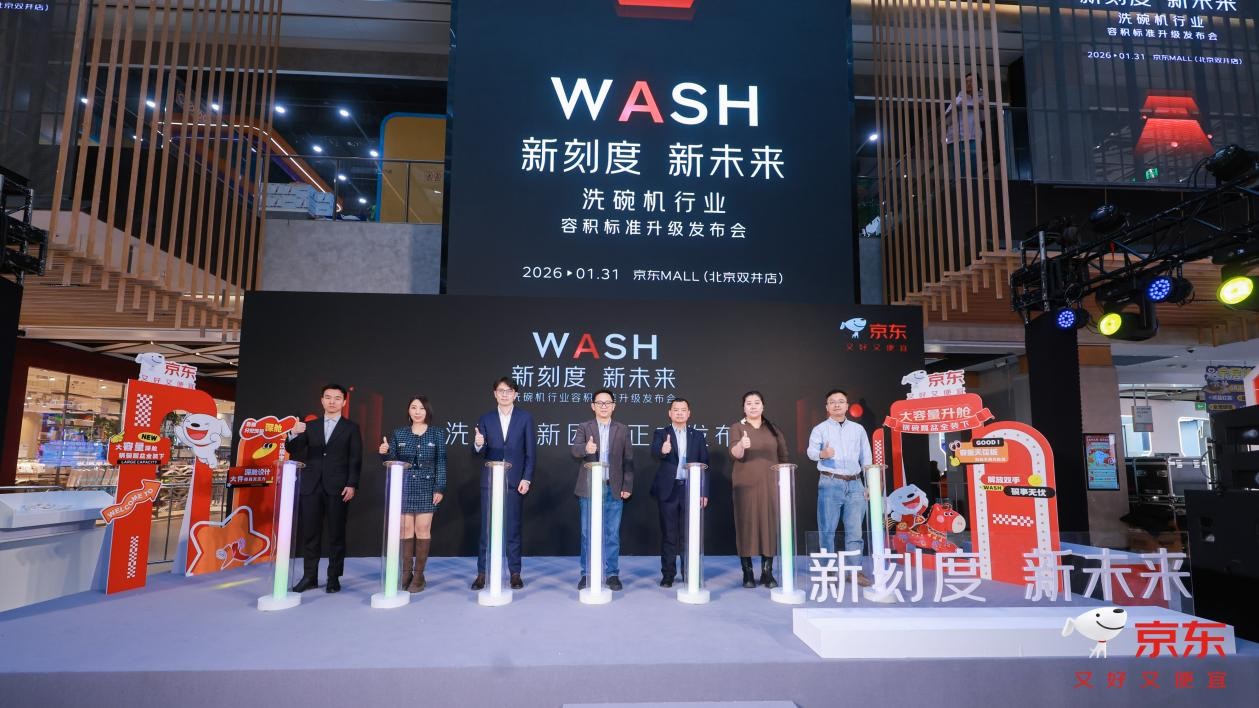
京东联合多方发布洗碗机容积新标准 为消费者提供选购依据
Zhong Jin Zai Xian· 2026-02-02 00:36
Core Viewpoint - The recent launch of the new dishwasher capacity standard by JD aims to enhance industry norms and provide clearer purchasing guidelines for consumers, addressing the confusion caused by vague capacity parameters in the growing Chinese dishwasher market [1][9]. Industry Overview - The Chinese dishwasher market has seen significant growth, with a 69% year-on-year increase in transaction volume as of January 2026, and the number of brands rising to 101, a growth of 12 brands [3]. - Despite the market's expansion, issues such as misleading marketing and poor user experience persist, particularly regarding the effectiveness of cleaning and the confusion surrounding capacity measurements [5][6]. New Standards Implementation - JD, in collaboration with various industry leaders and standardization bodies, has introduced a new capacity standard that replaces the ambiguous "set number" concept with a more quantifiable system based on internal volume (liters) and key installation dimensions [9][11]. - The new standard categorizes dishwashers based on effective volume rate (R), with three levels defined: Level 1 (R≥60%), Level 2 (58%≤R<60%), and Level 3 (R<58%). Higher levels indicate better space utilization and cleaning capacity [11]. Consumer Focus - The new standards aim to align dishwasher designs with the needs of Chinese households, moving away from Western-centric designs that do not accommodate common Chinese dishware [8][12]. - JD's initiative is expected to enhance consumer confidence by providing clear and reliable information, allowing for informed purchasing decisions [16][19]. Service Enhancements - JD has introduced a "5-year replacement at 50% off" service for certain kitchen appliances, ensuring that consumers have a safety net for performance issues or accidental damage [17]. - The service is part of a broader strategy to improve customer experience and satisfaction, making it easier for consumers to upgrade their kitchen appliances [18]. Conclusion - JD's efforts to standardize dishwasher capacity and enhance consumer services are set to transform the market, making dishwashers more accessible and suitable for Chinese households, ultimately promoting a more efficient and enjoyable kitchen experience [19].
互联网传媒行业AI周度跟踪:Clawdbot现象级热度强化Agent产业趋势,谷歌推出世界模型Genie3-20260201
GF SECURITIES· 2026-02-01 10:11
Core Insights - The report emphasizes the strong potential of the AI industry and high-growth segments such as gaming, recommending continued investment in these areas [2][13][16]. Group 1: Internet Sector - E-commerce: Alibaba is catalyzing AI-related developments, introducing the "Tongyun Ge" concept, which integrates large models, cloud computing, and chips as a key support for its technology strategy [2][16]. - Social Entertainment Media: Bilibili and Tencent are expected to see strong advertising momentum, with Tencent's gaming fundamentals improving and Bilibili preparing to release new games [2][17]. - Internet Healthcare: JD Health and Alibaba Health are leveraging their platform advantages to deepen collaborations with upstream pharmaceutical manufacturers, leading to sustained revenue and profit growth [2][17]. - Short Video: Kuaishou is maintaining a stable core business, with AI technology enhancing user engagement and commercial conversion [2][18]. - Trendy Toys + IP: Pop Mart announced the establishment of its European headquarters in London, aiming to expand its market presence [2][19]. - Long Video: Multiple platforms are releasing quality series, suggesting investment opportunities in iQIYI and Mango TV [2][20]. - Music Streaming: Tencent Music and NetEase Cloud Music show stable performance, although concerns about competition have led to valuation adjustments [2][20]. Group 2: Media Sector - Gaming: The report maintains a positive outlook on the gaming sector, with expectations of continued industry prosperity into 2026. Key recommendations include Tencent, NetEase, and companies with strong product pipelines like Century Huatong and Giant Network [2][21]. - Advertising: Adjustments in the advertising landscape are not expected to impact the operational trends of Focus Media, with increased investment from internet advertisers anticipated [2][22]. - Publishing: Some publishing companies are facing challenges due to educational reforms, but firms with strong fundamentals and high dividend yields are recommended [2][22]. - Film and Television: Attention is drawn to companies with robust project pipelines, such as Huace Film & TV and Mango TV, as well as cinema chains like Wanda Film and Hengdian Film [2][22]. - IP Derivatives: Companies involved in IP derivatives are highlighted for potential investment, including Huayi Brothers and Shanghai Film Group [2][22]. Group 3: AI Developments - The report notes the rapid advancement of AI applications, particularly with the emergence of Clawdbot, which has gained significant attention in the industry [2][23]. - Recommendations include major cloud players like Google and Amazon, as well as domestic giants like Alibaba and Tencent, focusing on their self-developed models and ecosystems [2][23]. - Specific applications in AI across various sectors are suggested for investment, including AI in gaming, marketing, and healthcare [2][23].

北京线上国补资格直接可领 来京东足不出户换新机
Zheng Quan Ri Bao Wang· 2026-02-01 09:54
Group 1 - The online national subsidy qualifications in Beijing can now be easily obtained for various products such as smartphones, tablets, computers, refrigerators, and washing machines without the need for competitive speed [1] - Many consumers have shared their successful application screenshots on social media, expressing relief at the ease of obtaining subsidies compared to previous attempts [1] - There is a sense of urgency among consumers to bind their subsidy qualifications on JD.com and complete purchases before the qualifications expire, especially ahead of the Spring Festival [1] Group 2 - Consumers in Beijing can access the national subsidy by searching for "京通" on WeChat or Baidu, completing real-name verification, and selecting the appropriate subsidy voucher for either home appliances or digital products [2] - After obtaining the subsidy code, consumers can use the JD.com app or WeChat to bind the code and browse eligible products, with the requirement that delivery addresses must be within Beijing [2] - JD.com offers additional services such as old appliance recycling subsidies, integrated delivery and installation services, and a "three-free four-unlimited" service to enhance the consumer experience [2]
为何突然大动作?京东9588亿营收!刘强东加24薪后,深夜再官宣
商业洞察· 2026-02-01 09:36
Core Viewpoint - JD.com has taken unexpected strategic moves in 2025, including entering the food delivery market and investing heavily in real estate, while reporting a revenue growth of 14.9% year-on-year in Q3 2025, reaching 299.1 billion RMB [1] Group 1: Financial Performance - JD.com reported a total revenue of 958.8 billion RMB for the first three quarters of 2025 [1] - The company achieved a net profit of 7.14 billion RMB in 2025, a significant increase from 2.44 billion RMB in 2023, indicating a nearly fourfold growth in profit over two years [8] Group 2: Employee Compensation - In 2023, JD.com raised its employee salaries to an average of 16 months' salary, with plans to increase this to 20 months' salary for all employees within two years [3] - By January 2026, JD.com’s total employee count reached approximately 900,000, with total employee expenses for 2024 amounting to 116.1 billion RMB [3] Group 3: Market Position and Consumer Behavior - A report indicated that nearly 80% of online shopping among households with annual incomes over 500,000 RMB occurs on JD.com [5] - JD.com has established a strong foothold in the health sector, with total revenue from JD Health projected to reach 71.6 billion RMB by 2025 [6] Group 4: Strategic Initiatives - JD.com plans to invest 1 billion RMB over the next three years to open 10,000 self-operated pharmacies, enhancing its presence in the health consumption market [8] - The company has focused on its core business and logistics capabilities, acquiring all remaining shares of Debon Logistics to strengthen its logistics network [10][12] Group 5: Logistics Development - JD.com has developed a comprehensive logistics strategy, integrating Dada for instant delivery, Debon for large and less-than-truckload deliveries, and Kuaixun for high-end time-sensitive deliveries [12] - The synergy from these logistics systems is expected to reshape the logistics market and enhance JD.com's operational efficiency [12]

京东推年夜饭上门套餐,含劲牌/牛栏山/青啤/燕京等品牌产品
Xin Lang Cai Jing· 2026-02-01 04:53
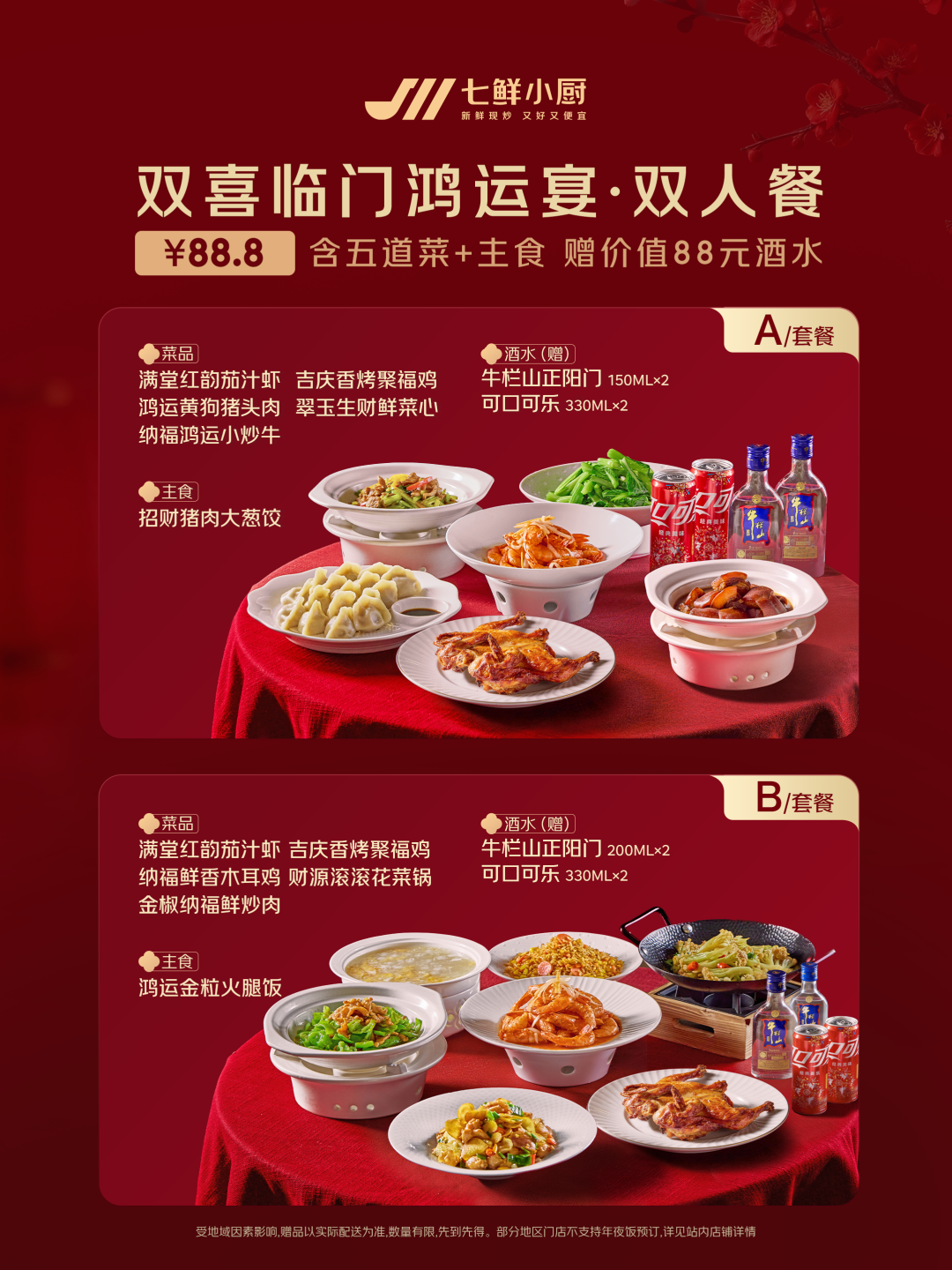
Group 1 - JD.com announced that its "Qixian Xiaochu" will offer New Year's Eve dinner package reservations from February 2 to February 14, with delivery on February 16, catering to different group sizes of 2-6 people [1][4][7] - The company will also hold a "Order Gifts" promotion, where customers can receive brand liquor worth up to 168 yuan with their meal orders, enhancing both cost-effectiveness and the festive atmosphere [1][4] - The dinner packages are priced at 88.8 yuan for a 2-person A/B package, 188.8 yuan for a 3-4 person A/B package, and 288.8 yuan for a 5-6 person A/B package, each with additional complimentary items [1][4][7] Group 2 - From February 2 to February 11, customers purchasing the 288.8 yuan New Year's Eve dinner package will receive an extra gift worth over 100 yuan, specifically a Qingdao craft beer gift box [7] - JD's Qixian Xiaochu is a quality catering platform launched by JD Group, focusing on an "online delivery + self-pickup" model, leveraging JD's supply chain for direct sourcing, standardized processing, and cold chain delivery to reduce costs while ensuring quality [7] - The company plans to open 10,000 stores within three years, aiming to reshape the food delivery supply chain and promote high-quality, transparent development in the catering industry [7]
京东联合多方发布洗碗机容积新标准
Xin Lang Cai Jing· 2026-02-01 04:30
新浪科技讯 2月1日午间消息,近日,京东联合中国标准化协会、中家院(北京)检测认证有限公司等 权威机构,西门子、美的、海尔、方太、老板等头部品牌共同发布洗碗机行业容积新标准。 据介绍,新标准彻底摒弃了模糊的"套数"概念,构建起以"内部容积(升)+关键安装尺寸"为表述的直 观、可量化、可对比的全新标识体系,为消费者提供了明确的选购依据,让容量匹配更精准、安装规划 更确定、购买决策更透明。 在具体规则上,新标准以有效容积率R(=容积÷体积)作为核心衡量指标,并形成分级体系:一级 (R≥60%)、二级(58%≤R<60%)、三级(R<58%)。等级越高,意味着在相同外部体积下可用空 间占比越大,也就更"能装、能洗",更利于一次多洗、少分批。同时,对有效容积率超过60%的产品, 为让标准真正赋能消费决策,京东将在商品页面为有效容积率超过60% 的优质产品打上专属标识。 京东家电家居厨卫大家电负责人表示,此次标准升级的目标,是让容量表达从"概念化"走向"可对照、 可验证",让消费者选购不再靠猜,为购买决策提供透明、可靠且易懂的统一标尺;对行业而言,这也 标志着竞争将更聚焦真实用户体验,推动厂商持续优化内部结构设计与装载 ...