
NONGFU SPRING(09633)

Search documents
恒生指数收跌1.27% 李宁、阿里健康、泡泡玛特跌超4%
Jin Tou Wang· 2025-08-28 08:59
Market Overview - The Hang Seng Index closed at 25,201.76 points, down 1.27% [1] - The Hang Seng Tech Index closed at 5,697.53 points, down 1.47% [1] - The China Enterprises Index closed at 9,020.26 points, down 1.40% [1] - The Red Chip Index closed at 4,273.29 points, down 1.62% [1] Top Gainers - Nongfu Spring rose over 7% to 50.250 HKD [1][2] - NIO-SW increased over 4% to 51.700 HKD [1][2] - Shanghai Fudan and WanGuo Data-SW both rose over 1% [1][2] Top Losers - Beike-W fell over 6% to 47.200 HKD [1][2] - Naixue's Tea and Stone Pharmaceutical Group both dropped over 5% [1][2] - Li Ning, Alibaba Health, and Pop Mart fell over 4% [1][2] - JD Logistics, Zhou Hei Ya, and Mengniu Dairy declined over 3% [1][2] - Other notable declines include Zhou Dafu, Dongfang Zhenxuan, and Haidilao, all down over 2% [1][2]



农夫山泉(09633):茶饮延续高增,经营质量优异
Guoxin Securities· 2025-08-28 08:56
Investment Rating - The investment rating for the company is "Outperform the Market" [6][4][18] Core Views - The company achieved a total revenue of 25.62 billion yuan in H1 2025, representing a year-on-year growth of 15.6%, and a net profit attributable to shareholders of 7.62 billion yuan, up 22.2% year-on-year [1][7] - The growth in revenue is driven by the recovery in packaged water sales, continued high growth in tea beverages, and strong performance in functional drinks and juices [2][8] - The company's gross profit margin improved to 60.3%, an increase of 1.5 percentage points, primarily due to lower raw material prices and increased production capacity utilization [3][9] Summary by Sections Financial Performance - In H1 2025, the revenue from water, tea, functional drinks, juices, and other beverages grew by 10.7%, 19.7%, 13.6%, 21.3%, and 14.8% respectively, with total revenues reaching 9.44 billion, 10.09 billion, 2.90 billion, 2.56 billion, and 0.63 billion yuan [2][8] - The net profit margin for H1 2025 was 29.7%, reflecting a 1.6 percentage point increase compared to the previous year [1][7] Cost and Efficiency - The company experienced a decrease in sales expense ratio by 2.8 percentage points due to lower advertising and promotional expenses, as well as reduced logistics costs [3][9] - The management expense ratio remained stable year-on-year, while other income as a percentage of revenue decreased by 1.5 percentage points due to lower interest income from deposits [3][9] Future Outlook - The company has revised its revenue forecasts for 2025-2027, expecting revenues of 50.53 billion, 57.28 billion, and 63.70 billion yuan, with year-on-year growth rates of 17.2%, 13.3%, and 11.2% respectively [4][16] - The projected net profits for the same period are 15.16 billion, 17.45 billion, and 19.60 billion yuan, with growth rates of 25.0%, 15.1%, and 12.3% [4][16]
里昂:升农夫山泉(09633)目标价至55港元 重申高度确信“跑赢大市”评级
Zhi Tong Cai Jing· 2025-08-28 08:09
Core Viewpoint - The report from Credit Lyonnais indicates that Nongfu Spring (09633) is expected to see accelerated revenue growth in the second half of the year, driven by a low base effect across all product categories and a recovery in market share within the bottled water segment [1] Group 1: Revenue Growth - Nongfu Spring's revenue is projected to grow by 25% year-on-year in the second half of the year, leading to an overall annual revenue increase of 20% to 51.6 billion RMB [1] - The bottled water market share recovery is expected to support a 22% year-on-year increase in bottled water revenue in the second half, improving from a low base in the second half of 2023 [1] Group 2: Profitability and Margins - The gross margin is anticipated to continue expanding in the second half, supported by lower raw material prices and reduced logistics costs, with a year-on-year improvement of 1.6 percentage points expected [1] - The net profit for the second half is forecasted to grow by 31%, with an annual net profit increase of 26% to 15.3 billion RMB [1] Group 3: Product and Market Expansion - The tea beverage segment is expected to accelerate with a 30% year-on-year growth in the second half, driven by sugar-free tea and new products like iced tea [1] - Strong momentum is also anticipated for juice and functional beverages, which are expected to maintain robust performance into the first half of 2025 [1] Group 4: Analyst Adjustments - Credit Lyonnais has raised its net profit forecasts for Nongfu Spring for 2025 to 2027 by 7% to 12% and increased the target price from 45 HKD to 55 HKD, reaffirming a strong buy rating [1]
里昂:升农夫山泉目标价至55港元 重申高度确信“跑赢大市”评级
Zhi Tong Cai Jing· 2025-08-28 08:04
Core Viewpoint - The report from Credit Lyonnais indicates that Nongfu Spring (09633) is expected to see accelerated revenue growth in the second half of this year, driven by low base effects across all product categories and a recovery in market share within the bottled water segment [1] Revenue Growth - Nongfu Spring's revenue is projected to grow by 25% year-on-year in the second half of the year, leading to an overall revenue increase of 20% year-on-year to 51.6 billion RMB for the full year [1] - The bottled water market share is expected to continue its recovery, supporting a 22% year-on-year growth in bottled water revenue in the second half, improving from an 8% decline compared to the second half of 2023 [1] Profitability - The gross margin is anticipated to expand in the second half, supported by lower raw material prices and reduced logistics costs, with a year-on-year improvement of 1.6 percentage points expected [1] - The net profit for the second half is forecasted to grow by 31% year-on-year, with an overall net profit increase of 26% year-on-year to 15.3 billion RMB for the full year [1] Product and Channel Expansion - Nongfu Spring's strong product quality is believed to support its expansion into new products and channels, with net profit forecasts for 2025 to 2027 being raised by 7% to 12% [1] - The tea beverage segment is expected to accelerate with a 30% year-on-year growth in the second half, driven by sugar-free tea and new products like iced tea [1]
市场重新审视钟睒睒:农夫山泉增收更增利
Sou Hu Cai Jing· 2025-08-28 05:21
Core Viewpoint - The beverage giant Nongfu Spring is experiencing a recovery in performance, with significant structural changes in its business model, as evidenced by double-digit growth in both revenue and net profit in the first half of 2025 [3][4]. Financial Performance - For the first half of 2025, Nongfu Spring reported revenue of 25.622 billion yuan, a year-on-year increase of 15.6%, and a net profit of 7.622 billion yuan, up 22.1% [3]. - The bottled water segment generated revenue of 9.44 billion yuan, reflecting a 10.7% year-on-year growth, although it has not yet returned to pre-crisis levels [3][4]. Market Sentiment and Stock Performance - Following the controversy surrounding Wahaha in mid-July, Nongfu Spring's reputation has improved, leading to a significant recovery in stock price, with a cumulative increase of over 20% in two weeks and a market capitalization growth of over 82 billion HKD [4][5]. - Since September 2024, the stock price has more than doubled, recovering the 250 billion HKD market value lost during the previous year's crisis [4]. Business Structure and Product Segmentation - Nongfu Spring's product categories include bottled water, tea beverages, functional drinks, fruit juices, and agricultural products, with bottled water historically being the core business [7]. - The market share for bottled water remains strong at 23.6%, despite a decline in revenue during the 2024 crisis [8][10]. - The tea beverage segment, led by the "Oriental Leaf" brand, has become a significant growth driver, with revenue reaching 10.089 billion yuan in the first half of 2025, a 19.7% increase [9][11]. Market Trends and Consumer Preferences - The overall beverage industry in China is experiencing growth, driven by trends towards health and natural products, with consumers increasingly favoring transparent and healthy ingredients [11]. - The "Oriental Leaf" brand is expected to continue its growth trajectory, potentially reaching a revenue level of 20 billion yuan by 2026 [11]. Distribution and Supply Chain - Nongfu Spring has demonstrated resilience in its distribution channels, with reports indicating that the brand's sales have remained stable despite previous controversies [13]. - The company is enhancing its supply chain and expanding into new markets, with new factories being built in various provinces to support its growth strategy [16].


中金:维持农夫山泉(09633)跑赢行业评级 目标价54港元
智通财经网· 2025-08-28 03:55
Core Viewpoint - The report from CICC maintains the profit forecast for Nongfu Spring (09633) for 2025/2026, with a target price of HKD 54, indicating a potential upside of 7% based on the projected P/E ratios of 37/33 times for 2025/2026 [1] Group 1: Financial Performance - In the first half of 2025, the company reported revenue of RMB 25.6 billion, a year-on-year increase of 15.6%, and a net profit of RMB 7.6 billion, up 22%, aligning with CICC's expectations [1] - The beverage business showed strong performance with significant growth across various categories: water, tea, juice, and functional drinks saw year-on-year increases of 10.7%, 19.7%, 21.3%, and 13.6% respectively, with all categories achieving double-digit growth [2] Group 2: Cost and Profitability - The gross margin improved by 1.5 percentage points year-on-year to 60.3% in the first half of 2025, benefiting from lower prices of key raw materials like PET and improved product mix [3] - The net profit margin reached a historical high of 29.7%, despite a donation and foreign exchange loss impacting net profit by RMB 110-120 million, showcasing the company's strong cost control and management efficiency [3] Group 3: Future Outlook - The company is expected to accelerate revenue growth in the second half of 2025 due to a lower base and ongoing product momentum, with profit margins likely to benefit from the continued decline in raw material prices [4] - The company is expanding its overseas business, with multiple products launched in the Hong Kong market, and is committed to developing natural and healthy products, which aligns with current consumer trends favoring sugar-free and health-conscious options [4]
中金:维持农夫山泉跑赢行业评级 目标价54港元
Zhi Tong Cai Jing· 2025-08-28 03:54
Group 1 - The core viewpoint of the report maintains the profit forecast for Nongfu Spring (09633) for 2025/2026, with a target price of HKD 54, indicating a potential upside of 7% [1] - The company reported a revenue of 25.6 billion yuan for 1H25, representing a year-on-year increase of 15.6%, and a net profit of 7.6 billion yuan, up 22% year-on-year, aligning with expectations [1] Group 2 - In 1H25, the beverage business showed strong performance with significant revenue growth across various categories: water, tea, juice, and functional drinks increased by 10.7%, 19.7%, 21.3%, and 13.6% respectively, all achieving double-digit year-on-year growth [2] - The market share for packaged water improved by 2.5 percentage points year-on-year, driven by a strategic focus on red bottle water and increased distribution [2] Group 3 - The gross profit margin increased by 1.5 percentage points to 60.3% in 1H25, benefiting from lower prices of key raw materials and improved product mix [3] - The net profit margin reached a historical high of 29.7%, despite some losses from donations and exchange rates, showcasing strong cost control and management efficiency [3] Group 4 - Revenue growth is expected to accelerate in the second half of the year due to a lower base and ongoing product momentum, with continued benefits from declining raw material prices [4] - The company is expanding its overseas business, with multiple products launched in the Hong Kong market, and is committed to developing natural and healthy products, enhancing its competitive advantage in the current health-conscious consumer trend [4]
被网曝又平反,可农夫山泉失去了10亿元生意
3 6 Ke· 2025-08-28 03:20
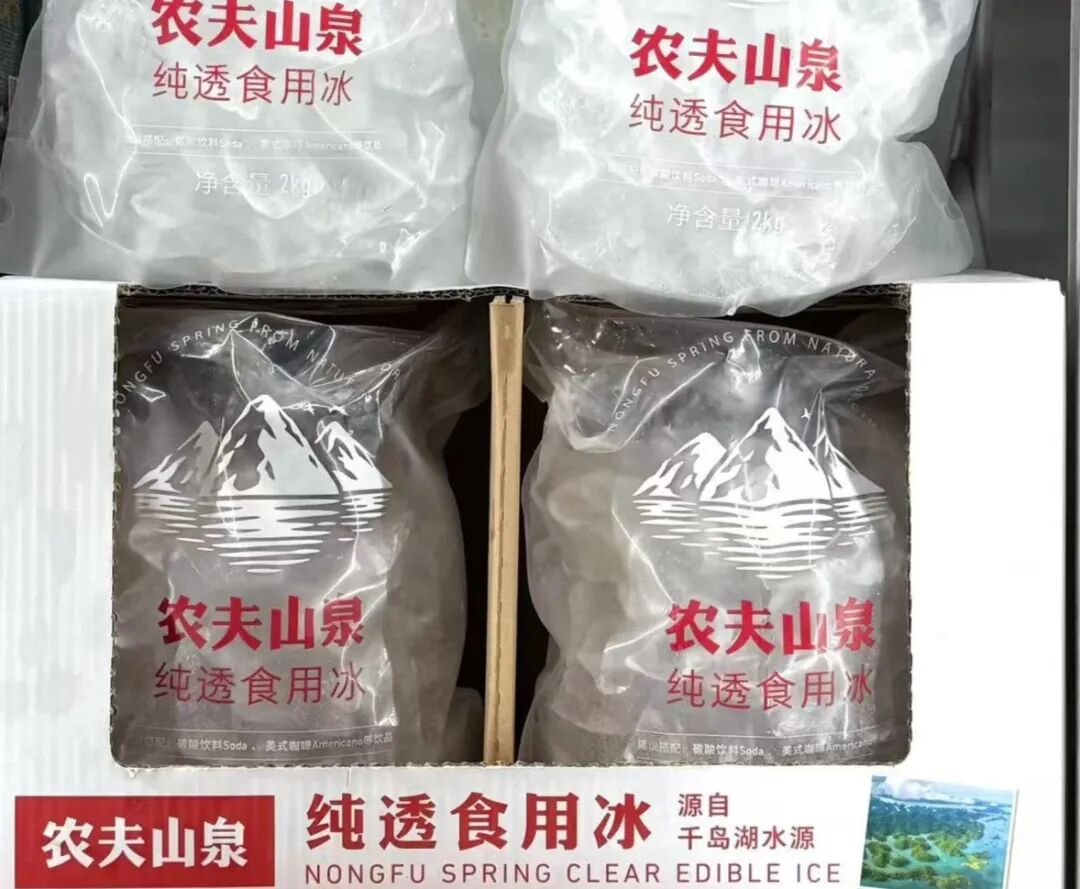
Core Viewpoint - In the first half of 2025, Nongfu Spring's business showed signs of recovery after facing significant challenges due to public opinion issues surrounding its founder, but it still missed 1 billion yuan in bottled water revenue compared to its peak in 2023 [1][2]. Group 1: Financial Performance - In the first half of 2025, Nongfu Spring achieved operating revenue of 25.622 billion yuan, a year-on-year increase of 15.56%, and a net profit attributable to shareholders of 7.622 billion yuan, up 22.16% year-on-year [1]. - Bottled water revenue in the first half of 2025 was 9.44 billion yuan, a year-on-year increase of 10.7%, while tea beverage revenue reached 10.1 billion yuan, growing 19.7% year-on-year [1]. - Compared to the peak in the first half of 2023, where bottled water revenue was 10.44 billion yuan, the company is still working to regain lost market share [1]. Group 2: Market Dynamics - The public opinion crisis began in February 2024, following the death of Wahaha's founder, leading to negative discussions about both companies, which affected Nongfu Spring's sales [1]. - In the first half of 2024, bottled water revenue dropped to 8.53 billion yuan, a year-on-year decline of 18.3%, while tea products like Dongfang Shuyue and Tea π maintained close to 60% growth, generating 8.43 billion yuan in revenue [2]. Group 3: Product Innovation and Strategy - Nongfu Spring is focusing on revitalizing its bottled water business while also expanding its tea product line, which has seen significant growth in recent years [3][8]. - The company has introduced new water sources and collaborated with emerging channels like Sam's Club to enhance profitability [4]. - Innovative products such as "pure transparent edible ice" and customized beverages are being developed to meet consumer demands, with a focus on quality and production efficiency [7]. Group 4: Cost Management and Profitability - In the first half of 2025, the profit margins for bottled water, tea, functional drinks, and juice were 35.45%, 48.36%, 47.08%, and 31.31%, respectively, showing year-on-year improvements [7]. - The overall net profit margin for the first half of 2025 was 29.75%, an increase of 1.6 percentage points compared to the previous year [7].
农夫山泉: 电话会议要点及我们的看法
2025-08-28 02:12
Summary of Nongfu Spring Co Ltd Conference Call Company Overview - **Company**: Nongfu Spring Co Ltd - **Industry**: Asia Pacific Consumer Sector Key Points from the Conference Call Financial Performance and Guidance - **Sales Growth**: The company maintained its full-year sales guidance of mid-teens growth, expecting steady growth across all segments in 2025 [3] - **Margin Expectations**: Nongfu Spring anticipates higher Gross Profit Margin (GPM) and Net Profit Margin (NPM) in 2025 compared to 2024 [3] - **1H25 Review**: GPM expanded by 1.5 percentage points in 1H25, primarily due to raw material cost savings. The selling expense ratio decreased by 2.8 percentage points, attributed to lower logistics costs and savings in advertisement and promotional expenses [4] Earnings Projections - **Earnings Growth**: Projected earnings growth of 25% in 2025 and 15% in 2026, with sales growth of 18% in 2025 and 15% in 2026, assuming margins remain at high levels [5] - **Valuation Concerns**: Current valuation implies a Price/Earnings to Growth (PEG) ratio of 1.6x on the 2024-26 earnings CAGR, indicating limited upside in the near term [5] Market Reaction - **Stock Performance**: Nongfu Spring's stock rose by 7% on August 27, 2025, following the results, contrasting with a 1% decline in the Hang Seng Index [10] - **Valuation Metrics**: The stock is currently trading at a P/E of 33x for 2025 and 29x for 2026, with a projected 20% earnings CAGR from 2024 to 2026 [10] Strategic Focus - **Product Segments**: The company will balance growth among all categories, with a near-term focus on drinking water and tea beverage segments. Emphasis on quality and differentiation is crucial [10] Key Watch Factors for 2H25 - **Market Share Recovery**: The pace of recovery in the water business market share and growth momentum in tea products are critical [10] - **Competitive Dynamics**: Monitoring industry competitive dynamics will be essential for future performance [10] Risks and Opportunities - **Upside Risks**: Increased market confidence or liquidity could drive valuations higher, along with better-than-expected growth and margin management [13] - **Downside Risks**: Increased competition in the beverage market, ESG issues, and adverse weather impacts pose potential risks [13] Additional Important Information - **Market Capitalization**: Current market cap is approximately US$72.396 billion [7] - **Revenue Projections**: Expected revenue for 2025 is Rmb 50,645 million, with a projected increase to Rmb 58,208 million in 2026 [7] - **Earnings Per Share (EPS)**: Projected EPS for 2025 is Rmb 1.34, increasing to Rmb 1.54 in 2026 [7] This summary encapsulates the essential insights from the conference call, highlighting the company's performance, strategic focus, and market outlook.
农夫山泉:H25 业绩回顾,聚焦水、茶、果汁核心竞争力,增长、利润发展势头持续至 2H25;买入评级
2025-08-28 02:12
Nongfu Spring (9633.HK) Earnings Review Summary Company Overview - **Company**: Nongfu Spring - **Ticker**: 9633.HK - **Market Cap**: HK$565.7 billion / $72.6 billion - **Industry**: China Consumer Staples Key Financial Highlights - **1H25 Results**: Sales and Net Profit (NP) increased by 16% and 22% year-over-year (yoy) respectively [1][21] - **2025 Guidance**: Management expects mid-teens percentage sales growth for 2025, with Gross Profit Margin (GPM) and Net Profit Margin (NPM) expansion due to cost benefits and improved capacity utilization [1][21] - **Capex**: Anticipated higher capital expenditures in 2025 and 2H25 for capacity additions and establishment of three natural water sources [1][21] Segment Performance Water Segment - **Stabilization**: The water segment has stabilized from previous social media issues and is expanding production capacity [1][21] - **Sales Growth**: Expected further sales and margin expansion in 2H25, approaching 2023 levels [1][21] Beverage Segment - **Product Innovation**: Focus on launching new products that cater to health trends and changing consumer preferences [1][21] - **Vertical Supply Chain**: Continued investment in upstream agricultural supply chains, enhancing competitiveness in healthy drinks like fresh juice [1][21] Competition Impact - **Food Delivery Competition**: Management believes that the development of the Food Delivery (FMD) industry will drive innovation in the Ready-to-Drink (RTD) beverage sector [1][21] - **Defensive Positioning**: Nongfu's portfolio, including sugar-free tea and packaged fresh juice, is competitively priced and well-penetrated in channels, providing a defensive edge against competitors [1][21] Market Dynamics - **Consumer Migration Opportunity**: Potential market share gain from competitor Wahaha, which is facing publicity issues, could yield significant revenue and profit increases for Nongfu [1][19] - **Sales Estimates**: Each 1 percentage point market share gain from Wahaha could equate to approximately Rmb2.3 billion in retail value or Rmb1 billion in revenue for Nongfu [1][19] Earnings Estimates and Valuation - **Revised EPS Estimates**: EPS estimates for 2025-2027 have been raised by approximately 4% due to stronger sales trends and profit improvements [1][20] - **Sales Growth Projections**: Expected sales growth of 21% in 2H25 and 18% in 2025, driven by water and juice segments [1][20] - **Target Price Update**: Updated 12-month target price to HK$53.2 from HK$48.0, reflecting changes in EPS estimates and valuation base year adjustments [1][20] Additional Insights - **Cost Management**: Management attributes long-term margin sustainability to strong execution and cost management capabilities, with raw material prices being a key factor [1][21] - **Consumer Awareness**: Focus on increasing consumer awareness of product quality in the water segment [1][22] - **Juice Segment Growth**: The C100 Fruit Drink has driven strong growth in the juice segment, with stable long-term growth expected [1][23] Conclusion Nongfu Spring demonstrates solid financial performance with a focus on innovation and market share expansion. The company is well-positioned to capitalize on growth opportunities in the beverage sector while maintaining strong margins through effective cost management.