
LEAPMOTOR(09863)

Search documents
零跑汽车前九个月交付近40万辆 创始人多次增持
Zhong Guo Zheng Quan Bao· 2025-10-23 22:19
Core Viewpoint - Leap Motor's recent share purchases by major shareholders indicate confidence in the company's fundamentals and long-term investment value, especially during challenging times for performance or stock price [2][3]. Group 1: Shareholder Activity - Leap Motor's Chairman and CEO Zhu Jiangming, along with shareholder Fu Liqian, purchased a total of 3.2435 million H-shares at an average price of HKD 63.19 per share, amounting to approximately HKD 205 million [2]. - Zhu Jiangming and Fu Liqian have committed not to transfer or reduce their holdings for the next ten years, demonstrating long-term confidence in the company [3]. - Since August 2024, Zhu Jiangming and Fu Liqian have collectively increased their holdings by approximately HKD 850 million [3]. Group 2: Operational Performance - In September, Leap Motor achieved a delivery volume of 66,700 vehicles, a year-on-year increase of over 97%, setting a record for monthly deliveries among new car manufacturers [4]. - For the first nine months of 2025, Leap Motor's cumulative deliveries reached 396,000 vehicles, a year-on-year growth of 129%, achieving 79.1% of its annual target [4]. - Leap Motor's product line covers four major series (A to D), focusing on the mainstream family car market priced between RMB 100,000 and RMB 250,000 [4]. Group 3: Product Development - The launch of the D series models is expected to broaden Leap Motor's product range and potentially enhance profitability, with the D19 model anticipated to improve gross margins [5]. - Leap Motor's senior vice president indicated that combined sales of the A and D series could reach 30,000 units per month, contributing to the company's goal of achieving annual sales of one million vehicles [5].


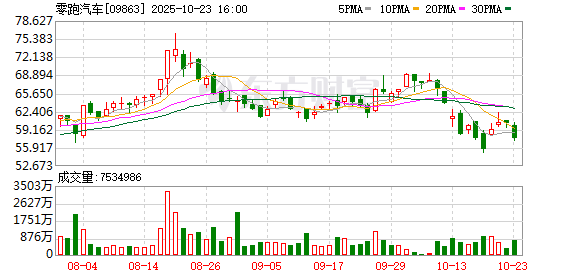
零跑汽车创始人14个月三度增持,前9个月交付近40万辆
Zhong Guo Zheng Quan Bao· 2025-10-23 12:04
Core Viewpoint - Recent share purchases by major shareholders of Leap Motor reflect confidence in the company's fundamentals and long-term investment value during a period of market pressure [1][2]. Group 1: Shareholder Activity - Leap Motor's chairman and CEO, Zhu Jiangming, along with shareholder Fu Liqian, purchased a total of 3.2435 million H-shares at an average price of approximately HKD 63.19 per share, amounting to about HKD 205 million [1]. - Zhu Jiangming and Fu Liqian have cumulatively invested approximately HKD 850 million in Leap Motor over the past 14 months [2]. - The latest share purchase announcement indicates that Zhu Jiangming and Fu Liqian now hold a combined total of 206.9 million H-shares and 128.5 million domestic shares, representing 23.59% of the company's total issued shares [2]. Group 2: Company Performance - Leap Motor achieved a delivery volume of 66,700 vehicles in September, marking a year-on-year increase of over 97%, and has maintained a month-on-month growth for nine consecutive months [3]. - In the first nine months of 2025, Leap Motor delivered a total of 396,000 vehicles, a year-on-year increase of 129%, achieving 79.1% of its annual target [3]. - The company has expanded its product line to cover four major series (A to D), focusing on the mainstream family car market priced between 100,000 to 250,000 yuan [3]. Group 3: Product Development - The launch of the D series, including the flagship D19 model, signifies a new phase in Leap Motor's technology and product layout, potentially enhancing profitability [3][4]. - The D series is expected to contribute significantly to sales, with projections suggesting that combined sales of the A and D series could reach 30,000 units per month [4][5].
零跑国际进出口(金华金东)有限公司成立
Zheng Quan Ri Bao· 2025-10-23 07:13
Core Insights - Recently, Leap International Import and Export (Jinhua Jindong) Co., Ltd. was established, with a registered capital of 1 million yuan [2] - The company is wholly owned by Zhejiang Leap Technology Co., Ltd. [2] - The business scope includes automobile sales, new energy vehicle sales, sales of new energy vehicle accessories, and battery sales [2] Company Information - The legal representative of the newly established company is Xu Jun [2] - The registered capital is set at 1 million yuan, indicating a modest initial investment [2] Industry Context - The establishment of this company reflects the growing focus on new energy vehicles and related products in the automotive industry [2] - The inclusion of battery sales in the business scope highlights the importance of energy storage solutions in the new energy vehicle sector [2]
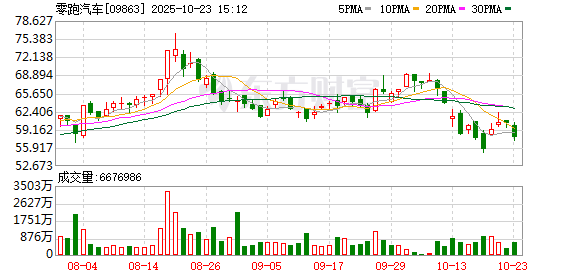
工信部就修订《车辆出厂合格证》公开征集意见;比亚迪与荣耀达成战略合作 | 汽车早参
Mei Ri Jing Ji Xin Wen· 2025-10-22 22:31
Group 1: Regulatory Changes - The Ministry of Industry and Information Technology is soliciting opinions on the revision of the mandatory national standard for the Vehicle Factory Certificate, highlighting the need for updates to meet new demands such as battery traceability for electric vehicles [1] - The revised certificate will include key information on advanced driving assistance systems and energy storage devices, aiming to enhance supervision and management of smart connected vehicles and new energy vehicles [1] - The updates are expected to improve information transparency and bolster consumer confidence in product safety, while providing technical standards for companies to promote healthy industry development [1] Group 2: Automotive Sales Data - In the first nine months of 2025, the top ten automotive companies sold a total of 20.431 million vehicles, accounting for 83.9% of total automotive sales [2] - Among these companies, Dongfeng Motor and GAC Group experienced varying degrees of sales decline compared to the same period last year, while other companies saw sales growth [2] - This data indicates a significant transformation within the automotive industry, suggesting a need for deeper market analysis [2] Group 3: Company Developments - Leap Motor has established an international import and export company in Jinhua, indicating a key advancement in its market expansion and globalization efforts in the new energy vehicle sector [3] - The new company will engage in various activities, including the sale of new energy vehicles and related components, which is expected to enhance Leap Motor's sales channels in overseas markets [3] - This move may attract investor interest in the company's international growth potential and contribute to the competitiveness of the new energy vehicle industry globally [3] Group 4: Strategic Partnerships - BYD and Honor have announced a strategic partnership to integrate mobile and automotive ecosystems, exploring possibilities for smart travel [4] - The collaboration will leverage Honor's vehicle networking solutions and BYD's DiLink smart ecosystem to create a high-end, intelligent travel experience for users [4] - This partnership signifies a deeper integration in the smart travel sector, potentially stimulating market interest and investment in smart travel solutions [4]

宁德时代、博世这些顶级供应商,为何都要为零跑汽车站台?
Hu Xiu· 2025-10-22 03:55
Core Viewpoint - Leap Motor recently held a technology launch event to showcase its flagship platform, the D platform, and introduced the Leap D19, which is claimed to offer a million-level product experience at an estimated price of only 300,000 yuan [1] Group 1 - The D platform is positioned as a significant technological advancement for Leap Motor [1] - The Leap D19 is marketed as a high-performance vehicle with competitive pricing [1] - The company aims to challenge existing market players with the D19's capabilities [1]

造车十年 零跑汽车想要撕掉“廉价”标签
Jing Ji Guan Cha Bao· 2025-10-22 03:25
Core Viewpoint - Leap Motor is transitioning from a budget-friendly brand to a higher-end market with the launch of its flagship D19 model, aiming to offer luxury at an accessible price point of around 300,000 yuan [2][3]. Product Development - The D19 is a full-size six-seat SUV with dimensions exceeding 5.2 meters in length, nearly 2 meters in width, and over 3.1 meters in wheelbase, priced significantly higher than previous models [2]. - Leap Motor's product line includes T, B, C, and D series, with the D series positioned as the highest tier [2]. Sales Performance - Leap Motor has achieved monthly sales exceeding 50,000 units recently, with September sales surpassing 60,000 units, making it the top new energy vehicle brand in terms of sales [2]. - Cumulative sales from January to September reached 395,500 units, indicating strong market demand [2]. R&D and Cost Structure - The company emphasizes its robust R&D capabilities, claiming that 65% of the D platform's vehicle costs are self-researched and manufactured, which contributes to cost savings [3]. - Leap Motor's gross margin has improved, reaching 14.1%, with expectations to turn profitable by mid-2025 due to increased sales volume and cost optimization [3]. Technology and Features - The D platform boasts advanced technologies, including over 500 kilometers of electric range, a high-voltage system, and cutting-edge driving assistance features, positioning it competitively in the 300,000 yuan market [4]. Market Strategy and Partnerships - Leap Motor plans to expand the D series to include various vehicle types such as SUVs, MPVs, and sedans, targeting the 300,000 yuan market segment [5]. - Strategic partnerships with Stellantis and FAW Group have been established to enhance international market presence and collaborative development [5]. Competitive Landscape - The D19 will compete with other six-seat SUVs in the 300,000 yuan segment, including models from Li Auto, Aito, and XPeng, indicating a highly competitive environment [5]. - Leap Motor is working on building a premium brand image, recently engaging a celebrity spokesperson to enhance its market presence [5]. Current Development Stage - The company is experiencing a phase of rising sales and improving operational performance, which is crucial for successfully launching the D series [6].
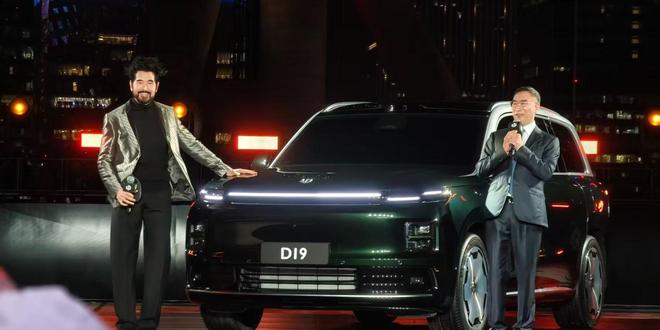
零跑汽车在金华成立国际进出口公司
Qi Cha Cha· 2025-10-22 02:57
Core Insights - Recently, Leap International Import and Export (Jinhua Jindong) Co., Ltd. was established, with Xu Jun as the legal representative [1] - The company is wholly owned by Leap Motor (09863.HK) and its business scope includes sales of new energy vehicles, sales of new energy vehicle accessories, small and micro passenger car rental services, second-hand car brokerage, and sales of motor vehicle charging [1] Company Overview - Leap International Import and Export (Jinhua Jindong) Co., Ltd. is a new entity focused on the new energy vehicle sector [1] - The establishment of this company indicates Leap Motor's expansion into various aspects of the new energy vehicle market, including sales and services [1] Industry Implications - The formation of this company aligns with the growing trend in the new energy vehicle industry, which is seeing increased demand for both vehicles and related services [1] - The inclusion of services such as second-hand car brokerage and vehicle charging sales suggests a comprehensive approach to capturing market opportunities within the new energy vehicle ecosystem [1]
Factbox-Automakers pool with EV makers to avoid EU emissions fines
Yahoo Finance· 2025-10-21 14:43
Core Insights - Automakers are forming alliances to purchase carbon credits from electric vehicle companies to avoid potential fines from the European Union, which could reach up to 15 billion euros ($17.5 billion) [1][8] - The European Commission has allowed compliance based on average emissions over the period of 2025-2027, rather than solely on 2025 levels [1] Alliances and Collaborations - Nissan has formed a pool with Chinese EV giant BYD in October [3] - KG Mobility from South Korea partnered with Chinese EV maker Xpeng at the end of September [4] - Tesla established a pool in January with Stellantis, Toyota, Ford, Leapmotor, Mazda, and Subaru, with Honda and Suzuki joining in March [5] - A separate pool formed in January includes Mercedes, Volvo Car, Polestar, and Smart Automobile, with Geely holding significant stakes in these companies [6] Market Trends - Electric vehicles accounted for 12% of total European light vehicle sales last year, projected to rise to 15% this year, and expected to reach 24% by 2027 and 40% by the end of the decade according to AlixPartners [7]





港股汽车股集体上扬 零跑汽车涨超4%
Mei Ri Jing Ji Xin Wen· 2025-10-21 02:37
Core Viewpoint - The Hong Kong automotive stocks have collectively risen, indicating positive market sentiment towards the sector [1] Company Performance - Li Auto (理想汽车-W) increased by 1.79%, trading at HKD 87.95 [1] - NIO (蔚来-SW) saw a rise of 3.64%, with shares priced at HKD 54.1 [1] - Geely (吉利汽车) experienced a 3.96% increase, reaching HKD 19.94 [1] - Xpeng Motors (小鹏汽车-W) rose by 4.12%, with a share price of HKD 84.7 [1] - Leap Motor (零跑汽车) surged by 4.73%, trading at HKD 61.95 [1]
汽车股集体上扬 零跑汽车续涨近5% 9月国内新能源汽车产销创历史新高
Zhi Tong Cai Jing· 2025-10-21 02:25
Group 1 - The core viewpoint of the article highlights a collective rise in automotive stocks, particularly in the electric vehicle (EV) sector, driven by strong sales performance in September 2025 [1] - Companies such as Li Auto, Xpeng Motors, and NIO have seen significant stock price increases, with Li Auto up 1.79% to HKD 87.95, Xpeng up 4.12% to HKD 84.7, and NIO up 3.64% to HKD 54.1 [1] - The China Association of Automobile Manufacturers reported that September 2025 saw record high production and sales of new energy vehicles (NEVs), with production reaching 1.617 million units and sales at 1.604 million units, marking year-on-year growth of 23.7% and 24.6% respectively [1] Group 2 - Guohai Securities indicated that the vehicle replacement policy is expected to boost passenger car sales beyond expectations in 2024, with the continuation of this policy in 2025 providing further support for automotive consumption [1] - Zhongyin International anticipates that with the sales peak approaching, domestic NEV sales in 2025 are likely to maintain high growth [1]

