LEAPMOTOR(09863)

Search documents
一汽集团1月销售新车27.5万辆,数据包含零跑汽车销量
Zhong Guo Ji Jin Bao· 2026-02-22 07:08
日前,中汽协在发布的2026年1月汽车工业产销情况中表示,1月,汽车销量排名前十五位的集团销量合计为219.2万辆,同比下降3.8%,占汽车销售总量的 93.4%,低于去年同期0.6个百分点。 资料显示,2025年12月28日、29日,零跑汽车连发两份公告,相继披露战略融资及两项关联交易进展。公司不仅与一汽股权投资(天津)有限公司(以下简 称"一汽股权")达成37.44亿元内资股认购协议,还续签零部件采购框架协议并订立品牌国际化服务协议,全方位夯实技术研发、供应链保障及海外市场布 局。 市场销量排名前三的企业为上汽、吉利和一汽,合计市场份额为38.5%。其中,上汽以32.0万辆的销量位居首位,环比下降17.3%,同比增长24.5%,市场份 额13.6%;吉利销量30.9万辆,环比增长1.9%,同比增长5.2%,市场份额13.2%;一汽销量27.5万辆,环比下降25.2%,同比下降3.0%,市场份额11.7%。 值得注意的是,备注信息显示,一汽集团1月份销量数据包含零跑汽车数据。根据零跑汽车公布的2026年1月交付数据,当月全系交付量达32,059台,同比增 长27%。 | 1月市场集中度 | 企业名称 | 1 ...



新春走基层|政策暖风频吹,新能源车加速“下沉”
2 1 Shi Ji Jing Ji Bao Dao· 2026-02-16 07:35
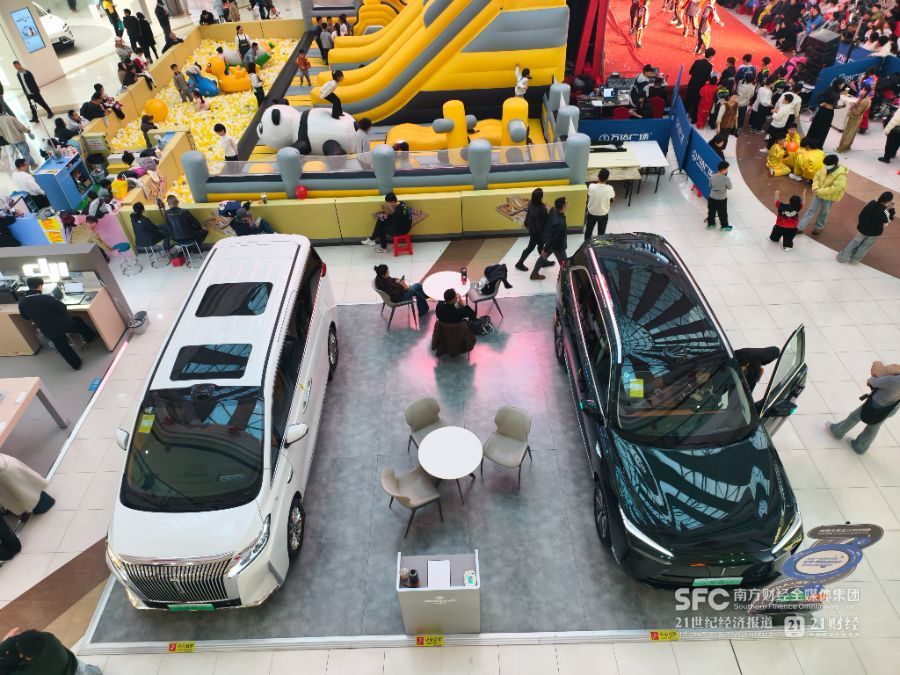
Core Insights - The Chinese automotive market is experiencing a surge in consumer interest, particularly in the context of the Spring Festival and the implementation of new national subsidy policies for electric vehicles [1][5][9] - There is a notable shift in the location of car dealerships, with brands moving into shopping malls to enhance visibility and compete more effectively for consumer attention [3][4] - The acceptance of electric vehicles (EVs) is increasing in rural areas, driven by government initiatives and the growing availability of charging infrastructure [7][8][9] Group 1: Market Trends - The implementation of the new national subsidy policy has led to increased foot traffic and sales in car dealerships, especially for models priced between 60,000 to 100,000 yuan [1] - The competition among automotive brands is intensifying, with companies like Li Auto and BYD adopting innovative marketing strategies, including the use of social media to reach younger consumers [3][4] - The demand for electric vehicles is rising, particularly in lower-tier cities, as evidenced by the increasing presence of brands like BYD and Wuling in these markets [7][9] Group 2: Consumer Behavior - Price remains a decisive factor for consumers in third and fourth-tier cities, with dealerships focusing on highlighting discounts and pricing to attract buyers [3][5] - There is a growing trend of consumers upgrading to electric vehicles, with many expressing interest in models that offer spacious interiors and advanced features [5][8] - Concerns about charging infrastructure persist, with consumers indicating a preference for electric vehicles if charging facilities are adequate; otherwise, they may opt for hybrid models [8] Group 3: Infrastructure Development - The construction of charging facilities is accelerating, with projections indicating that by the end of 2025, there will be approximately 20.09 million charging points in China, marking a 49.7% year-on-year increase [8][9] - The government of Henan province plans to build 29,000 new public charging stations by 2025, significantly exceeding its annual target and addressing range anxiety for EV owners [9] - The market for electric vehicles in rural areas is expected to grow substantially, with predictions indicating that by 2030, the number of vehicles per thousand people in rural regions could reach 160, resulting in a market size of approximately 500 billion yuan [7][9]



【月度排名】2026年1月厂商销量排名快报
乘联分会· 2026-02-14 08:39
Core Viewpoint - The domestic narrow passenger car market in China experienced a retail sales decline of 13.9% year-on-year in January 2026, with sales reaching 1.544 million units, attributed to the end of the 12-year new energy vehicle purchase tax exemption policy, leading to a temporary dip in demand [2][4]. Sales Data Summary Wholesale Sales Rankings (January 2026) - Geely Automobile led with 270,167 units sold, a 1.3% increase, capturing 13.7% market share - BYD Automobile followed with 205,518 units, down 30.7%, holding 10.4% market share - Chery Automobile sold 193,969 units, down 12.0%, with a 9.8% market share - Volkswagen sold 128,001 units, down 1.7%, with a 6.5% market share - SAIC Passenger Vehicle sales increased by 53.6% to 77,421 units, capturing 3.9% market share [6]. Retail Sales Rankings (January 2026) - Geely Automobile again led with 209,661 units sold, down 12.6%, holding 13.6% market share - Volkswagen sold 132,300 units, down 3.5%, with an 8.6% market share - BYD's retail sales dropped significantly by 53.0% to 94,176 units, capturing 6.1% market share - SAIC Volkswagen sold 89,600 units, down 9.3%, with a 5.8% market share - Changan Automobile's sales decreased by 33.5% to 81,074 units, holding 5.2% market share [7]. New Energy Vehicle (NEV) Wholesale Sales Rankings (January 2026) - BYD led NEV sales with 205,518 units, down 30.7%, capturing 23.8% market share - Geely followed with 124,252 units, up 2.6%, holding 14.4% market share - Tesla China sold 69,129 units, up 9.3%, with an 8.0% market share - Chery sold 46,802 units, down 14.9%, with a 5.4% market share - SAIC Passenger Vehicle saw a significant increase of 576.9% to 28,179 units, capturing 3.3% market share [9]. New Energy Vehicle (NEV) Retail Sales Rankings (January 2026) - BYD again led with 94,176 units sold, down 53.0%, holding 15.8% market share - Geely sold 92,135 units, down 21.6%, with a 15.5% market share - Hongmeng Zhixing saw a significant increase of 65.5% to 57,915 units, capturing 9.7% market share - SAIC's sales increased by 83.3% to 40,016 units, holding 6.7% market share - Xiaomi Automobile sold 39,002 units, up 70.3%, with a 6.5% market share [10].


固瑞克获机构关注,股价波动上涨,零跑汽车采购项目或利好订单
Jing Ji Guan Cha Wang· 2026-02-13 21:10
Group 1 - Institutional interest in Graco (GGG.N) has increased, with 40% of 15 institutions recommending buy or hold, while 13% suggest sell, indicating a rise in bearish sentiment [1] - Target price range for Graco is set between $85 and $105, with an average target of $97, suggesting potential upside from the current stock price [1] - Earnings per share (EPS) for Q4 2025 is projected at $0.766, reflecting a year-over-year growth of 20.31%, while Q1 2026 EPS is expected to be $0.741, a 10.76% increase [1] Group 2 - Graco's stock price has shown a volatile upward trend over the past week, with a price range fluctuation of 1.22% and a maximum price of $95.69 on February 12 [2] - The stock experienced a single-day increase of 1.58% on February 10, with a trading volume of approximately $99.15 million [2] - Recent procurement project by Leap Motor for Graco brand spare parts may positively impact Graco's business orders, with the bidding deadline set for February 13 [2]
持股5%,销量并表引关注:中国一汽计入零跑销量后,1月新能源销量实现同比增长9%
Mei Ri Jing Ji Xin Wen· 2026-02-13 11:55
Group 1 - The core point of the article is that China FAW Group has included the sales figures of Leap Motor in its own sales statistics, despite only holding a 5% stake, raising questions about the validity of this consolidation [1][2] - In January 2026, China FAW's new energy vehicle sales reached 51,000 units, a year-on-year increase of 9%, but excluding Leap Motor's sales, the actual sales were only 19,000 units [1][4] - Leap Motor's chairman has emphasized that the company will maintain its independence and that the investment from China FAW is primarily as an investor, not as a controlling entity [2] Group 2 - In comparison, Dongfeng Motor and Changan Automobile reported new energy vehicle sales of 83,000 units and 37,000 units respectively in the same period, indicating that China FAW's performance is lagging behind its peers [4] - For 2026, Dongfeng has set a sales target of 3.25 million units, with a new energy vehicle target of 1.7 million units, while Changan aims for 3.3 million units overall, with 1.4 million in new energy vehicles [4] - China FAW has set an overall sales target of 3.546 million units for 2026 but has not disclosed specific targets for new energy vehicles [5]


年销2700万辆,中国汽车又一个世界冠军
3 6 Ke· 2026-02-13 09:55
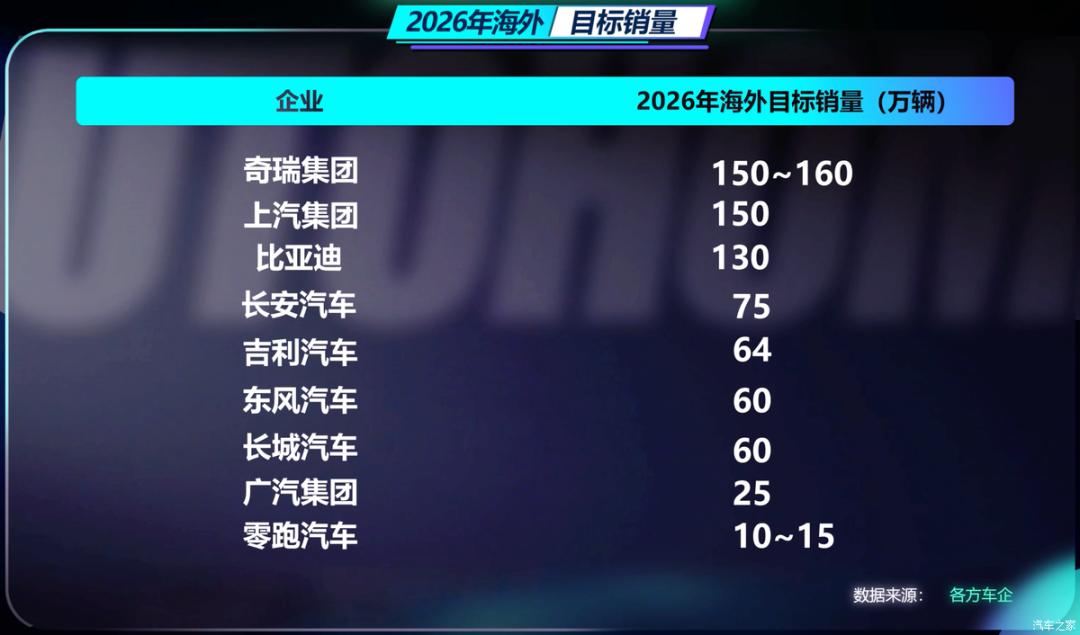
Core Insights - In 2025, Chinese automakers achieved a total global sales volume of 27 million vehicles, surpassing Japan for the first time in over 20 years, marking a significant milestone in the automotive industry [1] - Chinese automobile exports reached 8.32 million units in 2025, maintaining the title of the world's largest exporter for the third consecutive year, with Japan trailing at 4.21 million units [1] - Nine Chinese automakers have already set ambitious overseas sales targets for 2026, indicating confidence in continued growth in international markets [1][2] Group 1: Sales Performance - In 2025, Chery, SAIC, and BYD each exceeded 1 million units in overseas sales, with Chery selling 1.34 million units, representing nearly half of its total sales and a 17% increase year-on-year [3] - BYD's overseas sales surged by 145%, showcasing rapid growth from negligible figures to over 1 million units in just four years [3] - The overall export volume of Chinese automobiles grew by 29.9% in 2025, with December alone witnessing a remarkable 73.2% year-on-year increase, reaching 994,000 units [5] Group 2: Market Trends - The export of Chinese new energy vehicles (NEVs) reached 3.43 million units in 2025, a 70% increase, reflecting a growing global acceptance of electric vehicles [8] - In Europe, electric vehicles accounted for a record 19% of the market share in 2025, with Germany producing 1.67 million electric passenger cars, marking a 23% year-on-year growth [10] - Chinese brands are increasingly gaining traction in international markets, with significant sales growth in Australia and Europe, where they are becoming more competitive against traditional automakers [10][12] Group 3: Strategic Developments - Chinese automakers are expanding their presence in North America and Latin America, with Mexico becoming the largest market for Chinese car exports in 2025 [14] - Agreements with Canada allow Chinese companies to export electric vehicles at a reduced tariff rate, indicating a favorable trade environment [16] - The establishment of local supply chains and partnerships in various regions is a strategic move to enhance competitiveness and market penetration [16][17]



零跑汽车2026年销量目标上调,战略融资完成,全球化进程加速
Jing Ji Guan Cha Wang· 2026-02-13 05:48
业务进展情况 经济观察网 零跑汽车在2026年销量目标上调,并计划推出多款新车型以覆盖全品类,同时渠道建设加 速。公司已完成战略融资,资金将用于研发、运营及销售网络扩张,以支持销量目标。此外,与 Stellantis集团的合作深化,全球化进程加速,已进入多个国际市场并设定了海外销量目标。 业绩经营情况 公司于2026年2月1日公布1月交付量为3.2万台,同比增长27.4%,并宣布将全年销量目标从100万辆上调 至105万辆。 公司状况 公司与Stellantis集团合作持续深化,截至2026年1月已进入超35个国际市场,全球销售网点超1800个。 新车型A10于2026年1月在布鲁塞尔车展亮相,瞄准欧洲市场,未来海外销量目标为10万-15万辆。 以上内容基于公开资料整理,不构成投资建议。 2026年计划推出多款新车型,包括旗舰SUV D19、MPV D99和全球车型A10,以覆盖轿车、SUV和 MPV全品类。渠道建设同步加速,截至2026年1月5日全国门店达1068家。 资金动向 2026年1月,零跑汽车通过向一汽股权和金义高新发行内资股完成两笔溢价融资,总金额约67.4亿元, 认购价较H股当时市价溢价约9. ...
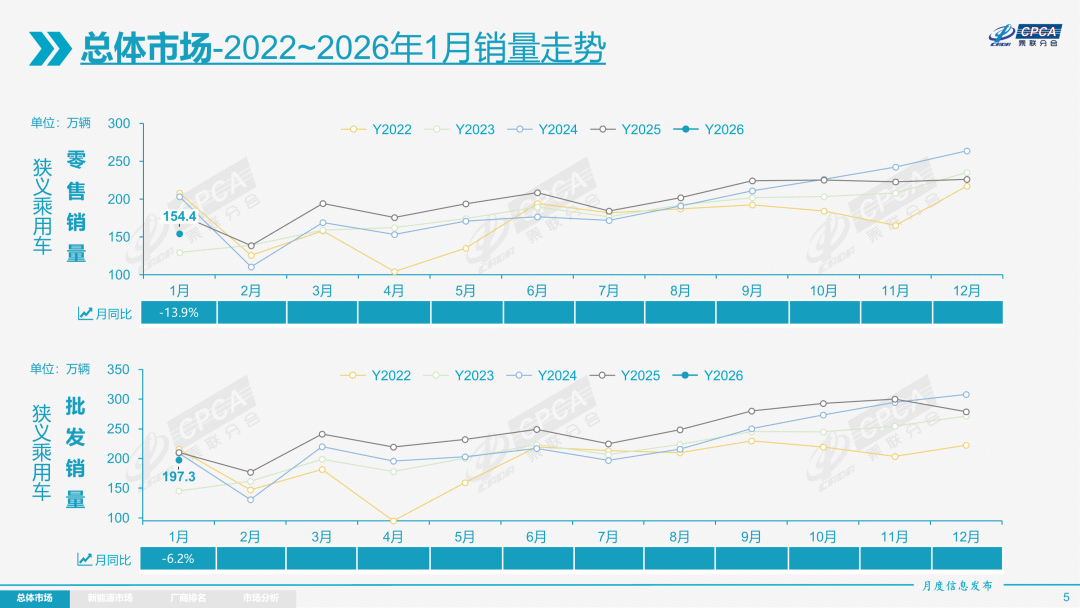
乘联分会:1 月全国乘用车市场零售 154.4 万辆,同比下降 13.9%
Xin Lang Cai Jing· 2026-02-12 07:27
Core Viewpoint - In January, the retail sales of passenger cars in China reached 1.544 million units, representing a year-on-year decline of 13.9% [1][7]. Group 1: Market Performance - The January retail sales decline is part of a historical trend where January sales have shown significant fluctuations, with previous years experiencing similar declines [3][9]. - The penetration rate of new energy vehicles (NEVs) in the overall passenger car market was 38.6%, down 3 percentage points from the previous year [3][9]. - Among domestic retail sales, the penetration rate of NEVs for independent brands was 61.7%, while luxury brands had a penetration rate of 16.1%, and mainstream joint venture brands only reached 4.3% [3][9]. Group 2: New Energy Vehicle Sales - In January, the retail share of NEVs for independent brands was 60.1%, a decrease of 12 percentage points year-on-year, while the share for mainstream joint venture brands increased to 3.9%, up 2 percentage points [3][9]. - The new forces in the market, including brands like Xpeng, Leap Motor, and Xiaomi, saw their share increase by 10 percentage points year-on-year, reaching 31.2% [3][9]. - Tesla's market share fell to 3.1%, a decrease of 1.5 percentage points compared to the previous year [3][9]. Group 3: Export Performance - In January, NEV exports reached 286,000 units, marking a year-on-year increase of 103.6%, accounting for 49.6% of total passenger car exports, up 12.5 percentage points from the previous year [4][10]. - Pure electric vehicles constituted 65% of NEV exports, while A00 and A0 class pure electric vehicles made up 50% of pure electric exports [4][10]. - The growth of NEV exports is attributed to the increasing recognition of Chinese brands in international markets, despite some external challenges [4][10]. Group 4: Manufacturer Performance - Leading manufacturers in NEV exports for January included BYD (96,859 units), Tesla China (50,644 units), and Geely (32,117 units) [5][11]. - The overall performance of NEV manufacturers remained strong, with 16 companies achieving monthly wholesale sales exceeding 10,000 units, accounting for 90.3% of total NEV sales [6][12]. - BYD led the market with 205,518 units sold, followed by Geely (124,252 units) and Tesla China (69,129 units) [6][12]. Group 5: Market Outlook - The outlook for February indicates a potential decline in sales due to the shorter effective production and sales time caused by the extended Spring Festival holiday [7][13]. - The rising costs of raw materials, driven by increased demand for electric power storage, are putting pressure on manufacturers [7][13]. - The anticipated decrease in promotional capabilities for NEV manufacturers may lead to a cautious consumer sentiment, potentially suppressing normal car purchase demand in the short term [7][13].


乘联分会:1月全国乘用车市场零售154.4万辆 新能源车渗透率为38.6%
智通财经网· 2026-02-12 06:41
Core Insights - The overall retail sales of passenger cars in January decreased by 13.9% year-on-year, with a total of 1.544 million units sold. The retail sales of new energy vehicles (NEVs) reached 596,000 units, representing a penetration rate of 38.6%, down 3 percentage points from the previous year [1][11]. Retail Market Overview - In January, the retail sales of self-owned fuel passenger cars were 250,000 units, up 17% year-on-year, while self-owned NEVs sold 226,000 units, marking a significant increase of 115%. NEVs accounted for 47.5% of self-owned exports, indicating growing international influence [2]. - The retail sales of self-owned brands totaled 890,000 units, down 18% year-on-year, with a domestic market share of 57.5%, a decrease of 3.5 percentage points [2]. - Mainstream joint venture brands sold 470,000 units, down 4% year-on-year, with German brands increasing their market share to 19.8%, up 1.4 percentage points [2]. Production and Wholesale Analysis - In January, the production of passenger cars was 2.003 million units, down 4.4% year-on-year. The wholesale volume was 1.973 million units, a decrease of 6.2% year-on-year [4]. - The wholesale of self-owned brands was 1.326 million units, down 8%, while luxury car wholesale increased by 4% to 228,000 units [4]. - The overall wholesale landscape is changing, with some mid-tier companies showing strong performance, such as SAIC-GM-Wuling and NIO [4]. New Energy Vehicle Insights - The production of NEVs reached 938,000 units, a slight decrease of 0.6% year-on-year, while wholesale sales were 864,000 units, down 3.3% [5][6]. - NEV retail sales were 596,000 units, down 20% year-on-year, with conventional fuel vehicles selling 948,000 units, down 10% [7]. - NEV exports reached 286,000 units, a remarkable increase of 103.6%, accounting for 49.6% of total passenger car exports [11][12]. Market Trends and Future Outlook - The new energy vehicle market is expected to face challenges in February due to the impact of the Spring Festival, which may lead to lower sales volumes [16]. - The transition from merely selling cars to exporting entire industrial chains is anticipated, indicating a shift towards quality growth in the automotive export sector [17].


零跑汽车今年能卖出105万辆?
Xin Lang Cai Jing· 2026-02-11 10:32
Core Viewpoint - Leap Motor aims to achieve a historic sales target of 1 million vehicles in 2023, with a long-term goal of 1.05 million vehicles by 2026, reflecting a 75.9% increase from 2025's target of 597,000 vehicles [2][18]. Sales Target Breakdown - The 1 million sales target for 2023 is divided into 900,000 units for the domestic market and 100,000 units for overseas markets [4][19]. - In 2025, Leap Motor's existing models are expected to achieve a total sales volume of 418,000 units, while new models launched in 2025 are projected to contribute an additional 178,000 units [5][21]. Model Performance Expectations - The existing models C10, C11, C16, T03, and C01 are anticipated to face challenges in increasing sales from the previous year's 418,000 units, with cautious estimates suggesting a total of 400,000 units and optimistic estimates reaching 450,000 to 500,000 units for these models in 2023 [7][24]. - The new models B10 and B01, launching in April and July 2025 respectively, are expected to achieve cautious sales of 150,000 units and optimistic sales of 200,000 units [7][24]. New Model Contributions - The Lafa5 model, launched in late 2025, is projected to provide significant sales growth, with cautious estimates of 60,000 units and optimistic estimates of 100,000 units for 2023 [8][25]. - The A10 model, a compact electric SUV, is expected to face competition from BYD's Yuan UP, with cautious sales estimates of 60,000 units and optimistic estimates of 100,000 units for 2023 [10][26]. Market Competition and Challenges - The D19 and D99 models, positioned in the competitive large SUV and MPV markets, respectively, are expected to face significant challenges in achieving sales targets due to intense competition [12][28]. - The overall sales target of 1 million units in 2023 is contingent upon overcoming challenges such as production capacity, supply chain issues, and the impact of reduced tax incentives for electric vehicles [34].