
XPENG-W(09868)

Search documents
超4400只股上涨
Di Yi Cai Jing Zi Xun· 2026-02-09 04:01
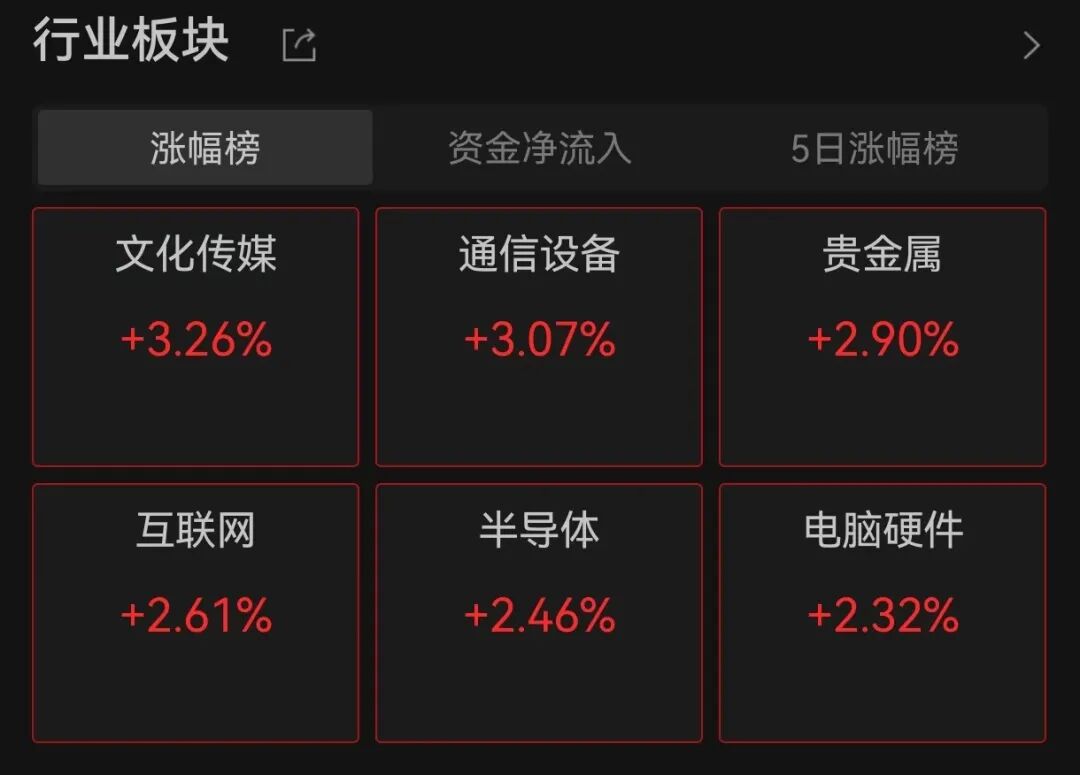
Market Performance - The A-share market showed strong performance with the Shanghai Composite Index up by 1.17%, the Shenzhen Component Index up by 2.07%, the ChiNext Index up by 3.11%, and the Sci-Tech Innovation Index up by 2.22% at midday [1][2]. Sector Highlights - The computing hardware industry chain experienced a surge, with CPO and memory sectors leading the gains. The photovoltaic industry chain also strengthened, particularly in space photovoltaic applications. AI applications, semiconductors, commercial aerospace, and consumer electronics saw significant increases [2][3]. - CPO concept stocks exploded, with Tianfu Communication nearing a 20% limit up, reaching a historical high. Other notable performers included Guangku Technology and Taicheng Light, both rising over 15% [3]. Trading Volume - The total trading volume in the Shanghai and Shenzhen markets reached 1.49 trillion yuan, an increase of 106.8 billion yuan compared to the previous trading day, with over 4,400 stocks rising [3]. Individual Stock Movements - Tianfu Communication's stock price hit a historical high, increasing by over 10% to 281.12 yuan [6]. - The photovoltaic concept stocks continued to perform well, with companies like GCL-Poly Energy achieving four consecutive trading limit ups [5]. - Longyun Co. and Jihua Group both saw their stocks hit the limit up after announcing significant corporate actions [9][10]. Hong Kong Market - The Hong Kong market opened positively, with the Hang Seng Technology Index rising by 1.59% and notable gains in stocks such as Huahong Semiconductor and XPeng Motors, both increasing by over 4% [10][11].




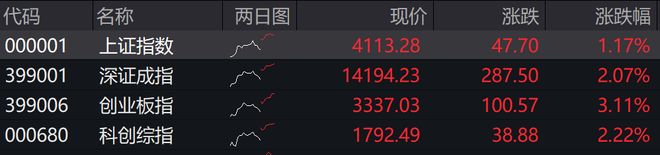
A股三大指数高开;港股高开,恒生科技指数涨近2%丨开盘播报
Mei Ri Jing Ji Xin Wen· 2026-02-09 01:39
每经记者|黄胜 每经编辑|许绍航 宋思艰 记者|黄胜 编辑|许绍航 宋思艰 校对|金冥羽 2月9日,沪指高开0.93%,深成指高开1.50%,创业板指高开1.95%,传媒、CPO、光伏、有色金属等板块指数涨幅居前。 | (免责声明:本文内容与数据仅供参考,不构成投资建议,使用前请核实。据此操作,风险自担。) | | --- | 港股高开,恒生指数涨1.59%,恒生科技指数涨1.9%。华虹半导体涨逾4%,小鹏汽车、哔哩哔哩、百度集团、中国平安、中国人寿涨逾3%。 ...


蔚来实现单季盈利,1亿次换电达成!比亚迪发布新品牌“领汇”!多款新车登陆工信部!加拿大将大幅降低中国电动车关税!丨一周大事件
电动车公社· 2026-02-08 16:06
New Car Launches - The new BMW i5 was launched with a price range of 368,000 to 458,000 yuan, featuring upgrades in comfort and battery optimization for improved range [3][8] - The all-new Li Auto L9 was revealed, with the top version "Li L9 Livis" priced at 559,800 yuan, showcasing significant design and technology enhancements [9][11][13] - Chery's new QQ3 has opened for blind orders, featuring a compact design and advanced driver assistance systems [14][17][21] Company Developments - NIO achieved its first quarterly profit, projecting an operating profit of approximately 290 million to 1 billion yuan for Q4 2025, and reached a milestone of 100 million battery swaps [51][54] - BYD announced its fifth sub-brand "Linghui Auto," targeting the B-end market with customized vehicles [55][57] - SAIC-GM-Wuling reported global sales of 105,792 units in January [58] Battery Market Insights - CATL maintained a dominant market share of 39.2% in the global battery market, with a projected global installation volume of 464.7 GWh for 2025 [61][62] - Changan announced the upcoming mass production of the world's first sodium battery passenger vehicle, indicating advancements in battery technology [64][67] International News - Canada announced a significant reduction in import tariffs on Chinese electric vehicles from 106.1% to 6.1%, facilitating easier market access for Chinese automakers [68][71]




小米YU7 GT、理想L9、问界M6领衔!2月工信部重磅新车亮相!
电动车公社· 2026-02-07 16:22
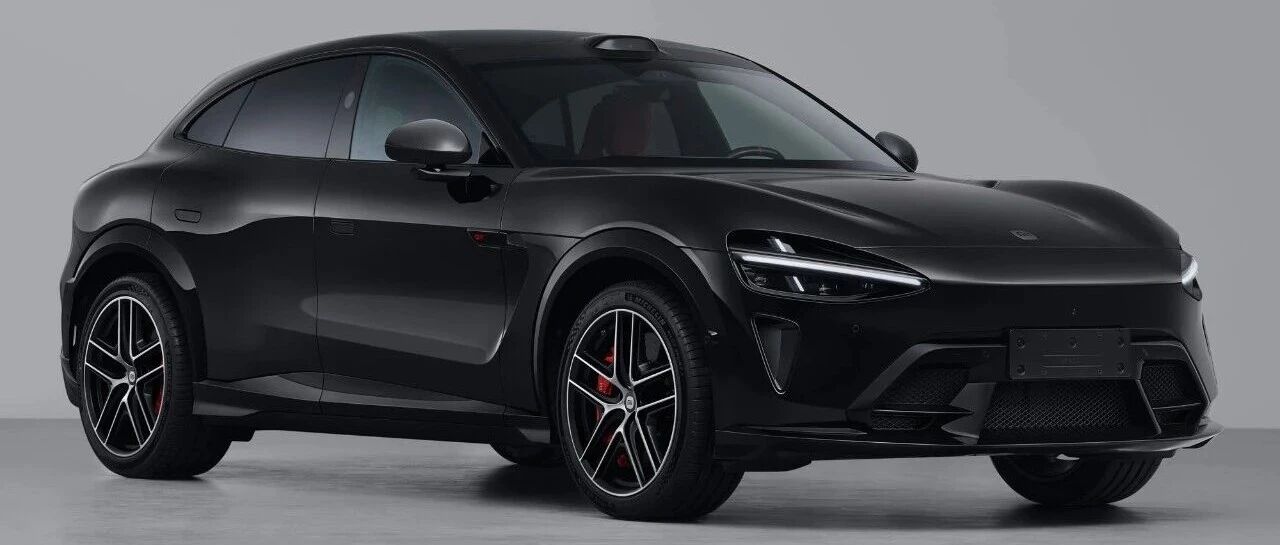
Core Viewpoint - The Chinese automotive industry is facing a slowdown in sales growth due to policy adjustments and the holiday season, aligning with predictions of a market shift in 2026 [1][2]. Industry Overview - According to Morgan Stanley, Chinese passenger car sales are expected to grow by 9% year-on-year in 2025, reaching a historical high, before declining by 5% in 2026 [2]. - Despite continued growth in new energy vehicle (NEV) sales and exports, a potential decline of around 30% in the first quarter is anticipated due to changes in subsidies and purchase tax policies, which may further impact annual sales [4]. - The industry consensus indicates that the Chinese automotive sector is entering a decisive phase, with pessimistic views suggesting that only 5-7 NEV companies may survive in the coming years, while optimistic estimates suggest a maximum of 10 [5]. Competitive Landscape - As competition intensifies, new models are set to launch, with over 20 different NEV models preparing to enter the market post-Spring Festival, indicating a fierce battle for market share in the upcoming months [6][7]. - The focus of new vehicle launches is on high-end features, with three key themes identified: high-end, high-end, and high-end [8]. New Model Highlights - The new Li Auto L9 features a larger size and advanced technology, including a 72.7 kWh battery and various high-tech components, positioning it as a critical product for Li Auto's success this year [11]. - The Xiaomi YU7 GT, with enhanced performance specifications, aims to compete directly with high-end models like the Porsche Cayenne Turbo GT [15]. - The AITO M6, a new model from AITO, is designed to target the market segment dominated by Model Y and Li L6, offering both pure electric and range-extended versions [19]. - XPeng's GX model aims to leverage L4-level autonomous driving technology, featuring advanced specifications and a focus on high-end market penetration [26]. - The Wey V9X, as a new model from Great Wall Motors, is positioned to compete with other large SUVs in the market, although pricing details are yet to be announced [31]. - The Volvo ES90, a pure electric sedan, is part of Volvo's accelerated electrification strategy, sharing technology with the EX90 and focusing on safety, range, and intelligence [44]. - The Zeekr 8X performance version emphasizes extreme performance and rapid charging capabilities, set to compete with the Xiaomi YU7 GT [49].



【窩輪透視】小鵬均線空頭排列,超賣信號帶來反彈機會?
Ge Long Hui· 2026-02-07 01:35
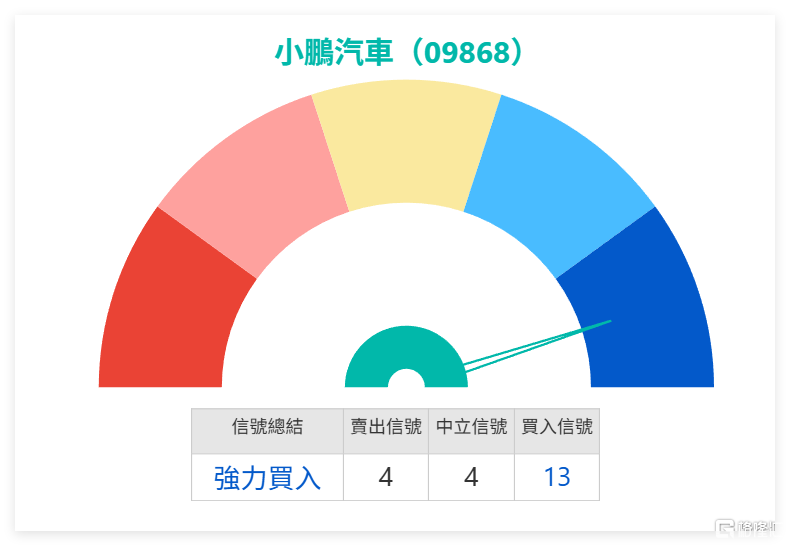
Core Viewpoint - Xiaopeng Motors (09868) shows a slight increase of 1.13% on February 5, closing at 67.3 HKD, indicating a cautious market sentiment towards its short-term performance [1]. Technical Analysis - The stock price is currently below the MA10 (70.98 HKD), MA30 (76.5 HKD), and MA60 (79.50 HKD) moving averages, reflecting a bearish trend in the short term [1]. - The RSI indicator is at 29, indicating an oversold condition, which suggests that the downward momentum may weaken in the short term [1]. - Multiple technical indicators suggest a potential for a technical rebound, with a summary signal of "strong buy" and a signal strength of 13 [1][3]. Market Comparison - In the broader context of the new energy vehicle sector, NIO (09866) closed at 36.56 HKD with a 2.70% increase and an RSI of 39, indicating a slightly stronger position than Xiaopeng [3]. - Li Auto (02015) closed at 69.2 HKD, up 1.91%, with an RSI of 57, suggesting a neutral stance [3]. - BYD (01211) closed at 91.25 HKD, up 1.39%, with an RSI of 34, indicating a similar oversold condition as Xiaopeng but with slightly better technical signals [3]. Support and Resistance Levels - Short-term support levels for Xiaopeng are at 57.2 HKD and 63.4 HKD, with the stock currently trading above 63.4 HKD, which is seen as a positive signal [4]. - Resistance levels are identified at 73.3 HKD and 78.3 HKD, with 73.3 HKD being close to the MA10, making it a key level to watch for potential breakout [4]. Product Recommendations - Two recommended products related to Xiaopeng Motors include: 1. Call option (25535) with a leverage of 2.1 and an exercise price of 78.88 HKD, suitable for investors expecting a gradual rebound [7]. 2. UBS bull certificate (55469) with a leverage of 6.7 and a redemption price of 60 HKD, appealing to those anticipating a short-term technical rebound [7].
深夜,中国资产大涨
财联社· 2026-02-06 23:44
Market Overview - After three days of selling pressure, the US stock market experienced a significant rebound, with the S&P 500 index recording its largest single-day gain since May of the previous year, and the Dow Jones Industrial Average surpassing the 50,000 points mark for the first time in history [1] - The S&P 500 index rose by 1.97% to close at 6,932.3 points, the Nasdaq Composite increased by 2.18% to 23,031.21 points, and the Dow Jones Industrial Average climbed by 2.47% to 50,115.67 points [1] Key Stock Performances - Nvidia saw a single-day increase of over 7%, adding more than $320 billion to its market capitalization, while other cyclical/value stocks like Caterpillar, Goldman Sachs, and JPMorgan also attracted significant capital inflows [1] - Despite the overall market rally, Amazon's stock fell over 5% after announcing a capital expenditure of up to $200 billion for 2026, indicating skepticism about AI spending [4] - Major tech stocks showed mixed results, with Nvidia up 7.87%, Apple up 0.8%, Google-A down 2.53%, and Microsoft up 1.9% [6] Sector Movements - The precious metals sector, represented by silver, rebounded nearly 10%, while Bitcoin surged close to 12%, reflecting a risk-on sentiment in the market [3] - The semiconductor sector performed well, with AMD rising 8.28%, and companies supporting Amazon's chip production, such as Marvell Technology, increasing by 8.18% [6] Chinese Stocks Performance - Chinese stocks continued their strong performance, with the Nasdaq Golden Dragon China Index rising by 3.71%. Notable gains included Alibaba up 3.01%, JD.com up 2.75%, and NIO up 7.23% [7] Company-Specific News - Tesla is reportedly evaluating options to increase its solar production capacity, including expanding its Buffalo, New York plant to 10 gigawatts and potentially building additional factories in New York, Arizona, or Idaho [8] - The FDA announced plans to crack down on illegal GLP-1 drugs, impacting companies like Hims & Hers Health, which saw a post-market drop of over 13% [9] - Stellantis faced a significant decline of 23.69% after announcing a restructuring plan that would lead to a €22.2 billion loss due to a reduction in its electric vehicle business [10]



21社论丨构建核心竞争力,促进汽车业高质量增长
2 1 Shi Ji Jing Ji Bao Dao· 2026-02-06 23:12
Core Viewpoint - The Chinese automotive market is transitioning from rapid growth to stable growth, with companies adjusting their sales targets to be more realistic and sustainable in light of recent market conditions [1][2][3]. Group 1: Market Performance - In the first half of January, vehicle sales decreased by 34.2% compared to the same period in December 2025, and by 66.4% compared to the second half of December 2025 [1][4]. - The overall retail sales for January are estimated to be around 1.8 million vehicles, reflecting a month-on-month decline of 20.4% but a slight year-on-year increase of 0.3% [1][4]. - The passenger car market is expected to maintain retail sales in 2026 at levels similar to 2025, with exports projected to grow at a rate of over 10% [1][4]. Group 2: Sales Targets - Major automotive companies have set more pragmatic sales targets for 2026, with Geely aiming for 3.45 million units (up 14%), Changan at 13.3%, and Chery also targeting a 14% increase [2][5]. - New energy vehicle manufacturers, which previously aimed for aggressive growth, have moderated their targets, with Leap Motor projecting a 67.6% increase, NIO around 40%-50%, and XPeng expecting growth of 28.1%-39.7% [2][5]. Group 3: Industry Trends - The automotive industry is undergoing a critical transformation, with rapid development in new energy vehicles leading to innovation, structural changes, and intensified competition [2][5]. - The previous years' fierce competition has resulted in revenue growth without profit for some companies, squeezing margins for suppliers and dealers [2][5]. Group 4: Strategic Shifts - Companies are encouraged to shift their focus from merely increasing sales volume to achieving sustainable profitability and healthy cash flow [3][6]. - The industry should respect market dynamics, as rapid product iterations can lead to increased costs and consumer fatigue, necessitating a more balanced approach to innovation and production [3][6]. - In a stabilizing market, companies should avoid relying solely on sales volume and price wars, instead prioritizing cash flow stability and setting achievable, profitable sales plans [3][6].



今夜,全线大涨!伊朗,突传大消息!
券商中国· 2026-02-06 15:24
Market Overview - The U.S. stock market indices experienced a significant rebound, with all three major indices rising over 1% as of February 6, 22:50 Beijing time, indicating a recovery from previous sell-offs in AI stocks [1][2] - Major technology stocks saw substantial gains, with Nvidia up 5.6%, AMD up 7%, and Broadcom up 5.1%, driven by renewed interest in AI infrastructure following Amazon's announcement of a $200 billion capital expenditure plan [1][2] Precious Metals - The precious metals market also saw a strong recovery, with spot gold rising 3.39% to $4,939.35 per ounce and spot silver increasing 7.22% to $76.02 per ounce as of the same time [2][3] - Morgan Stanley's report suggests that the long-term bullish trend for gold remains intact, supported by a weak dollar environment, as long as the dollar index stays below 100 [3] Geopolitical Developments - Recent negotiations between Iran and the U.S. in Muscat, Oman, have concluded temporarily, with both sides agreeing to continue discussions, which may impact market sentiment and geopolitical stability [4][5] - The situation remains tense, with Iran expressing readiness to respond to any military actions, particularly in light of increased U.S. military presence in the region [5]


小鹏GX开启L4级自动驾驶开放路段测试
Mei Ri Jing Ji Xin Wen· 2026-02-06 12:06
Core Viewpoint - Xiaopeng Motors is set to launch its first six-seater SUV, the Xiaopeng GX, which will feature advanced autonomous driving capabilities with L4 level technology [1] Group 1: Product Features - The Xiaopeng GX will be equipped with four Turing chips, providing a local computing power of 3000 TOPS [1] - The vehicle is currently undergoing technical validation to ensure its performance and safety [1] Group 2: Testing and Development - A test vehicle, marked with "L4 Autonomous Driving Test" and "Caution: Yield" signs, has been spotted conducting tests on open roads in Guangzhou [1]