
XPENG-W(09868)

Search documents
汽车早报|多家车企公布1月销量 宝马大中华区换帅
Xin Lang Cai Jing· 2026-02-02 00:40
Group 1: Automotive Industry Overview - In January 2026, the Vehicle Inventory Alert Index for Chinese automotive dealers was reported at 59.4%, a year-on-year decrease of 2.9 percentage points and a month-on-month increase of 1.7 percentage points, indicating inventory levels above the threshold [1] - Various automotive companies reported their January delivery and sales figures, showcasing a mixed performance across the industry [2][3][4][5][6][7][8][9][10][11][12][13][14][15][16][17][18][19] Group 2: Company-Specific Performance - Xiaomi delivered over 39,000 vehicles in January 2026 [2] - Hongmeng Zhixing reported a total delivery of 57,915 vehicles in January, marking a year-on-year increase of 65.6% [3] - Aion (昊铂埃安) achieved sales of 23,591 vehicles in January, reflecting a growth of 63.9% [16] - NIO delivered 27,182 vehicles in January, up 96.1% year-on-year [7] - Li Auto reported deliveries of 27,668 vehicles in January [8] - Leap Motor achieved total deliveries of 32,059 vehicles, a year-on-year increase of 27% [9] - BYD's January sales of new energy vehicles were 210,051, a decline of 30.11% year-on-year [6] - Great Wall Motors sold 90,312 vehicles in January, an increase of 11.59% [11] - GAC Group reported sales of 116,622 vehicles in January, up 18.47% year-on-year [13] - Geely's total sales for January were 270,200 units, showing a growth of approximately 1% [13] - Chery's total sales across five brands in January decreased by 10.7% year-on-year [13] - SAIC-GM delivered approximately 51,005 vehicles in January, with a year-on-year increase of 8.2% [15] - A total of 40,016 vehicles were delivered by AITO in January, representing an 83% increase year-on-year [4] - Seres reported sales of 43,034 new energy vehicles in January, a significant increase of 140.33% [5] - GAC Trumpchi's terminal sales reached 26,937 vehicles in January, up 2.06% [14] - BAIC Blue Valley's subsidiary reported sales of 8,073 vehicles, an increase of 11.83% [19] Group 3: Leadership Changes - BMW Group announced that Christian Ach will succeed Sean Green as the President and CEO of BMW Group Greater China, effective April 1 [20]





两大牛股今日复牌……盘前重要信息一览
证券时报· 2026-02-02 00:10
Key Points - The core viewpoint of the article highlights significant corporate announcements and market movements, including stock resumption and performance forecasts for various companies [2][5][8]. Group 1: Corporate Announcements - Fenglong Co., Ltd. announced that Yubiqi committed not to inject assets within 36 months, and the stock resumed trading after a suspension [2][9]. - Jiamei Packaging also completed its suspension review and resumed trading [2][10]. - Zhongji Xuchuang projected a net profit increase of 89.50% to 128.17% for 2025 [2][11]. - Xinyi Technology expects a net profit increase of 231% to 249% for 2025, with Q4 performance exceeding expectations [2][12]. - Hanwujing announced an expected net profit of 1.85 billion to 2.15 billion yuan for 2025, marking a turnaround from losses [2][13]. - Wentai Technology anticipates a net loss of 9 billion to 13.5 billion yuan for 2025 [2][14]. - Jerry Holdings signed a sales contract for gas turbine generator sets worth 1.265 billion yuan for a U.S. data center [2][16]. - The actual controller of Fushi Holdings, Chen Yongliang, has been detained [2][17]. Group 2: Automotive Industry Performance - BYD reported January sales of 210,051 new energy vehicles, a year-on-year decrease of 30.11% [2][18]. - Silverson announced January sales of 43,000 new energy vehicles, a year-on-year increase of 140.33% [2][19]. - Xiaomi Auto reported over 39,000 deliveries in January [2][20]. - NIO delivered 27,182 new vehicles in January, a year-on-year increase of 96.1% [2][21]. - XPeng delivered 20,011 new vehicles in January [2][22]. - Li Auto delivered 27,668 new vehicles in January [2][23]. - Leap Motor achieved total deliveries of 32,059 vehicles in January, a year-on-year increase of 27% [2][24].




展望二〇二六驶向汽车产业提质增效新征程
Jing Ji Ri Bao· 2026-02-02 00:00
Core Insights - The Chinese automotive industry is transitioning from "scale expansion" to "quality improvement and efficiency enhancement" in 2026, driven by electrification and intelligent transformation [1] - The market competition is shifting from price wars to a "value war" focused on technological innovation, product iteration, quality enhancement, and experience optimization [1] Market Overview - In 2026, the total vehicle sales in China are projected to reach 34.75 million, a slight increase of 1%, while another estimate suggests around 28 million units, growing by 2% [2] - The industry is entering a phase characterized by high sales volume but low growth, with competition focusing on quality and efficiency rather than scale [2] - The central economic work conference emphasizes a policy direction of "stability while seeking progress" and "quality improvement and efficiency enhancement" for the automotive sector [2] New Energy Vehicles (NEVs) - NEVs are expected to achieve significant growth, with sales projected to exceed 20 million units in 2026, solidifying their market dominance [3] - Domestic automakers are leveraging technological innovation and supply chain advantages to produce competitively priced NEVs, shifting from policy-driven sales to market-driven sales as penetration rates exceed 50% [3] Competitive Landscape - Leading domestic automakers like Geely, BYD, and Chery are expected to benefit from product structure upgrades and global expansion, with Geely targeting over 4.5 million units in sales for 2026 [3] - New entrants in the automotive market are experiencing accelerated differentiation, with companies like Leap Motor and Xpeng doubling their sales, while others like NIO are focusing on operational efficiency [4] Internationalization and Global Expansion - The Chinese automotive industry is increasingly focusing on international markets, with exports projected to exceed 8 million units in 2026, primarily driven by NEVs [12] - Major automakers are establishing overseas production facilities to mitigate tariffs and trade barriers, enhancing local integration and responsiveness [13] Technological Innovation - Key areas of technological advancement include power batteries, chips, and software, with significant breakthroughs expected in 2026 [6] - The development of next-generation battery technologies, such as solid-state batteries, is progressing, with initial production expected to begin in 2026-2027 [6] - Intelligent driving technologies are advancing, with L2-level driving assistance features expected to penetrate over 70% of new passenger vehicles by 2026 [7] Emerging Trends - The automotive industry is evolving into a "super platform," integrating various technologies and services beyond traditional transportation [11] - Companies are exploring new growth avenues, including humanoid robots and low-altitude economy sectors, with significant developments anticipated in 2026 [9][10]




特朗普称希望与伊朗“能够达成协议”;深圳水贝“杰我睿”进展:有消费者收到兑付方案;国投白银LOF复牌;何小鹏回应机器人摔倒 | 每经早参
Mei Ri Jing Ji Xin Wen· 2026-02-01 21:47
Taxation and Regulatory Changes - The State Taxation Administration has announced an increase in the threshold for value-added tax (VAT) from 500 yuan to 1000 yuan per transaction starting this year, with specific exemptions for certain activities [5] - New regulations for export tax rebates have been introduced to streamline the process, leveraging big data and new technologies to enhance efficiency for taxpayers [5] Shipbuilding Industry - China's shipbuilding industry is set to maintain its global leadership for the 16th consecutive year, with projections indicating that by 2025, six Chinese companies will rank among the top ten in terms of shipbuilding completion, new orders, and orders on hand [5] Energy Consumption - Shanghai's electricity consumption is expected to exceed 200 billion kilowatt-hours for the first time in 2025, reaching 208.88 billion kilowatt-hours, marking a year-on-year growth of 5.28% [6] Automotive Industry - In January 2026, several major automotive brands reported year-on-year sales growth, with Hongmeng Zhixing achieving a 65.6% increase in deliveries, while other brands like Xiaomi and Xpeng saw declines compared to the previous month [18] Telecommunications Sector - China Mobile, China Unicom, and China Telecom have announced that from January 1, 2026, the VAT rate for certain telecommunications services will increase from 6% to 9%, which will impact their revenue and profit [19]






蔚来、极氪翻倍!造车新势力1月销量公布
DT新材料· 2026-02-01 16:05
【DT新材料】 获 悉 , 2月1日, 比亚迪 以及造车新势力零跑、理想、蔚来和小鹏先后发布1月交付量。主要的原因可能是年初是传统的市场淡季, 再叠加去年底免征车辆购置税政策的截止,提前透支了一部分需求,导致今年市场大盘下滑幅度整体比较大。当然也有逆势上涨的企业。 比亚迪 ,1月份新能源汽车销量210051辆,乘用车销量205518辆,1月出口新能源汽车合计100482辆。 | | | | 产量 | | | | | 销量 | | | | --- | --- | --- | --- | --- | --- | --- | --- | --- | --- | --- | | 项目类别 | 本月 | 去年同期 | 本年累计 | 去年累计 | 累计同比 | 本月 | 去年同期 | 本年累计 | 去年累计 | 累计同比 | | 新能源汽车 | 232, 358 | 327,864 | 232, 358 | 327.864 | -29. 13% | 210, 051 | 300, 538 | 210, 051 | 300, 538 | -30. 11% | | -乘用车 | 227.835 | 323,811 | 227 ...

1月新势力销冠之争:问界千辆优势险胜小米
Di Yi Cai Jing· 2026-02-01 15:12
Core Insights - In January 2026, several new energy vehicle companies reported their sales data, with only three brands—Wenjie, Xiaomi, and Leap Motor—surpassing 30,000 units in sales [2][3] - Wenjie led the sales with 40,016 units, marking the only brand to exceed 40,000 units in a month [2][3] - The overall market performance showed a significant decline in sales compared to the previous month, with many companies experiencing year-on-year negative growth [2][3] Sales Performance - Wenjie delivered 40,016 vehicles, achieving a year-on-year growth of 83.26% [5] - Xiaomi reported over 39,000 units sold, following a previous month where it exceeded 50,000 units, indicating a decline but still ranking second among new forces [3][5] - Leap Motor sold 32,059 units, reflecting a year-on-year growth of 27.37% [5] - Among the "new force" companies, XPeng delivered only 20,011 units, a significant drop of 34.07% year-on-year, while Li Auto's sales fell by 7.55% to 27,668 units [3][5] - NIO experienced a year-on-year increase of 96.1%, delivering 27,182 units, largely supported by the new ES8 model [3][5] Market Trends - Over 70% of the 23 major listed passenger car companies reported a decline in stock prices, indicating a challenging market environment [4] - The competition among car manufacturers is intensifying, with a shift towards more subtle pricing strategies, including fixed pricing and low-interest financing options [4] - Following Tesla's introduction of a 7-year low-interest financing plan, several brands, including Xiaomi, Li Auto, and NIO, have adopted similar strategies [4]


2026年1月车企成绩单出炉:小米交付超3.9万台,登顶新势力榜首,雷军有大动作!车市打响“金融战”:低首付,零利息
Mei Ri Jing Ji Xin Wen· 2026-02-01 14:41
Core Insights - In January 2026, major automotive companies reported their sales data, showing a clear division among brands, with new energy vehicles driving growth [1][2][4] - BYD sold approximately 210,000 new energy vehicles in January 2026, while Hongmeng Zhixing reported a delivery of 57,900 units, marking a year-on-year increase of 65.6% [1][2] - Xiaomi Auto delivered over 39,000 vehicles in January, a decrease of 22% from December 2025, with a target of 550,000 units for the year [2][4] - Li Auto and XPeng reported deliveries of approximately 27,700 and over 20,000 units respectively, with XPeng experiencing a year-on-year decline of 34% [4][8] Company Performance - BYD's January sales reached about 210,000 units, indicating strong performance in the new energy sector [1] - Hongmeng Zhixing's main model, the Wenjie, contributed significantly with over 40,000 units delivered, reflecting an 83% year-on-year growth [1] - Xiaomi Auto's sales were impacted by the transition phase of its SU7 model, with the YU7 being the primary model delivered [2] - Li Auto's sales were approximately 27,700 units, while XPeng's deliveries fell to over 20,000 units, showing a significant decline [4][8] Market Trends - The overall automotive market in January 2026 is expected to see retail sales of around 1.8 million units, reflecting a month-on-month decline of 20.4% but a slight year-on-year increase of 0.3% [4][12] - The late timing of the Chinese New Year in 2026 contributed to a higher number of working days compared to the previous year, influencing sales dynamics [4][12] - Financial incentives such as long-term low-interest financing plans have been introduced by several companies, including NIO and Xiaomi, to stimulate demand [10][11]
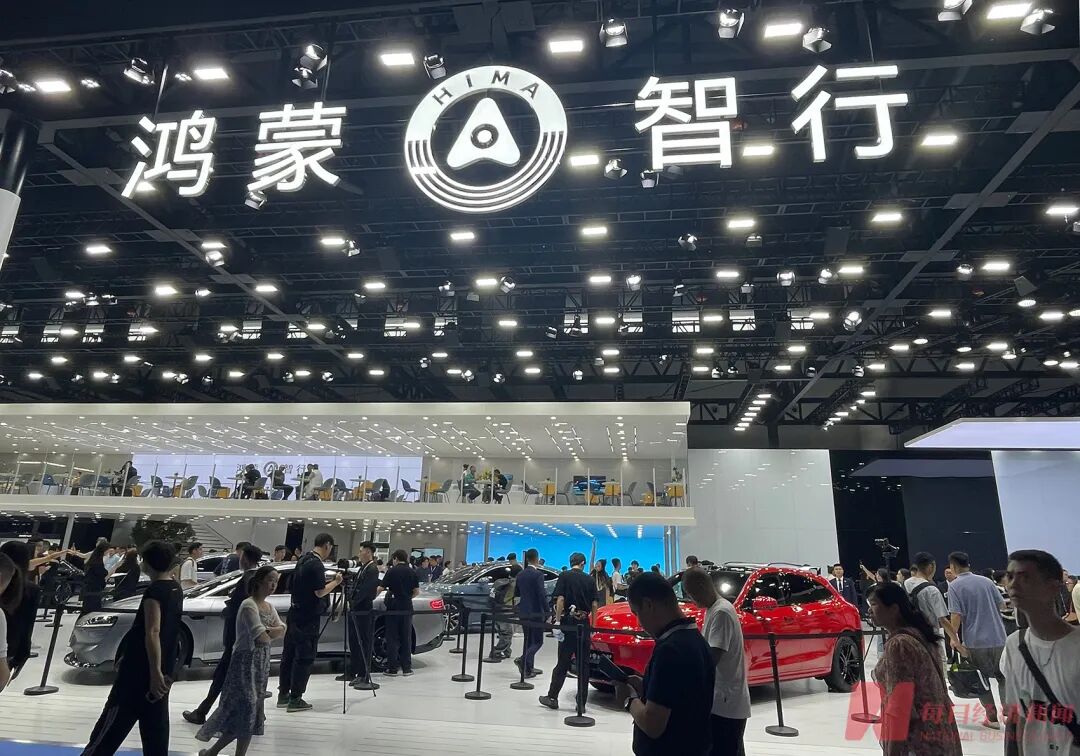
中国主要车企1月汽车交付数据汇总
Xin Lang Cai Jing· 2026-02-01 13:08
格隆汇2月1日|比亚迪:1月新能源汽车销量210051辆,同比下降30.11%。 鸿蒙智行:1月交付57915台,同比增长65.6%。 问界汽车:1月交付40016辆,同比增长83%。 理想汽车:1月交付27668辆。 蔚来汽车:1月交付27182台,同比增长96.1% 小米汽车:1月交付超39000台。 零跑汽车:1月交付32059台,同比增长27%。 小鹏汽车:1月交付20011台。 岚图汽车:1月交付10515辆,同比增长31%。 极氪:1月交付23852台,同比增长99.7%。 ...
新势力新年首交卷:同比增长分化明显 零跑继续领跑、理想重返“榜眼”
Xin Lang Cai Jing· 2026-02-01 11:48
Core Viewpoint - The new energy vehicle companies, including Leap Motor, Li Auto, NIO, and Xpeng, reported their January delivery figures, showing year-on-year growth but a significant decline compared to December due to seasonal market weakness and the expiration of tax incentives [1]. Delivery Performance - Leap Motor delivered 32,059 vehicles in January, a year-on-year increase of 27.37% but a month-on-month decrease of 46.94%. The company is accelerating channel development, adding 85 new stores to reach a total of 1,068 nationwide [2]. - Li Auto's January deliveries reached 27,668 vehicles, up 7.55% year-on-year but down 37.47% month-on-month. The company faced production delays due to battery supply issues, affecting the delivery schedule of its i6 and i8 models [3]. - NIO delivered 27,182 vehicles in January, marking a 96.08% year-on-year increase but a 43.53% month-on-month decline. The company highlighted the high margins of its new ES8 model, which is expected to enhance overall sales and profitability [3]. - Xpeng's January deliveries totaled 20,011 vehicles, reflecting a 34.07% year-on-year decline and a 46.65% month-on-month drop. The company launched four new models in January and anticipates strong growth, particularly in overseas markets [5]. Market Insights - The decline in deliveries is attributed to the traditional off-peak season at the beginning of the year and the impact of the end of the vehicle purchase tax exemption, which had previously pulled forward some demand [1]. - Industry experts expect the automotive retail market to gradually recover as local vehicle replacement subsidy policies are implemented and pre-holiday purchasing demand is released [5]. Technological Advancements - Both Li Auto and NIO announced advancements in their smart technology offerings, indicating increased competition in the smart vehicle sector. Li Auto released an OTA update with 40 new features and 25 optimizations, while NIO introduced a new version of its NIO World Model [4].

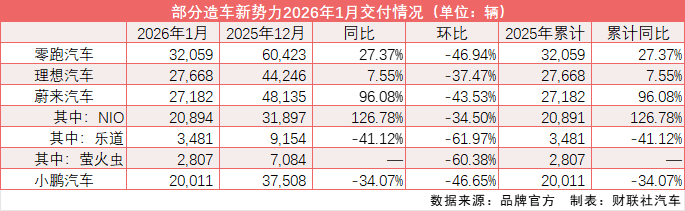
小鹏汽车2026年1月共交付新车20011辆
Bei Jing Shang Bao· 2026-02-01 10:41
Group 1 - The core point of the article is that Xpeng Motors reported a total delivery of 20,011 new vehicles in January 2026 [1] Group 2 - The delivery figure indicates a significant performance metric for the company in the electric vehicle market [1]