
TRIP.COM(09961)

Search documents
智通ADR统计 | 1月17日
智通财经网· 2026-01-16 23:57
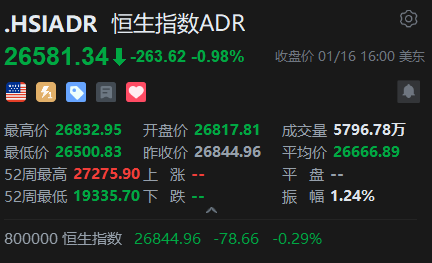
Group 1 - Major blue-chip stocks mostly declined, with HSBC Holdings closing at HKD 128.695, up 0.15% from the previous close in Hong Kong; Tencent Holdings closed at HKD 612.833, down 0.76% [2] - Tencent Holdings reported a latest price of HKD 617.500, with a decrease of HKD 4.500 or 0.72%; its ADR price is HKD 612.833, reflecting a decline of HKD 4.667 [3] - HSBC Holdings had a latest price of HKD 128.500, increasing by HKD 0.300 or 0.23%; its ADR price is HKD 128.695, showing a slight increase of HKD 0.195 [3] Group 2 - Other notable stocks include China Construction Bank at HKD 7.830, down 0.25%, and Xiaomi Group at HKD 37.100, down 2.01% [3] - AIA Group saw a decline of HKD 1.300 or 1.53%, closing at HKD 83.550; its ADR price is HKD 83.075, down HKD 0.475 [3] - Meituan-W closed at HKD 100.000, down 0.79%, while JD.com saw a decrease of HKD 1.500 or 1.30%, closing at HKD 113.600 [3]





TCOM ANNOUNCEMENT: If You Have Suffered Losses in Trip.com Group Limited (NASDAQ: TCOM), You Are Encouraged to Contact The Rosen Law Firm About Your Rights
Globenewswire· 2026-01-16 23:11
Core Viewpoint - Rosen Law Firm is investigating potential securities claims on behalf of shareholders of Trip.com Group Limited due to allegations of materially misleading business information [1] Group 1: Investigation and Legal Action - Shareholders of Trip.com Group Limited may be entitled to compensation through a class action without any out-of-pocket fees [2] - The Rosen Law Firm is preparing a class action to seek recovery of investor losses [2] Group 2: Stock Performance and Regulatory Issues - Trip.com stock fell 17% on January 14, 2026, after the company disclosed it is under investigation by China's market regulator for potential antitrust violations [3]


Trip.com: Antitrust Overhang Creates An Attractive Entry Point (NASDAQ:TCOM)
Seeking Alpha· 2026-01-16 12:56
Group 1 - The article discusses the role of buy-side hedge professionals who conduct fundamental, income-oriented, long-term analysis across various sectors globally in developed markets [1] - It emphasizes the importance of engaging in discussions about investment ideas and strategies among professionals in the hedge fund industry [1] Group 2 - The article does not provide specific company or industry insights, focusing instead on the general practices and perspectives of hedge fund analysts [2][3]

Trip.com: Antitrust Overhang Creates An Attractive Entry Point
Seeking Alpha· 2026-01-16 12:56
Group 1 - The article discusses the role of buy-side hedge professionals who conduct fundamental, income-oriented, long-term analysis across various sectors in developed markets globally [1] - It emphasizes the importance of engaging in discussions about investment ideas and strategies among professionals in the hedge fund industry [1] Group 2 - The article does not provide specific company or industry insights, focusing instead on the general practices and perspectives of hedge fund analysts [2][3]

携程被立案:企业的本质是什么?
Sou Hu Cai Jing· 2026-01-16 08:56
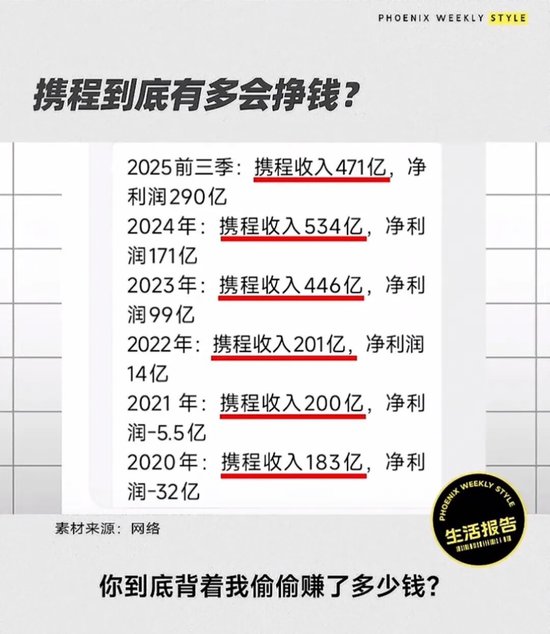
Core Viewpoint - The article critiques the current state of Chinese companies, particularly platform giants like Ctrip, for prioritizing profit over social value, suggesting that this focus on growth has led to a distorted business ethos [2][4][12]. Group 1: Company Performance and Impact - Ctrip reported a net profit of 19.9 billion yuan in the third quarter, averaging over 200 million yuan per day, which is more than the combined earnings of its upstream and downstream partners in the industry [2]. - The article highlights that the suffering is not limited to Ctrip but extends to other platform companies like Meituan, Pinduoduo, and Douyin, indicating a broader issue within the platform economy [3]. Group 2: Business Philosophy and Values - The growth mindset of Chinese companies has become overly performance-oriented, treating financial metrics as the sole purpose of existence, which is seen as a fundamental misunderstanding of business [4][5]. - The essence of a company should not be merely profit generation but rather solving social problems, as articulated by business theorists like Coase, Schumpeter, and Drucker [6][11]. Group 3: Ethical Considerations and Responsibilities - The article argues that the current approach of companies, driven by metrics and monopolistic practices, leads to societal discontent and a loss of ethical grounding [10][12]. - Companies are urged to reflect on their societal impact and responsibilities, questioning whether their existence benefits the world or merely serves their own growth ambitions [14].
携程年赚300亿元+,或被罚65亿高不高?
Xin Lang Cai Jing· 2026-01-16 07:14
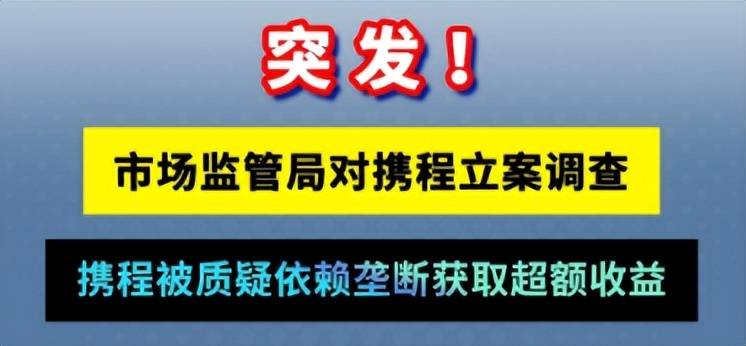
Core Viewpoint - Ctrip is facing a potential fine ranging from 4.9 billion to 6.5 billion yuan due to an investigation by the State Administration for Market Regulation, which is higher than the fines imposed on other major companies like Meituan and Didi [1][15]. Group 1: Potential Fines - The estimated fine of 6.5 billion yuan is calculated based on the Anti-Monopoly Law, which allows for penalties of 1% to 10% of the previous year's revenue. Assuming a revenue of 65 billion yuan for 2025, the maximum fine could reach 6.5 billion yuan [2][16]. - This fine is significant, as many large companies do not generate this amount in annual net profit, indicating that such a penalty could severely impact Ctrip's financial performance [3][17]. Group 2: Financial Performance - Ctrip reported revenues of 47.1 billion yuan and a net profit of 29 billion yuan for the first three quarters of 2025, with an expected total profit exceeding 35 billion yuan for the year [5][19]. - The company has an impressive gross margin of 81% and a market share of 72%, showcasing its strong profitability and market position [7][21]. Group 3: Market Implications - The fine is not merely a financial penalty but is expected to lead to significant business restructuring, particularly targeting revenue streams that operate in gray areas [9][23]. - There are allegations that Ctrip's practices may involve not only price discrimination but also more serious issues such as money laundering and fraud, highlighting the need for a fair competitive environment in the market [9][23]. Group 4: Company Background - Ctrip is registered in the Cayman Islands, indicating its international operational structure [10][24].
逼迫“二选一”、抢夺定价权 携程“盘剥”商户被反垄断调查
Xin Lang Cai Jing· 2026-01-16 07:08
Core Viewpoint - The State Administration for Market Regulation has initiated an investigation into Ctrip Group for suspected abuse of market dominance, particularly in its hotel business, following numerous complaints from merchants and prior local discussions [3][12]. Group 1: Investigation Background - The investigation is a response to previous local discussions and industry complaints, with Ctrip having been repeatedly interviewed by market regulators since the second half of 2025 [3][12]. - The investigation is based on the Anti-Monopoly Law of the People's Republic of China, focusing on Ctrip's alleged monopolistic practices in the online travel industry [3][12]. Group 2: Merchant Complaints - Numerous merchants have reported unreasonable terms imposed by Ctrip, claiming they have lost pricing power and are forced to comply with platform demands [4][14]. - Merchants have expressed frustration over the difficulty in disabling the "price adjustment assistant" feature, which they claim undermines their pricing strategies [4][13]. - Complaints have highlighted Ctrip's "choose one from two" policy, which may restrict merchants from listing on competing platforms while maintaining high commission rates [4][14]. Group 3: Market Share and Competition - Ctrip holds a significant market share in the hotel and travel sector, with a projected GMV market share of 56% in 2024, while its closest competitor, Tongcheng, holds 13% [6][14]. - The combined market share of Ctrip and Tongcheng accounts for nearly 70% of the domestic OTA market, indicating a lack of fair competition [6][14]. Group 4: Financial Performance - Despite the challenges faced by merchants, Ctrip's financial performance has been strong, with a net profit of 17.2 billion yuan in 2024, representing a 72% year-on-year increase [7][15]. - Approximately 40% of Ctrip's revenue is derived from hotel booking services, highlighting the importance of this segment to its overall business [7][15]. Group 5: Regulatory Context - The investigation aligns with the government's broader efforts to address "involutionary" competition, which is characterized by low-quality, low-price competition that disrupts the market [8][17]. - New regulations under the Anti-Unfair Competition Law aim to prevent platforms from forcing merchants to sell below cost and engaging in deceptive practices [9][18]. - If found guilty of abusing its market position, Ctrip could face administrative fines and the confiscation of illegal gains, as stipulated by the Anti-Monopoly Law [9][18].
携程涉嫌垄断被立案调查,其金融版图都有哪些?
Sou Hu Cai Jing· 2026-01-16 04:50
Core Viewpoint - Ctrip is under investigation by the State Administration for Market Regulation for suspected monopolistic behavior, which may lead to significant fines and increased regulatory scrutiny on its comprehensive financial ecosystem [2] Group 1: Investigation and Financial Impact - The investigation is based on the Anti-Monopoly Law of the People's Republic of China, with potential fines estimated at 4% of Ctrip's domestic sales revenue for 2024, amounting to approximately 1.5 billion RMB, which could reduce its net profit margin by 2 percentage points in fiscal year 2026 [2] - Ctrip has stated it will cooperate with regulatory authorities and aims to foster a sustainable market environment [2] Group 2: Financial Ecosystem Overview - Ctrip has developed a comprehensive financial ecosystem that includes consumer finance, insurance agency, payment services, and micro-lending, leveraging its vast user base to monetize traffic and enhance its core business competitiveness [3] - In 2024, the financial segment generated revenue of 4.6 billion RMB, accounting for 8.61% of total revenue, with a year-on-year growth of 31.43% [3] Group 3: Key Financial Licenses and Operations - Ctrip has acquired multiple financial licenses through direct investments and full ownership, including a third-party payment license obtained through the acquisition of Shanghai Dongfang Huirong Information Technology Service Co., Ltd. [4] - The core entity, Chongqing Ctrip Micro Loan Co., Ltd., has a registered capital of 5 billion RMB and offers consumer finance products, contributing significantly to Ctrip's financial operations [4] Group 4: Compliance Risks and Regulatory Challenges - Ctrip's financial operations include commercial factoring, financing guarantees, insurance agency, and fund sales, with a leading position in license coverage among OTA peers [5] - Despite strong growth in Chongqing Ctrip Micro Loan's revenue and profit, compliance risks are emerging, particularly regarding the ownership structure of Shanghai Shangcheng Consumer Finance Co., Ltd., which does not fully comply with new regulatory requirements [6][7] - Ctrip's fund sales division faces challenges due to the lack of a public fund sales license, limiting its business expansion in this area [8]

携程网“算法霸权”,全国酒店的利润,都没它赚得多
Sou Hu Cai Jing· 2026-01-16 03:48
Core Viewpoint - The National Market Supervision Administration has officially announced an investigation into Ctrip Group, the leading player in the online travel market, for allegedly abusing its market dominance to engage in monopolistic practices [1] Group 1: Market Position and Dominance - Ctrip and its affiliated platforms account for nearly 70% of the online travel market, with Ctrip's main brand alone holding a 56% market share [3] - Ctrip has over 100 million monthly active users, giving it significant leverage over hotels and other service providers [3] Group 2: Monopolistic Practices - Ctrip employs a "two-choice" policy, compelling hotels to either exclusively sell on its platform or offer the lowest prices on Ctrip, effectively eliminating competition [4] - The commission rates for hotels have risen to over 15%, with some reaching as high as 30%, significantly impacting the profitability of many hotels [6] - Ctrip's "price adjustment assistant" feature allows it to unilaterally change hotel prices without consent, undermining hotels' pricing authority [7] Group 3: Financial Performance - In the first three quarters of 2025, Ctrip's net profit reached 29.013 billion yuan, which is 1.5 times the total profit of all listed tourism companies in A-shares [8] - Ctrip's gross profit margin stands at 81.11%, ranking seventh in the Fortune China 500 profit margin list, indicating its high profitability compared to many tech giants [8] Group 4: Implications of the Investigation - The investigation signals a critical examination of the "winner-takes-all" logic in platform economies, emphasizing that market dominance should not equate to unchecked power [10] - The outcome of the investigation may lead to significant changes in the online travel industry, prompting platforms to reconsider their practices and focus on building a sustainable market environment [10]

携程因涉嫌垄断被立案调查,或面临最高65亿元罚款
2 1 Shi Ji Jing Ji Bao Dao· 2026-01-16 03:48
Core Viewpoint - The State Administration for Market Regulation has initiated an antitrust investigation against Ctrip Group for alleged abuse of market dominance, leading to a significant drop in the company's stock price [1] Group 1: Investigation Details - The investigation is based on the Anti-Monopoly Law of the People's Republic of China, following prior checks [1] - Ctrip has faced complaints from merchants since 2025 for practices such as unauthorized price changes and unreasonable trading conditions [1] Group 2: Impact on Merchants - The Yunnan Province Tourism Homestay Association reported a continuous increase in complaints related to Ctrip's practices [1] - Ctrip's commission rates have risen from 8%-10% a few years ago to 12%-18%, causing financial strain on some homestays, with total costs nearing 40% [1] Group 3: Potential Penalties - Legal experts estimate that Ctrip could face fines ranging from 650 million to 6.5 billion yuan based on its previous year's sales of approximately 65 billion yuan, making it one of the highest antitrust fines [1]