BABA(09988)

Search documents
阿里巴巴-W(09988.HK):1月9日南向资金增持80.06万股
Sou Hu Cai Jing· 2026-01-09 19:32
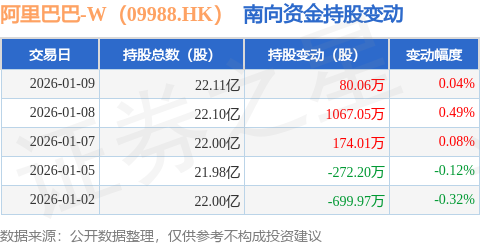
Core Viewpoint - Southbound funds have increased their holdings in Alibaba-W (09988.HK) by 800,600 shares on January 9, 2026, indicating a positive sentiment towards the company [1]. Group 1: Shareholding Changes - In the last five trading days, southbound funds have increased their holdings on three occasions, with a total net increase of 3,489,500 shares [1]. - Over the past twenty trading days, there have been ten days of net reductions in holdings, totaling 14,706,600 shares [1]. - As of January 9, 2026, southbound funds hold 2.211 billion shares of Alibaba-W, representing 11.56% of the company's total issued ordinary shares [1]. Group 2: Trading Data - On January 9, 2026, the total shareholding was 2.211 billion shares, with a change of 800,600 shares, reflecting a 0.04% increase [2]. - On January 8, 2026, the total shareholding was 2.210 billion shares, with a change of 10,670,500 shares, reflecting a 0.49% increase [2]. - On January 7, 2026, the total shareholding was 2.200 billion shares, with a change of 174,010 shares, reflecting a 0.08% increase [2]. - On January 5, 2026, the total shareholding was 2.198 billion shares, with a change of -2,722,000 shares, reflecting a -0.12% decrease [2]. - On January 2, 2026, the total shareholding was 2.200 billion shares, with a change of -6,999,700 shares, reflecting a -0.32% decrease [2]. Group 3: Company Overview - Alibaba Group Holding Limited provides technology infrastructure and marketing platforms, operating across seven business segments [2]. - The Chinese commerce segment includes retail businesses such as Taobao, Tmall, and Hema, as well as wholesale operations [2]. - The international commerce segment encompasses international retail and wholesale businesses like Lazada and AliExpress [2]. - The local services segment includes location-based services such as Ele.me, Amap, and Fliggy [2]. - The Cainiao segment offers domestic and international logistics services and supply chain management solutions [2]. - The cloud segment provides public and hybrid cloud services to domestic and international enterprises, including Alibaba Cloud and DingTalk [2]. - The digital media and entertainment segment includes Youku, Quark, Alibaba Pictures, and other content and distribution platforms, as well as online gaming [2]. - The innovation and other segment includes DAMO Academy, Tmall Genie, and other businesses [2].


美团、淘宝闪购、京东外卖集体表态
2 1 Shi Ji Jing Ji Bao Dao· 2026-01-09 15:38
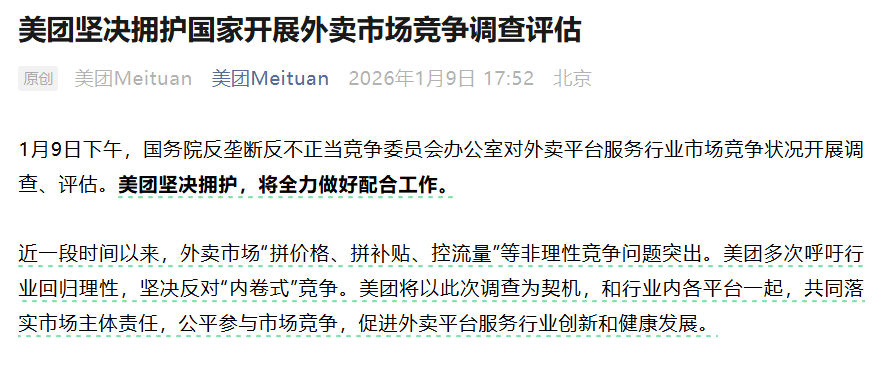
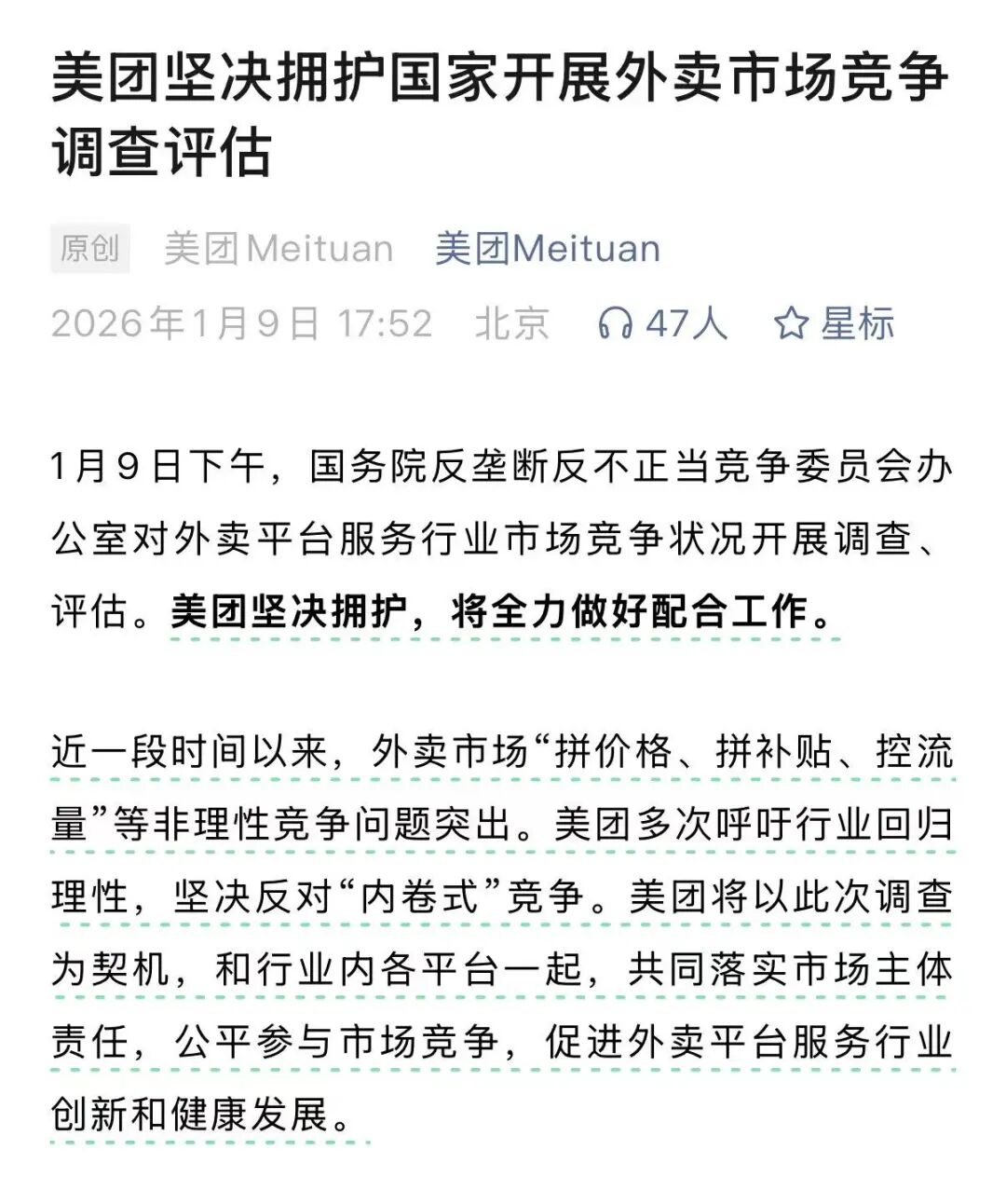
Core Viewpoint - The State Council's Anti-Monopoly and Anti-Unfair Competition Committee Office has initiated an investigation and assessment of the market competition status in the food delivery platform service industry, prompting responses from major players like Meituan, Taobao Flash Sale, and JD Delivery [1][3][5]. Group 1: Company Responses - Meituan expressed strong support for the investigation and emphasized the need for rational competition, opposing irrational practices such as price wars and excessive subsidies [1]. - Taobao Flash Sale highlighted its commitment to fair competition as a core principle of market economy and stated its adherence to relevant laws and regulations while welcoming the investigation [3]. - JD Delivery also expressed support for the investigation, advocating for the maintenance of fair competition and the protection of consumer and operator rights [5]. Group 2: Industry Challenges - The food delivery market has been facing significant issues related to irrational competition, including price wars, excessive subsidies, and traffic control, which have been described as "involutionary" competition [1]. - Companies are calling for a return to rational competition and are committed to fulfilling their market responsibilities to foster innovation and healthy development within the industry [1][6].


美团、淘宝闪购、京东外卖集体表态
21世纪经济报道· 2026-01-09 15:10
Core Viewpoint - The State Council's Anti-Monopoly and Anti-Unfair Competition Committee has initiated an investigation and assessment of the market competition status in the food delivery platform service industry, prompting responses from major players like Meituan, Taobao Flash Sale, and JD Delivery [1][3][5]. Group 1: Company Responses - Meituan expressed strong support for the investigation, emphasizing the need for rational competition and opposing "involution" in the industry. The company aims to collaborate with other platforms to promote innovation and healthy development in the food delivery sector [1]. - Taobao Flash Sale highlighted the importance of fair competition as a core principle of market economy, committing to compliance with relevant laws and regulations. The company plans to work with merchants and partners to enhance service quality and maintain a fair market environment [3]. - JD Delivery welcomed the investigation, supporting measures to combat involution and protect the rights of consumers, operators, and delivery personnel. The company intends to innovate its supply chain model to promote high-quality food delivery services [5].

南向资金今日净买入68.15亿港元,腾讯控股净买入14.12亿港元
Zheng Quan Shi Bao Wang· 2026-01-09 14:41
Core Viewpoint - The Hang Seng Index rose by 0.32% on January 9, with southbound capital totaling HKD 111.39 billion, resulting in a net inflow of HKD 6.81 billion [1] Group 1: Southbound Capital Activity - Total southbound trading amounted to HKD 111.39 billion, with buy transactions at HKD 59.10 billion and sell transactions at HKD 52.29 billion, leading to a net buy of HKD 6.81 billion [1] - The Shenzhen Stock Connect saw a total trading volume of HKD 44.30 billion, with net buying of HKD 5.15 billion, while the Shanghai Stock Connect had a total trading volume of HKD 67.08 billion, resulting in a net buy of HKD 1.66 billion [1] Group 2: Active Stocks - Alibaba-W had the highest trading volume among southbound stocks at HKD 99.89 billion, with a net sell of HKD 26.22 billion, despite a closing price increase of 2.73% [1] - Tencent Holdings recorded a net buy of HKD 14.12 billion, closing down by 0.81%, while Xiaomi Group-W had a net buy of HKD 8.70 billion, closing down by 0.53% [1][2] - Kuaishou-W also saw significant activity with a net buy of HKD 7.76 billion, closing up by 3.89% [2] Group 3: Continuous Net Buying - Xiaomi Group-W and Tencent Holdings were noted for continuous net buying, with Xiaomi seeing 7 consecutive days of net buying totaling HKD 55.53 billion, and Tencent with 3 consecutive days totaling HKD 42.31 billion [2]


南向资金今日净买入68.15亿港元 腾讯控股净买入14.12亿港元
Zheng Quan Shi Bao Wang· 2026-01-09 14:35
Core Viewpoint - On January 9, the Hang Seng Index rose by 0.32%, with southbound funds totaling HKD 111.39 billion in trading volume, resulting in a net inflow of HKD 6.81 billion [1] Group 1: Southbound Trading Activity - The total trading volume for southbound funds was HKD 111.39 billion, with buy transactions amounting to HKD 59.10 billion and sell transactions at HKD 52.29 billion, leading to a net buy of HKD 6.81 billion [1] - The Hong Kong Stock Connect (Shenzhen) recorded a total trading volume of HKD 44.30 billion, with net buying of HKD 5.15 billion, while the Hong Kong Stock Connect (Shanghai) had a trading volume of HKD 67.08 billion and a net buy of HKD 1.66 billion [1] Group 2: Active Stocks - Alibaba-W had the highest trading volume among southbound funds at HKD 99.89 billion, but experienced a net sell of HKD 26.22 billion, despite a closing price increase of 2.73% [1] - Tencent Holdings saw a net buy of HKD 14.12 billion, with a closing price decrease of 0.81%, while Xiaomi Group-W had a net buy of HKD 8.70 billion [1] - Kuaishou-W recorded a net buy of HKD 7.76 billion, and Meituan-W and China Mobile faced net sells of HKD 3.67 billion and HKD 3.11 billion, respectively [1] Group 3: Continuous Net Buying - Xiaomi Group-W and Tencent Holdings were the only two stocks with continuous net buying for more than three days, with Xiaomi Group-W having a total net buy of HKD 55.53 billion over seven days, and Tencent Holdings with HKD 42.31 billion over three days [2]


港股通(深)净买入51.55亿港元
Zheng Quan Shi Bao Wang· 2026-01-09 14:34
Core Viewpoint - On January 9, the Hang Seng Index rose by 0.32% to close at 26,231.79 points, with a net inflow of HKD 6.815 billion through the southbound trading channel [1] Group 1: Market Activity - The total trading volume for southbound trading on January 9 was HKD 111.389 billion, with a net buying amount of HKD 6.815 billion [1] - The Shanghai Stock Exchange's southbound trading amounted to HKD 67.084 billion, with a net buying of HKD 1.660 billion, while the Shenzhen Stock Exchange recorded HKD 44.305 billion in trading with a net buying of HKD 5.155 billion [1] Group 2: Active Stocks - In the Shanghai Stock Exchange's southbound trading, Alibaba-W had the highest trading volume at HKD 65.69 billion, followed by Goldwind Technology at HKD 33.07 billion and SMIC at HKD 21.74 billion [1] - Tencent Holdings had the highest net buying amount of HKD 0.883 billion, despite a closing price drop of 0.81% [1] - Alibaba-W recorded the highest net selling amount of HKD 2.114 billion, while its closing price increased by 2.73% [1] Group 3: Detailed Stock Data - The top active stocks in the southbound trading on January 9 included: - Alibaba-W: Trading amount of HKD 656.911 million with a net selling of HKD 211.364 million, closing up by 2.73% [3] - Goldwind Technology: Trading amount of HKD 330.673 million with a net selling of HKD 13.003 million, closing up by 3.41% [3] - SMIC: Trading amount of HKD 217.368 million with a net selling of HKD 17.406 million, closing down by 0.73% [3] - Tencent Holdings: Trading amount of HKD 209.478 million with a net buying of HKD 52.898 million, closing down by 0.81% [3]
三大外卖平台 集体发声
Zhong Guo Zheng Quan Bao· 2026-01-09 14:02
Core Viewpoint - The State Administration for Market Regulation has initiated an investigation into the competitive practices of the food delivery platform industry, citing issues such as excessive subsidies, price wars, and traffic control that harm the real economy and exacerbate "involution" competition [1] Group 1: Investigation and Regulatory Actions - The investigation aims to assess the competition status in the food delivery platform sector, evaluate monopoly risks, and regulate market order, utilizing methods such as on-site verification, interviews, and surveys [1] - The investigation reflects the government's commitment to ensuring fair competition and compliance within the industry, urging platforms to cooperate and adhere to antitrust responsibilities [1] Group 2: Industry Responses - Meituan expressed strong support for the investigation and emphasized the need for rational competition, committing to collaborate with other platforms to fulfill market responsibilities and promote healthy industry development [2] - Taobao Shanguo welcomed the investigation, pledging to maintain fair competition and work with merchants and partners to enhance service quality [4] - JD.com also supported the decision, advocating against harmful competition and focusing on quality development through supply chain innovation [7] Group 3: Financial Impact and Historical Context - In the third quarter of 2025, Meituan reported an adjusted net loss of 16 billion yuan, indicating that the price war has not created value for the industry and is unsustainable [9] - Alibaba's operating profit fell by 85% year-on-year to 5.365 billion yuan, with its adjusted EBITA for the e-commerce segment down 76% [10] - JD.com's net profit decreased by 54.7% year-on-year to 5.3 billion yuan, with new business losses significantly increasing [10]
美团、淘宝闪购,最新发声!
中国基金报· 2026-01-09 13:58
Core Viewpoint - The article discusses the recent announcement by the State Council's Anti-Monopoly and Anti-Unfair Competition Committee to conduct an investigation and assessment of the competitive conditions in the food delivery platform service industry, highlighting issues of irrational competition such as price wars and excessive subsidies [2][8]. Group 1: Responses from Major Players - Meituan expressed strong support for the investigation, emphasizing the need for the industry to return to rational competition and to oppose "involution" competition [3]. - Taobao Shanguo stated that fair competition is essential for the sustainable innovation and healthy development of the food delivery service industry, and it adheres to relevant laws and regulations [5]. - Taobao Shanguo welcomed the investigation and committed to cooperating actively, aiming to maintain a fair and orderly market environment [6]. Group 2: Investigation Details - The investigation aims to address issues such as excessive subsidies, price competition, and traffic control that have been reported to harm the real economy and exacerbate "involution" competition [8]. - The assessment will involve on-site verification, face-to-face interviews, and surveys to gather comprehensive insights from various stakeholders, including platform operators, new employment groups, and consumers [8]. - The market regulatory authority also released ten governance rules to combat "involution" competition, which includes basic requirements for food delivery platform services, focusing on merchant management, pricing behavior, and consumer rights protection [8].
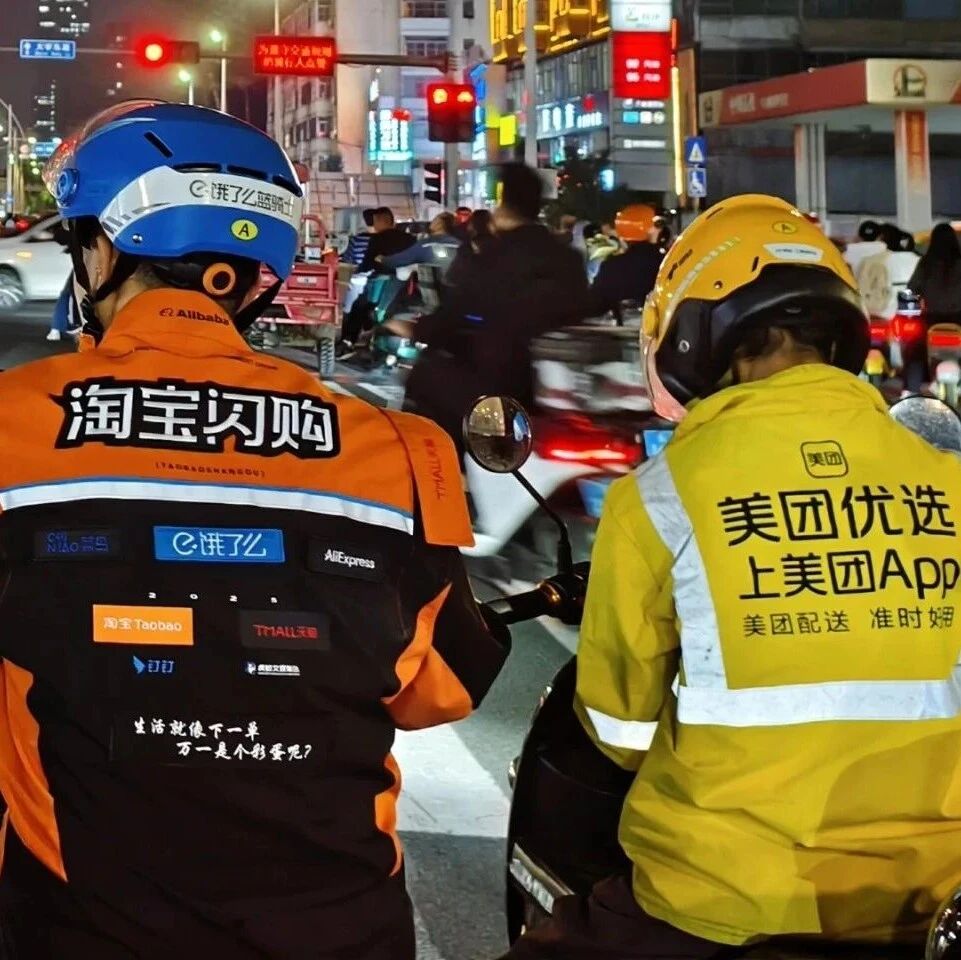
“不想打 停不下”的外卖大战迎来重磅监管,2026年拼什么
第一财经· 2026-01-09 13:18
Core Viewpoint - The article highlights the ongoing issues of disorderly competition in the food delivery industry, prompting regulatory scrutiny and a shift towards efficiency competition as platforms face pressure to move away from unsustainable subsidy wars [3][4]. Regulatory Investigation - The State Administration for Market Regulation has initiated an investigation into the competitive landscape of the food delivery service industry, citing concerns over excessive subsidies, price wars, and their negative impact on the real economy [3][6]. - The investigation aims to establish rules for high-quality development in the industry, rather than merely suppressing platforms [9]. Industry Response - Major platforms like Meituan, Taobao Shanguo, and JD have expressed support for the investigation, committing to fair competition and innovation in the food delivery sector [5][6]. - The platforms acknowledge that low prices can no longer be the primary focus of competition, prompting a need to explore other competitive factors [5][10]. Financial Performance - Meituan reported a 2.8% year-on-year decline in revenue for its core local business in Q3 2025, resulting in an operating loss of 14.1 billion yuan, with a loss rate of 20.9% [10]. - Alibaba's instant retail business saw a 60% year-on-year revenue increase to 22.9 billion yuan, but adjusted EBITA fell by 78% to 9.073 billion yuan due to investments in user experience and technology [10]. - JD reported steady growth in food delivery GMV and order volume, attributing this to improved operational efficiency [10]. Shift in Competitive Strategy - The article suggests that the future of competition in the food delivery industry may hinge on high average order values rather than low prices, with platforms focusing on enhancing the quality of user engagement [6][9]. - Analysts predict that regulatory pressure will encourage platforms to return to sustainable development practices, moving away from aggressive subsidy strategies [7][9].
大摩:中国在AI竞赛中拥有独特优势,阿里是“最佳赋能者”,腾讯具“最高2C变现潜力”
硬AI· 2026-01-09 12:29
Core Insights - Morgan Stanley highlights that China's AI industry is adopting a unique path by utilizing an "open model" strategy to counter the global "closed" systems, accelerating monetization at the application level [2][3] - The report indicates that major Chinese platforms like Alibaba and Tencent are leveraging their cloud computing capabilities and private data advantages to transform AI technology into high-return commercial value, shifting the capital market's focus from computing power speculation to application-based pricing logic [2][4] Market Trends - Morgan Stanley notes a structural shift in the market, with China capturing a significant share of the global state-of-the-art (SOTA) models, accounting for half of the top 10 as of January 8 [3] - The total addressable market (TAM) for cloud AI in China is projected to reach $50 billion by 2027, indicating a strengthening resilience in the domestic computing supply chain [3] Investment Focus - Investors should focus on the monetization capabilities and ecological barriers at the application level rather than just the infrastructure arms race [4] - Alibaba is identified as the "best enabler" of AI development in China due to its integration of cloud computing and model capabilities, while Tencent is noted for having the highest consumer-facing (2C) monetization potential and high return on investment (ROI) [4][12] Application Landscape - The Chinese market is witnessing a unique landscape where "super applications" evolve alongside the explosion of "AI native applications" [6] - WeChat is emphasized as a pioneer AI agent with significant potential, boasting 1.1 billion monthly active users (MAU) and high user engagement metrics, which provide fertile ground for AI integration [6][8] Competitive Dynamics - ByteDance's Doubao, Baidu's Wenxin Yiyan, and Alibaba's Quark and Yuanbao are rapidly competing for user engagement, evolving from simple chatbots to more complex AI assistants [8] - The enterprise (2B) sector is also experiencing a quiet transformation, with strong intentions for deploying generative AI (GenAI) across various industries, including advertising, healthcare, and finance [10][11] Company Differentiation - Alibaba is positioned as the "best AI enabler" due to its robust infrastructure and integration across various business scenarios, while Tencent is recognized for its high consumer monetization potential through its WeChat ecosystem [12] - ByteDance is characterized as a "full-stack AI leader," with comprehensive coverage from foundational engines to various AI applications, while Baidu faces challenges in its core advertising business due to AI search transformations [12]