BABA(09988)

Search documents
计算机行业研究:国内算力斜率陡峭
SINOLINK SECURITIES· 2026-01-11 09:14
Investment Rating - The report does not explicitly state an investment rating for the industry Core Insights - The competition in AI entry points is intensifying, with major companies increasing their investments. China's AI presence globally has significantly improved, with domestic large models continuously iterating. Despite GPT-5.2 and Gemini 3 Pro leading, Chinese models have effectively altered the North American dominance in the competitive landscape. In the global Top 10, three positions are held by Chinese models, and in the Top 15, there are six Chinese companies. By 2025, China's open-source AI model usage is expected to account for over 70% of the global market [2][11][19] - The demand for inference has surged, with the emergence of o1 class inference models unlocking approximately 10 times the potential of traditional models in terms of inference-time compute. The demand for computing power has shifted from being solely "training-driven" to a dual focus on "training + inference" [2][5][37] - The battle for entry points has evolved beyond mobile devices to OS-level intelligent agents and super apps. By December 24, 2025, ByteDance's AI application Doubao announced daily active users (DAU) exceeding 100 million, while Qianwen App reached over 30 million monthly active users within 23 days of public testing, becoming the fastest-growing AI application globally. Doubao bypasses traditional interfaces, creating an "AI operating system" that directly interacts with super apps like WeChat and Alipay, challenging the rules of the traditional app era [2][44][45] Summary by Sections AI Entry Point Competition - China's AI global presence has significantly improved, with domestic large models continuously iterating. In the global Top 10, three positions are held by Chinese models, and in the Top 15, there are six Chinese companies. By 2025, China's open-source AI model usage is expected to account for over 70% of the global market [2][11][19] - The competition for entry points has evolved beyond mobile devices to OS-level intelligent agents and super apps, with significant user engagement reported for new AI applications [2][44][45] Domestic Chip Breakthroughs - The smart computing center in China is expanding, with a projected compound annual growth rate (CAGR) of 57% from 2020 to 2028, reaching 2,781.9 EFLOPS by 2028. Domestic chip technology is steadily improving, with local cloud service providers accelerating the construction of heterogeneous environments [5][50] - Domestic general-purpose GPUs are upgrading from "usable" to "good," with performance metrics approaching those of leading international models. The production capacity of domestic chip manufacturers like SMIC is continuously increasing, providing solid support for domestic AI chip production [5][53][54] Supply and Demand Dynamics - The demand side is characterized by a surge in inference demand as AI applications become more prevalent, while the supply side sees continuous improvements in domestic GPU performance and accelerated adaptation by cloud service providers [5][59] - The AI server market is expected to see a shift towards inference servers becoming the mainstream, with a projected market size of approximately $39.3 billion in 2024, reflecting a year-on-year growth of 49.7% [5][64]





输入法“变笨”了吗?
经济观察报· 2026-01-11 07:29
Core Viewpoint - The article discusses the challenges faced by input method applications in the era of AI, highlighting user frustrations with accuracy and excessive advertisements, despite significant investments from major tech companies in enhancing these tools [2][4][14]. Group 1: User Experience Issues - Users are increasingly dissatisfied with input methods, reporting issues such as inaccurate word predictions and excessive advertisements, which detract from the overall user experience [2][4]. - A specific case is mentioned where a long-time user of Sogou Input Method uninstalled the app due to frequent incorrect suggestions, indicating a decline in basic functionality despite advanced AI features [4]. - Complaints about the voice recognition capabilities of input methods have also surfaced, with users noting that corrections often take longer than typing the text directly [4]. Group 2: AI Integration and Competition - Major input method providers, including Sogou, Baidu, and iFlytek, are engaged in a competitive race to integrate advanced AI capabilities into their products, aiming to enhance user experience and functionality [2][8][9]. - The input method market is characterized by a concentrated structure, with leading companies holding a combined market share of 84.4% as of July 2025, indicating a competitive landscape [8]. - Input methods are evolving from simple typing tools to becoming the primary interface for AI interactions, with companies aiming to position their products as essential gateways to AI capabilities [9][10]. Group 3: Commercialization and Privacy Concerns - Input methods face challenges in monetization, struggling with a "high traffic, low value" dilemma, which complicates their ability to generate revenue despite having a large user base [15][16]. - Privacy concerns are paramount, as input methods have been criticized for collecting unnecessary personal information, leading to regulatory scrutiny and the need for companies to adapt their data collection practices [16]. - Companies are implementing features that allow users to choose between different modes of data collection, balancing functionality with privacy protection [16]. Group 4: Future Directions - The future of input methods is seen as a shift towards becoming intelligent agents that can understand user intent and context, moving beyond basic text input to more complex interactions [12]. - Companies are exploring multi-modal input methods that incorporate voice, text, and images, which require sophisticated algorithms and technology to manage effectively [17].



新国补落地:普通人省钱攻略大揭秘,手把手教你薅羊毛!
Sou Hu Cai Jing· 2026-01-11 07:11
Core Insights - The new round of "trade-in" subsidy policy in China has been implemented with an initial allocation of 62.5 billion yuan, covering various consumer goods from home appliances to digital devices and automobiles [2][8] - The policy aims to stimulate consumption and promote energy-efficient products, with specific focus on first-level energy efficiency appliances and new energy vehicles [10] Home Appliance Upgrade - The subsidy for home appliances focuses on six core products: refrigerators, washing machines, televisions, air conditioners, computers, and water heaters, with a maximum subsidy of 1,500 yuan per item and a total potential savings of up to 9,000 yuan [2][3] - Sales of first-level energy-efficient appliances surged by 320% in the first week of the policy implementation, indicating strong consumer demand [3] Digital Device Upgrade - The subsidy now includes AI glasses for the first time, allowing consumers to save up to 500 yuan on eligible products priced under 6,000 yuan [4][5] - The digital subsidy covers smartphones, tablets, smartwatches, and smart glasses, with a 15% subsidy rate [4] Automotive Replacement - The policy favors new energy vehicles, offering a maximum subsidy of 20,000 yuan for scrapping old fuel vehicles, significantly reducing the effective purchase price [5][6] - The subsidy structure differentiates between scrapping and replacing vehicles, with varying rates for new energy and fuel vehicles [6] Policy Highlights - A unified national subsidy standard has been established, enhancing the benefits for consumers in regions with previously lower subsidies [8] - The policy is designed to encourage green consumption and accelerate the transition to low-carbon products, as evidenced by a 210% increase in green appliance sales and a 45% rise in new energy vehicle sales in the first week [10] Consumer Caution - Consumers are advised to be vigilant against price manipulation and fraudulent claims, with strict monitoring in place to prevent abuse of the subsidy system [9] - The policy includes specific timelines for subsidy claims, emphasizing the need for timely verification and submission of required documents [9]


唐杰、姚顺雨、杨植麟、林俊旸同台对话背后:5个2026年最重要的AI趋势观察
Xin Lang Cai Jing· 2026-01-11 06:47
Core Insights - A high-profile dialogue on AI took place in Beijing, featuring leading figures in China's large model sector, indicating a significant moment for the industry [1][2][15] - The discussion focused on the evolution of AGI, with a consensus that the future lies in autonomous learning and problem-solving capabilities [3][4][17] Group 1: Key Figures and Their Contributions - Tang Jie, a professor at Tsinghua University and founder of Zhipu AI, recently led the company to become "China's first stock in foundational models" [1][15] - Yao Shunyu, a former OpenAI researcher and now Tencent's chief scientist, emphasized the importance of autonomous learning in AGI's future [4][18] - Lin Junyang, head of Alibaba's Tongyi Qianwen model, discussed the need for models to evolve beyond general-purpose tools to specialized applications [7][21] Group 2: Future Directions in AGI - The next "singularity" in large models is expected to focus on autonomous learning, moving beyond passive responses to proactive decision-making [3][17] - Yao Shunyu highlighted that autonomous learning is a gradual process driven by data and task evolution, with current models already showing signs of self-optimization [4][18] - Concerns about the risks of autonomous AI were raised, emphasizing the need for proper guidance in AI development [3][17] Group 3: Scaling Law and Efficiency - The Scaling Law, which posits that increasing data and computational power leads to better model performance, is facing diminishing returns, prompting a shift towards "Intelligence Efficiency" [5][19] - Tang Jie proposed that future advancements should focus on achieving higher intelligence with less computational investment [5][19] - Yao Shunyu noted that improvements in model architecture and optimization are crucial for enhancing model performance beyond mere scaling [6][20] Group 4: Model Differentiation - The conference highlighted the trend of model differentiation, where models are tailored to specific scenarios rather than being one-size-fits-all solutions [7][21] - Yao Shunyu pointed out that in B2B contexts, strong models can significantly reduce operational costs, while in B2C, the focus should be on contextual understanding [8][22] - Lin Junyang emphasized the importance of integrating models with real-time user environments for better performance in consumer applications [8][22] Group 5: The Future of AI Agents - There is widespread optimism about the potential of AI agents to automate tasks, particularly in B2B settings, though challenges remain in B2C applications [11][25] - The development of agents is seen as a multi-stage process, with current models still reliant on human-defined goals [12][26] - The future of agents may involve more interaction with the physical world, enhancing their utility and effectiveness [11][25] Group 6: Competitive Landscape and Innovation - The dialogue acknowledged the existing gap between Chinese and American AI capabilities, with a consensus on the need for innovation to bridge this divide [12][26][28] - Yao Shunyu emphasized the importance of breakthroughs in computational power and market maturity for China's AI future [13][27] - Tang Jie identified opportunities for China to excel in AI through a culture of risk-taking and innovation among younger generations [14][28]
Alibaba: H200 Provides A Massive Growth Catalyst
Seeking Alpha· 2026-01-10 18:36
Core Viewpoint - Alibaba's shares increased by over 5% following the U.S. government's approval for H200 GPU shipments to China, which is expected to enhance Alibaba's growth potential [1] Group 1: Company Impact - The clearance for H200 GPU shipments is anticipated to provide Alibaba with access to high-performing GPUs, potentially accelerating its growth trajectory [1] Group 2: Market Reaction - The market responded positively to the news, reflected in the more than 5% rise in Alibaba's stock price [1]
国家出手!美团、淘宝闪购、京东集体表态!
Sou Hu Cai Jing· 2026-01-10 18:08
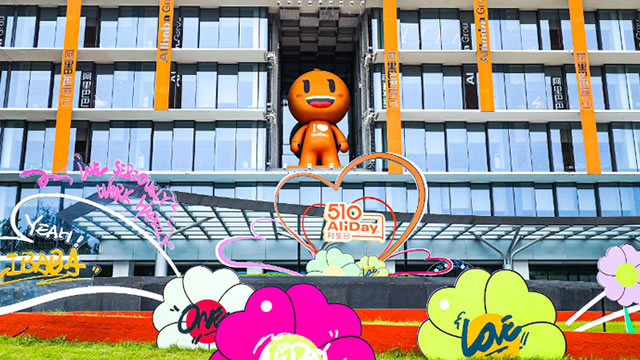
Core Viewpoint - The State Administration for Market Regulation has initiated an investigation into the competitive landscape of the food delivery platform service industry in China, citing issues such as price wars and excessive subsidies that harm the real economy and exacerbate "involution" competition [1][3]. Group 1: Government Actions - The investigation aims to promote lawful and compliant operations among food delivery platforms, ensuring fair competition and a healthy market order [3][9]. - The investigation will involve on-site verification, interviews, and surveys to gather comprehensive insights into competitive behaviors within the industry [9]. Group 2: Company Responses - Meituan expressed strong support for the investigation, emphasizing the need for rational competition and a return to industry norms, while committing to collaborate with other platforms to fulfill market responsibilities [3][9]. - Taobao Shanguo welcomed the investigation and pledged to adhere to compliance responsibilities, aiming to maintain a fair market environment and enhance service quality [5][9]. - JD Delivery also supported the decision, advocating against involution and committing to innovative supply chain models to promote high-quality food delivery services [7][9].

姚顺雨林俊旸杨植麟齐聚,锐评大模型创业与下一代技术范式
第一财经· 2026-01-10 14:21
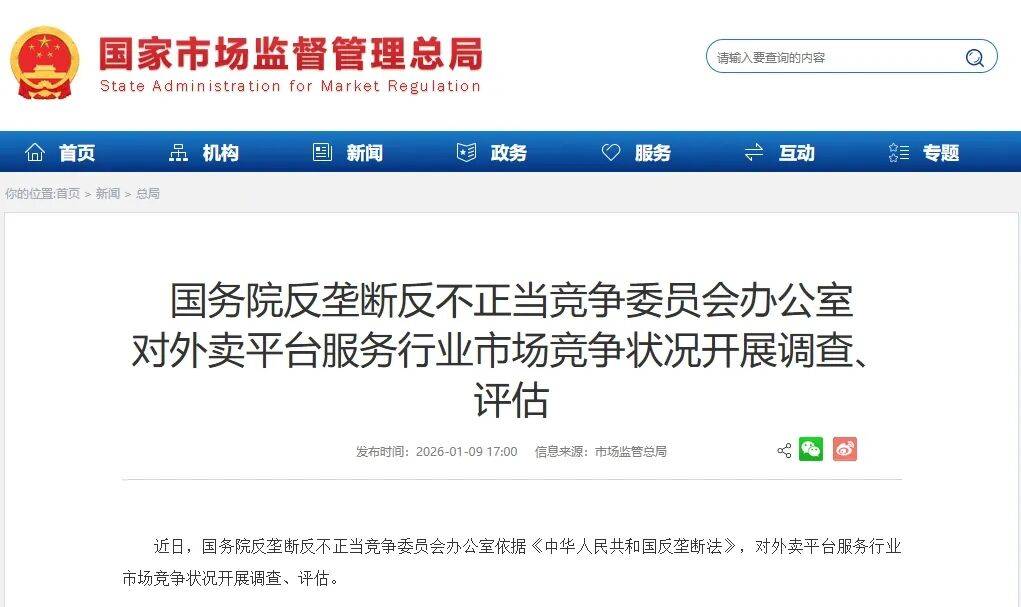
Core Viewpoint - The article discusses the next generation of AI technology paradigms, particularly focusing on the concept of Autonomous Learning as a potential solution to the limitations of current large models and their reliance on labeled data and offline pre-training [3][4]. Group 1: Autonomous Learning - Autonomous Learning is gaining traction as a method for large models to evolve independently by generating learning signals and optimizing through closed-loop iterations [3]. - The definition and understanding of Autonomous Learning vary among industry experts, indicating a need for context-specific applications [3]. - Current advancements in Autonomous Learning are seen as gradual improvements rather than revolutionary changes, with existing efficiency issues still to be addressed [3]. Group 2: Future Paradigms and Innovations - Experts believe that OpenAI, despite its commercialization challenges, remains a strong candidate for leading the next paradigm shift in AI [4]. - The potential of Reinforcement Learning (RL) is still largely untapped, with the next generation of paradigms expected to emphasize "self-evolution" and "proactivity" [4]. - Concerns about safety arise with the introduction of proactivity in AI, necessitating the instillation of appropriate values and constraints [4]. Group 3: Market Dynamics and Competitive Landscape - The probability of Chinese teams leading in AI innovation in the next three to five years is considered high, given their ability to quickly replicate and improve upon discovered technologies [5]. - Key challenges for China include breakthroughs in lithography technology, capacity, and software ecosystem development [5]. - The maturity of the B2B market and the ability to compete internationally are critical for China's success in AI [5].
王腾回应新公司不招应届生;阿里千问模型累计下载量达7亿;苹果CEO库克2025年总薪酬为7429.48万美元丨邦早报
创业邦· 2026-01-10 01:09
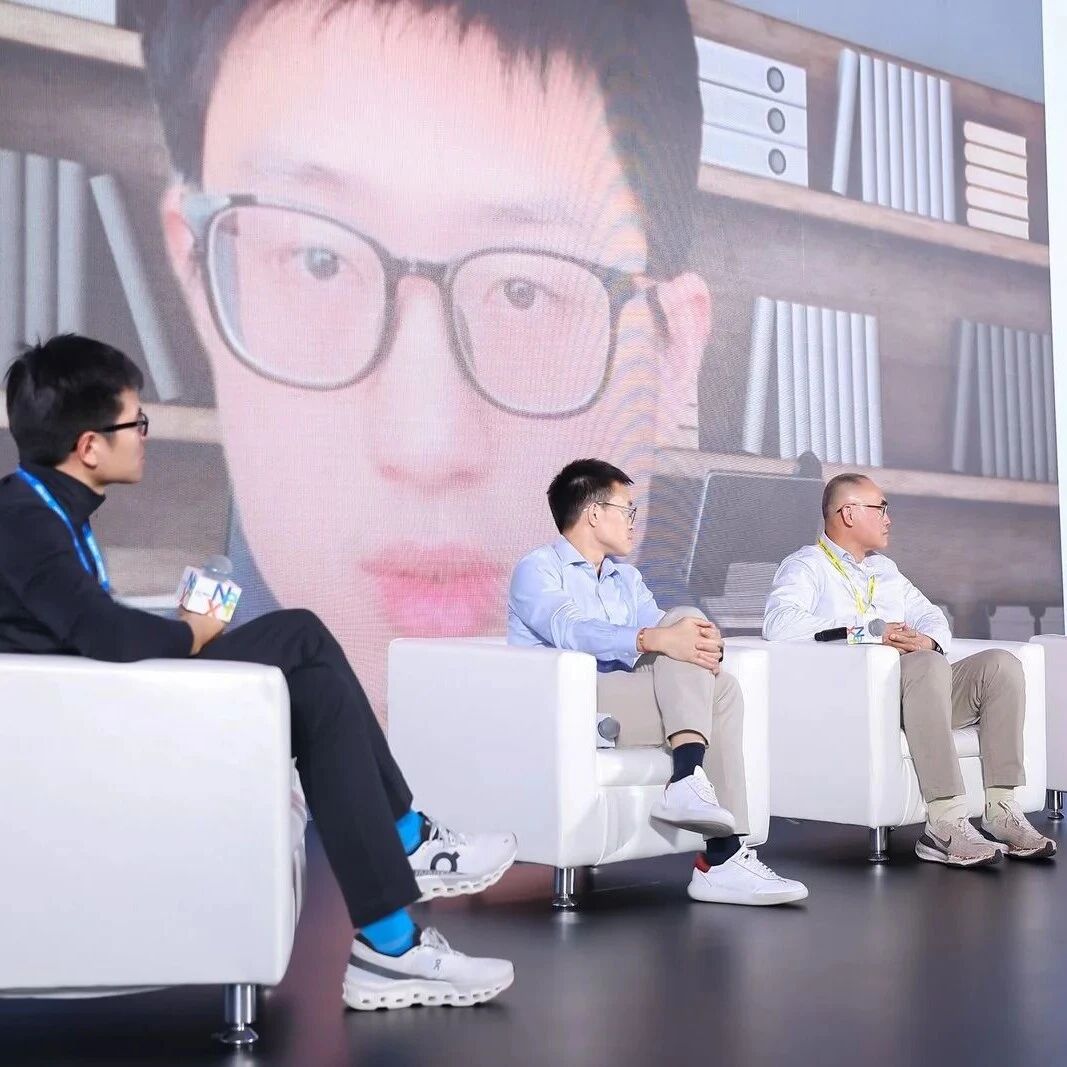
Group 1 - Wang Teng's new company will not hire fresh graduates initially, focusing on building a product development team with experienced professionals [2] - The company plans to establish branches in Shenzhen and Hangzhou after a year of operation in Beijing, with salaries and benefits comparable to major tech firms, emphasizing stock incentives [2] - Employees are encouraged to take breaks as needed, promoting a non-competitive work environment [2] Group 2 - Apple's CEO Tim Cook's total compensation for 2025 is reported to be $74.29 million, with significant portions coming from stock awards and non-equity incentives [3] - The company is set to hold its annual shareholder meeting online on February 24, 2026 [3] Group 3 - Bosideng faced criticism for a down jacket priced at 2099 yuan with only 86 grams of down filling, raising questions about brand premium [4][7] - The company stated that the down filling meets national standards and that pricing is influenced by various factors beyond just filling weight [4] Group 4 - Alibaba's Qianwen model has achieved a cumulative download of 700 million, marking a significant growth in the AI model sector [8] - The model's download rate surpassed that of other major AI models, indicating its rapid adoption [8] Group 5 - General Motors announced an additional charge of approximately $6 billion due to adjustments in its electric vehicle business, reflecting ongoing evaluations of production capacity and investment [15] - The company previously reported a $1.6 billion charge related to its electric vehicle strategy [15] Group 6 - The global humanoid robot market is projected to ship nearly 13,000 units by 2025, with ZhiYuan holding a 39% market share [21] - The semiconductor industry is expected to reach a record sales figure of $75.3 billion in November 2025, a 29.8% increase from the previous year [21] Group 7 - The Chinese large language model market is anticipated to exceed 100 billion yuan by 2030, with a compound annual growth rate of 63.5% from 2024 to 2030 [22] - Recent IPOs of domestic AI model companies signify a shift towards clearer business models and commercialization in the industry [22]





智通ADR统计 | 1月10日





智通财经网· 2026-01-09 23:41
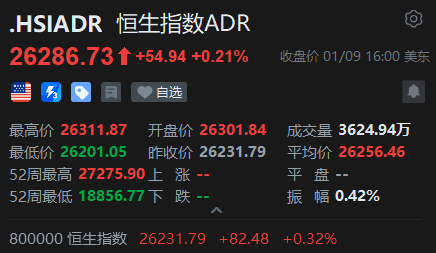
Core Viewpoint - The Hang Seng Index (HSI) showed a slight increase, closing at 26,286.73, up by 54.94 points or 0.21% on January 9, 2023, reflecting a mixed performance among major blue-chip stocks [1]. Group 1: Market Performance - The HSI reached a high of 26,311.87 and a low of 26,201.05 during the trading session, with a trading volume of 36.24 million shares [1]. - The index's 52-week high is 27,275.90, while the 52-week low is 18,856.77, indicating a significant range of fluctuation [1]. Group 2: Major Blue-Chip Stocks - HSBC Holdings closed at 125.014 HKD, up 0.17% from the previous close [2]. - Tencent Holdings closed at 615.325 HKD, reflecting an increase of 0.71% compared to the Hong Kong market close [2]. - Alibaba Group (W) saw a price increase of 2.73%, closing at 146.500 HKD, while its ADR price was 147.089 HKD, up by 0.589 HKD [3]. - Other notable performances include AIA Group, which rose by 0.54% to 84.300 HKD, and Meituan, which decreased by 2.48% to 98.500 HKD [3].
火拼AI互联网:2026字节、阿里、腾讯三国杀要来了
3 6 Ke· 2026-01-09 23:34
Group 1 - The article discusses the competitive landscape of the AI industry in China, highlighting the differences in development strategies between Chinese companies and their North American counterparts, particularly focusing on application deployment and cost-effectiveness [1][2] - Chinese tech giants are increasingly promoting both mature and emerging AI products to accelerate user penetration, contrasting with the more capital-intensive approaches seen in North America [1][2] - The article emphasizes the rapid evolution of AI applications, with significant user growth observed in a short time frame, particularly noting the success of ChatGPT and its implications for Chinese AI applications [8][10] Group 2 - The shift from traditional internet services to AI-driven services necessitates a complete overhaul of foundational costs, including computing power, storage, network capacity, and energy consumption [2][3] - The introduction of token-based pricing models for AI services poses challenges to users accustomed to free internet services, complicating the monetization of AI applications in China [3][6] - Despite the rapid growth of AI applications, Chinese companies face challenges in achieving comparable user engagement levels to their international counterparts, with significant differences in monthly active users (MAU) between platforms like ChatGPT and domestic alternatives [10][11] Group 3 - The competitive landscape is characterized by a significant disparity in user engagement and market penetration between leading Chinese AI applications and their international peers, with the article noting that the leading Chinese app has around 200 million MAU compared to ChatGPT's 800 million [10][11] - The article outlines three key factors that could catalyze a competitive surge in China's AI consumer market by 2026: advancements in technology, improved chip availability, and the influence of successful international models like ChatGPT [13][14] - The current market structure is evolving, with leading applications like Doubao capturing 60% of the market, followed by DeepSeek at 30%, indicating a rapidly changing competitive environment [16][18] Group 4 - The article highlights the strategic approaches of major tech companies in China, noting that ByteDance is aggressively pursuing both consumer and enterprise AI applications, while Alibaba is focusing on enhancing its B2B offerings [19][20] - Tencent's approach appears more conservative, with a focus on integrating AI capabilities into existing applications rather than developing new standalone products [19][20] - The competition among these giants is expected to intensify as they seek to establish new AI entry points, with the potential for significant shifts in market dynamics as they adapt to evolving user needs and technological advancements [21][22] Group 5 - The article suggests that the AI landscape in China is still in its early stages, making it difficult to predict future competitive dynamics, but emphasizes the importance of establishing a strong user base and ecosystem for long-term success [19][49] - The potential for smaller companies to carve out niches in less competitive areas is highlighted, as larger firms focus on more prominent market segments [49][50] - The overall investment landscape is characterized by a lower capital expenditure to revenue ratio for Chinese firms compared to their North American counterparts, allowing for more sustainable growth in the AI sector [46][49]