
CMBC(600016)

Search documents
7月央行中期借贷便利(MLF)净投放1000亿元
Zhong Guo Chan Ye Jing Ji Xin Xi Wang· 2025-08-07 22:46
Group 1 - The People's Bank of China (PBOC) reported a net liquidity injection of 100 billion yuan through Medium-term Lending Facility (MLF) in July 2025, with 400 billion yuan injected and 300 billion yuan withdrawn [1] - In July, the PBOC conducted a total of 1.4 trillion yuan in reverse repos, resulting in a net injection of 200 billion yuan after 1.2 trillion yuan was withdrawn [1] - The PBOC did not conduct any open market operations involving government bonds in July [1] Group 2 - The PBOC emphasized the need for sustained and effective macroeconomic policies to support the real economy and reduce overall financing costs [1] - The central bank plans to continue implementing a moderately accommodative monetary policy, ensuring ample liquidity and guiding financial institutions to maintain reasonable credit growth [1] - The PBOC will utilize various monetary policy tools, including MLF, reverse repos, and potentially open market operations for government bonds, to create a conducive monetary environment [2]

“挂羊头卖狗肉”乐在其中!金信基金多年视契约如儿戏
Sou Hu Cai Jing· 2025-08-07 08:55
来源:笔尖网官方 前十大重仓股分别是平安银行、工商银行、交通银行、建设银行、兴业银行、中国银行、中信银行、民生 银行、光大银行、农业银行,清一色的银行股,且前十持仓占比合计达46.73%。在今年一季度,该基金的 前十大重仓有9只为银行股、1只保险股;2024年四季度,前十大重仓有8只为银行股、1只保险股、1只家 用电器股;2025年三季度,前十大重仓有7只为银行股、1只保险股、1只家用电器股、1只电子股。 《笔尖网》文/笔尖财经 随着中国证监会《推动公募基金高质量发展行动方案》的落地,基金在公司治理、产品发行、投资运作、 考核机制等方面日渐完善,形成行业高质量发展的"拐点"。不过,却有基金公司置若罔闻,旗下基金在配 置资产时依然"挂羊头卖狗肉",视契约如儿戏。 金信基金旗下的金信智能中国2025混合基金则是典型一例,在二季度前十大重仓股中,清一色配置了银行 股。并且,多年来,该基金一直在"亲银行疏智能"。8月5日,金信基金在该基金吧中发起"银行板块投资的 宏观逻辑是什么?"的讨论,基金经理杨超大谈自己的投资心得。但在随后的基民留言中,"自相矛盾"四个 字尤为扎眼。 玩得上瘾! 从基金名称上看,真正的"智能中国 ...





股份制银行板块8月7日涨0.3%,浦发银行领涨,主力资金净流入6157.18万元
Zheng Xing Xing Ye Ri Bao· 2025-08-07 08:27
证券之星消息,8月7日股份制银行板块较上一交易日上涨0.3%,浦发银行领涨。当日上证指数报收于 3639.67,上涨0.16%。深证成指报收于11157.94,下跌0.18%。股份制银行板块个股涨跌见下表: | 代码 | 名称 | 收盘价 | 涨跌幅 | 成交量(手) | 成交额(元) | | --- | --- | --- | --- | --- | --- | | 600000 | 浦发银行 | 13.93 | 1.02% | 96.56万 | 13.38亿 | | 600015 | 华夏银行 | 8.13 | 0.62% | 34.18万 | 2.77亿 | | 601998 | 中信银行 | 8.42 | 0.48% | 36.83万 | 3.08亿 | | 601166 | 兴业银行 | 23.07 | 0.39% | 1 56.76万 | 13.11亿 | | 601818 | 光大银行 | 4.13 | 0.24% | 144.78万 | 5.97亿 | | 000001 | 平安银行 | 12.47 | 0.08% | 72.21万 | 9.01亿 | | 600036 | 招商银行 | 45 ...





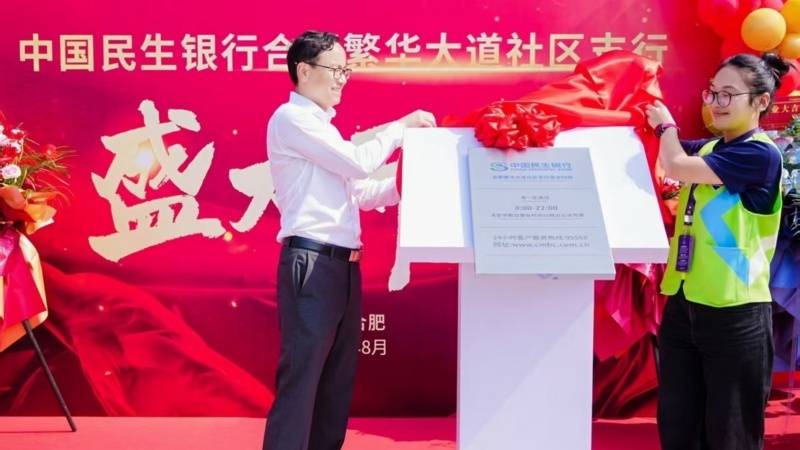
安徽山姆首店迎来首家驻场银行——民生银行合肥繁华大道社区支行开业
Zhong Guo Jin Rong Xin Xi Wang· 2025-08-06 13:18
Group 1 - The core viewpoint of the news is the collaboration between Minsheng Bank and Sam's Club in Hefei, which marks a new beginning for financial services integrated with retail, enhancing consumer experience in Anhui [1][2] - Minsheng Bank's Hefei branch has opened its first community branch within a Sam's Club, aiming to provide convenient financial services and improve consumer experience through a "retail + finance" model [1][3] - The partnership aligns with national policies to promote consumption upgrades and optimize the business environment, enhancing consumer experience and unlocking consumption potential in Anhui [1][2] Group 2 - Minsheng Bank and Sam's Club have launched co-branded credit and debit cards, offering significant cashback rewards to cardholders, which is expected to stimulate local consumption [2] - As of July 2025, over 24,000 customers have applied for the co-branded credit card, indicating strong interest and laying a solid foundation for further collaboration [2] Group 3 - The new community branch aims to create a "15-minute convenient service circle," providing a range of financial and non-financial services to local residents [3] - The branch operates in sync with Sam's Club hours, offering services such as credit and debit card applications, ATM transactions, and special member activities [3] Group 4 - The community branch integrates financial services into the shopping experience at Sam's Club, offering family-oriented activities that promote financial literacy while providing specialized services [4] - The branch is positioned as a community life center, enhancing the synergy between shopping and financial services, contributing to consumer upgrades and regional economic development in Anhui [4]
10.67亿元主力资金今日撤离银行板块
Zheng Quan Shi Bao Wang· 2025-08-06 09:46
Market Overview - The Shanghai Composite Index rose by 0.45% on August 6, with 24 out of the 28 sectors experiencing gains. The top-performing sectors were defense and military industry, and machinery equipment, with increases of 3.07% and 1.98% respectively [1] - The banking sector saw a decline of 0.14% [1] Capital Flow Analysis - The main capital outflow from the two markets totaled 9.652 billion yuan, with seven sectors experiencing net inflows. The machinery equipment sector led with a net inflow of 4.367 billion yuan, followed closely by the defense and military industry with a net inflow of 4.283 billion yuan [1] - The pharmaceutical and biological industry had the largest net outflow, totaling 9.049 billion yuan, followed by the telecommunications sector with a net outflow of 2.949 billion yuan [1] Banking Sector Performance - In the banking sector, there were 42 stocks, with 11 rising and 26 falling. The sector experienced a net outflow of 1.067 billion yuan [2] - The top three banks with the highest net outflow were Minsheng Bank, China Construction Bank, and Industrial and Commercial Bank of China, with outflows of 263.15 million yuan, 213.00 million yuan, and 174.41 million yuan respectively [2][3] - The individual stock performance showed that Changshu Bank had the highest net inflow of 41.12 million yuan, followed by Hangzhou Bank and Chongqing Rural Commercial Bank with inflows of 32.14 million yuan and 22.64 million yuan respectively [2][3]


民生银行中层人事调整涉及总行多部门和一级分行
Xin Lang Cai Jing· 2025-08-06 09:33
Group 1: Management Changes - Recently, Minsheng Bank experienced its first management change of the year, with Vice President Shi Jie retiring due to age, and Li Wenshi appointed as the new Vice President [1] - The bank's middle management has also undergone significant adjustments, with several general managers from various departments being assigned to local branches, and some branch presidents being transferred to headquarters [1] - Notable appointments include Deng Shasha as the new General Manager of the Transaction Banking Department and Shi Feixiong as a senior manager in the Inclusive Finance Department [2][3] Group 2: Branch Management Adjustments - Multiple vice presidents across various branches have received approval for their appointments, including Zhao Meng at the Xining branch and Zhao Xiaowang and Qiu Juan at the Chengdu branch [3] - New appointments also include Lei Meng as Vice President of the Nanning branch and Zhao Weijia as Vice President of the Nanjing branch, both with prior experience in different roles within the bank [4][5] Group 3: Regulatory Issues - Several branches of Minsheng Bank have recently faced fines, totaling 1.8 million yuan in August alone, indicating potential weaknesses in risk assessment mechanisms [6] - Specific fines include 300,000 yuan for the Jilin branch due to improper loan risk classification and 95,000 yuan for the Haikou branch for inadequate loan management [6] - The bank is actively working to optimize its credit approval and post-loan management processes to address external risk factors and maintain asset quality [6]
中证ECPI ESG 80指数报2005.09点,前十大权重包含民生银行等
Jin Rong Jie· 2025-08-05 14:48
Core Viewpoint - The China Securities Index ESG 80 Index has shown positive performance, with a recent increase in value and a diversified selection of securities based on ESG ratings and volatility [2][3]. Group 1: Index Performance - The China Securities Index ESG 80 Index has risen by 1.19% over the past month, 7.17% over the past three months, and 2.25% year-to-date [2]. - The index is based on a starting point of 1000.0 points as of June 30, 2011 [2]. Group 2: Index Composition - The index comprises 80 securities selected from the CSI 300 based on an ESG score of E+ or higher and the lowest volatility over the past six months [2]. - The top ten weighted securities in the index include Nanjing Bank (2.21%), Yangtze Power (1.87%), Zheshang Bank (1.82%), Agricultural Bank of China (1.82%), Daqin Railway (1.74%), Minsheng Bank (1.65%), Bank of Communications (1.60%), Ping An Bank (1.54%), Shanghai Pudong Development Bank (1.47%), and China Everbright Bank (1.47%) [2]. Group 3: Market and Sector Allocation - The index's holdings are primarily listed on the Shanghai Stock Exchange (73.31%) and the Shenzhen Stock Exchange (26.69%) [2]. - Sector allocations within the index include Financials (28.68%), Industrials (22.39%), Materials (11.53%), Healthcare (10.64%), Utilities (9.16%), Consumer Staples (6.80%), Energy (4.85%), Consumer Discretionary (3.67%), and Information Technology (2.28%) [3]. Group 4: Index Adjustment Mechanism - The index samples are adjusted semi-annually, with adjustments implemented on the next trading day following the second Friday of June and December each year [3]. - Weight factors are generally fixed until the next scheduled adjustment, with provisions for temporary adjustments in special circumstances such as delisting or corporate actions [3].
安徽山姆首店迎来首家驻场银行
Sou Hu Cai Jing· 2025-08-05 14:18
Group 1 - The opening of the first community branch of Minsheng Bank in Anhui, located within the Sam's Club, marks a new collaboration between the two entities, enhancing financial services and consumer experience in Hefei [2][3] - The partnership aligns with national policies aimed at upgrading consumption structures and optimizing the business environment, creating a "financial + life" value-added service ecosystem for consumers in Anhui [3] - As of July 2025, over 24,000 customers have applied for the co-branded credit card, establishing a solid foundation for deep cooperation between Minsheng Bank and Sam's Club [3] Group 2 - Minsheng Bank has established 30 community branches in Hefei, with the new branch aiming to create a specialized community banking service, enhancing convenience for local residents [4] - The community branch operates in sync with Sam's Club hours, offering various financial and non-financial services, including credit card applications and cash withdrawals [4] - The branch integrates financial services into consumer scenarios, providing family-oriented activities that promote financial literacy while offering specialized services like children's account management [5] Group 3 - Minsheng Bank's Hefei branch views the new community branch as a starting point for enhancing services in Anhui, aiming to innovate the "financial + life" service model [6] - Customers have expressed satisfaction with the ability to apply for co-branded cards while shopping at Sam's Club, enjoying a seamless "shopping + financial management" experience [6] - Upcoming promotional activities are planned to further reward local residents, indicating a commitment to improving convenience and quality of life in the region [6]

红利板块成“资产荒”下最优解?政策+估值+资金三重催化,价值ETF(510030)上探1.46%!
Xin Lang Ji Jin· 2025-08-05 13:02
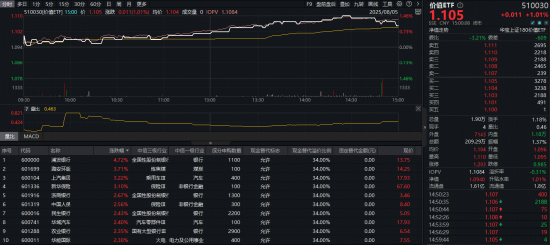
Group 1 - High dividend stocks showed strong performance on August 5, with the value ETF (510030) rising by 1.01% at close, peaking at a 1.46% increase during the day [1] - Key sectors contributing to the rise included finance, coal, and automotive, with notable gains from stocks like Pudong Development Bank (+4.72%) and others exceeding 3% [1] Group 2 - Starting from August 8, 2025, interest income from newly issued government bonds, local government bonds, and financial bonds will be subject to VAT, while previously issued bonds will remain exempt until maturity [3] - Analysts suggest that the attractiveness of high dividend assets is expected to slightly increase due to a minor decline in bond cost-effectiveness [4] Group 3 - The current market liquidity is relatively abundant, and the positive feedback effect of retail investors entering the market is anticipated to strengthen [4] - The value ETF (510030) tracks the 180 Value Index, focusing on "high dividend + low valuation" large-cap blue-chip stocks, which include major companies like China Ping An and CITIC Securities [4][6] Group 4 - China Galaxy Securities predicts that the market will maintain a fluctuating high level, with structural opportunities to be monitored, particularly in high dividend sectors like banking [5] - The demand for dividend assets is increasing due to their stable cash flow and defensive characteristics in a declining risk-free interest rate environment [5]



民生银行(01988) - 截至二零二五年七月三十一日止股份发行人的证券变动月报表
2025-08-05 11:00
股份發行人及根據《上市規則》第十九B章上市的香港預託證券發行人的證券變動月報表 截至月份: 2025年7月31日 狀態: 新提交 致:香港交易及結算所有限公司 公司名稱: 中國民生銀行股份有限公司(在中華人民共和國註冊成立的股份有限公司) 呈交日期: 2025年8月5日 I. 法定/註冊股本變動 | 1. 股份分類 | 普通股 | 股份類別 | H | | | 於香港聯交所上市 (註1) 是 | | | | --- | --- | --- | --- | --- | --- | --- | --- | --- | | 證券代號 (如上市) | 01988 | 說明 | H 股 | | | | | | | | | 法定/註冊股份數目 | | | 面值 | | 法定/註冊股本 | | | 上月底結存 | | | 8,320,295,289 | RMB | | 1 RMB | | 8,320,295,289 | | 增加 / 減少 (-) | | | 0 | | | RMB | | 0 | | 本月底結存 | | | 8,320,295,289 | RMB | | 1 RMB | | 8,320,295,289 | ...