China Unicom(600050)

Search documents
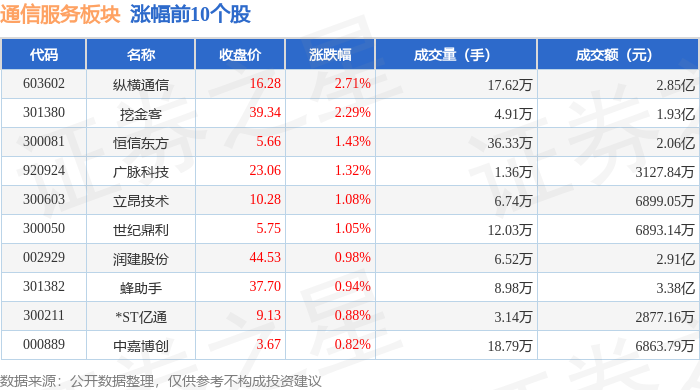
通信服务板块1月21日跌1.48%,三维通信领跌,主力资金净流出9.78亿元
Zheng Xing Xing Ye Ri Bao· 2026-01-21 09:08
Market Overview - The communication services sector experienced a decline of 1.48% on January 21, with Sanwei Communication leading the drop [1] - The Shanghai Composite Index closed at 4116.94, up 0.08%, while the Shenzhen Component Index closed at 14255.12, up 0.7% [1] Stock Performance - Notable gainers in the communication services sector included: - Zongheng Communication: closed at 16.28, up 2.71% with a trading volume of 176,200 shares and a turnover of 285 million yuan [1] - Wajingke: closed at 39.34, up 2.29% with a trading volume of 49,100 shares and a turnover of 193 million yuan [1] - Hengxin Oriental: closed at 5.66, up 1.43% with a trading volume of 363,300 shares and a turnover of 206 million yuan [1] - Conversely, significant decliners included: - Sanwei Communication: closed at 13.43, down 5.75% with a trading volume of 2.215 million shares and a turnover of 2.994 billion yuan [2] - China Telecom: closed at 5.80, down 2.52% with a trading volume of 3.0047 million shares and a turnover of 1.758 billion yuan [2] - Putian Technology: closed at 31.49, down 1.47% with a trading volume of 223,400 shares and a turnover of 708 million yuan [2] Capital Flow - The communication services sector saw a net outflow of 978 million yuan from institutional investors, while retail investors contributed a net inflow of 495 million yuan [2] - Key stocks with notable capital flows included: - Data Port: net outflow of 55.1 million yuan from institutional investors, with a retail net outflow of 74.6 million yuan [3] - China Mobile: net inflow of 37.96 million yuan from institutional investors, but a net outflow of 83.09 million yuan from retail investors [3] - Hengxin Oriental: net inflow of 15.33 million yuan from institutional investors, with a retail net outflow of 18.77 million yuan [3]





“顶流”调仓!傅鹏博、李晓星,加仓这些股票
Zhong Guo Zheng Quan Bao· 2026-01-21 08:51
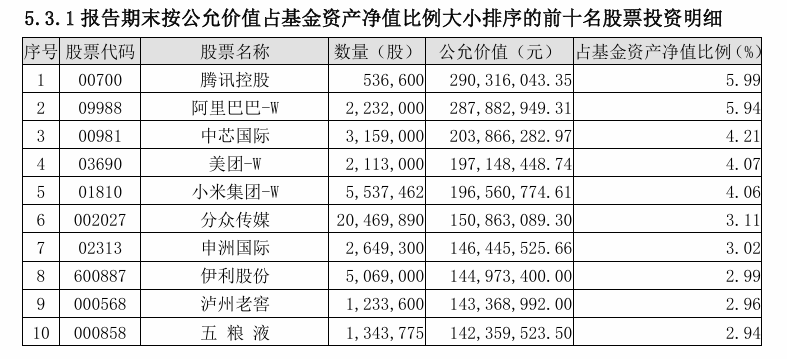
Group 1: Fund Manager Insights - Fund manager Fu Pengbo reduced holdings in companies with weak fundamentals and increased investments in data center liquid cooling, storage, and computing-related companies [1][2] - Fu noted that the annual reports of listed companies for 2025 will be pre-disclosed by the end of January 2026, with high-growth sectors like AI, non-ferrous metals, and lithium battery materials expected to show significant growth [1][3] - Li Xiaoxing increased positions in Hong Kong internet and consumer stocks while reducing holdings in some Hong Kong financial stocks, believing that overall opportunities in the equity market for 2026 outweigh risks [1][4] Group 2: Fund Performance and Adjustments - Fu's fund saw minor changes in its top ten holdings, with Maiwei Co. replacing China Mobile, and increased positions in Han's Laser while reducing stakes in companies like Ningde Times and Tencent [2][3] - Li's fund reported a stock position of 88.55% at the end of Q4 2025, a decrease of 4.54 percentage points from Q3 2025, with new entries in the top ten holdings including Tencent, Alibaba, and Meituan [4][5] Group 3: Market Outlook - Fu and Zhu believe that the stock market's activity is increasing, with a "spring excitement" arriving early, and expect high growth in sectors like AI and semiconductor manufacturing [3][6] - Li highlighted that AI remains the main line of global technological innovation, with significant capital expenditure growth in the AI sector, and domestic internet companies expected to maintain stable growth [6][7] - The consumer sector's performance needs dynamic observation, with many quality consumer stocks showing favorable dividend yields [6][7] Group 4: Sector-Specific Insights - The pharmaceutical sector experienced fluctuations in Q4 2025 due to previously high market expectations and capital flowing to other popular sectors, but long-term prospects for domestic innovative drugs remain positive [7] - The CRO and CDMO segments are showing clear signs of recovery in domestic and international demand, indicating an industry turning point [7]






中美竞逐万亿美元新赛道,五层解构下的投资蓝图
Tebon Securities· 2026-01-21 04:07
Investment Rating - The report maintains an "Outperform" rating for the commercial aerospace industry [1] Core Insights - The aerospace sector is transitioning from being viewed as a "cost center" driven by national will to a "growth engine" driven by commercial demand, with significant investments and strategic planning from both the US and China [6][9] - The global aerospace economy is projected to reach $613 billion in 2024, with commercial aerospace contributing 78%, and is expected to exceed $1 trillion by 2032 [6][9] - The value chain of commercial aerospace is divided into five core levels: "space, ground, terminal, rocket, and application," each presenting unique market opportunities and technical challenges from 2026 to 2030 [10][29] Summary by Sections 1. Space: Satellite Manufacturing - The satellite manufacturing market in China is expected to grow from approximately 7.1 billion yuan in 2025 to about 39.4 billion yuan by 2030, reflecting a shift from sporadic research models to continuous, batch engineering deliveries [16][18] 2. Ground: Ground Systems - The ground systems market is projected to increase from around 1.2 billion yuan in 2025 to approximately 39.1 billion yuan by 2030, evolving from a supporting role to a core infrastructure essential for stable satellite constellation operations [21][22] 3. Terminal: Key Variable for Commercial Aerospace - The terminal market is anticipated to grow from 500 million yuan in 2025 to about 141.9 billion yuan by 2030, driven by multiple vertical industries and potential consumer scenarios [23][24] 4. Rocket: Core Constraint - The cost of rocket launches is a critical constraint, with reusable technology expected to reduce costs by 80%-90% compared to traditional expendable rockets. The market for rocket launch services is projected to grow from approximately 10.7 billion yuan in 2025 to about 34.3 billion yuan by 2030 [25][26] 5. Application: Final Value Realization - The application market is expected to expand from 200 million yuan in 2025 to 525 billion yuan by 2030, with the revenue share from applications projected to rise from single digits to over 67% by around 2030 [27][28] 6. Investment Opportunities - Investment opportunities in commercial aerospace can be categorized into three main tracks: 1. Launch and manufacturing segments, which are expected to benefit directly from increased orders and visibility 2. Core components and systems, characterized by high technical barriers and critical for long-term competitiveness 3. Downstream applications and operational services, which, while currently limited in scale, hold the greatest long-term potential for value realization [29][30]


三大运营商定调2026:继续战略收缩 聚焦AI转型
Zhong Guo Jing Ying Bao· 2026-01-20 13:24
Core Insights - The three major telecom operators in China are shifting their strategies towards "strategic contraction and focused transformation," moving away from a "large and comprehensive" approach to concentrate resources on core business areas such as computing power, AI applications, and enterprise markets [1][4] Financial Performance - In 2024, the total revenue of the three operators approached 2 trillion yuan, with a year-on-year growth rate slowing to approximately 3%, a significant decline compared to previous years. The combined net profit was about 192 billion yuan, reflecting a year-on-year increase of approximately 6.1%. The combined EBITDA was around 574 billion yuan, showing a slight decline of about 0.7%, indicating a fatigue in profitability [2] Strategic Focus - China Telecom is upgrading its strategy from "cloud transformation" to "intelligent and beneficial cloud transformation," emphasizing AI empowerment and security in enterprise construction. In 2024, the revenue from digitalization in its industry is expected to increase, with a 22% year-on-year growth in capital expenditure for computing power [3] - China Unicom is focusing on four core areas: connectivity, computing power, services, and security, moving away from a comprehensive coverage model. Its investment in computing power is expected to rise by 19% in 2024, with plans to build a multi-layered computing supply system [3] - China Mobile aims to strengthen its three main businesses: communication services, computing services, and intelligent services, with a focus on technology leadership and scale synergy. The planned investment in computing power for 2025 is 37.3 billion yuan, maintaining the same level as 2024 but increasing its share in capital expenditure to 25% [4] Embracing AI - All three operators are sending a clear signal of "fully embracing AI." China Unicom is focusing on the synergy between AI and its core areas, while China Telecom is integrating AI throughout its operations. China Mobile is also prioritizing intelligent services and plans to develop 15 million AI terminals by 2026 [5][6] Capital Expenditure Trends - The capital expenditure of the three operators is showing a trend of "overall contraction with localized increases," with a total planned capital expenditure for 2025 reduced by 9.1% to 289.8 billion yuan. The focus is shifting towards "intelligent computing centers" and "massive card clusters" [7]


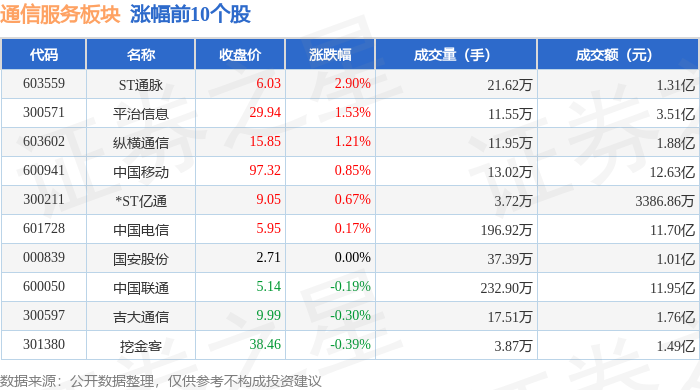
通信服务板块1月20日跌0.57%,三维通信领跌,主力资金净流出11.16亿元
Zheng Xing Xing Ye Ri Bao· 2026-01-20 08:59
Core Viewpoint - The communication services sector experienced a decline of 0.57% on January 20, with significant losses from Sanwei Communication, while the overall market indices showed slight decreases [1]. Group 1: Market Performance - The Shanghai Composite Index closed at 4113.65, down 0.01%, and the Shenzhen Component Index closed at 14155.63, down 0.97% [1]. - The communication services sector saw a net outflow of 1.116 billion yuan from major funds, while retail investors contributed a net inflow of 730 million yuan [2][3]. Group 2: Individual Stock Performance - Sanwei Communication (002115) led the decline with a drop of 9.98%, closing at 14.25 yuan, with a trading volume of 3.1924 million shares and a transaction value of 4.632 billion yuan [2]. - Other notable declines included Putian Technology (002544) down 5.30% and Yinhua Holdings (300292) down 5.23% [2]. - In contrast, ST Tongmai (603559) increased by 2.90%, closing at 6.03 yuan, with a trading volume of 216,200 shares and a transaction value of 131 million yuan [1]. Group 3: Fund Flow Analysis - China Mobile (600941) had a net inflow of 1.23 billion yuan from major funds, while China Unicom (600050) saw a net inflow of 1.22 billion yuan [3]. - Jiada Communication (300597) reported a net inflow of 27.2269 million yuan from major funds, indicating strong interest despite overall sector declines [3].
通信行业资金流出榜:新易盛等26股净流出资金超亿元
Zheng Quan Shi Bao Wang· 2026-01-20 08:43
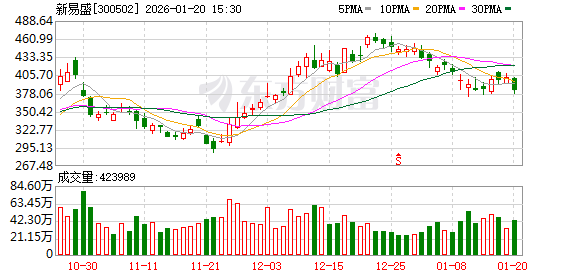
Market Overview - The Shanghai Composite Index fell by 0.01% on January 20, with 20 industries experiencing gains, led by the oil and petrochemical sector with a rise of 1.74% and construction materials at 1.71% [2] - The communication and defense industries saw the largest declines, with drops of 3.23% and 2.87% respectively, making communication the worst-performing sector of the day [2] Capital Flow Analysis - The main capital outflow from the two markets totaled 95.723 billion yuan, with 11 industries seeing net inflows [2] - The banking sector led the net inflow with 1.472 billion yuan and a daily increase of 0.80%, followed by the real estate sector with a 1.55% increase and a net inflow of 627 million yuan [2] Communication Industry Performance - The communication sector experienced a decline of 3.23%, with a total net capital outflow of 12.815 billion yuan [3] - Out of 124 stocks in the communication sector, only 14 rose, with one hitting the daily limit, while 106 fell, including three that hit the lower limit [3] - The top three stocks with the highest net inflow were Hengtong Optic-Electric with 253 million yuan, China Unicom with 114 million yuan, and Dingxin Communication with 111 million yuan [3] Top Gainers and Losers in Communication Sector - The top gainers in the communication sector included: - Hengtong Optic-Electric: +2.58% with a turnover rate of 6.88% and a capital flow of 252.99 million yuan - Dingxin Communication: +10.00% with a turnover rate of 5.63% and a capital flow of 111.12 million yuan [4] - The top losers included: - Xinyi Sheng: -5.11% with a capital outflow of 2.136 billion yuan - Zhongji Xuchuang: -3.39% with a capital outflow of 2.068 billion yuan - Fenghuo Communication: -5.70% with a capital outflow of 951.52 million yuan [5]


通信服务板块1月19日跌1.07%,三维通信领跌,主力资金净流出20.05亿元
Zheng Xing Xing Ye Ri Bao· 2026-01-19 08:58
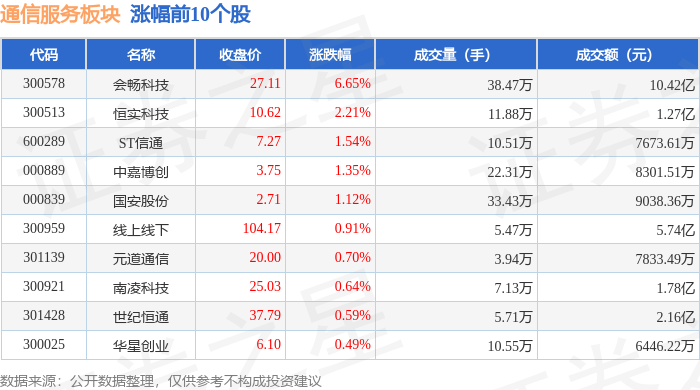
Market Overview - The communication services sector experienced a decline of 1.07% on January 19, with Sanwei Communication leading the drop [1] - The Shanghai Composite Index closed at 4114.0, up 0.29%, while the Shenzhen Component Index closed at 14294.05, up 0.09% [1] Stock Performance - Key stocks in the communication services sector showed varied performance, with Huiwu Technology rising by 6.65% to a closing price of 27.11 [1] - Sanwei Communication saw a significant drop of 10.01%, closing at 15.83 [2] - Other notable declines included Runze Technology down 3.74% and Data Port down 3.68% [2] Trading Volume and Value - Huiwu Technology had a trading volume of 384,700 shares and a transaction value of 104.2 million yuan [1] - Sanwei Communication recorded a trading volume of 138,400 shares with a transaction value of 219 million yuan [2] Capital Flow - The communication services sector experienced a net outflow of 2 billion yuan from institutional investors, while retail investors saw a net inflow of 1.6 billion yuan [2] - Notable stocks like China Unicom had a net inflow of 89.04 million yuan from institutional investors, while retail investors showed a net outflow of 778.29 million yuan [3] Individual Stock Analysis - South Ling Technology had a net inflow of 11.48 million yuan from institutional investors but a net outflow of 20.05 million yuan from retail investors [3] - ST Xintong had a net inflow of 2.41 million yuan from institutional investors, indicating some interest despite the overall sector decline [3]
国资委公开80多家央企负责人薪酬
Sou Hu Cai Jing· 2026-01-17 13:14
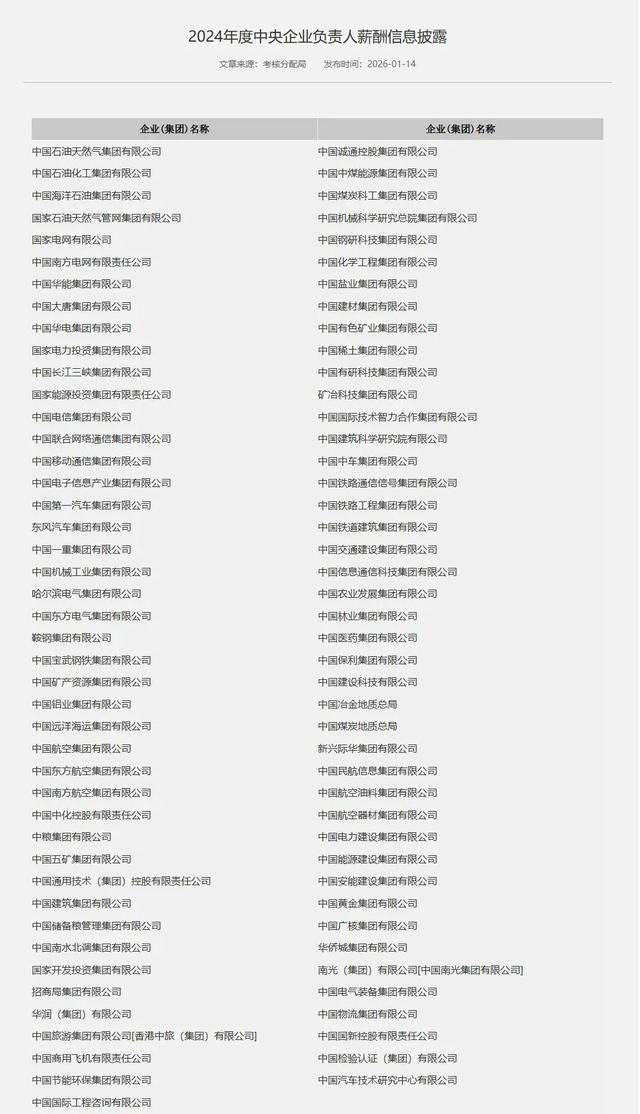
Core Viewpoint - The State-owned Assets Supervision and Administration Commission (SASAC) disclosed the salary information of over 80 central enterprise leaders for the year 2024, indicating a stable salary range without extreme high salaries, showcasing significant industry differentiation [1][5]. Group 1: Salary Disclosure - The disclosure of salary information is part of SASAC's ongoing efforts to enhance transparency in key areas and respond to public concerns [2]. - The overall salary of central enterprise leaders in 2024 remains within a stable range, characterized by "top leaders leading, median concentration, and low compliance," with no extreme high salary phenomena observed [5]. Group 2: Salary Rankings - The top tier of salaries is dominated by leaders from telecommunications and energy central enterprises, with China Mobile's former chairman Yang Jie leading with a pre-tax salary of 1.2582 million yuan, followed by China Telecom and China Unicom chairmen with salaries of 1.2160 million yuan and 1.2101 million yuan respectively [6]. - In the energy sector, PetroChina's chairman Dai Houliang and general manager Hou Qijun both have an annual salary of 978,500 yuan, ranking first among energy central enterprises [7]. - Other notable salaries include China Huaneng Group's chairman Wen Shugang at 961,700 yuan and State Power Investment Corporation's chairman Yu Bing at 953,700 yuan, both of whom are also in the top tier [8]. Group 3: Salary Distribution - The second tier includes core central enterprises in electricity, construction, and automotive industries, with notable figures such as State Grid's chairman Zhang Zhigang earning 735,000 yuan and China National Nuclear Corporation's chairman Yang Changli earning 930,000 yuan [15]. - The third tier consists of central enterprises with strong public welfare attributes, such as China Forestry Group's chairman Shan Zhongli and Overseas Chinese Town Group's chairman Zhang Zhenggao, both earning 438,500 yuan, which is below the average level for central enterprises [16]. Group 4: Salary Variability - Within the same industry, the salary differences among central enterprise executives are manageable, with the highest annual salary for energy central enterprise chairmen (PetroChina at 978,500 yuan) and the lowest (National Pipeline Network at 872,900 yuan) showing a difference of about 100,000 yuan [20].



中国联通申请持续集成步骤插件管理方法专利,降低了插件开发的复杂度
Sou Hu Cai Jing· 2026-01-17 06:48
Group 1 - China United Network Communications Group Co., Ltd. has applied for a patent titled "Continuous Integration Step Plugin Management Method, Electronic Device and Storage Medium," with publication number CN121326386A, and the application date is September 2025 [1] - The patent aims to provide a method for managing continuous integration step plugins, which includes constructing a step plugin model, converting it into a standard template, and facilitating plugin development and deployment, thereby reducing complexity and improving efficiency [1] - The method ensures high efficiency in plugin deployment and lowers management and maintenance costs by enhancing template reusability [1] Group 2 - China United Network Communications Group Co., Ltd. was established in 1994 and is primarily engaged in telecommunications, broadcasting, television, and satellite transmission services, with a registered capital of approximately 10.57 billion RMB [2] - The company has made investments in 35 enterprises and participated in 3,344 bidding projects, holding 3,734 trademark records and 5,000 patent records [2] - China United Network Communications Group Co., Ltd. has 11 administrative licenses [2] Group 3 - Unicom Digital Technology Co., Ltd., established in 2006, focuses on software and information technology services, with a registered capital of approximately 988.98 million RMB [2] - The company has invested in 54 enterprises and participated in 5,000 bidding projects, holding 24 trademark records and 1,981 patent records [2] - Unicom Digital Technology Co., Ltd. has 44 administrative licenses [2] Group 4 - Unicom Cloud Data Co., Ltd., established in 2013, specializes in internet and related services, with a registered capital of 400 million RMB [2] - The company has invested in 1 enterprise and participated in 2,298 bidding projects, holding 753 patent records [2] - Unicom Cloud Data Co., Ltd. has 11 administrative licenses [2]
央企帮扶转向常态化 为乡村振兴注入长效动能
Zhong Guo Jing Ying Bao· 2026-01-16 18:42
Core Viewpoint - Central enterprises are transitioning from temporary support to a systematic and sustainable assistance model for rural revitalization during the "14th Five-Year Plan" period, focusing on education and industrial empowerment [1][3][5]. Education Assistance - China General Nuclear Power Group (CGN) has invested 100 million yuan to build the Bailu School, transforming it into a modern educational facility with advanced teaching spaces and resources [1][2]. - The school now has 30 elementary classes and 7 middle school classes, along with specialized "Bailu Classes" supported by CGN for curriculum development and student incentives [2]. - CGN has organized 23 research activities to broaden students' horizons, fostering aspirations among students, such as a sixth-grade student who aims to become a teacher after participating in a summer camp [2][3]. Industrial Empowerment - COFCO Group is innovating its cooperation model with farmers, engaging in large-scale planting over 3 million acres through order agriculture and cooperative planting to enhance agricultural productivity and farmers' income [4]. - The company aims to create a modern agricultural service model that integrates various agricultural sectors, providing comprehensive solutions from production to sales [4][5]. - Digital technology is being leveraged to enhance agricultural practices, as seen in the smart cultivation of Lingzhi mushrooms in Jilin Province, which has significantly improved yield rates [6]. Transition to Normalized Support - The State-owned Assets Supervision and Administration Commission (SASAC) emphasizes the need for central enterprises to shift from transitional support to a normalized assistance phase, focusing on sustainable development and effective integration with rural revitalization plans [5][6]. - The goal of normalized support is to achieve comprehensive rural revitalization, moving beyond mere poverty alleviation to fostering thriving industries, ecological sustainability, and improved living standards [6].