Hisense V.T.(600060)

Search documents
海信3.95亿竞得青岛崂山宅地,楼面价27719元创纪录
Cai Jing Wang· 2025-10-30 09:47
Core Insights - The Qingdao real estate market has witnessed intense competition for a residential land parcel in Laoshan District, with Hisense acquiring the land for 395 million yuan, setting a new record for floor price in the area [1] Group 1: Transaction Details - Hisense won a residential land parcel of 9.7 acres after 282 rounds of bidding [1] - The final bid price was 395 million yuan, resulting in a floor price of 27,719 yuan per square meter [1] - The transaction reflected a premium rate of 25.77% over the starting price [1] Group 2: Market Implications - This transaction establishes a new benchmark for floor prices in Qingdao's residential land market, indicating strong demand and competition [1] - The record-setting price may influence future land auctions and pricing strategies in the region [1]



青岛诞生新单价地王 海信斥资3.95亿斩获崂山一宅地
Ge Long Hui A P P· 2025-10-30 09:32
Core Insights - The Qingdao land auction market has seen intense competition for a prime residential plot in Wangjiacun, Laoshan District, which was sold for 395 million yuan, setting a new record for floor price in Qingdao [1] Group 1: Auction Details - A residential land parcel of 9.7 acres was auctioned in Qingdao, attracting 282 rounds of bidding [1] - The winning bid by Hisense was 395 million yuan, resulting in a floor price of 27,719 yuan per square meter [1] - The premium rate for this transaction was 25.77%, indicating strong demand for residential land in the area [1] Group 2: Market Implications - The transaction has established a new benchmark for floor prices of residential land in Qingdao, marking it as a new "land king" in terms of unit price [1]
黑色家电板块10月30日跌2.16%,四川九洲领跌,主力资金净流出3.74亿元
Zheng Xing Xing Ye Ri Bao· 2025-10-30 08:40
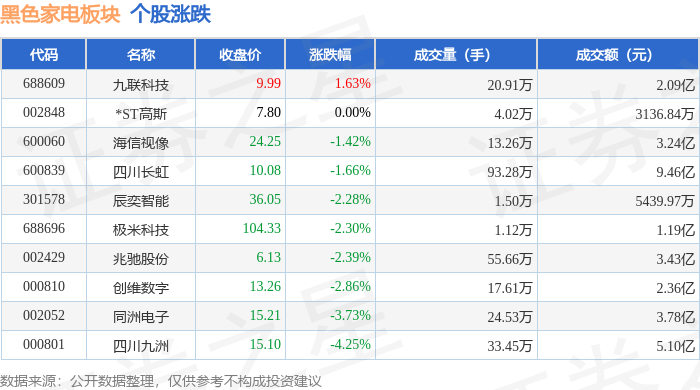
Market Overview - The black home appliance sector experienced a decline of 2.16% on October 30, with Sichuan Jiuzhou leading the drop [1] - The Shanghai Composite Index closed at 3986.9, down 0.73%, while the Shenzhen Component Index closed at 13532.13, down 1.16% [1] Stock Performance - Notable stock performances in the black home appliance sector included: - Jiulian Technology (688609) rose by 1.63% to a closing price of 66.6 [1] - Sichuan Jiuzhou (000801) fell by 4.25% to a closing price of 15.10 [1] - Tongzhou Electronics (002052) saw a decline of 3.73% to a closing price of 15.21 [1] - The trading volume and turnover for key stocks were significant, with Sichuan Changhong (600839) recording a turnover of 946 million [1] Capital Flow - The black home appliance sector saw a net outflow of 374 million from main funds, while retail investors contributed a net inflow of 223 million [1] - The capital flow for individual stocks indicated: - Jiulian Technology had a net inflow of 3.55 million from main funds [2] - Sichuan Jiuzhou experienced a significant net outflow of 66.24 million from main funds [2] - Creative Digital (000810) had a net outflow of 31.78 million from main funds [2]


海信视像披露2025年三季报:RGB-Mini LED带动产业升级 价值成长提升全球竞争力
Zheng Quan Ri Bao Wang· 2025-10-30 07:47
Core Viewpoint - Hisense Visual Technology Co., Ltd. reported a revenue of 39.989 billion yuan for the first three quarters of 2025, marking a year-on-year increase of 5.65%, with a net profit of 1.629 billion yuan, up 24.27% year-on-year [1] Group 1: Financial Performance - In Q3 2025, Hisense achieved a revenue of 15.066 billion yuan and a net profit of 573 million yuan, representing year-on-year growth of 6.71% and 20.15% respectively [1] - For the first three quarters of 2025, Hisense's revenue from the 98-inch and above large-screen TV market increased by over 64% globally and 59% in China [1] - The global shipment of Hisense's Mini LED TVs grew by 76%, with sales in the Chinese market increasing by over 200% [1] Group 2: Market Position - Hisense maintained the leading position in both sales volume and sales revenue in the domestic TV market for the first three quarters of 2025 [2] - The company continues to hold a dominant advantage in high-end large-screen segments such as Mini LED and 100-inch+ TVs [2] Group 3: Technological Innovation - Hisense is focusing on three core display technologies: LCD, laser, and Micro LED, achieving significant breakthroughs in high-end display technology [3] - The company has developed the RGB color control AI quality chip H7 and high-performance RGB-Mini LED backlight chip, marking a major advancement in display technology [3] - Hisense launched the world's first 116-inch RGB-Mini LED TV and other flagship products, expanding its market presence to over 20 countries [3] Group 4: New Business Growth - Hisense is expanding into new display and business areas, including commercial displays, cloud services, and AI, with commercial display revenue increasing by over 149% [5] - The company is innovating in product design, with significant sales growth in art TVs, monitors, and mobile smart screens, achieving year-on-year increases of over 52%, 86%, and 199% respectively [5] Group 5: AI and Robotics Development - Hisense is establishing an integrated AI capability system and has released new AI products, including the V11 ear-clip headphones and G11 smart glasses [6] - The company is collaborating with Fujian Fuyao Technology University to create a joint innovation center for smart manufacturing and robotics [6] Group 6: Market Recognition - Major securities firms, including CITIC Securities and Guotai Junan Securities, have issued research reports recognizing Hisense's innovation strength and growth potential, with ratings such as "outperforming the industry" and "strongly recommended" [7]
海信视像(600060):2025年三季报点评:25Q3业绩符合预期,盈利能力稳步提升
Shenwan Hongyuan Securities· 2025-10-30 07:09
Investment Rating - The investment rating for Hisense Visual (600060) is maintained at "Outperform" [1][6]. Core Insights - The company's Q3 2025 performance met expectations, with revenue of 428.30 billion yuan, a year-on-year increase of 5%, and a net profit attributable to shareholders of 16.29 billion yuan, up 24% year-on-year [3][6]. - The domestic market shows steady growth, with Hisense maintaining the top position in retail volume and value in the 100-inch and above segment, achieving a market share of 41.65% in retail volume and 48.66% in retail value [6]. - The overseas market is also expanding, with significant growth in the sales of large-screen products, particularly 98-inch and above, which saw an increase of 85.29% year-on-year [6]. Financial Data and Profit Forecast - For 2025, the total revenue is projected to be 64.177 billion yuan, with a year-on-year growth rate of 9.6% [5]. - The net profit attributable to shareholders is expected to reach 2.500 billion yuan in 2025, reflecting an 11.3% increase year-on-year [5]. - The earnings per share (EPS) for 2025 is forecasted at 1.92 yuan, with a gross margin of 16.3% [5][6].
海信视像:前三季度主营业务收入稳步增长 凸显价值成长优势
Zhong Guo Zheng Quan Bao· 2025-10-30 07:04
Core Viewpoint - Hisense Visual reported strong financial performance for the first three quarters of 2025, with a focus on value growth and innovation in display technology, positioning itself as a leader in the high-end display market [1][2]. Financial Performance - For the first three quarters of 2025, the company achieved a revenue of 39.989 billion yuan, a year-on-year increase of 5.65%, and a net profit attributable to shareholders of 1.629 billion yuan, up 24.27% year-on-year [1]. - In Q3 2025, the company recorded a revenue of 15.066 billion yuan and a net profit of 573 million yuan, representing year-on-year growth of 6.71% and 20.15%, respectively [1]. Technological Innovation - The company adheres to a "technology-driven enterprise" strategy, focusing on three core display technologies: LCD, laser, and Micro LED, to enhance its competitive edge in the high-end display sector [2]. - Hisense has made significant advancements in RGB-Mini LED technology, overcoming challenges in chip and algorithm development, and has launched several flagship products, including the world's first 116-inch RGB-Mini LED TV [2]. Market Position and Growth - Hisense's sales data indicates a substantial increase in the large-screen TV market, with over 64% and 59% year-on-year growth in the 98-inch and 100-inch segments, respectively [1]. - The global shipment of Hisense's Mini LED TVs grew by 76%, with a remarkable increase of over 200% in the Chinese market [1]. Future Growth Strategies - The company is expanding its business into commercial displays, cloud services, and emerging technologies such as AI, AR/VR, and robotics, aiming to create new growth engines [3]. - Hisense is recognized as a leader in AI television, establishing an integrated AI capability system and contributing to international standards in smart home technology [3]. Industry Recognition - The company's innovation and growth potential have been acknowledged by over 20 leading securities firms, which have issued positive ratings, reflecting confidence in Hisense's technological attributes and long-term growth value [3].
海信视像跌2.03%,成交额2.08亿元,主力资金净流出1560.88万元
Xin Lang Cai Jing· 2025-10-30 05:20
Core Viewpoint - Hisense Visual's stock price has shown volatility, with a year-to-date increase of 26.44% but a recent decline in the last five and twenty trading days [2] Financial Performance - For the period from January to September 2025, Hisense Visual achieved a revenue of 42.83 billion yuan, representing a year-on-year growth of 5.36% [2] - The net profit attributable to shareholders for the same period was 1.63 billion yuan, reflecting a year-on-year increase of 24.28% [2] Stock Market Activity - On October 30, Hisense Visual's stock price fell by 2.03%, trading at 24.10 yuan per share with a total transaction volume of 208 million yuan [1] - The stock's turnover rate was 0.65%, and the total market capitalization stood at 31.45 billion yuan [1] - There was a net outflow of 15.61 million yuan in principal funds, with significant selling pressure observed [1] Shareholder Information - As of September 30, 2025, the number of shareholders increased by 5.38% to 34,600, while the average circulating shares per person decreased by 4.73% to 37,614 shares [2] - The top ten circulating shareholders include Hong Kong Central Clearing Limited, which increased its holdings by 19.07 million shares [3]
海信视像(600060):25Q3业绩符合预期,盈利能力稳步提升
Shenwan Hongyuan Securities· 2025-10-30 04:11
Investment Rating - The investment rating for Hisense Visual (600060) is maintained at "Outperform" [1]. Core Insights - The company's Q3 2025 performance met market expectations, with revenue of 42.83 billion yuan for the first three quarters, a year-on-year increase of 5%, and a net profit attributable to shareholders of 1.63 billion yuan, up 24% year-on-year [4][7]. - The domestic and international markets are steadily developing, with Hisense maintaining a leading position in the high-end TV market in China and significant growth in overseas sales, particularly in large-screen and MiniLED products [7]. - Profitability is steadily improving, with a net profit margin of 4.29% in Q3 2025, an increase of 0.88 percentage points year-on-year [7]. Financial Data and Earnings Forecast - For 2025, the total revenue is projected to be 64.18 billion yuan, with a year-on-year growth rate of 9.6%. The net profit attributable to shareholders is expected to reach 2.50 billion yuan, reflecting an 11.3% increase [6]. - The earnings per share (EPS) for 2025 is estimated at 1.92 yuan, with a projected gross margin of 16.3% [6]. - The return on equity (ROE) is forecasted to be 12.0% for 2025, with corresponding price-to-earnings ratios of 13, 12, and 11 for the years 2025, 2026, and 2027 respectively [6].
华泰证券今日早参-20251030
HTSC· 2025-10-30 02:15
Macro Insights - The Federal Reserve's October meeting resulted in a 25 basis point rate cut, with Chairman Powell indicating that December's rate cut remains uncertain, leading to a decrease in market expectations for future cuts [2][3] - The Chinese Yuan has appreciated by 2.8% against the US dollar this year, with a notable 12% increase against the Japanese Yen since July, indicating a shift towards an "independent trend" in the Yuan's valuation [2][3] Fixed Income - In October, the People's Bank of China announced a resumption of bond purchases, leading to a significant rise in government bond futures [5][6] - The US financial sector is seeing a new model of support for national strategy, with JPMorgan's $1.5 trillion initiative focusing on key industries and supply chain resilience [6] Energy and New Energy - The "15th Five-Year Plan" emphasizes the development of new energy storage and smart grid infrastructure, benefiting companies in the storage and wind power sectors [10][11] - A significant $80 billion investment in nuclear power by Cameco and Brookfield Asset Management aims to enhance energy infrastructure in the US [11] Real Estate - The "15th Five-Year Plan" outlines a shift towards high-quality development in real estate, focusing on improving housing quality and supply systems, which may enhance long-term value in the sector [13] Financial Services - The brokerage sector is experiencing a slight decrease in positions, with a focus on high-quality financial strategies amid a recovering market sentiment [9] - The banking sector shows signs of improvement, with a notable increase in credit issuance and a stable asset quality outlook [23] Key Companies - Huafeng Measurement Control reported a 67.21% year-on-year revenue increase in Q3, driven by cost reduction and improved testing performance [17] - Shaanxi Coal and Chemical Industry's Q3 revenue showed a 6.03% quarter-on-quarter increase, benefiting from a recovery in coal prices [18] - Kweichow Moutai's Q3 revenue growth was lower than expected, but the company is implementing strategies to boost market confidence [19] - Guangdong Investment's Q3 performance reflects a stable business model with strong cash flow, supporting high dividend returns [20] - Yutong Bus reported a 32.27% year-on-year revenue increase in Q3, driven by strong export performance [21]




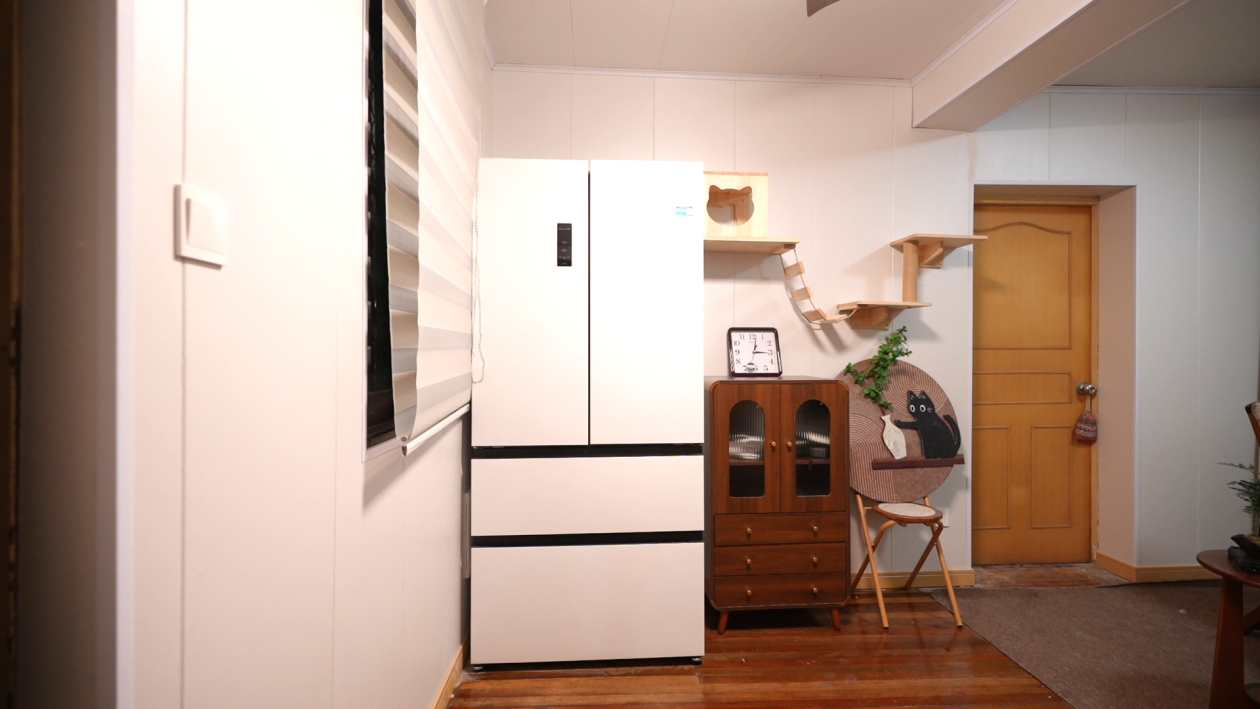
海信“双11”圆梦爆改局,超薄真空冰箱破解生活难题
Huan Qiu Wang· 2025-10-30 02:04
Core Insights - The article highlights the innovative solutions provided by Hisense to address the mismatched needs of modern households through customized refrigerator designs [1][2][4]. Group 1: Shanghai Case Study - In Shanghai, Hisense introduced the ultra-thin Hisense Big Mint 509 refrigerator, featuring a 60 cm slim body and a capacity of 509 liters, catering to the needs of a pet owner [2]. - The refrigerator employs a dual-system independent circulation design for refrigeration and freezing, preventing odor mixing and ensuring optimal taste for both human and pet food [2]. - The design includes a French-style large drawer with a steel sliding track and balance stabilizer, making it user-friendly for elderly individuals [2]. - The refrigerator also features DBD ion active sterilization and deodorization technology, achieving a sterilization rate of 99.9999% [2]. Group 2: Jinan Case Study - In Jinan, Hisense provided the Hisense Vacuum 510 refrigerator, which emphasizes "preserving original flavor, preventing odor mixing, and enhancing taste" [4]. - This refrigerator utilizes original vacuum ice temperature technology to create an independent, sealed vacuum environment, effectively isolating odor molecules [4]. - The vacuum magic storage box allows for categorized independent storage, enabling the simultaneous storage of strong-smelling foods without affecting the taste of other items [4]. Group 3: Overall Impact - The initiative showcases how technology and warmth can enhance the quality of life in different urban settings, reflecting Hisense's commitment to innovation and customer satisfaction [6].