SAIC MOTOR(600104)

Search documents
上汽集团:12月12日召开董事会会议
Mei Ri Jing Ji Xin Wen· 2025-12-12 08:27
Group 1 - The core point of the article is that SAIC Motor Corporation Limited announced the convening of its ninth fifth board meeting via communication method on December 12, 2025, to review proposals including the establishment of branch offices [1] - For the year 2024, the revenue composition of SAIC Motor is projected to be 97.85% from the automotive manufacturing sector and 2.15% from the financial sector [1] - As of the report date, SAIC Motor's market capitalization stands at 180.7 billion yuan [1]

上汽集团(600104) - 上汽集团关于预计2026年上半年日常关联交易金额的公告
2025-12-12 08:15
证券代码:600104 证券简称:上汽集团 公告编号:临 2025-054 上海汽车集团股份有限公司 关于预计 2026 年上半年日常关联交易金额的公告 本公司董事会及全体董事保证本公告内容不存在任何虚假记载、误导性陈述或者重大遗漏, 并对其内容的真实性、准确性和完整性承担法律责任。 重要内容提示: 以下日常关联交易事项尚须提交公司股东会审议 以下日常关联交易事项是基于公司生产经营发展需要,在公平、 互利的基础上进行,符合公司和全体股东利益,不影响公司的独立性 一、日常关联交易基本情况 2023 年,经公司第八届董事会第十三次会议和 2022 年年度股东大会 审议批准,公司与关联方签订了《商品供应框架协议》《综合服务框架 协议》《房屋土地及车辆租赁框架协议》《金融服务框架协议》四类日 常关联交易框架协议;公司子公司上海汽车集团财务有限责任公司(以 下简称"上汽财务公司")与公司关联方签订了《金融服务框架协议》。 上述框架协议的有效期为三年,至三年后公司股东会批准新的协议之日 止。 1 易的议案》,关联董事黄坚先生回避表决。上述日常关联交易相关议案 将提交公司股东会审议,关联股东将在股东会上回避表决。 3、独立 ...
上汽集团(600104) - 上汽集团关于召开2025年第二次临时股东会的通知
2025-12-12 08:15
证券代码:600104 证券简称:上汽集团 公告编号:临 2025-055 至2025 年 12 月 30 日 上海汽车集团股份有限公司 关于召开2025年第二次临时股东会的通知 本公司董事会及全体董事保证本公告内容不存在任何虚假记载、误导性陈述 或者重大遗漏,并对其内容的真实性、准确性和完整性承担法律责任。 重要内容提示: 网络投票系统:上海证券交易所股东会网络投票系统 网络投票起止时间:自2025 年 12 月 30 日 无 二、 会议审议事项 本次股东会审议议案及投票股东类型 | 序号 | | 议案名称 | 投票股东类型 | | --- | --- | --- | --- | | | | | A 股股东 | | 非累积投票议案 | | | | | 1 | 关于预计 2026 | 年上半年日常关联交易金额的议案 | √ | | 2 | 关于预计 2026 | 年上半年上海汽车集团财务有限责 | √ | | | | 任公司与公司关联方日常关联交易金额的议案 | | | 3 | 关于预计 2026 | 年上半年在招商银行开展存贷款等 | √ | | | 业务暨关联交易的议案 | | | 1、各议案已披露的时间 ...
上汽集团(600104) - 上汽集团九届五次董事会会议决议公告
2025-12-12 08:15
证券代码:600104 证券简称:上汽集团 公告编号:临 2025-053 上海汽车集团股份有限公司 九届五次董事会会议决议公告 本公司董事会及全体董事保证本公告内容不存在任何虚假记载、误导性陈述或者重大遗 漏,并对其内容的真实性、准确性和完整性承担法律责任。 3、关于《上汽集团 2025-2026 年工资决定机制改革实施方案》 的议案 (同意 8 票,反对 0 票,弃权 0 票) 上海汽车集团股份有限公司第九届董事会第五次会议通知于 2025 年 12 月 9 日通过传真、电子邮件等形式送达。本次董事会会议 于 2025 年 12 月 12 日采用通讯方式召开,应参加会议董事 8 人,实际 收到 8 名董事的有效表决票。会议的召集、召开符合《公司法》及《公 司章程》的有关规定。 经与会董事逐项审议,表决通过了如下决议: 1、关于公司设立分支机构的议案 为加快推动公司新能源汽车业务发展,同意设立上海汽车集团股 份有限公司乘用车金桥分公司(暂定名,以市场监督管理局核准的名 称为准),并授权公司经营管理层具体办理设立分公司的相关手续。 (同意 8 票,反对 0 票,弃权 0 票) 2、关于公司高级管理人员 202 ...
11月多家新能源汽车销量大增,零跑、小鹏、小米完成全年目标
高工锂电· 2025-12-11 11:10
Core Insights - The article highlights the surge in the electric vehicle (EV) market driven by the impending end of the new energy vehicle purchase tax exemption policy, leading to a year-end consumption peak [2][3] - The battery supply chain is experiencing a rare high production rhythm in December, with material prices rising across the board, prompting several battery companies to announce or plan price increases [2][8] Group 1: Market Performance - In November, the production and sales of new energy vehicles reached 1.88 million and 1.823 million units respectively, both showing a year-on-year increase of 20%, with a penetration rate exceeding 53% [2] - From January to November, cumulative production and sales of new energy vehicles reached 14.907 million and 14.78 million units, respectively, with year-on-year growth exceeding 31% and a penetration rate of 47.5% [2] - Several major automakers, including Li Auto and NIO, have achieved or exceeded their annual sales targets ahead of schedule due to consumer demand driven by the tax policy change [3][4] Group 2: Sales Growth and Market Concentration - Notable sales growth in November includes Leap Motor with a 75.1% year-on-year increase, and Xiaomi Auto with a 99.7% increase [4] - The top fifteen new energy vehicle manufacturers collectively sold 14.072 million units from January to November, representing a year-on-year growth of 32.6% and accounting for 95.2% of total sales [5] - The top three manufacturers (BYD, Geely, SAIC) hold a combined market share of 50.5%, indicating a strengthening head effect in the market [5] Group 3: Battery Production and Pricing - The battery production in December is expected to remain stable at around 220 GWh, marking the first time since late 2022 that production has not decreased in December [6] - The demand from non-power sectors is contributing significantly to the overall production stability, supporting high operational levels in the supply chain [7] - Battery companies are initiating price increases due to rising raw material costs, with Dejia Energy announcing a 15% price hike effective December 16 [9][10]




月产量首超350万辆, 中汽协:全年汽车产销有望再创新高
Feng Huang Wang· 2025-12-11 09:45
Group 1 - In November, China's automotive production and sales reached 3.532 million and 3.429 million units respectively, marking a month-on-month increase of 5.1% and 3.2%, and a year-on-year increase of 2.8% and 3.4%, with production exceeding 3.5 million units for the first time, setting a historical record [1] - From January to November, automotive production and sales totaled 31.231 million and 31.127 million units, reflecting year-on-year growth of 11.9% and 11.4%, although the growth rate has narrowed compared to the previous ten months [1] - Domestic sales of passenger vehicles in November were 2.414 million units, showing a month-on-month increase of 1% but a year-on-year decrease of 6.5%, with traditional fuel vehicles experiencing a significant decline [1] Group 2 - Nissan's sales in China for November reached 70,084 units, a year-on-year increase of 10.29%, while Honda's sales faced a significant decline of 33.78% [2] - GAC Toyota's November sales were 73,500 units, showing a slight year-on-year increase of 0.68%, while FAW Toyota's sales dropped over 20% [3] - The retail sales of mainstream joint venture brands in November were 490,000 units, a year-on-year decrease of 19% and a month-on-month decrease of 6% [4] Group 3 - The market share of German brands in retail sales was 14.0%, down 1.6 percentage points year-on-year, while Japanese brands held 11.7%, down 0.7 percentage points [4] - The secretary-general of the Passenger Car Market Information Association anticipates strong retail sales for new energy vehicles in December due to tax incentives and consumer urgency [4]
大电池增程会是未来主流吗?
数说新能源· 2025-12-11 06:31
Group 1: China's Energy Landscape - China's reliance on imported crude oil has increased, with self-sufficiency dropping to 28% as of 2023, down from 39.4% in 2015 [1] - The primary use of crude oil in China is for transportation, accounting for 53.6% of consumption, followed by chemical products (28.9%) and industrial use (8%) [1] - China has a significant advantage in coal resources and a leading position in the global photovoltaic (PV) industry, with the cost of solar components at 0.7 yuan/W and total installation costs under 1.8 yuan/W [1] Group 2: Photovoltaic Potential - If 10% of China's desertified land (approximately 168,000 square kilometers) were covered with PV panels, it could generate 18.9 trillion kWh annually, exceeding the projected total electricity generation of 10 trillion kWh for 2024 [2] Group 3: Economic Comparison of Energy Sources - The cost of gasoline derived from crude oil is approximately 2.86 yuan per liter, leading to a driving cost of 0.14-0.28 yuan per kilometer for gasoline vehicles [3][4][5] - In contrast, the cost of electricity for electric vehicles (EVs) is between 0.5-1 yuan per kWh, resulting in a driving cost of 0.08-0.16 yuan per kilometer, which is more economically favorable as it supports domestic distribution [6] Group 4: Electric Vehicle Challenges - The current infrastructure for public charging stations is insufficient during winter months, leading to increased wait times for charging [6][9] - To meet the commuting needs in first-tier cities, EV batteries should ideally be designed with a capacity of 80-100 kWh to counteract winter range reduction [7] Group 5: Battery Size Considerations - Increasing battery size to 200 kWh may lead to resource and financial waste, as larger batteries significantly increase vehicle weight and cost [12] - The current trend is towards larger battery packs in range-extended electric vehicles (REEVs), with models like the Li Auto L6 and others increasing battery capacities to meet consumer demands [17][18] Group 6: Market Trends - The market for REEVs is evolving, with manufacturers increasing battery sizes to enhance electric driving capabilities while maintaining the option for range extension [18]

上证50调仓,龙头企业逆周期穿行
2 1 Shi Ji Jing Ji Bao Dao· 2025-12-11 06:17
Core Viewpoint - The adjustment of the SSE 50 Index reflects a shift between traditional and emerging industries, indicating changes in market liquidity rather than a direct correlation with the fundamental performance of the companies involved [1][5]. Group 1: Index Adjustment Details - The SSE 50 Index will see the removal of China Mobile, Poly Developments, China Aluminum, and CRRC, while SAIC Motor, Northern Rare Earth, Huadian New Energy, and Zhongke Shuguang will be added, effective December 12 [1]. - The index is based on the SSE 180 Index, selecting the top 50 securities with the largest market capitalization and liquidity, with adjustments occurring semi-annually [2]. Group 2: Performance of Removed Companies - China Mobile reported a net profit of 842 billion yuan in the first half of the year, a 5% increase year-on-year, but was removed due to low average daily trading volume [3]. - Poly Developments, despite being the highest market cap in the real estate sector with a market value of 760.12 billion yuan, was also removed for similar liquidity reasons, although it demonstrated strong sales recovery and cash flow capabilities [3]. - China Aluminum and CRRC's removal is attributed to decreased trading activity linked to macroeconomic cycles affecting their respective industries [4]. Group 3: Market Reactions and Future Outlook - Analysts view the index adjustment as a normal operation within the rules, emphasizing that it does not strongly correlate with the companies' fundamentals [5]. - Both China Mobile and Poly Developments remain industry leaders, with China Mobile having 980 million mobile users and a significant role in 5G infrastructure [5][6]. - Poly Developments is transitioning from merely selling properties to managing them, aligning with national economic goals, and continues to hold a substantial market share in the real estate sector [6]. - Historical data shows that companies removed from indices can still perform well based on their fundamentals, indicating that long-term value is determined by core business performance rather than index inclusion [7].





奋战四季度 确保全年红丨智行盒子量产 智己项目投产 河南造车新势力加速入场
He Nan Ri Bao· 2025-12-10 23:08
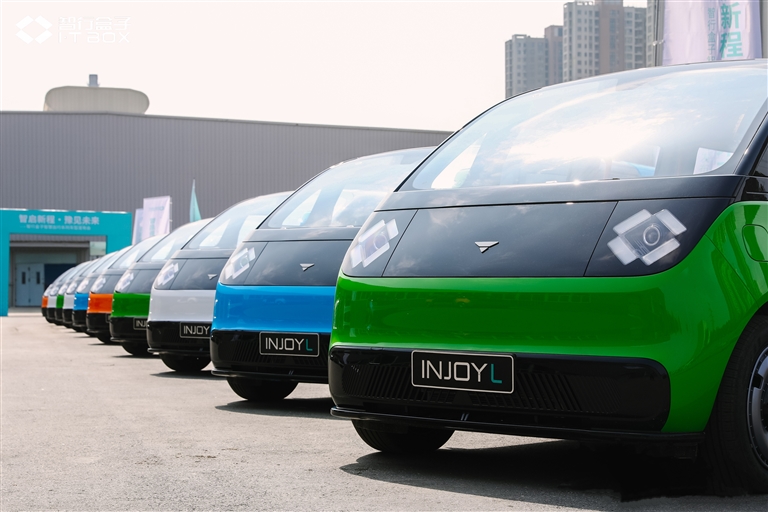
Group 1 - The core viewpoint of the articles highlights the rapid development of the new energy vehicle (NEV) industry in Henan, particularly through local companies like Haima Automobile and Zhiji Automobile, which are contributing to the transformation of the automotive sector towards electrification and intelligence [2][3][4] - Haima Automobile's third smart factory has begun producing the customized INJOY series vehicles, marking a significant step in the intelligent transformation of the NEV industry in the province [2] - The launch of the Zhiji LS9 model at the Zhengzhou base of SAIC Motor signifies the commencement of production for extended-range hybrid vehicles, which is expected to stimulate high-value supporting projects in the region [3] Group 2 - Zhengzhou is projected to produce 626,000 NEVs in 2024, representing a year-on-year growth of 112.9%, contributing to an overall automotive production of over 1.1 million units, placing it among the top ten cities in China for automotive output [3][4] - From January to October this year, Zhengzhou has produced a total of 956,000 vehicles, with 508,000 of those being NEVs, showcasing the city's strong manufacturing capabilities [4] - The establishment of production bases by major players like BYD and SAIC, along with the entry of new energy vehicle startups, is propelling Zhengzhou towards becoming a "New Energy Vehicle City" [4]

中国燃油车,在海外杀疯了!
Xin Lang Cai Jing· 2025-12-10 14:05
Core Viewpoint - The article discusses the significant growth of Chinese fuel vehicles in overseas markets, highlighting their competitive advantages in terms of price and features compared to traditional brands, despite the global shift towards electric vehicles [4][25]. Group 1: Export Growth of Fuel Vehicles - Since 2020, for every four cars exported from China, three have been fuel vehicles [5]. - In 2021, China exported 2.015 million cars, with 1.705 million being fuel vehicles, accounting for 84.6% [6]. - In 2022, the total car export volume reached 3.111 million, with fuel vehicles increasing to 2.342 million, representing 78.2% [7]. - In 2023, the export volume of traditional fuel vehicles was 3.707 million, making up 75.4% of total exports [8]. - Projections for 2024 indicate that fuel vehicle exports will reach 4.574 million, maintaining a share of 78.1% [9]. Group 2: Market Performance and Competitiveness - Chinese fuel vehicles are performing well in secondary markets such as Eastern Europe, Latin America, and Africa, with significant market shares [12]. - In South Africa, Chinese manufacturers captured nearly 16% of the automotive market in the first half of the year, up from 10% the previous year [12]. - In Chile, Chinese fuel vehicles accounted for nearly one-third of the market, while traditional brands saw sales declines of 34% to 45% [12]. Group 3: Advantages of Chinese Fuel Vehicles - Chinese fuel vehicles offer superior cost-performance ratios, allowing consumers to purchase larger and better-equipped vehicles for the same price as basic models from traditional brands [16][38]. - For example, in Saudi Arabia, the price of a base model Nissan Sylphy can buy a fully equipped MG7, which offers better performance and features [38]. - The strategy of providing high configurations at competitive prices has proven effective in attracting budget-conscious consumers [40]. Group 4: Industry Upgrades and Global Strategy - Chinese automakers have upgraded their production standards to meet international safety and reliability benchmarks, moving from merely exporting products to establishing local production bases in key markets [21][42]. - Companies like Chery, SAIC, and Geely have successfully transitioned to building local supply chains and sales networks, enhancing their global competitiveness [21][44]. - Some joint ventures have also leveraged Chinese manufacturing advantages to boost their export operations significantly [23][45]. Group 5: Future Outlook - The narrative of Chinese fuel vehicles represents a "silent yet solid" counterattack in the face of the electric vehicle trend, focusing on practical needs in markets where electric infrastructure is lacking [25][46]. - Despite challenges in brand recognition and scale compared to global giants like Toyota and Volkswagen, Chinese manufacturers are poised to convert their cost and technology advantages into sustainable global competitiveness [25][46].