
ZZPZH(600436)

Search documents
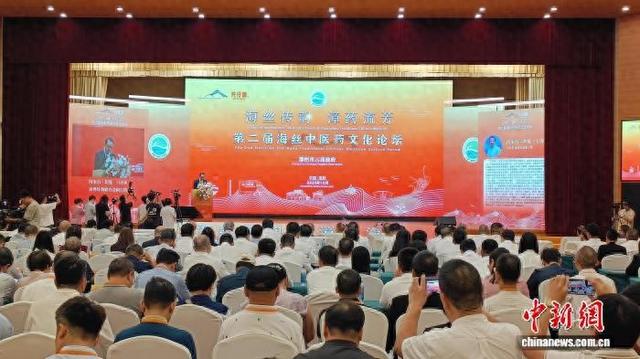
第二届海丝中医药文化论坛在福建漳州举行
Zhong Guo Xin Wen Wang· 2025-10-18 11:22
Core Viewpoint - The integration of traditional Chinese medicine (TCM) with Western medicine is gaining popularity internationally, with many foreign patients seeking TCM treatments such as herbal medicine and acupuncture, which have shown effective results [1][2]. Group 1: Event Overview - The second Maritime Silk Road Traditional Chinese Medicine Culture Forum was held in Zhangzhou, Fujian, focusing on the themes of TCM inheritance, innovation, and integration [2]. - The forum gathered TCM experts and scholars from both domestic and international backgrounds to discuss the development of TCM [2]. Group 2: Key Projects and Agreements - A total of 47 projects were signed during the forum, with a total investment amounting to 154.47 billion yuan [4][6]. - The projects included 18 health industry projects with an investment of 61.55 billion yuan, 22 fund establishment and attraction projects totaling 92.92 billion yuan, and 7 technology achievement transformation projects [6]. Group 3: Local Significance and Initiatives - Zhangzhou is recognized as an important node in the Maritime Silk Road and has a rich history in traditional medicine, with notable historical figures and renowned medicines originating from the area [5]. - The city is implementing the "Yuan Mountain Plan," which aims to enhance the integration of TCM and health industries across the Taiwan Strait, promoting TCM culture and innovation [5].

片仔癀再做LP,这次投了中金资本
Zheng Quan Shi Bao Wang· 2025-10-18 10:33
Core Viewpoint - Pizhou Pharmaceutical has made a strategic investment in the healthcare sector by becoming a limited partner in the newly established CICC Medical Fund, contributing 200 million RMB, which represents 20% of the fund's target size of 1 billion RMB [1][2][3] Group 1: Investment Details - The CICC Medical Fund was established on October 14, with a target fundraising size of 1 billion RMB, and Pizhou Pharmaceutical's subsidiary, Zhangzhou Pizhou Investment Management Co., Ltd., is a limited partner contributing 200 million RMB [1][2] - The fund's primary investment focus includes traditional Chinese medicine, biomedicine, medical devices, healthcare services, and beauty and wellness industries, aligning with Pizhou's strategic interests [2][3] Group 2: Strategic Implications - Pizhou Pharmaceutical views this investment as a forward-looking strategy to enhance its core competitiveness while ensuring stable development of its main business [3] - The collaboration with CICC Capital is expected to leverage their extensive fund management experience and resources to integrate industry and capital effectively, supporting the long-term development of Pizhou and the healthcare industry in Zhangzhou [3] Group 3: Previous Investments - This is not Pizhou's first foray into the limited partner space; earlier in 2023, the company invested in two other funds, each with a similar contribution of 200 million RMB, focusing on the healthcare supply chain and biomedicine [4][5] - The previous investments are aimed at diversifying risks and linking innovative resources, which may provide future material supply guarantees for Pizhou's core products [5]
陆家嘴财经早餐2025年10月18日星期六
Wind万得· 2025-10-17 22:46
Monetary Policy and Economic Measures - The People's Bank of China will continue to implement a moderately loose monetary policy, using various tools to ensure ample liquidity and support consumption and effective investment, while maintaining the stability of the RMB exchange rate [2] - The Ministry of Finance reported that national fiscal revenue for the first three quarters reached 16.39 trillion yuan, a year-on-year increase of 0.5%, with a notable growth of 2.5% in the third quarter [3] - The Ministry of Finance announced measures to consolidate and expand the economic recovery, including allocating 500 billion yuan from local government debt limits to support local governments, an increase of 100 billion yuan from the previous year [3] Trade and Regulatory Developments - The Ministry of Commerce and other departments have adjusted the duty-free shopping policy for Hainan, increasing the number of duty-free product categories from 45 to 47, effective November 1 [4] - The Ministry of Commerce, along with five other departments, issued guidelines to improve the overseas comprehensive service system for enterprises, providing support for international cooperation and competition [4] - The State Administration for Market Regulation and the Ministry of Industry and Information Technology are drafting regulations to strengthen supervision of smart connected and new energy vehicle recalls [10] Corporate Performance and Market Trends - The China Securities Regulatory Commission revised the Corporate Governance Code for listed companies, effective January 1, 2026, to enhance the regulation of directors and senior management [5] - A-share market saw a significant decline, with the Shanghai Composite Index dropping 1.95% to 3839.76 points, and the Shenzhen Component Index falling 3.04% [5] - Zijin Mining reported third-quarter revenue of 86.489 billion yuan, a year-on-year increase of 8.14%, and a net profit of 17.056 billion yuan, up 52.25% [6] Investment and Financing Activities - The number of new margin trading accounts opened in September reached 205,400, a year-to-date high, with a month-on-month increase of 12.24% [6] - The fund managed by Zhao Yi increased holdings in companies such as Enjie and Kuaishou while reducing positions in CATL and Tencent [7] - Coca-Cola is considering an IPO for its bottling business in India, potentially raising $1 billion and valuing the business at approximately $10 billion [23]






漳州片仔癀药业股份有限公司2025年第三季度报告
Shang Hai Zheng Quan Bao· 2025-10-17 19:49
Core Viewpoint - The company has announced the completion of the first subject enrollment in the Phase III clinical trial of its innovative traditional Chinese medicine, Wen Dan Pian, which aims to treat mild to moderate generalized anxiety disorder. This development is not expected to have a significant impact on the company's financial status and operating performance for the current year [9][12]. Financial Data - The company has reported that the cumulative research and development investment for Wen Dan Pian is approximately 55 million yuan [11]. - The financial data for the first three quarters of 2025 has been disclosed, but specific figures are not provided in the available documents [15]. Clinical Trial Information - Wen Dan Pian is classified as a Class 1 innovative traditional Chinese medicine and is designed to treat mild to moderate generalized anxiety disorder [9][10]. - The Phase III clinical trial is a multi-center, randomized, double-blind, placebo-controlled study, with the primary efficacy indicator being the reduction in HAMA score from baseline at week 12 [10]. Market Context - The global prevalence of anxiety disorders is reported to be 4.4%, with a lifetime prevalence of 7.6% and an annual prevalence of 5.0% in China [12]. - The sales scale of anti-anxiety medications in Chinese hospitals reached 2.444 billion yuan in 2024 [12].
片仔癀第三季度归母净利润同比下降28.82%;歌尔股份终止筹划收购米亚精密科技等100%股权;广大特材董事长解除留置|公告精选
Mei Ri Jing Ji Xin Wen· 2025-10-17 15:34
Mergers and Acquisitions - Xiangshan Co. plans to publicly transfer 100% equity of its wholly-owned subsidiary, Xiangshan Electronics, with a starting price of 400 million yuan [1] - Goer Group has terminated its plan to acquire 100% equity of Mia Precision Technology and Changhong Industrial due to failure to reach agreement on key terms, with an intended investment of approximately 10.4 billion HKD (about 9.5 billion yuan) [2] - Weigao Blood Purification is planning to acquire 100% equity of Shandong Weigao Puri Pharmaceutical Packaging through a share issuance, which is expected to constitute a major asset restructuring and related party transaction [3] Shareholding Changes - Youfa Group's director Zhang Degang intends to reduce his holdings by up to 3.54 million shares, representing 0.24% of the company's total equity and 25% of his holdings [4] - Jiacheng International's shareholder, Guangdong Hengshang Industrial Investment, plans to reduce its holdings by up to 1% of the total equity within 90 days after a 15-day notice period due to financial reasons [5] - Shengbang Co.'s controlling shareholder's concerted actor, director Lin Lin, plans to reduce holdings by up to 7.8871 million shares, which is not more than 1.28% of the total equity [6] Earnings Disclosure - Rongbai Technology reported a net loss of 135 million yuan in Q3 2025, with a revenue of 2.737 billion yuan, down 38.29% year-on-year [7] - Pianzihuang reported a Q3 2025 net profit of 687 million yuan, down 28.82% year-on-year, with revenues of 2.064 billion yuan, down 26.28% [8] - Cambrian reported a Q3 2025 net profit of 567 million yuan, with revenues of 1.727 billion yuan, up 1332.52% year-on-year [9]

“药茅”业绩全面下滑!
Shen Zhen Shang Bao· 2025-10-17 13:54
Core Viewpoint - The pharmaceutical company Pianzaihuang (600436), known as "Medicine Mao," reported a significant decline in revenue and profit for the first three quarters of 2025, primarily due to reduced sales in the pharmaceutical manufacturing sector and a decrease in gross margin [1] Financial Performance - For the first three quarters of 2025, the company achieved operating revenue of 7.44 billion, a year-on-year decrease of 11.9% [1] - The net profit attributable to the parent company was 2.13 billion, down 20.7% year-on-year [1] - The net profit after deducting non-recurring items was 1.89 billion, a decline of 30.38% year-on-year [1] - The net operating cash flow was 487 million, reflecting a significant drop of 62.5% year-on-year [1] Quarterly Performance - In the third quarter, the company reported operating revenue of 2.06 billion, a year-on-year decrease of 26.3% [1] - The net profit attributable to the parent company for the third quarter was 687 million, down 28.8% year-on-year [1] - The net profit after deducting non-recurring items for the third quarter was 438 million, a decline of 54.6% year-on-year [1] Business Operations - The primary reason for the profit decline was attributed to reduced sales in the pharmaceutical manufacturing industry and a decrease in gross margin [1] - The company’s main business includes the research, production, and sales of traditional Chinese medicine formulations, particularly the Pianzaihuang series of drugs, which cover multiple therapeutic areas [1] - The company is actively pursuing international business opportunities to expand its overseas market and promote traditional Chinese medicine culture globally [1] Industry Insights - For the first three quarters of 2025, the pharmaceutical manufacturing sector's revenue decreased by 12.93%, with a gross margin reduction of 7.51 percentage points [1] - The cosmetics sector experienced a revenue decline of 23.87%, with a gross margin decrease of 1.28 percentage points [1]
公告精选:寒武纪第三季度营收同比增长1332.52%;罗博特科签订重大合同



Zheng Quan Shi Bao Wang· 2025-10-17 12:39
Performance - Cambrian's Q3 revenue reached 1.727 billion yuan, a year-on-year increase of 1332.52%; net profit was 567 million yuan [1] - Hikvision's Q3 net profit grew by 20.31% year-on-year [5] - Sitaiwei's net profit for the first three quarters is expected to increase by 140% to 169% year-on-year [5] - Northern Heavy Industries anticipates a year-on-year net profit increase of 56.90% to 70.74% for the first three quarters [5] - Jintian's net profit for the first three quarters increased by 104.37% year-on-year [5] - Yingshi Network's Q3 net profit grew by 28.73% year-on-year [5] - Sankeshu's net profit for the first three quarters increased by 81.22% year-on-year, with a proposed dividend of 5 yuan per 10 shares [5] - Pianzaihuang's Q3 net profit decreased by 28.82% year-on-year [5] - Shentong Technology's Q3 net profit surged by 452.62% year-on-year [5] - Huayou Cobalt's net profit for the first three quarters increased by 39.59% year-on-year [5] - Guotou Power's Q3 power generation reached 47.891 billion kWh, a year-on-year decrease of 14.42% [5] - Rongbai Technology reported a Q3 net loss of 135 million yuan [5] - Zijin Mining's Q3 net profit increased by 52.25% year-on-year [5] - Haida Group's net profit for the first three quarters increased by 14.31%, planning to spin off its subsidiary Haida Holdings for a Hong Kong listing [5] Share Buybacks and Reductions - Fujirui plans to repurchase shares worth 10 million to 20 million yuan [3] - Tonghua Dongbao intends to repurchase shares worth 20 million to 40 million yuan [3] - Shenzhen New Star plans to adjust the maximum repurchase price to no more than 30 yuan per share [3] - Sanhua Intelligent Control has raised the maximum repurchase price and extended the implementation period [3] - Dayang Electric has also raised the maximum repurchase price and extended the implementation period [3] - Hunan Baiyin's controlling shareholder plans to reduce its stake by no more than 2% [5] - Shengbang shares' controlling shareholder plans to reduce its stake by no more than 1.28% [5] - Liandong Technology's actual controller plans to reduce its stake by no more than 2.9963% [5] - Juxing Agriculture's shareholder plans to reduce its stake by no more than 2% [5] - Aerospace Engineering's shareholders plan to reduce their stakes by no more than 6% [5] Contracts and Collaborations - Yongmaotai signed a strategic cooperation framework agreement with a leading humanoid robot company [3] - Xinjiang Jiaojian won a construction project worth 556 million yuan [4] - Jingjiawei signed a strategic cooperation agreement with Cangqiong Digital to create a fully domestic integrated solution [3] - Shengshi Technology signed a contract for a project worth 102 million yuan at Hunchun Port [3] - Robotech signed a contract worth approximately 761 million yuan, accounting for about 68.83% of the company's 2024 revenue [3] - Guangdong Construction's subsidiary signed a cooperation framework agreement with the Maoming Binhai New Area Management Committee [3] Mergers and Acquisitions - Jingwei Huikai plans to acquire 100% of Zhongxing System for 850 million yuan, entering the private network communication field [6] - Weigao Blood Purification intends to purchase 100% of Weigao Purui's shares, with stock trading suspended from October 20 [6] - GoerTek terminated its planned acquisition of Mia Precision Technology and Changhong Industrial [6] Financing - Changsha Bank received regulatory approval to issue capital instruments not exceeding 12 billion yuan [6]
片仔癀:前三季度实现收入74.42亿元,1.1类新药有望填补中药焦虑用药空白
Zheng Quan Shi Bao Wang· 2025-10-17 12:29
Core Viewpoint - The company reported a slight decline in performance for the first three quarters of 2025, with operating revenue and net profit attributable to shareholders reaching 7.442 billion yuan and 2.129 billion yuan respectively, due to adverse factors such as a temporary contraction in the consumer market and high raw material costs [1] Group 1: Financial Performance - The company's operating revenue for the first three quarters of 2025 was 7.442 billion yuan, while the net profit attributable to shareholders was 2.129 billion yuan [1] - The management is actively investing in brand, channel, research and development, and external investments to support future business recovery [1] Group 2: Raw Material Costs - The price of natural bull gall has been decreasing, dropping from 1.65 million yuan per kilogram at the beginning of the year to 1.45 million yuan, which is expected to further improve cost conditions [1] Group 3: R&D and Clinical Trials - The company announced the completion of the first subject enrollment in the Phase III clinical trial for the innovative traditional Chinese medicine, Wen Dan Pian, which targets mild to moderate generalized anxiety disorder [1][2] - Wen Dan Pian is based on the classic formula Wen Dan Tang and has been used clinically since 2007, classified as a 1.1 category innovative traditional Chinese medicine [2] - The Phase III clinical trial aims to confirm the efficacy and safety of Wen Dan Pian in treating mild to moderate generalized anxiety disorder, with 606 subjects expected to be recruited [4] Group 4: Market Demand and Opportunities - The patient base for generalized anxiety disorder (GAD) is large, with a lifetime prevalence of 7.6% among Chinese adults and an annual prevalence of 5.0% [3] - The market for anti-anxiety medications in hospitals in China is projected to reach 2.444 billion yuan in 2024 [3] - There is a significant unmet clinical need for traditional Chinese medicine treatments for GAD, particularly for the phlegm-heat disturbance type, which the company's product aims to address [3][4] Group 5: Industry Trends - The Chinese government has emphasized the importance of innovation in traditional Chinese medicine, encouraging the development of new drugs and children's medications [4] - The company has been actively promoting the research and development of innovative drugs, with 18 new drug research projects underway in the first half of 2025 [4]
一周医药速览(10.13-10.17)
Cai Jing Wang· 2025-10-17 12:12
Group 1: Investment Activities - CICC (Zhangzhou) Medical Industry Investment Partnership has been established with a total investment of 1 billion RMB, focusing on healthcare investments including traditional Chinese medicine and biomedicine [1] - Pizaihuang plans to invest 200 million RMB, representing 20% of the target fundraising scale of the CICC Medical Fund [1] - Beautiful Garden Medical Health is acquiring 100% of Shanghai Siyuanli Industrial for 1.25 billion RMB, aiming to strengthen its position in high-end beauty services [2] Group 2: Financial Performance - Johnson & Johnson reported Q3 revenue of 23.993 billion USD, a 6.8% year-on-year increase, with total revenue for the first nine months reaching 69.629 billion USD, up 5.0% [3] - Meinian Health expects a net profit of 42 million to 62 million RMB for the first three quarters, representing a year-on-year growth of 70.51% to 151.7% [4] - The company reported that revenue from AI technology applications reached approximately 249.64 million RMB, a 71.02% increase compared to the previous year [4] Group 3: Strategic Developments - Johnson & Johnson plans to spin off its orthopedic business into a new independent company named DePuy Synthes, focusing on six key growth areas [3] - Hansoh Pharmaceutical has granted Roche exclusive rights to develop and commercialize the HS-20110 antibody-drug conjugate, with a potential total transaction value of up to 1.45 billion USD [6] - Valiant Biopharma has entered into a global exclusive licensing agreement with Dianthus Therapeutics for the dual antibody LBL-047, with a potential total transaction value of up to 1 billion USD [7]



片仔癀前三季度净利21.29亿元,同比下降20.74%
Bei Jing Shang Bao· 2025-10-17 11:51
针对业绩下降的原因,片仔癀表示,主要原因系年初至报告期末医药制造业销售减少、毛利率下降所 致。 北京商报讯(记者 丁宁)10月17日晚间,片仔癀(600436)发布2025年第三季度报告显示,公司前三 季度营收、净利双降。 财务数据显示,今年前三季度,片仔癀实现的营业收入约为74.42亿元,同比下降11.93%;对应实现的 归属净利润约为21.29亿元,同比下降20.74%;对应实现的扣非净利润约为18.91亿元,同比下降 30.38%。 ...