WINGTECH(600745)

Search documents
闻泰科技敦促安世荷兰切实解决控制权问题
Zheng Quan Shi Bao Wang· 2025-11-23 11:31
(原标题:闻泰科技敦促安世荷兰切实解决控制权问题) 鉴于此,我们要求安世荷兰能在切实尊重事实和法律的基础上,就如何恢复闻泰科技的合法控制权与完 整股东权利,提出具有建设性且真正富有诚意的解决方案。 闻泰科技消息,近日,我方注意到安世荷兰及其相关方的一系列单方面行为,已对全球半导体产业链的 稳定构成潜在威胁。为避免局势进一步升级,维护各方合法权益,公司特此发表声明如下: 全球半导体产业的稳定关乎行业发展大局。我们再次呼吁各方以理性、负责任的态度行事,共同维护安 世半导体的稳定与繁荣,保障全球客户的供应链安全。 自荷兰经济部不当干预以来,本着负责任的态度和维护全球客户利益的原则,在中国相关政府部门的大 力帮助与推动下,我方已主动释放善意,明确表达了愿意与安世荷兰方面就如何恢复闻泰科技的合法控 制权、妥善解决当前争端进行建设性沟通。我们始终相信,通过坦诚对话解决分歧,是保障公司正常运 营和全球芯片供应稳定的切实正确途径。 来源:闻泰科技微信公众号 然而,令人深感遗憾与不解的是,尽管我方展现出最大诚意,安世荷兰方面迄今未对我方的沟通提议作 出任何实质性回应。 ...

刚刚,闻泰发声
半导体行业观察· 2025-11-23 11:21
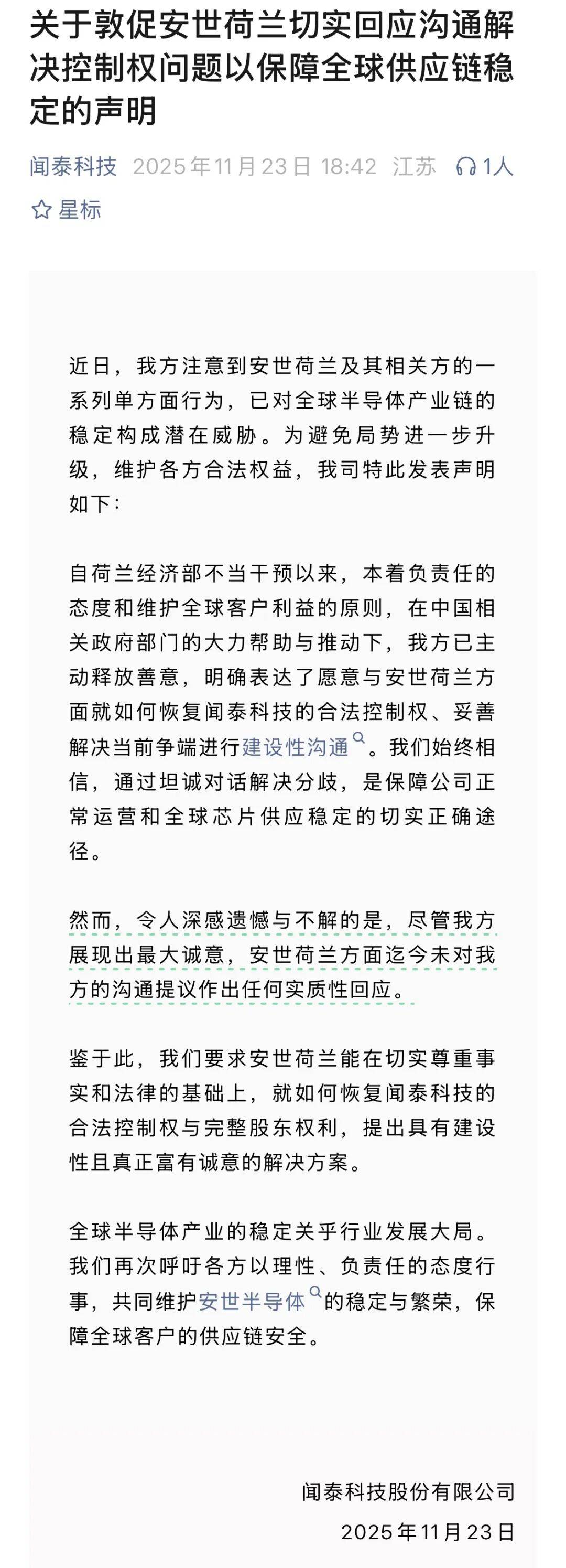
23日晚间,闻泰科技发布《关于敦促安世荷兰切实回应沟通解决控制权问题以保障全球供应链稳定的声明》,声明全文如下: 动释放善意,明确表达了愿意与安世荷兰方 面就如何恢复闻泰科技的合法控制权、妥善 解决当前争端进行建设性沟通。我们始终相 信,通过坦诚对话解决分歧,是保障公司正 常运营和全球芯片供应稳定的切实正确途 径。 近日,我方注意到安世荷兰及其相关方的一系列单方面行为,已对全球半导体产业链的稳定构成潜在威胁。为避免局势进一步升级,维护各方合法权益, 我司特此发表声明如下: 自荷兰经济部不当干预以来,本着负责任的态度和维护全球客户利益的原则,在中国相关政府部门的大力帮助与推动下,我方已主动释放善意,明确表达 了愿意与安世荷兰方面就如何恢复闻泰科技的合法控制权、妥善解决当前争端进行建设性沟通。我们始终相信,通过坦诚对话解决分歧,是保障公司正常 运营和全球芯片供应稳定的切实正确途径。 然而,令人深感遗憾与不解的是,尽管我方展现出最大诚意, 安世荷兰方面迄今未对我方的沟通提议作出任何实质性回应。 鉴于此,我们要求安世荷兰能在切实尊重事实和法律的基础上,就如何恢复闻泰科技的合法控制权与完整股东权利,提出具有建设性且真正 ...

刚刚,闻泰科技再发声
Sou Hu Cai Jing· 2025-11-23 11:15
Core Viewpoint - The company expresses concern over unilateral actions by ASML Netherlands that threaten the stability of the global semiconductor supply chain and calls for constructive dialogue to resolve control issues [1][6]. Group 1: Company Actions and Statements - The company has shown goodwill and a willingness to engage in constructive communication with ASML Netherlands to restore its legitimate control and resolve the current dispute [1][3]. - Despite the company's efforts, ASML Netherlands has not provided any substantial response to the communication proposals made by the company [1][3]. - The company emphasizes that the stability of the global semiconductor industry is crucial for overall industry development and urges all parties to act rationally and responsibly [1][3]. Group 2: Government Involvement and Negotiations - The Chinese Ministry of Commerce disclosed that on November 18 and 19, government departments from China and the Netherlands held face-to-face consultations regarding ASML semiconductor issues [6]. - During these consultations, China reiterated that the source of the current chaos in the global semiconductor supply chain lies with the Netherlands and urged the Dutch side to take effective actions to resolve the ASML issue [6]. - The Dutch side proposed to suspend the ministerial order issued under the Goods Availability Act, which China welcomed as a step in the right direction, but noted that further actions are needed to fully resolve the underlying issues [6]. Group 3: Legal and Regulatory Context - The Dutch Minister of Economic Affairs and Climate Policy announced the suspension of the ministerial order regarding ASML, but the court ruling from October 7, 2025, remains in effect, limiting the company's control over ASML [7]. - The company warns investors that despite the suspension of the ministerial order, the court's emergency measures are still in place, and control over ASML remains restricted [7].
闻泰科技:敦促安世荷兰切实回应控制权问题
Xin Jing Bao· 2025-11-23 11:11
新京报讯11月23日,闻泰科技(600745)股份有限公司发布声明,全文如下: 近日,我方注意到安世荷兰及其相关方的一系列单方面行为,已对全球半导体产业链的稳定构成潜在威 胁。为避免局势进一步升级,维护各方合法权益,我司特此发表声明如下: 鉴于此,我们要求安世荷兰能在切实尊重事实和法律的基础上,就如何恢复闻泰科技的合法控制权与完 整股东权利,提出具有建设性且真正富有诚意的解决方案。 全球半导体产业的稳定关乎行业发展大局。我们再次呼吁各方以理性、负责任的态度行事,共同维护安 世半导体的稳定与繁荣,保障全球客户的供应链安全。 自荷兰经济部不当干预以来,本着负责任的态度和维护全球客户利益的原则,在中国相关政府部门的大 力帮助与推动下,我方已主动释放善意,明确表达了愿意与安世荷兰方面就如何恢复闻泰科技的合法控 制权、妥善解决当前争端进行建设性沟通。我们始终相信,通过坦诚对话解决分歧,是保障公司正常运 营和全球芯片供应稳定的切实正确途径。 然而,令人深感遗憾与不解的是,尽管我方展现出最大诚意,安世荷兰方面迄今未对我方的沟通提议作 出任何实质性回应。 ...
闻泰科技发布关于敦促安世荷兰切实回应沟通解决控制权问题以保障全球供应链稳定的声明
Huan Qiu Wang· 2025-11-23 11:07
全球半导体产业的稳定关乎行业发展大局。我们再次呼吁各方以理性、负责任的态度行事,共同维护安 世半导体的稳定与繁荣,保障全球客户的供应链安全。 闻泰科技股份有限公司 2025年11月23日 然而,令人深感遗憾与不解的是,尽管我方展现出最大诚意,安世荷兰方面迄今未对我方的沟通提议作 出任何实质性回应。 鉴于此,我们要求安世荷兰能在切实尊重事实和法律的基础上,就如何恢复闻泰科技的合法控制权与完 整股东权利,提出具有建设性且真正富有诚意的解决方案。 关于敦促安世荷兰切实回应沟通解决控制权问题以保障全球供应链稳定的声明 近日,我方注意到安世荷兰及其相关方的一系列单方面行为,已对全球半导体产业链的稳定构成潜在威 胁。为避免局势进一步升级,维护各方合法权益,我司特此发表声明如下: 自荷兰经济部不当干预以来,本着负责任的态度和维护全球客户利益的原则,在中国相关政府部门的大 力帮助与推动下,我方已主动释放善意,明确表达了愿意与安世荷兰方面就如何恢复闻泰科技(维权) 的合法控制权、妥善解决当前争端进行建设性沟通。我们始终相信,通过坦诚对话解决分歧,是保障公 司正常运营和全球芯片供应稳定的切实正确途径。 ...
闻泰科技,发布最新声明
财联社· 2025-11-23 11:06
Core Viewpoint - The company emphasizes the importance of restoring its legitimate control and shareholder rights over Nexperia Netherlands, urging for constructive and sincere solutions to ensure the stability of the global semiconductor supply chain [1][2]. Group 1 - The company has expressed concerns regarding unilateral actions by Nexperia Netherlands that pose potential threats to the stability of the global semiconductor industry [2]. - The company has shown willingness to engage in constructive communication with Nexperia Netherlands to resolve the current disputes and restore legitimate control [2]. - The company calls for all parties to act rationally and responsibly to maintain the stability and prosperity of Nexperia Semiconductor and ensure the safety of the global supply chain [1][2].

闻泰科技:敦促安世荷兰切实回应沟通解决控制权问题,以保障全球供应链稳定
Di Yi Cai Jing· 2025-11-23 11:01
Core Viewpoint - The company emphasizes the importance of open dialogue to resolve disputes and ensure the stability of global chip supply [1] Group 1: Company Actions and Statements - The company has noted a series of unilateral actions by Nexperia Netherlands that pose a potential threat to the stability of the global semiconductor supply chain [1] - The company has expressed a willingness to engage in constructive communication with Nexperia Netherlands to restore its legitimate control and resolve the current dispute [1] - Despite the company's efforts to initiate dialogue, Nexperia Netherlands has not provided any substantive response to the company's proposals [1] Group 2: Industry Implications - The stability of the global semiconductor industry is crucial for the overall development of the sector [1] - The company calls for all parties to act rationally and responsibly to maintain the stability and prosperity of Nexperia Semiconductor and ensure the security of the global supply chain [1]
闻泰科技:关于敦促安世荷兰切实回应沟通解决控制权问题以保障全球供应链稳定的声明
Mei Ri Jing Ji Xin Wen· 2025-11-23 10:57
Core Viewpoint - The company expresses concern over unilateral actions by ASML Netherlands and related parties, which pose a potential threat to the stability of the global semiconductor supply chain [1] Group 1: Company Actions and Responses - The company has proactively shown goodwill and expressed willingness to engage in constructive communication with ASML Netherlands to restore its legitimate control and resolve the current dispute [1] - The company emphasizes the importance of honest dialogue to address differences and ensure normal operations and stability in global chip supply [1] Group 2: Industry Implications - The stability of the global semiconductor industry is crucial for overall industry development, and the company calls for rational and responsible actions from all parties to maintain the stability and prosperity of ASML and safeguard the global supply chain [1]
闻泰科技已向荷兰政府提起上诉!
是说芯语· 2025-11-23 09:35
Core Viewpoint - Nexperia's parent company, Wingtech Technology, has appealed to the Dutch government to revoke its decision to take control of Nexperia, claiming the action is unprecedented and lacks legal basis [2][3]. Group 1: Appeal and Legal Proceedings - Wingtech Technology filed its initial appeal on October 21 and expanded it on November 10, arguing that the Dutch government's order constitutes an unreasonable "property deprivation" [2]. - The Dutch Ministry of Economic Affairs announced on November 19 that it has suspended the order against Nexperia, but this suspension does not affect the ruling made by the Dutch Enterprise Court on October 7, 2025, which remains valid [3]. - The Enterprise Court's ruling includes the suspension of Zhang Xuezheng's positions and the appointment of an independent foreign director with decisive voting rights for Nexperia [3]. Group 2: Demands and Rights Restoration - Wingtech Technology demands the permanent revocation of the administrative order based on the "Goods Availability Act" and the restoration of control and rights for Chinese shareholders to the status prior to September 29, 2025 [4]. - The company asserts it will not accept any attempts to "legalize" illegal outcomes or a new governance norm created through unlawful procedures, and it will take all legal measures to protect its and all shareholders' rights [4]. Group 3: Uncertainty on Further Appeals - It remains unclear whether Wingtech Technology will appeal the ruling made by the Dutch Enterprise Court [5].
最新!闻泰科技已向荷兰政府提出上诉
是说芯语· 2025-11-22 09:10
Core Viewpoint - Wentech Technology has appealed to the Dutch government to revoke its decision regarding the takeover of its Dutch chip subsidiary Nexperia, claiming the decision is unprecedented and disproportionate, lacking legal basis [1][3]. Group 1: Appeal and Legal Actions - Wentech Technology first questioned the Dutch government's decision on October 21 and expanded its appeal on November 10 [3]. - The company's lawyers urged the Dutch Ministry of Economic Affairs to withdraw the order, describing it as an unprecedented "property deprivation" [3]. - The Dutch government has suspended its intervention in Nexperia, citing constructive talks with China regarding the chip shortage affecting automotive manufacturers [3]. Group 2: Government's Position and Court Actions - The Dutch government has not revoked its decision made on September 30, which aims to prevent the former CEO of Nexperia from relocating European operations to China [3][5]. - The Dutch Minister of Economic Affairs, Vincent Karremans, urged the court to act swiftly to prevent the transfer of Nexperia's assets to China shortly after intervening in the case [5]. - A Dutch court ordered the removal of Nexperia's former CEO, Zhang Xuezheng, due to mismanagement in October [7]. Group 3: Responses from China - The Chinese Ministry of Commerce stated that the Dutch actions have not fully ended the intervention as requested [4]. - Wentech Technology and Chinese authorities have also called for the Dutch government to withdraw another lawsuit regarding mismanagement of Nexperia [5]. Group 4: Compliance Concerns - The Dutch government's lawyers indicated in a letter to the court that Wentech Technology is unlikely to comply with the government's intervention measures [6].