
CMS(600999)

Search documents
招商证券:比亚迪股份二代刀片电池实现5分钟快充 维持“增持”评级
Zhi Tong Cai Jing· 2026-03-09 09:47
Core Viewpoint - BYD has launched its second-generation blade battery and fast-charging technology, significantly enhancing charging speed and efficiency, which is expected to strengthen its competitive advantage in the electric vehicle market [1][2] Group 1: Battery Technology - The new battery allows charging from 10% to 70% in 5 minutes and from 10% to 97% in 9 minutes, setting a new record for mass-produced vehicles [1] - The battery will be featured in 10 models, including the BYD Dynasty and Ocean series, with the Tengshi Z9GT achieving a range of 1,036 kilometers [1] - Performance improvements include enhanced charging in low temperatures, with charging from 20% to 97% taking about 12 minutes at -20 degrees Celsius [1] Group 2: Safety and Infrastructure - The new battery passed rigorous safety tests, including a 10-fold impact test without catching fire or exploding, and successfully completed 500 fast-charging cycles [1] - The company plans to implement the "Fast Charge China" strategy, aiming to build approximately 20,000 fast-charging stations by the end of 2026, with 4,239 already established [1] Group 3: Competitive Advantage - The significant technological advancements are expected to enhance BYD's competitive edge by improving charging efficiency and reducing the gap with fuel vehicles [2] - The vertical integration in battery technology, vehicle platforms, and charging networks is likely to strengthen BYD's technological moat and accelerate the launch of high-end models [2] - The new battery technology and product cycle are anticipated to improve market expectations and help BYD regain a differentiated competitive advantage amid temporary sales pressures [2]


招商证券:比亚迪股份(01211)二代刀片电池实现5分钟快充 维持“增持”评级
智通财经网· 2026-03-09 09:44
Core Viewpoint - BYD has launched its second-generation blade battery and fast-charging technology, significantly enhancing charging speed and efficiency for electric vehicles [1][2] Group 1: Battery Technology - The new battery allows charging from 10% to 70% in 5 minutes and from 10% to 97% in 9 minutes, setting a new record for mass-produced vehicles [1] - The BYD Seal 07 EV takes approximately 8 minutes and 44 seconds to charge from 10% to 97% [1] - The battery's performance has improved in low-temperature environments, charging from 20% to 97% in about 12 minutes at -20 degrees Celsius [1] Group 2: Vehicle Models - The new battery will be featured in 10 models, including the BYD Dynasty series, Ocean series, and Tengshi, with the Tengshi Z9GT achieving a range of 1,036 kilometers [1] Group 3: Safety and Testing - The battery has passed rigorous safety tests, including a 10-fold impact test without catching fire or exploding, and has undergone 500 fast-charging cycles [1] Group 4: Charging Infrastructure - The company plans to build approximately 20,000 fast-charging stations by the end of 2026, including 18,000 urban stations and 2,000 highway stations, with 4,239 already completed [1] - The first batch of 1,000 highway fast-charging stations is expected to be operational before the May Day holiday [1] Group 5: Competitive Advantage - The significant technological advancements are expected to strengthen BYD's competitive edge, enhancing charging efficiency and narrowing the gap with fuel vehicles [2] - The vertical integration in battery technology, vehicle platforms, and charging networks is likely to reinforce BYD's technological moat and accelerate the launch of high-end models [2]
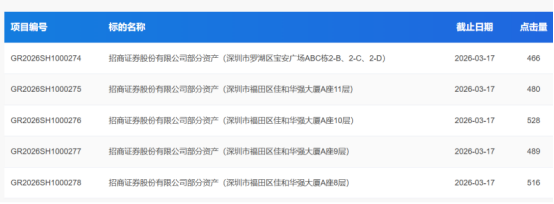
招商证券“瘦身”:挂牌转让5处深圳不动产,2025年减员千余,密集调整分支机构
Jin Rong Jie· 2026-03-09 09:20
Group 1 - The core strategy of the company is to implement a "lean and quality improvement" approach through asset revitalization, personnel optimization, and organizational restructuring in response to the deepening transformation and cost reduction trends in the securities industry [1] - The company is initiating the transfer of five properties in Shenzhen, with a total starting price of approximately 148 million yuan, as part of its asset disposal strategy [2][4] - The properties being disposed of are older assets acquired during the 1990s, indicating a focus on revitalizing idle assets and shedding non-core properties [3][4] Group 2 - The company reduced its workforce by 1,292 employees, with a focus on optimizing the personnel structure rather than simple downsizing, particularly in traditional brokerage roles [5] - Despite achieving revenue and profit growth in 2025, the company faces pressure from industry differentiation, prompting a need for cost reduction and efficiency improvement [5][8] - The company is undergoing significant organizational and personnel adjustments, including changes in executive leadership and branch management, to enhance operational efficiency [6][7] Group 3 - The asset disposal, personnel optimization, and organizational adjustments are part of a systematic layout during a critical transformation period in the securities industry, where cost reduction and focusing on core business have become common goals among leading firms [8] - The new president, Zhu Jiangtao, is expected to strengthen strategic collaboration with China Merchants Bank and drive the company's focus on digital development and core business areas [7][8] - The ongoing asset transfer process, personnel optimization, and organizational restructuring are aimed at enhancing the company's competitive advantage amid industry challenges [8]

港股评级汇总:招商证券(香港)维持兖煤澳大利亚买入评级
Xin Lang Cai Jing· 2026-03-09 07:24
Group 1 - China Coal Australia (03668.HK) maintains a "Buy" rating with a target price of HKD 38, benefiting from rising natural gas prices due to Middle East geopolitical conflicts, which may drive coal prices up, enhancing profitability by 5% for every 1% increase in coal prices [1] - Aubo Holdings (00880.HK) holds a "Neutral" rating with a target price of HKD 2.20, facing short-term market share pressure and a 3% decline in EBITDA margin due to the closure of satellite entertainment venues, but is working on property upgrades to attract customers [1] - Neway Group (01686.HK) is upgraded to a "Buy" rating with a target price of HKD 8.58, as its MEGA IDC phase one has a 91% occupancy rate, and demand for AI reasoning and high-density deployment is significantly increasing [1] Group 2 - JD Group (09618.HK) receives a "Strong Buy" rating, with Q4 retail operating profit down only 2.5% year-on-year, better than expected, and a recovery in food delivery losses, alongside double-digit growth in daily necessities and 3P advertising revenue [2] - JD Logistics (02618.HK) maintains a "Buy" rating, with Q4 non-IFRS net profit up 5.7%, driven by significant internal revenue growth of 68% from instant delivery, and the privatization of Debon is expected to accelerate network integration and profitability recovery [2] Group 3 - China Tobacco Hong Kong (06055.HK) holds a "Buy" rating, with a projected 14.8% year-on-year growth in net profit for 2025, and a 6.2 percentage point increase in H2 cigarette export gross margin to 21.4%, attributed to channel expansion and product optimization [3] Group 4 - Bilibili-W (09626.HK) maintains a "Buy" rating, with Q4 DAU up 10% to 113 million, and advertising revenue increasing by 27%, driven by improved ad efficiency and AIGC tool applications, achieving annual profitability for the first time [4] Group 5 - Bosideng (03998.HK) holds a "Buy" rating, achieving mid-single-digit revenue growth despite a warm winter, with brand strength reinforced through designer series and successful international expansion [5] Group 6 - Swire Properties (01972.HK) maintains a "Buy" rating, with 67% completion of its HKD 100 billion investment plan, and a projected 9% CAGR for mainland IP rights area by 2032, showcasing strong financial health and stable dividend growth [6] Group 7 - Shangmei Co. (02145.HK) holds a "Buy" rating, with projected revenue growth of 34.0%-35.4% and net profit growth of 41.9%-44.4% for 2025, driven by strong sales of popular product lines and healthy channel structure [7]
招商证券:维持哔哩哔哩“买入”评级,新游戏上线可望改善游戏业务前景
Xin Lang Cai Jing· 2026-03-09 06:36
Core Viewpoint - Bilibili's revenue in Q4 of last year grew by 8% year-on-year, with advertising revenue increasing by 27%, surpassing expectations by 3% [1] Financial Performance - Value-added services revenue increased by 6% year-on-year, meeting expectations, while the average monthly paying users rose by 19%, reaching a historical high [1] - Non-GAAP operating profit and net profit reached 839 million and 878 million yuan, respectively, representing significant increases of 81% and 94%, exceeding expectations by 2% and 10% [1] Investment Plans - Bilibili plans to invest an additional 500 million to 1 billion yuan in AI, including capital expenditures for AI computing power and technology, as well as operational investments in R&D and talent acquisition [1] - These investments are expected to enhance efficiency, reduce costs, increase advertising revenue, and strengthen the company's competitive advantage in content communities [1] Game Development - Two new games, "Three Kingdoms: Hundred Generals Card" and "Shining! Lume," are expected to launch in Q2 of this year, which may improve the outlook for the gaming business [1] Stock Rating - The target price for Bilibili's US stock is maintained at $30, with a "Buy" rating, and the company is expected to achieve a 9% year-on-year revenue growth and a 37% increase in Non-GAAP net profit this year [1]

研报掘金丨招商证券:维持哔哩哔哩“买入”评级,新游戏上线可望改善游戏业务前景
Ge Long Hui A P P· 2026-03-09 06:35
Core Viewpoint - Bilibili's revenue in Q4 of last year grew by 8% year-on-year, with advertising revenue increasing by 27%, exceeding expectations by 3% [1] Revenue Performance - Value-added services revenue increased by 6% year-on-year, meeting expectations, with the average monthly paying users rising by 19%, reaching a historical high [1] - Non-GAAP operating profit and net profit reached 839 million and 878 million yuan, respectively, representing significant increases of 81% and 94%, surpassing expectations by 2% and 10% [1] Investment Plans - Bilibili plans to invest an additional 500 million to 1 billion yuan in AI, including capital expenditures for AI computing power and technology, as well as operational investments in R&D and talent acquisition [1] - These investments are expected to enhance efficiency, reduce costs, increase advertising revenue, and strengthen the company's core competitive advantage in content communities [1] Gaming Business Outlook - Two new games, "Three Kingdoms: Hundred Generals Card" and "Shining! Lume," are expected to launch in the second quarter of this year, which may improve the outlook for the gaming business [1] Stock Rating - The target price for Bilibili's U.S. stock is maintained at $30, with a "Buy" rating, and the company is expected to achieve a 9% year-on-year revenue growth and a 37% increase in Non-GAAP net profit this year [1]
招商证券:OpenClaw热度持续提升,继续推荐AI Infra
Jin Rong Jie· 2026-03-08 12:11
Group 1 - OpenClaw is experiencing a surge in popularity, becoming the fastest-growing open-source software project in GitHub's history [1] - Domestic large models are ranked among the top globally in terms of usage [1] - OpenAI has released GPT-5.4, and ByteDance has announced the pricing standards for Seedance 2.0 [1] Group 2 - Cloud computing services remain a highly certain direction for investment, with strong recommendations continuing [1]
两会定调高质量发展方向,看好非银板块配置机会
GF SECURITIES· 2026-03-08 05:48
Core Viewpoints - The report emphasizes the potential investment opportunities in the non-bank financial sector, driven by the government's focus on high-quality development during the Two Sessions [1][6]. Group 1: Industry Performance - As of March 7, 2026, the Shanghai Composite Index closed at 4124.19, down 0.93%, while the Shenzhen Component Index fell by 2.22% [11]. - The average daily trading volume in the Shanghai and Shenzhen markets was 2.65 trillion yuan, reflecting a week-on-week increase of 8.37% [6]. Group 2: Insurance Sector Insights - The Two Sessions outlined a blueprint for the insurance industry's high-quality development, focusing on enhancing social security and promoting commercial health insurance [16]. - The report suggests that the insurance sector's long-term profit margin is expected to improve, with specific recommendations to focus on companies like China Ping An and China Life [16]. Group 3: Securities Sector Insights - The report highlights the reform direction for the capital market during the 14th National People's Congress, emphasizing the need for deeper reforms in the ChiNext board and optimizing refinancing mechanisms [17][18]. - The introduction of new regulations on short-term trading is expected to enhance market fairness and liquidity, facilitating the entry of long-term funds [23][24]. Group 4: Key Company Valuations - China Ping An (601318.SH) has a current price of 62.67 yuan, with a target value of 83.17 yuan, indicating a buy rating [7]. - China Life (601628.SH) is rated as a buy with a current price of 42.69 yuan and a target value of 55.47 yuan [7].




关于同意招商证券股份有限公司为南方上证科创板人工智能交易型开放式指数证券投资基金提供主做市服务的公告
Xin Lang Cai Jing· 2026-03-06 10:00
2026年03月06日 特此公告。 上海证券交易所 上证公告(基金)【2026】458号 为促进南方上证科创板人工智能交易型开放式指数证券投资基金(以下简称AI科创CS,基金代 码:589230)的市场流动性和平稳运行,根据《上海证券交易所基金自律监管规则适用指引第2号——上 市基金做市业务》等相关规定,本所同意招商证券股份有限公司自2026年03月09日起为AI科创CS提供 主做市服务。 ...
关于同意招商证券股份有限公司为中金沪深300交易型开放式指数证券投资基金提供主做市服务的公告
Xin Lang Cai Jing· 2026-03-06 10:00
特此公告。 上海证券交易所 2026年03月06日 上证公告(基金)【2026】459号 为促进中金沪深300交易型开放式指数证券投资基金(以下简称300中金,基金代码:510320)的市 场流动性和平稳运行,根据《上海证券交易所基金自律监管规则适用指引第2号——上市基金做市业 务》等相关规定,本所同意招商证券股份有限公司自2026年03月09日起为300中金提供主做市服务。 ...