BOB(601169)

Search documents
2025年服贸会金融服务专题要来了!近千平方米数币体验展区“存在感”拉满
Bei Jing Shang Bao· 2025-08-15 10:57
Group 1: Event Overview - The 2025 China International Service Trade Fair Financial Services Special Event will be held from September 10 to 14 in Beijing Shougang Park [1] - The theme for this year's financial services special event is "Digital Intelligence Driven, Open and Win-Win" [1] - The event aims to create four platforms: global financial innovation product and service display, important policy and industry rule release, partner negotiation, and cutting-edge financial experience [1] Group 2: Participation and Scale - A total of 92 domestic and foreign financial institutions will participate in the event, with 68 being Fortune 500 companies and industry leaders [4] - The exhibition area will cover 11,000 square meters, featuring two main halls with themes of "Open Integration" and "Intelligent Sharing" [4] - The internationalization rate of participating institutions is 45.7%, with 50 domestic institutions and 42 foreign institutions [1][4] Group 3: Innovative Financial Products and Services - Notable exhibits include the "Mifang Card," a three-in-one service product for foreign visitors, developed by Bank of China in collaboration with China Unicom and Beijing Yikatong [5] - China Insurance will showcase the first commercial aerospace insurance consortium in China and innovative technology insurance products [5] - Mastercard and UnionPay will present new products and services aimed at enhancing the payment experience for foreign visitors [5] Group 4: Technology Integration - The event will leverage AI technology to create an immersive exhibition experience, showcasing the deep integration of AI and the financial industry [6] - Agricultural Bank of China will feature VR technology for real estate viewing, enhancing customer engagement [6] - Beijing Bank will present an interactive digital robot to demonstrate various financial services [6] Group 5: Digital Currency and Interactive Activities - A 1,000 square meter immersive digital RMB experience area will be featured, enhancing visitor engagement through AI interactions [7] - Newcomer CCB Fund will utilize a "Wutong Bus" design for its booth, incorporating interactive elements to educate investors [7] - Various interactive activities will be organized to engage both professional and general audiences, including a financial empowerment event for professionals and fun activities for the general public [9]


北京银行(601169) - 北京银行股份有限公司关于独立董事辞任的公告
2025-08-15 10:46
北京银行股份有限公司关于独立董事辞任的公告 本公司董事会及全体董事保证本公告内容不存在任何虚假记载、误导性陈述或者重大遗 漏,并对其内容的真实性、准确性和完整性承担个别及连带责任。 证券代码:601169 证券简称:北京银行 公告编号:2025-042 北京银行股份有限公司(简称"本行")董事会于近日收到张光华 先生、赵丽芬女士、杨运杰先生提交的书面辞职报告。因任期届满, 张光华先生、赵丽芬女士、杨运杰先生辞去本行独立董事及董事会相 关专门委员会职务。辞任自辞呈送达本行董事会之日起生效。 经张光华先生、赵丽芬女士、杨运杰先生确认,其与本行董事会 无不同意见,亦无任何与其辞任有关的事项需要通知本行股东。 北京银行股份有限公司董事会 2025 年 8 月 16 日 本行董事会谨此对张光华先生、赵丽芬女士、杨运杰先生为本行 作出的贡献表示衷心感谢。 特此公告。 ...

定了!9月10日开幕!
Jin Rong Shi Bao· 2025-08-15 09:41
Core Insights - The 2025 China International Service Trade Fair's financial services section will take place from September 10 to September 14 in Beijing, focusing on "Digital Intelligence Driving Open Win-Win" as its theme [1] - The event aims to create four platforms: global financial innovation product and service showcase, important policy and industry rule releases, partner negotiations, and cutting-edge financial experiences [1] Group 1: Exhibition Overview - The financial services exhibition has attracted 92 domestic and international financial institutions, covering an area of 11,000 square meters [2] - Two main thematic exhibition areas: Hall 5 focuses on "Open Integration," showcasing achievements in building a strong financial nation and expanding financial services [2] - Hall 6 emphasizes "Smart Benefits and Sharing," highlighting deep cooperation between financial institutions and leading technology companies [2] Group 2: International Participation - Over 40 international and foreign financial institutions, including AIIB, HSBC, and Mastercard, will present their innovative practices in cross-border financial services and fintech [3] Group 3: Technological Integration - This year's exhibition will leverage AI technology to enhance interactive experiences, creating an immersive platform for financial innovation [4] - Notable exhibits include ICBC's trillion-level financial model and Agricultural Bank's VR-enabled home viewing service [4] Group 4: Beijing's Role in Financial Innovation - Beijing, as the national financial management center, will showcase original and advanced "Beijing Service" cases that support national strategies and urban development [5] - Key exhibits include Bank of China's "three-in-one" service card for foreign tourists and PICC's commercial space insurance initiatives [5][6] Group 5: Interactive Experiences - The exhibition will feature engaging activities to enhance public interaction with financial services, such as fun games and educational experiences [7] - Examples include Minsheng Bank's interactive activities and ICBC Credit Management's anti-money laundering themed maze [7]


行业点评报告:信贷社融增长背离,存款活化流向非银
KAIYUAN SECURITIES· 2025-08-15 06:52
Investment Rating - Investment rating: Positive (maintained) [1] Core Viewpoints - Credit and social financing growth are diverging, with financial support for the real economy shifting from indirect financing (loans) to direct financing, primarily through government bonds [4] - The increase in social financing in July was mainly driven by government bonds, with a notable increase of 1.24 trillion yuan, the highest for the month in many years [4] - The report highlights a trend of deposits moving from residents to non-bank financial institutions, indicating a shift in risk appetite among investors [5] Summary by Sections Credit Market Analysis - In July, RMB loans decreased by 50 billion yuan, a year-on-year reduction of 310 billion yuan, with a balance growth rate of 6.9%, down 0.2 percentage points from June [3] - The demand for credit remains weak, with both corporate and household loan demands declining, particularly in medium to long-term loans [3][4] - The increase in corporate loans was primarily supported by bills, which saw a year-on-year increase of 312.5 billion yuan [3] Social Financing Insights - Social financing increased by 1.16 trillion yuan in July, a year-on-year increase of 289.3 billion yuan, with a stock growth rate of 9.0%, up 0.1 percentage points from June [4] - The divergence between social financing and credit growth suggests a transition in how financial support is provided to the real economy [4] Deposit Trends - M2 grew by 8.8% year-on-year in July, while M1 saw a significant increase of 5.6%, indicating signs of deposit activation [5] - The report notes that the increase in non-bank deposits by 1.39 trillion yuan contrasts with a decrease in resident deposits by 780 billion yuan, highlighting a clear trend of funds moving towards non-bank sectors [5] Investment Recommendations - The report suggests that dividend strategies remain solid, with a focus on direct financing as the primary means of financial support for the real economy [5] - It recommends specific banks such as CITIC Bank, Construction Bank, Agricultural Bank, and others as beneficiaries of the current market conditions [5]



北京银行:以金融“含绿量”赋能绿色发展“含金量”
Jin Rong Shi Bao· 2025-08-15 03:38
Core Viewpoint - Beijing Bank is committed to enhancing its green finance strategy, aligning with national "dual carbon" goals and promoting sustainable development through innovative financial products and services [1][9]. Group 1: Strategic Leadership - Beijing Bank has established a comprehensive green finance management system across all levels, from headquarters to branches, enhancing its strategic focus on sustainable development [2]. - The bank restructured its board committee to emphasize ESG (Environmental, Social, and Governance) responsibilities, reflecting a stronger commitment to green finance [2]. - A three-year development strategy for green finance (2025-2027) has been set, outlining growth paths and reinforcing the bank's commitment to sustainability [2]. Group 2: Green Loan Initiatives - The bank has increased its green loan offerings, with a balance of 210.35 billion yuan by the end of 2024, marking a growth of 63.365 billion yuan and a 43.11% increase from the beginning of the year [3]. - New financial products such as "Waste-Free Loan," "Water-Saving Loan," and "Green E-Loan" have been introduced to support low-carbon transitions in various sectors [3]. - The bank has also established a multi-faceted service system encompassing green loans, bonds, and supply chains to support sustainable projects [3]. Group 3: Carbon Finance Development - Carbon finance has become a key area for Beijing Bank, with 1.6 billion yuan in loans issued to 56 projects, resulting in an annual carbon reduction of 58,500 tons [5]. - The bank is developing a carbon account system to enhance carbon accounting capabilities and promote green finance innovation [5]. - A new green financial product, "Jingxing Carbon E-Loan," has been launched, allowing for differentiated financing rates based on quantified environmental benefits [5]. Group 4: ESG Integration - Beijing Bank is integrating ESG principles into its strategic framework, with a three-year action plan (2025-2027) focusing on various ESG initiatives [7]. - The bank has improved its ESG reporting practices, including third-party verification of its ESG reports to enhance transparency and credibility [8]. - The bank aims to develop a range of innovative financial products that align with ESG principles, including ESG investment and green funds [8][9].

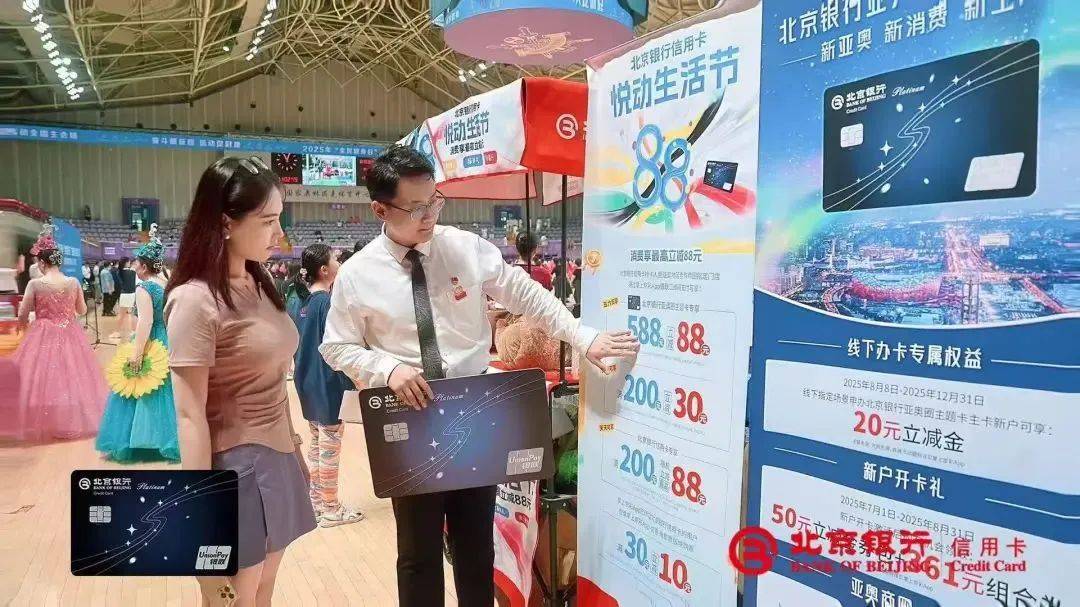
北京银行丨解锁消费新乐趣!“悦动生活节”启幕
Sou Hu Cai Jing· 2025-08-14 12:27
来源:北京日报 近期亚奥地区同步举办"2025全民健身日"系列主题活动、"2025玩酷亚奥国际嗨啤节",北京银行信用卡积极融入区域民生服务,在全民健身日、嗨啤节等 活动区域设立"金融服务小站",为参与健身的市民及周边消费者提供便捷的金融支持与服务,实现"金融+运动+消费"的场景融合。 本次"悦动生活节"是北京银行践行金融惠民,以金融力量赋能亚奥联盟、服务区域经济、促进消费升级的有力实践。活动通过"金融+场景"深度融合,旨 在进一步释放亚奥地区消费潜力,提升市民生活品质,为区域经济高质量发展注入金融动能。未来,北京银行将持续探索更多服务民生、促进消费的新模 式与新路径,携手共建繁荣、充满活力的亚奥幸福生活圈,为培育建设国际消费中心城市注入强劲金融动能。 为助力北京国际消费中心城市建设,提振消费信心,活跃消费氛围,服务首都发展大局,北京银行精心策划"悦动生活节"商圈主题消费活动,持续深化与 亚奥商圈新消费创新联盟成员单位的合作,以丰富多样的消费活动回馈北京银行亚奥圈主题信用卡持卡客户,以金融力量精准赋能区域消费增长,助力激 发亚奥区域经济新活力。 ...
天津:“津质贷”模式激活中小微发展新势能
Jin Rong Shi Bao· 2025-08-14 02:35
Core Viewpoint - The People's Bank of China Tianjin Branch, in collaboration with relevant departments, has successfully implemented the first batch of quality financing credit enhancement loans in Tianjin, aimed at supporting enterprises in equipment upgrades and capacity enhancement [1][2]. Group 1: Quality Financing Credit Enhancement - Quality financing credit enhancement refers to a mechanism based on the quality capabilities and qualifications of enterprises, providing financing services to those with high-quality efficiency levels [1]. - The initiative was guided by a joint notice from the State Administration for Market Regulation, the People's Bank of China, and the Financial Regulatory Bureau, aimed at enhancing the financing accessibility and convenience for quality-oriented enterprises, especially small and micro enterprises [1]. Group 2: "Tianjin Quality Loan" Product - Beijing Bank Tianjin Branch has launched the "Tianjin Quality Loan" product, which breaks traditional collateral restrictions by using quality credit, management capability, brand value, basic qualifications, and innovation potential as the basis for credit enhancement [1]. - The "Tianjin Quality Loan" has provided credit of 131 million yuan and new loans of 126 million yuan to five enterprises, helping them convert quality advantages into development momentum [2]. Group 3: Impact on Enterprises - A small micro-enterprise in Tianjin upgraded its production equipment using the "Tianjin Quality Loan," resulting in a 30% increase in production capacity [2]. - A technology enterprise with industry brand value certification utilized the loan to increase R&D investment, successfully launching an upgraded product and significantly improving market share [2]. Group 4: Future Plans - The People's Bank of China Tianjin Branch plans to continue promoting the quality financing credit enhancement work, strengthen policy guidance, and encourage the application of the "Tianjin Quality Loan" model throughout the city [2].
短线防风险 60只个股短期均线现死叉
Zheng Quan Shi Bao Wang· 2025-08-13 07:45
证券时报·数据宝统计,截至下午收盘,上证综指3683.46点,涨跌幅为0.48%,A股总成交额为21752.11 亿元。到目前为止,今日有60只A股的5日均线主动下穿10日均线,其中*ST高鸿、步科股份、嵘泰股份 等个股的5日均线较10日均线距离最大,分别达-1.93%、-1.00%、-0.96%。 (文章来源:证券时报网) 丰 部分5日、10日均线死叉个股 | 代码 | 简称 | 今日涨跌 | 今日换手 | 5日均线 | 10日均线 | 5日较10日均线 | 最新价 | 较10日均线乖 | | --- | --- | --- | --- | --- | --- | --- | --- | --- | | | | (%) | 率(%) | (元) | (元) | 距离(%) | (元) | 离率(%) | | 000851 | *ST 高鸿 | -5.00 | 0.12 | 2.09 | 2.13 | -1.93 | 1.90 | -10.76 | | 688160 | 步科 股份 | 1.28 | 1.29 | 95.01 | 95.97 | -1.00 | 95.11 | -0.89 | | 605133 ...




个人消费贷贴息新政城农商行集体缺席,行业格局或生变?
Di Yi Cai Jing Zi Xun· 2025-08-13 06:23
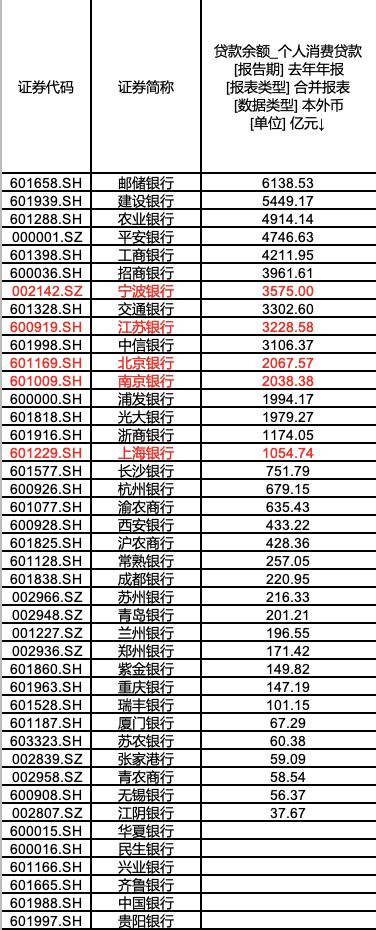
中央首次实施的个人消费贷款"国补",城商行、农商行无缘首批经办机构名单。 8月12日,财政部、中国人民银行、金融监管总局联合印发《个人消费贷款财政贴息政策实施方案》 (以下简称《实施方案》)。自2025年9月1日至2026年8月31日,居民个人在贷款经办机构办理的、实 际用于消费的个人消费贷款(不含信用卡业务),可享受年贴息比例1个百分点的财政补贴,贴息金额 最高不超过贷款合同利率的50%。 与此同时,财政贴息银行名单也同步落地。六大国有银行与十二家全国性股份制银行入列,城商行、农 商行等地方性银行集体缺席,即便是2024年末个人消费贷规模位居全国前列的宁波银行(3575亿元)、 江苏银行(3229亿元)、北京银行(2068亿元),也未能跻身其中。 业内人士表示,贴息名单决定了客户能否直接获得政策优惠,这一初步安排对城商行、农商行等中小银 行的冲击不容小觑,或将引发消费贷市场竞争格局的新一轮洗牌。不过,名单外银行并非没有机会,它 们可以通过产品创新、服务升级打造差异化优势。 同时,8月13日,在国新办举行的新闻发布会上,财政部副部长廖岷亦表示,政策到期后,还会开展效 果评估,研究视情况延长政策的期限,或扩大支 ...



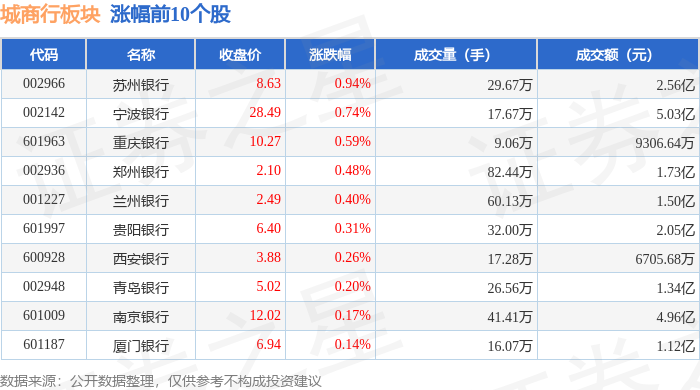
城商行板块8月12日涨0.03%,苏州银行领涨,主力资金净流出1.47亿元
Zheng Xing Xing Ye Ri Bao· 2025-08-12 08:31
证券之星消息,8月12日城商行板块较上一交易日上涨0.03%,苏州银行领涨。当日上证指数报收于 3665.92,上涨0.5%。深证成指报收于11351.63,上涨0.53%。城商行板块个股涨跌见下表: | 代码 | 名称 | 收盘价 | 涨跌幅 | 成交量(手) | 成交额(元) | | --- | --- | --- | --- | --- | --- | | 002966 | 苏州银行 | 8.63 | 0.94% | 29.67万 | 2.56亿 | | 002142 | 宁波银行 | 28.49 | 0.74% | 17.67万 | = 5.03亿 | | 601963 | 重庆银行 | 10.27 | 0.59% | 1 9.06万 | 9306.64万 | | 002936 | 郑州银行 | 2.10 | 0.48% | 82.44万 | 1.73亿 | | 001227 | 兰州银行 | 2.49 | 0.40% | 60.13万 | 1.50亿 | | 601997 | 贵阳银行 | 6.40 | 0.31% | 32.00万 | 2.05亿 | | 600928 | 西安银行 | 3.88 ...