
GAC GROUP(601238)

Search documents
广汽集团多品牌联动 广州汽车巡游展成为智能出行展示场
Zhong Guo Jing Ying Bao· 2025-12-23 08:36
Core Insights - The event "Car Parade in Flower City: Smart Towards the Future" held in Guangzhou showcases the city's automotive industry upgrade and urban development through a dynamic parade and static exhibition format [1][2] - GAC Group participated with 36 vehicles and 2 robots, highlighting its comprehensive industry layout from vehicle manufacturing to smart mobility [1] - The parade featured GAC's autonomous brands and electric models, demonstrating the company's multi-technology approach in the new energy sector [1][2] Group 1 - The parade route was approximately 17 kilometers long, starting from the Guangzhou Tower and showcasing the Pearl River scenery and urban skyline [1] - GAC Group displayed 13 vehicle models in the "Current Formation," including its self-owned brands like GAC Aion and GAC Honda, emphasizing its advantages in the new energy field [1][2] - The event theme reflects Guangzhou's ambition to become a "Smart Car City," marking a significant step in the city's automotive transformation [2] Group 2 - The highlight of the parade was the lead float featuring GAC's fourth-generation humanoid robot GoMate Mini, capable of real-time interaction with the audience [2] - A static display area at the Guangzhou Tower showcased GAC's diverse product lineup and cutting-edge technologies, providing insights into its innovation capabilities [2] - GAC Group has made progress in key areas such as L4-level autonomous driving and intelligent robotics, aiming to strengthen its position as a high-tech enterprise and contribute to the development of the Guangdong-Hong Kong-Macao Greater Bay Area [2]

硅基档案:广汽GoMate Mini机器人
2 1 Shi Ji Jing Ji Bao Dao· 2025-12-23 08:34
Core Insights - The Guangzhou Tower International Climbing Competition will feature a robot climbing challenge set to launch on January 1, 2026, highlighting advancements in robotics and competitive technology [1] Group 1 - The event will showcase the GoMate Mini robot from GAC Group, which is expected to participate in the challenge in 9 days [1]

广汽集团跌2.04%,成交额2.91亿元,主力资金净流出4419.42万元
Xin Lang Zheng Quan· 2025-12-23 06:31
Core Viewpoint - GAC Group's stock has experienced a decline of 12.34% this year, with a recent drop of 2.04% on December 23, 2023, reflecting ongoing challenges in the automotive sector [1] Financial Performance - For the period from January to September 2025, GAC Group reported a revenue of 66.272 billion yuan, a year-on-year decrease of 10.49% [2] - The net profit attributable to shareholders was -4.312 billion yuan, representing a significant year-on-year decline of 3691.33% [2] Stock Market Activity - As of December 23, 2023, GAC Group's stock price was 8.17 yuan per share, with a total market capitalization of 83.31 billion yuan [1] - The trading volume was 291 million yuan, with a turnover rate of 0.48% [1] - Major funds saw a net outflow of 44.1942 million yuan, with large orders buying 54.7318 million yuan and selling 71.4520 million yuan [1] Shareholder Information - As of September 30, 2025, the number of GAC Group's shareholders was 127,600, a decrease of 6.03% from the previous period [2] - The top ten circulating shareholders included Hong Kong Central Clearing Limited, which held 72.2261 million shares, down by 47.8595 million shares from the previous period [3] Dividend Distribution - GAC Group has distributed a total of 25.639 billion yuan in dividends since its A-share listing, with 3.974 billion yuan distributed over the past three years [3]
事关无人机!强制性国家标准发布 产业链投资机会获关注(附概念股)
Zhi Tong Cai Jing· 2025-12-22 23:31
Group 1: Regulatory Developments - The Civil Aviation Administration of China has released two mandatory national standards for civil unmanned aerial vehicles (UAVs), effective from May 1, 2026, aimed at promoting a safer and more orderly industry development [1] - The standards include requirements for real-name registration and activation of UAVs, detailing the relationship, processes, and technical requirements for various systems involved in registration and activation [1] - The operational identification standard mandates UAV systems to actively report their identity, location, speed, and status throughout their operation, providing unified technical standards for design, production, and testing [1] Group 2: Market Opportunities - The drone industry is reshaping engineering operation and maintenance services in China's infrastructure sector, addressing challenges in high-risk inspections and supporting intelligent monitoring of energy pipelines and telecom base stations [2] - The low-altitude economy, encompassing UAVs and eVTOLs, is a significant area of growth, with 969 companies registered and over 478,000 UAVs documented in China [2] - The low-altitude economy is projected to grow at a compound annual growth rate of over 25%, potentially reaching a market size of 1.5 trillion yuan by 2025 and 3.5 trillion yuan by 2035 [3] Group 3: Policy Support and Industry Growth - Recent policies have intensified focus on the low-altitude economy, with local governments releasing standards for low-altitude communication networks and UAV traffic management [3] - The national "14th Five-Year Plan" emphasizes the development of the aerospace and low-altitude economy sectors, with state-owned enterprises establishing low-altitude economic companies [4] - The market for low-altitude economy is expected to reach a trillion yuan by 2030, with significant investments in infrastructure and technology to support this growth [4] Group 4: Key Players and Innovations - AVIC (Aviation Industry Corporation of China) is a leading player in the aerospace sector, involved in various UAV and aviation-related businesses [6] - ZTE Corporation is advancing its low-altitude sensing technology and has completed pilot projects for 5G-A sensing systems [6] - XPeng Motors has launched a low-altitude flight camp and plans to establish a flying car store, marking a significant step in the practical application of low-altitude economy technologies [6] - GAC Group's GOVY AirJet, a composite wing flying car, has successfully completed its first flight, showcasing advanced technology and performance [7]



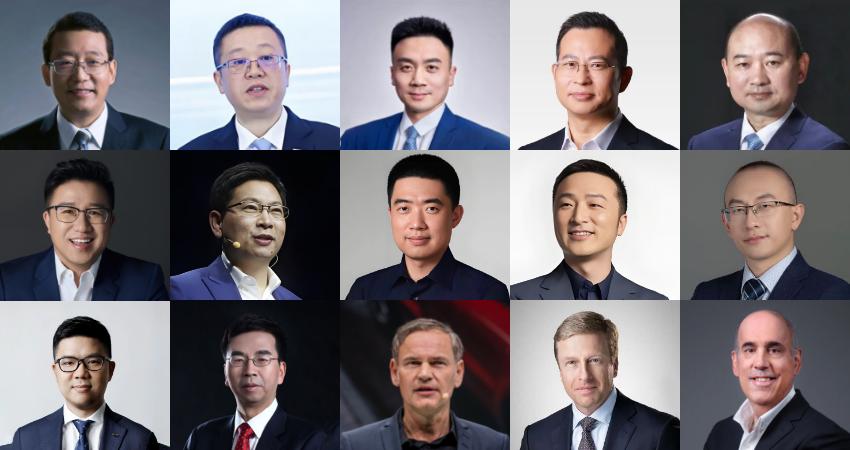
车圈俩月换了6个CEO,29家企业327名高管变动,掀起年终人事巨变
3 6 Ke· 2025-12-22 23:18
Core Insights - The automotive industry is experiencing a significant wave of executive changes, with over 327 high-level personnel adjustments reported in the last two months, including six CEOs [2][3][4] - The restructuring reflects a strategic shift among companies as they prepare for intensified competition in 2026, focusing on leadership renewal, efficiency, and core business enhancement [4][5][6] Group 1: Executive Changes in State-Owned Enterprises - Major state-owned automotive groups such as Dongfeng, Changan, GAC, and BAIC have undergone frequent personnel changes, aiming for younger and more professional decision-making teams [5][6][7] - GAC has appointed its first "post-70s" general manager, indicating a move towards clearer internal responsibilities and optimized decision-making [7] - Dongfeng has brought in external talent to drive its smart transformation, while Changan has filled its long-vacant president position, reflecting a commitment to leadership stability [11][13][15] Group 2: Executive Departures in Private Enterprises - Private automakers like BYD, Geely, and Great Wall have seen significant executive turnover, with key figures leaving amid fierce market competition [17][19] - Chery has emerged as an active talent poacher, recruiting from competitors to enhance its marketing and technology capabilities [19][21] Group 3: New Forces in the Automotive Sector - New energy vehicle companies are making urgent personnel adjustments to tackle pressing challenges, with Li Xiang of Li Auto taking direct control of human resources to streamline operations [22][24] - Xiaomi's automotive division is focusing on sales growth, with top executives taking on additional responsibilities to drive performance [26][28] - XPeng Motors is enhancing its technical capabilities by hiring AI experts, indicating a strategic focus on core technology development [29] Group 4: Changes in Foreign and Joint Venture Brands - Major foreign automotive companies, including GM and Tesla, are undergoing significant executive changes, with GM's software and AI teams experiencing notable turnover [32][34][36] - German luxury brands are also reshuffling their leadership, with key executives transitioning to new roles to align with future strategic goals [38][40][42] Group 5: Supply Chain and Component Manufacturers - The supply chain sector is also witnessing high-frequency personnel changes, with Huawei's Yu Chengdong taking on additional leadership roles to strengthen its market position [46][49] - Traditional component manufacturers like Continental and ZF are focusing on efficiency and business concentration through their leadership adjustments [51][52] Conclusion - The recent wave of personnel changes in the automotive industry signifies a critical reassessment of survival strategies amid the ongoing transition towards electrification and intelligence [53]




启境首款车型启动全国路测,定位百万级猎装轿跑
Feng Huang Wang· 2025-12-22 12:49
Core Viewpoint - The CEO of Qijing Automotive, Liu Jiaming, announced the nationwide road testing of their first model, a high-end smart electric vehicle positioned in the "three million" category, marking a significant step in the company's development [1] Group 1: Product Details - The new model is characterized by its core selling points of "million-level aesthetics, million-level driving control, and million-level intelligence" [1] - This vehicle is the first project to be launched under Huawei's Qian Kun "Jing" series [1] Group 2: Company Background - Qijing brand is a collaboration between GAC Group and Huawei Qian Kun, initiated in January 2025, and is positioned as a high-end smart electric vehicle brand, independent of GAC's existing brand system [1] Group 3: Market Launch Timeline - The model is scheduled to officially launch and begin deliveries in June 2026, with the joint team currently in the final stages of product development and deep coordination [1]

改革再提速!广汽启动自主品牌BU整合,昊铂埃安渠道融合剑指千店规模
Guo Ji Jin Rong Bao· 2025-12-22 12:17
Core Viewpoint - GAC Group is intensifying its reform efforts one year after the launch of the "Panyu Action," focusing on integrating its autonomous brands and enhancing operational efficiency [1][5]. Group 1: Brand Integration and Structure - GAC officially initiated the integration of its autonomous brand business units (BUs) on December 18, creating a structured BU framework that includes the establishment of the Haobo and Aion brands under a unified management system [2]. - The integration aims to address three major pain points in the autonomous brand development: coping with industry competition, aligning with market segmentation, and improving market responsiveness [3]. Group 2: Channel Integration - The core strategy for integration involves channel fusion, with a phased approach to combine sales and service networks for Haobo and Aion, targeting over 30 cities by January 31, 2026, and achieving full integration by March 31, 2026, with over 1,000 sales points [3]. - Haobo targets the mid-to-high-end market, while Aion focuses on the mainstream market, ensuring complementary positioning to avoid internal competition [3]. Group 3: Operational Efficiency and Innovation - The "Panyu Action" has led to significant improvements in operational efficiency, reducing the new car development cycle from 26 months to 18-21 months and cutting R&D costs by over 10% [5]. - GAC has established a shared center and a large R&D system for its autonomous brands, optimizing the number of planned models by approximately 20% [5]. Group 4: Strategic Partnerships and New Products - GAC's joint venture with Huawei, "Hua Wang Automotive," has launched the high-end brand "Qijing," targeting the premium market with a product matrix focused on young elites [6]. - The flagship sedan Haobo A800 has received an L3-level autonomous driving road test license, and GAC has signed a ten-year strategic cooperation agreement with CATL to develop a battery swap ecosystem [7]. Group 5: Market Performance and Future Goals - GAC's transformation has shown initial results, with a 7% quarter-on-quarter revenue growth and an 11% increase in sales in Q3 2025, while the autonomous brand segment grew by 15% [7]. - The company aims to achieve a sales target of 2 million units for its autonomous brands by 2027, with a market share of over 60% during the "14th Five-Year Plan" period [7].
新能源汽车指数上周涨0.14%,磷酸铁锂平均报价持平丨行业周报
2 1 Shi Ji Jing Ji Bao Dao· 2025-12-22 06:04
Market Overview - The new energy vehicle (NEV) index rose by 0.14% from December 15 to December 19, outperforming the CSI 300 index by 0.42% [1] - The best-performing sector within the automotive industry was the automotive services and others index, which increased by 2.49% [1] - In the battery-related sector, the power battery recycling index had a modest increase of 0.05% [1] Company Performance - Notable closing prices for NEV companies as of December 19 include: - BAIC Blue Valley: 8.21 CNY [3] - Changan Automobile: 11.75 CNY [3] - BYD: 94.23 CNY [3] - Great Wall Motors: 22.21 CNY [3] - Other companies in the automotive parts sector showed varied performance, with closing prices such as: - Joyson Electronics: 29.68 CNY [5] - Huayu Automotive: 19.94 CNY [5] - In the lithium battery sector, notable companies include: - Contemporary Amperex Technology Co. (CATL): 374.0 CNY [7] - Yiwei Lithium Energy: 68.56 CNY [7] Industry Data - In November, the production of new energy vehicles reached 1,880,000 units, a year-on-year increase of 20% [36] - Cumulative production for the year reached 14,907,000 units, with a year-on-year increase of 31.4% [36] - The wholesale sales of new energy vehicles in November were 1,706,000 units, reflecting an 18.7% year-on-year increase [36] - The penetration rate for wholesale sales was 56.9%, while the retail penetration rate was 59.3% [36] - The total installed capacity of power batteries in November was 93,500 MWh, a year-on-year increase of 39.2% [36] Material Prices - As of December 19, the average price of battery-grade lithium hydroxide was 94,100 CNY/ton, up by 4,500 CNY/ton from December 12 [12] - The average price of battery-grade cobalt sulfate was 92,500 CNY/ton, increasing by 1,000 CNY/ton [14] - The price of lithium hexafluorophosphate remained stable at 180,000 CNY/ton [30] Sales Performance - BYD's sales in November were 480,186 units, with a month-on-month increase of 8.71% but a year-on-year decrease of 5.25% [36] - Leap Motor's delivery volume was 70,327 units, showing a year-on-year increase of 75.08% [36] - Sales figures for other brands in November included: - NIO: 36,275 units, down 10.2% year-on-year [37] - Li Auto: 33,181 units, up 4.45% year-on-year [37]





广汽集团涨2.07%,成交额1.68亿元,主力资金净流入450.33万元
Xin Lang Zheng Quan· 2025-12-22 02:29
资料显示,广州汽车集团股份有限公司位于广东省广州市番禺区金山大道东668号,香港铜锣湾威菲路道 18号万国宝通中心808室,成立日期1997年6月6日,上市日期2012年3月29日,公司主营业务涉及研发、 整车(汽车、摩托车)、零部件、商贸服务、金融、出行等业务,构成了完整的汽车产业链闭环。主营业务 收入构成为:汽车业务及相关贸易95.26%,其他4.74%。 12月22日,广汽集团盘中上涨2.07%,截至10:24,报8.40元/股,成交1.68亿元,换手率0.27%,总市值 856.55亿元。 资金流向方面,主力资金净流入450.33万元,特大单买入943.68万元,占比5.63%,卖出344.32万元,占 比2.05%;大单买入3647.81万元,占比21.75%,卖出3796.84万元,占比22.64%。 广汽集团今年以来股价跌9.87%,近5个交易日涨1.69%,近20日涨0.48%,近60日涨8.39%。 分红方面,广汽集团A股上市后累计派现256.39亿元。近三年,累计派现39.74亿元。 机构持仓方面,截止2025年9月30日,广汽集团十大流通股东中,香港中央结算有限公司位居第七大流 通股东, ...
车企在激烈厮杀中告别2025,未来竞争更残酷
3 6 Ke· 2025-12-22 00:13
Core Insights - The competitive landscape of the Chinese automotive market is rapidly changing, with new players emerging and established leaders facing challenges [1][2] - The shift from a price war to a "value war" is evident, as companies seek to differentiate themselves amid increasing competition [1][5] - The upcoming reduction in purchase tax for new energy vehicles (NEVs) is expected to intensify competition between fuel and electric vehicles [8][9] Group 1: Market Dynamics - The title of "top car manufacturer" in China is becoming less stable, with BYD narrowly maintaining its lead over SAIC Group in revenue [1] - BYD's sales have been declining in 2025, with monthly sales from July to November showing significant year-on-year decreases [2] - Leap Motor has emerged as the new leader among new car manufacturers, surpassing Li Auto in delivery volumes [3] Group 2: Competitive Strategies - The automotive industry is transitioning from a focus on price competition to a focus on product value and differentiation [5][7] - Companies are increasingly recognizing the need for ecosystem collaboration to meet market demands and enhance competitiveness [7] - The "反内卷" (anti-involution) movement emphasizes the importance of healthy competition and sustainable business practices [6][7] Group 3: Future Outlook - The reduction of NEV purchase tax starting January 1, 2026, is anticipated to shift the market dynamics, potentially leading to a resurgence of fuel vehicle sales [8][10] - Industry leaders predict a "survival of the fittest" phase in the automotive sector, with a clearer competitive landscape emerging over the next five to ten years [10][11] - The competition is expected to become more intense, with a potential widening gap between leading and lagging companies as the market evolves [10]

