AGRICULTURAL BANK OF CHINA(601288)

Search documents
银行板块震荡走强 上海银行等涨超2%
Zheng Quan Shi Bao Wang· 2025-11-04 02:07
Core Viewpoint - The banking sector has shown a strong upward trend, with several banks experiencing significant stock price increases [1] Group 1: Stock Performance - Shanghai Bank, China Merchants Bank, and CITIC Bank have all risen by over 2% [1] - Xiamen Bank, Postal Savings Bank, and Agricultural Bank have also seen increases of over 1% [1]





重点领域贷款增量创新高 服务实体经济“挑大梁”
Jin Rong Shi Bao· 2025-11-04 02:06
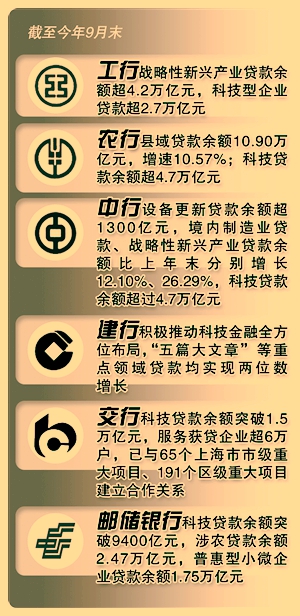
Core Insights - The six major state-owned banks in China reported stable loan growth and effective support for key sectors of the economy in their Q3 reports, demonstrating leadership in addressing weak links in the economy [1][2]. Loan Growth and Focus Areas - The total loan volume of the six major banks has shown steady growth, with targeted lending in key areas such as manufacturing, strategic emerging industries, and agriculture [4][5]. - Industrial and Commercial Bank of China (ICBC) reported a significant increase in loans, with RMB loans from domestic branches rising by 2.04 trillion yuan [4]. - Agricultural Bank of China (ABC) prioritized county-level resource allocation, with a loan balance of 10.90 trillion yuan and a growth rate of 10.57%, which is 2.21 percentage points higher than the bank's average [4]. - China Bank's loans for manufacturing and strategic emerging industries grew by 12.10% and 26.29%, respectively [4]. Support for Agriculture and Small Enterprises - Postal Savings Bank of China focused on agricultural finance, with an agricultural loan balance of 2.47 trillion yuan and inclusive finance loans exceeding 1 trillion yuan [5]. - ABC's loans for rural industries and construction reached 2.74 trillion yuan and 2.47 trillion yuan, with growth rates of 22.8% and 9.7% respectively [4]. Technology Loan Growth - The six banks have significantly increased their loan scales in the technology sector, with ICBC's loans for strategic emerging industries exceeding 4.2 trillion yuan and technology enterprise loans surpassing 2.7 trillion yuan [6]. - Agricultural Bank and China Bank also reported technology loan balances exceeding 4.7 trillion yuan [6]. AIC Equity Investment Development - Several banks have initiated AIC equity investment pilot projects, with ICBC covering 18 pilot regions and establishing 38 funds with a subscribed scale exceeding 45 billion yuan [7]. - China Bank has set up 16 equity investment funds focusing on key emerging industries, with a total subscribed scale of 11.76 billion yuan [7]. Risk Management and Control - The six banks have enhanced their risk management frameworks, particularly in agricultural loans, to ensure asset quality remains stable [8]. - ABC has integrated risk control measures throughout the loan process, utilizing financial technology to improve risk identification and management [8]. - Construction Bank has implemented monitoring measures for loan usage to prevent misuse of funds, ensuring compliance with policies [10].





普惠、绿色、科创三大领域信贷增量显著
Jin Rong Shi Bao· 2025-11-04 02:01
Core Viewpoint - The major state-owned banks in China have reported stable performance in Q3, with a focus on supporting high-quality development of the real economy through optimized credit allocation and increased lending in key sectors [1][2]. Group 1: Credit Allocation and Key Sectors - The overall trend in credit issuance for the year has been characterized by "total growth + structural optimization," with significant support directed towards inclusive small and micro enterprises, green development, and technological innovation [1][2]. - As of the end of Q3, the Agricultural Bank of China reported a balance of inclusive loans at 4.33 trillion yuan, with an increase of 731.1 billion yuan, while the balance of green loans reached 5.8 trillion yuan [2]. - The China Construction Bank's green loan balance stood at 5.89 trillion yuan, reflecting an 18.38% increase from the beginning of the year [2]. Group 2: Consumer Loans and Spending - There has been a notable increase in consumer loans, with the Industrial and Commercial Bank of China reporting a debit card transaction volume of 13.8 trillion yuan and credit card spending of 1.4 trillion yuan in the first three quarters [4]. - The China Bank's personal consumption loan balance grew by 26.11% year-on-year, reaching a significant increase in consumer spending [4][5]. - The Postal Savings Bank has implemented measures to boost consumption, resulting in a more than 10% year-on-year increase in loans for non-housing consumption [5]. Group 3: Digital Transformation and Future Outlook - Experts anticipate that the credit structure will continue to optimize, with a dual focus on consumption and inclusive finance, supporting stable growth in public enterprises and promoting domestic demand [6]. - The integration of digitalization in credit services is expected to enhance efficiency and precision in loan approvals, with the application of AI and big data technologies further reducing credit risks [7]. - Future credit allocations are likely to prioritize green, low-carbon, and digital economy sectors, aligning with national policy directions [6].
零售贷款增速显著跑输对公,民生兴业平安个贷增速为负!哪家对公强?
Xin Lang Cai Jing· 2025-11-04 01:00
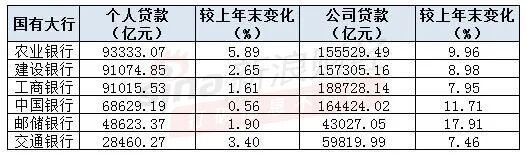
Core Viewpoint - The report highlights that corporate loans continue to drive the growth of bank credit, significantly outpacing retail loans in the first three quarters of 2025, with state-owned banks showing a notable increase in corporate lending compared to retail lending [1][5][11]. Group 1: State-Owned Banks Performance - Among state-owned banks, Agricultural Bank of China leads in personal loan size at 93,333.07 million yuan, with a growth of 5.89% compared to the end of the previous year [3][5]. - Postal Savings Bank shows a remarkable increase in corporate loans, with a growth rate of 17.91%, while its personal loans grew by only 1.90% [5][7]. - The overall trend indicates that personal loan growth is lagging behind corporate loan growth, with only Agricultural Bank exceeding a 5% increase in personal loans among the major banks [5][11]. Group 2: Joint-Stock Banks Performance - Several joint-stock banks, including Minsheng Bank, Industrial Bank, and Ping An Bank, reported negative growth in retail loans, while their corporate loans continued to grow positively [1][11]. - For instance, Ping An Bank's personal loans decreased by 2.10% to 17,291.92 million yuan, while its corporate loans saw a decline in bad debt rates [11][12]. - In contrast, China Merchants Bank reported a retail loan balance of 36,966.19 million yuan, with a modest growth of 1.43%, but its corporate loans grew significantly [9][13]. Group 3: Retail Asset Under Management (AUM) - Despite the challenges in retail loan growth, several banks reported strong growth in retail AUM. For example, China Merchants Bank's retail AUM reached 16.6 trillion yuan, growing by 11.19% [1][15]. - Shanghai Pudong Development Bank also reported a significant increase in personal financial assets, with a growth of 19.07% to 4.62 trillion yuan [15]. - Management teams from various banks emphasized their commitment to enhancing retail market share, indicating a long-term strategic focus on retail banking despite current market conditions [15][16].



国家级“耐心资本”布局科创进入新阶段
Shang Hai Zheng Quan Bao· 2025-11-04 00:18
Core Insights - The establishment of social security science and technology innovation funds in Jiangsu and Zhejiang provinces, each with an initial scale of 50 billion yuan, marks a new phase in the national-level "patient capital" strategy for deepening investment in the science and technology sector [1] Group 1: Fund Establishment and Structure - The Jiangsu social security science and technology innovation fund was launched in Suzhou on October 31, with contributions from the National Social Security Fund, Jiangsu provincial government, Suzhou municipal government, and ICBC Investment [1] - The Zhejiang social security science and technology innovation fund was established on October 27, formed by the Zhejiang provincial government, the National Social Security Fund, and Agricultural Bank of China, aiming to leverage social capital for innovation-driven development [1] - Both funds represent a milestone in the service of new productive forces, showcasing a new paradigm of "strong governance + precise operation" [1] Group 2: Differentiated Operations - The funds are designed to adapt to local industrial characteristics, with Jiangsu focusing on high-end manufacturing and biomedicine, while Zhejiang emphasizes strategic emerging industries and future industries [2][3] - Jiangsu's fund employs a "mother fund + direct investment" dual-layer structure, allowing for rapid adjustments in investment strategies based on local industrial strengths [3] - Zhejiang's fund utilizes a "1+6" mother-son fund matrix, aiming to establish six sub-funds by the end of 2025, each targeting specific sectors [2] Group 3: Central-Local-Financial Collaboration - The establishment of these funds aligns with the national development reform commission's guidelines for enhancing coordination between national and local funds [4] - The collaboration between the National Social Security Fund, local governments, and major financial institutions aims to maximize capital efficiency and address the "last mile" issue in project identification [5] - This model is expected to create a replicable framework for national-level "patient capital" to support local development, potentially influencing nationwide practices [5]
农业银行(01288.HK)获平安资管增持3604.2万股
Ge Long Hui· 2025-11-03 23:23
Group 1 - Ping An Asset Management Co., Ltd. increased its stake in Agricultural Bank of China (01288.HK) by acquiring 36.042 million shares at an average price of HKD 6.1117 per share, totaling approximately HKD 220 million [1][2] - Following this acquisition, Ping An's total shareholding in Agricultural Bank of China rose to 6,463,853,000 shares, increasing its ownership percentage from 20.91% to 21.02% [1][2]

以“强省强市”为支点,“强治理+精运作”并重 国家级“耐心资本”布局科创进入新阶段
Shang Hai Zheng Quan Bao· 2025-11-03 18:16
Core Insights - The establishment of social security science and technology innovation funds in Jiangsu and Zhejiang provinces, each with a scale of 50 billion yuan, marks a significant step in the national-level "patient capital" strategy for deepening investment in the science and technology sector [1][4]. Group 1: Fund Structure and Management - Jiangsu's fund utilizes a "mother fund + direct investment" dual-layer structure, with the Suzhou Innovation Investment Group as the general partner (GP), reflecting the city's industrial advantages in high-end manufacturing and biomedicine [2][3]. - Zhejiang's fund adopts a "1+6" mother-son fund (FOF) matrix structure, aiming to establish six sub-funds by the end of 2025, focusing on strategic emerging industries and future industries [2][3]. Group 2: Investment Focus and Strategy - The Jiangsu fund targets strategic emerging industries such as artificial intelligence, integrated circuits, and biomanufacturing, while the Zhejiang fund emphasizes new quality productivity, covering strategic new industries and major projects [3][6]. - The investment strategies of both funds are tailored to local industrial characteristics, showcasing a flexible and market-oriented approach to fund management [2][3]. Group 3: Central-Local-Financial Collaboration - The funds exemplify a "central + local + financial" collaboration model, aligning with national guidelines for enhancing coordination between national and local funds [4][5]. - National social security funds act as a core supply of "patient capital," providing long-term funding support and strategic direction, while local governments and financial institutions contribute resources and project support [5][6]. Group 4: Implications for Economic Development - The establishment of these funds is expected to create a replicable model of national-level "patient capital" supporting local development, potentially influencing similar initiatives across the country [5][6]. - This collaboration is anticipated to accelerate the formation of a closed loop of "strategic guidance - capital empowerment - industrial upgrading," providing robust support for building a modern industrial system and fostering new quality productivity [6].
机遇“金闪闪” 银行贵金属业务规模大增
Shang Hai Zheng Quan Bao· 2025-11-03 18:11
Core Viewpoint - The strong international gold prices and rising global risk aversion are driving the growth of banks' precious metals businesses, with significant year-on-year increases reported in the third-quarter financial results of listed banks. However, the recent fluctuations in gold prices present new challenges for these banking operations [1]. Group 1: Growth in Precious Metals Business - The precious metals business of banks has rapidly expanded due to the sustained rise in gold prices, with smaller banks showing particularly impressive growth. As of the end of September, Nanjing Bank's precious metals business reached 7.201 billion yuan, a staggering increase of 11,914.36% compared to the end of 2024. Hangzhou Bank's precious metals business grew to 1.217 billion yuan, up 1,523.57% from the end of 2024 [2]. - Joint-stock banks also experienced significant growth in their precious metals business. By the end of September, compared to the end of 2024, the precious metals business of Shanghai Pudong Development Bank increased by over 350%, while China CITIC Bank saw an increase of over 200%. Other banks like Zhejiang Commercial Bank, Industrial Bank, China Merchants Bank, and Minsheng Bank all reported growth exceeding 100% [2]. - Major banks maintained steady growth from a high base, with the precious metals business of Bank of China, China Construction Bank, and Agricultural Bank of China all increasing by over 10% compared to the end of 2024 [2]. Group 2: Strategic Focus on Precious Metals - The precious metals business combines wealth management and increased intermediary income, potentially becoming a significant factor in banks' intermediary income. Precious metals, especially gold, are seen as irreplaceable in banks' wealth management offerings and are crucial for customer asset allocation [3]. - Analysts note that the demand for gold as a hedge and a store of value is rising among residents. Banks, as key channels for gold bar sales and coin distribution, are well-positioned to meet this demand through the continued popularity of online investment products like account gold and gold accumulation [3]. - The decline in gold jewelry consumption may lead banks to reduce reliance on traditional jewelry sales and instead focus on innovation and promotion of their precious metals business [3]. Group 3: Risk Management Amid Price Volatility - Despite the growth, the high volatility of precious metals, particularly gold and silver, poses challenges for banks. Since October, these metals have entered a period of high volatility, prompting banks to enhance their risk management strategies [4]. - In response to market fluctuations, banks have adjusted trading rules and increased the minimum purchase thresholds for gold accumulation products to a range of 950 to 1,200 yuan, compared to around 500 yuan last year. Additionally, some banks have modified their precious metals wallet services to align with real-time gold price fluctuations [4]. - Looking ahead, institutions expect gold to retain its upward potential, maintaining its importance in asset allocation. The profitability of banks' precious metals business will increasingly depend on their internal capabilities, including the establishment of robust risk management systems to mitigate price volatility risks and the optimization of asset allocation for stable returns [4].



前三季度42家上市银行非利息收入同比增长5% 手续费及佣金净收入实现正增长 投资净收益增速放缓
Zheng Quan Ri Bao· 2025-11-03 16:21
Core Viewpoint - Non-interest income is a crucial component of banks' revenue structure, reflecting operational resilience amid pressure on net interest income. The performance of non-interest income among 42 listed banks in A-shares for the first three quarters shows a total of 1.22 trillion yuan, a year-on-year increase of 583 billion yuan, representing a growth rate of 5% [1][2]. Summary by Category Non-Interest Income Growth - In the first three quarters, 18 banks reported year-on-year growth in non-interest income, with 16 banks increasing the proportion of non-interest income in total revenue [1][2]. - Notably, Zijin Bank, Changshu Bank, and Zhangjiagang Bank, all located in Jiangsu, exhibited remarkable growth rates of 54%, 35%, and 22%, respectively, contributing significantly to their total revenues [2][3]. Performance of Different Bank Types - Among the six major state-owned banks, all reported year-on-year growth in non-interest income, with five achieving double-digit growth rates. In contrast, only one national joint-stock bank saw an increase [2][3]. - The non-interest income growth rates for major state-owned banks were as follows: Agricultural Bank (21%), Postal Savings Bank (20%), Bank of China (16%), China Construction Bank (14%), and Industrial and Commercial Bank (11%) [2]. Fee and Commission Income - The total net fee and commission income for the 42 listed banks reached 578.2 billion yuan, a year-on-year increase of 4.6%, with over 60% of banks reporting growth in this area [4][5]. - Noteworthy increases in fee and commission income were observed in Changshu Bank and Ruifeng Bank, with growth rates exceeding 364% and 162%, respectively [5]. Investment Income Trends - The total investment net income for the listed banks was 477 billion yuan, reflecting a year-on-year growth of 21%, although this growth rate has slowed compared to the previous year's 24% [6]. - The investment income of many banks was impacted by fluctuations in the bond market, particularly affecting smaller banks such as city commercial banks and rural commercial banks [6].

前三季度42家上市银行非利息收入同比增长5%
Zheng Quan Ri Bao· 2025-11-03 15:48
Core Insights - Non-interest income is a crucial component of banks' revenue structure, especially under pressure on net interest income, reflecting operational resilience [1] - In the first three quarters of this year, 42 listed banks in A-shares reported a total non-interest income of 1.22 trillion yuan, an increase of 58.3 billion yuan, or 5% year-on-year [1] - The growth in non-interest income is driven by the performance of wealth management businesses and the overall market activity, although investment income has been affected by fluctuations in the bond market [1][6] Non-Interest Income Growth - Among the 42 listed banks, 18 reported a year-on-year increase in non-interest income, with 16 banks seeing an increase in the proportion of non-interest income in total revenue [1][2] - Notably, Zijin Bank, Changshu Bank, and Zhangjiagang Bank, all from Jiangsu, showed remarkable growth rates of 54%, 35%, and 22% respectively, contributing significantly to their total revenues [2] - State-owned banks demonstrated strong growth in non-interest income, with Agricultural Bank, Postal Savings Bank, Bank of China, China Construction Bank, and Industrial and Commercial Bank reporting double-digit growth rates [2][3] Fee and Commission Income - The total fee and commission income for the 42 listed banks reached 578.2 billion yuan, a year-on-year increase of 4.6%, with over 60% of banks reporting growth [4][5] - Notable increases in fee and commission income were observed in Changshu Bank and Ruifeng Bank, with growth rates exceeding 364% and 162% respectively [4] - State-owned banks also reported growth in fee and commission income, with major banks like China Merchants Bank seeing a 0.9% increase, driven by significant growth in various subcategories of income [5] Investment Income Trends - The investment net income for the 42 listed banks totaled 477 billion yuan, reflecting a year-on-year growth of 21%, although this growth rate has slowed compared to the previous year [6] - The fluctuations in the bond market have particularly impacted the investment income of smaller banks, such as city commercial banks and rural commercial banks [6] - Analysts suggest that differences in client bases and operational strategies between state-owned and smaller banks are influencing their respective non-interest income growth [3][6]